Author: Brayden Quackenbush

  • “Education is not about obscure facts and little test scores” – Mr. Feeny

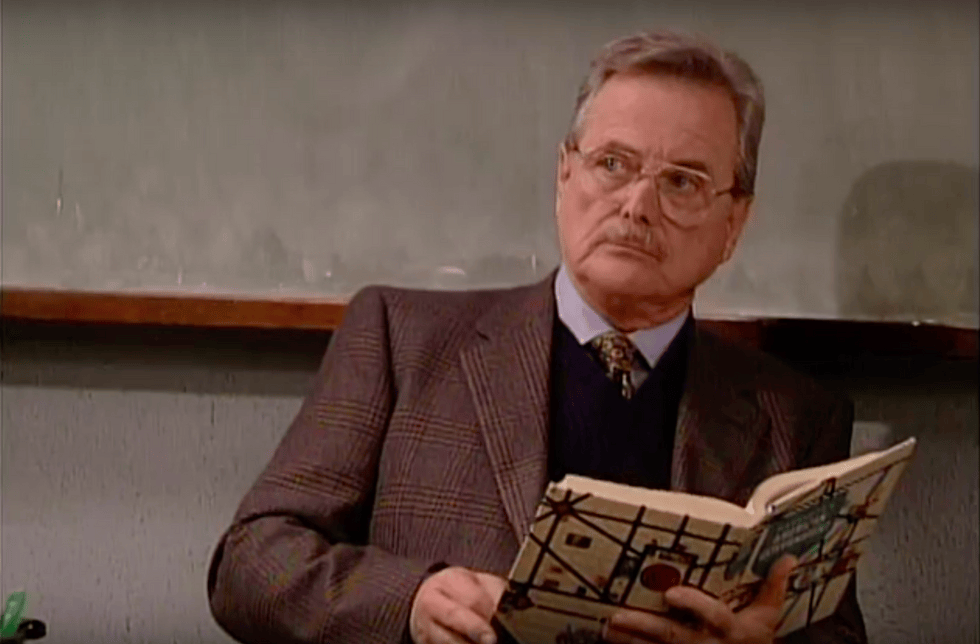
    “Education is not about obscure facts and little test scores” – Mr. Feeny

    “Education is not about obscure facts and little test scores. Education is about the overall effect of years of slow absorption of concepts, philosophies, approaches to problem-solving. The whole process is so grand and all-encompassing that it really can’t be threatened by the occasional late-night no-hitter. It is important that a boy spend time with his father.”

    Oh, the wisdom of Mr. Feeny.

    I’ve had some good teachers in my life. I consider Mr. Feeny to be one of them, even though he’s a fictional character.

    Quick recap of this classic Boy Meets World episode. Alan (Cory’s father) pulls Cory out of bed late at night to watch a no-hitter in progress in a Phillies baseball game. The next day Cory sleeps through a test. Alan goes to speak to Mr. Feeny to ask if Cory could have a makeup test. Mr. Feeny denies his request.

    It is later in the episode, during a late-night stargazing, apple juice session that Cory sits down with Mr. Feeny and Mr. Feeny gives the above quote.

    Education is not about one moment. It’s about a billion small moments.

    I often reflect back on that quote. I have read more in 2020 (the year I wrote this post) than any previous year. I don’t feel any smarter today than I did a year ago, I don’t think. But that’s not how knowledge-gaining works. It doesn’t happen over the course of a day or a week or even a year. Learning is an ongoing process. I hope to look back on the year 2020 and appreciate that it helped me learn things that would help me learn more and grow for the rest of my life.

    I look forward to learning into eternity.

    It is important that a boy (or girl) spend time with his (or her) father (or mother). What is the value of time with a father, a mother, someone who loves you? I believe it’s invaluable.

    The episode continues and both Mr. Feeny and Alan come to Cory separately and tell Cory that the other was right in their decision. Alan tells Cory Mr. Feeny was right to not let him retake the test and that Alan shouldn’t have pulled Cory out of bed. Obviously, the quote above indicates that Mr. Feeny approved of Alan’s pulling Cory out of bed to spend time with his son, despite not letting Cory re-take the test.

    Later, Cory is talking to his mom and he asks her how two people could both think the other was right, while seemingly disagreeing with one another. The lesson here is that the world is not black and white. There are many judgment calls where there is no perfect decision. There are many decisions that depend on your intent.

    Cory’s dad was not wrong for wanting to spend time with his son. His desire was good and admirable. Mr. Feeny agreed with that.

    Mr. Feeny had a standard he had long set that he would take no excuses from students as to why they failed a test. He couldn’t back down from that standard. His standard was set so he would always hold his students accountable and not let them down. Mr. Feeny had a good reason for denying Alan’s request.

    Both were right. Both agreed with the other’s reasoning.

    The conversation between Mr. Feeny and Cory’s dad was contentious. It ended with Mr. Feeny saying, “this conversation is over.” Both men ended up telling Cory the other was right. Why is that? Respect, introspection, understanding of the reasoning behind another’s viewpoint.

    We could do with much more of this in the world today.

  • Addiction, Freedom, and Satan

    Addiction, Freedom, and Satan

    The title of this post makes pretty clear where this is headed.

    I recently listened to a “Public Service Announcement” at the end of a Hidden Brain podcast episode about resolutions. The podcast had someone on their staff record a message that he would like to share with youth about smoking. Today the dangers of smoking are well documented. Luckily, for children nowadays and future generations, the campaign against smoking has been pretty successful. People definitely aren’t smoking like they were a couple decades ago. But people still smoke. It kind of blows my mind. I’ve written about it before HERE. I can’t emphasize this enough: it blows my mind that people still smoke cigarettes. It makes no sense to me.

    In listening to the long anecdotal PSA about smoking, many thoughts came to mind. Thoughts about the power of this addiction, the power of Satan, and why I’m grateful I never got sucked into that dark habit.

    He started by talking about his Great Aunt who he stole cigarettes from when he started smoking at age 14.

    “My parents and aunts and uncles used to tell us kids when we were little to ask Aunt Do to quit. They thought kids would be more persuasive than they were. I remember one time after nudging, ‘Aunt Do, you shouldn’t smoke,’ she replied, ‘I know honey, but when I think about quitting, I get stressed, and when I get stressed, I smoke more.’

    Loss of control.

    He continued, “Having smoked more than 10 years myself I know how she felt. But smoking clearly cut her life short. It’s a fact that, well, I’m ashamed to admit, hasn’t discouraged my own smoking. The thing is, death is too abstract, lung cancer too far off, and the risk of heart attack too uncertain.”

    Short-term reward versus long-term looking. The world today doesn’t think about 10 years from now, let alone eternity.

    “I’m sure Aunt Do knew, like I do, the risks. That smoking kills little cilia that clean the air for your lungs. That it cuts off the blood flow from to your gums causing your teeth to rot from the inside. That it causes plaque to build up in your arteries leading to stroke and heart attack. A doctor once told me on his smoke break that I just needed to quit before I was 35 and my body could still recover. I’m not sure he was right. I can already hear my laugh sometimes turn into a cough like Aunt Do’s did. But by his measure, I probably have another 10 good years of smoking in front of me. I’m only 25.”

    What is truth?

    “But if you’re 14 and thinking about having your first cigarette, I’m quitting now, and here’s why. Smoking really sucks. Not just when you’re 60 or 70 or 80 if you’re lucky. It sucks when you’re 16, when you’re 20, when you’re 25. Today I can’t run as fast or as far as a nonsmoker. I spend more money on cigarettes than I’d like to think about. But the worst of it are the cravings that come like clockwork even when I’m sleeping.”

    The pull of smoking is extraordinary. He’s going to talk about this more. Visions of Glory talks about individuals who leave this life so addicted to smoking that they continue to linger around this world with the desire to get one more hit of a cigarette. Before you think that’s absurd and completely outlandish and just can’t be true, stop, and think. Do you know anyone so addicted to smoking that when they die it might be the first thing they miss, having a body and the ability to smoke a cigarette? It’s not outlandish to me at all.

    “When you don’t smoke, here’s what you should know. When you’re a smoker life is lived around cigarettes. You’ll be laughing with friends at dinner or totally engrossed in a good book and something will tug at you. And as much as you want to stay in this moment, you’ll be thinking about a cigarette. So, you’ll get up, walk outside, and light up. And it will feel really good. But you’ll wish you were back inside, and you’ll be so tired of trading off these moments for a smoke.”

    More loss of control.

    “If you don’t smoke, you should know that smoking makes a prison out of completely normal situations.”

    Reading his words just made me think about, and appreciate (in a negative way), how powerful Satan is on this earth. He has so much control over individuals through the habits he perpetuates. Of course, the world never looks at it like this. The world says, “I want to smoke so I will” or “I enjoy coffee,” never admitting that they are controlled by these cravings. So many people in this world are contained in prisons of their own choosing.

    “Long flights, concerts, class, anything that lasts longer than a couple hours. These are your enemy, as a smoker. And any time you go on a date, or to a job interview, or to your grandparents’ house, it will be accompanied by a pang of worry. You’ll wash your hands and pull your shirt to your nose and hope they can’t smell smoke. Finally, if you don’t smoke, you should know how hard it is to quit. How much you’ll want to, and fail, to give it up. I’m going to quit on January 1st and to be honest, I’m sad about losing something that’s been a part of my life for so long.”

    How powerful is this poison? So powerful that after describing all the ways smoking is horrible and describing it as “making a prison out of completely normal situations,” he still admits that he’s sad about losing it. This is what I already mentioned. The world says, “I want to smoke,” because admitting you’re a slave to something is much worse.

    “And in the coming weeks without a cigarette, I know the cravings will find a way to twist my reasons for quitting into reasons why I can still smoke. This is the most baffling part of smoking. The way it hijacks your best intentions.”

    “Hijacks your best intentions.” Takes away your control. Takes away your agency.

    “I’ve heard that quitting is the hardest thing a smoker ever does. But also, that whatever pain is meted out in the coming weeks will be totally worth it. Because to be a nonsmoker means to be free to go anywhere and to do anything unencumbered. It means being able to be fully present in each moment if I choose. And so the next time I get on a long flight, or go out to dinner with friends, or see a movie, I won’t be plotting my next cigarette.”

    Quitting is hard. The pain meted out.

    Followed by.

    Worth it. Free. Unencumbered. Fully present.

    It’s striking to me that if any smoker put together a pros and cons of smoking vs nonsmoking the answer would be so obvious. This is exactly what this person was saying. His best intentions are hijacked, he’s in a prison, he can’t think straight when it comes to this addictive poison. Addiction really comes down to one thing. It’s the same thing that was fought over in Heaven before we came here. That one thing is agency, our freedom to choose, our choice. Of course, a smoker always has the choice to quit. All drug addicts have the choice to quit. How many people have we seen incapable of making that choice, no matter how destructive those substances are?

    The same war Satan waged in Heaven, he continues today. He wants to take our agency. He does so through all the tools of the world at his disposal. Those tools include cigarettes, alcohol, other drugs, sports, television, pornography, internet. There are so many addictions out there. This is the war Satan fights with us. He fights to take away our choice. He fights to make us think we have no choice because we need that thing that badly.

    Having spent a large portion of my life addicted, and having that feeling of having no control over what I really want to do, I can now look at this with somewhat of an outside perspective. I’m still fighting some addictions. It’s still a daily struggle choosing good things over mindless things. It’s still a choice every day to use my time to the best of my ability.

    Addiction is powerful and I feel sympathy for anyone caught in its thralls. There is hope, there is choice, there is a way to get away from addiction. We always need help. The power put into addiction from Satan, we need equal power on the other side to be able to conquer our natural inclinations. That power exists. If we turn to that power, to God, and to Christ, who feels and knows all our addictions and how hard it can be, we gain the ultimate reward: freedom.

    Ultimately Christ wants us to be free. That is the battle being fought. We just need to use all our willpower possible to align ourselves with the right, and winning, side. And then we are free.

  • Does God get Impatient?

    Does God get Impatient?

    Sometimes I have heard the comment when discussing scripture that God “lost his patience.” In this way of thinking, enough was enough for God. The Lord of Lords and King of Kings had come to the end of His straw. His patience was lost.

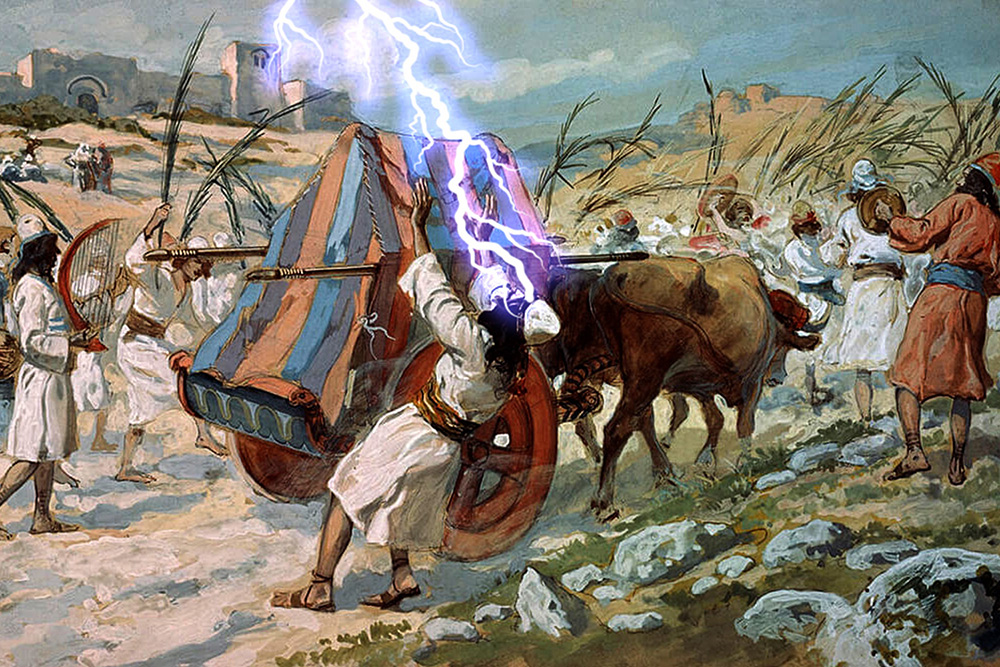
    There are countless examples we can look to where a perceived loss of patience occurred. In these examples, our human eyes see a loss of patience. Examples include the times the Lord told Moses He was going to destroy the Israelites (Exodus 32, Deuteronomy 9:12-14) or Uzzah touching the ark (2 Samuel 6:6-7).

    Does God change His mind?

    Various Google searches of “Is God impatient” come up with many titles like “God is patient – until He isn’t.” I propose that this is not the right way to think about God. I lose patience with my toddler, often. We all lose patience, often. Does God “lose patience” with me? I don’t think so.

    Remember the omniscient thing? Omniscience=all knowing. If God knows the beginning from the end, how can He lose patience? He knows what’s coming.

    From this link during some of those Google searches:

    “God is never said to be patient about things or circumstances. Why? It is because He knows all things. He knows the beginning from the end. He does not have any need of that kind of patience. When we speak of the patience of God, we are not talking about enduring hard times; we are talking about being longsuffering toward people.”

    David Hocking

    Patience, like time, is a human thing. It doesn’t apply to God. We apply it to Him in our attempt to understand Him. But how can God be “patient” if He already knows everything?

    So why are these examples, where it seems like the Lord changes His mind, included in the scriptures? Why is the account of the Lord saying He was going to destroy the Israelites and raise up a seed through Moses, only to “change His mind” included in the Bible?

    The question, “Why is it in the Bible” is almost always answered, “to teach us about Christ.”

    Let’s look at the Moses example.

    Moses is talking to Jehovah when he pleads on behalf of the children of Israel. He is interceding on their behalf. Who does Moses represent here? – Jesus Christ, our advocate with the Father. So, in this case, Moses was being a type of Christ and Christ was assuming the role of God the Father. We were learning from this scripture that Christ is our advocate with the Father, the same way Moses was the advocate for the Israelites with Jehovah.

    We must be careful in applying our human traits to God. God is not us. He works on a completely different plane. We can’t comprehend His ways and it’s important, because of our lack of understanding, we don’t lessen His power and perfection in our finite minds.

    God doesn’t lose patience with circumstances. He can’t. He knows all the circumstances. He knows the beginning. He knows the end. God doesn’t lose patience with us. He can’t. He is perfect in everything, including His love for us. He can want the best from us, He can want us to be better, He can want us to make better choices. But He DOES NOT lose patience with us. He is longsuffering. He is loving. He is perfect.

  • The Prints

    The Prints

    There’s a subtlety throughout scripture I don’t think we discuss often enough.

    We know that when we are resurrected, we are resurrected to our perfect frame. Not a hair on our heads will be lost. We will be perfected (Alma 11:43-44).

    We also know that when Christ showed Himself after His resurrection, He retained the prints in his hands, wrists, and feet (3 Nephi 11, John 20).

    Why does Christ retain these markings? Why does He keep these reminders of the most pain and suffering any person has ever experienced? It’s because Christ doesn’t remember the suffering when he looks at those marks. He remembers us.

    He could choose to remove those physical “blemishes.” Instead, He keeps them as a reminder.

    He also probably keeps them for us. So that when we see Him, we can be reminded of what He did for us. So we can remember His suffering and in turn realize how deeply He loves us. In this sense, Christ may have Thomas the Doubter (unfair title) in mind (John 20:25).

    Everything in scripture can hold some deep significance.

    I think this often overlooked fact holds spectacular significance.

    He was pierced through, tortured, suffered for us. He will never forget us. We are etched in the palms of His hands.

  • Ivy Thougts Part 3

    Ivy Thougts Part 3

    It’s time for one of my favorite posts to write – Ivy thoughts!

    This is a good one.

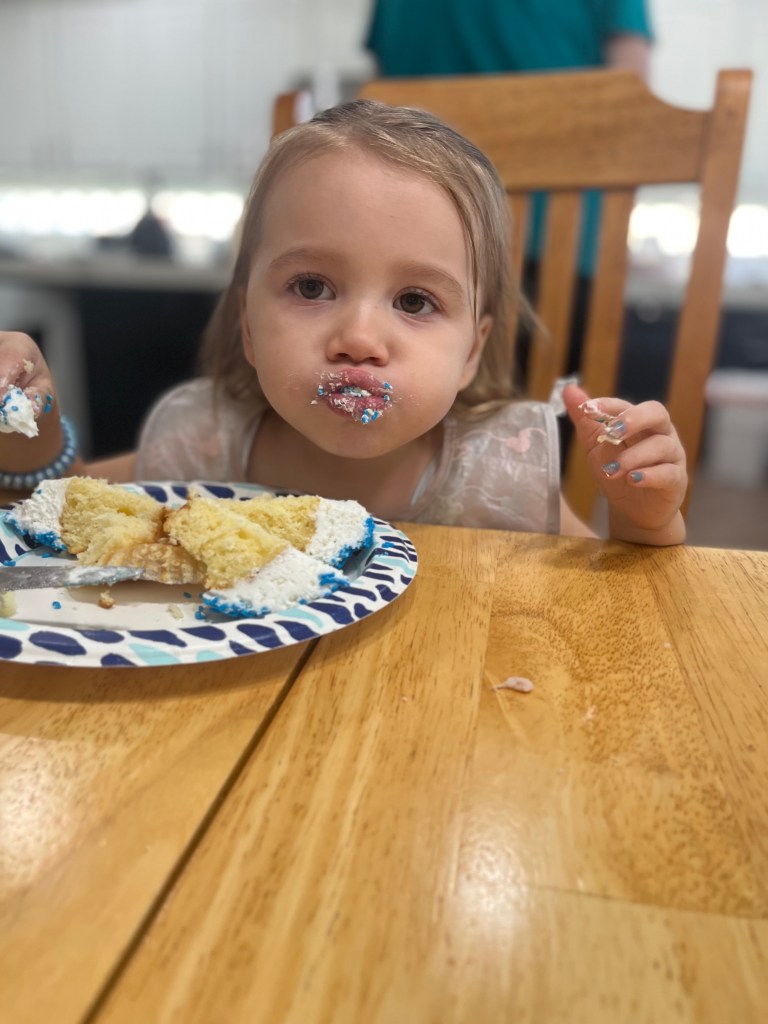
    One of the funnest things about being a parent is watching your child start to mimic you. It’s in those moments that I get a snapshot into how closely she is watching me. The other day Beth texted me and said, “I can tell when there’s a habit you do because Ivy does it. Like tapping your toothbrush on the edge of the sink. I said, ‘Does Daddy do that?’ And she said, ‘Yeah Daddy like tap tap tap.’”

    Other examples are the words she copies. The other day she said to her grandpa, “Papa, come hang out.” Another time they were playing a game and she said, “You give it a try.” My favorite example showing Ivy paying attention and learning, she was standing at the kitchen counter while her grandpa cut vegetables. He set the knife down and she, unprompted, said, “Ivy no touch knives.” Ivy helps me put the dishes away. I’ll hand her cups, plastic bowls, plastic plates, forks, spoons and she’ll put them in the dishwasher. Early on I would start to hand her a knife and then pause and say, “Does Ivy touch knives.” Of course, in the beginning, she would say, “Yes,” and I would say, “No, no, Ivy doesn’t touch knives,” and she’d quickly say, “No, no, Ivy no touch knives.” So we’d continue and if I started to hand her a knife to test her she would quickly say, “No, no, Ivy no touch knives.” Glad to see the things I’m teaching her are travelling.

    I had Ivy for an hour while I worked one day. She sat on the couch and watched Curious George by herself for 30 minutes. 30 minutes in she wanted to work with me. I tell her she can sit on my lap as long as she doesn’t touch anything. She proceeds to touch everything and say, “Can I touch this.” This I accept, having played this game before, as long as she doesn’t touch my keyboard. Then she starts throwing things. I gently set her aside and tell her it’s back to Curious George. This whole time she hasn’t said a word about the bag of Reese’s Peanut Butter Eggs on the right side of my desk. I’m amazed until… 2 minutes later she comes back. She walks up to my right arm which is on my chair’s arm rest. She gives my arm a huge hug and says, “Daddy, I’m so proud of you.” She gives it a good squeeze. I say, “Aw Ivy, thank you, I love you,” and give her a kiss. She promptly reaches over for the bag of chocolates and starts to walk away. I grab them just before she is out of reach. I tell her she can have one. I unwrap it and give it to her. As she walks out she says, “Thank you Daddy, I love you.” Is this what being wrapped around a finger feels like?

    Ivy and I were cuddling in bed after a nap and totally out of nowhere Ivy looks up at me and says, “You have sharks on your water bottle, Dad?” I looked over at my water bottle and said, “No, my water bottle is just green.” Ivy said, “It OK Dada, one day when you’re bigger you’ll get sharks on your water bottle TOO.”

    The other day Beth asked Ivy if she tooted and she said, very seriously, “No. There’s just a bobcat in my bum.” The same day, after I left for work, Ivy asked Beth, “Where Daddy going?” Beth responded that I went to work and Ivy said, “Again?!?!” You and me both sweet girl. She had a lot of personality that day.

    This was one of those equally heartbreaking and also wonderful parenting moments. I took Ivy with me to an open gym for basketball a couple months back. I expected it to go well. It went as poorly as it could have. I had to leave early and it was the last time I took Ivy to open gym. In my frustration, after Ivy was upset and throwing a fit and crying, I told her I’d hoped I could take her with me to basketball more this season but that I wasn’t going to make that mistake again. Like I said, I hadn’t taken her back with me since. Recently, I was at basketball. Ivy saw me leave with my bag and ball. “Where you goin Daddy?” “I have to go to basketball sweetie, I’ll see you when I get back.” She just looked at me with the most beautiful eyes and content face. But it wasn’t the normal – ‘see ya later’ face. While I was at practice Beth texted me, “Ivy’s been packing a bag and saying ‘I’m packing because I have to go to basketball soon. I know you will miss me when I’m at basketball. I come back though.’” I realized I need to give her another shot.

    Apparently when I was gone for work an entire day Ivy kept saying, “Say what’s wrong Hero Boy.” So Beth replies and asks what’s wrong with Hero Boy. “I lost my daddy.” Heart. Broken.

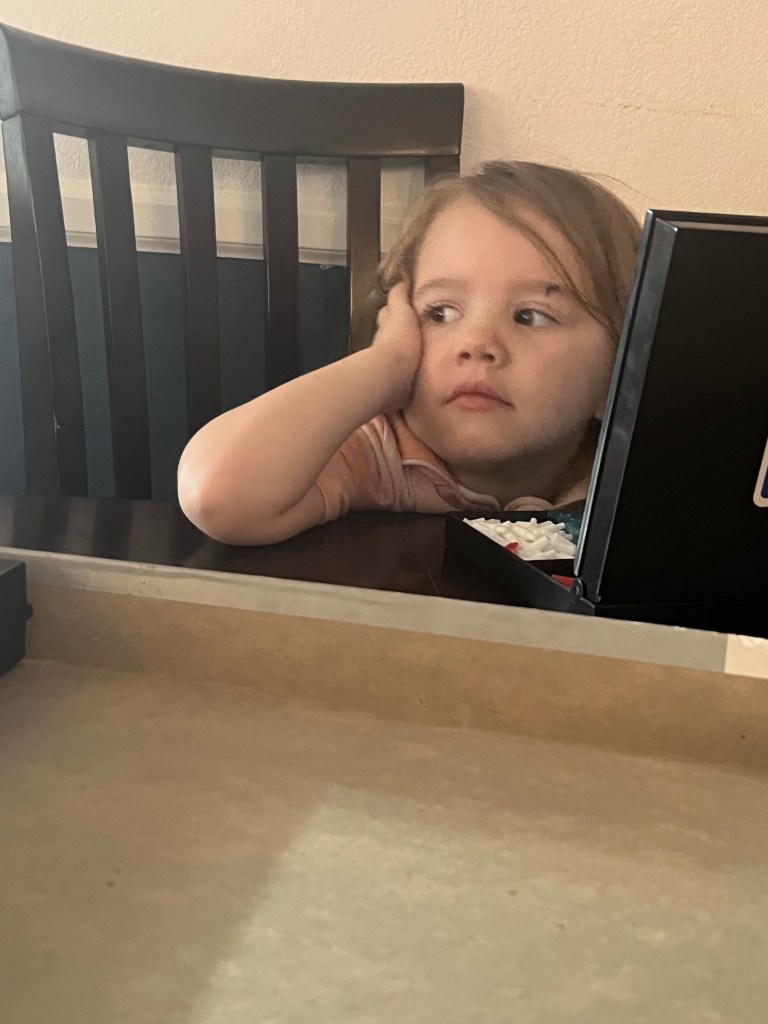
    We’ve had a few days of complete toddler turmoil. I love Ivy. She’s been a monster. She’s in the stage where if you ask her not to do something it’s instantly the next thing she does. Not kidding. We’ve been letting her play Battleship. You know, like the old school board game. She sits and puts the ships and pegs in and plays Battleship with herself. On occasion, the little pegs drop and I had to emphasize to her that it was important those didn’t drop because we didn’t want to lose pieces and Sage could choke on them. Ivy got out of her chair, walked across the room to where Sage was, and started to hand her one of the little pegs. It wasn’t like the temptation was even there. Sage wasn’t right next to her. She had to get out of her seat (a lot of work) and walk across the room to find Sage and willfully disobey what I just said. It was like she was possessed by some irrepressible urge to do exactly what I just told her not to do. These are the parenting moments that are teaching us patience, I guess.

    On that note of Ivy being difficult and us trying to be patient – I was leaving for basketball the other day and it had been a particularly stressful day for Beth. I went to Ivy before I left and quietly talked to her. I asked her to be my best girl. To help her mom, to take care of her sister, and to be my best, sweetest girl. “Can you do that for me?” “Yes, Daddy.” Beth texted me while I was at basketball: “We finally had a quiet moment to sit down after a walk and crafts. I’m trying so hard and yet she’s being so difficult! Ivy has a cold drink and Sage is eating her dinner. Ivy looks up at me and says in a sweet little voice, ‘Mom, I am doing my best.’ I have no idea where she heard that or if she even knows what that means but it was so sweet and probably true so I told her, ‘I know, my sweet Ivy’ and felt a little calmer. The student becomes the teacher yet again.” Ivy knows what that means. And she’s amazing. And she’s teaching us so much, while we try to teach her just enough to survive and not choke her sister.