Category: Books

  • The Room and Freedom

    The Room and Freedom

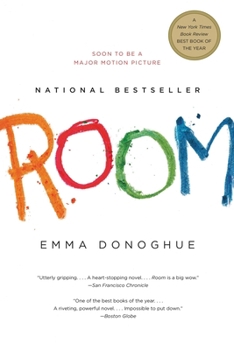
    I just finished the book The Room. Without spoiling too much, it’s about a woman who is captured and kept locked up in an 11 foot by 11 foot room with her five-year-old son who is born into captivity.

    It is a good book. The most interesting part is that it’s written from the perspective of the five-year-old.  

    At the end of the book there was a “Reading Group Guide” with questions to consider. One of them was, “Why do people tend to be so fascinated by stories of long-term confinement?” 

    I pondered this a bit. The obvious answer is that our freedom is so precious to us, we can’t imagine something so terrible, so we’re drawn to it. Like watching a train crash or the modern true crime craze. 

    There is a longer answer, though.  

    Our freedom, our agency, is the most important thing in the world to each of us. Our ability to choose and make our own choices is more important to us than anything. It’s more important to God than anything, also. That’s why we’re here. 

    I think this fascination with confinement and the inability to choose is a fascination with something we know to be inherently wrong.  

    Every one of us here on earth chose to come here, to Earth. There were some who didn’t choose this. There was one that tried to take away our freedom, to force us to choose his way. He phrased it as a way to save us all, but really, what he was proposing was enslavement. Satan proposed the plan that would have us all return to heaven. The catch was that we would have no say in the matter. We would be compelled to follow him, to do it his way. We would be his puppets. In return, he would ensure we got back safely. 

    God always wants us to choose. 

    We even chose to be able to choose. We are here because we chose agency and freedom.  

    I think that’s why these stories are so fascinating to us. We already chose freedom. Being here on Earth was a choice. God will always give us a choice. Not being given a choice feels wrong because it is wrong.  

    We already chose to reject Satan and come here and use our agency. 

    Don’t forget that. You’ve already chosen.   

  • Simplified Husbandship

    Simplified Husbandship

    These are the highlights I typed up for myself from a book called Simplified Husbandship | Simplified Fathership by Richard M. Eyre. I typed this up mostly for myself to refer back to.

    This is only on the simplified husbandship portion of the book. These are the quotes, summaries, and most important points I found from the book.

    “To become a better husband –

    change yourself

    not your wife.”

    “The home should be the center of growth, happiness, of excitement. If your home isn’t a happier place now than it was a year ago, you’re not progressing.”

    “A marriage of oneness should have a Venn diagram that is as circular as possible in the middle. When the marriage doesn’t have enough oneness, the middle is like a football.”

    “This type of marriage, like a football, is erratic and hard to predict. There is no telling where it will bounce.”

    “The best way for a husband to pursue this kind of oneness lies not in efforts to change his wife or even in efforts to change the marriage relationship. His best chance lies in changing himself.”

    Partnership-Plan-Pray

    Communication – “Oneness is an impossibility between two who share only part of what they feel.” This one really hits home for me. I’m not a great communicator.

    Inspiration – “The third partner should be the Lord.”

    One strategy for partnership –

    Wife handles the “inside partnership” of inside-the-home things such as home, children, personal kingdom, etc.

    Husband handles the “outside partnership” of outside-the-home things such as money, providing necessities, involvement in outside causes like church and civic, etc.

    In the above example, the wife would be general manager of inside partnership and husband participating partner and vice versa.

    Each night before prayer each gives a brief report on their stewardship, and receives comments, questions, or insight from the participating partner. Both participate, but one is in charge of each.

    During scheduling, attempt is made to find an hour where roles are reversed. Husband spends time with the children on the inside and wife shifts to outside activities, church, civic, or personal. (This seems extremely structured, to the point that it might border on unrealistic, practically speaking. But I still like the premise).

    Partnership – “day planning” – evening prayer.

    Each has a role and the Lord is the supervising partner.

    Partnership meeting is simple and shouldn’t take more than 10 minutes. The results:

    1. Each learns more about the arena where he or she did not spend the day (and becomes more appreciative of what the other is doing).
    2. Each gives input and ideas for the other’s benefit.
    3. Each thinks about what he or she will do the next day in both the general and the limited role.
    4. The prayer becomes far more specific and meaningful (because it is about things just discussed).
    5. Both sleep better when the next day is clear and challenging rather than hazy and uncertain.

    Things I personally could talk about with the outside responsibilities:

    1. Schedule for work / coaching / gym / church calling / projects
      • Go over my daily items
    2. Investments and status
    3. Finances – budget (handled by Beth, could be a part of her report).

    Once a month dinner date, reviewing the month. Review the past month and set goals for the month ahead.

    Once a year “honey-moon” vacation to review the last year and the year ahead.

    Principles:

    1. Total communication and openness
    2. Complementary roles (separate but shared responsibility)
    3. Shared goals and plans
    4. Adding the Lord to your partnership through earnest, regular prayer together

    “If exaltation is the goal, marriage partnerships must fold together in purpose and communication until they become one. We often imagine that temple marriages differ from civil marriages in quantity (they last longer), but, in fact, their quantity will be great only if their quality is great, only if oneness is obtained.”

    “Agreeing to disagree on some things is fine among friends and business partners but not between marriage partners striving for oneness.”

    “Partners are separated when they compete in any context other than fun.”

    “Emerson said, “Marriages do not fail, people fail. All marriages do is show those failures up.””

    Partnership-Plan-Pray Summary:

    • My wife is my partner in all I do.
    • We share everything, including our deepest feelings.
    • We plan our time together and share objectives for our lives inside and outside our home.
    • We pray together regularly, and preceding the prayer is a discussion of our partnership.

    Protect-Pamper-‘Preciate

    “A woman’s ego is no weaker than a man’s, but hers works in a slightly different way. Hers usually is best fed when she is cared for, complimented, appreciated, protected – even pampered a bit – not with the patronizing implication that she is weaker, less able, but with the implication that she is more special, important, and genuinely valued. A wife who receives sincere compliments, who is appreciated, who feels needed and cherished and protected, seems to gain a soft strength, a kind of clear-headed fulfillment that raises her toward her full potential in many areas.”

    “It’s the old notion of “out-giving” that can make marriages even more beautiful. Have you ever watched what happens to a basketball team when one player is so unselfish that he is always looking for a teammate to get the ball to? Other players respond in kind. The ball moves faster; everyone gets better shots. The teamwork of marriage can be similar.”

    Me – This is similar to the advice I received early in my marriage. When I confided in someone about my frustrations with doing household chores, that someone asked me point blank, “Why are you doing chores?” They asked if it was to one-up or get an edge on my wife. They asked how the Savior served. They pointed out that this life is meant for us to become like the Savior. The Savior never asked for anything in return when he served others. If I’m cleaning the house or doing something so that I’m owed something or appreciated by my wife, what’s the point? It’s not service, it’s a way to get an advantage. They said to love and serve my wife for that simple purpose. Because I love her and I want her to be happy, and for no other reason. My life and marriage are better when I realize and remember this.

    “It is not the addition of responsibility and children that destroy romance. It is the subtraction of courtship, of chivalry, of living to make the other person happy.”

    Protect-Pamper-‘Preciate Summary:

    • I love my wife deeply and understand her need to feel cherished and loved. 
    • I feel tenderness toward her and want to find meaningful ways to compliment her, to be chivalrous and protective of her. 
    • I watch her closely and notice the time she needs the “lift” of a tender kiss, a word of sincere appreciation, a helping hand, a date.” 

    Patriarch-Priesthood

    A wife is asked, “What would you do if your husband were to ask you to do something you didn’t agree with, not something unrighteous, but something you didn’t want to do?” 

    She responds, “I would tell him I didn’t want to, and we would discuss it.” 

    “Yes, and most things you would work out and agree on. But let’s say in this instance you still didn’t agree. You thought it was the wrong decision, but he still wanted it. What would you do?  

    She says, “I wouldn’t do it.” 

    “That’s what I want to talk to you about. You would have two options in that situation. One, to refuse. Or two, to say, ‘Yes, you know my feelings, but if you still feel it is right, I will accept your decision.’ If you take the first option you get into a power struggle and minimize his chance to change or repent if he is wrong (his ego, if you defy him, will lock him into his wrong choice). If you take the second option, you show trust and giving, and you maximize his chance to change if his decision is wrong. (The other side of the husband’s ego is the one which feels the responsibility to protect and be fair with his wife who puts her confidence in him.)” 

    The husband is then asked, “Would you ever do that? Demand that your wife do something she did not agree with? If you do, you will sooner or later destroy your relationship. If you force decisions on her, you abuse her trust and become a tyrant. That is what you do if you demand.” 

    If either the husband or wife remembers this, it will work. If the wife respects the priesthood, the husband will use it well. If the husband counsels and communicates rather than demands, the wife will respect the husband and they will be one, with the priesthood belonging to both together. 

    I would add that this example works the other way around as well. If the wife decides on something and doesn’t respect the disagreement of the husband and the husband refuses to compromise, it becomes a problem.

    “In a baseball game the pitcher throws the ball, the catcher catches it. The roles are equal but different. They could rotate, the catcher throwing every other pitch, but they would do less well in the game. In the patriarchal order, the husband holds the priesthood and the wife shares it. The “head of the home” (the husband’s role) and the “heart of the home” (the wife’s role) are equal but different in that both draw on the great, inherent strengths of each.”

    To be a strong priesthood leader in a home:

    1. Take the lead in planning the week together each Sunday. 
    1. Use the priesthood more in the home (for blessings, etc.). 
    1. Have a short personal interview with each child on Sunday evening. 
    1. Hold a good family prayer each morning and a “partnership prayer” with your wife each night.  

    Patriarch-Priesthood Summary:

    • My wife shares the priesthood with me, and we are equal partners. But I hold that authority and I have the righteous strength that helps her feel secure and fulfilled in her support. 
    • I take the lead in planning and goal-setting, in family prayer, and in personal interviews with each of the children. 
    • I realize that there is no intervening link in the priesthood chain between myself and the Lord. As a father I am entitled to direct inspiration for my wife and children. I ask for that inspiration and receive it. 
    • use the priesthood often in my home for personal blessings and to keep the Lord’s Spirit present.  

    Priority 

    “Lack of commitment is Satan’s key tool in destroying relationships. Without commitment, little problems and disagreements can become final ones.” 

    A “planning” husband: “In addition to planning with my wife, I consciously ‘prioritize’ my wife in my personal planning. When I plan my week, I think about her first, and the fist thing I put on my calendar is our Friday night date. Then I ask her about her schedule and try to work out when she might need me. I try to plan at least one little surprise for her each week.” 

    A less planning husband, “I just watch Pattie and try to notice when she needs a little pick up. Also, and I don’t always remember this, I try to make my last thought of the day, just before I got to sleep, be of Patti. I think, ‘What can I do for Pattie tomorrow?…It’s fun to try to think of her for a moment each night just as I doze off.” 

    Priority Summary:  

    • My wife comes first in my plans, my schedule, my priorities. 
    • When I have decisions to make, my first thought is always how they will affect her. 
    • I consciously try to find “little things” to do for her on a regular basis.  

    Becoming these things 

    “Most husbands, busy with jobs, callings, and concerns of all varieties, cannot be constantly thinking of their roles as husbands. Therefore, becoming these four qualities to the point where you live them naturally is the only practical, workable way to improve your husbandship.” 

    “Self-programming” is the idea of making these qualities subconscious, so they don’t have to constantly be thought about. The point is to become these husband qualities.  

    Methods of self-programming 

    1. Running 
    1. Meditation 
    • The same kind of self-programming can be done in meditation. Simply sit comfortably in a quiet place, close your eyes and quiet your mind as best you can. Then begin – “I put my wife first,” etc. 
    1. Shaving 
    1. The last thought of the day. 
    • The quiet night, with no light or distraction, is a good time to say, “I am the patriarch of my home. I lead righteously through the priesthood. Last week I gave a priesthood blessing to little Nell. I watch for opportunities to use the priesthood.” And so on. 

    “Each method of self-programming can be strengthened by prayer. We have great power to change ourselves, but our Heavenly Father is the true changing force.” 
  • Books 2025

    Books 2025

    I was disappointed in the number of books I read in 2024. I tried to improve in 2025, despite another new baby and the continued busyness of life. I read 15 books in 2024. Not hard to improve on that. Here are the books I read in 2025 in order of enjoyment.

    *As always, my disclaimer, “enjoyment” is so hard to define. I usually go through the list and put the books I most enjoyed reading at the top. But if a book was impactful in other ways, it raises its value. Basically these are my favorite books of the year.

    1. Harry Potter and the Sorceror’s Stone by J.K. Rowling
      • How can this not be first? It’s a foundational book in my life. It’s the book that jump-started my love of reading. I read this book out loud to Ivy and Sage and loved every second of it.
    2. Power of Everyday Missionaries: The What and How of Sharing the Gospel by Clayton M. Christensen
      • One of my favorite books of all time. I think it’s the third time I’ve read it. It’s a powerful and impactful read every time.
    3. Hunters of Dune by Brian Herbert and Kevin J. Anderson
      • I think expectations set how we will enjoy media. I avoid movie trailers for this reason. If I’m told a movie is amazing, I’m likely to end up disappointed. I heard this book was not very good. It being the first book where Frank’s son Brian took over the story, I came in with low expectations. I was blown away. I loved this book.
    4. Troubled Blood by Robert Galbraith
      • J.K. Rowling does it again. Robert Galbraith is a psedynym for J.K. Rowling. I have grown to love these crime novels. It is the fifth book in the series and I think it might be my favorite.
    5. The Dark Tower 1: The Gunslinger by Stephen King
      • I debated putting this ahead of Troubled Blood. This was a page-turner. But then, Stephen King novels usually are. This is the first in what I’ve described as Stephen King’s Mona Lisa, his masterpiece. In this case, the expectations didn’t alter my enjoyment. It was that good.
    6. Coming from the Light by Sarah Hinze
      • This book is a compilation of stories about premortal children. It is an impactful book on me.
    7. Isaac’s Storm: A Man, a Time, and the Deadliest Hurricane in History by Erik Larson
      • This was one of my grandma’s old books that I took off the shelf wondering why in the world I would ever read about a storm from the year 1900. This is a book I would never go out of my way to read. Those are often the books that will most surprise you. In a great underdog story, this book became one of my favorites of the year. It had me in tears thinking about life, death, destruction, and family at the end. Despite being #7, this might be the number one book I’d recommend from this year.
    8. How will you Measure your Life by Clayton M. Christensen
      • Second Christensen book of the year. This book came recommended and I loved it. The message in it paired perfectly with The Infinite Game which I read earlier in the year but is right behind this on the list.
    9. The Infinite Game by Simon Sinek
      • This book came highly recommended by my brother. It started off slow, to the point that I wondered why he recommended it. Then it picked up. A book that shaped and altered my preexisting opinion so impactfully can’t be too far down this list.
    10. Chapterhouse: Dune by Frank Herbert
      • This list is making me take a look at the evolution of my reading. The Harry Potter books are my favorite books of all time. I almost put Hunters of Dune above Harry Potter. But Harry Potter is still the GOAT. This wasn’t my favorite of the Dune books. Still great. I liked Hunters of Dune more.
    11. Animorphs: The Hork-Bajir Chronicles by K.A. Applegate
      • These lists are really hard to make when you love most every book you read each year. Where do you rank a book you loved as a child? Can’t be ahead of the Dune books, surely.
    12. Animorphs: The Invasion by K.A. Applegate
      • The first book in the Animorphs series. I read these as a kid and loved them. Adds some fun to my reading to revisit what sparked a love of reading in the first place. You’ll see a pattern from this year with Harry Potter, Holes, and Animorphs. I’m thinking a lot more about why I grew to love reading as my girls start growing into their young reading years.
    13. Yesterday’s Sunshine by Lyle Hollis Rodabough
      • Put this up there with Isaac’s Storm as a book I was super pleasantly surpised to thoroughly enjoy. It was the autobiography of a man I had never met and didn’t know anything about. He was the father of someone I worked with. I loved this book. He was a police officer for many years and the stories were incredible.
    14. Queen’s Gambit by Walter Tevis
      • This came recommended. I’m not a big chess guy but I loved the show on Netflix and I love games. Really enjoyed this book. Again, can’t believe it’s this low, but I read some good books this year.
    15. Guns Germs and Steel: The Fates of Human Societies by Jared Diamond
      • This was an impactful book for me. It opened my eyes to some macro concepts in the history of societies. It also opened my eyes and made me think more about why the world is the way it is.
    16. Hugh Nibley Semester 4 on the Book of Mormon
      • The transcript of Semester 2 was #2 last year and Semester 3 was #9. Whereas I loved semester 2 in how it expanded my mind, and semester 3 felt redundant, semester 4 fell in the middle. It felt like it contained more new information that semester 3. As noted in 2024, I just love Hugh Nibley.
    17. Holes by Louis Sachar
      • As a kid, this was my favorite non Harry Potter book. I loved this book. It’s just as good for a second reading nearly 3 decades later.
    18. In this Together by Ann Romney
      • Another book I question why I ended up reading, but enjoyed. Ann is a survivor of MS. It was interesting reading her story.
    19. Gold Standard by Coach Krzyzewski
      • Fun fact, I bought this book used and found that it was signed by Coach K. Pretty cool. I remember this being a fine book. I just don’t remember much about it. Making it lower on this list.
    20. The Castaways by Sarah Hinze
      • The first book in the series is higher on the list. This one felt less powerful. Still great, but didn’t pack the power of the first.
    21. 40-Hour Work Week by Tim Ferris
      • I read this in 2024 as well where it was #3 for that year. I think this ranking is mostly due to fatigue with reading this book multiple times in a short period of time.
    22. Hammer of the Gods by Stephen Davis
      • I don’t know how this book got on my list. It’s the story of Led Zeppelin. I had never listened to a Led Zeppelin song. Glad I read this though, taught me about something I knew nothing about.
    23. Great are the Words of Isaiah
      • Isaiah is tough. This was a book trying to make the words of Isaiah less tough.
    24. Pebbles in the Pond
      • I started off with a lot of momentum in this book but it got to be a grind near the middle. Similar to Teachings of Ezra Taft Benson. Impactful, and I liked the book, just near the bottom in enjoyment for the year.
    25. Teachings of Ezra Taft Benson
      • This was a compilation of basically everything President Benson ever said before becoming the prophet of the Church of Jesus Christ of Latter-day Saints in 1985. I don’t mean to disparage this book by its ranking. It was an immensely important book for me to read. But it was ~700 pages and kind of a grind at times.
    26. Memory Rescue: Supercharge Your Brain, Reverse Memory Loss, and Remember What Matters Most by Daniel G. Amen
      • Another one of my grandma’s old books I wouldn’t normally go out of my way to read this. I haven’t been able to enjoy microwave popcorn and sugar guilt-free ever since. Which I guess is good and bad. I’m not a huge fan of medical books where a portion of the content goes over my head. But it was impactful and I recommended it to others.
    27. Meditations of Marcus Aurelius
      • This little book came recommended from a friend. It was short and quick. I enjoyed it, but don’t remember a ton about it.
  • Lazy Christianity

    Lazy Christianity

    I wrote this in 2022. As I re-read it before posting, I cringed a little. I wondered if I should post it. It’s a little aggressive. I felt this way in 2022. We all go through ups and downs in our faith and devotion, and as I feel like a lazy Christian at this very moment, I think it’s all that more important to post. This is a call to repentance for myself.

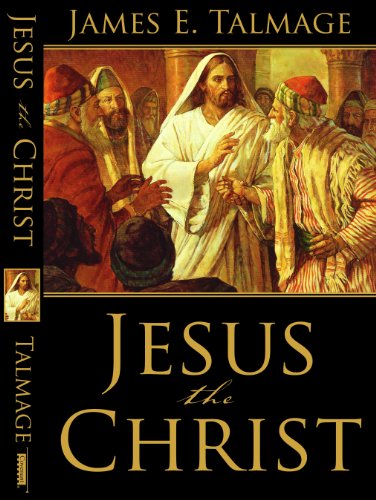
    If you don’t read Jesus the Christ by James E. Tallmadge at least twice in your life, you’re not a real Christian.

    Of course, this is an exclamatory statement. I say it to make a point. 

    I hear so many people profess Christ. Sometimes when this book is mentioned people will say, “It’s so long.”

    Jesus Christ literally suffered the pain and suffering for your sins and mistakes, but the book is too long?

    Before anyone gets mad at me for being high and mighty, let me be clear: I have not read Jesus the Christ twice. But I plan to.

    I think that’s the point. We’re all trying to be better “Christians” or followers of Christ, but, really, what effort are we putting in?

    Are we serving others? Are we thinking about Him? Are we trying to be like Him? Are we reading about Him?

    I think we need to put in more effort.

    On that note, if you’re a member of the Church of Jesus Christ of Latter-day Saints, and you haven’t read the Book of Mormon cover to cover at least two times: get to reading. This is latter-day scripture. Joseph Smith died for this book. Everything we have been given is because of this book.

    We must strengthen our testimonies of Christ as these days get darker and the second coming approaches.

    When Christ returns, will you know Him?

    Will He know you?

  • Amos and Joseph Smith

    Amos and Joseph Smith

    The book of Amos in the Old Testament is an underrated book of scripture which I believe is extremely important to the Church of Jesus Christ of Latter-day Saints.

    In 2021 I was reading through the entire Old Testament for the first time and got to Amos. I’d like to share some things I learned from this book that I seldom hear talked about.

    Amos 3:7 is a scripture often quoted by latter-day saints. It reads:

    “Surely the Lord God will do nothing, but he revealeth his secret unto his servants the prophets.”

    This has obvious significance to the message of the restored Gospel of Jesus Christ. God reveals nothing, save it is revealed to a prophet.

    As I’ve read this short book of only 9 chapters, other significant scriptures have stood out. 

    An example is chapter 7. It is well-known that God chooses the most meek and humble of the earth to be His mouthpiece on the earth. This is a common theme in the Old Testament. It is common for herders and fisherman (symbolic much?), and others of little means to be called to God’s service.

    Chapter 7 starts with Amos relating a vision he had wherein he was called to prophesy to Israel of their sins and upcoming destruction if they did not repent. 

    Verse 9 of chapter 7 reads:

    “And the high places of Isaac shall be desolate, and the sanctuaries of Israel shall be laid waste; and I will rise against the house of Jeroboam with the sword.”

    This prophesy, naturally, led to a scorned priest going to the king and tattling. The modern day equivalent of going to the teacher and whining about a classmate. 

    “Then Amaziah the priest of Beth-el sent to Jeroboam king of Israel, saying, Amos hath conspired against thee in the midst of the house of Israel: the land is not able to bear all his words.”

    Boo-hoo Amaziah.

    boo hoo Memes & GIFs - Imgflip

    Amos’s reply is a classic prophet response.

    “Then answered Amos, and said to Amaziah, I was no prophet, neither was I a prophet’s son; but I was an herdman, and a gatherer of sycamore fruit.”

    Amos is basically saying, ‘Who am I to lead an insurrection against the king?  What is my motivation? Yesterday I was minding my own business herding sheep. The Lord has commanded me to say these words and so I must say them.’ Amos is pointing out that he is a humble shepherd. Someone of little consequence.

    The footnote to the word prophet in this verse is what really jumped out to me. The footnote referred to Joseph Smith-History 1:22-23 which reads:

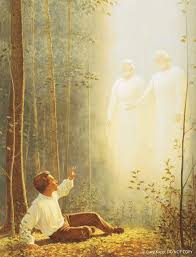
    22 I soon found, however, that my telling the story had excited a great deal of prejudice against me among professors of religion, and was the cause of great persecution, which continued to increase; and though I was an obscure boy, only between fourteen and fifteen years of age, and my circumstances in life such as to make a boy of no consequence in the world, yet men of high standing would take notice sufficient to excite the public mind against me, and create a bitter persecution; and this was common among all the sects—all united to persecute me.

    23 It caused me serious reflection then, and often has since, how very strange it was that an obscure boy, of a little over fourteen years of age, and one, too, who was doomed to the necessity of obtaining a scanty maintenance by his daily labor, should be thought a character of sufficient importance to attract the attention of the great ones of the most popular sects of the day, and in a manner to create in them a spirit of the most bitter persecution and reviling. But strange or not, so it was, and it was often the cause of great sorrow to myself.

    Here we find something of simple but important significance. The pattern continues. Just as Joseph Smith, a boy of little confidence and almost no education was vilely attacked for his claims, claims that, as he said, should have made these men of God want to bring him close and set him straight to help him, instead lead to persecution and hatred. Such it is when corrupt men are brought before light and truth.

    Just as Joseph Smith was attacked for his claims, so was Amos. A humble herdman, minding his own business, but one day called upon by God.

    Profound teachings can be found throughout the scriptures. All of the written word of God should be pondered by us as latter-day saints. We can find truths everywhere. This pattern is one that adds to my testimony that Joseph Smith was a prophet. I’m grateful that like Amos, Joseph Smith fought the persecution he received to bring forth the word of God. Just as Amos thousands of years earlier had to do the same.