Author: Brayden Quackenbush

  • Inheritance and Lehi’s Blessing

    Inheritance and Lehi’s Blessing

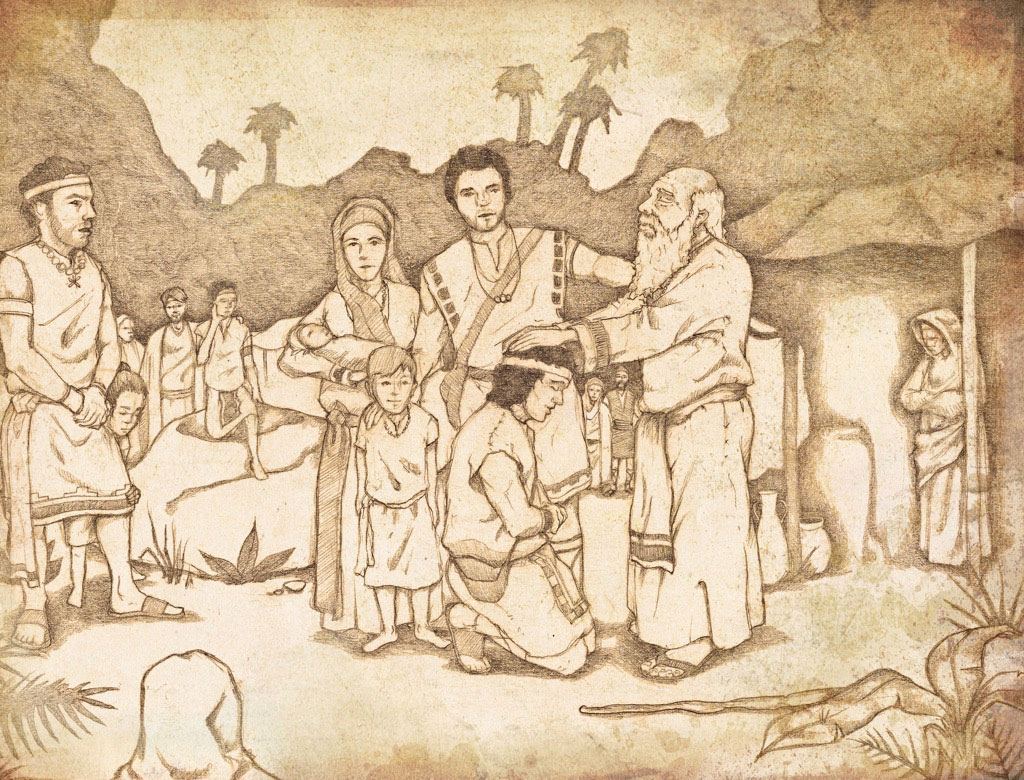
    I have always been confused by the blessings of Lehi to his posterity in the 4th chapter of 2 Nephi in the Book of Mormon.  For one, there is the obvious blessing that is missing: Nephi’s.  For another, there seem to be mixed messages.  Laman and Lemuel have a blessing, but it may be removed?  What does Sam get?  Who is the actual new leader- Nephi or Laman?

    In an article titled Lehi’s Last Will and Testament: A Legal Approach, John Welch goes into great detail on the legality and custom of Lehi’s blessing, and answers all of the above questions. I’d encourage anyone interested to read his whole article. It strengthened my testimony of the authenticity of the Book of Mormon and reminds us of the real world that Nephi was a part of.

    I want to go over some highlights from John Welch’s article that explain Lehi’s blessing in its cultural context. Credit also goes to Alan C. Miner who put together the points I found most relevant to the above questions.

    Inheritance and succession was an important aspect of near eastern culture. It was a way of “preserving and transmitting the family estate from one generation to the next” (John Welch). Typically, the eldest son of the father’s first wife inherited his estate. The leadership of the family was also an important inheritance given. Faulk points out, “a father was free to choose a younger son as his successor, if he found the eldest unworthy of the office.” Sound like this fits Laman and Lemuel much? The father passed this leadership of the family on often through a special blessing (Deuteronomy 21:17), like we see in 2nd Nephi chapter 4.

    There are many examples of this spiritual or ruling leadership being given to a younger son including:

    1. Abel
    2. Seth
    3. Jacob (Israel)
    4. Ephraim
    5. David
    6. Solomon

    In each of these cases older sons were passed over as the spiritual leaders of the family.

    So, we have property inheritance and ruling inheritance. There was a third category sometimes handed down from the father: priestly duties. This is what happened with Lehi giving Jacob the priestly authority in the Book of Mormon. Another example of this was Jacob/Israel’s blessing in the Old Testament. Israel blessed Judah with the ruling authority (Genesis 49:10), Joseph of Egypt receiving a double portion through Ephraim and Manasseh (Genesis 48:22), and Levi inherited some priestly rights to the priesthood.

    As time passed in ancient Jerusalem, it became common custom for the eldest son to automatically receive a double portion of the inheritance. As noted, there were times that younger sons received different portions, or rights to rule, or increased inheritance. This was the exception, not the rule.

    This basic background information brings us to our fascinating story in the Book of Mormon. We have an eldest son, Laman, who was the eldest son of, what appears to be, a relatively well-off citizen of Jerusalem. This family leaves behind their land and property, to venture off to a promised land, a promised land Laman seldom showed faith in attaining. This family spends years in the wilderness, potentially months on a ship, and eventually land in the promised land. This elder brother is now over the moon with joy and enthusiasm. He will inherit all that his father has and be the leader and now king of a new nation.

    But what about Nephi? It was Nephi from the start that helped the family in the wilderness. It was Nephi that went back and got the plates so they could remember God and how to read and write. It was Nephi who built a ship to get them to the promised land. Nephi led the family, physically and spiritually to the promised land. He was the natural leader of the family and deserved to inherit the leadership, and kingship, of this great new nation.

    Lehi has a bit of a conundrum. How was Lehi going to handle Laman’s expectation to receive a double portion from his father? How was Lehi to handle the expectation from Laman that, as the oldest son, it was his RIGHT to inherit everything, despite his lack of leadership throughout the journey. Especially when Nephi had been declared a “ruler and a teacher” (1 Nephi 2:22, 3:29) by God Himself.

    This brings us to our blessing, and to the answer to the questions I always had.

    Lehi needed to appease Laman while attaching appropriate contingencies to his blessing. The main contingency was that Laman’s blessing would be applicable as long as he hearkened unto Nephi. This same admonition was given to Lemuel, Sam, and the sons of Ishmael. If they refused to follow Nephi, their blessings would be null and void.

    So Lehi employed three ways to diminish Laman’s blessing and role as the firstborn son. In diminishing Laman’s role Lehi enhanced Nephi’s. This leads us to the questions:

    First, why was Sam’s portion linked with Nephi’s? Why were there no Samites?

    Combining Sam’s inheritance with Nephi’s was similar to Joseph of Egypt’s blessing being doubled through his sons, Ephraim and Manasseh. Sam’s share of the land was linked to Nephi’s and therefore Nephi’s portion was doubled through Sam’s faithfulness, loyalty, and devotion he would show to Nephi as he always had.

    Welch discusses a second way Lehi diminished Laman’s blessing as found in 2 Nephi 4:5-9, “He [Lehi] blessed his firstborn’s children to the effect that their sins and cursings would be answered upon the heads of their parents. This could not have been flattering to Laman.”

    The third way Laman’s authority and blessing was reduced, Lehi referred to Jacob three times as his “firstborn…in the wilderness” and applied the priestly duties to him. By naming Jacob as another version of the “firstborn,” Lehi subtly took away from Laman’s claims as the firstborn son. As we remember, the custom in ancient Jerusalem was for Laman to receive the inheritance by default because he was the firstborn son. But, with Jacob also receiving a form of the title, “first born son,” Laman lost some claim on this exclusive title.

    Laman was warned that if he was disobedient, to God and to Nephi, that his blessing would be revoked. Lehi was, in a way, willing to give Laman the cursory “honor” of the blessing while putting many safeguards in place to keep Laman from actually ruling.

    This background context gives us additional insight into how the Nephites (followers of Nephi) and Lamanites (followers of Laman) could so quickly devolve into war and contention. The peace was kept as long as Lehi, the official patriarch, was around. Custom in Jerusalem was to love and respect the father (Exodus 20:12). But as soon as Lehi died, it was chaos. Laman was never one to heed faith or blessings, so the warnings from his now passed father were of no concern to him. He wanted to rule.

    To conclude, Alan C. Miner states, “Thus, John Welch has provided a plausible cultural background and answer as to why there were no “Samites.”  His words also give testimony to the fact that the ancient world of which Lehi and Nephi were proposed to be a part of in the pages of the Book of Mormon was a very real world.” The confusing nature of the blessing adds to the authenticity of the Book of Mormon.  Lehi’s blessing is consistent with the pattern an ancient Israelite may use in blessing his children. 

    I bear testimony that the Book of Mormon is a true historical account of families that originated in Jerusalem and eventually settled in the Americas. The more I read and study the book the more obvious it becomes. God has given us a second witness of the divinity of Jesus Christ, and I’m grateful for it. I’m grateful for a book that has been tested for 200 years and still holds up. I’m grateful to know God is still invested in us and our lives. I’m grateful for the Book of Mormon, Joseph Smith, and the Church of Jesus Christ of Latter-day Saints.


  • Beth’s Talk on Mosiah 3:19 (January)

    Beth’s Talk on Mosiah 3:19 (January)

    This is a talk, exactly as written, by Beth, that she gave in church in January. She rehearsed the talk verbally to me multiple times before I heard it in church. Of course, through hearing it I knew it was a great talk, but it wasn’t until proofreading and preparing to post this that I was struck by how phenomenal a talk this really was. Hope you enjoy reading it as much as much as I did. And now, Beth –

    Mosiah 3:19 Talk
    January 9, 2022
    Good morning brothers and sisters.
    I wanted to start by introducing my family as we are one of the families that were blended into this ward with the recent changes in the stake. My name is Elisabeth Quackenbush. My husband is Brayden Quackenbush. We met in the Scottsdale Young Single Adult Ward in 2017 and have been married for over 2 years. We have a one year old daughter named Ivy. You’ll see her running around Sunday School for another 5 months but she is very excited to start nursery after that.

    The topic I was given to speak on this morning is the scripture Mosiah 3:19. When I was informed this was my assignment I wasn’t really surprised. This scripture comes into my mind a lot and is brought up in conversations about life all the time when I’m chatting with my husband. I think it sticks in my mind because it stands in such contrast to a lot of the attitudes of the world these days.

    For those of you that memorized scripture mastery back in the day you may remember this scripture, but as a reminder, this scripture is King Benjamin speaking to his people in the Book of Mormon. It reads,

    “For the natural man is an enemy to God, and has been from the fall of Adam, and will be, forever and ever, unless he yields to the enticings of the Holy Spirit, and putteth off the natural man and becometh a saint through the atonement of Christ the Lord, and becometh as a child, submissive, meek, humble, patient, full of love, willing to submit to all things which the Lord seeth fit to inflict upon him, even as a child doth submit to his father.”

    When we break down this verse, we can derive meaning in a variety of ways. The first that I noted is that the natural man is inherently selfish. The second is the importance of change to the Eternal Plan of Happiness.

    Boyd K Packer stated in his 1990 talk, “Put Off the Natural Man, and Come Off
    Conqueror”:
    “Unchecked selfishness [of the natural man] stubbornly blocks the way for developing all of the divine qualities: love, mercy, patience, long-suffering, kindness, graciousness, goodness, and gentleness. Any tender sprouts from these virtues are sheared off by sharp selfishness. Contrariwise, I cannot think of a single gospel covenant the keeping of which does not shear off selfishness from us.”

    Through the influence of the Holy Ghost, and the atonement of Jesus Christ, we can and should change from the narrow focus of the natural man and become, “submissive, meek, humble, patient, full of love, and willing to submit to the will of God.”

    This idea of our ability and strength to change stands in stark contrast to the pervasive attitude of our society. This attitude states that we are born a certain way. We can’t change, and even shouldn’t want to change. If we do change, we are inauthentic. On the surface, this has a false sense of empowerment, I think. However, this idea that change is bad and that we must only be one way for the rest of our life is truly limiting, almost an eternal purgatory of mediocrity. Compare this to the freedom and growth permitted to us through Jesus Christ’s suffering, that we may improve and become like our Heavenly Father and Savior, Jesus Christ.

    My husband and I have had the opportunity to have many deep, religious
    conversations with friends of a variety of backgrounds. We often come across
    criticism of our faith’s belief that we can take steps, including repentance, baptism, and participating in temple ordinances, to change and become like God. We are accused of valuing works and forgetting the grace provided through Jesus Christ. On the contrary… His grace is the key element that permits us TO become new beings.

    In 2 Corinthians 5:17 we read, “Therefore if any man be in Christ, he is a new
    creature: old things are passed away; behold, all things are become new.”

    Brad Wilcox does a beautiful job in his BYU talk, “His Grace is Sufficient” at outlining how the Atonement of Jesus Christ, through His death and resurrection, provides us the need to change… (forgive me for this lengthy quote but as many of you know, this talk is incredible…)

    “[Yes, we are saved by Grace but] Have you been changed by grace? [We] are so excited about being saved that we are not thinking enough about what comes next. We are so happy the debt is paid that we may not have considered why the debt existed in the first place. Latter-day Saints know not only what Jesus has saved us from but also what He has saved us for.

    “A life impacted by grace eventually begins to look like Christ’s life. While many Christians view Christ’s suffering as only a huge favor He did for us,
    Latter-day Saints also recognize it as a huge investment He made in us.

    “As Moroni puts it, grace isn’t just about being saved. It is also about becoming like the Savior. The miracle of the Atonement is not just that we can live after we die but that we can live more abundantly. The miracle of the Atonement is not just that we can be cleansed and consoled but that we can be transformed.“

    Again, just think for a minute… how does that compare to what we are being taught by the world? I can’t change, I shouldn’t change…

    HOW DO WE PUT OFF THE NATURAL MAN AND BECOME LIKE CHRIST?

    We can actively seek this positive change…

    In her 1998 BYU Speech, Wendy Watson, now well known as Wendy Nelson, lists some ways. One is reflection. She notes how Alma directs this type of reflection:

    “Just how does Alma invite these change-inducing reflections? One way is through his use of questions. In Alma 5 alone, more than 40 questions are offered—questions like:
    ‘Have ye received his image in your countenances? Have ye experienced this mighty change in your hearts? . . .
    . . . If ye have experienced a change of heart, and if ye have felt to sing the song of redeeming love, I would ask, can ye feel so now?‘ [Alma 5:14, 26]. Through the process of persistent questioning, Alma invites us to reflect over and over again: on our status with the Lord, on our spiritual growth and development, on things that need to change or have changed—and before we know it our desire for more change increases.”

    Another idea is to listen to the uplifting voices of authority in your life remembering, “As helpful as human voices of authority are, none can or should replace the ultimate voice of authority—the Word himself: the Savior Jesus Christ. What are you doing to hear his voice in your life? What are you doing to establish his voice as the voice of authority for you?”

    Other ways we can develop this change to become more like Him… Consistently and earnestly repent, seek out holy places, take steps of faith, pray to Him daily.”

    Sometimes change finds us…whether it be through loss, grief, depression, or trials in life, change is often thrust upon us in this mortal life. Again, the world finds few answers as to why there is such suffering and grief in the world. His eternal plan of growth and development is sometimes the only answer that makes sense. If we are to become like Christ, our innocent brother that felt all the sufferings of the world, how can we expect to be truly changed without some suffering of our own?

    Peter in speaking of [trials], said: “Beloved, think it not strange concerning the fiery trial which is to try you, as though some strange thing happened unto you: But rejoice, inasmuch as ye are partakers of Christ’s sufferings; that, when his glory shall be revealed, ye may be glad also with exceeding joy.”

    When we endure this life, put off the natural man, and develop into more Christ-like beings, we set ourselves up to feel an even greater degree of joy in this life and in eternity.

    This topic makes me think of a time when I came back to church after living a life that was not in line with what I knew to be right. I made many positive changes when I started coming back and attending the Scottsdale Young Single Adult ward. I starting observing the sabbath day, stopped a lifestyle of college partying, broke off a serious relationship, and made several other difficult but important decisions.

    However, with all this positive change and shunning of the enticings of the natural man, I still felt like I wasn’t receiving the blessings I thought I would. I wallowed in self pity over my own suffering for a while because of this and even wondered if all of my change was for nothing.

    However, I eventually decided I would stop focusing on what I needed and instead turned outward. I made it my mission to seek anyone in my ward that seemed lonely as I was. I sought opportunities to serve those that were also going through a variety of trials. And a miracle happened! The less I focused on my pain, my loneliness, my loss, and focused on loving those around me as Christ did, I really came to find true joy.

    I couldn’t believe how sincerely I loved everyone around me. I didn’t feel lonely. I developed new, Christ-like attributes. And ultimately, I shunned the ultimate trait of the natural man – selfishness. What a blessing that lesson was for my life.

    I know how hard it can be to put off the feelings we have as humans in a difficult mortal journey. It is something we will actively have to work for as long as we live. However, I know that when we let ourselves change and take on the characteristics of Christ we will prepare ourselves to find real joy in eternity. We will truly have cause to rejoice in his second coming.

    I say these things in the name of Jesus Christ, amen.

  • We’re Being Watched

    We’re Being Watched

    Beth just said something that gave me the heebie-jeebies, even though it’s something we already know, and unfortunately, are starting to accept.

    Beth said, “You know what I just realized?  Whenever we watch YouTube TV kids shows, all of the ads are super girly stuff.  They totally know we have a daughter.”

    They.

    Remember in the good old days when we would have conversations about skiing and then ski gear would show up as an ad on our phone/computer/device?  Do you remember when we transitioned from “wow that’s really weird…” to “are they listening to me?…” to “oh they’re listening good.”

    That last part came after it became public knowledge that our mics and search history and everything about us was being turned into marketing and advertisement data. 

    This will be a short post.  Re-read the end of The Social Dilemma where i discuss how to protect our families from becoming too attached to our devices. Also re-read The Social Dilemma part 2 and consider what we can do to protect ourselves and our families from advertisers. Be wary of what is happening to our children.  They are growing up in a world where MY TV knows I have a girl and is targeting her before she can even walk.  If that doesn’t scare you, at least a little bit, it should.

    Be cautious about what we expose our kids to.  Be cautious about what we post and share.  Protect them. 

    I know in this world it’s impossible for “them” to not know I have a daughter by now.  I know there’s only so much we can do.  But what I can try to control is how she is influenced by their advances.  I will do my best for my whole life to protect Ivy against targeted advertising and the influences of the media on her growing mind.

  • Books in 2021

    Books in 2021

    This is a list of every book I read in 2021 and the order I ranked them in from favorite to least favorite.  I get something out of every book I read.  I learned long ago that if I allow myself to not finish one book, I won’t finish any.  For those reasons, when I start a book, I’m committed to finishing it.  I don’t care how dry or boring it may be.

    It’s difficult to rank such a wide variety of books. I don’t overthink it too much. This is mostly a list of most enjoyable and most rewarding reads. That said, every book offers something, even if it might just be a laugh.

    I included a one sentence thought about each book.  This proved difficult because I could say so much about every book.  To get around the one sentence rule, I used many commas and run-on sentences. My list, my rules. I find it amusing posting a list of of books read in such an illiterate fashion.

    I enjoyed all these books because they each taught me something. That’s the great thing about books. 

    * Represents a book I recommended or gave to someone to read.

    Here’s my list:

    1. Dune*
      • The movie and book did not disappoint, what a fantastic world created by Frank Herbert.
    2. Stories of your Life and Others*
      • This is a book of short stories, one of which inspired the movie Arrival, the “Arrival” short story, actually called “Story of Your Life,” wasn’t even one of my favorite short stories, I ranked it 6th out of the 8 short stories, I can’t say enough about how phenomenal this book was, looking over it again makes me want to read it right now. 
    3. Unlimited Power*
      • This was a difficult read due to all the exercises and activities done throughout but has resulted in multiple beneficial changes to my daily life so needs to be near the top.
    4. Out of the Best Books Volume 1
      • I never expected to love this book so much, it’s a collection of classic short stories and poems, I learned I’m not huge on poems but highly recommend this for the short stories.
    5. The Eternal Man
      • Second or third reading of this book, love this book, the truths in it speak to my eternal soul every time.
    6. A Boy’s Story a Man’s Memory
      • I met Oscar at a church activity where he spoke about his book, the man emanated love and humility, his story is extraordinary and had me in tears more often than I’ll admit.
    7. Edgar Cayce Mystery Man of Miracles
      • Reading about this man’s fascinating life opens the eyes to the gifts God has potentially given some of His children here on earth.
    8. The Time Machine and the Invisible Man
      • These two classics were in one book so I’m putting them together, I think I preferred the Invisible Man for the roller coaster of where that story went, both great stories.
    9. The Short Second Life of Bree Tanner
      • Make fun of me all you want, Stephanie Meyer is an amazing author and I enjoyed this book enough for it to be in my top ten for the year. 
    10. The Tommyknockers*
      • This book proved to be too long for CJ Matthews, classic Stephen King, super long, I read three quarters of this a long time ago but never finished it, the ending made it worth re-reading. 
    11. Whispers
      • Classic Dean Koontz, this was my second time reading this, there’s a reason it’s right next to a Stephen King book, Koontz and King are so similar and yet so different. 
    12. The Locket
      • This book is the perfect example of how expectations set the tone for a book, I had zero expectations for this book, and ended up liking it a lot.
    13. The Outsiders
      • Much better than Catcher in the Rye in my opinion, the movie was pretty good too. 
    14. Robinson Crusoe
      • This was a youth version so it was a condensed and quick version of the story, but I really loved it.
    15. Return from Tomorrow (just because I read it twice)
      • I love this book but it’s the second time I’ve read it recently, so it dropped a little (from #11 on last year’s list). 
    16. Those Gold Plates!
      • This is a defense of the Book of Mormon, it discusses other records that were kept on metal plates anciently that have only recently been found (book written 1979), and provides information that would have been impossible for Joseph Smith to know in the 1800s yet were somehow in the Book of Mormon, this was another book that strengthened my testimony of the Book of Mormon and Joseph Smith.            
    17. The Little Mermaid and other Fairy Tales
      • Clearly there’s something about reading some good old fashioned classic books that is good for the soul (see #4 and #14).
    18. Embrace Fatherhood
      • This was written by a friend and gave a unique perspective on fatherhood that I enjoyed reading.
    19. Mexican Gothic
      • I’m still not sure exactly how I feel about this book, it was entertaining, but not super entertaining, it was a page turner, it wasn’t a super page turner, but it was one of the more unique books I read this year.
    20. Lighten Up
      • Here starts the group of nonfiction books, nonfiction is great for learning and growth but I think most would agree fiction is more enjoyable, thus their position on my list, anyways, I really liked this book and I think it was one I needed to read at the time I read it.
    21. Spencer W. Kimball
      • Spencer W. Kimball and Howard W. Hunter meld a bit in my mind, I love Spencer W. Kimball for his missionary focus during his time as our prophet.
    22. Howard W. Hunter
      • I love reading about the lives of these most faithful men.
    23. The Mis-Education of the Negro
      • This was given to me by CJ and it taught me a lot about the history of education (and mis-education) for black people in America. 
    24. Moses Man of Miracles
      • Speaking about learning of great, faithful men (See #21 and #22), these are a series of books, with other books of great prophets, really enjoyed this book from Mark E. Petersen about Moses. 
    25. The Coming of the Lord
      • A book written by Gerald N. Lund in 1971, I don’t remember much of the details of this book, but it was all about the signs of the Second Coming of Christ.
    26. Essentials in Church History
      • This was DENSE, but this 685 page (yes you read that right) book taught me a lot about the history of the Church of Jesus Christ of Latter-day Saints.   

    27. Pearl of Great Price Commentary
      • This was a deep and dense commentary on what I feel is one of our more underrated books of scripture, the Pearl of Great Price.
    28. A Bride goes West
      • A fictional book detailing the life of a woman helping to pioneer the west. 
    29. By Love and Grace
      • I could not remember this book at all until I pulled it off the book shelf, that normally would give it huge deduction points in my list, but once I saw the book and opened the front cover, memories of this book washed over me, so I had to move it up the list, a book about a man who finds love and faith, gets falsely accused of murder, it was actually a super awesome book.
    30. Catcher in the Rye
      • Kind of terrifies me that our high school students are reading this book of debauchery.
    31. Dakota Diaspora
      • I may have to read this again as I don’t remember much about it, but reading the back cover reminds me what a fascinating story it was, a woman tells the story of her Jewish parents who left Russia to settle in North Dakoda in the 1800s, really interesting story and a way of life I can’t even imagine. 
    32. Temple Worship
      • When you read temple books in succession, they kind of meld together, this is the case with this book and next on the list, House of Glory, Temple Worship was written by Andrew C. Skinner in 2007, it’s a little deeper than House of Glory and had pictures!
    33. House of Glory
      • Compared to Temple Worship this book was more temporal information on temples if I remember right, it was written by S. Michael Wilcox in 1995.
    34. How to Pray and not Fall Asleep
      • This was literally a how-to book on praying better.
    35. An Epistle from the New Testament Apostles
      • This was a cool concept, it put all the epistles from the New Testament into thematic categories as if they were a single letter. 
    36. This Word of Wisdom
      • This tiny book was written in 1958 and was all about the Word of Wisdom.
    37. America’s Wonderlands
      • This was a coffee table book with pictures and information about America’s national parks. 
    38. Articles of Faith Volume 1
      • This is another coffee table book, a big, beautifully illustrated book about the articles of faith, part 1 of 3 I believe.
    39. Studies in Scripture Volume 3 the Old Testament
      • You know when a book is so good for you but man is it dense and difficult to read, yeah, commentary on Genesis through 2 Samuel falls into that category.
    40. The Seat of the Soul
      • Dude, this book was wild, I quickly went from “wow I’m really getting a lot out of this” to abruptly thinking, “what the heck, we’re talking about dolphin souls,” this book was a wild ride, and fun fact, it appeared my grandma had the same experience because right as my marking of the book started to greatly decrease so did hers, and I don’t think she ended up finishing this book, which is understandable with the out there direction it headed. 
    41. The Church and the Negro
      • Here enters my flawed books, this book had some outdated and inappropriate information.
    42. I was a Born Again Mormon
      • I don’t want to be too disparaging of a book, so I won’t say much about this, let’s just say I disagreed with a lot.
    43. Deal Me In
      • Old book I’ve had for a long time and read before, biographies of professional poker players in the early 2000s.
    44. No Limit Hold em Theory and Practice
      • Dusted off one of my old poker books to explore some strategic game theory ways of thinking.
    45. Passport to Survival
      • This is so low due to the dry nature of the content, not due to lack of good content, this book had all sorts of recipes and ways to extend food storage and survive in an emergency. 

    Additional reading:

    1. To Young Men Only – old church pamphlet.
    2. Book of Mormon
      • Checking back on time stamps of my notes tells me I read 2 Nephi 6-Mosiah 2. I’m reading the book of Mormon alongside a cultural commentary and adding notes throughout.
    3. Doctrine & Covenants
      • Read from Section 100 to 133 alongside two student manuals to add comments and additional information throughout.
    4. Finished Old Testament
      • Ezekiel-Malachi alongside Enduring Word Bible commentary to add notes throughout.
    5. Come Follow Me lesson each week
    6. Started the New Testament
      • Started in Matthew chapter 1 and reading alongside New Testament Student Manual.

    Bonus footage for getting this far

  • He Hears your Prayers

    He Hears your Prayers

    When I go through difficult times, for whatever reason that might be, I often find myself thinking to myself a lyric from the song “A Child’s Prayer.” 

    “Heavenly Father, are you really there?”

    I was recently having one of those difficult times and was thinking this phrase.

    I went to church that Sunday and said a prayer asking that if there was some guidance I could receive, that I’d hear it.  It was a particularly distracted day with Ivy in church.  Quick side note, it’s amazing how distracting a toddler can be in church.  Ivy is really good in church, and yet I still find it so difficult to focus on the speakers while also making sure she’s ok and entertained.

    Despite the normal distractions, I caught a speaker mentioning, “Heavenly Father, are you really there?”  I can’t remember in what context.  I believe it might have been the youth speaker.  I perked up, but that was it, the moment passed.

    It was a thoroughly uplifting Sunday that day and I found myself feeling in much better spirits.  Still, there were those lingering “difficulties” in the background.

    The next day I was with Ivy in her room.  I am more and more convinced that Ivy, and probably all children, are still at least 50% angel.  The coincidences Ivy causes in my life are too perfect.

    I was in her rocking chair on my computer reading and doing stuff while she played. Suddenly she came over to me which isn’t unusual.  I put my computer away and pulled out my phone instead.  I wanted to look up the songs we had in church the previous day because I had a song stuck in my head but didn’t know it’s name.  I pulled up Youtube to play the sacrament song and confirm it was the one stuck in my head.

    We listened to the song and then Ivy reached for the phone, again, not something out of the ordinary by any means.  She started tapping it with her finger.  I saw her click a couple recommended videos that were on the side of the screen and then she pulled her hand away.  A video started playing.  I didn’t recognize the song (at first).  It had a long introduction and then there were images of children with their parents.  Children praying with their parents, being tucked in, coloring, playing. 

    Suddenly it started.

    Heavenly Father, are you really there?
    And do you hear and answer every child’s prayer?
    Some say that Heaven is far away
    But I feel it close around me as I pray

    “I feel it close around me as I pray” is the part, during times of difficulty, that I struggle with.  Because in those times I don’t always feel heaven close around me as I pray.

    I started to cry.

    The song continued.

    Heavenly Father, I remember now
    Something that Jesus told disciples long ago
    “Suffer the children to come to me”
    Father, in prayer I’m coming now to thee

    I looked at Ivy.

    Then the song continued.

    Pray, He is there
    Speak, He is listening
    You are His child
    His love now surrounds you
    He hears your prayer
    He loves the children
    Of such is the kingdom, the kingdom of Heaven

    It had been so long since I’d heard the full song I truly didn’t remember that part. And when I heard it, it was so clear.  It was so clear.  In moments of challenge I remember the part, “Heavenly Father, are you really there?”  But I’d forgotten the part, “He is there.  Speak, He is listening.  You are His child.  His love now surrounds you.  He hears your prayer.”

    I remembered.

    Sometimes it’s so hard to hear Him.  Sometimes it’s so hard to remember He is there.

    Then He reminds you. 

    I want to remind everyone reading.  He is there.  Speak, He is listening.

    The world can yell at me that it was a complete coincidence that Ivy somehow brought up that song that I’ve never listened to before on Youtube.  I say, that’s ridiculous.  I needed to be reminded that my Father was there and listening, and so he reminded me.  Through my angel.

    I’m grateful for Him.  I’m grateful for all my angels. 

    I know He is there.