Category: Uncategorized

  • The God Question: Intelligent Design, Evolution, and God

    The God Question: Intelligent Design, Evolution, and God

    This is a version of an essay I wrote for a science and religion course. That’s why it has such an “official” tone, and the headlines. I don’t share this because I think it’s an extraordinary essay. But I do think I made some decent points about the “God issue” in science. When you spend this much time writing an essay that fits the theme of your blog, it’s just gotta be shared. So here’s my essay on intelligent design, evolution, and God.

    Intelligent Design and Evolution

    God is the center of the debate between science and religion, and in particular the debate between the theories of evolution and intelligent design. To claim any other conflict ahead of the question of whether God exists is to distract from the root cause that separates these theories. If the question of God’s existence could be solved one way or another, then evolution and intelligent design could coexist and potentially benefit one another. Unfortunately, the existential question of God will never be solved by science. Therefore, with God being the center of the issue, exploring the “God issue” between evolution and intelligent design is the best way to help the two theories reconcile with one another, even if the true question, “does God exist?” is never answered.

    The God Question

    Believers of evolution and believers of intelligent design have more to agree upon than is often realized. However, there is one topic or question that creates a gulf between the two fields. That question is: Does God exist? When evolutionists and intelligent design proponents come to understand this as the main question that separates them, it may be possible to relate and coexist, and therefore grow as fields of knowledge alongside one another. It is the loud voices of ardent atheist evolutionists such as Richard Dawkins, Sam Harris, and Daniel Dennett who pronounce aggressive disbelief in God, and it is the loud and passionate voices of creationists who oppose belief in the undeniable evidence of evolution that create this void (Wolf, 2006). The milder, middle-of-the-road voices get drowned out by the louder minority. The believer in intelligent design who accepts the facts of evolution and the believer in evolution who can see the merits in intelligent design theory are the voices that bring these two fields to an agreement that benefits both. Intelligent design need not deny many aspects of the theory of evolution. Evolution need not devalue the merits of the theory of intelligent design. At the root of the conflict is the belief in God. Coming to understand God as the major issue and question can bring both sides into more agreement, or at the very least, a middle-ground of mutual understanding.

    Historical Belief in God

    The thinking of the world has transitioned aggressively from a belief in God. While there has been a movement away from God, especially in scientific communities, as can be illustrated in countless scholarly writings such as The God Delusion (Dawkins, 2006) and Why Intelligent Design Fails (Young & Edis, 2014), a large portion of the world still believes in some higher power, some creator that put humans on this earth. It is nearly impossible for a firm believer in God to remove that innate belief from their consciousness.

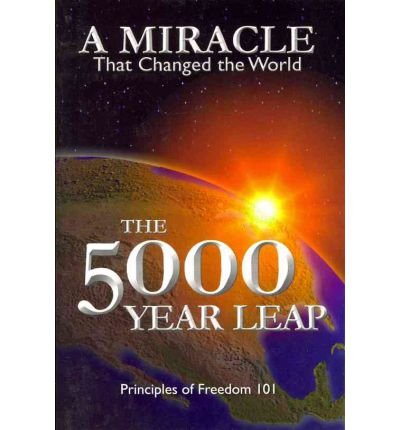
    In the book The 5000 Year Leap, Cleon Skousen (2011) discusses John Locke’s famous Essay Concerning Human Understanding. “In it Locke pointed out that it defies the most elementary aspects of reason and experience to presuppose that everything in existence developed as a result of fortuitous circumstance. The mind, for example, will not accept the proposition that the forces of nature, churning about among themselves, would ever produce a watch, or even a lead pencil, let alone the marvelous intricacies of the human eye, the ear, or even the simplest of the organisms found in nature. All of these are the product of intelligent design and high-precision engineering” (Skousen, 2011, pp. 95-96). Locke’s thinking agrees with the teleological argument of intelligent design put forth by William Paley in the 1700s (Crashcourse, 2016). Locke continues to expound on this topic by pointing out how a man can come to know God exists. Skousen concludes with Locke’s thinking, “And because any thoughtful person can gain an appreciation and conviction of these many attributes of the Creator, Locke felt that an atheist has failed to apply his divine capacity for reason and observation” (Skousen, 2011, p. 97).

    These examples from Locke are used to illustrate a point. It was not long ago that disbelief in God was deemed a ludicrous proposition. It wasn’t long ago that these theists were the louder voices. Historically, those with no belief in God have been discriminated against and ridiculed similarly to how science ridicules belief in God today. Ridicule of the belief of God is as counterproductive today as the ridicule of not believing in God has been throughout history.

    Attack on God

    An outspoken opponent of theism in the scientific community is Richard Dawkins. One of the basic attacks Dawkins uses against God is comparing belief in God to belief in any number of mythical creatures. Dawkins often refers to belief in God as being similar to believing in a Flying Spaghetti Monster (Dawkins, 2006). Dawkins says that because people believe in something ridiculous like the Flying Spaghetti Monster, doesn’t mean he has to accept it. This analogy is not close to comparable. There aren’t books handed down for centuries about belief in the Flying Spaghetti Monster. There isn’t a majority of the world population believing in Flying Spaghetti Monsters. We don’t have any support for the existence of Flying Spaghetti Monsters. This is just one example of an unfair attack from the “militant atheism” that Dawkins proposes (Dawkins, 2008).

    Scientists like Dawkins ignore the evidence that does exist out there because it doesn’t suit their needs or beliefs. This is the opposite of scientific progress and something Dawkins is “militantly” opposed to. There are many unexplained phenomena with adequate scientific evidence behind that scientists like Dawkins disregard simply because it’s phenomenal and they can’t understand it. Take, for example, near-death experiences. The catalogs and books being put together of people of different cultures, ages, demographics, and backgrounds all detailing a similar experience is dismissed out of hand. Science is based on observation. If any other phenomena like gravity or momentum had as much documented support as near death experiences that have been cataloged, scientists would explore further, not dismiss automatically.

    Another main critique of intelligent design is that the theory mentions design without defining who the designer would be. The reason intelligent design refuses to mention the designer is obvious. The mere mention of God is liable to get extreme backlash from the scientific community. Furthermore, it leaves the concept open to the many interpretations of the nature of God and who the creator may be across varying religions. This is an example of why the attack on God is counterproductive. It creates the dynamic where intelligent design theory talks about an ambiguous “designer” without simply stating that the designer is a theorized divine creator. God is the answer to the question of who the intelligent designer would be, and yet because of the aforementioned loud minority, God is not specifically mentioned. The issue is that while so many believe in this designer, in and out of the scientific community, no one can say the name for fear of being criticized.

    Intelligent Design within Evolution

    There is plausible proof of many elements of evolution. However, this does not remove the possibility of the influence of intelligent design. That is to say, it is conceivable that the world can evolve while also having the influence of an intelligent designer that planned for this evolution and progression. The two theories need not be at odds with one another. Intelligent design and evolution both have holes and flaws in their theories as Darwin himself admitted (Leddra, 2010). Neither theory is perfect. If either theory were perfect, there would be a definitive answer. That’s why they are still classified as theories. The conflict really comes down to one question: is there a God? This is where the entire conflict between intelligent design and evolution lies. That question will not be answered decisively by either science or religion.

    Science will not answer whether God exists. That will always be a matter of faith. If that question is answered it will mean that God has revealed Himself and His purpose, as science will never disprove God. This is obvious, for you cannot prove that something does not exist. If there is a God and He reveals Himself and His purposes, designs, and methods to humanity, then the conflict between intelligent design and evolution will instantly become a moot point. Humanity will know for a fact how living things came to be. The question of if they evolved, how they evolved, and God’s role in it, and these debates between intelligent design and evolution will become null and void. 

    Conclusion

    These examples showing the change in how God is perceived in both society and science, and how science has changed in the attack on God, go to show the underlying cause of all the controversy. It is ultimately about the existence of God. We can conclude, then, that it is extremely important for religion and science, and their respective theories, to consider how they can coexist with one another. By rejecting even the possibility of a God, science limits itself and its ability to explore the universe. By rejecting evolution, the theory of intelligent design limits its ability to coexist with science. Science will benefit by cooperation between the theories of intelligent design and evolution. This cooperation ultimately hinges on finding a way to reconcile the question of God, for the ability of all theories to progress to their fullest potential, and the furthering of knowledge for humanity.

  • Time I Felt Safe

    Time I Felt Safe

    During a guided meditation I was asked to picture a time when I felt safe.

    Interestingly, as I was asked to picture a time that I felt safe, the first image that came to mind was after my ATV accident. I saw the image of me in that ATV with my brother holding down on the back of my head. That’s the image that came to me of a time when I felt safe.

    I’ve thought about that since. Why was that the first image to come to mind? Was it because it was a moment I felt the opposite of safe? As I’ve pondered this question, I don’t think that’s the reason. I think that image came to mind because it really was a moment that I felt safe. I think it’s the most powerful moment in my life where I knew whose hands I was in. It was the most vulnerable and helpless I’d felt since I was a young boy, and yet I felt safe. I was reminded whose I am and who watches over me. And I knew, whatever happened, I was safe.

    How do you value the Gospel of Jesus Christ? What’s it really worth? What’s it really worth knowing who you are, where you come from, why you’re here, where you’re going, and who your Father is? What’s that worth? It’s worth everything.

  • Dontcha know I know

    Dontcha know I know

    All of Ivy’s life, when she’s been upset or crying, I’ve said, “Dontcha know I know?”

    This is my way of saying jokingly, “Don’t you know I know what it’s like to not want to get dressed, not want to eat certain food, to be hungry, to be tired, to be upset, etc.?”

    Today was Sunday. I woke up from a nap and I watched a video depicting the Atonement that Jesus Christ performed.

    Sage started crying in the other room. She’d been having a rough day. We think she has some acid reflux and stuff like that. Sometimes her tummy gets upset. This day seemed to be hard for her.

    Sage likes to tilt her head way back and stretch out her stomach. Apparently, this is a sign of acid reflux. I went to the other room and picked up Sage and put her into her favorite position. Head in my hands tilted back, stomach stretched, looking up at a ceiling fan (she LOVES looking up at ceiling fans).

    This provided a little relief, but she was still crying on and off.

    When Sage was still fussing, I started to say my automatic, “Dontcha know…”

    And that’s where I stopped.

    I didn’t know what it was like to have acid reflux, and for my stomach to hurt like hers did, and to not be able to find relief whatsoever on my own, and to only attain some relief if Mom or Dad came to hold me a certain way. Even if I had that experience as a baby myself, I don’t remember. I didn’t know or remember what Sage was feeling.

    But someone did. I believe that Christ, during that infinite and indescribable Atonement, even felt the pains of an infant with acid reflux. I believe He felt it all.

    “Children are alive in Christ” (Moroni 8:12).

    I couldn’t know what Sage was feeling. Dontcha know I didn’t know. But He knows, and He felt it, and He remembered it.

    When Sage cries she’s communicating to us that she needs help. It’s me and Beth’s job to come to her aid and help her with what she can’t help herself with. How many things, as adults, do we need help with that we can’t do ourselves? As adults, we think of ourselves as so independent. But all we do relies on the Lord. We rely on Him to allow our breath to work within our bodies, water to hydrate us, food to nourish us. These things don’t happen of ourselves but because of Him.

    God and Christ come to our aid when we need it and especially when we ask for it. Christ knows how to hold us just right to help ease our pain and give us relief. Rely on Him for aid just as little children rely on their parents. Be ye as little children (Matthew 18:3).

    Christ felt it. Christ remembers it. Christ experienced it. Turn to Him and He will help all our pains, challenges, and afflictions.

  • A Miracle that Changed the World

    A Miracle that Changed the World

    These are thoughts from a book I read recently called A Miracle that Changed the World. It was an awesome book that laid out just how spectacular the establishing of America was. This was a section of the book I had some thoughts on. I’m quoting sections of the book with my thoughts.

    p. 52:

    The Tide of Reform

    “Many Americas became extremely self-conscious about their lack of “public virtue” because of non-involvement in the affairs of government. They began to acknowledge their obsession with self-interest, the neglect of public affairs, and their disdain for the needs of the community as a whole. Gradually, a spirit of “sacrifice and reform” became manifest in all thirteen colonies.”

    This occurred in America in the couple of years leading up to the Declaration of Independence being signed. Is it any coincidence that a spirit of sacrifice, public virtue, and selflessness preceded the greatest revolution in the history of the world and the rise of the greatest nation ever to exist on earth? God needed a self-sacrificing and humble people to inherit the new world. When they exhibited these qualities, they became His chosen people to enact this major event. This led to a revolution and the freedom from tyranny that allowed the explosion of religious freedom that God planned, that couldn’t have happened under the rule of a monarchy. It started with sacrifice, service, and humility.

    “In the eyes of the Whigs, the two or three years before the Declaration of Independence always appears to be the great period of the Revolution, the time of greatest denial and cohesion, when men ceased to extort and abuse one another, when families and communities seemed peculiarly united, when the courts were wonderfully free of that constant bickering over land and credit that had dominated their colonial life.”

    Two things especially stand out to me from that statement –

    1. “families and communities seemed peculiarly united.”
      • From the Family Proclamation: “We call upon responsible citizens and officers of government everywhere to promote those measures designed to maintain and strengthen the family as the fundamental unit of society.”
      • As the fundamental unit of society, strong families make for strong society. No wonder Satan has so adamantly attacked the family. Look at divorce rates, look at what has happened to the American family. The dismantling of families is the the beginning of the downfall of a great society, and we’re seeing it happen right before our eyes.
    2. “the courts were wonderfully free of that constant bickering…”
      • Could the 13 original colonies have broken from the greatest world power at that time, colonies v. Greatest World Power, if they were busy bickering amongst themselves? It took unity for the freedom of America to be established.
      • D&C 38:27: “be one; and if ye are not one ye are not mine.”

    This is what we need – Americans to become self-conscious about how selfish we’ve become. This is the eternal principle of unity. America needed to be united under one cause and one heart before they could break free from tyranny. God wants us to be one. What has happened to that unity?

    I read in a Doctrine and Covenants commentary how early church members, going back to the very earliest days of the church, were advised to avoid courts. It was said that if a dispute couldn’t be resolved by arbitration, then there was discord and discontent too strong amongst the parties, and they needed to evaluate what they truly valued. One early church leader, Oliver Cowdery, was chastised for becoming too involved in the courts, and it ultimately began to descent towards his excommunication.

    “When Oliver moved to Missouri in 1837, he sought to alleviate personal debts by starting a legal career. Witnesses testified that Oliver had urged people to sue others in court who “fired guns in town,” who broke “the Sabbath day,” he “frequently solicited for business in collecting debts,” and “urge[d] on lawsuits with others.””

    There can’t be unity where there is constant bickering and lawsuits. Those needed to be removed from public standards before the 13 colonies could think to stand up against Britain.

    The book continues:

    “How the Moral Reform Accelerated the Revolution

    “Many Americans became so impressed with the improvement in the quality of life as a result of the reform movement that they were afraid they might lose it if they did not hurriedly separate from the corrupting influence of British manners. They attributed this corruption to the monarchal aristocracy of England. Even Americans such as John Jay, Robert Morris, and Robert Livingston were beginning to see that the people were exhibiting a potential capacity for virtue and morality which would guarantee the success of a free, self-governing society. Therefore, it became popular to express the sentiment that the sooner they became independent the better” (emphasis added).

    The underlined portion is the part that stood out to me. Imagine if society today could be said to have such a high standard of virtue and morality. This is what guaranteed the success of the United States: A virtuous and morally upright people. This is why they could self-govern themselves, because they self-governed in righteousness. Imagine describing our society like that today – excess of virtue and morality.

    The definition of virtue is “behavior showing high moral standards.”

    The definition of morality is “principles concerning the distinction between right and wrong or good and bad behavior.”

    We couldn’t be farther from such a standard. We’ve gone so far off the path that we have reversed morality so that right is wrong and wrong is right. We have molded morality to be what we want it to be. The early Americans who established this nation were moral and upright in all their dealings, which allowed them the honor of being the people to establish the most free, most righteous, and most powerful nation in history. Freedom and righteousness are power.

    Another motivating factor for the colonies wanting freedom from England was to avoid developing all the negative attributes of the British.

    “British influence was already taking its toll. One alarmed American wrote, “Elegance, luxury and effeminacy begin to be established.” David Ramsay declared that if Americans had not revolted “our frugality, industry, and simplicity of manners, would have been lost in an imitation of British extravagance, idleness and false refinements” (emphasis added).

    America has gotten closer to extravagance, idleness, and false refinements than frugality (look at our national debt), industry (look at our bail outs), and simplicity (look at social media).

    It’s time for unity in America. It’s time for virtue and morality. It’s time to protect and re-establish the importance of the family. It’s time to return to frugality, industry, and simplicity. If America can return to these values, maybe it stands a chance to stay a chosen nation and be protected from the tribulations that are to come.

  • Flagstaff, Falling out of Bed, and Adversity

    Flagstaff, Falling out of Bed, and Adversity

    We were in Flagstaff after New Years. We drove up the morning of 1/2/23 in a brand new year. We met my family, who drove from Las Vegas, for lunch. My family included Mom, Dad, Dresdan, Kodi Joe, and Easton. After lunch, we found some little hills at a park to go sledding. Ivy loved sledding. It’s possible she loved it a little too much. The moment the sled stopped at the bottom of the hill, and sometimes before the sled even stopped, she would be saying, “again, again, again.” If I paused a moment to catch my breath she’d get upset.

    After sledding, we went back to our hotels to get cleaned up. My family came to our hotel and we played games.

    The next day we went sledding again. It was interesting how quickly Ivy turned on sledding. She was excited to get out there, and after we went down one hill I received the normal, “again, again, again.” After the second time down the hill, she was done.

    “Do you want to go again?” I asked.

    “No.”

    Just like that, Ivy was done sledding. We did a little more sledding, which she tolerated. Then Ivy saw the park and swings that were nearby. All she wanted to do was swing after that. Ivy loves swings.

    We all had lunch after sledding and parted ways. The drive to Las Vegas is nearly four hours and it was pretty stormy. It had been snowing for some time and the temperature was around 25 degrees.

    Beth and I sat in the parking lot trying to decide what to do. We were in Flagstaff primarily for a St. Mary’s basketball game. We still had some time before we needed to be at the gym. The plan had been for us to drive home after the basketball game. Beth was worried about driving home after it had been raining and snowing with the roads being icy. My lack of concern came not from bravery but from a complete ignorance of snow.

    Beth had strong feelings against driving home at night on unsafe roads which trumped my blissful ignorance. We audibled to finding a hotel room for the night and then went to the gym.

    The team was late due to bus troubles but ultimately arrived safely and we were able to have a basketball game. All I’ll say about this game was Flagstaff High School, on top of having a very good team, also had a significant home-court advantage. You try getting a bus of Phoenix high school girls that never see snow to focus on a basketball game after driving up in a snowstorm. After the game, the Flagstaff High School team looked confused as our team ran outside to roll around in the snow. We overheard, “they must not see snow much” as we walked to our car.

    We checked into a new hotel that night. Hotels with Ivy are fun. She gets so excited. She likes to walk around the room and be present with the whole family. Ivy and I share a bed while Beth and Sage get the other.

    Sleeping in the same bed as Ivy is an extreme adventure. I never know when I’m going to get kicked or slapped. Every time I wake up and look at Ivy she’s in a completely different position.

    At some point in the middle of the night, I awoke to a thump sound on the opposite side of the bed. You know how when you’re awoken by a noise, it usually takes your brain a minute or two to understand what it just heard? That didn’t happen with this sound. I knew exactly what happened the moment my brain woke up to it. I can’t remember how I got to the other side of the bed. I don’t know if I jumped to all fours on the bed like Spiderman and leaped to the other side, or if I jumped off the bed and ran around. It was most likely the latter. However I got there, I arrived before the tears even started.

    I found Ivy’s shape on the floor with my hands as it was pitch dark and I couldn’t see anything. I scooped her into my arms as she started to cry. I held her head to my should and told her it would be ok. As I rocked her I told Ivy that we were going to get back in bed but I would hold her and she would be safe. She stopped crying immediately and said, “yes.” We got back into the bed and I slept the rest of the night with Ivy in my arms.

    As I thought back on this, I was struck by something. I was struck by how quickly Ivy stopped crying. The moment I told her I was going to hold her and she was going to be safe, her simple reply “yes” and she was completely at peace. I was so glad I could be there for her and make her know she was safe.

    I think in this life we can often feel like God isn’t there to hug us and make us feel safe as quickly as we’d like. I think we forget that in God’s time, His reaction is instant. It just feels longer for us. I believe God is always there ready and willing to wrap us in a protective hug, whether we realize it or not.

    Another thing I was struck by was how quickly I reacted. If there was ever any doubt in my mind about whether I would jump in front of a moving vehicle to save my daughters, that doubt is gone. I would throw myself in front of danger for my girls without hesitation. I know that.

    Back to that Flagstaff High School basketball game, I wasn’t skimming over the details of that game only because I wanted to move creatively through the story. I didn’t want to talk too much about how badly we got our butts kicked.

    We’ve had mostly close games this season and a couple bad blowouts to two of the best teams in Arizona. Thinking back on that game, I realized how proud of the team I was. The first half was the lowest low. Our team gave up and practically stopped playing. Their heads were down and they were resigned to a bad loss. We had a serious talk with them at halftime about doing their best no matter what the score was. I pulled some girls aside that were leaders on the team and told them I was disappointed in their reaction to losing. I told them I knew they were disappointed, frustrated, upset, and embarrassed; so was I. But they had to be leaders, stay positive, and encourage their teammates.

    The second half we were like a different team. We still weren’t the better team, but we were a better team. I got slightly emotional thinking about how big a turnaround those girls showed in the second half. Instead of continuing to pout and give up, they encouraged each other and really tried to be better.

    I don’t get emotional like that thinking about the average game. It’s the intensely adverse games that I think back on and get very proud of our teams.

    I would never wish for Ivy to fall off the bed. But I’d be lying if I said I wasn’t kind of glad it happened. It was a chance for me to see how quickly I would react to the pain of my daughter. It gave Ivy a chance to see I am there for her and I will protect her. Will I always be able to react that quickly? No. But Ivy is starting to learn I am always there.

    I think this life is about learning God is also always there.

    Would I ever wish my basketball team to get beaten by an obscene amount of points? Of course not… except, well, it gives them the greatest opportunity to grow. Getting blown out is a real opportunity to see what kind of person each girl is. I truly believe getting blown out in a basketball game is teaching those girls a valuable lesson about getting your teeth kicked in in real life and how you react to it.

    Moth’s come to a flame because it is warm and comforting. While the flame is warm and comforting, eventually warmth and comfort make you stagnant, and before you realize it, you’re stuck or worse, burnt. It’s the adversity and challenges in life that shape us and keep us on our toes.

    Adversity can give us amazing opportunities to see what kind of person we are. It’s easy to be kind, encouraging, and happy when life is all good and nothing difficult is happening. It’s a little more challenging when life is throwing all the roadblocks your way.

    I know (Doctrine and Covenants 121) that this is how God feels about adversity. He doesn’t love that we have to go through it, but He knows we have to go through it.

    Adversity is our greatest opportunity to see what we’re really made of. As I get older and more “mature” I can say with more and more honesty that I am grateful for adversity as it gives me the best opportunity to find out what kind of person I really am.