Category: Uncategorized

  • Amos and Joseph Smith

    Amos and Joseph Smith

    The book of Amos in the Old Testament is an underrated book of scripture which I believe is extremely important to the Church of Jesus Christ of Latter-day Saints.

    In 2021 I was reading through the entire Old Testament for the first time and got to Amos. I’d like to share some things I learned from this book that I seldom hear talked about.

    Amos 3:7 is a scripture often quoted by latter-day saints. It reads:

    “Surely the Lord God will do nothing, but he revealeth his secret unto his servants the prophets.”

    This has obvious significance to the message of the restored Gospel of Jesus Christ. God reveals nothing, save it is revealed to a prophet.

    As I’ve read this short book of only 9 chapters, other significant scriptures have stood out. 

    An example is chapter 7. It is well-known that God chooses the most meek and humble of the earth to be His mouthpiece on the earth. This is a common theme in the Old Testament. It is common for herders and fisherman (symbolic much?), and others of little means to be called to God’s service.

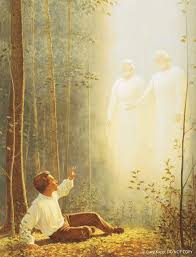
    Chapter 7 starts with Amos relating a vision he had wherein he was called to prophesy to Israel of their sins and upcoming destruction if they did not repent. 

    Verse 9 of chapter 7 reads:

    “And the high places of Isaac shall be desolate, and the sanctuaries of Israel shall be laid waste; and I will rise against the house of Jeroboam with the sword.”

    This prophesy, naturally, led to a scorned priest going to the king and tattling. The modern day equivalent of going to the teacher and whining about a classmate. 

    “Then Amaziah the priest of Beth-el sent to Jeroboam king of Israel, saying, Amos hath conspired against thee in the midst of the house of Israel: the land is not able to bear all his words.”

    Boo-hoo Amaziah.

    boo hoo Memes & GIFs - Imgflip

    Amos’s reply is a classic prophet response.

    “Then answered Amos, and said to Amaziah, I was no prophet, neither was I a prophet’s son; but I was an herdman, and a gatherer of sycamore fruit.”

    Amos is basically saying, ‘Who am I to lead an insurrection against the king?  What is my motivation? Yesterday I was minding my own business herding sheep. The Lord has commanded me to say these words and so I must say them.’ Amos is pointing out that he is a humble shepherd. Someone of little consequence.

    The footnote to the word prophet in this verse is what really jumped out to me. The footnote referred to Joseph Smith-History 1:22-23 which reads:

    22 I soon found, however, that my telling the story had excited a great deal of prejudice against me among professors of religion, and was the cause of great persecution, which continued to increase; and though I was an obscure boy, only between fourteen and fifteen years of age, and my circumstances in life such as to make a boy of no consequence in the world, yet men of high standing would take notice sufficient to excite the public mind against me, and create a bitter persecution; and this was common among all the sects—all united to persecute me.

    23 It caused me serious reflection then, and often has since, how very strange it was that an obscure boy, of a little over fourteen years of age, and one, too, who was doomed to the necessity of obtaining a scanty maintenance by his daily labor, should be thought a character of sufficient importance to attract the attention of the great ones of the most popular sects of the day, and in a manner to create in them a spirit of the most bitter persecution and reviling. But strange or not, so it was, and it was often the cause of great sorrow to myself.

    Here we find something of simple but important significance. The pattern continues. Just as Joseph Smith, a boy of little confidence and almost no education was vilely attacked for his claims, claims that, as he said, should have made these men of God want to bring him close and set him straight to help him, instead lead to persecution and hatred. Such it is when corrupt men are brought before light and truth.

    Just as Joseph Smith was attacked for his claims, so was Amos. A humble herdman, minding his own business, but one day called upon by God.

    Profound teachings can be found throughout the scriptures. All of the written word of God should be pondered by us as latter-day saints. We can find truths everywhere. This pattern is one that adds to my testimony that Joseph Smith was a prophet. I’m grateful that like Amos, Joseph Smith fought the persecution he received to bring forth the word of God. Just as Amos thousands of years earlier had to do the same.

  • Faith in Man or Faith in God

    Faith in Man or Faith in God

    Since I’m posting this on Thanksgiving day I think I’m obligated to say I’m grateful for the Book of Mormon, how it makes me a better person, how it makes my home a happier place, what it teaches me about Jesus Christ, and the hope it gives me for an eternal future.

    I will make a simple argument here.

    My thesis:

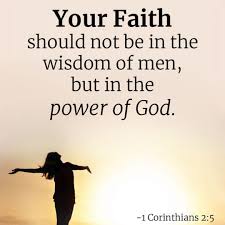
    Anyone who has read the Book of Mormon and believes it is a made-up story written by a man has more faith in the brilliance of a man than in the Glory of God. It is easier for that person to believe there is a man with otherworldly abilities than that God still speaks to humans.

    Explanation –

    Things that can’t be denied by any logical or thinking person:

    1. The Book of Mormon exists. You can go get a copy now and read it.
    2. The Book of Mormon was brought into existence in our day, for us to read, somehow.

    If the above two points are true, then we can move on.

    Next statements of truth:

    1. Since the Book of Mormon exists, we must determine who played a role in creating it.

    This leads us to only a couple options as far as I can tell. There may be other sub-options, but I think this mostly covers it. I’ve added sub points to each option to add important perspective:

    1. Joseph Smith wrote it by his own mind and creativity.
      • Joseph Smith had a third-grade education.
      • There are many witnesses attesting to Joseph Smith’s involvement in the creation of the Book of Mormon.
      • If historical accounts are to be believed, Joseph Smith dictated it word for word without notes or reference materials.
    2. Someone else wrote the Book of Mormon
      • This is hard to believe given countless eye-witness testimonies of Joseph Smith’s involvement in the creation of this book. It takes some creative gymnastics to determine how this could be true.
    3. Joseph Smith wrote it with the assistance of somebody very learned, ex: Sydney Rigdon.
      • This would require some sort of explanation on why no one else ever came forward to claim writing such a brilliant book.
      • With any minor research we find much evidence to show Sydney Rigdon didn’t meet or know Joseph Smith until the Book of Mormon was published.
    4. Joseph Smith translated the Book of Mormon by the power of God.
      • This would be taking the supposed creator of the book at his word.

    I believe any basic research into this subject proves Joseph Smith’s direct involvement in the creation of the Book of Mormon. Whether that be through point 1 or point 4 will now be briefly discussed. If points 2 or 3 are to believed, then a vast and complex conspiracy has been going on for 200 years. For 200 years, no proof has come forth to show that anyone but Joseph Smith created the Book of Mormon. No one has come forward. No information has leaked.

    If we come down to points 1 or 4, let’s address point 1, that Joseph Smith wrote the Book of Mormon by his own mind and creativity.

    Let’s first just disregard the fact that he wrote it in 65 working days because I feel detractors will just say, “That’s not true” even though the historical account appears to support if not prove this. Let’s say Joseph Smith wrote it with as much time, editing, and re-editing as he needed (which many testimonies argue against, but for the sake of this argument, let’s say he did take months or years to write it before he turned 25 years old).

    Those arguing Joseph Smith created the Book of Mormon from his own mind admit a man with little to no formal education, little to no access to any historical books or other reference materials, wrote a detailed account of a company leaving Jerusalem and travelling to the Americas. Instead of elaborating more on this, I will quote a challenge issued by Hugh Nibley to his students at BYU:

    “Since Joseph Smith was younger than most of you and not nearly so experienced or well educated at the time he copyrighted the Book of Mormon, it should not be too much to ask you to hand in by the end of the semester (which will give you more time than he had) a paper of, say, five to six hundred pages in length.  Call it a sacred book if you will, and give it the form of a history.  Tell of a community of wandering Jews in ancient times; have all sorts of characters in your story, and involve them in all sorts of public and private vicissitudes [daily activities]; give them names — hundreds of them — pretending that they are real Hebrew and Egyptian names of circa 600 B.C.; be lavish with cultural and technical details — manners and customs, arts and industries, political and religious institutions, rites, and traditions, include long and complicated military and economic histories; have your narrative cover a thousand years.

    Keep a number of interrelated local histories going at once; feel free to introduce religious controversy and philosophical discussion, but always in a plausible setting; observe the appropriate literary conventions and explain the derivation and transmission of your varied historical materials.  Above all, do not ever contradict yourself!  For now we come to the really hard part of this little assignment.  You and I know that you are making this all up — we have our little joke — but just the same you are going to be required to have your paper published when you finish it, not as fiction or romance, but as a true history!  After you have handed it in you may make no changes in it. . . .

    What is more, you are to invite any and all scholars to read and criticize your work freely, explaining to them that it is a sacred book on a par with the Bible.  If they seem over-skeptical, you might tell them that you translated the book from original records by the aid of the Urim and Thummim — they will love that!  Further to allay their misgivings, you might tell them that the original manuscript was on golden plates, and that you got the plates from an angel.  Now go to work and good luck!” (The Prophetic Book of Mormon, F.A.R.M.S., 221-222)

    I will add Alan C. Miner’s addition to this challenge, stating, “It shouldn’t be hard, living as we do in the computer world of the internet”:

    “Because your story is supposed to be a religious record, include in your paper over 500 different descriptive titles for deity, all within a proper religious context that will not only explain these titles in relation to what we have in the Bible, but give added meaning and understanding to the text of the Bible and to your own story.  And while you are at it, have most all the proper names of people, places and things have intrinsic and symbolic meaning.  Because this is supposedly an ancient Hebrew record, give hundreds of ancient parallelistic Hebrew literary forms.  In fact, have the whole text written in parallelistic patterns.  Incorporate thousands of phrases from the Bible so that these intertextual usages give added meaning to both the Bible and the Book of Mormon.  Make sure that the biblical sources are from all different parts of the Bible, and for that added touch, use some extra-biblical texts.  But don’t limit yourself to just your own patterns of language, or that of the KJV Bible, also use Early Modern English terms that were dated near 1611 when the KJV Bible was first published and became the bible of the masses.  Weave in an underlying theme of covenants with the Lord, both culturally and scripturally using covenant terms and practices used in ancient times.  In fact, it would be a good idea to make every part of your narrative not only covenant-related, but Christ related as well. For one final challenge you must dictate your story to a scribe without the aid of a written script.  While you may be allowed to tell your scribe to adjust the spelling of proper names, you must leave your script as you dictate it, and never ask your scribe to tell you where you left off after lunch or the end of a day.  On his own, your scribe can adjust capitalization, punctuation, the spelling of traditional words, and some simple grammar, but that is all.  Dictate parts of your story in non-chronological order, and be sure to credit these parts of your story to different writers, varying your manner of using words so that a distinct separation of language style can be detected.”

    What Joseph Smith wrote has been critiqued, criticized, evaluated, and been under a microscope for nearly 200 years. With additional evidence from archaeology, what we know about the Middle East and Jerusalem, and what we know about the Americas, the Book of Mormon is more validated, not disproven, despite what detractors may argue.

    I hope this goes to illustrate how impossible this act would be. It would be miracle of extraordinary human skill, intelligence, and foresight (knowing things that hadn’t yet been discovered yet, like chiasmus).

    Those who believe Joseph Smith wrote the book of Mormon through his own brilliance have more faith in the genius of a man than faith in the idea that God assisted in the matter. Put simply, you either have faith in the brilliance of Joseph Smith or in the Glory of God.

    Those who believe Joseph Smith did not translate the Book of Mormon through the gift, power, and love of God “deny the power thereof” (2 Timothy 3:5, Joseph Smith History 1:19).

    You must come to terms with this truth.  Either Joseph Smith was above and beyond the most brilliant man in the history of mankind.

    Or. 

    God loves His children and instituted a great work through Joseph Smith.

    What does it say if you more easily believe in Joseph Smith than in God?

    I am grateful for the Book of Mormon.

  • San Junipero

    San Junipero

    I really enjoy the show Black Mirror on Netflix.

    For those who don’t know the show, each season includes independent episodes that usually (but not always) have a futuristic, technological theme.

    One of my favorite episodes is called San Junipero.

    I don’t love this episode for its ending. I love it for how it makes me think. Funny enough, I watched the episode a second time, 7 years after the first viewing. Usually when something really makes me think, I pull out my phone and start writing down my thoughts.

    In 2025 when I rewatched San Junipero, I pulled out my phone to take notes. I found notes I took 7 years prior. I didn’t remember taking those notes. But they fit exactly what I thought 7 years later watching the episode a second time. Good to see I’m consistent. Typing those thoughts out led to this blog post.

    In the show, San Junipero is a virtual reality where people can upload their consciousness to live and experience life much like in the real world. In San Junipero, people can eat, drink, laugh, dance, and do seemingly all of the things that you can do in real life.  

    The main character is named Yorki. Yorki meets a character named Kelly (I hope it goes without saying that there are about to be spoilers for the episode).

    Yorki and Kelly start a romance in San Junipero. In San Junipero, everyone is young and vibrant. We learn that in the real world Yorki is an old woman who was paralyzed at the age of 20 and has spent her entire life in a coma-like state. Kelly is an old woman who was given 3 months to live 6 months ago.

    We learn that Kelly was married for many years to a man named Richard. Kelly and Richard… well, I’ll let Kelly tell the story.

    The episode comes to a climax when Yorki is trying to convince Kelly to stay with her in San Junipero.

    This leads to one of the most powerful monologues I’ve ever seen on television. In exasperation and frustration at Yorki’s request, Kelly exploded (you can watch the exact clip on YouTube HERE):

    “49 years. I was with him for 49 years. You can’t begin to imagine. You can’t know. The bond, the commitment, the boredom, the yearning, the laughter, the love of it. The *expletive love. You just cannot know. Everything we sacrificed. The years I gave him. The years he gave me. Did you think to ask? Did it occur to you to ask?

    “We had a daughter, Allison. Always difficult, always beautiful. Died at 39 years old, bless her heart. And Richard and I, we felt that heartbreak as one.

    “You know when he was dying, Rich said to me, when they offered him this, to pass over, pass through, spend eternity in this *expletive graveyard you’re so in love with, he said, ‘How can I? When she missed out, how can I?’ And so he went. And I wish I could believe he’s with her now, that they’re together, but I don’t. I believe they’re nowhere. Just like you said. Gone…

    “And now you give me some sales pitch about how *expletive peachy forever could be. You want to spend forever somewhere nothing matters? End up like Wes. All those lost *expletives at the Quagmire trying anything to feel something, go ahead. But I’m out. I’m gone.”

    The episode goes on. You see a coffin being lowered into a grave next to Richard’s tombstone. You think that’s the end.

    Black Mirror is known for its twists. I love it for its twists. I hated this twist.

    Kelly is back in San Junipero with Yorki. She decided not to “pass on.” She stayed in San Junipero. The show plays background music of Belinda Carlisle’s Heaven is a Place on Earth.

    While this may seem like a happy ending, the broader implications broke my heart.

    Obviously, I’m going to take this from a perspective of faith.

    There’s a lot to unpack here and a lot to consider. It’s why, despite my dislike for the ending, it’ s still one of my favorite episodes.

    Kelly could have “moved on” and spent an eternity with her husband and daughter. Instead she decided to stay in an artificial world.

    What is the lesson here?

    Her husband Rich had a particle of faith. Just a mustard seed of faith, you might say. Kelly couldn’t exhibit even that. She said herself, “I wish I could believe he’s with her now.” Wish. She Wishes. She hopes, probably. But she couldn’t believe it. She couldn’t even give real honest effort. She could only wish and hope but she couldn’t believe. According to Kelly Richard didn’t believe, but clearly he tried to. From a faithful perspective, what did Richard get? An eternity with his beloved daughter. What did Kelly get? An eternity in a fake and counterfeit world.

    Kelly took the guarantee in front of her. She took what she knew. She chose earth. She chose an existence of “trying to feel alive” over eternal life.

    Kelly’s monologue makes mention of a place called the Quagmire. The definition of quagmire is: “a soft boggy area of land that gives way underfoot.” A land that gives way underfoot = unsteady, uncertain, unsure. A sandy foundation.

    The Quagmire was a disgusting, sad, pathetic place where people in San Junipero went to party. It was all grotesque acts, cage fighting, drugs – all the worst of the world. Why did so many people in San Junipero go to the Quagmire? A hell-hole of debauchery? Kelly in her monologue pointed out the reason the living souls of the dead in San Junipero went there. Why would they go to somewhere so horrible? Just to try to feel alive.

    This is another eternal point to consider. The Quagmire clearly represented hell. Hell is a lack of progression. Hell is a lack of purpose.

    What is life without purpose? What is your purpose?

    Kelly chose a fake world. Will her life there be happy? Maybe. It might even be amazing, from an earthly perspective.

    We know that people really will make this choice. When some die, they can’t enjoy an otherworldly experience because they are too attached to this world. It’s the reason Jesus said to leave all earthly things behind and seek after eternal things. There is so much in store for us if we can just seek it out. Some will choose this world and this life because they can’t garner the faith to hope for something so much more.

    For those that want a greater blessing, there will be an eternity of love and joy, and things we can’t even begin to wrap our minds around – amazing, spectacular, fantastic things. But if we get too stuck in this world, we’ll miss the opportunity for that so much more.

    The fictional Richard hoped for so much more. He wished for so much more. He believed it just enough that he received it. A blessed existence for eternity with his daughter.

    I so wished the show would have taken an “eternal perspective” for once. But alas, it is a show of the world.

  • Tolkien’s Knowledge of Eternal Truths

    Tolkien’s Knowledge of Eternal Truths

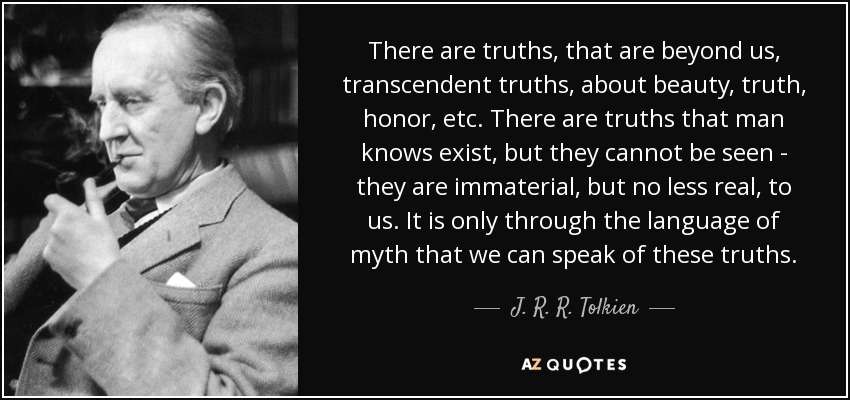
    I’ve written before about Tolkien’s uncanny parallels to what the Church of Jesus Christ of Latter-day Saints knows to be true due to modern revelation. These truths include information on the premortal life, Satan, and the afterlife.

    See The Wisdom of Tolkien and The Many Literary Parallels to Satan.

    I just started reading The Silmarillion by J.R.R. Tolkien. It is a book whose tale pre-dates The Lord of the Rings Trilogy and even The Hobbit. It is the origin story of Middle Earth.

    The preface to The Silmarillion includes a letter Tolkien wrote to his editor. In the letter Tolkien is trying to explain why The Silmarillion and the Lord of the Rings trilogy should be released together as their saga is intrinsically linked. Something Tolkien said in that letter struck me. He said, “[The mere stories] arose in my mind as ‘given’ things, and as they came, separately, so too the links grew. An absorbing, though continually interrupted labour… yet I always had the sense of recording what was already ‘there’, somewhere: not of ‘inventing’.”

    J.R.R. Tolkien was known to be a devout Christian. So I find it no surprise that his soul seemed to speak of things already known, deep in his being, that he expressed through his writing.  

    I find that statement especially fascinating given the parallels to eternal truth Tolkien touched on as I already referenced. I’m going to note some of those truths I’ve found in The Silmarillion. This list, I think, could go on and on nearly endlessly, but I will list out the few that made me literally stop reading, come to my computer, and note down:

    It is a well known fact that Tokien was a religious man who was pulling from religious traditions into his writing. I think it is clear that he had a sense of more. I would consider that his spirit telling him things his mind had no way of knowing. We did come from somewhere. We are here for a reason. We are going somewhere. There are too many eternal truths in his writings. Someday I’ll likely re-read the Lord of the Rings Trilogy, books I haven’t read since I was 11 and 12, to see what more I can pull from those great books as an adult.

    1. (Page 16 of The Silmarillion) “Manwe (Jesus Christ) and Melkor (Satan) were brethren in the thought of Illuvatar (God). The mightiest of those Ainur (first children of God) who came into the world was in the beginning Melkor; but Manwe is dearest to Illuvatar and understands most clearly his purposes. He was appointed to be, in the fullness of time, the first of all Kings: lord of the realm of Arda (Earth) and ruler of all that dwell therein.”
      • Wow, there are many parallels here.
    2. (Page 36) (Note also that Elves and Men are often referred to in this mythology as the sons of Illuvatar (God)). The book talks about how death is given to men as a gift from Illuvatar (God). Whereas the elves are immortal on earth, men die. “But illuvatar knew that Men, being set amid the turmoils of the powers of the world, would stray often, and would not use their gifts in harmony; and he said: ‘these too in their time shall find that all that they do redounds at the end only to the glory of my work.’ Yet the Elves believe that Men are often a grief to Manwe (in this analogy, Manwe=Christ), who knows most of the mind of Illuvatar (God); for it seems to the Elves that Men resemble Melkor (Satan) most of all the Ainur, although he has ever feared and hated them, even those that served him.
      • This is fascinating because despite us being most like Satan (rebellious, stubborn, prone to anger and hatred, greedy, desirous of power, desirous of honor), he still fears us because we have bodies and have the potential he will never have. And even when we follow and serve Satan, he still hates us. This is just like in the Lord of the Rings mythology where men are looked at as a burden to God, but loved by Him. Melkor doesn’t trust man even when they serve him.`
    3. (Page 36) “It is one with this gift of freedom that the children of Men dwell only a short space in the world alive, and are not bound to it, and depart soon whither the Elves know not… But the sons of Men die indeed, and leave the world; wherefore they are called the Guests, or the Strangers. Death is their fate, the gift of Illuvatar, which as Time wears even the Powers shall envy. But Melkor (Satan) has cast his shadow upon it, and confounded it with darkness, and brought forth evil out of good, and fear out of hope.
      • It is a gift that we dwell on Earth for a short time. Our reward after earth life is unimaginable. Satan tries to make death seem like a bad thing, casting his shadow upon it. We should remember that death is not evil and nothing to fear. It is a gift.
    4. (Page 96) Curse of Noldor for slaying their brethren. “’Ye have spilled the blood of your kindred unrighteously and have stained the land of Aman. For blood ye shall render blood, and behold Aman ye shall dwell in Death’s shadow. For though Eru appointed to you to die not in Ea, and no sickness may assail you, yet slain ye may be, and slain ye shall be: by weapon and by torment and by grief; and your houseless spirits shall come then to Mandos. There long shall ye abide and yearn for your bodies, and find little pity though all whom ye have slain should entreat for you. And those that endure in Middle-earth and come not to Mandos shall grow weary of the world as with a great burden, and shall wane, and become as shadows of regret before the younger race that cometh after. The Valar have spoken.’
      • There are elves in the mythology that commit the first murder of their own kindred. They are punished by having their spirits go to Mandos, keeper of the underworld, after their deaths. “There long shall ye abide and yearn for your bodies.” This is a truth of the Plan of Salvation that when men die, they go to spirit prison or spirit paradise and look at the absence of their body from their spirit as a prison. Also, the ties to the first murder in the Bible and the curse of Cain are obvious.
    5. (Page 109) “And they mourned not more for the death of the Trees than for the marring of Feanor: of the works of Melkor one of the most evil. For Feanor was made the mightiest in all parts of body and mind, in valour, in endurance, in beauty, in understanding, in skill, in strength and in subtlety alike, of all of the Children of Iluvatar (God), and a bright flame was in him. The works of wonder for the glory of Arda (Earth) that he might otherwise have wrought only Manwe (Christ, God of earth) might in some measure conceive. And it was told by the Vanyar who held vigil with the Valar that when the messengers declared to Manwe the answers of Feanor to his heralds, Manwe wept and bowed his head.”
      1. This is talking about one of the earliest elves, Feanor. Feanor was deceived by Melkor and ultimately his pride led him to swearing an oath to do anything to reclaim the silmarils he had crafted. This led to many misdeeds. This made me think of Satan, a “morning star that fell.”
      • Also, this part talks about how the greatest evil Melkor (Satan) committed was lying, deceiving, and ultimately turning the path of Feanor to evil. The most evil work of Satan on this earth is turning the hearts of men to do evil when they could have done so much good. How many are there out there that could have been great bringers of peace, creators of beauty, uniters of the human race, that Satan destroyed?
    6. (Page 325) – Sauron in deceiving men tells them that the Valar have deceived men by putting forth the name of Eru (God). That they speak for Eru. He says Eru is a phantom, putting the power in the Valar’s hands. Then Sauron says, “But he that is their (the Valar) shall yet prevail, and he will deliver you from this phantom (God); and his name is Melkor, Lord of All, Giver of Freedom, and he shall make you stronger than they.”
      • Isn’t this the strategy of Satan today? There is no God. Those who speak for him (prophets) only speak in His name to get their own power. This is what Satan tries to get people to believe. There is one that you can follow who will give you freedom and power – yourself. In this analogy, I think Melkor is us. When Satan denies God, he usually doesn’t bring himself into it. He tells men that they are Gods and need no God. He tells us that we can find freedom and power in our own devices. Satan’s prevailing strategy today is telling the world there is no God.
    7. (Page 334-335) – men become so proud that they deny God and go to war against the Valar. It says that Manwe (the King of earth) “called upon Iluvatar, and for that time the Valar laid down their government of earth.” It says that Illuvatar changed the world with a chasm, water, and smoke, and the world was shaken.
      • This sounds like a description of the end of times when all the unrighteous turn from God and rebel against Him. They will be destroyed.
    8. There is a scene during the destruction of Numenor, a city that rebelled against the Gods, that describes a Queen of the people who, “Too late she strove to ascend the steep ways of the Meneltarma, to the holy place; for the waters overtook her.” The Meneltarma was the temple they had built to Illuvatar (God) and that had been neglected and ignored for decades. As floods started to come into the city, she tried to go to the temple but it was too late for the Queen. She had neglected the temple and God for too long. Once hardship befalls man, it’s too late to then try to cry out for help and worship God. This is the parable of the 10 virgins put right into the Lord of the Rings mythology.

    This is why I love reading! Everything denotes that there is a Christ. Beauty and truth can be pulled from almost any book. Everything I read gives me some new perspective or something new I hadn’t before considered. It’s also why I like writing. The greatest invention in the world was writing. Before I digress, let me close this post. I love Tolkien’s writing. Go read something great today.

  • Adultery and Card Sharks

    Adultery and Card Sharks

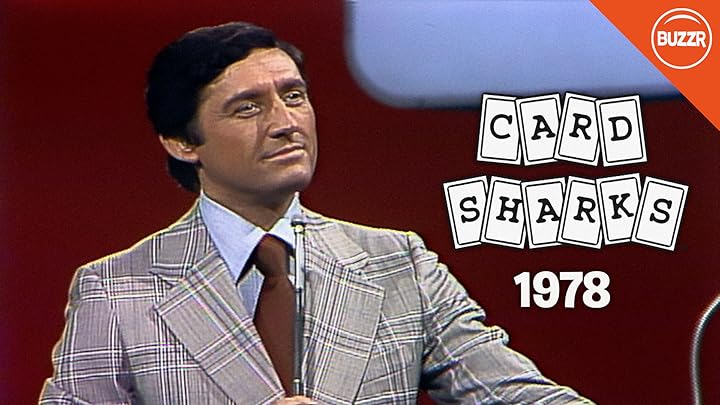
    I was recently watching one of my all-time favorite game shows: Card Sharks. I was watching old episodes from 1978. A timeless treasure is Card Sharks.

    Anyways, the show is filled with questions about human nature. They would poll 100 people, 100 Playboy Bunnies, 100 women in a studio audience, 100 men, etc etc and the contestants would guess how many out of a hundred would think a certain way. The other contestant then guesses if the actual number is higher or lower than their opponent’s estimate.

    The question was asked:

    “In a confidential poll, we asked 100 married men, have you ever considered having an affair? How many married men said, yes, they had considered having an affair?”

    The contestant guessed that 68 (!) married men had considered having an affair.

    “Lower!” I yelled at the TV. My guess was 16.

    Imagine my shock at the correct answer: 40! I was dumbstruck. 40 out of 100 men in 1978 said they had considered having an affair.

    Now, a sad question to consider, do you think that number has gotten higher or lower?

    27 Ye have heard that it was said by them of old time, Thou shalt not commit adultery:

    28 But I say unto you, That whosoever looketh on a woman to lust after her hath committed adultery with her already in his heart.

    Matthew 5:27-28

    I once had a conversation with a friend that was soon to be married. I asked him point blank, would you ever cheat on your wife? He adamantly said no. He said if you’re going to be married then you commit to never even consider that.

    I agreed. I told him that marriage is sacred. Despite society treating marriage with the ultimate disrespect, like it’s some casual commitment that can be set aside whenever it becomes inconvenient, that is not what marriage is. Marriage is a binding promise. Marriage is a covenant. That’s why we do it in front of friends and family. Have you thought about that? Weddings aren’t for the party, extravagance, and fun. Weddings serve an important purpose. Weddings are an opportunity to stand before all our loved ones as witnesses, and promise before every person present that we are entering a binding agreement with someone we love.

    As long as I remember I knew one thing about myself. That one thing was that I would never, ever, under any circumstances, cheat on my wife. That’s important to me. It’s a point of honor. I made a promise not only to Beth, but to God, that I would be faithful to my wife.

    So the question, would I ever consider having an affair?

    No.