Tag: Adam

  • What Really Happened with Noah’s Curse of Ham/Canaan?

    What Really Happened with Noah’s Curse of Ham/Canaan?

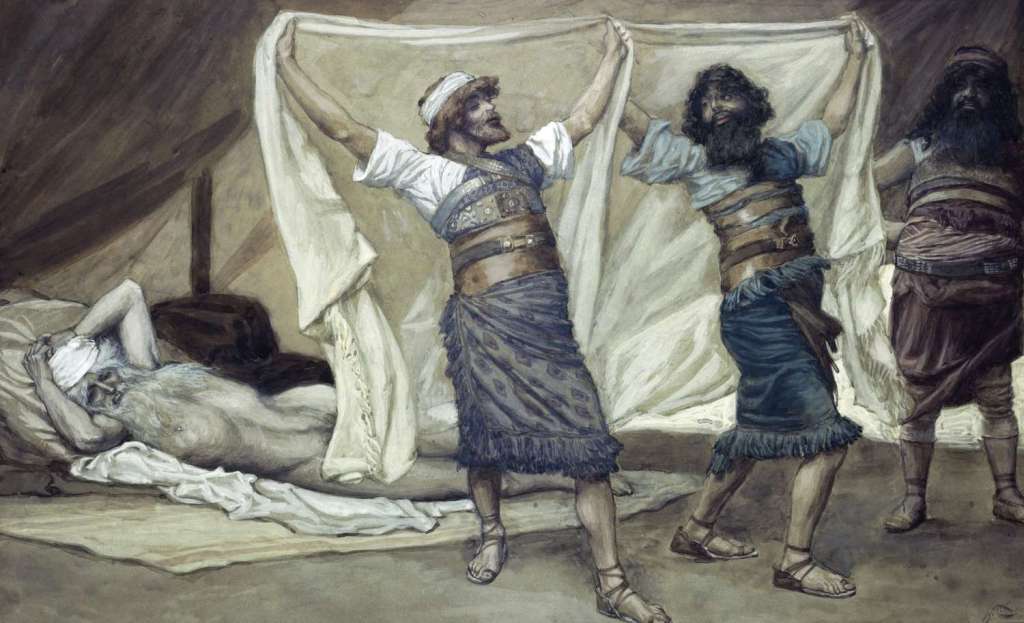
    There’s a story from the Bible that’s never sat right with me. The Bible tells of Noah and his three sons after the flood. As the story goes, Noah planted a vineyard after the flood waters receded. He then drank of the fruit of the vine, got drunk, and passed out naked.

    Ham, finding his father naked, brought his brothers Shem and Japheth in, presumably to mock and make fun of their father.

    This disrespect to Noah is undeniable. What Ham did in this story was wrong.

    But did it warrant this?

    (Genesis 9:24-27 my additions in parentheses):

    24 And Noah awoke from his wine, and knew what his younger son (Ham) had done unto him.

    25 And he said, Cursed be Canaan (Ham’s son, Noah’s grandson); a servant of servants shall he be unto his brethren.

    26 And he said, Blessed be the Lord God of Shem (Noah’s other son); and Canaan shall be his servant.

    27 God shall enlarge Japheth (Noah’s other son), and he shall dwell in the tents of Shem; and Canaan shall be his servant.

    Was Ham’s sin so egregious that his son and their descendants deserved to be “servant of servants” to his brothers?

    Ham did something wrong, but this seems extreme.

    Bible scholars will say Ham violated the edict to honor his father. True. But all his descendants cursed for the rest of time? This is the part I’ve never understood. Seems too harsh a punishment for something that borders on immature and insensitive at worst.

    Which leads to something I read from Hugh Nibley. I read this in a lecture Hugh Nibley gave and he was citing some information he read. (Reference to this story is also in the Book of Jasher).

    “A very early Christian writing tells how Noah’s descendants waged bitter war among themselves after his death, to see who should possess his kingship; finally one of the blood of Ham prevailed, and from this the Egyptians, Babylonians, and Persians derive their priesthood and kingship. “From the race of Ham,” says the text, “came one through the magical (as opposed to the holy) succession named Nimrod, who was a giant against the Lord.”

    First of all, note the vague “before the Lord” of the King James Version (Genesis 10:9) conceals the true meaning, rendered “against the Lord” by the Rabbinical and early Christian writers).”

    Hugh Nibley continues (my emphasis bolded):

    “Nimrod claimed his kingship on the ground of victory over his enemies. His priesthood, however, he claimed by virtue of possessing “the garment of Adam.” The legends of the Jews assure us that it was by virtue of owning this garment that Nimrod was able to claim power to rule over the whole earth, and that he sat in his tower while men came and worshiped him.”

    Doesn’t this give Lord of the Rings vibes? A man in a tower making the peoples of the earth come to worship him. I had to say that, anyways…

    Let’s recap quickly the genealogy of Nimrod:

    Noah begot Ham. Ham had four sons – Canaan, Cush, Mizraim, and Phut. Nimrod was a son of Cush. Remember that Canaan is the one specifically mentioned in the curse of Noah in Genesis 9.

    But let’s continue with Hugh Nibley (emphasis bolded again):

    “The Apocryphal writers, Jewish and Christian, have a good deal to say about this garment. (“the garment of Adam” mentioned above). To quote one of them: “the garments of skin which God made for Adam and his wife, when they went out of the garden, were given . . . after the death of Adam . . . to Enoch”; hence they passed to Methuselah, and then to Noah, from whom Ham stole them as the people were leaving the ark. Ham’s grandson Nimrod obtained them from his father Cush. As for the legitimate inheritance of this clothing, a very old fragment recently discovered says that Michael (AKA Adam, the original owner of the garment) “disrobed Enoch of his earthly garments, and put on him his angelic clothing,” taking him into the presence of God.

    This idea is interesting. When Enoch and his city were taken up to God (Genesis 5:24), he apparently received new “angelic” clothing. This clothing must have been Terrestrial while the garment of Adam given to him from God was Tellestial, as that was the world he was entering. This would mean the garment of Adam, which was handed down to Enoch, would have been held until…

    “This garment of Enoch was supposed to be the very garment of skins that John the Baptist wore, called by the early Christians “the garment of Elias.” An Arabic “Life of John the Baptist” says that Gabriel (AKA Noah, which makes sense, it was stolen from him originally) brought it to John from heaven as “the garment of Elijah”. “It went back,” says John Chrysostom, “to the beginning of the world, to the times before which Adam required covering. Thus it was the symbol of repentance. . . .”

    So let’s recap. The garment belonged to Adam and was handed down to Enoch until it was taken from him when he went to Heaven. It was then given to Noah who may have had it stolen by his son Ham. It was lost to time until the angel Gabriel (Noah) returned to give it to John the Baptist. The part I want to focus on, if you haven’t guessed, is Ham stealing the garment from his father Noah.

    “Incidentally, the story of the stolen garment as told by the old rabbis, including the great Eleazer, calls for an entirely different rendering of the strange story in Genesis 9 from the version in our King James Bible. They seemed to think that the erwath of Genesis 9:22 did not mean “nakedness” at all, but should be given its primary root meaning of “skin covering.” Read thus, we are to understand that Ham took the garment of his father while he was sleeping and showed it to his brethren, Shem and Japheth, who took a pattern or copy of it (salmah) or else a woven garment like it (simlah) which they put upon their own shoulders, returning the skin garment to their father. Upon awaking, Noah recognized the priesthood of two sons but cursed the son who tried to rob him of his garment.”

    Does Ham’s taking of the garment of his father, trying to strip him of it, remind you of anyone?

    “Behold, here am I, send me, I will be thy son, and I will redeem all mankind, that one soul shall not be lost, and surely I will do it; wherefore give me thine honor”.

    Moses 4:1

    -Satan

    Now read Genesis 9:22-23 considering this rabbinical story:

    22 And Ham, the father of Canaan, saw the nakedness of his father, and told his two brethren without.

    23 And Shem and Japheth took a garment, and laid it upon both their shoulders, and went backward, and covered the nakedness of their father; and their faces were backward, and they saw not their father’s nakedness.

    It seems plausible that what Ham did wasn’t simple mockery. It seems he might have stolen something from his father. Shem and Japheth, wanting to be like their father, try to replicate the garment Ham stole. But unlike Ham, they return it to Noah.

    Of course there are some unanswered questions with this theory – how did Ham get it back and hand it down to his sons if it was returned to Noah? Why was it Caanan cursed and not Cush or Ham himself? Still, there is something here that seems to add to this story of why Ham and all his descendants were cursed.

    Let’s continue to theorize..

    If this garment that Ham stole was the original garment of Adam, and signified the power, priesthood, and patriarchy of Noah, doesn’t that make more sense why he would have cursed Ham and his descendants? Noah might have sensed what Heavenly Father sensed (knew) when Satan demanded his honor. Ham might have desired power over those around him. This adds some new potential context to Noah’s great-grandson Nimrod’s story:

    “Nimrod claimed his kingship on the ground of victory over his enemies. His priesthood, however, he claimed by virtue of possessing “the garment of Adam.” The legends of the Jews assure us that it was by virtue of owning this garment that Nimrod was able to claim power to rule over the whole earth, and that he sat in his tower while men came and worshiped him.”

    The parallels to Satan continue.

    The rabbis (through Hugh Nibley) continue:

    “By an extremely common type of substitution, the simlah of Genesis 9:23 could very easily stand for an original tsimlah, a copy, imitation, pattern, or by an equally common type of transposition for Salmah, a garment or mantle, as in Micah 2:8. Even as it stands simlah means only a woven garment and can hardly refer to the original skin article. This is, apparently, the source of the widespread legend that Ham stole the garment of Noah and claimed to possess the priesthood by virtue of his illegal insignia. Ham’s descendants, Cush and Nimrod–both Africans, though Nimrod in his wandering moved to Asia–made the same claim. It is interesting that according to certain ancient scriptures which the Latter-day Saints claim have been restored by revelation in our own age, Pharaoh (who represents the Afro-Asian line of Cush-Nimrod) was blessed as to the kingship but cursed as to the priesthood, and he offered Abraham the privilege of wearing his own royal insignia in hope that Abraham would return the compliment by allowing Pharaoh to wear his priestly ones” (Abraham 1:26-27).

    I would suggest the possibility that Pharaoh wasn’t just trying to get Abraham to return the favor by letting him where his royal insignia. Maybe Pharaoh was trying to get Abraham to worship him in his counterfeit insignia of the priesthood. Abraham ultimately sought after the true priesthood, not the counterfeit.

    It continues…

    “According to a very old tradition, Pharaoh coveted the priesthood of Moses exactly as his ancestor Nimrod did that of Abraham, and it was said that the Pharaohs of Egypt dressed in a skin garment “to show that their origin was older than time itself. (Note, Abraham’s refusal to make the exchange was the real reason for his being expelled from Egypt, according to apocryphal writers.)

    Whatever the details, the priests and kings of antiquity certainly wore such garments, and the skin garment was often imitated in woven materials (see footnote below), in fact, the skin garment was itself held to be a substitute for a still older garment made of the leaves of the ficus religiosus.”

    Footnote (pertinent sentences to this discussion bolded):

    In later times the Egyptian priest wore “no real leopard-skin but a close-fitting coat of fine linen in the form of a leopard-skin,” H.R. Hall, “The Bronze Statuette of Khonserdaisu in the British Museum,” JEA 16 (1930): 1, cf. T.J.C. Baly, “Notes on the Ritual of Opening the Mouth,” 178. The Syrian Christians said that the garment given to Adam was of cotton, the “skin” of the tree, Eisler, Iesous Basileus, 2;34; this doctrine, they say, was known only to Moses, “who called cotton ‘skin’ because among trees it takes the place of skin”‘ hence the idea that John the Baptist took his clothes from trees. The Jews retained traces of the older garment in their phylacteries and in the Sisith, the four strings that every Jew once had on the edge of his garment, Ferris J. Stephens, “The Ancient Significance of Sisith,” JBL 50 (1931):59-70. Compare the Irham of the Moslems in John L. Burckhardt, Travels in Arabia, 2 vols. (London: Colburn & Bently, 1831), 1:104-05; 163-64.

    I provided this extra information from the mentioned footnote because I found it interesting and it added more context. But back to the point –

    It seems there is more to this story in Genesis 9.

    What actually happened with Ham and Noah?

    Was Noah’s nakedness symbolic?

    Was there a cloak or some sort of clothing that held significance that was stolen?

    We currently don’t know the answers to these questions but I find the questions fascinating.

    For now I hope anyone reading enjoyed where these thoughts took them, as I enjoyed the exercise. Possibly there’s more to know and understand about this story of Noah and his sons. There might be a great significance to the priesthood power that the ancients so desired, a significance we’re only scratching the surface of.

    One day we’ll know the answers to these questions.
  • Chosen by God

    Chosen by God

    I had a thought that never occurred to me before while reading Doctrine and Covenants 138, as obvious as this thought is.

    I believe it’s correct that some of the ancient prophets, Adam down to Joseph Smith and beyond, have resurrected bodies and are in heaven teaching. For some reason I’d only ever thought about them teaching those who had already been on earth and died. For the first time it occurred to me that they might also be teaching those who haven’t come to earth yet.

    This seems to be affirmed by the words of modern prophets, from Doctrine and Covenants Student Manuals:

    “President Joseph F. Smith was shown that many choice servants of this dispensation were also among those noble spirits. The Lord held them in the spirit world where they were taught and prepared to come forth and lay the foundations of His latter-day work. The Prophet Joseph Smith once said that “every man who has a calling to minister to the inhabitants of the world was ordained to that very purpose in the Grand Council of heaven before this world was” (Teachings, p 365).

    “President (Joseph F.) Smith also observed that, in addition to these leaders, there were “many others” who “received their first lessons in the world of spirits and were prepared to come forth in the due time of the Lord to labor in his vineyard for the salvation of the souls of men” (D&C 138:56). This refers to the doctrine of foreordination, which teaches that “in the premortal spirit world, God appointed certain spirits to fulfill specific missions during their mortal lives. … Foreordination does not guarantee that individuals will receive certain callings or responsibilities. Such opportunities come in this life as a result of the righteous exercise of agency, just as foreordination came as a result of righteousness in the premortal existence.”

    “President Russell M. Nelson taught: “Your spirit is an eternal entity. … Your Heavenly Father has known you for a very long time. You, as His son or daughter, were chosen by Him to come to earth at this precise time, to be a leader in His great work on earth. You were chosen not for your bodily characteristics but for your spiritual attributes, such as bravery, courage, integrity of heart, a thirst for truth, a hunger for wisdom, and a desire to serve others. You developed some of these attributes premortally. Others you can develop on earth as you persistently seek them.”

    These are things I’ve known, and thought about, but an encouraging and empowering reminder when the world fights back so aggressively against spiritual things.

    We were chosen before we came. We were potentially tutored by the very greatest prophets and teachers the world has ever seen. The tutoring from great prophets pales in comparison to the reminder that we were chosen by God, the eternal Father. God of Heaven and Earth. Creator of all things. When we remember He chose us for a purpose, and we’re on the Earth now for that purpose, the oppositions of the world should seem silly.

    If I was lucky enough to receive training from a great prophet and was chosen by God before coming here, anything is possible.

  • Adam-God Theory

    Adam-God Theory

    I’ve heard of the “Adam-God Theory” but never looked into it. Until recently, I really didn’t know what exactly it referred to. Here is my research into the Adam-God theory for those interested and especially for those who may have concerns about this theory and its history in the restored Church of Jesus Christ.

    Before I begin, almost all my thoughts come from this link:

    https://www.fairlatterdaysaints.org/answers/Mormonism_and_doctrine/Repudiated_concepts/Adam-God_theory#Question:_What_is_the_Adam-God_Theory.3F

    It was a great resource on this topic and I recommend it if you want to learn more.

    If you want a quick, short video that sums up the whole history of the Adam-God theory, watch this video:

    Now, my thoughts.

    The Adam-God theory is the theory that Adam and God the Father are the same person. This theory was mentioned by Brigham Young.

    First – Adam is not God the Father. Adam is not who we pray to. This does not fit the teachings of the scriptures, does not fit modern revelation, is not a doctrine of the restored gospel. So why are we talking about it, you ask?

    Second – Yes, Brigham Young did make some bold statements about Adam being God. He also made countless statements contradicting that statement. Brigham Young was a convert and a prophet. Try to imagine the dichotomy of those positions. Try to imagine someone a few years into the faith trying to lead the entire church. Is it so shocking that there were erroneous statements made, especially when we consider and understand the personality and boldness of the prophet who led the saints across the rugged wilderness of the West?

    Third – Because Brigham Young made incorrect statements does not mean he was a false prophet. It means he was learning line upon line, and he made false statements. He has made statements to try to help us, the people of the church, reconcile some of his more questionable comments. For example, when speaking generally about who Adam was and proposing some thoughts about Adam, Brigham started by saying, “I propose to speak upon a subject that does not immediately concern yours or my welfare….I do not pretend to say that the items of doctrine and ideas I shall advance are necessary for the people to know, or that they should give themselves any trouble about them whatever.. (Brigham Young, Oct 8, 1851). If it does not concern our welfare, don’t get too hung up on it. The church was young and growing when Brigham was prophet. God has always worked through us, mortals, to fulfill His works. This has always resulted in fallibility. Brigham Young was a prophet, even if he made mistakes in the thousands of public discourses he gave during his learning period as a prophet/convert.

    Fourth – Because prophets are fallible does not mean we cannot trust and follow them. As The Church has grown out of its infancy, it has strengthened itself in countless ways. One of those strengths has become the checks and balances of the church organization. The First Presidency and Quorum of the Twelve Apostles must be unanimous in any declaration of doctrine. President Nelson speaks hundreds of times a year. Not every word from his mouth (in my opinion) is scripture. It is guidance and direction from God’s anointed prophet, yes, but not scripture. But when President Nelson, the First Presidency, and the Quorum of the Twelve sign their names to a declaration, it becomes binding guidance on doctrine, church policy, etc. Such was the case with “The Family: A Proclamation to the World” for example.

    Now, the statement made by Brigham that when Adam and Eve came to the Garden of Eden they already had celestial, resurrected bodies is interesting. I more think they came with perfect bodies as they came directly from the Father and hadn’t yet been corrupted by the fall, not that they were necessarily resurrected bodies yet. Celestial, maybe, resurrected, I don’t think so. That’s all I will say on this matter, though, to support my point earlier that things that distract from our salvation should be discussed with caution. I haven’t done enough research, pondering, or praying to comment on this with much confidence and would hate for my children 150 years from now to claim I believed Adam was already resurrected when put in the Garden of Eden. See how these small comments can be blown out of proportion? Grateful I’m not a prophet.

    Another thought – the eternal nature of the plan of happiness is not something we can begin to comprehend. If it ultimately distracts us from our current efforts towards salvation, we should tread with ultimate caution. Such is the thinking about if Adam lived on another planet before he came here and countless other thought experiments that might distract from what is important, which is, Jesus Christ performed the ultimate atoning sacrifice for my sins. He died so that I can live. He suffered so I can be forgiven and can live with God, my Father, again. All other questions, while interesting and can expand our minds and thinking, if they distract from the ultimate source of our salvation – the Plan of Salvation and Christ’s personal role in it for us – should be avoided.

    Those are my thoughts on this from my research. Here are some final items to really, I hope, put this theory and any issues involved with it, to rest.

    As mentioned, Brigham contradicted himself many times on the idea that Adam was God. While he mentioned the idea a couple times in public, there are many other instances of Brigham Young speaking where he clearly separated Adam and God the Father as two separate individuals.

    BYU professor Stephen E. Robinson sums it up well:

    “Yet another way in which anti-Mormon critics often misrepresent LDS doctrine is in the presentation of anomalies as though they were the doctrine of the Church. Anomalies occur in every field of human endeavor, even in science. An anomaly is something unexpected that cannot be explained by the existing laws or theories, but which does not constitute evidence for changing the laws and theories. An anomaly is a glitch…. A classic example of an anomaly in the LDS tradition is the so-called “Adam-God theory.” During the latter half of the nineteenth century Brigham Young made some remarks about the relationship between Adam and God that the Latter-day Saints have never been able to understand. The reported statements conflict with LDS teachings before and after Brigham Young, as well as with statements of President Young himself during the same period of time. So how do Latter-day Saints deal with the phenomenon? We don’t; we simply set it aside. It is an anomaly. On occasion my colleagues and I at Brigham Young University have tried to figure out what Brigham Young might have actually said and what it might have meant, but the attempts have always failed. The reported statements simply do not compute—we cannot make sense out of them. This is not a matter of believing it or disbelieving it; we simply don’t know what “it” is. If Brigham Young were here we could ask him what he actually said and what he meant by it, but he is not here…. For the Latter-day Saints, however, the point is moot, since whatever Brigham Young said, true or false, was never presented to the Church for a sustaining vote. It was not then and is not now a doctrine of the Church, and…the Church has merely set the phenomenon aside as an anomaly.”

    From the link above previously mentioned:

    “As far as can be determined, none of Brigham Young’s successors in the presidency of the Church continued this teaching in public, and by the presidency of Joseph F. Smith (1901–18) there were active moves to censure small groups that taught Adam-God.

    One of the earliest statements from the Church rejecting Adam-God teachings was made by Charles W. Penrose in 1902:

    The Church of Jesus Christ of Latter-day Saints has never formulated or adopted any theory concerning the subject treated upon by President Young as to Adam.

    In October 1976 general conference, Spencer W. Kimball declared the Church’s official position on Adam-God:

    We warn you against the dissemination of doctrines which are not according to the Scriptures and which are alleged to have been taught by some of the General Authorities of past generations. Such, for instance, is the Adam-God theory. We denounce that theory and hope that everyone will be cautioned against this and other kinds of false doctrine.‘”

    Other statements by future general authorities refuting Brigham Young’s opinions:

    Bruce R. McConkie – “What I am saying is that Brigham Young, contradicted Brigham Young, and the issue becomes one of which Brigham Young we will believe. The answer is we will believe the expressions that accord with the teachings of the Standard Works.”

    And Brigham Young himself – “I am more afraid that this people have so much confidence in their leaders that they will not inquire for themselves of God whether they are led by Him. … Let every man and woman know, by the whisperings of the Spirit of God to themselves, whether their leaders are walking in the path the Lord dictates, or not.”

    Finally, while some might consider everything said here to be a sign that the church changes and is “wrong,” I would completely refute that. The church is changing. The church is growing. The church is living.

    Doctrine and Covenants 1:30 is Christ speaking and reads “And also those to whom these commandments were given, might have power to lay the foundation of this church, and to bring it forth out of obscurity and out of darkness, the only true and living church upon the face of the whole earth, with which I, the Lord, am well pleased, speaking unto the church collectively and not individually.”

    While so many would criticize the Church of Jesus Christ of Latter-day Saints for changing, the Lord describes it as living. The only living church on the face of the earth. This is a power of Christ’s church- not a weakness.

  • You are Loved, You are Worthy

    You are Loved, You are Worthy

    “When you get to a place where you understand that love and belonging, your worthiness, is a birthright and not something you have to earn, anything is possible.”

    Think about that statement for a moment. 

    I heard this quote in a recent meditation I did.  The meditation guided this visual exercise:  Picture yourself as a child, truly picture it.  Picture yourself as a baby.  Picture yourself on someone’s lap.  Picture yourself being held, comforted, and played with.  Picture yourself laughing joyfully as someone makes a funny face at you.  Picture yourself young and innocent. 

    You don’t have to earn worthiness; you don’t have to earn love.  You are loved because you are.

    The next time you don’t feel worthy, picture yourself as a child.  You are worthy.

    This exercise led me to an even more powerful thought.  One that speaks not only to our worthiness here, but to our birthright and our eternal potential. 

    Consider Adam for a moment, the first man. When he came to this earth, we are told he was as a child. Adam came to earth meek and humble, a child-like individual. He had forgotten who he was. Who he was in reality was Michael the archangel, the chief angel. Adam was Michael, the angel second in authority. His authority was only exceeded by Jesus Christ Himself (and God, of course). In Hebrew the name Michael means “Who is like God.” This Michael came to earth with his mind wiped clean, with no recollection of his prior authority, no memory of his prior self.

    What about us?  What don’t we remember about ourselves?

    The next time you are insecure, unsure, or afraid, remember that you are a child of divine inheritance.  You are a prince or princess of the most High God.  Consider that for a moment.

    Not only are you loved and worthy of love, you are loved by the God of the universe.  You are in line to inherit all He has to offer (D&C 84:38).  Remember that, and don’t forget it.  Hold to it.

    We are as children here.  We don’t remember our past.  For all we know, we were spiritual giants.  We are spiritual giants.  We can be spiritual giants.  Embrace that identity.  Remember who you might be.  Remember who it is you have been tutored by.  The God of Heaven and Earth.  When we embrace this way of thinking and embrace this possibility, the difficult things of this earth become so inconsequential.  Our true potential is greatness.  May we never forget it.

  • Satan’s Story Continued: What I learned from the Qur’an

    Satan’s Story Continued: What I learned from the Qur’an

    In Satan’s Story, I explored the origins of Satan before we came to earth.  This was back when we knew Satan, in the premortal existence.  This was when he was attempting to (mis)lead us.  It was an interesting revelation for me to learn what led to Satan’s revolt.

    If you haven’t read that post, you can click the link (Satan’s Story) above to read it.  It’s not required to understand this post.

    In this post I’d like to explore a little more about the Father of all Lies (John 8:44).

    I’d like to give the same sort of disclaimer I gave in the first post.  My interest in studying Satan is to further my testimony of One person.  That is Jesus Christ.  By studying Satan, I am studying the exact opposite of all that Jesus Christ is.  By studying Satan, I hope to understand him better only to avoid the same traps he is laying today that he laid in the premortal existence.  Those traps led to 1/3 of our brothers and sisters coming out in full rebellion to the light and love that created us.

    First, an update.  After I finished writing and had posted Satan’s Story (part 1), I started a book called Islam by John Alden Williams.  This book contains a quick historical overview of the beginning, development, growth, laws, and customs of Islam. 

    The book started with reviewing portions of the Qur’an (Koran? Quaran?).  While reading, I came across some interesting text about Satan. 

    I’ve found there are many translations of the Qur’an, similar to our modern day Bible. This was the text provided in the book (my own emphasis and commentary in parentheses added):

    “We created you, then we shaped you,

    then we said to the angels: ‘Bow yourselves

    to Adam’; so they bowed themselves,

    save Iblis (Iblis = Satan)-he was not of those

    that bowed themselves.

    Said He (God), ‘What prevented thee to

    Bow thyself, when I commanded thee?’

    Said he (Satan), ‘I am better than he; Thou

    createdst me of fire, and him Thou

    Createdst of clay.’ (God created Adam out of clay)

    Said He (God), ‘Get thee down out of it;

    It is not for thee to wax proud here,

    So go forth; surely thou art

    Among the humbled.’

    It goes on to provide other interesting details about Satan being cast out of heaven.  I find it interesting that so many of the world’s religions and especially the many sects of Christianity have such unique views on Satan’s story.  I think the mythology and legend of Satan in all cultures goes to show the significance of Satan on all of us here. 

    Another noteworthy item from the above, notice the first two lines. We created you. We said to the angels. Who are we? If it is only God, why is he referring to we? Joseph Smith taught and the Church of Jesus Christ of Latter-day Saints theology teaches us that we is referring to Jesus Christ and God.

    That portion of Satan speaking in the Qur‘an I found to add somewhat to the idea that Satan ultimately revolted because he was jealous of Adam and prideful, feeling he deserved the honor that Adam received. We see that pride is the great detriment to all souls. Pride took Satan from “an angel of God who was in authority in the presence of God” to one called Perdition, who fell, who the heavens wept over. (Doctrine and Covenants 76:25-27)

    The book goes on to say that Adam inherited the earth with his wife.  While there “Satan whispered to them…And he swore to them, Truly, I am for you a sincere adviser.”

    So, we see that Satan was a liar and has always been a liar, “from the beginning” (D&C 93:25, John 8:44).