Tag: Alma

  • Ministering

    Ministering

    Alma 35:7

    “And it came to pass that Alma and his brethren did minister unto them.”

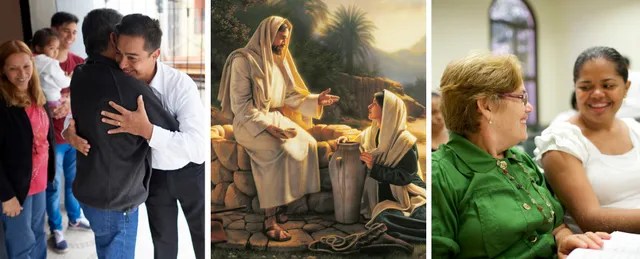
    This is referring to the poor people of the Zoramites who had been forced to leave their homes and their city because they believed in Jesus Christ. These poor Zoramites were welcomed to the city of Jershon by the Ammonites, a recently converted group of Lamanites. I’ve written about the corruption of the Zoramites before.

    The Zoramites were so mad at these poor members of their society that they had already banished that they told the Ammonites in Jershon to not allow these poor individuals to live in their city. The people of Ammon, being decent human beings, ignored the demand from the wealthy Zoramites to cast out these poor people again.

    This is where the verse quoted, verse 7, comes in.

    Alma and his brethren ministered to these poor Zoramites. It was Alma and his brethren who preached to the poor Zoramites which ultimately led to them being cast from their homes. The people of Ammon also ministered to these people.

    Doesn’t this seem like an obvious thing? To take care of an innocent group of already poor people who were forced to leave their homes?

    If there was any question whether the teachings of the rich Zoramites were corrupt and had their roots in an evil nature, this behavior seems to confirm this fact. By their fruits you shall know them.

    And what’s up with the rich Zoramites that made them leave? It wasn’t enough that they forced these people out, making them pack up and go with what little they had to another town? They had to follow these people and try to get another town to not allow them to be there? How petty is this? This makes me think of some who leave the Church. Isn’t it enough to just leave? Do you have to follow the Church around bashing it, hating it, trying to destroy it?

    It is said that adherence of the sabbath day is what separated the Jews from the rest of the world and today respecting and keeping holy the sabbath day should be a mark of Christians, though that has unfortunately changed. That was the sign in ancient sign. What is the sign today?

    What sets apart Christ’s true church? It should be ministering to the one. Christ’s church should have a clear focus on ministering to one another, and to others.

    Christ’s church is not vindictive, it is loving. Christ’s church is not exclusive, it is inclusive. Christ’s church should be a community of saints supporting each other in every physical, emotional, and spiritual way possible. Christ’s church should be like Christ’s ministry. It should be a church of ministering to the one and to the all.

    The Ammonites are an extraordinary example of ministering. “And [they] did minister unto them.” Even with the threat of war, they still ministered. Even with the threat of murder, they ministered.

    What is our excuse as members of the Church of Jesus Christ if we aren’t ministering to each other? The Church of Jesus Christ has an organized, cohesive, important program of ministering. If we aren’t doing our part to minister to one another then we aren’t doing our part in separating ourselves from the world.

    I’m grateful that Christ’s church has an organized emphasis on ministering. I’m grateful I get to be a part of it. I’m grateful that Jesus Christ was the example of a perfect minister.

  • The Prints

    The Prints

    There’s a subtlety throughout scripture I don’t think we discuss often enough.

    We know that when we are resurrected, we are resurrected to our perfect frame. Not a hair on our heads will be lost. We will be perfected (Alma 11:43-44).

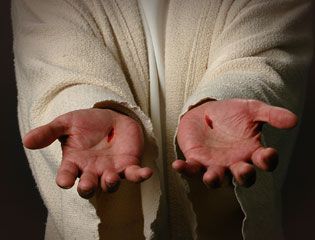
    We also know that when Christ showed Himself after His resurrection, He retained the prints in his hands, wrists, and feet (3 Nephi 11, John 20).

    Why does Christ retain these markings? Why does He keep these reminders of the most pain and suffering any person has ever experienced? It’s because Christ doesn’t remember the suffering when he looks at those marks. He remembers us.

    He could choose to remove those physical “blemishes.” Instead, He keeps them as a reminder.

    He also probably keeps them for us. So that when we see Him, we can be reminded of what He did for us. So we can remember His suffering and in turn realize how deeply He loves us. In this sense, Christ may have Thomas the Doubter (unfair title) in mind (John 20:25).

    Everything in scripture can hold some deep significance.

    I think this often overlooked fact holds spectacular significance.

    He was pierced through, tortured, suffered for us. He will never forget us. We are etched in the palms of His hands.

  • What do we believe in?

    What do we believe in?

    My Aunt Lindsey often asks the question, “What do you know?” I usually respond, “Not much.”

    What do we really know? Anything?

    While reading Mosiah chapter 26, I came across an interesting commentary from Hugh Nibley, one of my favorite scholars. The commentary was on Mosiah 26:15 which reads:

    “Blessed art thou, Alma, and blessed are they who were baptized in the waters of Mormon. Thou art blessed because of thy exceeding faith in the words alone of my servant Abinadi” (emphasis added).

    In considering that phrase, “in the words alone of Abinadi”, Hugh Nibley asks, “Now what about childish faith? What about being gullible, etc.? Alma believed in the “words alone”? Alma saw no evidence, no proof, or anything like that? And it wasn’t the words of God; it was the words of Abinadi alone that he believed in? What’s going on here? Why is there merit in this?”

    He continues, “There is merit because Alma believed in his words alone. I would emphasize his. You are blessed because of the things you choose to believe-not by the act of believing, not just by faith. You weren’t blessed because you believed, but because you chose what to believe. Everybody chooses what to believe. The atheist is a very strong believer. He is the most passionate arguer you can possibly find, and the positivist. Where will you find greater faith and firm conviction than among economists? . . . You must believe in something, and everybody does. But the Lord said, blessed are you [Alma] because of the things you chose to believe; you chose to believe in the things that Abinadi taught.”

    I’ve written before about The Faith of an Atheist.

    What do we believe in?

    This is an interesting statement by Hugh Nibley. The idea that it isn’t our faith that is important. Everyone has faith in something. It is what we have faith in. What do we choose to believe? Do we choose to believe that this is all one dumb coincidence and we’re all here for no real reason? Or do we believe in a Savior who redeems us, a Father who loves us, and an eternity of potential?

    Like a lot of things, it’s really about agency. What do we choose to believe in? Alma chose to believe in something good, hopeful, eternal.

    People who leave the church – are they better for it? This is going to upset some people. But in my opinion, no, people aren’t better for leaving the Church. That’s not absolute, of course. Some who leave the church still donate constantly to good causes, serve others, love others, and use their time in helping others. More often than not, I don’t think that’s the case.

    Many who leave the church, instead of turning their focus to good, hopeful, and helpful things, spend the rest of their lives trying to bash, destroy, and talk negatively about the church. Why is that? If leaving the Church of Jesus Christ is a good thing, why doesn’t more good come from it instead of more negativity? Why is tearing down something, whatever your feelings on it, that brings others hope and joy, a good result?

    Is it easy to be a member of the Church of Jesus Christ? With the number of people my age deciding they don’t care for the Church, or any church, I’d say membership in the Church of Jesus Christ is not super easy. A lot of people say, “The church doesn’t do anything for me.” The Church isn’t about what it can do for you. It’s about what you can do for others. When you leave the Church, what do you do for others?

    Leaving the Church is complicated. I’m not trying to oversimplify it too much. But what I think gets lost sometimes is that leaving the Church is often a selfish choice. At least it was for me. I don’t want to have to get up early for church on Sunday. I don’t want to use my Saturday morning helping an elderly person move their belongings. I want to drink. I don’t have time for a church calling like teaching a class, working with the youth, or organizing group activities. I definitely don’t have time for ministering. Yeah, checking on a couple people every so often to make sure they’re doing OK, and really help them if they say they need something, don’t have time for that. I don’t want to pay 10% of what I earn anymore. The list goes on. Someone leaving the Church NEVER thinks this way (or won’t admit it). It’s about historicity or “what they feel” or feeling lied to or CES letter blah blah. I’m not trying to say that those things can’t be hard for people. They are, and I understand that. But often, it comes back to I, when the Church’s main goal is to help us see outside of ourselves.

    Now let’s be clear. Simply going to church isn’t enough. There are plenty of people who go to church on Sunday, leave, and call themselves stalwart disciples of Christ. You may be worse off than the nonbeliever in that case. It may be worse to believe and turn away the sick and needy than to choose not to believe.

    Does some small historical question, or some big historical question, distract you from a plan called “the Plan of Happiness”? Do you choose to worry about a statement by Brigham Young or some question about Joseph Smith? Do you disregard the miraculous book that was written, the testimony of a Savior of the world, an account of that Savior visiting His children in America? Do you ignore the hopeful and positive miracles because you have doubts?

    What do you choose to believe in?

  • Unity, Peace, and Love

    Unity, Peace, and Love

    I recently watched a video depicting the famous rameumptom of Alma chapter 31. I’ve written about the rameumptom before.

    The rameumptom was a tower built by the Zoramites for their prayers. They would stand atop this small tower and pray. Their prayers consisted of proclamations of how they were better than their brethren, and they thanked God for making them so much better than others. 

    In this video depiction, it showed a fancily dressed person strutting to the rameumptom, pushing aside someone on his way, cutting a line, and walking to the top while someone was already there. That person, apparently properly interpreting the danger of standing up to this man, quickly left his prayer so this man could yell with pride, “Holy, holy God, we believe that thou art God and we believe that thou art holy.”

    That video can be watched here if you’re interested.

    What I thought about as I watched this video is how strange the behavior would be for a follower of God to strut and push someone out of their way to offer a public prayer of pride. It was the spiritual God-follower pushing someone rudely out of the way that stood out to me.

    President Nelson, Elder Soares, and Elder Christofferson recently all talked to members of the Church of Jesus Christ of Latter-day Saints about being kinder, more charitable, and avoiding contention in one session of General Conference. The impact of three of the highest-ranking members of our Church and apostles and prophets of the Lord all speaking on essentially the same topic in a 2-hour span was quite jarring.

    The three talks were:

    President Nelson – Peacemakers Needed

    Elder Soares – Followers of the Prince of Peace

    Elder Christofferson – One in Christ

    As I watched this video of the corrupt Zoramites, I worried about this message from our leaders. I personally have been witness to so much contention and unkindness in social media in “LDS” or “doctrine” or supposed “Christ-centered groups” where combativeness sometimes seems more important than kindness and love. This has led me to lessen my usage of social media, despite loving the doctrinal topics sometimes explored, due to the hateful nature that the topics are explored in.

    I worry about members of the Church of Jesus Christ that take being right more seriously than being loving.

    How many members of our religion and all religions strut around with our beliefs and act like we’re better than those around us? We must not be the Zoramites. This, I believe, is what President Nelson, Elder Soares, and Elder Christofferson are trying to tell us. Followers of Jesus Christ should be loving first, second, and last. Followers of Jesus Christ should be distinguished by their kindness.

    This behavior of someone knocking someone out of the way to go pray looks so similar to someone debating the merits of Christ’s gospel by putting down and insulting others. I hope we all avoid this behavior. As representatives of Jesus Christ, it’s important we remember the two great commandments: love and love.

  • Importance of Promises (and Covenants)

    Importance of Promises (and Covenants)

    Since as long as I can remember, promises have been important to me. I’ve always said I would never break a promise for any reason. Period. I’m sure at some points in my life I have broken promises. I have this vague recollection of a broken promise or two that still eat at me. I don’t remember the details, but I remember the feeling of not keeping my word. For whatever reason, promises are something I’ve always considered immensely important, I’m not sure exactly why. Deep down inside, I’ve always thought promises were important to keep. Otherwise, what was the point? Otherwise, words were hollow and how could you be trusted?

    In Alma 23:16-25:2 of the Book of Mormon, there is the story of the Anti-Nephi-Lehis. This is the story of the Lamanites who converted unto the Lord and from then on turned away from their past traditions of murder and bloodshed. They buried their weapons of war and covenanted to shed blood no more. They took their new covenant so seriously that when other Lamanites came to war against them, rather than break their newly made covenant, they knelt before their former brothers and gave up their lives.

    As I read this story recently, a question arose: how seriously do we take our covenants? What does our word mean to us? How about when our word is a promise to God? How important do we deem that pact?

    Covenants are important. Covenants are serious. Keeping covenants is a serious thing.

    The converted Lamanites, or Anti-Nephi-Lehis, made a covenant to shed blood no more. Full stop. No excuses. When their lives were at stake, did they reconsider? Did they say to themselves, “well I promised this, but surely I’m not supposed to lie here and die over a promise”? They thought the exact opposite. Their covenant was worth more than their mortal life. These Anti-Nephi-Lehis understood the significance of covenants. There were no excuses. They had faith. They knew that if they died keeping their word to God, they would inherit a glory and reward that would be well worth the earthly sacrifice.

    Covenants with God are greater than death.

    So, I ask again, how seriously do you take your covenants?

    Have I been perfect in keeping the covenants I’ve made with God? Let’s review the first covenants I made with God when I was baptized at age 9. I covenanted to:

    1. Take upon myself the name of Jesus Christ.
    2. Keep His commandments.
    3. Serve Him to the end.

    Have I been perfect in this? Of course not. None of us are perfect yet. But I’ve tried. I often wonder how much my baptism and the Gift of the Holy Ghost at age 9 strengthened me and helped me to return. I often wonder how my upbringing influences my deep respect for promises. Though I haven’t been perfect, I always took these covenants seriously.

    I now take further covenants I’ve made very seriously. For example, my covenant with my wife, to be faithful to her, to love her, to serve her, to be there for her. That is the most important promise I’ve made in this life and I intend to die before breaking it.

    In a world of promise-breaking and commitment to nothing, I am ever-grateful for the covenants I’ve been privileged to make. I’m grateful for the Church of Jesus Christ that provides the proper authority for me to make promises with God. I’m grateful to be linked to God. I’m grateful for the strength covenants provide in a shaky and uncertain world.

    If you’ve made covenants that you’ve broken, I implore you to reexplore those promsies. Satan leads us to believe that once broken, we can’t mend our word. When our promise is with God, that is true, we can’t mend it. But He can. Jesus Christ suffered the Atonement so that we can come back even to make up for the promises we’ve broken. He knows we aren’t perfect. He will make the difference. I fell into that trap for stretches in my life. Thinking I’d gone too far away from God, I’d broken too many promises, disregarded too many commandments, and I couldn’t come back. The feeling of reuniting with God is the most comforting feeling in the world. Reunite with Him. He will always take us back. He will always reestablish our covenants because He loves us that much.

    Come back to Him and feel His peace.

    I am grateful for covenants and that God allows me, an insignificant little speck, to align and connect myself with Him. What power. What comfort.