Tag: Book of Mormon

  • Salt of the Earth

    Salt of the Earth

    In studying the scriptures, it can be beneficial to have an understanding of the cultural background of those people and situations we read about. I recently read something that added a whole new perspective to the phrase “salt of the earth.”

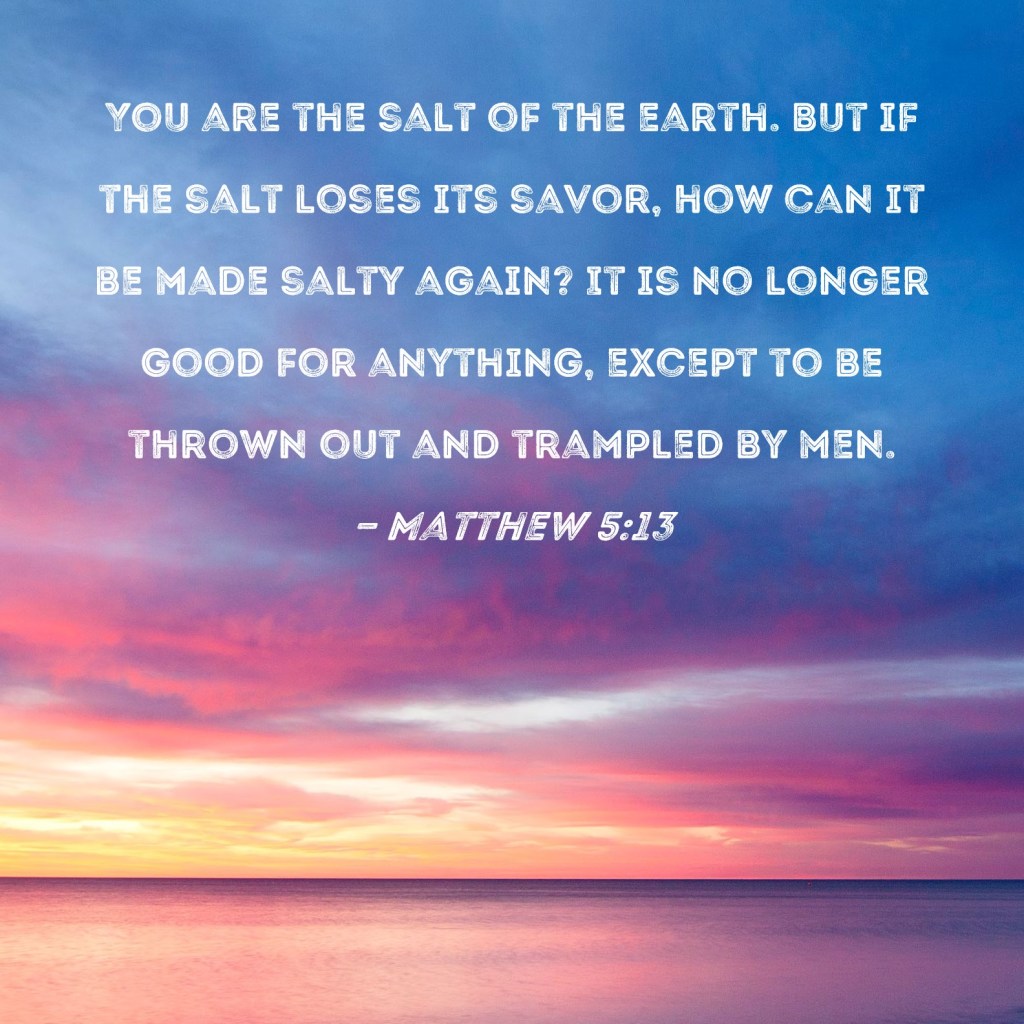
    Matthew 5:13 reads

    “Ye are the salt of the earth: but if the salt have lost his savour, wherewith shall it be salted? It is thenceforth good for nothing, but to be cast out, and to be trodden under foot of men.”

    3 Nephi 12:13 reads

    “Verily, verily, I say unto you, I give unto you to be the salt of the earth; but if the salt shall lose its savor wherewith shall the earth be salted? The salt shall be thenceforth good for nothing, but to be cast out and to be trodden under foot of men.”

    I don’t know about you, but when I think about salt the first thing I think about is taste. Especially when the word “savor” is used. But this is NOT what those hearing these words come from the source (Jesus Christ) would have thought about.

    In using the metaphor of us being “the salt of the earth”, with my understanding of taste, I would think about being a representative of the gospel to help it “taste” good to others. That by seeing the way I live, others can see that the Gospel is good. Another thought that comes to my mind about salt is its preservative properties. This metaphor could be looked at as those who are the salt of the earth conserve and preserve the Gospel, keeping it active and alive.

    How would the ancient Israelites and inhabitants of ancient America have viewed this metaphor? Turns out, the primary purpose of salt to these cultures would have been its ability to impact the smell of sacrifices.

    The commentary I read stated:

    “When sacrifices were offered upon the altars of ancient Israel, the Israelites did not give the Lord the flesh of the animal, the fruit of the ground, or the ashes or smoke of such sacrifices. The acceptable part of the offering presented to the Lord was the smell, ‘a sweet savour unto the Lord’ (Leviticus 1:17). (Many translations have the word “aroma” in the place of “savour”). In the Bible, the word savour most often refers to the pleasant smell of burning sacrifice in the temple. To ensure that the smell would be sweet, the Mosaic law required that the offering be liberally sprinkled with salt.

    “The scent of an unsalted burnt offering would be the stench of scorched flesh. But if the meat were generously salted, the odor would be quite different, ….. due to the reaction of the salt upon the cells that compose animal flesh. Under high-salt conditions, cellular fluid rapidly escapes the cells to dilute the salts outside cell membranes. ………When accentuated by heat, these fluids cause a sweet savour to emanate….

    “In this context the charge to be the ‘salt of the earth’ takes on marvelous significance. The Lord said, ‘I give unto you to be the salt of the earth; but if the salt shall lose its savour wherewith shall the earth be salted?’ (3 Nephi 12:13). The Savior’s audience no doubt understood the law of Moses and the close connection between salt and acceptable sacrifice (emphasis added).

    “It is clear that under the new covenant the followers of Christ, as “salt,” are responsible for extending gospel blessings to the whole earth. “When men are called unto mine everlasting covenant,” the Lord explains, “they are accounted as the salt of the earth and the savor of men” (D&C 101:39). It is our privilege and blessing to lovingly lead our brothers and sisters to Christ, helping them receive their covenant blessings. As we do so, we become the figurative salt that makes it possible for them to offer the acceptable sacrifice of a broken heart and a contrite spirit. In addition, our own covenant sacrifice of time, talents, and means is pleasing to the Lord.”

    The commentary concludes with this statement:

    “So how do we become the salt of the earth? The Apostle Paul points out that charity is a key to this process: “Be ye therefore followers of God, as dear children; And walk in love, as Christ also hath loved us, and hath given himself for us an offering and a sacrifice to God for a sweet smelling savour” (Ephesians 5:1-2).

    This gives the analogy of salt of the earth a whole new meaning.

    Without the gospel of Jesus Christ, and those keeping the covenants of God on earth, there is no acceptable sacrifice on the earth.

    I’ve written before about the One True Church and why it’s important. Our covenants are important.

    Malachi 4:5-6 reads

    Behold, I will send you Elijah the prophet before the coming of the great and dreadful day of the Lord:

    And he shall turn the heart of the fathers to the children, and the heart of the children to their fathers, lest I come and smite the earth with a curse.

    Modern revelation gives us more insight into this curse.

    D&C 128:18 reads

    the earth will be smitten with a curse unless there is a welding link of some kind or other between the fathers and the children, upon some subject or other—and behold what is that subject? It is the baptism for the dead. For we without them cannot be made perfect; neither can they without us be made perfect. Neither can they nor we be made perfect without those who have died in the gospel also; for it is necessary in the ushering in of the dispensation of the fulness of times, which dispensation is now beginning to usher in, that a whole and complete and perfect union, and welding together of dispensations, and keys, and powers, and glories should take place, and be revealed from the days of Adam even to the present time.

    We are the salt of the earth. We are the enabling welding link, through the power and priesthood of Jesus Christ Himself, that allows the sacrifices of this world to be of any worth, of a sweet savor, to God Almighty.

    What a beautiful and powerful responsibility. What a calling. Without the gospel our sacrifices are for naught. Our covenants are important.

    We must be the salt of the earth to save it from the curse, to make our sacrifices acceptable to God, to link ourselves to our past generations, and to one day come before God, having fulfilled our salt-like duties. To preserve, save, and help the earth on its eternal trajectory. What a sobering an humbling thought.

    As I always say, I am grateful for the Church of Jesus Christ of Latter-day Saints. I am grateful for the priesthood attached to it. I am grateful that we can help in God’s glorious plan.

  • Faith in Man or Faith in God

    Faith in Man or Faith in God

    Since I’m posting this on Thanksgiving day I think I’m obligated to say I’m grateful for the Book of Mormon, how it makes me a better person, how it makes my home a happier place, what it teaches me about Jesus Christ, and the hope it gives me for an eternal future.

    I will make a simple argument here.

    My thesis:

    Anyone who has read the Book of Mormon and believes it is a made-up story written by a man has more faith in the brilliance of a man than in the Glory of God. It is easier for that person to believe there is a man with otherworldly abilities than that God still speaks to humans.

    Explanation –

    Things that can’t be denied by any logical or thinking person:

    1. The Book of Mormon exists. You can go get a copy now and read it.
    2. The Book of Mormon was brought into existence in our day, for us to read, somehow.

    If the above two points are true, then we can move on.

    Next statements of truth:

    1. Since the Book of Mormon exists, we must determine who played a role in creating it.

    This leads us to only a couple options as far as I can tell. There may be other sub-options, but I think this mostly covers it. I’ve added sub points to each option to add important perspective:

    1. Joseph Smith wrote it by his own mind and creativity.
      • Joseph Smith had a third-grade education.
      • There are many witnesses attesting to Joseph Smith’s involvement in the creation of the Book of Mormon.
      • If historical accounts are to be believed, Joseph Smith dictated it word for word without notes or reference materials.
    2. Someone else wrote the Book of Mormon
      • This is hard to believe given countless eye-witness testimonies of Joseph Smith’s involvement in the creation of this book. It takes some creative gymnastics to determine how this could be true.
    3. Joseph Smith wrote it with the assistance of somebody very learned, ex: Sydney Rigdon.
      • This would require some sort of explanation on why no one else ever came forward to claim writing such a brilliant book.
      • With any minor research we find much evidence to show Sydney Rigdon didn’t meet or know Joseph Smith until the Book of Mormon was published.
    4. Joseph Smith translated the Book of Mormon by the power of God.
      • This would be taking the supposed creator of the book at his word.

    I believe any basic research into this subject proves Joseph Smith’s direct involvement in the creation of the Book of Mormon. Whether that be through point 1 or point 4 will now be briefly discussed. If points 2 or 3 are to believed, then a vast and complex conspiracy has been going on for 200 years. For 200 years, no proof has come forth to show that anyone but Joseph Smith created the Book of Mormon. No one has come forward. No information has leaked.

    If we come down to points 1 or 4, let’s address point 1, that Joseph Smith wrote the Book of Mormon by his own mind and creativity.

    Let’s first just disregard the fact that he wrote it in 65 working days because I feel detractors will just say, “That’s not true” even though the historical account appears to support if not prove this. Let’s say Joseph Smith wrote it with as much time, editing, and re-editing as he needed (which many testimonies argue against, but for the sake of this argument, let’s say he did take months or years to write it before he turned 25 years old).

    Those arguing Joseph Smith created the Book of Mormon from his own mind admit a man with little to no formal education, little to no access to any historical books or other reference materials, wrote a detailed account of a company leaving Jerusalem and travelling to the Americas. Instead of elaborating more on this, I will quote a challenge issued by Hugh Nibley to his students at BYU:

    “Since Joseph Smith was younger than most of you and not nearly so experienced or well educated at the time he copyrighted the Book of Mormon, it should not be too much to ask you to hand in by the end of the semester (which will give you more time than he had) a paper of, say, five to six hundred pages in length.  Call it a sacred book if you will, and give it the form of a history.  Tell of a community of wandering Jews in ancient times; have all sorts of characters in your story, and involve them in all sorts of public and private vicissitudes [daily activities]; give them names — hundreds of them — pretending that they are real Hebrew and Egyptian names of circa 600 B.C.; be lavish with cultural and technical details — manners and customs, arts and industries, political and religious institutions, rites, and traditions, include long and complicated military and economic histories; have your narrative cover a thousand years.

    Keep a number of interrelated local histories going at once; feel free to introduce religious controversy and philosophical discussion, but always in a plausible setting; observe the appropriate literary conventions and explain the derivation and transmission of your varied historical materials.  Above all, do not ever contradict yourself!  For now we come to the really hard part of this little assignment.  You and I know that you are making this all up — we have our little joke — but just the same you are going to be required to have your paper published when you finish it, not as fiction or romance, but as a true history!  After you have handed it in you may make no changes in it. . . .

    What is more, you are to invite any and all scholars to read and criticize your work freely, explaining to them that it is a sacred book on a par with the Bible.  If they seem over-skeptical, you might tell them that you translated the book from original records by the aid of the Urim and Thummim — they will love that!  Further to allay their misgivings, you might tell them that the original manuscript was on golden plates, and that you got the plates from an angel.  Now go to work and good luck!” (The Prophetic Book of Mormon, F.A.R.M.S., 221-222)

    I will add Alan C. Miner’s addition to this challenge, stating, “It shouldn’t be hard, living as we do in the computer world of the internet”:

    “Because your story is supposed to be a religious record, include in your paper over 500 different descriptive titles for deity, all within a proper religious context that will not only explain these titles in relation to what we have in the Bible, but give added meaning and understanding to the text of the Bible and to your own story.  And while you are at it, have most all the proper names of people, places and things have intrinsic and symbolic meaning.  Because this is supposedly an ancient Hebrew record, give hundreds of ancient parallelistic Hebrew literary forms.  In fact, have the whole text written in parallelistic patterns.  Incorporate thousands of phrases from the Bible so that these intertextual usages give added meaning to both the Bible and the Book of Mormon.  Make sure that the biblical sources are from all different parts of the Bible, and for that added touch, use some extra-biblical texts.  But don’t limit yourself to just your own patterns of language, or that of the KJV Bible, also use Early Modern English terms that were dated near 1611 when the KJV Bible was first published and became the bible of the masses.  Weave in an underlying theme of covenants with the Lord, both culturally and scripturally using covenant terms and practices used in ancient times.  In fact, it would be a good idea to make every part of your narrative not only covenant-related, but Christ related as well. For one final challenge you must dictate your story to a scribe without the aid of a written script.  While you may be allowed to tell your scribe to adjust the spelling of proper names, you must leave your script as you dictate it, and never ask your scribe to tell you where you left off after lunch or the end of a day.  On his own, your scribe can adjust capitalization, punctuation, the spelling of traditional words, and some simple grammar, but that is all.  Dictate parts of your story in non-chronological order, and be sure to credit these parts of your story to different writers, varying your manner of using words so that a distinct separation of language style can be detected.”

    What Joseph Smith wrote has been critiqued, criticized, evaluated, and been under a microscope for nearly 200 years. With additional evidence from archaeology, what we know about the Middle East and Jerusalem, and what we know about the Americas, the Book of Mormon is more validated, not disproven, despite what detractors may argue.

    I hope this goes to illustrate how impossible this act would be. It would be miracle of extraordinary human skill, intelligence, and foresight (knowing things that hadn’t yet been discovered yet, like chiasmus).

    Those who believe Joseph Smith wrote the book of Mormon through his own brilliance have more faith in the genius of a man than faith in the idea that God assisted in the matter. Put simply, you either have faith in the brilliance of Joseph Smith or in the Glory of God.

    Those who believe Joseph Smith did not translate the Book of Mormon through the gift, power, and love of God “deny the power thereof” (2 Timothy 3:5, Joseph Smith History 1:19).

    You must come to terms with this truth.  Either Joseph Smith was above and beyond the most brilliant man in the history of mankind.

    Or. 

    God loves His children and instituted a great work through Joseph Smith.

    What does it say if you more easily believe in Joseph Smith than in God?

    I am grateful for the Book of Mormon.

  • Attack in Michigan

    Attack in Michigan

    For those who didn’t hear, there was a shooting at an LDS church 18 days ago. I’m not sure if this was big news outside of LDS circles. Sad when there is “just another shooting.”

    For these last two weeks I’ve considered writing something about the attack.

    It felt like something I should write about.

    But I didn’t know what to say. Especially with all the conversation that started to come up around it, I didn’t really want to contribute to that.

    But again, I felt like it was something I should write about.

    The first thing I felt when I heard the news was a real, deep sadness. A quick, deep sadness, like a punch of sorrow to my gut.

    The next thing I felt was a little ashamed of myself. There are shootings often. Unfortunately. When this happened, it hit me hard. I found other recent shootings that I hadn’t heard anything about. Every shooting brings me sadness. Why did this one impact me so much more? I guess because this shooting happened against my people, I felt it more.

    I don’t like thinking in terms of “my people.” Polarized, tribal views is one of the major issues in America right now.

    Still, these were my people. I now had images of being with my congregation on Sunday when a nightmare might start. These were followers of Christ. These were my brothers and sisters.

    What happened in Michigan hit me. But it’s not what I want to talk about. What I want to talk about is the response.

    What should separate members of the body of Christ? How should members of the Church of Jesus Christ of Latter-day Saints act? How should true followers of Christ respond to an act of violence against them?

    If we are true studiers of the Book of Mormon, true understanders of the Gospel, and true readers of the Bible, we should know that the response should be love and compassion. No matter how hard that is.

    So when I read that a member of the Church of Jesus Christ of Latter-day Saints, not a member of the attacked congregation, but a member nonetheless, when I heard someone started a fundraiser for the family of the man that did something indescribably wrong, I held back tears.

    I encourage you to read that last link becuase Dave Butler, the man who started the fundraiser, makes some good and important points.

    It’s not easy to forgive your enemies.

    Is this a story of forgiveness or is it a story of empathy, love, and compassion? It is an example of all those things. This was just a way for a community of people to show all those attributes in a difficult circumstance.

    We have a commission to look after the widowed and fatherless. There was now a family that needed that. The human family showed its true character when it stepped up to help the widowed and the fatherless.

    If we could just show more love, compassion, forgiveness, and empathy in this world, how different would it be?

    I am proud of my church.

    I am proud of Jesus Christ’s church.

    I’m proud of our members and what we represent. I know that aggression against the followers of Christ will increase. I wrote about this last week. I hope our faith is ready to withstand the trials that await us.

    I hope that throughout our trials we can always remember that love, compassion, empathy, and forgiveness are always the right choice.

  • Revenge and Forgiveness

    Revenge and Forgiveness

    Israel

    Palestine

    Israel and Palestine

    Israeli War

    Aggressors in War

    Revenge

    Forgiveness

    9/14/25

    As I prepared to write on this topic that I quite honestly don’t want to write about, I listed out those possible titles for this post. If that list is an indication of anything, it’s how scattered my thoughts on this topic will be.

    I actively avoid politics. I aggressively avoid current affairs.

    It’s not that I want to, I’d like to be aware of the important things happening around the world. It’s that I feel like I have to.

    Politics and current events are so filled with hatred, vitriol, unkindness, unfairness, poison, and frankly stupidity that I have chosen to actively avoid it. This becomes a problem when my wife wants to discuss these things, and would really like her husband to be able to discuss it with her, and then she has to watch me like an ostrich putting my head straight into a hole. I just want no part of it.

    Recent events have led to me looking into some things.

    I hear so much leftist this and right wing that – I am aggressively trying to keep myself from knowing what these distinctions mean. Call me naive. I think it’s all so stupid.

    What does this have to do with those topics listed above?

    Just saying Israel and Palestine, I believe, ignites passionate political beliefs.

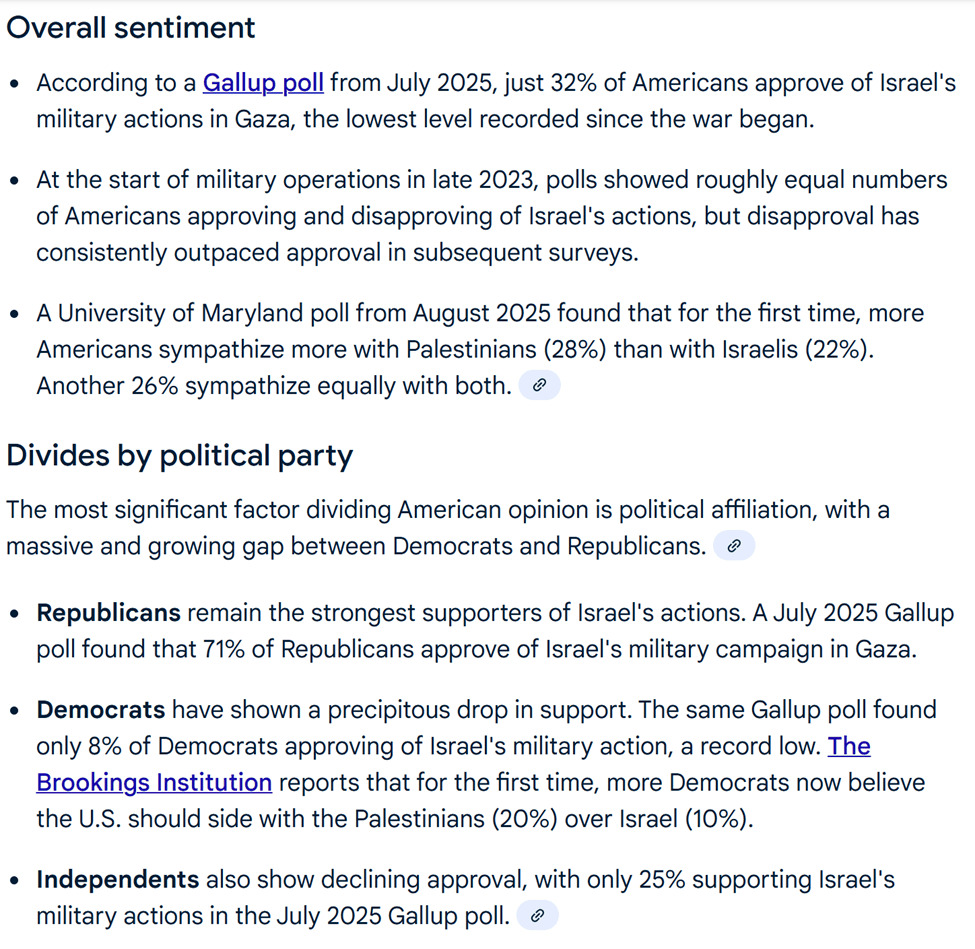
    If you need proof, yes, even wars are split along party lines:

    I do not like passionate political beliefs. I hope this post has nothing to do with politics.

    I hope this post has something to do with history, what’s right, and prophesy.

    I’ve written about Israel and Palestine before HERE and ten months later HERE.

    The Book of Mormon was written so that we, the Gentiles of today, will understand what is coming in our future. The Book of Mormon is meant for our day and is meant to guide us.

    I’ve recently been reading Hugh Nibley’s thoughts on what the Book of Mormon teaches us about how a civilization and a people can go wrong and destroy themselves.

    I probably lost most people at “prophesy.” Prophesy is real. And while I put my head in the ground about political affairs and current events, I think the rest of the world puts its head in the ground when it comes to prophesy.

    Hugh Nibley emphasized, as I’ve been studying his words regarding Mormon chapters 1-9, how the ancient inhabitants of Mesoamerica ultimately destroyed themselves. He detailed how the chosen people of this land, those who were given this land and given God’s covenant that it would be their land as long as they followed Him – how those people lost their favor and were destroyed.

    The extinction of a people started with:

    Pride.

    No repentance.

    War.

    Revenge.

    War is justified when it comes in self-defense. The thing I want to focus on here is revenge. Hugh Nibley talks about how the Nephites of the Book of Mormon were destroyed when they officially became a bloodthirsty people bent on revenge. God withdrew from them when they decided they would avenge all their fallen brothers who had been killed.

    Which leads to me today, long having put my head in the ground since that post about Palestine and Israel four years ago.

    I accidentally read an article about the current state of the Israel – Palestine war.

    I decided to write this post when I read this:

    “Signs for this old-new vocabulary are everywhere. It is common among Jews, for example, to add the initials for “blessed his memory” next to the name of the dead – but in this war, almost every soldier or civilian victim is memorialized with the phrase “Hashem yikom damo” (God will avenge his blood).”

    God punishes the wicked with the wicked. You don’t want to become the people punishing the wicked in the name of God. Because at that point, you are the wicked. And at that point, your day will come too.

    I fear how long the United State of America has felt the need to be the aggressor in the war against wickedness around the world.

    There is a big difference between wars of self-defense, wars of aggression, and wars of revenge.

    Ceasing to remember the blessed memory of loved ones and instead seeking to avenge blood is not God’s way.

    The world has long said this is how God works. It is not how God works. It is how Satan works. And when people think they’re acting on behalf of God but really being led chain-linked by Satan, the worst atrocities happen.

    Prophesy is being fulfilled before our eyes and the world collectively puts its head in the ground.

    Which leads to my concluding point that Hugh Nibley mentions. Ultimately, we will all be judged for our own actions. What we do matters. All we can do is what we can do – kindness, forgiveness, love, peace, avoid contention, avoid fighting, avoid hatred, avoid judgment, meekness, humility, faith. These are the things we can do in a world that is lost and confused. A world that is deviating. A world that distances itself from God more and more every day.

    You do your part. You do what’s right.

    You love. That’s all.

    9/15/25 Update

    As I painfully, accidentally read more political information, I come back to add more because it seems relevant to what I’ve already written.

    Some recent quotes I’ve read from Donald Trump regarding Charlie Kirk’s assassination:

    The radicals on the left are the problem. And they’re vicious and they’re horrible and they’re politically savvy.

    We have radical left lunatics out there, and we just have to beat the hell out of them.

    And then I read articles and comments and it’s all attack attack attack hate hate hate while yelling at Trump for saying to attack attack attack. Does no one see the irony?

    The same article with the headline

    later, quietly, adds:

    “The president added in a separate answer that he would urge his supporters to follow a nonviolent path in response to the shooting. “He [Kirk] was an advocate of nonviolence,” Trump said. “That’s the way I’d like to see people respond.””

    Why does “beat the hell out of them” get the headline?

    Because it evokes emotion on both sides. It gets clicks.

    The same article that condemns Trump for violent speech chooses to promote the violent speech.

    Why?

    Because the violent inflammatory statement get the clicks.

    It is all hypocrisy.

    I’m not excusing Trump’s, “beat the hell out of them.” I am condemning it. But if we fail for this click-baiting and this hatred, this you against us mentality, we become part of the problem.

    Then I read Governor Cox of Utah’s statements:

    “We can return violence with violence; we can return hate with hate. That’s the problem with political violence. It metastasizes. We can always point the figure at the other side. At some point we have to find an off ramp, or else it’s going to get much worse.”

    I stand by the Governor Cox’s words.

    An eye for an eye quickly becomes lives for lives. Revenge hurts everyone.

    How do we find an off ramp?

    Again, from Governor Cox:

    “Social media is a cancer on our society right now,” Cox said. “And I would encourage people to log off, turn off, touch grass, hug a family member, go out and do good in your community.”

    Love. Forgive. Look past the thing you disagree with someone on and instead look at the beautiful, passionate, important person they are.

    We all have a divine heritage and one day we will be embarrassed about how we thought of the people around us.

    There is no other side. There are only people. We are all imperfect and the sooner we realize that and forgive and show love, the better we will all be. Only love can heal the divide in our world.

  • A Corny Video but Compelling Witness

    A Corny Video but Compelling Witness

    I came across this extremely corny 8-minute video that I had to share.

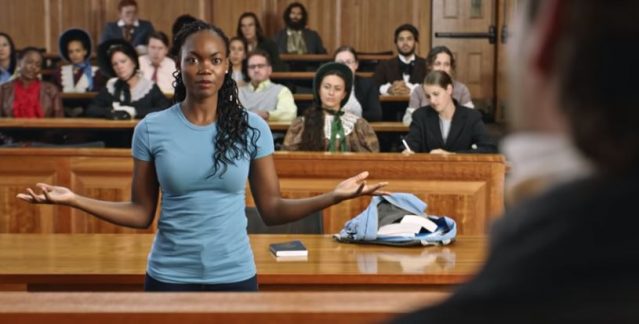
    It depicts a somewhat realistic interaction between two high schoolers that is then transported (classic short video trope) into a courtroom debate.

    I’m poking fun at the video because it really is quite cringy. But I love it. Which is why I’m sharing it.

    This video made me think of this post I wrote recently:

    Is the Book of Mormon true? Yes.

    The other day I overheard someone talking about how they don’t believe in God. I didn’t talk to them. But later I daydreamed about what I could have said. I daydreamed about walking up to them and telling them I know God exists. I imagined this imaginary person asking ‘How do you know?’ I would then explain about the Book of Mormon, and that because of it, I can know that God exists. This imaginary person would then ask, ‘How do you know the Book of Mormon is true?’ At which point I could try to explain in less than 1000 words as even my imaginary friend starts to gloss over and not understand/comprehend/care about what I’m saying.

    That’s what this short video made me think of. This video made me think of all the people I wish I could convince that the Book of Mormon is true. And along with that, all the people I wish I could convince that this matters, and it’s important.

    A quick recap from the video and from myself because I can’t help myself –

    Joseph Smith dictated the Book of Mormon without notes or source materials, nothing in front of him, in 65 working days. Today tens of thousands of people his same age stress and fret over 10-page term papers with sources included. The Book of Mormon is 531 pages.

    So he was a literary genius? Quite the contrary, could hardly write an understandable letter.

    So he faked for decades being an illiterate farm boy while dictating the greatest fictional literary work of all time? Uhm, okay. “This would require a beyond creative, theological genius to compile a book that radiates with the spirit.”

    Not to mention the things no one in his day knew about that have since come to light. Things it would have been impossible for him to know.

    As this video says, it’s not about proving the Book of Mormon is true with facts.

    It isn’t fiction. But I can’t prove that to anyone (as much as I think I actually can…). You have to read it then you have to ask God. And then if you get your answer, what next?

    A reminder of what the Book of Mormon asks us to do – prove it. Then be baptized and remember Jesus Christ, the redeemer of this world.  

    Moroni 10:3-5:

    Behold, I would exhort you that when ye shall read these things, if it be wisdom in God that ye should read them, that ye would remember how merciful the Lord hath been unto the children of men, from the creation of Adam even down until the time that ye shall receive these things, and ponder it in your hearts.

    And when ye shall receive these things, I would exhort you that ye would ask God, the Eternal Father, in the name of Christ, if these things are not true; and if ye shall ask with a sincere heart, with real intent, having faith in Christ, he will manifest the truth of it unto you, by the power of the Holy Ghost.

    And by the power of the Holy Ghost ye may know the truth of all things.

    Mosiah 18:8-10:

    And it came to pass that he said unto them: Behold, here are the waters of Mormon (for thus were they called) and now, as ye are desirous to come into the fold of God, and to be called his people, and are willing to bear one another’s burdens, that they may be light;

    Yea, and are willing to mourn with those that mourn; yea, and comfort those that stand in need of comfort, and to stand as witnesses of God at all times and in all things, and in all places that ye may be in, even until death, that ye may be redeemed of God, and be numbered with those of the first resurrection, that ye may have eternal life—

    10 Now I say unto you, if this be the desire of your hearts, what have you against being baptized in the name of the Lord, as a witness before him that ye have entered into a covenant with him, that ye will serve him and keep his commandments, that he may pour out his Spirit more abundantly upon you?

    If this book is true, what else matters!?!?

    Family = eternity.

    Jesus Christ = resurrection and eternal life.

    Heavenly Father = our Father, we are sons and daughters of God.

    If the Book of Mormon is true these things are true! Don’t day to day issues seem smaller when you realize you will live forever, with your family, as a divine being alongside THE divine beings?

    What a message.

    Read the book. Prove for yourself.