Tag: book review

  • Simplified Husbandship

    Simplified Husbandship

    These are the highlights I typed up for myself from a book called Simplified Husbandship | Simplified Fathership by Richard M. Eyre. I typed this up mostly for myself to refer back to.

    This is only on the simplified husbandship portion of the book. These are the quotes, summaries, and most important points I found from the book.

    “To become a better husband –

    change yourself

    not your wife.”

    “The home should be the center of growth, happiness, of excitement. If your home isn’t a happier place now than it was a year ago, you’re not progressing.”

    “A marriage of oneness should have a Venn diagram that is as circular as possible in the middle. When the marriage doesn’t have enough oneness, the middle is like a football.”

    “This type of marriage, like a football, is erratic and hard to predict. There is no telling where it will bounce.”

    “The best way for a husband to pursue this kind of oneness lies not in efforts to change his wife or even in efforts to change the marriage relationship. His best chance lies in changing himself.”

    Partnership-Plan-Pray

    Communication – “Oneness is an impossibility between two who share only part of what they feel.” This one really hits home for me. I’m not a great communicator.

    Inspiration – “The third partner should be the Lord.”

    One strategy for partnership –

    Wife handles the “inside partnership” of inside-the-home things such as home, children, personal kingdom, etc.

    Husband handles the “outside partnership” of outside-the-home things such as money, providing necessities, involvement in outside causes like church and civic, etc.

    In the above example, the wife would be general manager of inside partnership and husband participating partner and vice versa.

    Each night before prayer each gives a brief report on their stewardship, and receives comments, questions, or insight from the participating partner. Both participate, but one is in charge of each.

    During scheduling, attempt is made to find an hour where roles are reversed. Husband spends time with the children on the inside and wife shifts to outside activities, church, civic, or personal. (This seems extremely structured, to the point that it might border on unrealistic, practically speaking. But I still like the premise).

    Partnership – “day planning” – evening prayer.

    Each has a role and the Lord is the supervising partner.

    Partnership meeting is simple and shouldn’t take more than 10 minutes. The results:

    1. Each learns more about the arena where he or she did not spend the day (and becomes more appreciative of what the other is doing).
    2. Each gives input and ideas for the other’s benefit.
    3. Each thinks about what he or she will do the next day in both the general and the limited role.
    4. The prayer becomes far more specific and meaningful (because it is about things just discussed).
    5. Both sleep better when the next day is clear and challenging rather than hazy and uncertain.

    Things I personally could talk about with the outside responsibilities:

    1. Schedule for work / coaching / gym / church calling / projects
      • Go over my daily items
    2. Investments and status
    3. Finances – budget (handled by Beth, could be a part of her report).

    Once a month dinner date, reviewing the month. Review the past month and set goals for the month ahead.

    Once a year “honey-moon” vacation to review the last year and the year ahead.

    Principles:

    1. Total communication and openness
    2. Complementary roles (separate but shared responsibility)
    3. Shared goals and plans
    4. Adding the Lord to your partnership through earnest, regular prayer together

    “If exaltation is the goal, marriage partnerships must fold together in purpose and communication until they become one. We often imagine that temple marriages differ from civil marriages in quantity (they last longer), but, in fact, their quantity will be great only if their quality is great, only if oneness is obtained.”

    “Agreeing to disagree on some things is fine among friends and business partners but not between marriage partners striving for oneness.”

    “Partners are separated when they compete in any context other than fun.”

    “Emerson said, “Marriages do not fail, people fail. All marriages do is show those failures up.””

    Partnership-Plan-Pray Summary:

    • My wife is my partner in all I do.
    • We share everything, including our deepest feelings.
    • We plan our time together and share objectives for our lives inside and outside our home.
    • We pray together regularly, and preceding the prayer is a discussion of our partnership.

    Protect-Pamper-‘Preciate

    “A woman’s ego is no weaker than a man’s, but hers works in a slightly different way. Hers usually is best fed when she is cared for, complimented, appreciated, protected – even pampered a bit – not with the patronizing implication that she is weaker, less able, but with the implication that she is more special, important, and genuinely valued. A wife who receives sincere compliments, who is appreciated, who feels needed and cherished and protected, seems to gain a soft strength, a kind of clear-headed fulfillment that raises her toward her full potential in many areas.”

    “It’s the old notion of “out-giving” that can make marriages even more beautiful. Have you ever watched what happens to a basketball team when one player is so unselfish that he is always looking for a teammate to get the ball to? Other players respond in kind. The ball moves faster; everyone gets better shots. The teamwork of marriage can be similar.”

    Me – This is similar to the advice I received early in my marriage. When I confided in someone about my frustrations with doing household chores, that someone asked me point blank, “Why are you doing chores?” They asked if it was to one-up or get an edge on my wife. They asked how the Savior served. They pointed out that this life is meant for us to become like the Savior. The Savior never asked for anything in return when he served others. If I’m cleaning the house or doing something so that I’m owed something or appreciated by my wife, what’s the point? It’s not service, it’s a way to get an advantage. They said to love and serve my wife for that simple purpose. Because I love her and I want her to be happy, and for no other reason. My life and marriage are better when I realize and remember this.

    “It is not the addition of responsibility and children that destroy romance. It is the subtraction of courtship, of chivalry, of living to make the other person happy.”

    Protect-Pamper-‘Preciate Summary:

    • I love my wife deeply and understand her need to feel cherished and loved. 
    • I feel tenderness toward her and want to find meaningful ways to compliment her, to be chivalrous and protective of her. 
    • I watch her closely and notice the time she needs the “lift” of a tender kiss, a word of sincere appreciation, a helping hand, a date.” 

    Patriarch-Priesthood

    A wife is asked, “What would you do if your husband were to ask you to do something you didn’t agree with, not something unrighteous, but something you didn’t want to do?” 

    She responds, “I would tell him I didn’t want to, and we would discuss it.” 

    “Yes, and most things you would work out and agree on. But let’s say in this instance you still didn’t agree. You thought it was the wrong decision, but he still wanted it. What would you do?  

    She says, “I wouldn’t do it.” 

    “That’s what I want to talk to you about. You would have two options in that situation. One, to refuse. Or two, to say, ‘Yes, you know my feelings, but if you still feel it is right, I will accept your decision.’ If you take the first option you get into a power struggle and minimize his chance to change or repent if he is wrong (his ego, if you defy him, will lock him into his wrong choice). If you take the second option, you show trust and giving, and you maximize his chance to change if his decision is wrong. (The other side of the husband’s ego is the one which feels the responsibility to protect and be fair with his wife who puts her confidence in him.)” 

    The husband is then asked, “Would you ever do that? Demand that your wife do something she did not agree with? If you do, you will sooner or later destroy your relationship. If you force decisions on her, you abuse her trust and become a tyrant. That is what you do if you demand.” 

    If either the husband or wife remembers this, it will work. If the wife respects the priesthood, the husband will use it well. If the husband counsels and communicates rather than demands, the wife will respect the husband and they will be one, with the priesthood belonging to both together. 

    I would add that this example works the other way around as well. If the wife decides on something and doesn’t respect the disagreement of the husband and the husband refuses to compromise, it becomes a problem.

    “In a baseball game the pitcher throws the ball, the catcher catches it. The roles are equal but different. They could rotate, the catcher throwing every other pitch, but they would do less well in the game. In the patriarchal order, the husband holds the priesthood and the wife shares it. The “head of the home” (the husband’s role) and the “heart of the home” (the wife’s role) are equal but different in that both draw on the great, inherent strengths of each.”

    To be a strong priesthood leader in a home:

    1. Take the lead in planning the week together each Sunday. 
    1. Use the priesthood more in the home (for blessings, etc.). 
    1. Have a short personal interview with each child on Sunday evening. 
    1. Hold a good family prayer each morning and a “partnership prayer” with your wife each night.  

    Patriarch-Priesthood Summary:

    • My wife shares the priesthood with me, and we are equal partners. But I hold that authority and I have the righteous strength that helps her feel secure and fulfilled in her support. 
    • I take the lead in planning and goal-setting, in family prayer, and in personal interviews with each of the children. 
    • I realize that there is no intervening link in the priesthood chain between myself and the Lord. As a father I am entitled to direct inspiration for my wife and children. I ask for that inspiration and receive it. 
    • use the priesthood often in my home for personal blessings and to keep the Lord’s Spirit present.  

    Priority 

    “Lack of commitment is Satan’s key tool in destroying relationships. Without commitment, little problems and disagreements can become final ones.” 

    A “planning” husband: “In addition to planning with my wife, I consciously ‘prioritize’ my wife in my personal planning. When I plan my week, I think about her first, and the fist thing I put on my calendar is our Friday night date. Then I ask her about her schedule and try to work out when she might need me. I try to plan at least one little surprise for her each week.” 

    A less planning husband, “I just watch Pattie and try to notice when she needs a little pick up. Also, and I don’t always remember this, I try to make my last thought of the day, just before I got to sleep, be of Patti. I think, ‘What can I do for Pattie tomorrow?…It’s fun to try to think of her for a moment each night just as I doze off.” 

    Priority Summary:  

    • My wife comes first in my plans, my schedule, my priorities. 
    • When I have decisions to make, my first thought is always how they will affect her. 
    • I consciously try to find “little things” to do for her on a regular basis.  

    Becoming these things 

    “Most husbands, busy with jobs, callings, and concerns of all varieties, cannot be constantly thinking of their roles as husbands. Therefore, becoming these four qualities to the point where you live them naturally is the only practical, workable way to improve your husbandship.” 

    “Self-programming” is the idea of making these qualities subconscious, so they don’t have to constantly be thought about. The point is to become these husband qualities.  

    Methods of self-programming 

    1. Running 
    1. Meditation 
    • The same kind of self-programming can be done in meditation. Simply sit comfortably in a quiet place, close your eyes and quiet your mind as best you can. Then begin – “I put my wife first,” etc. 
    1. Shaving 
    1. The last thought of the day. 
    • The quiet night, with no light or distraction, is a good time to say, “I am the patriarch of my home. I lead righteously through the priesthood. Last week I gave a priesthood blessing to little Nell. I watch for opportunities to use the priesthood.” And so on. 

    “Each method of self-programming can be strengthened by prayer. We have great power to change ourselves, but our Heavenly Father is the true changing force.” 
  • Book Review: Mamma’s Boarding House

    Book Review: Mamma’s Boarding House

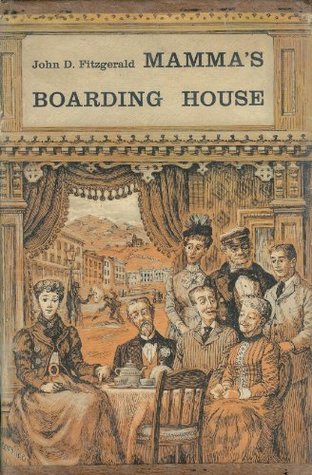
    Mamma’s Boarding House

    By John D. Fitzgerald

    Copyright 1958

    _________________________

    I think the Foreword to this book did a great job of summing up what it was all about, it read:

    “There was more to the settling of the West than the battles between Cattle Barons and Sheepmen, Outlaws and Posses, White Men and Indians, Ranchers and Homesteaders which have been told in story and song over and over again.

    There were other people who helped put down the roots of the West: the banker, the editor, the schoolteacher, the judge, the clergyman, the merchant, the artist, the saloonkeeper, the miner, the town drunk and the town bully.

    This is their story.”

    I read a lot of nonfiction so mixing in some fiction is always a nice change of pace.  This was a perfect book for that purpose.  A story shooting (pun intended?) back into a time I don’t know from personal experience but can relate to in all the cowboys v. natives fights I setup with my toys growing up.

    New Research Ends Marvel Vs. DC Movie Debate, But Is It a Fair Fight?

    I feel like the world has become increasingly fascinated by extreme fantasy – dragons and magic; or space travel – spaceships, aliens, and inter-galactic battles; or superheroes – Marvel and DC.  I think one of the greatest tragedies of this transition is kids not growing up with a fascination of something that really happened, here in the United States, in the last century.  Like I alluded to already, gun slinging bandits only slowed down by gun toting sheriffs – that was my favorite imaginary time as a kid.  I loved the idea of a bandit coming into town to rob the corner store and another gun wielder being the only defense.

    Attractions – Old Tombstone Western Theme Park

    This book took me right back into my old imagination.  A town where guns are on most hips as a matter of protection.  The value in this book was the story telling from the perspective of a young man growing up in an early western settlement in Utah.  If you enjoy the western theme, I think this is a great book for you.

    This book is the sequel to another book: Papa Married a Mormon, with a third in the series titled: Uncle Will and the Fitzgerald Curse.  I haven’t read Papa Married a Mormon but stumbled upon it in my collection of soon to be read books, so will read it soon.  I didn’t get the feeling I was missing much having not read the first book.  The story made complete sense to me and I thoroughly enjoyed it.

    The book is 241 pages but is a quick and easy read.  I would recommend it to anyone, especially anyone who enjoys the Western theme.

  • Book Review: LeGrand Richards Beloved Apostle

    Book Review: LeGrand Richards Beloved Apostle

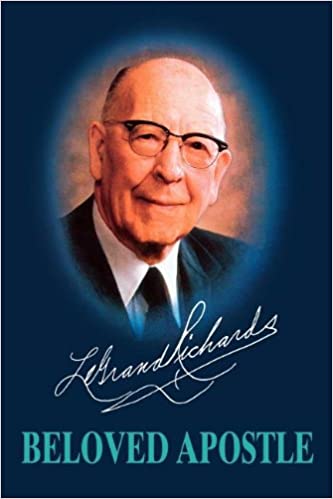
    LeGrand Richards: Beloved Apostle

    By Lucile Christenson Tate

    Copyright 1982

    _______________________

    I was excited to read this book because LeGrand Richards wrote one of the most impactful books for my life that I’ve ever read – A Marvelous Work and a Wonder.

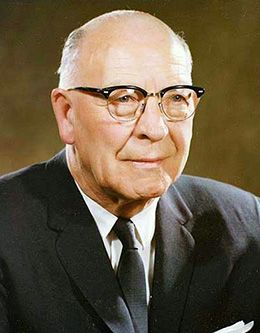
    I think the best way to honor this book is to honor the amazing man LeGrand Richards was.

    Testimony Archives - BYU Speeches

    He was a mission president, presiding Bishop, and member of the Quorum of the Twelve Apostles. He was an Apostle of the Lord Jesus Christ.  I believe near the end of his life he was in very close communication with Jesus Christ.

    One of his greatest contributions to the building up of God’s kingdom here on earth has been the writing A Marvelous Work and a Wonder.   One of my favorite books of all time.  I don’t know how a person can read that book and still question the claims of the Church of Jesus Christ of Latter-day Saints.

    In life LeGrand was one of the greatest missionaries of this dispensation.  He was described by someone in this book as the Paul of the latter days.  I was extremely motivated by his example and boldness in sharing the gospel throughout his life. 

    One great missionary story about LeGrand Richards in the book comes from Bruce R. McConkie. Elder McConkie tells of a time he was sitting in the back of a plane waiting for it to take off.  LeGrand got on the plane and shook the hand of every single person. “He started at the front and walked the full length of the plane shaking the hands of everyone aboard – people he’d never seen before – and he asked each one if he or she was a Mormon.” After speaking to each person on the plane he went back up to the front, turned, and said, “There are seventeen of us on board tonight. Isn’t it wonderful to belong to the Church?” Bruce R. McConkie continued, “The plane was full of non-Mormons, some had never heard of Mormons, but that is exactly what he did…all over the plane people smiled, laughed, were pleased. He hadn’t offended. He hadn’t hurt anyone’s feelings and he’d left a good impression and feeling for the Church.” He was a kind, gentle, and somewhat funny old man.  Can you imagine the impact this act had on that plane?  The feeling of fellowship that would be present?  The missionary discussions and promotion of the Gospel of Jesus Christ that could then occur?

    I can imagine someone leaning over, “who is that man?”

    A response, “He is an Apostle of the Lord, Jesus Christ.”

    To LeGrand Richards:  Thank you.  Thank you for writing amazing books.  Thank you for being an example of service to the Lord, and to others.  Thank you for being a source of truth and light to this world.  All I know of you is what I’ve read.  That’s enough to tell me I greatly look forward to meeting you one day, if I ever get that privilege.

    ________________________

    LeGrand Richards spoke in General Conference a total of 22 times. He was known for speaking purely from his heart and through the spirit. He could go on and on with profound spiritual insights. Here is his second talk in General Conference in October of 1971, “Laying a Foundation for the Millennium.”

  • Book Review: The Joseph Smith Translation.  Precious Truths Restored

    Book Review: The Joseph Smith Translation. Precious Truths Restored

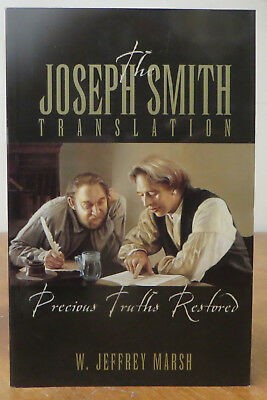
    The Joseph Smith Translation.  Precious Truths Restored

    by W. Jeffrey Marsh

    Copyright 2002

    ______________________

    There are multiple ways I judge a book.  It can be so entertaining I can’t put it down.  I can feel enlightened by it, like I’m learning constantly through its pages.  Ideally a book does both.  I think this book more was on the enlightened, learning something from it category.

    I realize most people aren’t going to enjoy the books I’m enjoying.  Few people get excited about learning about the Restoration of the Gospel of Jesus Christ.  This is a book I wish every active member of the Church of Jesus Christ of Latter-day Saints would read.  It did so many things for me: taught gospel truths, built my testimony of Joseph Smith and his divine call, and probably the biggest thing I took away from it, better understanding of the Bible. 

    A statement from the summary on the back of the book states it:

    “will guide you through the history, significance, and insights found in the Prophet Joseph Smith’s translation of the Bible.”

    The biggest takeaway I got from this book was the knowledge of how blessed I am to have the Joseph Smith Translation (JST) of the Bible and the fact that I’ve never once doubted its truthfulness and divine nature.  The book goes a lot into the history of the JST.  I didn’t know there were many years that the JST was regarded skeptically by members of the Church.

    I am truly grateful to be living while I’m living, with so much truth and light surrounding me.  This book helped me appreciate how lucky I am.  There was a part of the book where the author talked about how there would one day be a generation that never doubted the divine nature of the Joseph Smith Translation.  He talked about how that generation will know the scriptures better than any prior generation.  That generation will know Jesus Christ better than any prior generation, due to the truths restored by Joseph Smith.  He talked about this generation that will have more fullness of scriptures than any generation ever had.  Truly the fullness of times.

    This made me appreciate my place in time, my place in history, my place in the fullness of times more than ever.  It’s never been a doubt to me that the Joseph Smith Translation is holy scripture and worth studying.  It helps me trust Joseph Smith as a prophet and teaches me more about Jesus Christ. 

    I know these things aren’t to be taken for granted.  Our generation isn’t gifted greater scriptural knowledge simply by living now.  We must study and learn.  If we devote ourselves to the Word of God, there is more out there for us to devour and grow from than any people on this earth has ever had the opportunity to know.

    I’m so grateful to be alive today and I’m so grateful to Joseph Smith for the truths he restored.

    ____________________________

    To learn more about the Joseph Smith Translation of the Bible go here:

    https://www.churchofjesuschrist.org/study/manual/revelations-in-context/joseph-smiths-bible-translation?lang=eng

    https://www.churchofjesuschrist.org/study/history/topics/joseph-smith-translation-of-the-bible?lang=eng

  • Book Review:  The Problem of Pain

    Book Review: The Problem of Pain

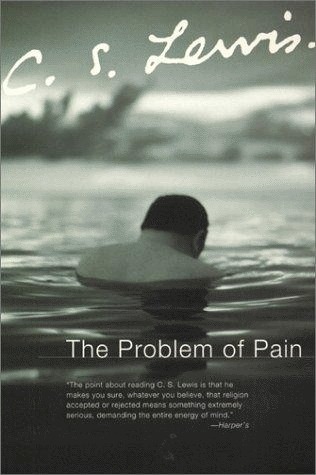
    The Problem of Pain by C.S. Lewis

    Copyright 1940

    ________________________________

    From the front cover: “The point about reading C.S. Lewis is that he makes you sure, whatever you believe, that religion accepted or rejected means something extremely serious, demanding the entire energy of mind.”

    Before starting this book, I was in the precarious position of thinking C.S. Lewis was one of my favorite authors without having ever read one of his books.  I have many of his books on my list of to-one-day-read.  The Lion, the Witch, and the Wardrobe is obviously on that list.  In the Church of Jesus Christ we often hear that C.S. Lewis is one of the most quoted, nonmember of the Church of Jesus Christ of Latter-day Saints, ever.  For good reason.  I came to the conclusion C.S. Lewis was one of my favorite authors because all his quote ARE SO GOOD.  He is brilliant.

    The Problem of Pain was the first C.S. Lewis book I ever read.

    I consider myself a semi-literate and intelligent individual.  That all went out the window while reading this book.

    This is how I felt reading this book:

    My monkey brain couldn’t wrap itself around these eloquent and long sentences.  Here’s another thing, I don’t like huge paragraphs, if you can’t tell.  When a paragraph goes 3 pages long (in the paper-back I was reading) I’m likely to get lost before even starting it.

    All that being said, my simplistic mind could still grasp that it was being stretched.  I could still sense this learning taking place in my mind, even if much of it was going over my head.  There were many quotes that made me stop and think. That was part of the problem.  To truly appreciate this book, I would have had to stop and ponder what I was reading at least 3 times per page.  That makes for a long reading of a 162-page book.

    I will read this book again, mark my words.  I may read it 10 more agains.  It is good and I do desperately want to understand it.  So, I won’t be giving up on it.  I’ll just have to mix in some simple, relaxed reading alongside it.  My mind  can only take so much.

    If you’re much smarter than me, please read it.  If you have read it and understood greater than 20% of it, let’s sit down and talk, but only if you’re prepared to be extremely patient with me.

    I will leave you with one of my favorite parts of this book so you can get a feel for the book, learn something, and see how brilliant C.S. Lewis’s writing is.  It will not be the whole paragraph because I don’t want every reader to get lost midway through like I often did.

    In speaking of hell, C.S. Lewis writes:

    “I willingly believe that the damned are, in one sense, successful, rebels to the end; that the doors of hell are locked on the inside.  I do not mean that the ghosts may not wish to come out of hell, in the vague fashion wherein an envious man ‘wishes’ to be happy: but they certainly do not will even the first preliminary stages of that self-abandonment through which alone the soul can reach any good.  They enjoy forever the horrible freedom they have demanded, and are therefore self-enslaved:  just as the blessed, forever submitting to obedience, become through all eternity more and more free.”