Tag: book

  • The Rock Christ would Build His Church Upon

    The Rock Christ would Build His Church Upon

    In a book called The Forerunners by Mark E. Petersen, I was introduced to an interpretation of a scripture that I’d read and heard quoted a thousand times.  The truth of the interpretation was so clear I couldn’t believe I’d lived so long with such a clear misunderstanding of the meaning of that important scripture.

    The verse is Matthew 16:18 which reads:

    18 And I say also unto thee, That thou art Peter, and upon this rock I will build my church; and the gates of hell shall not prevail against it.

    Let’s give some context to this important passage.

    Jesus was with His apostles and He asked a simple question:  Who do the people say I am? (verse 13)

    They responded with some of the rumors out there – Some thought Jesus was the returned John the Baptist, some thought Elias, others thought Jeremias or another of the prophets.  (verse 14)

    Jesus asked, who do you say I am? (verse 15)

    Peter, Jesus’s first apostle responded, “Thou art the Christ, the Son of the living God.” (verse 16)

    Christ responds, “Blessed art thou, Simon Barjona (Peter): for flesh and blood hath not revealed it unto thee, but my Father which is in heaven.”

    Which leads us to our important verse and the part I always misunderstood.

    Christ says to Peter, “thou art Peter, and upon this rock I will build my church.”

    One more quick review to make the point clear:

    1. Christ says who am I?
    2. Peter answers – you are the Christ, the Son of the living God.
    3. Christ responds – blessed are you, for flesh and blood (man) has not revealed this but my Father who is in heaven has revealed this to you.
    4. Christ, in responding to Peter stating properly that He is the Christ, says “thou art Peter.”
    5. Then, adding to what Jesus said about the truth being revealed to Peter by God, Jesus says, “and upon this rock I will build my church.”

    Christ wasn’t saying the church would be built on Peter.  Christ’s Church couldn’t be built on anyone’s shoulders but His own.  Additionally, Christ is adding that the testimony of Him could only be received by man from Heavenly Father, more specifically the Holy Spirit.  The rock of Christ’s Church would be Christ Himself, and the testimony of Christ only comes by revelation from the Holy Spirit.  Not by flesh or blood, but by Heavenly Father and personal revelation.  Thus, the rock of Christ’s Church would be personal revelation that Jesus is the Christ.

    I was always so confused by this scripture.  Why would the rock, the sure foundation of Christ’s Church be on anyone but Christ?  How could Peter be the foundation?  He is not.  There is only one foundation.  There is only one name by which we can receive salvation, there is only one person who can save us.  That is Jesus Christ.  The Son of the living God.  Our Savior and King.

    My foundation - $Christ ministries$

    This scripture, when properly read, emphasizes the importance of coming to a personal testimony that Jesus is the Christ.  We’re reminded that the testimony of Christ does not come from man.  It comes from personal revelation.  It is unfortunate that personal revelation has been removed from much of modern Christianity.  Modern Christian churches say the heavens are closed and God speaks to us no longer.  He only speaks to us through His ancient word.  But what of today?  How do we come to a testimony of Jesus Christ but through revelation from heaven and the Holy Spirit?

    If God no longer speaks to man then man can no longer receive testimony of Jesus Christ.  But men receive testimony of Jesus Christ daily.  Every day millions worship Jesus Christ.  Every day thousands come to the realization that only through Christ can they be saved.

    Revelation is alive.  The Holy Spirit talks to us daily.  He reveals the testimony of Christ to the hearts of man.  God speaks to us;  through scripture, through prophets, and most importantly through the Holy Ghost.

    A quote from William Barclay of the Church of Scotland:

    “The rock is the truth that Jesus Christ is the Son of the living God.  To Peter that great truth had been divinely revealed.  It was God Himself who had opened Peter’s eyes to that great discovery.  The fact that Jesus Christ is the Son of God is indeed the foundation stone of the Church’s faith and belief.  On that great truth the Church is founded for ever and ever.  This explanation holds that the divinely revealed truth that Jesus is the Son of God is the only foundation on which the Church is founded.”

    The Church of Jesus Christ of latter-day Saints.

    It was restored to point men to Christ.  His name is in the name of His Church.

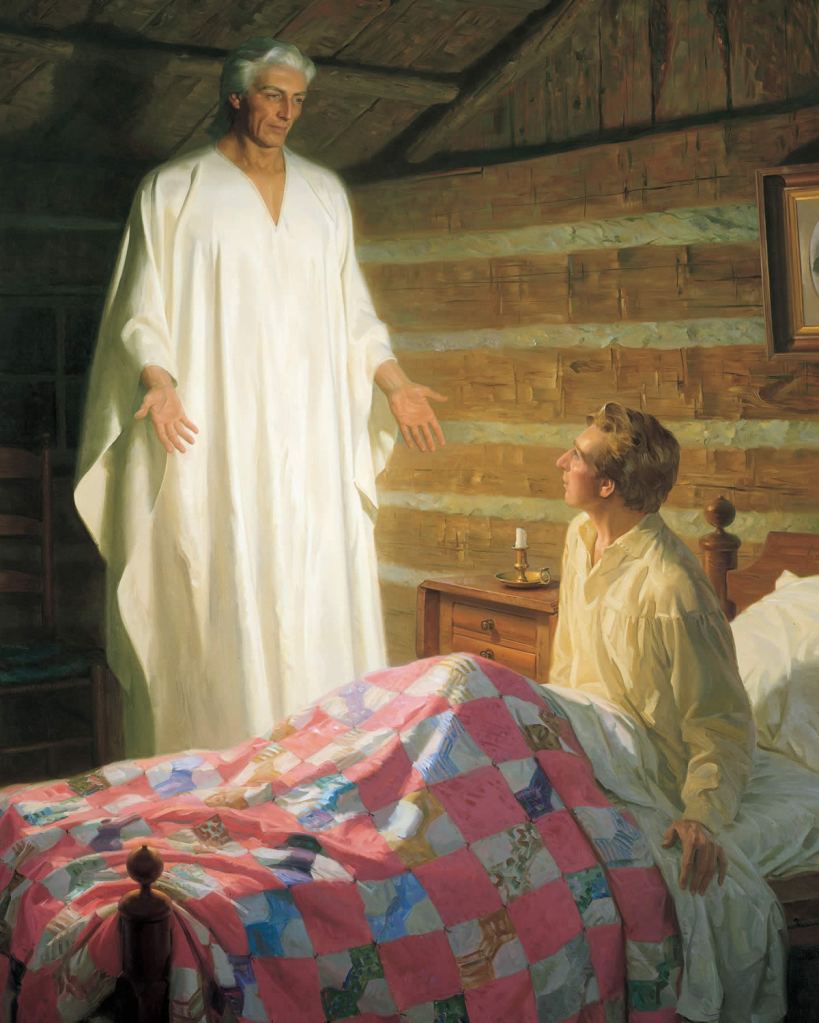
    Jesus Christ still is actively interested and engaged in the affairs of man.  Under the direction of His Father, our Father, He sent an angel named Moroni to reveal an ancient record to his modern-day prophet.  He, through the Holy Spirit, directed and guided Joseph Smith through the translation of a record that would make clear His doctrine and the saving ordinances of His gospel. Not to replace the Bible, but to add a second testimony to it.

    The testimony of the Bible, the Book of Mormon, and my testimony is this: Jesus Christ lives.  He directs His church.  He loves all and wants us all to return to Him.

    This is the foundation of His Church.

    “Build firmly upon the rock of your Redeemer. Treasure His life and teachings. Follow His example and commandments. Embrace the powerful gifts of His Atonement. As you do, I promise you that you will see the [challenges of life] for what they are, [and] the spiritual rock under your feet will be solid and secure.” From #ElderAndersen’s pinterest.com/pin/24066179229002852 inspiring #LDSconf facebook.com/223271487682878 message lds.org/general-conference/2014/04/spiritual-whirlwinds #ShareGoodness
  • Book Review: Mamma’s Boarding House

    Book Review: Mamma’s Boarding House

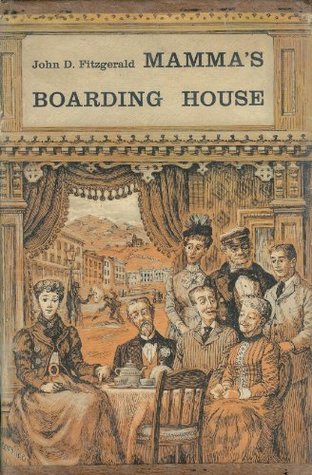
    Mamma’s Boarding House

    By John D. Fitzgerald

    Copyright 1958

    _________________________

    I think the Foreword to this book did a great job of summing up what it was all about, it read:

    “There was more to the settling of the West than the battles between Cattle Barons and Sheepmen, Outlaws and Posses, White Men and Indians, Ranchers and Homesteaders which have been told in story and song over and over again.

    There were other people who helped put down the roots of the West: the banker, the editor, the schoolteacher, the judge, the clergyman, the merchant, the artist, the saloonkeeper, the miner, the town drunk and the town bully.

    This is their story.”

    I read a lot of nonfiction so mixing in some fiction is always a nice change of pace.  This was a perfect book for that purpose.  A story shooting (pun intended?) back into a time I don’t know from personal experience but can relate to in all the cowboys v. natives fights I setup with my toys growing up.

    New Research Ends Marvel Vs. DC Movie Debate, But Is It a Fair Fight?

    I feel like the world has become increasingly fascinated by extreme fantasy – dragons and magic; or space travel – spaceships, aliens, and inter-galactic battles; or superheroes – Marvel and DC.  I think one of the greatest tragedies of this transition is kids not growing up with a fascination of something that really happened, here in the United States, in the last century.  Like I alluded to already, gun slinging bandits only slowed down by gun toting sheriffs – that was my favorite imaginary time as a kid.  I loved the idea of a bandit coming into town to rob the corner store and another gun wielder being the only defense.

    Attractions – Old Tombstone Western Theme Park

    This book took me right back into my old imagination.  A town where guns are on most hips as a matter of protection.  The value in this book was the story telling from the perspective of a young man growing up in an early western settlement in Utah.  If you enjoy the western theme, I think this is a great book for you.

    This book is the sequel to another book: Papa Married a Mormon, with a third in the series titled: Uncle Will and the Fitzgerald Curse.  I haven’t read Papa Married a Mormon but stumbled upon it in my collection of soon to be read books, so will read it soon.  I didn’t get the feeling I was missing much having not read the first book.  The story made complete sense to me and I thoroughly enjoyed it.

    The book is 241 pages but is a quick and easy read.  I would recommend it to anyone, especially anyone who enjoys the Western theme.

  • Book Review: LeGrand Richards Beloved Apostle

    Book Review: LeGrand Richards Beloved Apostle

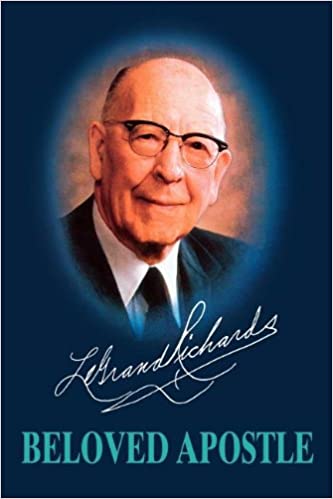
    LeGrand Richards: Beloved Apostle

    By Lucile Christenson Tate

    Copyright 1982

    _______________________

    I was excited to read this book because LeGrand Richards wrote one of the most impactful books for my life that I’ve ever read – A Marvelous Work and a Wonder.

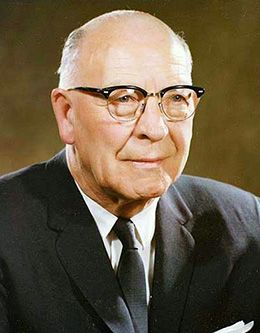
    I think the best way to honor this book is to honor the amazing man LeGrand Richards was.

    Testimony Archives - BYU Speeches

    He was a mission president, presiding Bishop, and member of the Quorum of the Twelve Apostles. He was an Apostle of the Lord Jesus Christ.  I believe near the end of his life he was in very close communication with Jesus Christ.

    One of his greatest contributions to the building up of God’s kingdom here on earth has been the writing A Marvelous Work and a Wonder.   One of my favorite books of all time.  I don’t know how a person can read that book and still question the claims of the Church of Jesus Christ of Latter-day Saints.

    In life LeGrand was one of the greatest missionaries of this dispensation.  He was described by someone in this book as the Paul of the latter days.  I was extremely motivated by his example and boldness in sharing the gospel throughout his life. 

    One great missionary story about LeGrand Richards in the book comes from Bruce R. McConkie. Elder McConkie tells of a time he was sitting in the back of a plane waiting for it to take off.  LeGrand got on the plane and shook the hand of every single person. “He started at the front and walked the full length of the plane shaking the hands of everyone aboard – people he’d never seen before – and he asked each one if he or she was a Mormon.” After speaking to each person on the plane he went back up to the front, turned, and said, “There are seventeen of us on board tonight. Isn’t it wonderful to belong to the Church?” Bruce R. McConkie continued, “The plane was full of non-Mormons, some had never heard of Mormons, but that is exactly what he did…all over the plane people smiled, laughed, were pleased. He hadn’t offended. He hadn’t hurt anyone’s feelings and he’d left a good impression and feeling for the Church.” He was a kind, gentle, and somewhat funny old man.  Can you imagine the impact this act had on that plane?  The feeling of fellowship that would be present?  The missionary discussions and promotion of the Gospel of Jesus Christ that could then occur?

    I can imagine someone leaning over, “who is that man?”

    A response, “He is an Apostle of the Lord, Jesus Christ.”

    To LeGrand Richards:  Thank you.  Thank you for writing amazing books.  Thank you for being an example of service to the Lord, and to others.  Thank you for being a source of truth and light to this world.  All I know of you is what I’ve read.  That’s enough to tell me I greatly look forward to meeting you one day, if I ever get that privilege.

    ________________________

    LeGrand Richards spoke in General Conference a total of 22 times. He was known for speaking purely from his heart and through the spirit. He could go on and on with profound spiritual insights. Here is his second talk in General Conference in October of 1971, “Laying a Foundation for the Millennium.”

  • Book Review:  The Problem of Pain

    Book Review: The Problem of Pain

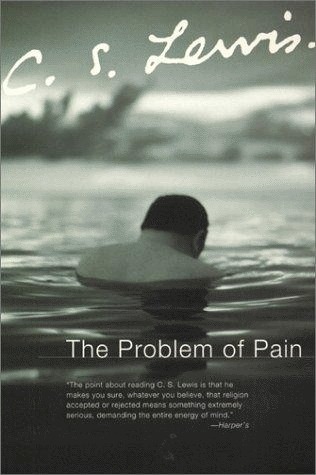
    The Problem of Pain by C.S. Lewis

    Copyright 1940

    ________________________________

    From the front cover: “The point about reading C.S. Lewis is that he makes you sure, whatever you believe, that religion accepted or rejected means something extremely serious, demanding the entire energy of mind.”

    Before starting this book, I was in the precarious position of thinking C.S. Lewis was one of my favorite authors without having ever read one of his books.  I have many of his books on my list of to-one-day-read.  The Lion, the Witch, and the Wardrobe is obviously on that list.  In the Church of Jesus Christ we often hear that C.S. Lewis is one of the most quoted, nonmember of the Church of Jesus Christ of Latter-day Saints, ever.  For good reason.  I came to the conclusion C.S. Lewis was one of my favorite authors because all his quote ARE SO GOOD.  He is brilliant.

    The Problem of Pain was the first C.S. Lewis book I ever read.

    I consider myself a semi-literate and intelligent individual.  That all went out the window while reading this book.

    This is how I felt reading this book:

    My monkey brain couldn’t wrap itself around these eloquent and long sentences.  Here’s another thing, I don’t like huge paragraphs, if you can’t tell.  When a paragraph goes 3 pages long (in the paper-back I was reading) I’m likely to get lost before even starting it.

    All that being said, my simplistic mind could still grasp that it was being stretched.  I could still sense this learning taking place in my mind, even if much of it was going over my head.  There were many quotes that made me stop and think. That was part of the problem.  To truly appreciate this book, I would have had to stop and ponder what I was reading at least 3 times per page.  That makes for a long reading of a 162-page book.

    I will read this book again, mark my words.  I may read it 10 more agains.  It is good and I do desperately want to understand it.  So, I won’t be giving up on it.  I’ll just have to mix in some simple, relaxed reading alongside it.  My mind  can only take so much.

    If you’re much smarter than me, please read it.  If you have read it and understood greater than 20% of it, let’s sit down and talk, but only if you’re prepared to be extremely patient with me.

    I will leave you with one of my favorite parts of this book so you can get a feel for the book, learn something, and see how brilliant C.S. Lewis’s writing is.  It will not be the whole paragraph because I don’t want every reader to get lost midway through like I often did.

    In speaking of hell, C.S. Lewis writes:

    “I willingly believe that the damned are, in one sense, successful, rebels to the end; that the doors of hell are locked on the inside.  I do not mean that the ghosts may not wish to come out of hell, in the vague fashion wherein an envious man ‘wishes’ to be happy: but they certainly do not will even the first preliminary stages of that self-abandonment through which alone the soul can reach any good.  They enjoy forever the horrible freedom they have demanded, and are therefore self-enslaved:  just as the blessed, forever submitting to obedience, become through all eternity more and more free.”

  • Book Review: They Knew the Prophet

    Book Review: They Knew the Prophet

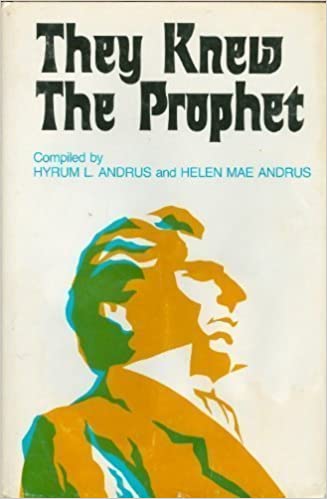
    Book review:  They Knew the Prophet compiled by Hyrum L. and Helen Mae Andrus Copyright 1974

    I just finished a book I really enjoyed called They Knew the Prophet. 

    The book is a collection of first-hand accounts of people’s interactions with the Prophet, Joseph Smith.  I think this book could be of interest to anyone, whether a member of the Church of Jesus Christ of Latter-day Saints or not.  Even if you know nothing about the Church, you get a grasp of how respected and revered Joseph Smith was by his followers. This man with zero education started a religion.  In 1830, less than 200 years ago, six people gathered together to formally organize the church. That group of six has turned into over 16 million. For this reason, even people not of the faith of the Church of Jesus Christ could be fascinated by and should be interested in the historical character that Joseph Smith was.

    If you are a member of the Church, I highly recommend this book.  It was an easy read. Each first-hand account is brief. The longest individual account was 10 pages but that was an outlier.  The book is 193 pages long and there are a total of 98 unique accounts. Fun fact—the 10-page account was from my great-great grandfather, Benjamin F. Johnson.  The book is organized so you move through the prophet’s life. It starts from the beginning with someone who lived near his family and hired young Joseph to help on his farm.  It moves slowly until the end where first-hand accounts are given of his death. I’ve previously read a decent amount on the death of the Prophet and some of what I read at the end was still new to me.

    It’s interesting to see the progression from people describing Joseph Smith early on as ineloquent to later in the book people describing him as the most powerful man and speaker they ever encountered.  It’s truly fascinating to see that progression through the eyes of those who knew him.

    I will avoid giving away too much and thus ruining the book for anyone that may want to read it.  I will share an excerpt from my favorite account. It was written by Howard Coray. He was speaking about all the learned men that would come and try to contend with and confound Joseph.  He wrote:

    “Among other great men who called to see him was Cyrus Walker, a lawyer of much note.  He tried to sound the Prophet, and see how deep he was. Well, it was with Walker as it had been with all the others.  He soon got enough, found Joseph too deep for his lead and line, and gave up the enterprise. Thus it was in every instance that came under my observation.  How could we expect it to be otherwise-for any man who had never peered into heaven and seen heavenly things to be a match for one who had had a half score or more heavenly messengers for teachers.”

    That passage made me think of Joseph Smith in a new way.  Thinking about myself, in the last four years since coming back to Church and actively studying the gospel, I’ve felt I’ve grown so much.  The knowledge and understanding I have today is so far from where I was just four years ago. Joseph was being visited, tutored, and taught by the leaders of past dispensations.  He was being taught by Jesus Christ Himself. His progression from an un-learned farm hand to eloquent orator of gospel principles was at such an accelerated pace. I love that story and it perfectly illustrates what I enjoyed about this book.

    It did get a bit repetitive near the very end and I found myself having a hard time finishing it.  Until the conclusion came. Reading of the end of the Prophet’s life is always emotional and gives me an appreciation for Joseph Smith and what he was willing to give for his testimony:  everything. 

    You can find a copy of the book online for ~$28.  If anyone is interested in borrowing my copy, just let me know!  

    I highly recommend this book.  As the inside cover said, “more than any other book it will make the reader feel that (they) too knew the prophet.”  He was the Moses of our dispensation. There’s no better way to try to understand who he was than through the eyes of those who knew him.