Tag: Books

  • The Room and Freedom

    The Room and Freedom

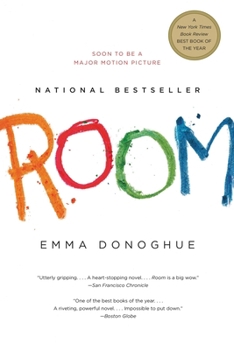
    I just finished the book The Room. Without spoiling too much, it’s about a woman who is captured and kept locked up in an 11 foot by 11 foot room with her five-year-old son who is born into captivity.

    It is a good book. The most interesting part is that it’s written from the perspective of the five-year-old.  

    At the end of the book there was a “Reading Group Guide” with questions to consider. One of them was, “Why do people tend to be so fascinated by stories of long-term confinement?” 

    I pondered this a bit. The obvious answer is that our freedom is so precious to us, we can’t imagine something so terrible, so we’re drawn to it. Like watching a train crash or the modern true crime craze. 

    There is a longer answer, though.  

    Our freedom, our agency, is the most important thing in the world to each of us. Our ability to choose and make our own choices is more important to us than anything. It’s more important to God than anything, also. That’s why we’re here. 

    I think this fascination with confinement and the inability to choose is a fascination with something we know to be inherently wrong.  

    Every one of us here on earth chose to come here, to Earth. There were some who didn’t choose this. There was one that tried to take away our freedom, to force us to choose his way. He phrased it as a way to save us all, but really, what he was proposing was enslavement. Satan proposed the plan that would have us all return to heaven. The catch was that we would have no say in the matter. We would be compelled to follow him, to do it his way. We would be his puppets. In return, he would ensure we got back safely. 

    God always wants us to choose. 

    We even chose to be able to choose. We are here because we chose agency and freedom.  

    I think that’s why these stories are so fascinating to us. We already chose freedom. Being here on Earth was a choice. God will always give us a choice. Not being given a choice feels wrong because it is wrong.  

    We already chose to reject Satan and come here and use our agency. 

    Don’t forget that. You’ve already chosen.   

  • Books 2025

    Books 2025

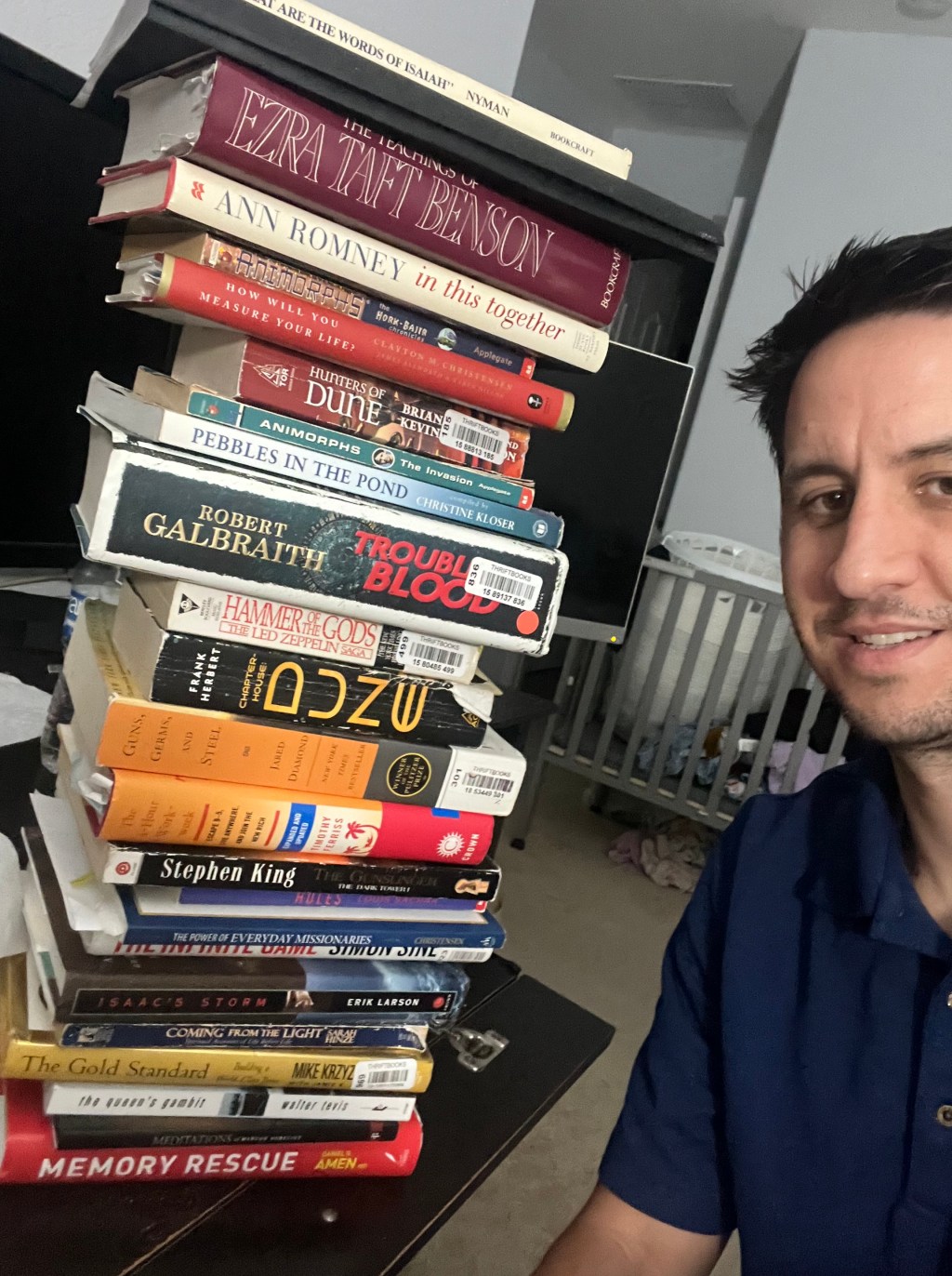
    I was disappointed in the number of books I read in 2024. I tried to improve in 2025, despite another new baby and the continued busyness of life. I read 15 books in 2024. Not hard to improve on that. Here are the books I read in 2025 in order of enjoyment.

    *As always, my disclaimer, “enjoyment” is so hard to define. I usually go through the list and put the books I most enjoyed reading at the top. But if a book was impactful in other ways, it raises its value. Basically these are my favorite books of the year.

    1. Harry Potter and the Sorceror’s Stone by J.K. Rowling
      • How can this not be first? It’s a foundational book in my life. It’s the book that jump-started my love of reading. I read this book out loud to Ivy and Sage and loved every second of it.
    2. Power of Everyday Missionaries: The What and How of Sharing the Gospel by Clayton M. Christensen
      • One of my favorite books of all time. I think it’s the third time I’ve read it. It’s a powerful and impactful read every time.
    3. Hunters of Dune by Brian Herbert and Kevin J. Anderson
      • I think expectations set how we will enjoy media. I avoid movie trailers for this reason. If I’m told a movie is amazing, I’m likely to end up disappointed. I heard this book was not very good. It being the first book where Frank’s son Brian took over the story, I came in with low expectations. I was blown away. I loved this book.
    4. Troubled Blood by Robert Galbraith
      • J.K. Rowling does it again. Robert Galbraith is a psedynym for J.K. Rowling. I have grown to love these crime novels. It is the fifth book in the series and I think it might be my favorite.
    5. The Dark Tower 1: The Gunslinger by Stephen King
      • I debated putting this ahead of Troubled Blood. This was a page-turner. But then, Stephen King novels usually are. This is the first in what I’ve described as Stephen King’s Mona Lisa, his masterpiece. In this case, the expectations didn’t alter my enjoyment. It was that good.
    6. Coming from the Light by Sarah Hinze
      • This book is a compilation of stories about premortal children. It is an impactful book on me.
    7. Isaac’s Storm: A Man, a Time, and the Deadliest Hurricane in History by Erik Larson
      • This was one of my grandma’s old books that I took off the shelf wondering why in the world I would ever read about a storm from the year 1900. This is a book I would never go out of my way to read. Those are often the books that will most surprise you. In a great underdog story, this book became one of my favorites of the year. It had me in tears thinking about life, death, destruction, and family at the end. Despite being #7, this might be the number one book I’d recommend from this year.
    8. How will you Measure your Life by Clayton M. Christensen
      • Second Christensen book of the year. This book came recommended and I loved it. The message in it paired perfectly with The Infinite Game which I read earlier in the year but is right behind this on the list.
    9. The Infinite Game by Simon Sinek
      • This book came highly recommended by my brother. It started off slow, to the point that I wondered why he recommended it. Then it picked up. A book that shaped and altered my preexisting opinion so impactfully can’t be too far down this list.
    10. Chapterhouse: Dune by Frank Herbert
      • This list is making me take a look at the evolution of my reading. The Harry Potter books are my favorite books of all time. I almost put Hunters of Dune above Harry Potter. But Harry Potter is still the GOAT. This wasn’t my favorite of the Dune books. Still great. I liked Hunters of Dune more.
    11. Animorphs: The Hork-Bajir Chronicles by K.A. Applegate
      • These lists are really hard to make when you love most every book you read each year. Where do you rank a book you loved as a child? Can’t be ahead of the Dune books, surely.
    12. Animorphs: The Invasion by K.A. Applegate
      • The first book in the Animorphs series. I read these as a kid and loved them. Adds some fun to my reading to revisit what sparked a love of reading in the first place. You’ll see a pattern from this year with Harry Potter, Holes, and Animorphs. I’m thinking a lot more about why I grew to love reading as my girls start growing into their young reading years.
    13. Yesterday’s Sunshine by Lyle Hollis Rodabough
      • Put this up there with Isaac’s Storm as a book I was super pleasantly surpised to thoroughly enjoy. It was the autobiography of a man I had never met and didn’t know anything about. He was the father of someone I worked with. I loved this book. He was a police officer for many years and the stories were incredible.
    14. Queen’s Gambit by Walter Tevis
      • This came recommended. I’m not a big chess guy but I loved the show on Netflix and I love games. Really enjoyed this book. Again, can’t believe it’s this low, but I read some good books this year.
    15. Guns Germs and Steel: The Fates of Human Societies by Jared Diamond
      • This was an impactful book for me. It opened my eyes to some macro concepts in the history of societies. It also opened my eyes and made me think more about why the world is the way it is.
    16. Hugh Nibley Semester 4 on the Book of Mormon
      • The transcript of Semester 2 was #2 last year and Semester 3 was #9. Whereas I loved semester 2 in how it expanded my mind, and semester 3 felt redundant, semester 4 fell in the middle. It felt like it contained more new information that semester 3. As noted in 2024, I just love Hugh Nibley.
    17. Holes by Louis Sachar
      • As a kid, this was my favorite non Harry Potter book. I loved this book. It’s just as good for a second reading nearly 3 decades later.
    18. In this Together by Ann Romney
      • Another book I question why I ended up reading, but enjoyed. Ann is a survivor of MS. It was interesting reading her story.
    19. Gold Standard by Coach Krzyzewski
      • Fun fact, I bought this book used and found that it was signed by Coach K. Pretty cool. I remember this being a fine book. I just don’t remember much about it. Making it lower on this list.
    20. The Castaways by Sarah Hinze
      • The first book in the series is higher on the list. This one felt less powerful. Still great, but didn’t pack the power of the first.
    21. 40-Hour Work Week by Tim Ferris
      • I read this in 2024 as well where it was #3 for that year. I think this ranking is mostly due to fatigue with reading this book multiple times in a short period of time.
    22. Hammer of the Gods by Stephen Davis
      • I don’t know how this book got on my list. It’s the story of Led Zeppelin. I had never listened to a Led Zeppelin song. Glad I read this though, taught me about something I knew nothing about.
    23. Great are the Words of Isaiah
      • Isaiah is tough. This was a book trying to make the words of Isaiah less tough.
    24. Pebbles in the Pond
      • I started off with a lot of momentum in this book but it got to be a grind near the middle. Similar to Teachings of Ezra Taft Benson. Impactful, and I liked the book, just near the bottom in enjoyment for the year.
    25. Teachings of Ezra Taft Benson
      • This was a compilation of basically everything President Benson ever said before becoming the prophet of the Church of Jesus Christ of Latter-day Saints in 1985. I don’t mean to disparage this book by its ranking. It was an immensely important book for me to read. But it was ~700 pages and kind of a grind at times.
    26. Memory Rescue: Supercharge Your Brain, Reverse Memory Loss, and Remember What Matters Most by Daniel G. Amen
      • Another one of my grandma’s old books I wouldn’t normally go out of my way to read this. I haven’t been able to enjoy microwave popcorn and sugar guilt-free ever since. Which I guess is good and bad. I’m not a huge fan of medical books where a portion of the content goes over my head. But it was impactful and I recommended it to others.
    27. Meditations of Marcus Aurelius
      • This little book came recommended from a friend. It was short and quick. I enjoyed it, but don’t remember a ton about it.
  • Lazy Christianity

    Lazy Christianity

    I wrote this in 2022. As I re-read it before posting, I cringed a little. I wondered if I should post it. It’s a little aggressive. I felt this way in 2022. We all go through ups and downs in our faith and devotion, and as I feel like a lazy Christian at this very moment, I think it’s all that more important to post. This is a call to repentance for myself.

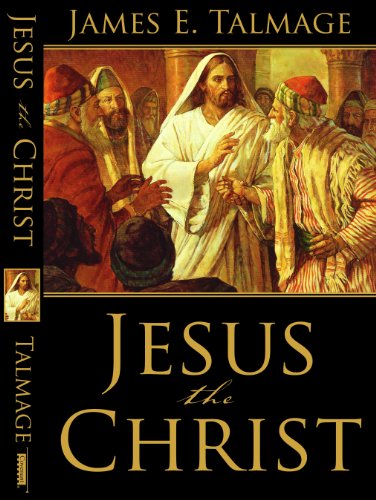
    If you don’t read Jesus the Christ by James E. Tallmadge at least twice in your life, you’re not a real Christian.

    Of course, this is an exclamatory statement. I say it to make a point. 

    I hear so many people profess Christ. Sometimes when this book is mentioned people will say, “It’s so long.”

    Jesus Christ literally suffered the pain and suffering for your sins and mistakes, but the book is too long?

    Before anyone gets mad at me for being high and mighty, let me be clear: I have not read Jesus the Christ twice. But I plan to.

    I think that’s the point. We’re all trying to be better “Christians” or followers of Christ, but, really, what effort are we putting in?

    Are we serving others? Are we thinking about Him? Are we trying to be like Him? Are we reading about Him?

    I think we need to put in more effort.

    On that note, if you’re a member of the Church of Jesus Christ of Latter-day Saints, and you haven’t read the Book of Mormon cover to cover at least two times: get to reading. This is latter-day scripture. Joseph Smith died for this book. Everything we have been given is because of this book.

    We must strengthen our testimonies of Christ as these days get darker and the second coming approaches.

    When Christ returns, will you know Him?

    Will He know you?

  • Is Roseto, Pennsylvania Zion?

    Is Roseto, Pennsylvania Zion?

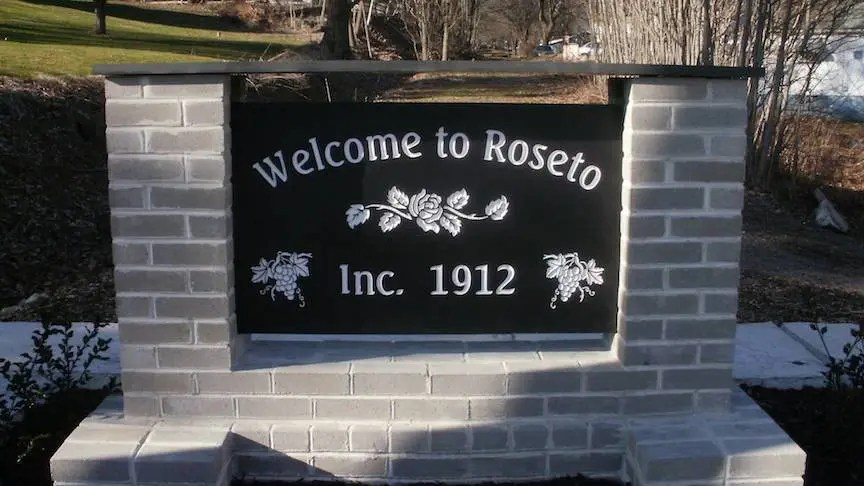
    There was an extraordinary thing happening in Roseto, Pennsylvania in the 1950s. I read about it in an awesome book called Outliers by Malcom Gladwell.

    Roseto, Pennsylvania was an outlier when it came to heart disease. For some reason, instances of heart attacks and heart trouble in Roseto were shockingly different than anywhere else.

    In the 1950s, heart attacks were the leading cause of death in men under the age of 65 (Outliers, p. 6).

    In Roseto, nobody under 55 had heart attacks. Roseto had half as many people with heart trouble over 65 compared to any other area studied. This included next-door cities and towns.

    What’s fascinating about this is that this phenomenon apparently had nothing to do with genetics, diet, or any other seemingly obvious reason. There was no obvoius indicator of why a whole community would be free of heart trouble.

    Heart trouble wasn’t the only thing missing from this community. A sociologist was brought in to study the community. His name was John Bruhn and he said, “There was no suicide, no alcoholism, no drug addiction, and very little crime. They didn’t have anyone on welfare. Then we looked at peptic ulcers. They didn’t have any of those either. These people were dying of old age. That’s it” (Outliers, p. 7).

    What made Roseto unique, then?

    Finding no pattern, those doing the study had to look at anything different about Roseto to try to explain this phenomenon.

    This led to a primary theory. That primary theory behind why Roseto, Pennsylvania residents didn’t suffer heart trouble or many other common diseases had to do with their community.

    Roseto had an old-fashioned way about it in the 1950s, even compared to the standards of its day. The residents of Roseto were primarily Italian-American immigrants. The standard in Roseto was to live at home as long as possible, take care of one another, and generally live a more laid-back and communal way of life. A young man would stay at home and take care of family. If he lost a job, it was okay. The community would often try to keep shortcomings like a lost job secret so as not to create any embarrassment. Kids would take care of parents. Parents would take care of kids. The community took care of each other. It was a family-focused, close-knit community.

    “(Researchers) learned about the extended family clans that underlay the town’s social structure. They saw how many homes had three generations living under one roof, and how much respect grandparents commanded. They went to mass at Our Lady of Mount Carmel and saw the unifying and calming effect of the church. They counted twenty-two separate civic organizations in a town of just under two thousand people. They picked up on the egalitarian ethos of the community, which discouraged the wealthy from flaunting their success and helped the unsuccessful obscure their failures” (Outliers p. 9, emphasis added).

    The fact that Roseto residents had such low instances of heart trouble revealed a potential connection between community relationships and social support to reduced stress and heart disease. The community of Roseto appeared to buffer its inhabitants from the stresses of life.

    This got me to thinking.

    What is Zion? What is the perfect society? What will it look like? What will it be like, practically speaking?

    “…the Rosetans had created a powerful, protective social structure…” (Outliers p. 9).

    Will Zion be a community that goes to church together? A community that stops to talk to each other? A community that continues to live under one roof with their direct family as long as possible? A community where equality reigns? A community where spontaneous cookouts in front yards are common?

    This sounds like Zion to me.

    It’s fascinating that a community basically shielded itself from the stresses of a fallen world by living by these principles. I believe these are God-given principles: fairness, love, community, support, unity – that’s what makes Zion.

    “When presenting (the researchers’) findings at many medical conferences where their peers were presenting long rows of data arrayed in complex charts and referring to this kind of gene or that kind of physiological process, and they themselves were talking instead about the mysterious and magical benefits of people stopping to talk to one another on the street and of having three generations under one roof….No one was used to thinking about health in terms of community” (Outliers p. 10).

    This Christmas season, as I’m inevitably considering the state of our world and where we’re headed, I can’t help but wonder: is it this simple?

    Community, family, support. People supporting people, people uplifting one another, communities looking out for each other. Neighbors waving hi. People engaging with those in their community. Ministering. Fellowship. Is it that simple? Would that fix our world?

    I think it would. I think this is primarily what is missing from our modern-day societies. Love thy neighbor. How about say hi to thy neighbor?

    This holiday season, aim to light the world. Start by dropping off cookies at a neighbor’s house. It might save you from a heart attack.

  • Faith in Man or Faith in God

    Faith in Man or Faith in God

    Since I’m posting this on Thanksgiving day I think I’m obligated to say I’m grateful for the Book of Mormon, how it makes me a better person, how it makes my home a happier place, what it teaches me about Jesus Christ, and the hope it gives me for an eternal future.

    I will make a simple argument here.

    My thesis:

    Anyone who has read the Book of Mormon and believes it is a made-up story written by a man has more faith in the brilliance of a man than in the Glory of God. It is easier for that person to believe there is a man with otherworldly abilities than that God still speaks to humans.

    Explanation –

    Things that can’t be denied by any logical or thinking person:

    1. The Book of Mormon exists. You can go get a copy now and read it.
    2. The Book of Mormon was brought into existence in our day, for us to read, somehow.

    If the above two points are true, then we can move on.

    Next statements of truth:

    1. Since the Book of Mormon exists, we must determine who played a role in creating it.

    This leads us to only a couple options as far as I can tell. There may be other sub-options, but I think this mostly covers it. I’ve added sub points to each option to add important perspective:

    1. Joseph Smith wrote it by his own mind and creativity.
      • Joseph Smith had a third-grade education.
      • There are many witnesses attesting to Joseph Smith’s involvement in the creation of the Book of Mormon.
      • If historical accounts are to be believed, Joseph Smith dictated it word for word without notes or reference materials.
    2. Someone else wrote the Book of Mormon
      • This is hard to believe given countless eye-witness testimonies of Joseph Smith’s involvement in the creation of this book. It takes some creative gymnastics to determine how this could be true.
    3. Joseph Smith wrote it with the assistance of somebody very learned, ex: Sydney Rigdon.
      • This would require some sort of explanation on why no one else ever came forward to claim writing such a brilliant book.
      • With any minor research we find much evidence to show Sydney Rigdon didn’t meet or know Joseph Smith until the Book of Mormon was published.
    4. Joseph Smith translated the Book of Mormon by the power of God.
      • This would be taking the supposed creator of the book at his word.

    I believe any basic research into this subject proves Joseph Smith’s direct involvement in the creation of the Book of Mormon. Whether that be through point 1 or point 4 will now be briefly discussed. If points 2 or 3 are to believed, then a vast and complex conspiracy has been going on for 200 years. For 200 years, no proof has come forth to show that anyone but Joseph Smith created the Book of Mormon. No one has come forward. No information has leaked.

    If we come down to points 1 or 4, let’s address point 1, that Joseph Smith wrote the Book of Mormon by his own mind and creativity.

    Let’s first just disregard the fact that he wrote it in 65 working days because I feel detractors will just say, “That’s not true” even though the historical account appears to support if not prove this. Let’s say Joseph Smith wrote it with as much time, editing, and re-editing as he needed (which many testimonies argue against, but for the sake of this argument, let’s say he did take months or years to write it before he turned 25 years old).

    Those arguing Joseph Smith created the Book of Mormon from his own mind admit a man with little to no formal education, little to no access to any historical books or other reference materials, wrote a detailed account of a company leaving Jerusalem and travelling to the Americas. Instead of elaborating more on this, I will quote a challenge issued by Hugh Nibley to his students at BYU:

    “Since Joseph Smith was younger than most of you and not nearly so experienced or well educated at the time he copyrighted the Book of Mormon, it should not be too much to ask you to hand in by the end of the semester (which will give you more time than he had) a paper of, say, five to six hundred pages in length.  Call it a sacred book if you will, and give it the form of a history.  Tell of a community of wandering Jews in ancient times; have all sorts of characters in your story, and involve them in all sorts of public and private vicissitudes [daily activities]; give them names — hundreds of them — pretending that they are real Hebrew and Egyptian names of circa 600 B.C.; be lavish with cultural and technical details — manners and customs, arts and industries, political and religious institutions, rites, and traditions, include long and complicated military and economic histories; have your narrative cover a thousand years.

    Keep a number of interrelated local histories going at once; feel free to introduce religious controversy and philosophical discussion, but always in a plausible setting; observe the appropriate literary conventions and explain the derivation and transmission of your varied historical materials.  Above all, do not ever contradict yourself!  For now we come to the really hard part of this little assignment.  You and I know that you are making this all up — we have our little joke — but just the same you are going to be required to have your paper published when you finish it, not as fiction or romance, but as a true history!  After you have handed it in you may make no changes in it. . . .

    What is more, you are to invite any and all scholars to read and criticize your work freely, explaining to them that it is a sacred book on a par with the Bible.  If they seem over-skeptical, you might tell them that you translated the book from original records by the aid of the Urim and Thummim — they will love that!  Further to allay their misgivings, you might tell them that the original manuscript was on golden plates, and that you got the plates from an angel.  Now go to work and good luck!” (The Prophetic Book of Mormon, F.A.R.M.S., 221-222)

    I will add Alan C. Miner’s addition to this challenge, stating, “It shouldn’t be hard, living as we do in the computer world of the internet”:

    “Because your story is supposed to be a religious record, include in your paper over 500 different descriptive titles for deity, all within a proper religious context that will not only explain these titles in relation to what we have in the Bible, but give added meaning and understanding to the text of the Bible and to your own story.  And while you are at it, have most all the proper names of people, places and things have intrinsic and symbolic meaning.  Because this is supposedly an ancient Hebrew record, give hundreds of ancient parallelistic Hebrew literary forms.  In fact, have the whole text written in parallelistic patterns.  Incorporate thousands of phrases from the Bible so that these intertextual usages give added meaning to both the Bible and the Book of Mormon.  Make sure that the biblical sources are from all different parts of the Bible, and for that added touch, use some extra-biblical texts.  But don’t limit yourself to just your own patterns of language, or that of the KJV Bible, also use Early Modern English terms that were dated near 1611 when the KJV Bible was first published and became the bible of the masses.  Weave in an underlying theme of covenants with the Lord, both culturally and scripturally using covenant terms and practices used in ancient times.  In fact, it would be a good idea to make every part of your narrative not only covenant-related, but Christ related as well. For one final challenge you must dictate your story to a scribe without the aid of a written script.  While you may be allowed to tell your scribe to adjust the spelling of proper names, you must leave your script as you dictate it, and never ask your scribe to tell you where you left off after lunch or the end of a day.  On his own, your scribe can adjust capitalization, punctuation, the spelling of traditional words, and some simple grammar, but that is all.  Dictate parts of your story in non-chronological order, and be sure to credit these parts of your story to different writers, varying your manner of using words so that a distinct separation of language style can be detected.”

    What Joseph Smith wrote has been critiqued, criticized, evaluated, and been under a microscope for nearly 200 years. With additional evidence from archaeology, what we know about the Middle East and Jerusalem, and what we know about the Americas, the Book of Mormon is more validated, not disproven, despite what detractors may argue.

    I hope this goes to illustrate how impossible this act would be. It would be miracle of extraordinary human skill, intelligence, and foresight (knowing things that hadn’t yet been discovered yet, like chiasmus).

    Those who believe Joseph Smith wrote the book of Mormon through his own brilliance have more faith in the genius of a man than faith in the idea that God assisted in the matter. Put simply, you either have faith in the brilliance of Joseph Smith or in the Glory of God.

    Those who believe Joseph Smith did not translate the Book of Mormon through the gift, power, and love of God “deny the power thereof” (2 Timothy 3:5, Joseph Smith History 1:19).

    You must come to terms with this truth.  Either Joseph Smith was above and beyond the most brilliant man in the history of mankind.

    Or. 

    God loves His children and instituted a great work through Joseph Smith.

    What does it say if you more easily believe in Joseph Smith than in God?

    I am grateful for the Book of Mormon.