Tag: Brigham Young

  • What do we believe in?

    What do we believe in?

    My Aunt Lindsey often asks the question, “What do you know?” I usually respond, “Not much.”

    What do we really know? Anything?

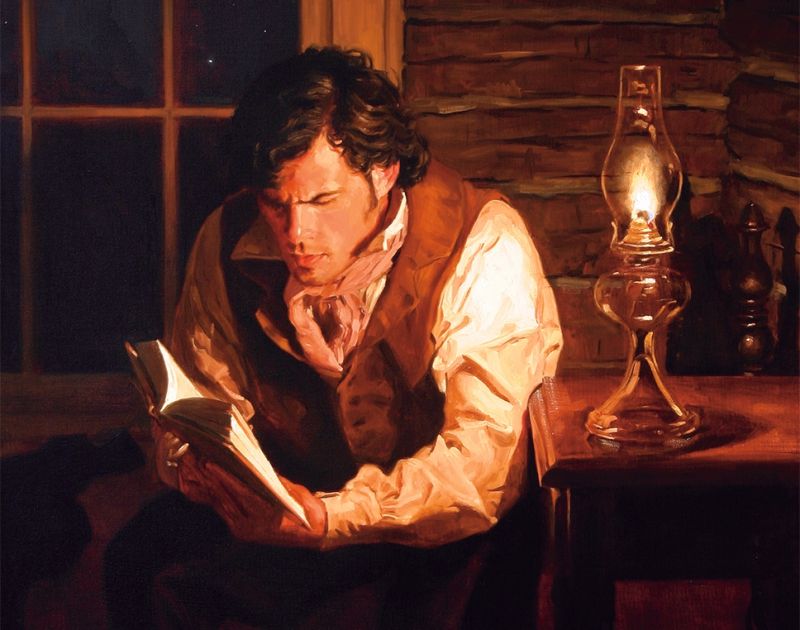
    While reading Mosiah chapter 26, I came across an interesting commentary from Hugh Nibley, one of my favorite scholars. The commentary was on Mosiah 26:15 which reads:

    “Blessed art thou, Alma, and blessed are they who were baptized in the waters of Mormon. Thou art blessed because of thy exceeding faith in the words alone of my servant Abinadi” (emphasis added).

    In considering that phrase, “in the words alone of Abinadi”, Hugh Nibley asks, “Now what about childish faith? What about being gullible, etc.? Alma believed in the “words alone”? Alma saw no evidence, no proof, or anything like that? And it wasn’t the words of God; it was the words of Abinadi alone that he believed in? What’s going on here? Why is there merit in this?”

    He continues, “There is merit because Alma believed in his words alone. I would emphasize his. You are blessed because of the things you choose to believe-not by the act of believing, not just by faith. You weren’t blessed because you believed, but because you chose what to believe. Everybody chooses what to believe. The atheist is a very strong believer. He is the most passionate arguer you can possibly find, and the positivist. Where will you find greater faith and firm conviction than among economists? . . . You must believe in something, and everybody does. But the Lord said, blessed are you [Alma] because of the things you chose to believe; you chose to believe in the things that Abinadi taught.”

    I’ve written before about The Faith of an Atheist.

    What do we believe in?

    This is an interesting statement by Hugh Nibley. The idea that it isn’t our faith that is important. Everyone has faith in something. It is what we have faith in. What do we choose to believe? Do we choose to believe that this is all one dumb coincidence and we’re all here for no real reason? Or do we believe in a Savior who redeems us, a Father who loves us, and an eternity of potential?

    Like a lot of things, it’s really about agency. What do we choose to believe in? Alma chose to believe in something good, hopeful, eternal.

    People who leave the church – are they better for it? This is going to upset some people. But in my opinion, no, people aren’t better for leaving the Church. That’s not absolute, of course. Some who leave the church still donate constantly to good causes, serve others, love others, and use their time in helping others. More often than not, I don’t think that’s the case.

    Many who leave the church, instead of turning their focus to good, hopeful, and helpful things, spend the rest of their lives trying to bash, destroy, and talk negatively about the church. Why is that? If leaving the Church of Jesus Christ is a good thing, why doesn’t more good come from it instead of more negativity? Why is tearing down something, whatever your feelings on it, that brings others hope and joy, a good result?

    Is it easy to be a member of the Church of Jesus Christ? With the number of people my age deciding they don’t care for the Church, or any church, I’d say membership in the Church of Jesus Christ is not super easy. A lot of people say, “The church doesn’t do anything for me.” The Church isn’t about what it can do for you. It’s about what you can do for others. When you leave the Church, what do you do for others?

    Leaving the Church is complicated. I’m not trying to oversimplify it too much. But what I think gets lost sometimes is that leaving the Church is often a selfish choice. At least it was for me. I don’t want to have to get up early for church on Sunday. I don’t want to use my Saturday morning helping an elderly person move their belongings. I want to drink. I don’t have time for a church calling like teaching a class, working with the youth, or organizing group activities. I definitely don’t have time for ministering. Yeah, checking on a couple people every so often to make sure they’re doing OK, and really help them if they say they need something, don’t have time for that. I don’t want to pay 10% of what I earn anymore. The list goes on. Someone leaving the Church NEVER thinks this way (or won’t admit it). It’s about historicity or “what they feel” or feeling lied to or CES letter blah blah. I’m not trying to say that those things can’t be hard for people. They are, and I understand that. But often, it comes back to I, when the Church’s main goal is to help us see outside of ourselves.

    Now let’s be clear. Simply going to church isn’t enough. There are plenty of people who go to church on Sunday, leave, and call themselves stalwart disciples of Christ. You may be worse off than the nonbeliever in that case. It may be worse to believe and turn away the sick and needy than to choose not to believe.

    Does some small historical question, or some big historical question, distract you from a plan called “the Plan of Happiness”? Do you choose to worry about a statement by Brigham Young or some question about Joseph Smith? Do you disregard the miraculous book that was written, the testimony of a Savior of the world, an account of that Savior visiting His children in America? Do you ignore the hopeful and positive miracles because you have doubts?

    What do you choose to believe in?
  • Adam-God Theory

    Adam-God Theory

    I’ve heard of the “Adam-God Theory” but never looked into it. Until recently, I really didn’t know what exactly it referred to. Here is my research into the Adam-God theory for those interested and especially for those who may have concerns about this theory and its history in the restored Church of Jesus Christ.

    Before I begin, almost all my thoughts come from this link:

    https://www.fairlatterdaysaints.org/answers/Mormonism_and_doctrine/Repudiated_concepts/Adam-God_theory#Question:_What_is_the_Adam-God_Theory.3F

    It was a great resource on this topic and I recommend it if you want to learn more.

    If you want a quick, short video that sums up the whole history of the Adam-God theory, watch this video:

    Now, my thoughts.

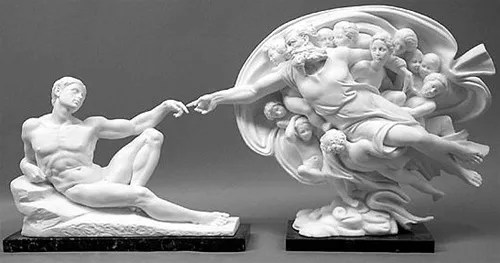
    The Adam-God theory is the theory that Adam and God the Father are the same person. This theory was mentioned by Brigham Young.

    First – Adam is not God the Father. Adam is not who we pray to. This does not fit the teachings of the scriptures, does not fit modern revelation, is not a doctrine of the restored gospel. So why are we talking about it, you ask?

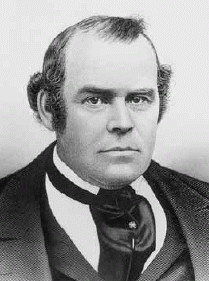
    Second – Yes, Brigham Young did make some bold statements about Adam being God. He also made countless statements contradicting that statement. Brigham Young was a convert and a prophet. Try to imagine the dichotomy of those positions. Try to imagine someone a few years into the faith trying to lead the entire church. Is it so shocking that there were erroneous statements made, especially when we consider and understand the personality and boldness of the prophet who led the saints across the rugged wilderness of the West?

    Third – Because Brigham Young made incorrect statements does not mean he was a false prophet. It means he was learning line upon line, and he made false statements. He has made statements to try to help us, the people of the church, reconcile some of his more questionable comments. For example, when speaking generally about who Adam was and proposing some thoughts about Adam, Brigham started by saying, “I propose to speak upon a subject that does not immediately concern yours or my welfare….I do not pretend to say that the items of doctrine and ideas I shall advance are necessary for the people to know, or that they should give themselves any trouble about them whatever.. (Brigham Young, Oct 8, 1851). If it does not concern our welfare, don’t get too hung up on it. The church was young and growing when Brigham was prophet. God has always worked through us, mortals, to fulfill His works. This has always resulted in fallibility. Brigham Young was a prophet, even if he made mistakes in the thousands of public discourses he gave during his learning period as a prophet/convert.

    Fourth – Because prophets are fallible does not mean we cannot trust and follow them. As The Church has grown out of its infancy, it has strengthened itself in countless ways. One of those strengths has become the checks and balances of the church organization. The First Presidency and Quorum of the Twelve Apostles must be unanimous in any declaration of doctrine. President Nelson speaks hundreds of times a year. Not every word from his mouth (in my opinion) is scripture. It is guidance and direction from God’s anointed prophet, yes, but not scripture. But when President Nelson, the First Presidency, and the Quorum of the Twelve sign their names to a declaration, it becomes binding guidance on doctrine, church policy, etc. Such was the case with “The Family: A Proclamation to the World” for example.

    Now, the statement made by Brigham that when Adam and Eve came to the Garden of Eden they already had celestial, resurrected bodies is interesting. I more think they came with perfect bodies as they came directly from the Father and hadn’t yet been corrupted by the fall, not that they were necessarily resurrected bodies yet. Celestial, maybe, resurrected, I don’t think so. That’s all I will say on this matter, though, to support my point earlier that things that distract from our salvation should be discussed with caution. I haven’t done enough research, pondering, or praying to comment on this with much confidence and would hate for my children 150 years from now to claim I believed Adam was already resurrected when put in the Garden of Eden. See how these small comments can be blown out of proportion? Grateful I’m not a prophet.

    Another thought – the eternal nature of the plan of happiness is not something we can begin to comprehend. If it ultimately distracts us from our current efforts towards salvation, we should tread with ultimate caution. Such is the thinking about if Adam lived on another planet before he came here and countless other thought experiments that might distract from what is important, which is, Jesus Christ performed the ultimate atoning sacrifice for my sins. He died so that I can live. He suffered so I can be forgiven and can live with God, my Father, again. All other questions, while interesting and can expand our minds and thinking, if they distract from the ultimate source of our salvation – the Plan of Salvation and Christ’s personal role in it for us – should be avoided.

    Those are my thoughts on this from my research. Here are some final items to really, I hope, put this theory and any issues involved with it, to rest.

    As mentioned, Brigham contradicted himself many times on the idea that Adam was God. While he mentioned the idea a couple times in public, there are many other instances of Brigham Young speaking where he clearly separated Adam and God the Father as two separate individuals.

    BYU professor Stephen E. Robinson sums it up well:

    “Yet another way in which anti-Mormon critics often misrepresent LDS doctrine is in the presentation of anomalies as though they were the doctrine of the Church. Anomalies occur in every field of human endeavor, even in science. An anomaly is something unexpected that cannot be explained by the existing laws or theories, but which does not constitute evidence for changing the laws and theories. An anomaly is a glitch…. A classic example of an anomaly in the LDS tradition is the so-called “Adam-God theory.” During the latter half of the nineteenth century Brigham Young made some remarks about the relationship between Adam and God that the Latter-day Saints have never been able to understand. The reported statements conflict with LDS teachings before and after Brigham Young, as well as with statements of President Young himself during the same period of time. So how do Latter-day Saints deal with the phenomenon? We don’t; we simply set it aside. It is an anomaly. On occasion my colleagues and I at Brigham Young University have tried to figure out what Brigham Young might have actually said and what it might have meant, but the attempts have always failed. The reported statements simply do not compute—we cannot make sense out of them. This is not a matter of believing it or disbelieving it; we simply don’t know what “it” is. If Brigham Young were here we could ask him what he actually said and what he meant by it, but he is not here…. For the Latter-day Saints, however, the point is moot, since whatever Brigham Young said, true or false, was never presented to the Church for a sustaining vote. It was not then and is not now a doctrine of the Church, and…the Church has merely set the phenomenon aside as an anomaly.”

    From the link above previously mentioned:

    “As far as can be determined, none of Brigham Young’s successors in the presidency of the Church continued this teaching in public, and by the presidency of Joseph F. Smith (1901–18) there were active moves to censure small groups that taught Adam-God.

    One of the earliest statements from the Church rejecting Adam-God teachings was made by Charles W. Penrose in 1902:

    The Church of Jesus Christ of Latter-day Saints has never formulated or adopted any theory concerning the subject treated upon by President Young as to Adam.

    In October 1976 general conference, Spencer W. Kimball declared the Church’s official position on Adam-God:

    We warn you against the dissemination of doctrines which are not according to the Scriptures and which are alleged to have been taught by some of the General Authorities of past generations. Such, for instance, is the Adam-God theory. We denounce that theory and hope that everyone will be cautioned against this and other kinds of false doctrine.‘”

    Other statements by future general authorities refuting Brigham Young’s opinions:

    Bruce R. McConkie – “What I am saying is that Brigham Young, contradicted Brigham Young, and the issue becomes one of which Brigham Young we will believe. The answer is we will believe the expressions that accord with the teachings of the Standard Works.”

    And Brigham Young himself – “I am more afraid that this people have so much confidence in their leaders that they will not inquire for themselves of God whether they are led by Him. … Let every man and woman know, by the whisperings of the Spirit of God to themselves, whether their leaders are walking in the path the Lord dictates, or not.”

    Finally, while some might consider everything said here to be a sign that the church changes and is “wrong,” I would completely refute that. The church is changing. The church is growing. The church is living.

    Doctrine and Covenants 1:30 is Christ speaking and reads “And also those to whom these commandments were given, might have power to lay the foundation of this church, and to bring it forth out of obscurity and out of darkness, the only true and living church upon the face of the whole earth, with which I, the Lord, am well pleased, speaking unto the church collectively and not individually.”

    While so many would criticize the Church of Jesus Christ of Latter-day Saints for changing, the Lord describes it as living. The only living church on the face of the earth. This is a power of Christ’s church- not a weakness.

  • We are Scripture

    We are Scripture

    As I read the historical background of Section 136 of the Doctrine and Covenants, I’m struck by the realization of how much the pioneers of the 1840s parallel the children of Israel leaving Egypt.

    The pioneers were leaving persecution, and in many ways bondage, just as the children of Israel.

    The pioneers had a humble leader, being inspired of God.  Brigham Young said, “What I know, I have received from the heavens…Men talk about what has been accomplished under my direction, and attribute it to my wisdom and ability; but it is all by the power of God, and by intelligence received from him.”

    The pioneers were on a covenant path.  The destination was not as important as the journey.  Section 136 is all about the pioneers learning to trust and follow God, whatever happened.  This has many parallels with the children of Israel, from manna coming to heaven to their rejection of the full covenants with God along their way.

    The pioneers were going to settle a new promised land.  The children of Israel were going to settle the Lord’s city.

    The comparisons go on and on.

    As I’ve been writing this, I have said: the pioneers compared to the children of Israel.  It’s important to realize that the pioneers were the modern children of Israel.  It is no coincidence that their story so perfectly parallels the Exodus from Egypt.  God works in patterns.  This is proof of His work.

    Brigham Young, when worries came from the pioneers about them being behind schedule in their goal to have crops planted, is quoted as saying, if the Saints “had done all [they] could,” he would feel “just as well satisfied as if [they] had a thousand acres planted with grain.  The Lord would do the rest.”

    Ultimately, the pioneers settled Utah.  Salt Lake City has become a bustling and powerful city of the world.  The desert has blossomed as the rose, (Isaiah 35:1) just as Jerusalem became a powerful city in ancient times.

    I believe we often read the scriptures and forget that we are scripture.  Very little differentiates us from the followers of God 2000 or 4000 years ago.  Different places, different time, new technology; but we are still following God, trying our best to keep His covenants, and trying our best to come closer to Him.

    If scripture verses were written about you, what would be written?

    With this understanding comes an important realization.  History repeats itself.  I believe we can read of the ancient Jews condemning their Christ to death on the cross and scoff at the idea.  We are ~170 years removed from our “time in the wilderness,” our pioneer days.  If Christ came before Zion today, would we know Him?

    I hope we would, but sometimes I worry for Zion.  We know Zion will become complacent in the last days.  It’s important that we stay vigilant in our devotion to God and to our covenants with Him.  Otherwise we risk the same fate that befell Jerusalem so many years ago.

  • Bold Testimonies

    Bold Testimonies

    Nearly everything I write is a testimony of the restored Gospel of Jesus Christ.

    Today I had a thought that I wanted to write a particular testimony.

    As I read church history, which I’m doing a lot of at the moment, I’m often inspired by the testimonies borne by the early adopters of the faith.  People like Orson and Parley Pratt, Brigham Young, Sydney Rigdon, Orson F. Whitney, and Heber C. Kimball come to mind.  Of course, there are countless others.  Early men and women of the church were not only of devout faith, but of great courage in proclaiming the gospel.

    Parley P. Pratt

    Times have changed. But have they changed so much that we can’t powerfully declare the truth of the restored Gospel to all the world?  Missionaries are throughout the world, in every corner.  They proclaim the truth of the gospel. Christ’s Church has always been a missionary church.

    There are roughly 16 million members across the globe.

    Imagine if all 16 million of us were as outspoken about the truth as Parley P. Pratt was.  In D&C 49 we see an example of the boldness of Parley P. Pratt.  He was sent, by revelation, to the Shaker faith to give them a message.  Parley P. Pratt believed, and knew, that this revelation came from Jesus Christ Himself.  When he arrived at the Shaker church and learned those that had come ahead of him were passive in their declaring of the message, Parley wasn’t having it.  According to Elder Pratt, “they had come with the authority of the Lord Jesus Christ, and the people must hear it.”

    Sometimes I think I take for granted, or forget, the veracity of the message I have been sent to this earth to deliver.

    Sometimes I’m ashamed of my lack of boldness.

    I’ve been meeting with a small group of guys to study the Bible.  I have only met with them a couple times but have loved both meetings immensely.  These few gentlemen come from different faiths than me.  Mostly non-denominational Christianity.

    In these discussions so much light, knowledge, and truth is exchanged.  I know we are all edified by the discussion.  I know that I benefit greatly from the faith and example of these men.  Especially as the youngest in the group, I can look to these family men as examples of raising faithful families, striving for truth, and striving to be better.  In the couple meetings I’ve had, I’ve come to admire these guys.

    I had a thought today that struck me.

    So much goodness is happening in these meetings, no doubt.  Studying the Bible will seldom lead anyone astray.

    My thought recently was this – I’m basically a secret agent in the group.  The person who invited me knows I’m a member of the Church of Jesus Christ of Latter-day Saints.  But does he know what that means?  Have I shared with him my testimony that I have what he’s been searching for:  the message of his Lord and Savior, the message of Jesus Christ’s restored Church. 

    Maybe this friend that has invited me has let the others know my faith background.  It’s no secret.  The “secret agent” part comes from my demeanor.  Throughout the discussions I’ll drop things here and there that show I’m peculiar.  I have learned different things in my faith journey. I understand different things.  Why?  Because of revealed truths that prophets in THIS dispensation have revealed.  Because a prophet in the 1800s saw Christ on the right hand of the Father and restored Jesus Christ’s Church.

    It occurred to me recently what I should do.

    At the end of one of these meetings I should thank these men for all they teach me and how I grow by learning from them.

    Then I should share what Jesus Christ has commissioned me to share.

    Here is the testimony I imagined giving:

    “Thank you, guys, for another great meeting.  I always learn so much from you.  I have something I need to share.  What you’re seeking, what you’re studying in the Bible, what we’re studying in the Bible in each of these meetings, the truth you’re seeking, it is here.  Christ’s Church, as it was in the meridian of time, has been restored.  The principles taught by Christ are here on the earth today: faith, repentance, baptism, the gift of the Holy Ghost, apostles, prophets, pastors, teachers, evangelists.  The Church of Jesus Christ exists today.  It is led by a prophet, just as Christ left the Church in the hands of his prophet, Peter, before he ascended to heaven.  A man saw God the Father, and His Son, Jesus Christ.  Christ’s kingdom exists today, and it is growing.  All the ordinances of the gospel are restored.  The second coming is upon us, and the long-prophesied gathering of Israel is taking place.  Today thousands gain the testimony of Jesus Christ and His restored church and unite themselves with the Saints of the Lord.  The gathering is happening as tribulation in the world continues to increase and come upon us. As a member of this church, fully aware of this truth I have been blessed with, I would be a selfish, abominable person, if I didn’t share with truth-seekers like yourselves this great and important message.  Christ lives!  And He leads His church.  The heavens are not sealed and blocked.  God has not forsaken us.  He is our Father, and He loves us.  The time is coming that we all must unite and gather under one banner.  The strength of Zion is increasing.  It’s my responsibility to share this with you.

    You don’t need to take my word for it.  A book exists that will testify of this truth.  The Book of Mormon is a book inspired of God just as the books of Moses, the Book of Acts, the Book of Revelations, the Book of Isaiah, all the books that were written by men of God and brought forth to help us, these many books are all from the old world, Jerusalem.  What of America?  History now tells us God had millions of His children on the American continent.  Are we to believe Christ was only sent to the old world?  Are we to believe that the word of God was never shared with those on another portion of the earth?  God loves all His children; how could it be?

    Read the book.  Please.  Don’t take my word for it.  Read it.  If it doesn’t touch your heart and scream of the power of the spirit of God that you have spent your lives cultivating the ability to hear and feel, if it doesn’t spur your spirit to know that it is true, then set it aside and continue in your faith.  But read it.  Please.  Determine for yourselves.”

    Do I have the boldness to say these words?…

    I don’t know.

    I’ve written them.

    Maybe I’ll share it with these men. 

    For I am on this earth with the authority of the Lord Jesus Christ, and the people must hear it.