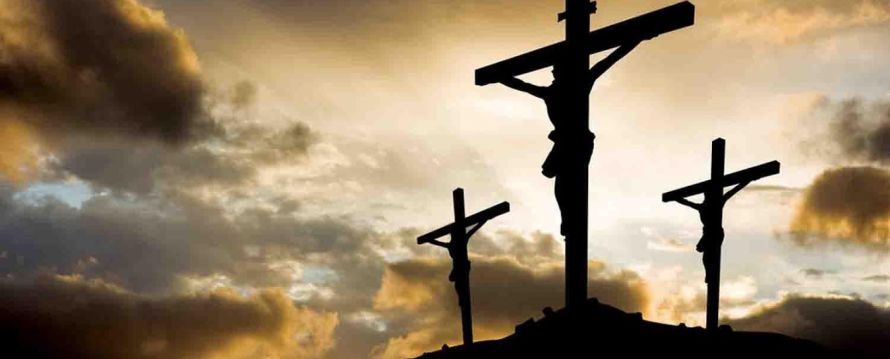
*Before I post this I want to unequivocably say that I respect any church and its teachings, especially if they bring people and families closer to Jesus Christ. I don’t get to interact with teenagers much outside of coaching, but from what I’ve seen with the girls I’ve gotten to coach at two catholic schools, they are kind, compassionate, intelligent, awesome young women.
When I started coaching basketball at my second catholic high school, I had to sign a Profession of Faith.
I started reading through the document.
“I believe in one God, the Father almighty, maker of heaven and earth, of all things visible and invisible.”
Okay, yeah, I can get behind that, we’re off to a good start.
“I believe in one Lord Jesus Christ, the Only Begotten Son of God, born of the Father before all ages.”
We’re good here. This is going to be easier than I thought!
“God from God, Light from Light, true God from true God, begotten, not made, consubstantial with the Father;”
Wait, hold on, what’s that word mean?
Consubstantial: “Of the same substance or essence (used especially of the three persons of the Trinity in Christian theology).
Uh oh.
But wait. Didn’t I just say I believe in one God, the Father almighty? Also, I believe in one Lord Jesus Christ, the Only Begotten Son of God?
“through him all things were made. For us men and for our salvation he came down from heaven, and by the Holy Spirit was incarnate of the Virgin Mary, and became man. For our sake he was crucified under Pontius Pilate, he suffered death and was buried, and rose again on the third day in accordance with the Scriptures. He ascended into heaven and is seated at the right hand of the Father.”
Yes! Exactly. Seated at the right hand of the Father. Okay, we’re back on track again.
“He will come again in glory to judge the living and the dead and his kingdom will have no end. I believe in the Holy Spirit, the Lord, the giver of life, who proceeds from the Father and the Son, who with the Father and the Son is adored and glorified, who has spoken through the prophets.”
Yeah! Okay, this is great!
“I believe in one, holy, catholic and apostolic Church.”
Uh oh.
“I confess one Baptism for the forgiveness of sins and I look forward to the resurrection of the dead and the life of the world to come. Amen.”
I wholeheartedly agree (does the Catholic Church have one baptism? I personally don’t know, I’m curious… to Google we go… quick Google search says no, the Catholic Church does not have one method of baptism).
“With firm faith I also believe everything contained in God’s word, written or handed down in tradition and proposed by the Church, whether by way of solemn judgment or through the ordinary and universal magisterium, as divinely revealed and calling for faith.”
Another word I have to look up, let’s see.
Magisterium: “the teaching authority of the Roman Catholic Church, especially as exercised by bishops or the Pope.”
Hmm.
“I also firmly accept and hold each and every thing that is proposed definitively by the Church regarding teaching on faith and morals.”
Uhm, I’m not sure. But I hope we can agree on principles of faith and morals.
“Moreover, I shall always teach in accord with the Official Magisterium of the Church as it is proclaimed by the Pope and the College of Bishops.”
…
I then re-read it to see if I could make it work. I kept coming back to this:
“God from God, Light from Light, true God from true God, begotten, not made, consubstantial with the Father; through him all things were made. For us men and for our salvation he came down from heaven, and by the Holy Spirit was incarnate of the Virgin Mary, and became man. For our sake he was crucified under Pontius Pilate, he suffered death and was buried, and rose again on the third day in accordance with the Scriptures. He ascended into heaven and is seated at the right hand of the Father.”
How can Christ be consubstantial with the Father and then sit on His right hand?
“I believe in one, holy, catholic and apostolic Church.”
That one I couldn’t wiggle around. I don’t believe that.
This wasn’t going to work. I couldn’t sign this. I so looked forward to coaching at this new school. I looked forward to continuing our work as a coaching staff. I looked forward to a new group and new challenges, though I’d miss my girls at St. Mary’s so much. I was excited to coach closer to home. I was excited to start taking Ivy to practice with me so she could hopefully start to develop a love for basketball like I had.
I had to call Patricia and tell her we had a problem, that I couldn’t sign the Profession of Faith.
I picked up my phone to call Patricia to see if there were any options available to us. I hit dial. The phone rang. I scrolled down a little bit more on my screen and saw this:
“FOR NON-CATHOLICS
Roman Catholic Diocese of Phoenix
Division of Education and Evangelization
Profession of Faith
I accept and hold each and every thing that is proposed definitively by the Catholic Church regarding teaching on faith and morals.“
Patricia answered.
“Never mind, we’re in the clear!”
She was confused. I explained. All I had to do was enter the church I belonged to and I was good.
How grateful I was for that last part, that I could submit my belief and move on. Was I prepared to refuse to sign that Profession of Faith? Yes, I was. I could not deny what I know. I couldn’t sign something I didn’t believe to be true.
As I thought more about this, I thought more about the United States of America. How grateful I am to belong to a free country. How grateful I am to have the first amendment of the U.S. Constitution which grants me freedom of religion. How grateful I am that, even at a Catholic high school, which I just detailed might have some strong opinions about my beliefs, I can still click “other religion,” enter what church I belong to, and an institution with different beliefs accepts that. I am grateful for different beliefs. I am grateful for different opinions. I am grateful for debate and disagreement – as long as it is done with love. I am grateful for freedom.
I’ve now coached three seasons at this new school. Of course there have been no issues. I hope through my example and love I can teach these girls about becoming great young women. I don’t proselytize them.
It’s ended up being an amazing transition and I’m glad I’ve gotten to coach at a great Catholic high school. Andddd I checked with Patricia before posting this, just to be safe.
 No Coincidences