Tag: child of god

  • Your True Identity

    Your True Identity

    *I originally wrote this in 2022.

    I’d like to discuss Grace and our Identity.

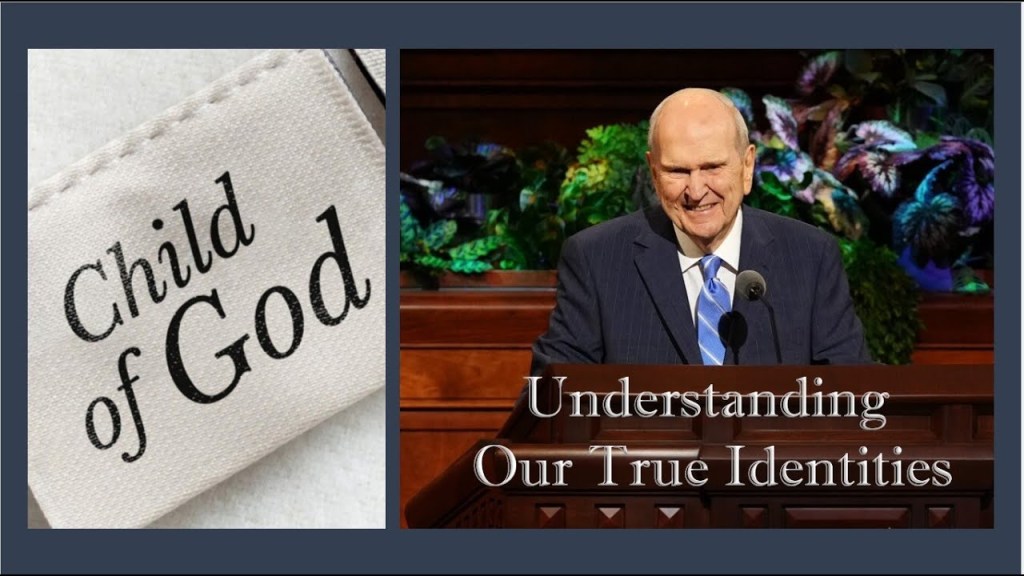
    In a recent address to young adults of the Church of Jesus Christ of Latter-day Saints, the prophet of the Lord, President Russell M. Nelson, talked about the three defining identities of a member of Christ’s church. Those identities were:

    1. Child of God
    2. Child of the covenant
    3. Disciple of Jesus Christ

    The grace portion of what I’d like to discuss, like President Nelson’s identities, will focus on members of Christ’s church. This doesn’t mean what I’m saying here doesn’t apply to all. I believe it does. Whether someone believes in God or not, the first identity of all God’s children is true. Every soul on this earth is a child of God, whether they believe it (or like it) or not. The other two identities are not excluded from anyone. Anyone can be a child of the covenant by aligning themselves with God. Anyone can be a disciple of Jesus Christ. These must be choices.

    Now that I’ve established that this is for everyone, let’s talk more about President Nelson’s message of identity. President Nelson emphasized that if the Lord spoke directly to us, the first thing He’d want us to understand is who we are; thus, the identities. It’s my testimony that the Lord was reminding us of this, through His mouthpiece, the prophet.

    President Nelson said:

    “Tonight, I plead with you not to replace these three paramount and unchanging identifiers with any others, because doing so could stymie your progress or pigeonhole you in a stereotype that could potentially thwart your eternal progression.

    There are various labels that may be very important to you, of course. Please do not misunderstand me. I am not saying that other designations and identifiers are not significant. I am simply saying that no identifier should displace, replace or take priority over these three enduring designations …”

    The world would so quickly have us forget who we truly are, and our true potential. The multitude of designations we can apply to ourselves pale in comparison to “Child of God.” Can you imagine being a prince of a nation, and calling yourself a peasant? Can you imagine being the president of a university and calling yourself a student? Can you imagine being the captain of the team, and calling yourself a bench warmer? That is what many of us do every day when we give ourselves any title but “Child of God.” Wear your title with pride. Your Father is God of the entire universe. He is King, He is Ruler, and you are His Child.

    “Make no mistake about it: Your potential is divine. With your diligent seeking, God will give you glimpses of who you may become. … As you embrace these truths, our Heavenly Father will help you reach your ultimate goal of living eternally in His holy presence.”

    -Russell M. Nelson

    Let’s transition into Grace. I can’t say anything better here than Brad Wilcox said in his talk His Grace is Sufficient, so please read the talk to remind yourself how patient and loving and kind our Savior is. I believe this may be the most powerful address ever given, especially for our day. I mean that literally. His Grace is Sufficient is so filled with eternal and significant truths, you could quote the whole thing. I will quote much of it here.

    I believe there is an epidemic in the Church of people not feeling good enough. I believe this aligns with President Nelson’s message of forgetting our identity. I think it also aligns with a misunderstanding that Satan has perpetuated, a misunderstanding of Grace and the Atonement of Jesus Christ.

    Brad Wilcox said, “Too many are giving up on the Church because they are tired of constantly feeling like they are falling short.”

    He then gave an example:

    “There are young women who know they are daughters of a Heavenly Father who loves them, and they love Him. Then they graduate from high school, and the values they memorized are put to the test. They slip up. They let things go too far, and suddenly they think it is all over. These young women don’t understand grace.”

    I would add – these young women don’t understand who they are. Slipping up doesn’t take away any of your three identities. Because you make a mistake, are you no longer God’s daughter? Because you slip up, are you no longer a daughter of the covenant? Because you’re not perfect, are you not a disciple of Jesus Christ? If that were the case, Christ would never have disciples! Be less hard on ourselves. And remember who we are.

    Few paragraphs in a talk have applied more perfectly to me:

    “There are young men who grow up their whole lives singing, “I hope they call me on a mission,” and then they do actually grow a foot or two and flake out completely. They get their Eagles, graduate from high school, and go away to college. Then suddenly these young men find out how easy it is to not be trustworthy, loyal, helpful, friendly, courteous, kind, obedient, cheerful, thrifty, brave, clean, or reverent. They mess up. They say, “I’ll never do it again,” and then they do it. They say, “I’ll never do it again,” and then they do it. They say, “This is stupid. I will never do it again.” And then they do it. The guilt is almost unbearable. They don’t dare talk to a bishop. Instead, they hide. They say, “I can’t do this Mormon thing. I’ve tried, and the expectations are just way too high.” So they quit. These young men don’t understand grace.”

    For me, it was a process of making mistakes, and then deciding I didn’t need to ask for forgiveness. The guilt of asking for forgiveness wasn’t worth it. I just moved on and stopped asking. But my soul was crying out. What saved me was my testimony of Jesus Christ and His Church, the Church of Jesus Christ of Latter-day Saints. Without that testimony of His restored Gospel, I would have never returned. It wasn’t worth feeling the guilt. But once I did return and reminded myself of the fruits of repentance and the pure joy of forgiveness, I could never go back. I continued to make mistakes and I continued to fall short. I continue to fall short. But that day when I cried tears of joy in a church parking lot, I felt Christ so palpably and so near, I knew I could never go back. I knew I had to keep trying. My soul had been starved for so long and once I felt the grace of Jesus Christ, which I only had to ask for, returning into my very being, I couldn’t go back.

    I plead for all of God’s children, all of you, my brothers and sisters, to not give up. Ask for that forgiveness, endure the guilt, and feel the overwhelming joy.

    Brother Wilcox in continuing to describe me, “…guilt is almost unbearable. They don’t dare talk to a bishop. Instead, they hide. They say, “I can’t do this Mormon thing. I’ve tried, and the expectations are just way too high.” So they quit. These young men don’t understand grace.”

    I definitely didn’t understand grace until I’d felt it’s full magnitude. Don’t give up on who you are. Don’t give up on who you can become. Don’t forget your true identity. “In all of these cases there should never be just two options: perfection or giving up. When learning the piano, are the only options performing at Carnegie Hall or quitting? No. Growth and development take time. Learning takes time. When we understand grace, we understand that God is long-suffering, that change is a process, and that repentance is a pattern in our lives. When we understand grace, we understand that the blessings of Christ’s Atonement are continuous and His strength is perfect in our weakness (see 2 Corinthians 12:9). When we understand grace, we can, as it says in the Doctrine and Covenants, “continue in patience until [we] are perfected” (D&C 67:13).”

    “Grace is not a booster engine that kicks in once our fuel supply is exhausted. Rather, it is our constant energy source.”

    Let Christ be your constant energy source. Don’t give up.

    “I testify that God’s grace is sufficient. Jesus’ grace is sufficient. It is enough. It is all we need. Oh, young people, don’t quit. Keep trying. Don’t look for escapes and excuses. Look for the Lord and His perfect strength. Don’t search for someone to blame. Search for someone to help you. Seek Christ, and, as you do, I promise you will feel the enabling power we call His amazing grace… I believe in you. I’m pulling for you… And Jesus is pulling with you.”

    -Brad Wilcox

    What has Christ done for us? What has God given us? President Nelson reminded us:

    “In short, They have offered you everything! Heavenly Father’s plan for His children allows us to live where and how He lives and ultimately to become more and more like Him. His plan literally makes the richest blessings of all eternity available to us, including the potential for us to become ‘joint-heirs with Christ’ (Romans 8:17).”

    “God will do “everything He can, short of violating your agency, to help you not miss out on the greatest blessings in all eternity.”

    Don’t give up. Don’t be discouraged. Never forget your divine heritage and what it affords you. You are a child of God! A joint heir with our Savior, the King, Jesus Christ. Don’t ever replace your identity with something temporary, that only this world gives. Satan abandoned his identity and now he wants nothing more but to deceive you into abandoning yours. Don’t do it!

    I bear my testimony that Christ’s Grace is Sufficient. He died for me, and He died for you. He did it all. There’s nothing we can do to screw it up if we just turn to Him. There’s nothing we can possibly do to make God abandon us. He loves us with a love we can’t comprehend.

    One day we’ll stand before Him, our Father, and we’ll remember. We’ll remember what love truly is, and we’ll remember who we are. Remember today and move towards that glorious light of living with Him, our Savior, and our families through eternity.

  • Of Goodly Parents

    Of Goodly Parents

    Over Christmas, I watched family home videos with my family. We played a video from 1994, a few months after my sister Adie was born. I was four at the time. I was singing to Adie.

    Early in the video, I was singing Humpty Dumpty, Old Mcdonald, and Jack and Jill. Then I started singing Follow the Prophet.

    Adam was a prophet, first one that we know.

    In a place called Eden, he helped things to grow.

    Adam served the (King!) Lord by following his ways.

    We are his descendants in the latter days.

    Of course, at that age, I stumbled through most of the song and got many prompts. King was my confident guess at who Adam served. My answer was as right as the correct lyric anyway.

    My mom joked while my whole family was gathered around watching, “See, we did teach you about the Bible.”  We laughed.

    I don’t remember singing that song to Adie when I was four, obviously. But that song is so ingrained in my heart and soul, it’s a part of my being. Watching that video, it’s a physical, emotional, and spiritual remembering. As an adult now, thinking about that song, it feels like it’s always been a part of me. After watching that quick video, I know why.

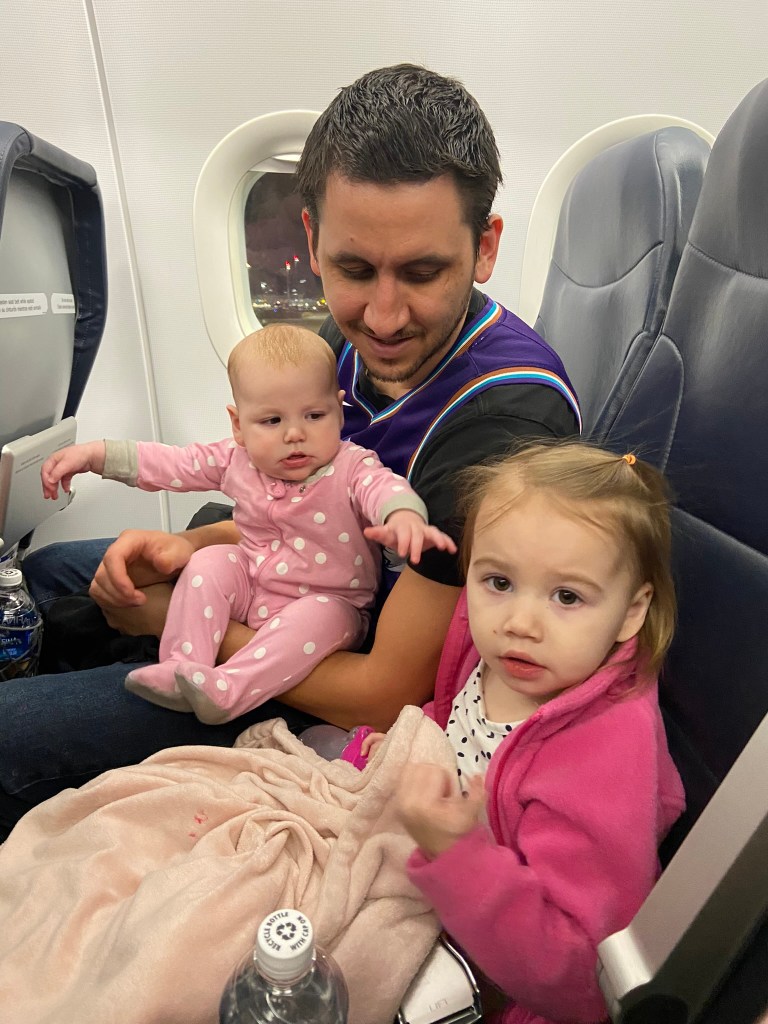
    Parenthood is infinite tiny moments. I know that every day provides thousands and thousands of opportunities to have an impact on Ivy and Sage. I’m grateful for the thousands and thousands of moments my parents impacted me.

    My parents have flaws just as I do. I pray to Heavenly Father that, despite my many shortcomings and flaws, I can have a positive impact on Ivy and Sage, just as my parents had on me.

    If you’ve read the themes in my writing, you know there are three things ingrained in me that I know to be true.

    1. I have a divine inheritance; I am a child of God.
    2. I am loved.
    3. I am watched over.

    I hope to ingrain these same truths into the hearts and minds of Ivy and Sage. I wish to remind them here of what their souls already know. That is the greatest gift I could give them.

  • Blessing Ivy

    Blessing Ivy

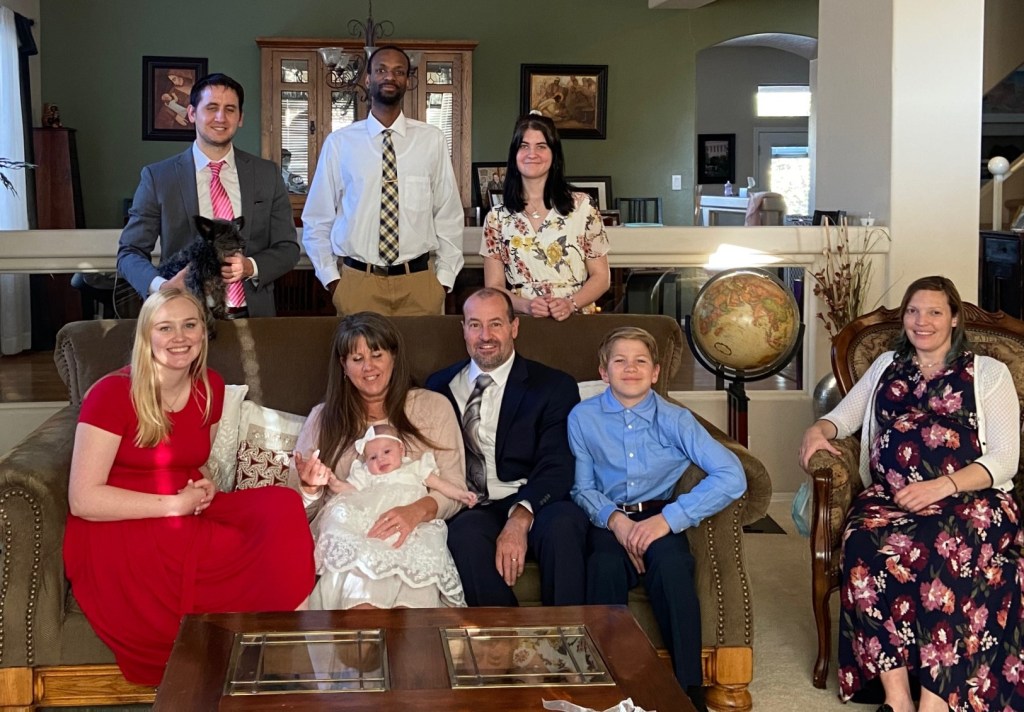
    I recently had the special opportunity to bless Ivy.  Leading up to the blessing, I did some research on the history of blessing children in the Church of Jesus Christ and its significance.  For Ivy’s blessing, Beth put together an event and a description of what a baby blessing is.  Here is that description:

    What is a baby blessing?

    In summary, the naming and blessing of children is a commandment of God. It is proper for a worthy father to name and bless his children. Blessing of children was done during the time of Christ, and it occurred in the early years of the restored Church. The ordinance has become a regular practice followed by Church members ever since.

    Who has the authority to bless a baby?

    A worthy priesthood holder under the direction of the local bishop. It is usually the father or a close family member.

    What is the priesthood?

    The word priesthood has two meanings. First, priesthood is the power and authority of God. It has always existed and will continue to exist without end. Through the priesthood, God created and governs the heavens and the earth. Through this power, He exalts His obedient children, bringing to pass “the immortality and eternal life of man.”

    Second, in mortality, priesthood is the power and authority that God gives to man to act in all things necessary for the salvation of God’s children. The blessings of the priesthood are available to all who receive the gospel.

    What is the format of a baby blessing?

    When blessing a baby, priesthood holders gather in a circle and place their hands under the baby. When blessing an older child, brethren place their hands lightly on the child’s head. The person who gives the blessing:

    1. Addresses Heavenly Father.

    2. States that the blessing is performed by the authority of the Melchizedek Priesthood.

    3. Gives the child a name.

    4. Gives words of blessing as the Spirit directs.

    5. Closes in the name of Jesus Christ.

    Ivy and Aunt Cambria

    Reading up on the baby blessing beforehand taught me some interesting things about this sacred practice that I would like to share.

    The below points were taken from this link:

    https://www.churchofjesuschrist.org/study/ensign/1979/12/i-have-a-question/in-blessing-an-infant-should-both-the-naming-and-blessing-be-addressed-to-our-heavenly-father?lang=eng

    1. Unique to giving a blessing to an older child or adult, the naming and blessing of a child is directed to Heavenly Father like prayers are. 
      • This could be because the baby is too young to understand the words directed to him or her. 
    2. It appears that Melchizedek Priesthood holders are authorized to more than ask for a blessing but are able to pronounce a blessing upon the child directly, as the spirit directs.
      • See D&C 20:70
      • Sometimes inspiration (or confidence) to pronounce/give a blessing does not come.  In this case it is of course acceptable to ask Heavenly Father for these blessings.  I believe this is how I felt in giving Ivy her blessing.  It was enough to ask Heavenly Father to bless her with my requests.
    3. It is a commandment to name and bless infants.
      • See again D&C 20:70
      • It is important to remember the naming and blessing of children is not a saving ordinance.  It is still an important and sacred moment seen in heaven.
    4. “It is an awesome responsibility to be a priesthood agent of the Lord, to act in his behalf, and to approximate in one’s words and doings what the Lord would do if he were here.  A father, especially, who is to bless his child, has the delight and responsibility to prepare himself beforehand by pondering and by fasting and prayer, that he may be sensitive to the suggestions of the Spirit when giving the blessing.”
      • “How blessed we are to be able to present our little ones before the Lord, our families and the Church, and then consecrate them to the Lord.  How blessed we are to be able to name them, plead over, pray for, and, yes, to bless them directly and personally in harmony with our finest desires for them, by the authorization and wisdom of heaven.”

    The below points were taken from this link:

    https://www.churchofjesuschrist.org/study/ensign/1988/12/i-have-a-question/why-is-the-naming-and-blessing-of-a-child-important?lang=eng

    1. An interesting account from Joseph Smith on March 13, 1843 says, “Twenty-seven children were blessed, nineteen of whom I blessed myself, with great fervency.  Virtue went out of me, and my strength left me…”
      • “[The next day] Elder Jedediah M. Grant enquired of me the cause of my turning pale and losing strength last night while blessing children.  I told him that I saw that Lucifer would exert his influence to destroy the children that I was blessing, and I strove with all the faith and spirit that I had to seal upon them a blessing that would secure their lives upon the earth; and so much virtue went out of me into the children, that I became weak, from which I have not yet recovered; and I referred to the case of the woman touching the hem of the garment of Jesus. (Luke 8).” (History of the Church, 5:303.)
      • Elder John Taylor said the Savior’s example of blessing children “should be studiously complied with without hesitancy or objection” (by priesthood holders).
      • We see that Joseph Smith followed the example of the Savior who blessed children in both Israel and the American continent.  (Mark 10:14-16 and 3 Nephi 17).  What an amazing and marvelous thought:  our virtue can be passed to our children.  Our blessings are a force Satan must reckon with.  It makes me want to bless my daughter daily.  It also adds insight to a scripture that has always been a bit puzzling in Luke 8:46.  Virtue can literally leave us to help others.
    2. The new name:
      • A new name is often involved when a covenant relationship is formed.
      • When Adam and Eve were given dominion over the earth, Adam named all the animals (Genesis 2:19-20).
      • God blessed them and named Adam after giving him a body (Genesis 5:2).
      • When we get baptized we follow a similar pattern, taking upon us a new name, the name of Christ.
      • Temple covenants also involve the giving and receiving of names.
    3. The responsibility of blessing a child is bestowed, ideally, on he who helped create that child’s body, and who Heavenly Father entrusted His child with in mortality.
      • Joseph F. Smith – “The patriarchal order is of divine origin and will continue throughout time and eternity.  There is, then, a particular reason why men, women, and children should understand this order and authority in the households of the people of God and seek to make it what God intended it to be, a qualification and preparation for the highest exaltation of his children.  In the home, the presiding authority is always vested in the father, and in all home affairs and family matters there is no other authority paramount…This authority carries with it a responsibility, and a grave one, as well as its rights and privileges, and men cannot be too exemplary in their lives, nor fit themselves too carefully to live in harmony with this important and God-ordained rule of conduct in the family organization.”

    It is my experience that giving blessings is often the closest I ever feel to Heavenly Father.  I can feel him speaking through me and it is always a powerful, emotional, and memorable experience.  The opportunity to bless my daughter will be one of the greatest moments of my life.  I have immense gratitude to my Heavenly Father for entrusting Ivy into my care, allowing me to name her, and trusting me to watch over and protect her in this life and through eternity.

  • Letter to a Sinner

    Letter to a Sinner

    I write this with as much humility as possible.  Fully knowing and understanding my weaknesses have given me perspective.  It is my faults and errors that make me feel like I can write this letter. 

    I remember when I came back to church I was asked to not take the sacrament for three weeks.  It was one of the more difficult things I had to do, although it doesn’t sound like much.  I think it was the moment I realized I had changed.  Something that in the past might not have affected me too much, really hurt.  It was difficult coming back and immediately feeling like maybe I’m not enough.  Maybe I could have gone the route of resentment.  Instead I realized how much I didn’t want to have to go through that again.

    I don’t in any way imply I’m better than someone who can’t take the sacrament and does feel resentment.  We all have our own paths.  Mine was of being completely away, coming back, and realizing I deserved my three weeks.  Some are never officially away so that state of probation seems unfair or not right.  I understand that.

    This is my letter to the sinner.  A reminder, that includes all of us.  This is the sinner who has made mistakes.  This particular sinner might come from a perfect family and part of their struggle is feeling like they don’t fit in in the one place they should feel welcome.  This sinner might feel judged by the very people that should love them the most.  It doesn’t matter if those family, friends, and caring loved ones are right or wrong.  It matters how the sinner interprets things.  We all live our own experiences and encounter the world in different ways.  We must, to the best our abilities, see the world in perfect light and perfect truth.

    Here is my letter to a hypothetical sinner:

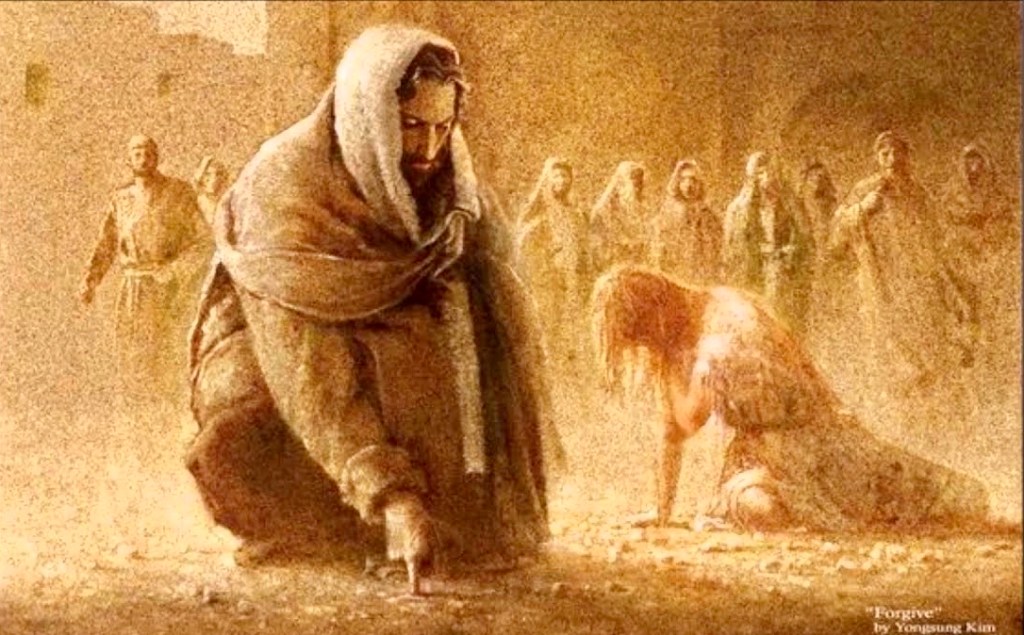
    You will never be like the “perfect” people you see around you.  You won’t.  Your path has been set.  Your path has been set partly by different “luck,” different experiences.  Partly by your choices.  My life was set by very bad choices.  But now that I’ve come out of the other side, my joy is greater than I could have ever imagined.  You won’t be “perfect”, but you’ll be who Heavenly Father sees you can be.  You won’t be “better” than those who never made the mistakes you made, but you might be stronger.  Your path will lead you somewhere wholly different.  And if you decide you want to come through to the other side: to truly know your Savior, to know forgiveness, to know what being welcomed home feels like even if you don’t think you’ll ever deserve it – if you come to that other side with that relationship with your Savior, your testimony will be welded in steel, as hard as diamond.  You’ll have gone through the refiner’s fire and come out united with He who gives all strength.  This is no excuse to continue to sin.  You know the light.  You’ve seen and felt the light.  I knew the light and I turned from it.  I hope to help anyone not make the same mistake.

    You will make mistakes.  You will sin.  But no matter what, you have to remember Jesus Christ.  Because while the world will judge you and you’ll have to struggle with that, He will judge you with a perfect love and comprehension.  Remember that those around you are trying to judge you with love.  They’re trying to love you righteously.  Jesus Christ doesn’t try.  He is perfect love.  Don’t forget it.  Don’t forget that those around you whose points of view you can’t understand, they’re trying to be like Jesus Christ.  They may be falling short.  But that’s not for you to judge.  Just as they can’t judge you, you can’t judge their intentions or efforts.  Just love and do your best. 

    I’m sorry you have to go through trials.  But do not lose sight of Jesus Christ.  Do not.  He is the only person true peace can come from.  Whatever you do, whatever mistakes you make, do not forget HIM.  He won’t forget you.  I promise.

    At this point I must apologize.  Throughout this letter I’ve referred to you as “the sinner.”  I know that phrase hurt the whole way through.  I know it because I’ve felt it.  I did it throughout the whole letter to get to this point.  I want to remind you, “sinner” is not who you are.  It will never be who you are.  We all sin but that’s not what God and Jesus Christ see in us.  No matter how many mistakes we make.  No matter how many slip ups or downright wrong things you do, you are not a sinner.  You are a child of Heavenly Father.  You are growing.  You are learning.  I reiterate something I said earlier, this does not excuse your sin.  Sin is wrong, you know that.  Christ will see your sin.  What means much more to Him is your repentance.  He doesn’t see who you were but who you will be. 

    “God cares a lot more about who we are and who we are becoming than about who we once were. He cares that we keep trying.”

    Elder Dale G. Renlund in April 2015 Conference talk “Latter-day Saints Keep on Trying”
  • Lectures on Faith – Lectures 3 and 4: The Character and Attributes of God.

    Lectures on Faith – Lectures 3 and 4: The Character and Attributes of God.

    These two lectures are combined because they are so closely linked.  They were also combined into one video in the series I’m watching that teaches about the Lectures on Faith.

    Lectures 3 and 4 are about the unchanging attributes of God and why understanding those attributes is necessary for our faith.

    The points made in the video were so good I’m going to just list the character traits and attributes of God given in these lectures and then give points from the video.  All the points from the video I believe inspire some thought-provoking ideas.

    Character of God:

    1. He was God before the world was created and continued to be God after.
    2. He is merciful, gracious, slow to anger, abundant in goodness, He was from everlasting, and will be to everlasting.
    3. He is unchanging, there is no variableness with Him, His course is one eternal round.
    4. He is a God of truth and cannot lie.
    5. He is no respecter of persons.
    6. He is love.

    Attributes of God:

    1. Knowledge
    2. Faith or power
    3. Justice
    4. Judgement
    5. Mercy
    6. Truth

    It is obvious why these two lectures go hand in hand as there is a lot of overlap between the character and attributes of God.

    I’ll now go over some interesting thoughts from the video.

    1. Pretty obvious but worth saying, this is not a finite list of attributes.  It’s meant to help our minds to understand who God is so we can put complete faith in Him.
    2. Unfortunately, this has become less true in our day, but most of us don’t have a problem believing in God, it’s what He’s like where we have an issue – and so much disagreement.
    3. The first attribute listed is mercy.  One of the first attributes of God Nephi mentions in the Book of Mormon is mercy.  In Moroni’s last chapter, the concluding chapter of the book of Mormon, mercy is mentioned again.
      • 1 Nephi 1:14 And it came to pass that when my father had read and seen many great and marvelous things, he did exclaim many things unto the Lord; such as: Great and marvelous are thy works, O Lord God Almighty! Thy throne is high in the heavens, and thy power, and goodness, and mercy are over all the inhabitants of the earth; and, because thou art merciful, thou wilt not suffer those who come unto thee that they shall perish!
      • Moroni 10:3 Behold, I would exhort you that when ye shall read these things, if it be wisdom in God that ye should read them, that ye would remember how merciful the Lord hath been unto the children of men, from the creation of Adam even down until the time that ye shall receive these things, and ponder it in your hearts.
      • It is important for us to understand the mercy of God.
    4. If we have the idea that God is easy to anger it makes it harder for us to have faith in Him.  In the parable of the talents, why did the servant bury his talent?  Because he was afraid.
    5. The fifth and sixth attributes can be combined.  God is a God of love because He is no respecter of persons.  He loves us all. 
    6. God doesn’t stop loving people when they sin.  The difference is God is not able to bless people when they sin.
    7. Where there is doubt faith cannot exist.  Questions are different from doubts.

    I’ll conclude with a statement directly from lecture 4:16 because I think it is extra relevant to us today.

    “And lastly, but not less important to the exercise of faith in God, is the idea of the existence of the attribute truth, in him. For, without the idea of the existence of this attribute the mind of man could have nothing upon which it could rest with certainty: all would be confusion and doubt; but with the idea of the existence of this attribute in the Deity, in the mind, all the teachings, instructions, promises and blessings become realities, and the mind is enabled to lay hold of them with certainty and confidence.”

    We see the fruits of this today.  If no one knows for sure what truth is we become so shaken and confused, thrown about by any wind, blown about on the sea like a boat without paddle.  That’s how we are today when we try to understand truth without putting our faith in the truth of God.  One expert disagrees with another expert.  No one knows how to fix anything.  It is all confusion.  We don’t know who to listen to or who to trust.  Trust God.  His attribute of truth allows us to put our complete confidence in Him and know He will never lead us astray.

    To read the lectures yourself you can find them HERE.

    For the videos about the lectures you can go HERE.