Tag: choice

  • Who Will You Become?

    Who Will You Become?

    “You wasted it,” he said.

    I looked back, confused by what I was seeing. I considered a response. All that came was, “Who are you?” 

    “I’m all that you could have been,” he replied.   

    He looked just like me. I guess I couldn’t have been a bodybuilder. “What do you mean I wasted it?” I asked. 

    “You were given so much. So much opportunity. So much of a head start. You were raised to know God. You were raised to know Jesus Christ. You were raised to know why you were here and where you were going. And look what you did with it.” 

    I stared back dumbly. Ok, that was unfair. I got married late. Had one kid. Got divorced. Held down a decent job for most of my life. Maybe I drank a bit too much and I had a propensity to gamble. But my son loved me, despite my faults. My life wasn’t perfect by any means but a waste? This seemed over the top.  

    “I didn’t waste it. My life? It wasn’t wasted,” I finally said. I had no other defense than to repeatedly say it wasn’t a waste.

    “I’ve come to tell you that you did. I’m sorry,” the other me seemed to say with real compassion. Would I have been equally compassionate in his shoes? 

    “What did you do differently?” I asked. 

    A vision opened up to me. This must have been what so many near-death-experiencers describe as a life review, but this wasn’t my life. It was me I was seeing, but it wasn’t my life. It was my life for stretches. But then something changed. In a miraculous way I saw it all. The thoughts, the struggle, the fear, the doubt, and the triumph. I saw the grappling with faith.

    In my life, I’d never come back to God. It was too painful to feel like I’d let Him down. The focus of this vision was one critical moment.  A prayer to God begging Him to take this alternate version of me back. I’d never done that. 

    The vision flew through other minor and major events. The major events: Marriage, but not at the venue I got married at, this was performed at a beautiful white building. A temple. A wife he (the alternate version) was faithful to. Children that didn’t just “love” him but admired and adored him. Children that had their own faith that strengthened and guided them in a fallen world. A wife that appreciated him and stuck with him through it all. 

    Then seemingly minor but apparently important events: Service, church callings, prayers, books read, time spent studying, time spent writing, small discussions, small moments shared, smiles, gratitude, forgiveness, sharing, giving. I had to admit it was a much different life than the one I had lived. It sure had a lot less football on Sundays.

    Did I waste it?

    In 2021 when I wrote the above, I had heard the question, “If on the last day of your life you met the person you could have been, what would you say to each other?” 

    That inspired me to write the brief dialogue above. It’s what I thought that interaction could look like if I never turned back to God and reminded myself what is truly important about this life.

  • The Room and Freedom

    The Room and Freedom

    I just finished the book The Room. Without spoiling too much, it’s about a woman who is captured and kept locked up in an 11 foot by 11 foot room with her five-year-old son who is born into captivity.

    It is a good book. The most interesting part is that it’s written from the perspective of the five-year-old.  

    At the end of the book there was a “Reading Group Guide” with questions to consider. One of them was, “Why do people tend to be so fascinated by stories of long-term confinement?” 

    I pondered this a bit. The obvious answer is that our freedom is so precious to us, we can’t imagine something so terrible, so we’re drawn to it. Like watching a train crash or the modern true crime craze. 

    There is a longer answer, though.  

    Our freedom, our agency, is the most important thing in the world to each of us. Our ability to choose and make our own choices is more important to us than anything. It’s more important to God than anything, also. That’s why we’re here. 

    I think this fascination with confinement and the inability to choose is a fascination with something we know to be inherently wrong.  

    Every one of us here on earth chose to come here, to Earth. There were some who didn’t choose this. There was one that tried to take away our freedom, to force us to choose his way. He phrased it as a way to save us all, but really, what he was proposing was enslavement. Satan proposed the plan that would have us all return to heaven. The catch was that we would have no say in the matter. We would be compelled to follow him, to do it his way. We would be his puppets. In return, he would ensure we got back safely. 

    God always wants us to choose. 

    We even chose to be able to choose. We are here because we chose agency and freedom.  

    I think that’s why these stories are so fascinating to us. We already chose freedom. Being here on Earth was a choice. God will always give us a choice. Not being given a choice feels wrong because it is wrong.  

    We already chose to reject Satan and come here and use our agency. 

    Don’t forget that. You’ve already chosen.   

  • The Ladder of the Atonement

    The Ladder of the Atonement

    When we came to earth and committed our first sin, knowing right and wrong, we fell. Coming to Earth was an inevitable fall. Why then did we shout for joy when the plan was laid forth and we were told we would be coming to Earth? Coming to Earth to fall below our current status, to fall into a pit, in a way. So why were we excited to enter this pit?

    Well, for a couple reasons. One reason would be that we would receive a body. Another reason was we knew we could become like our Father, who we loved and admired. All it required was this scary step.

    I think this might be why so many didn’t come to earth. We are told that one third of our brothers and sisters in heaven didn’t make the jump. They were content where they were at. Why fall and risk not getting back to the point they were already at? I think we see this mindset with a lot of people on earth now. Why push yourself? Why come out of your comfort zone? Why do difficult things? Why do anything for anyone else? What’s the point? The point is growth and progression. If we’re not growing we’re not doing anything.

    So, we fell into this pit called earth. And how were we supposed to get out? We would be stuck in a pit. We would need something completely out of our power and ability to save us. A ladder would need to be extended to us. And from this ladder we could ascend not only out of the pit and back to our original standing before we came to earth. We could ascend all the way to be like our Father, the one we admired and desperately wanted to be like.

    The Atonement is that ladder. From the pit, there was nothing we could do to attain this ladder. It was given to us by the grace of Jesus Christ alone. He brought the ladder, He did the hard work (bleeding from every pore, broken body) of carrying that ladder to us. Then He extended the ladder down.

    It was then up to us to decide if we wanted to use the ladder. God won’t ever force us to do anything. We would have to choose to use the ladder. We would have to choose to take step by step, rung by rung to come up to the level of our Savior, Jesus Christ. Again, without the ladder, we could do nothing. With the ladder, we could be like Him.

    What is the ladder? The ladder is faith in Jesus Christ and His Atoning sacrifice for our sins, for our fallen state. Every time we repent and try to be better, we are taking a step up the ladder Jesus Christ has provided us. Every step up the ladder is service and love. Every step up the ladder is trying to be like Jesus Christ, by using the ladder to get closer to Him.

  • Addiction, Freedom, and Satan

    Addiction, Freedom, and Satan

    The title of this post makes pretty clear where this is headed.

    I recently listened to a “Public Service Announcement” at the end of a Hidden Brain podcast episode about resolutions. The podcast had someone on their staff record a message that he would like to share with youth about smoking. Today the dangers of smoking are well documented. Luckily, for children nowadays and future generations, the campaign against smoking has been pretty successful. People definitely aren’t smoking like they were a couple decades ago. But people still smoke. It kind of blows my mind. I’ve written about it before HERE. I can’t emphasize this enough: it blows my mind that people still smoke cigarettes. It makes no sense to me.

    In listening to the long anecdotal PSA about smoking, many thoughts came to mind. Thoughts about the power of this addiction, the power of Satan, and why I’m grateful I never got sucked into that dark habit.

    He started by talking about his Great Aunt who he stole cigarettes from when he started smoking at age 14.

    “My parents and aunts and uncles used to tell us kids when we were little to ask Aunt Do to quit. They thought kids would be more persuasive than they were. I remember one time after nudging, ‘Aunt Do, you shouldn’t smoke,’ she replied, ‘I know honey, but when I think about quitting, I get stressed, and when I get stressed, I smoke more.’

    Loss of control.

    He continued, “Having smoked more than 10 years myself I know how she felt. But smoking clearly cut her life short. It’s a fact that, well, I’m ashamed to admit, hasn’t discouraged my own smoking. The thing is, death is too abstract, lung cancer too far off, and the risk of heart attack too uncertain.”

    Short-term reward versus long-term looking. The world today doesn’t think about 10 years from now, let alone eternity.

    “I’m sure Aunt Do knew, like I do, the risks. That smoking kills little cilia that clean the air for your lungs. That it cuts off the blood flow from to your gums causing your teeth to rot from the inside. That it causes plaque to build up in your arteries leading to stroke and heart attack. A doctor once told me on his smoke break that I just needed to quit before I was 35 and my body could still recover. I’m not sure he was right. I can already hear my laugh sometimes turn into a cough like Aunt Do’s did. But by his measure, I probably have another 10 good years of smoking in front of me. I’m only 25.”

    What is truth?

    “But if you’re 14 and thinking about having your first cigarette, I’m quitting now, and here’s why. Smoking really sucks. Not just when you’re 60 or 70 or 80 if you’re lucky. It sucks when you’re 16, when you’re 20, when you’re 25. Today I can’t run as fast or as far as a nonsmoker. I spend more money on cigarettes than I’d like to think about. But the worst of it are the cravings that come like clockwork even when I’m sleeping.”

    The pull of smoking is extraordinary. He’s going to talk about this more. Visions of Glory talks about individuals who leave this life so addicted to smoking that they continue to linger around this world with the desire to get one more hit of a cigarette. Before you think that’s absurd and completely outlandish and just can’t be true, stop, and think. Do you know anyone so addicted to smoking that when they die it might be the first thing they miss, having a body and the ability to smoke a cigarette? It’s not outlandish to me at all.

    “When you don’t smoke, here’s what you should know. When you’re a smoker life is lived around cigarettes. You’ll be laughing with friends at dinner or totally engrossed in a good book and something will tug at you. And as much as you want to stay in this moment, you’ll be thinking about a cigarette. So, you’ll get up, walk outside, and light up. And it will feel really good. But you’ll wish you were back inside, and you’ll be so tired of trading off these moments for a smoke.”

    More loss of control.

    “If you don’t smoke, you should know that smoking makes a prison out of completely normal situations.”

    Reading his words just made me think about, and appreciate (in a negative way), how powerful Satan is on this earth. He has so much control over individuals through the habits he perpetuates. Of course, the world never looks at it like this. The world says, “I want to smoke so I will” or “I enjoy coffee,” never admitting that they are controlled by these cravings. So many people in this world are contained in prisons of their own choosing.

    “Long flights, concerts, class, anything that lasts longer than a couple hours. These are your enemy, as a smoker. And any time you go on a date, or to a job interview, or to your grandparents’ house, it will be accompanied by a pang of worry. You’ll wash your hands and pull your shirt to your nose and hope they can’t smell smoke. Finally, if you don’t smoke, you should know how hard it is to quit. How much you’ll want to, and fail, to give it up. I’m going to quit on January 1st and to be honest, I’m sad about losing something that’s been a part of my life for so long.”

    How powerful is this poison? So powerful that after describing all the ways smoking is horrible and describing it as “making a prison out of completely normal situations,” he still admits that he’s sad about losing it. This is what I already mentioned. The world says, “I want to smoke,” because admitting you’re a slave to something is much worse.

    “And in the coming weeks without a cigarette, I know the cravings will find a way to twist my reasons for quitting into reasons why I can still smoke. This is the most baffling part of smoking. The way it hijacks your best intentions.”

    “Hijacks your best intentions.” Takes away your control. Takes away your agency.

    “I’ve heard that quitting is the hardest thing a smoker ever does. But also, that whatever pain is meted out in the coming weeks will be totally worth it. Because to be a nonsmoker means to be free to go anywhere and to do anything unencumbered. It means being able to be fully present in each moment if I choose. And so the next time I get on a long flight, or go out to dinner with friends, or see a movie, I won’t be plotting my next cigarette.”

    Quitting is hard. The pain meted out.

    Followed by.

    Worth it. Free. Unencumbered. Fully present.

    It’s striking to me that if any smoker put together a pros and cons of smoking vs nonsmoking the answer would be so obvious. This is exactly what this person was saying. His best intentions are hijacked, he’s in a prison, he can’t think straight when it comes to this addictive poison. Addiction really comes down to one thing. It’s the same thing that was fought over in Heaven before we came here. That one thing is agency, our freedom to choose, our choice. Of course, a smoker always has the choice to quit. All drug addicts have the choice to quit. How many people have we seen incapable of making that choice, no matter how destructive those substances are?

    The same war Satan waged in Heaven, he continues today. He wants to take our agency. He does so through all the tools of the world at his disposal. Those tools include cigarettes, alcohol, other drugs, sports, television, pornography, internet. There are so many addictions out there. This is the war Satan fights with us. He fights to take away our choice. He fights to make us think we have no choice because we need that thing that badly.

    Having spent a large portion of my life addicted, and having that feeling of having no control over what I really want to do, I can now look at this with somewhat of an outside perspective. I’m still fighting some addictions. It’s still a daily struggle choosing good things over mindless things. It’s still a choice every day to use my time to the best of my ability.

    Addiction is powerful and I feel sympathy for anyone caught in its thralls. There is hope, there is choice, there is a way to get away from addiction. We always need help. The power put into addiction from Satan, we need equal power on the other side to be able to conquer our natural inclinations. That power exists. If we turn to that power, to God, and to Christ, who feels and knows all our addictions and how hard it can be, we gain the ultimate reward: freedom.

    Ultimately Christ wants us to be free. That is the battle being fought. We just need to use all our willpower possible to align ourselves with the right, and winning, side. And then we are free.

  • Agency and Mistakes: Was Brigham Young Wrong?

    Agency and Mistakes: Was Brigham Young Wrong?

    Let’s start with an assumption.

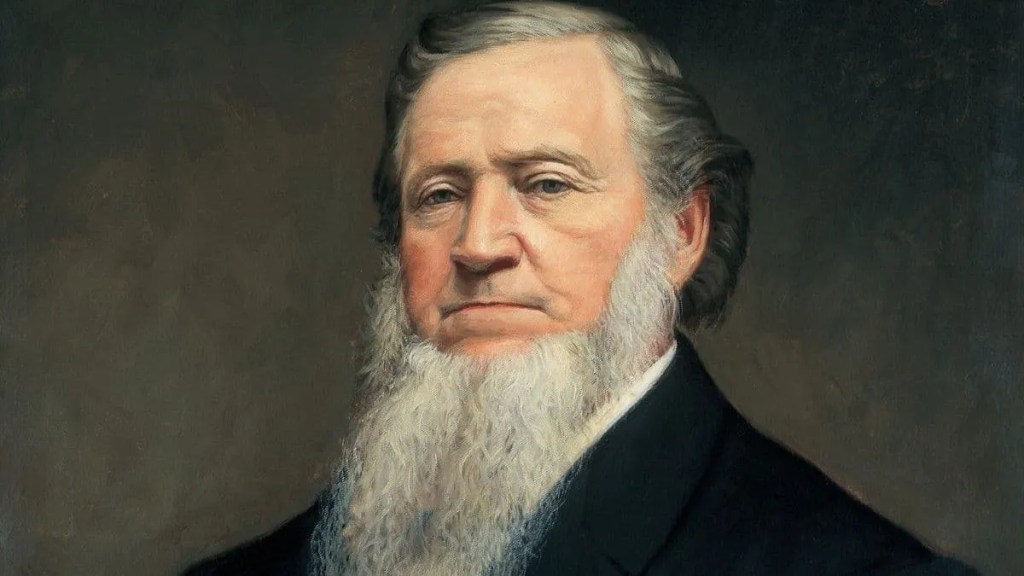
    What if Brigham Young incorrectly instituted the practice of the priesthood ban for black people?

    We always think in this way that God can do anything, however He wants to. Why didn’t He fix the priesthood ban for blacks issue immediately after Brigham Young if it was in fact a mistake by Brigham Young?

    We sometimes neglect to think that, if God were to fix things however He wants to, that would likely supersede our agency. This whole life is about us making choices. It would be a problem if God started correcting everything on this earth, especially with our many mistakes and shortcomings as mortals. It was never in God’s plan to supersede our agency, that was Lucifer’s plan.

    But let’s take a bigger perspective on this.

    What if God did correct this issue of black men not receiving the priesthood in the 1800s and early 1900s? What if He corrected it an eternity ago, when He created the Plan? God’s plan is perfect. God doesn’t always fix things the way we think He should fix things. In fact, He probably never fixes things the way we think they should be fixed. That’s what makes Him God and us tiny mortals trying with all our might to be like Him, but inevitably falling short.

    God’s Plan was established well before black men were denied the priesthood through Earth’s late 19th and early 20th centuries. His plan allows all those who would have faithfully accepted the priesthood while in this life to lose out on nothing. This is in precisely the same way His plan accounts for His countless children who didn’t have access to the saving ordinances of the Gospel in life, whether that be due to the gospel not being present on earth, never hearing about it, or a child dying before reaching the age of accountability. God’s plan is perfect. He’s already thought it through. I assume those who have an issue with the delay in the Church allowing black men to have the priesthood also have an issue with the tens of millions of infant deaths each year. In that case, your issue is with your faith in God, not in any church policy.

    I understand that these things are hard to understand while here. Some reading this may respond, “Yes, that’s precisely the issue I have: That many noble and worthy men weren’t allowed the priesthood and the millions of innocent children that die unfairly.” I understand this challenge. This is where faith comes in. I have faith in God, His Plan, His love, and that He will make all these things we don’t understand right. If we don’t have faith in those things, then yes, God is a monster that we should not worship. The God I know loves us and one day all these things will be understood.

    Something to us, here, simple and short-minded on earth, that looks like a huge mistake – it’s not a mistake to God. All those who couldn’t get the priesthood due to an incorrect policy will receive it.

    What if Brigham Young did make a mistake and what if the Church really would have collapsed if that mistake was corrected in the 1860s? THEN God’s church wouldn’t be on the earth. That seems like a real mistake. Again, God has thought these things through.

    We have an example of this principle in the policy change instituted by Wilford Woodruff banning plural marriage. In Official Declaration 1 of 1890, now in the Doctrine and Covenants, Wilford Woodruff says,

    “The question is this: Which is the wisest course for the Latter-day Saints to pursue—to continue to attempt to practice plural marriage, with the laws of the nation against it and the opposition of sixty millions of people, and at the cost of the confiscation and loss of all the Temples, and the stopping of all the ordinances therein, both for the living and the dead, and the imprisonment of the First Presidency and Twelve and the heads of families in the Church, and the confiscation of personal property of the people (all of which of themselves would stop the practice); or, after doing and suffering what we have through our adherence to this principle to cease the practice and submit to the law, and through doing so leave the Prophets, Apostles and fathers at home, so that they can instruct the people and attend to the duties of the Church, and also leave the Temples in the hands of the Saints, so that they can attend to the ordinances of the Gospel, both for the living and the dead?

    “The Lord showed me by vision and revelation exactly what would take place if we did not stop this practice. If we had not stopped it, you would have had no use for … any of the men in this temple at Logan; for all ordinances would be stopped throughout the land of Zion. Confusion would reign throughout Israel, and many men would be made prisoners. This trouble would have come upon the whole Church, and we should have been compelled to stop the practice. Now, the question is, whether it should be stopped in this manner, or in the way the Lord has manifested to us, and leave our Prophets and Apostles and fathers free men, and the temples in the hands of the people, so that the dead may be redeemed.”

    Sometimes we live with this thinking that God can do whatever so why doesn’t He? This, I think, is the basis of so many losing faith in Him. I look forward to the day when we are all reminded that we came to earth willingly, that we knew the Plan, and that we were eternally grateful for the opportunity to have freedom of choice and to learn right from wrong, away from Him (God), where it was completely up to us to make choices.

    Again, we fall into this thinking, I think, that God can do anything He wants however He wants. Maybe. But God still works through us. God still gives us our agency. God still lives by laws. God said He allows plural marriage in the case where he wants to raise a righteous generation unto Himself (Jacob 2). What would we have had God do if He needed to grow the church membership in one generation? Import a couple hundred thousand men and women from space? The answer is – God works with us. He works within the world He has given us.

    God allows us the bounds to make mistakes. Within those mistakes, God’s Plan works. I have faith in the truth of that. God takes our worst, and it becomes part of the Plan. He prefers our best, but He knows us better than we know ourselves.

    On the question of if Brigham Young did make a mistake – again, maybe the answer is yes, but I will refer again to the Official Declaration 1 – this was Wilford Woodruff speaking, “The Lord will never permit me or any other man who stands as President of this Church to lead you astray. It is not in the programme. It is not in the mind of God” (emphasis added).

    It is not in the program. It is not in the mind of God.  

    I believe in giving God all the power we actually try to take away from His power. God doesn’t watch things unfold her and go, “Oh crap, I need a righteous generation, let’s implement polygamy.”  Or, “Oh man, Brigham isn’t listening, this is bad.” This was worked out long ago. Just because we don’t like the way God did things makes it all the more likely He did it perfectly, because we are dumb, and so limited in our view. We cannot comprehend the workings of God.

    Did Brigham Young make a mistake? I don’t know.

    I know who didn’t make a mistake. That’s where I put my faith.