Tag: Christ

  • The Rock Christ would Build His Church Upon

    The Rock Christ would Build His Church Upon

    In a book called The Forerunners by Mark E. Petersen, I was introduced to an interpretation of a scripture that I’d read and heard quoted a thousand times.  The truth of the interpretation was so clear I couldn’t believe I’d lived so long with such a clear misunderstanding of the meaning of that important scripture.

    The verse is Matthew 16:18 which reads:

    18 And I say also unto thee, That thou art Peter, and upon this rock I will build my church; and the gates of hell shall not prevail against it.

    Let’s give some context to this important passage.

    Jesus was with His apostles and He asked a simple question:  Who do the people say I am? (verse 13)

    They responded with some of the rumors out there – Some thought Jesus was the returned John the Baptist, some thought Elias, others thought Jeremias or another of the prophets.  (verse 14)

    Jesus asked, who do you say I am? (verse 15)

    Peter, Jesus’s first apostle responded, “Thou art the Christ, the Son of the living God.” (verse 16)

    Christ responds, “Blessed art thou, Simon Barjona (Peter): for flesh and blood hath not revealed it unto thee, but my Father which is in heaven.”

    Which leads us to our important verse and the part I always misunderstood.

    Christ says to Peter, “thou art Peter, and upon this rock I will build my church.”

    One more quick review to make the point clear:

    1. Christ says who am I?
    2. Peter answers – you are the Christ, the Son of the living God.
    3. Christ responds – blessed are you, for flesh and blood (man) has not revealed this but my Father who is in heaven has revealed this to you.
    4. Christ, in responding to Peter stating properly that He is the Christ, says “thou art Peter.”
    5. Then, adding to what Jesus said about the truth being revealed to Peter by God, Jesus says, “and upon this rock I will build my church.”

    Christ wasn’t saying the church would be built on Peter.  Christ’s Church couldn’t be built on anyone’s shoulders but His own.  Additionally, Christ is adding that the testimony of Him could only be received by man from Heavenly Father, more specifically the Holy Spirit.  The rock of Christ’s Church would be Christ Himself, and the testimony of Christ only comes by revelation from the Holy Spirit.  Not by flesh or blood, but by Heavenly Father and personal revelation.  Thus, the rock of Christ’s Church would be personal revelation that Jesus is the Christ.

    I was always so confused by this scripture.  Why would the rock, the sure foundation of Christ’s Church be on anyone but Christ?  How could Peter be the foundation?  He is not.  There is only one foundation.  There is only one name by which we can receive salvation, there is only one person who can save us.  That is Jesus Christ.  The Son of the living God.  Our Savior and King.

    My foundation - $Christ ministries$

    This scripture, when properly read, emphasizes the importance of coming to a personal testimony that Jesus is the Christ.  We’re reminded that the testimony of Christ does not come from man.  It comes from personal revelation.  It is unfortunate that personal revelation has been removed from much of modern Christianity.  Modern Christian churches say the heavens are closed and God speaks to us no longer.  He only speaks to us through His ancient word.  But what of today?  How do we come to a testimony of Jesus Christ but through revelation from heaven and the Holy Spirit?

    If God no longer speaks to man then man can no longer receive testimony of Jesus Christ.  But men receive testimony of Jesus Christ daily.  Every day millions worship Jesus Christ.  Every day thousands come to the realization that only through Christ can they be saved.

    Revelation is alive.  The Holy Spirit talks to us daily.  He reveals the testimony of Christ to the hearts of man.  God speaks to us;  through scripture, through prophets, and most importantly through the Holy Ghost.

    A quote from William Barclay of the Church of Scotland:

    “The rock is the truth that Jesus Christ is the Son of the living God.  To Peter that great truth had been divinely revealed.  It was God Himself who had opened Peter’s eyes to that great discovery.  The fact that Jesus Christ is the Son of God is indeed the foundation stone of the Church’s faith and belief.  On that great truth the Church is founded for ever and ever.  This explanation holds that the divinely revealed truth that Jesus is the Son of God is the only foundation on which the Church is founded.”

    The Church of Jesus Christ of latter-day Saints.

    It was restored to point men to Christ.  His name is in the name of His Church.

    Jesus Christ still is actively interested and engaged in the affairs of man.  Under the direction of His Father, our Father, He sent an angel named Moroni to reveal an ancient record to his modern-day prophet.  He, through the Holy Spirit, directed and guided Joseph Smith through the translation of a record that would make clear His doctrine and the saving ordinances of His gospel. Not to replace the Bible, but to add a second testimony to it.

    The testimony of the Bible, the Book of Mormon, and my testimony is this: Jesus Christ lives.  He directs His church.  He loves all and wants us all to return to Him.

    This is the foundation of His Church.

    “Build firmly upon the rock of your Redeemer. Treasure His life and teachings. Follow His example and commandments. Embrace the powerful gifts of His Atonement. As you do, I promise you that you will see the [challenges of life] for what they are, [and] the spiritual rock under your feet will be solid and secure.” From #ElderAndersen’s pinterest.com/pin/24066179229002852 inspiring #LDSconf facebook.com/223271487682878 message lds.org/general-conference/2014/04/spiritual-whirlwinds #ShareGoodness
  • Truths Removed from the Bible:  What does the Book of Mormon tell us about Baptism?

    Truths Removed from the Bible: What does the Book of Mormon tell us about Baptism?

    I like to think about what critics would say as proof against the Book of Mormon.  I think it helps to have responses to honest concerns about its validity.  I always hope something I read, know, or especially my testimony can one day help someone to see what I see, the truth of this ancient record. 

    The Book of Mormon makes a very important claim.  The claim is that many plain and precious truths have been removed from the Bible over time.  When Joseph Smith first translated the Book of Mormon this was an outlandish and inflammatory statement.  Even more so than today. Christianity in the early to mid-1800s had a firm belief that the Bible was infallible. 

    From a website (https://stepbystep.alancminer.com/) I’ve loved using to study alongside the Book of Mormon, I read this:

    “Richardson, Richardson and Bentley write that while the Book of Mormon testifies to the authenticity of the Bible, it does not claim that the Bible is without error. It specifically states that there were many “plain and precious things” that were deleted from its pages through the evil works of men. (See 1 Nephi 13:20-32; 19:10-12; 20:1-3; 2 Nephi 3:5-22; Alma 33:3, 13, 15; 34:7; 46:23-27; Helaman 8:19-20; 15:11; 3 Nephi 10:14-17; 12:13, 17-19, 22, 29-30; 14:1.)

    Scholars of the Bible have found indisputable evidence that the Bible has indeed suffered many deletions. Non Mormon scholarship has concluded that the gospels found in the New Testament have also been manipulated.”

    Critics may ask for specific examples of any “plain and precious truths” found in the Book of Mormon that are not also found in the Bible.

    The website I mentioned above goes on to list 24 plain and precious truths removed from the Bible and where they are laid forth in the Book of Mormon.  I’d like to go over an extremely important one.

    Baptism is only for those who are accountable (Moroni 8:5-23).

    I know of nowhere in the Bible that lays forth the age of accountability. Should children be baptized?  We know baptism is of the utmost importance:

    John 3:5 “Jesus answered, Verily, verily, I say unto thee, Except a man be born of water and of the Spirit, he cannot enter into the kingdom of God.”

    What does the Book of Mormon teach us on the subject of baptism? Moroni chapter 8 is full of profound truths found nowhere in the Bible. I will quote portions of the chapter here but encourage everyone to read the chapter and ponder its truthfulness.

    8 “the whole need no physician, but they that are sick; wherefore, little children are whole, for they are not capable of committing sin; wherefore the curse of Adam is taken from them in me (Jesus Christ), that it hath no power over them”

    9 “I know that it is solemn mockery before God, that ye should baptize little children.”

    10 “repentance and baptism unto those who are accountable and capable of committing sin; yea, teach parents that they must repent and be baptized, and humble themselves as their little children, and they shall all be saved with their little children.”

    11 “And their little children need no repentance, neither baptism.”

    12 “But little children are alive in Christ…if not so, God is a partial God, and also a changeable God, and a respector of persons; for how many little children have died without baptism!”

    15 “For awful is the wickedness to suppose that God saveth one child because of baptism, and the other must perish because he hath no baptism.”

    19 “Little children cannot repent; wherefore, it is awful wickedness to deny the pure mercies of God unto them, for they are all alive in him because of mercy.”

    20 “And he that saith that little children need baptism denieth the mercies of Christ, and setteth at naught the atonement of him and the power of his redemption.”

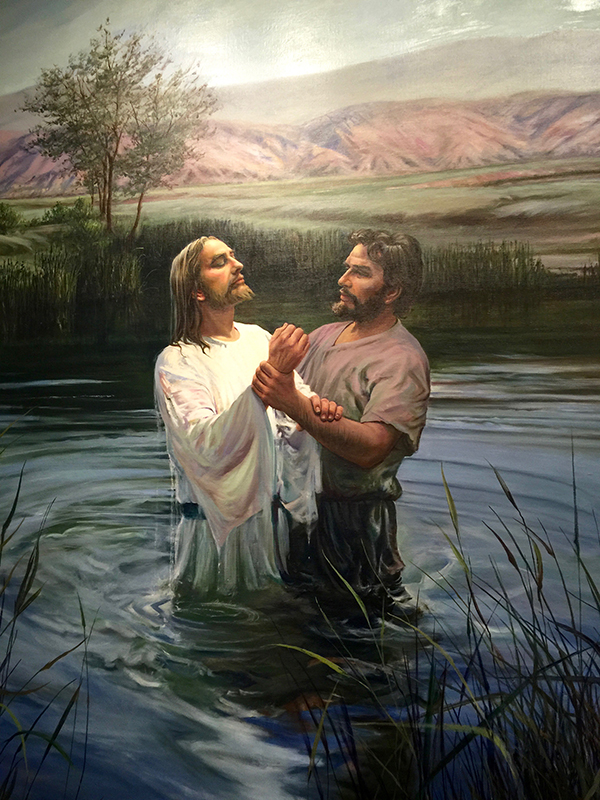
    Girl Being Baptized

    Who can read this and deny the truth that speaks to your heart and soul?  It is so clearly laid out. So perfectly explained. 

    What about how to baptize?  There is so much confusion in the world on not only when but how.  Does the Book of Mormon provide an answer?  Of course!  3 Nephi 11:24-28.

    24 And now behold, these are the words which ye shall say, calling them by name, saying:

    25 Having authority given me of Jesus Christ, I baptize you in the name of the Father, and of the Son, and of the Holy Ghost. Amen.

    26 And then shall ye immerse them in the water, and come forth again out of the water.

    27 And after this manner shall ye baptize in my name; for behold, verily I say unto you, that the Father, and the Son, and the Holy Ghost are one; and I am in the Father, and the Father in me, and the Father and I are one.

    28 And according as I have commanded you thus shall ye baptize. And there shall be no disputations among you, as there have hitherto been; neither shall there be disputations among you concerning the points of my doctrine, as there have hitherto been.

    How lucky we are to live in the dispensation of the fullness of times. I’m grateful for the Book of Mormon. I’m grateful that it clarifies what has been a point of contention within Christianity for centuries.

    Christ was our ultimate example.

    2 Nephi 31:5 And now, if the Lamb of God, he being holy should have need to be baptized by water, to fulfil all righteousness, O then, how much more need have we, being unholy, to be baptized yea, even by water!

    Click below to learn more about baptism as it has been perfectly restored through the Gospel of Jesus Christ by the Church of Jesus Christ of Latter-day Saints.

    https://www.churchofjesuschrist.org/study/manual/true-to-the-faith/baptism?lang=eng

  • First year of marriage during a pandemic-oh my!

    First year of marriage during a pandemic-oh my!

    Beth and I have been married for 15 months.  If you’re doing the math, you’re realizing that our first 12 months of marriage included 3 months of quarantine.  It seems silly for someone married 15 months to give marriage advice.  But I’ll remind you, we’ve survived the great pandemic and quarantine period of 2020!  I’d like to write some things I learned in the first year of marriage.

    First let me comment on the pandemic.  While being stuck with someone and quarantined with them for 6 months may be miserable for some, it’s made me realize how lucky I am to have a wife I love to be around.  Beth and I have joked about how quarantine has been quite a blessing for us.  We basically haven’t left each other’s side for 6 months.  It’s crazy to think about.  What’s even crazier is I love it.  It’s given me a chance to appreciate her, talk with her, and be with her.  We went through a stretch when the weather was nice where we were biking almost every day.  That was great.  As the heat set in, we transitioned into conversations and TV series together.  It’s been nice. 

    It hasn’t been all roses and bliss.  While we rarely fight, there are still frustrations.  I’ll mention one (and don’t worry, this will be proofread by Beth before I post it).

    Early on in our marriage I noticed a frustration setting in.  If I cleaned a bathroom, or did laundry, or vacuumed the living room I would find myself resenting her.  I would wonder why she didn’t help or do this or that. 

    I was letting this frustration build when I turned to someone for advice.  This wise advice giver presented me with thoughts that completely turned around my way of thinking.  He said that when he got married (39 years ago, congrats!) he was given some advice that he took to heart.  He said he struggled with something similar early in marriage where he would fold the laundry and then expect his wife to do something in return.  Someone explained to him that you don’t fold the laundry to keep a leg up or hold something over on your wife.  You fold the laundry because you love your wife and you want to do it for her and yourself, without any thought of repayment.

    My advice giver talked about the Savior and how He is our greatest example.  He reminded me Jesus Christ never did anything with any hope of getting something in return.  Christ served only to serve.  He reminded me we’re here to become like Christ.  Folding the laundry or doing the dishes, with zero expectations of getting something back, was our small way of becoming like Christ. 

    It hit me how dumb I’d been.  Here I was doing good stuff like picking up around the house but doing it without good intentions.  I was essentially nullifying my “good deed.”  I was reminded we don’t serve to get pats on the back, we serve because we love.  It reminded of the advice of our bishop, Bishop Nelson, when Beth and I met with him before getting married.  He said, “If you always do whatever you can to make the other person happy, you will always have a happy marriage.”  I’ve realized how difficult that is in practice, but how rewarding it is to try to live thinking about Beth first.

    I realized after this advice that I’d really let some negative feelings set into my heart.  Looking back, I think it would have been a short skip and a jump to negative feelings turning into resentment, resentment turning into animosity, and animosity turning into a really unhappy home.  I’m extraordinarily grateful to two wise advice givers that helped me be a *slightly better husband early on.

    Let me be clear about something.  I am far from a perfect or I’d say even a decent husband at this point.  While Beth is the epitome of love and kindness, I know my tendency to be stoic and un-affectionate.  I am lucky to be married to someone who understands my flaws.  I’ve mentioned some of the patience I’ve developed but I’m well aware of Beth’s out of this world patience with me.  I know I am not easy to live with and I feel so lucky to have her. 

    Since I received the advice, I can say my heart has changed.  Every once in a while, if I’m vacuuming, I’ll get an inkling of frustration.  I have to stop myself and remember.  Am I vacuuming so I’m owed something?  No.  I’m vacuuming because I want to clean up and I love my wife.  She does so much around the house and does so much for me.  There’s no keeping score.  Truth is I’m lucky we don’t keep score, or I’d probably be losing.

    The moral of the story I learned is we control how we feel.  We can control our thoughts and our emotions- especially frustration.  It’s not always easy,  but it’s possible.  It’s what we’re here to learn.  We’re here to learn patience and love.  I’m still working on being a more loving husband and look forward to the years where Beth teaches me how to be more loving. 

    I see a sad trend in our society and the world today.  We give up too easy.  Love and marriage aren’t easy.  If it was easy it wouldn’t be rewarding.  We’re in a world that has decided if things are difficult, they’re not worth it.  It makes me sad.  Committing to marriage should be the most serious commitment of our life.  Too many people give up too quickly.  It’s sad and I wish it wasn’t that way.

    I know that my marriage will end up being the greatest catalyst to my growth in this life.  From my marriage I will soon be blessed with a daughter which will also provide vast opportunities to mature in many qualities.  I’m grateful for my marriage.  I’m grateful that my marriage is for eternity.  I can’t imagine vacuuming all these floors and taking out all this trash just to have this marriage end when I die.  I’m earning brownie points for eternity 😉.  (Just kidding!  Were you paying attention?  No brownie points!)

    I’ll conclude with a great quote.  The quote comes from Jenkin Lloyd Jones and has famously been quoted by Gordon B. Hinckley.  I share it because I think it’s important to remember, especially when marriage becomes difficult. 

    There seems to be a superstition among many thousands of our young who hold hands and smooch in the drive-ins that marriage is a cottage surrounded by perpetual hollyhocks, to which a perpetually young and handsome husband comes home to a perpetually young and ravishing wife. When the hollyhocks wither and boredom and bills appear, the divorce courts are jammed.

    Anyone who imagines that bliss is normal is going to waste a lot of time running around shouting that he’s been robbed. The fact is that most putts don’t drop. Most beef is tough. Most children grow up to be just ordinary people. Most successful marriages require a high degree of mutual toleration. Most jobs are more often dull than otherwise. . . .

    Life is like an old-time rail journey—delays, sidetracks, smoke, dust, cinders, and jolts, interspersed only occasionally by beautiful vistas and thrilling bursts of speed. The trick is to thank the Lord for letting you have the ride.”

  • Pride of the Gentiles

    Pride of the Gentiles

    I write this as a complement to my testimony of the Book of Mormon as the Word of God.

    For the purposes of what I’m writing I will focus on the Old Testament.  I would gladly speak on the New Testament, but for simplicity I will focus on the Old.

    Let’s look historically at the creation of the Bible.  The text of the Old Testament was preserved and handed down by the hands of the Jews.  It was protected by the Jews.  If not for the Jews, there would be no Old Testament today.

    By definition, a gentile is a person who is not Jewish.  The Gentiles received the Bible from the Jews.  Most of us are gentiles.  If you come from Europe, have Catholic, Protestant, or pretty much any other Christian ties in your ancestry, you are most likely considered a gentile.  Again, none of us would have the Bible today if it weren’t for the Jews.

    It’s those same Gentiles who today say, A Bible, a Bible, we have a Bible! (2 Nephi 29:3).  But how do you have the Bible?  You have it from the Israelites, from the Jews.  You didn’t do anything to gain it.

    When Christ was crucified and resurrected the Jews of old who believed in Christ had a difficult time moving past their traditions.  If you read about Paul and his missionary efforts, you will see that a major portion of his time was spent fighting Judaizers.  Judaizers were “Christians in the primitive church who taught it was necessary to adopt Jewish customs and practices, especially those found in the Law of Moses.”

    From History of the Christian Church, 1, 338 regarding Judaizers:

    These men were Christians in name, but narrow-minded and narrow-hearted Jews in fact.  They were scrupulous, pedantic, slavish formalists, ritualists, and traditionalists of the malignant type.  Circumcision of the flesh was to them more important than circumcision of the heart, or at all events an indispensable condition of salvation.  Such men could, of course, not understand and appreciate Paul, but hated and feared him as a dangerous radical and rebel.  Envy and jealousy mixed with their religious prejudice.  They got alarmed at the rapid progress of the gospel among the unclean Gentiles who threatened to soil the purity of the church…”

    For just a couple of examples of Paul’s contention with Judaizers see Acts 15:23-29, Galatians chapters 3 and 4, Acts 21: 20-25.  That last example in Acts 21 would be roughly the year AD 58.  At this point, 25 years after Christ’s death, there were still thousands of Jewish Christians following the Law of Moses.

    I give this historical background to make a comparison to the Christian gentiles of today. 

    Christians who cannot accept any scripture outside of the Bible are the Jews of old.  Holding firm to their traditions, fighting to preserve what they’ve always known, refusing to see the greater blessing of the Gospel right before them.

    The Gentiles of today say, “I have a Bible.”  By what source have you gotten your Bible?

    2 Nephi 29 4-5:

    4 But thus saith the Lord God: O fools, they shall have a Bible; and it shall proceed forth from the Jews, mine ancient covenant people. And what thank they the Jews for the Bible which they receive from them? Yea, what do the Gentiles mean? Do they remember the travails, and the labors, and the pains of the Jews, and their diligence unto me, in bringing forth salvation unto the Gentiles?

    5 O ye Gentiles, have ye remembered the Jews, mine ancient covenant people? Nay; but ye have cursed them, and have hated them, and have not sought to recover them. But behold, I will return all these things upon your own heads; for I the Lord have not forgotten my people.

    The Jews couldn’t accept further revelation – that Jesus was the Christ and in Him the law was fulfilled.  Gentiles today  – who have only been shown the mercy of God by being adopted into Christ’s fold – do the same thing.  They have a Bible, they need no “other” Bible.

    What does this speak of?  It speaks of pride.  This attitude says – “God has given us all He’s going to give us and now it’s up to ME, MAN to interpret what God is saying.”  This pride removes God from the equation.  You think God has disowned us?  You think He’s given us all He can or will give us?  WHY?!?!?  God loves His children.  Has He abandoned us?

    The hard-hearted, prideful, and stubborn attitude of holding onto traditions has kept people from Christ since the start of mankind and it continues today.  Let go of pride and accept that God still speaks to man.  Pride makes us interpret the Bible how it suits us.  Let go of pride and let God guide us.

    The denial of modern revelation is the removal of God.  It is the denial of either God’s love for us or His power in redeeming His children.  How can people who can only accept the Bible not see that?  They’ve removed a living God for God’s word.  The Bible is God’s word to us, but what good is it if you don’t understand it?  What good is it if you kick against the pricks?  Let the spirit work within you and accept all truth God will give you.  He will enlighten your mind and expand your spirit, but you must let Him, and stop removing Him by saying you have the Bible and that’s all you need.

    The great apostle Paul spent his entire missionary career fighting against the Judaizers.

    Today modern-day missionaries of the Church of Jesus Christ of Latter-day Saints spend so much time fighting modern day Judaizers, traditionalists.  We must Bible bash, meanwhile we have a far greater message: GOD STILL LIVES, GOD STILL SPEAKS, REVELATION IS ALIVE.  He has provided a new Book of Promise – the Book of Mormon – to help and guide us. Not to replace the Bible but to supplement it.  READ IT.  And see for yourself if it speaks to your spirit. See for yourself if God still loves His children. See for yourself if Jesus is the Christ and if HE IS STILL redeeming his people.  Set aside your pride!

    2 Nephi 29: 6-9

    Thou fool, that shall say: A Bible, we have got a Bible, and we need no more Bible. Have ye obtained a Bible save it were by the Jews?

    Know ye not that there are more nations than one? Know ye not that I, the Lord your God, have created all men, and that I remember those who are upon the isles of the sea; and that I rule in the heavens above and in the earth beneath; and I bring forth my word unto the children of men, yea, even upon all the nations of the earth?

    Wherefore murmur ye, because that ye shall receive more of my word? Know ye not that the testimony of two nations is a witness unto you that I am God, that I remember one nation like unto another? Wherefore, I speak the same words unto one nation like unto another. And when the two nations shall run together the testimony of the two nations shall run together also.

    And I do this that I may prove unto many that I am the same yesterday, today, and forever; and that I speak forth my words according to mine own pleasure. And because that I have spoken one word ye need not suppose that I cannot speak another; for my work is not yet finished; neither shall it be until the end of man, neither from that time henceforth and forever.

    How accurate are those words written nearly 2600 years ago?  Inspired writing.  It is my testimony that the Book of Mormon can only bring a person closer to the Savior of the world, Jesus Christ.  I wish we could all remove our pride and stop being like the Judaizers of the primitive Church.  Accept that Christ is as interested in us today as He was when He walked the earth 2000 years ago.  Read His word.  Hear His word.  Feel his word.  Accept his words. All of them.

    Jesus Teaching in the Western Hemisphere (Jesus Christ Visits the Americas)
  • How did I get here?

    How did I get here?

    What is my goal in writing this blog?

    Hopefully to uplift someone, anyone.  Believer, nonbeliever.  Member of the Church of Jesus Christ, member of any church, member of no church.  I’d like to teach people who know nothing about this faith some of what I believe.  I’d like to share with members of my faith the things that have impacted my testimony.

    Recently a new motivation has emerged.  With a daughter on the way I realize one day she can read all this.  Whether or not anyone reads any of this.  One day my daughter might.

    Right now, I’m posting individual posts that are unrelated to each other.  Mostly my thoughts and musings.  As I post more, I plan on categorizing posts into certain sections.  If someone could come to this page and read a quick one to two-page entry and leave slightly uplifted, that’s my ultimate goal.  Most of my writing I hope to be somewhat thought provoking.  Just things I’ve thought about or ideas and concepts that have really impacted me and changed the way I’ve looked at life.

    I hope for this to be informational.  I was greatly impacted by the writing of a man, John Pontius.  As I read more, I’m impacted by the writings of many people who took the time to put thoughts on paper.  Maybe something I write one day will help someone.  I also hope to discuss what I feel makes the restored Gospel of Jesus Christ special.  I hope for people not of my faith to read, and maybe have something stirred in their souls.  Something that reminds them of where they came from, and maybe have a desire to learn more about Christ’s Church and what makes it so important. 

    As I write I’ll share a lot about me.  I wanted a section to describe, briefly, who I am and how I got here.

    Anybody reading on my page will immediately notice the strong religious theme.  It’s what I think about most.  For a portion of my life, it was not this way.


    About me:

    I was born in Payson, Utah in 1990.  I moved to St. George, Utah when I was ~5.  I moved to Las Vegas, Nevada when I was ~9.  I lived in three houses from ages 9 to 18 in Las Vegas.  We moved a lot and that was always difficult for me while growing up.  

    History – Payson
    Payson, Utah
    The Establishment & History of St. George - Greater Zion
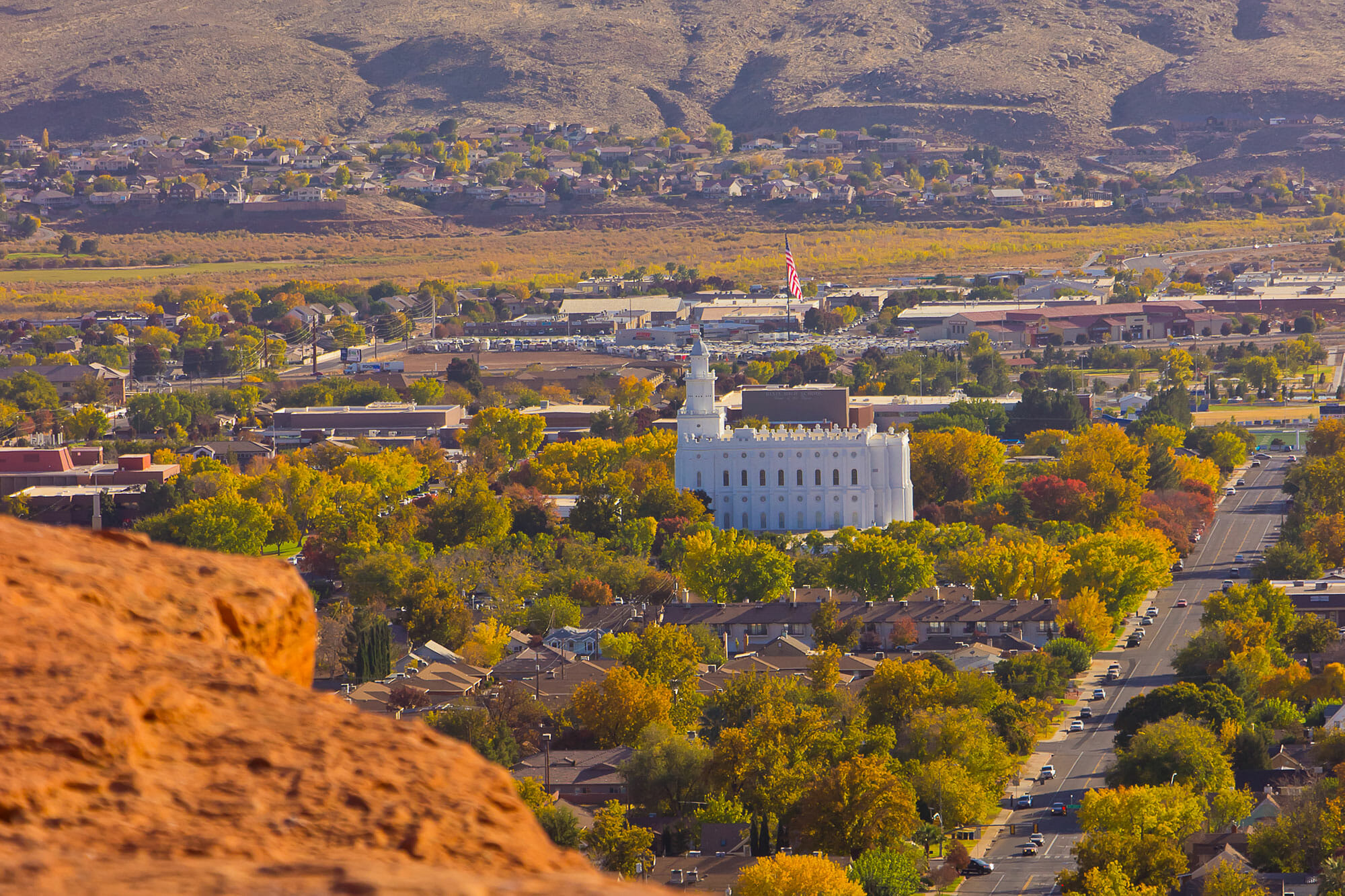
    St. George, Utah
    New Luxury Homes for Sale in Las Vegas, NV | Shadow Point
    Las Vegas, Nevada

    In 2009 I moved to Arizona to go to Arizona State University.  I decided early on I didn’t want to go to UNLV (University of Nevada Las Vegas) or UNR (University of Nevada Reno).  I wanted to get out of Nevada, I wanted a fresh start.  I had no family in Arizona.  Las Vegas wasn’t far, but I would be completely on my own.

    I still remember when I was driving to Arizona for orientation with my mom.  She got sick on the way and we stopped.  I think we were in Boulder City, about an hour into the drive.  I took her to the emergency room.  My dad drove there to be with my mom.  I had to be at orientation the next morning.  I drove to Arizona by myself.  It was the first time I’d driven that kind of distance alone and was symbolic of me becoming independent.

    I went to ASU for five semesters.  I studied construction management.  I always did well in high school with minimal effort.  I’m one of those obnoxious individuals who brags about never studying in high school.  Boy did I learn my lesson once I got to college.  My grades, with zero work ethic and desire, quickly reflected my effort.  It didn’t help that I soon realized I wasn’t interested in what I was studying.  Construction management can be interesting, but it wasn’t for me.  There’s only so much I could take learning about the strength of concrete.

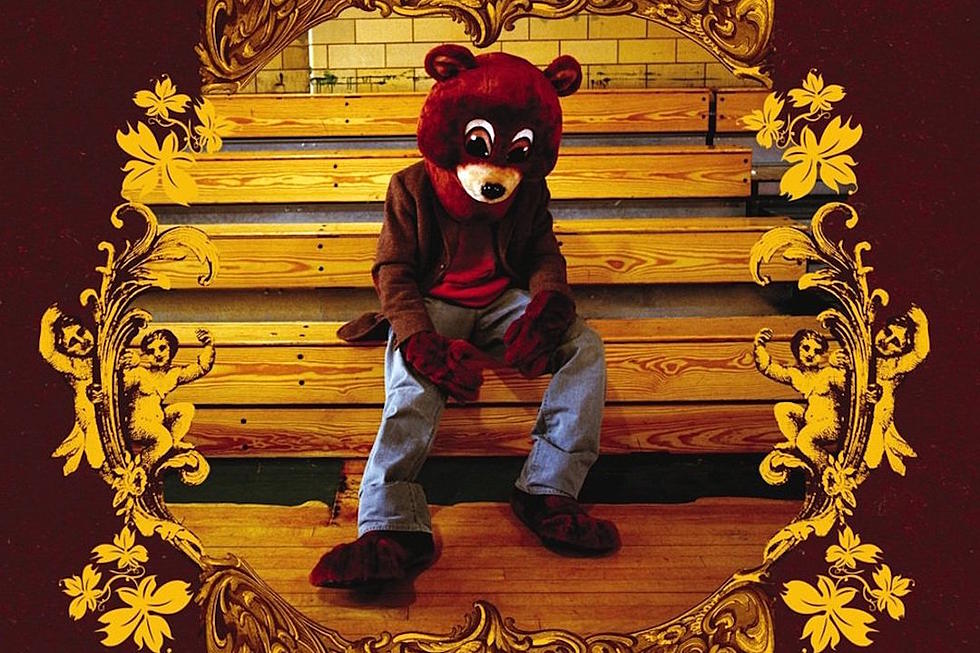
    The College Dropout Turns Fifteen — Scene+Heard
    Like if you get the reference

    My junior year I officially dropped out of college with (of course) the intention of going back and finishing once I found my passion.  I say “of course” because that’s what we all say.  During school I found that I was much more interested in parties, poker, and basketball than I was in learning about safety standards of construction sites.  When I stopped going to school I continued to live on campus and enjoy college life, minus the higher education part.  I spent a full year couch surfing.  I’m sheepish to admit now, but I look back fondly on that year.  It was a year spent staying up until 5am, waking up at 1pm, sneaking into the student rec center to play basketball, getting food, finding a party, rinse/repeat.  It may sound like a pathetic use of time but it’s something I think I needed to experience.

    If my daughter ever reads this – not everyone needs to experience this.  That’s part of why I’m writing.  To show that I made mistakes and lived life a certain way.  Ultimately, I can’t regret it because it eventually got me to where I am today.  I have learned through my own experiences where true happiness exists.  True happiness comes from serving others, giving yourself to something bigger than yourself.  True happiness comes from loving others.  I had to go a round-about way to learn what’s important in life.  Not everyone has to make things as difficult as I made things for myself.

    During my time couch surfing, I was working odd jobs here and there to have enough money for food and extra-curricular activities.  I went to Utah near the end of this adventure for some “soul searching.” After “finding myself,” or not finding myself, I ended up back in Arizona working as a helpdesk tech for two companies.  I went with one of those companies 3 years later when they switched offices and took over as the Systems Administrator.  I now (as of 2020) work for a managed services provider supporting various companies with their technology needs. 

    As I write this blurb about my journey and my past, many thoughts come to mind of what I learned along the way.  I might refer back to this when I need a topic to write about.  Like my lack of desire studying something I wasn’t passionate about or the years spent partying and what that taught me about what I want out of life.

    Faith-wise, I started falling away from the church, due to my choices, when I was 16.  I always had a testimony of this restored church, of Joseph Smith, the Book of Mormon, and Jesus Christ.  That never changed.  Despite my many mistakes and many wrong decisions, I always knew it was true.  When I went to ASU I lost contact with the church completely.  It amazes me to look back and realize I didn’t even know where the church building/institute building/anything related to the church was on campus.  It’s like I’d lost connection with that part of me.

    Throughout the years I’d attempt half-heartedly to return to church.  It never stuck.  I was completely inactive from about 18-25.  Seven long years of inactivity.

    As of this year, 2020, I’ve been back at church for four years and never been happier.  I hope to express through my writing the joy the gospel has brought me and share some of my experiences that can maybe help others.  That’s the hope.  I’ve felt drawn to writing these entries so if one person is helped it’s a major win.

    And if all these hopes fail, I’ll at least be able to look back on everything I’ve written.  One day I can show my daughter and she can know I always believed.  She can see it wasn’t always easy.  She can see life has ups and downs, but it will work out.  Have faith.  That makes this worth writing.