Tag: Church Of Jesus Christ of Latter-day Saints

  • Becoming a Father

    Becoming a Father

    I wrote and posted a first 48 hour update when Ivy was born. At the time I wrote some ramblings from the hospital. I never posted but wanted to share, even though it’s been a couple years since this was written. It’s funny to read back on the simplicity of a newborn. Oh how life has changed with two little ones. Here are those ramblings followed by a thought about my grandparents at the end:

    36 hours in the hospital.

    Swaddling and diapers.

    Resting and food.

    That seems to be the cycle of the last 36 hours. Beth feeds Ivy, change diaper, swaddle, Beth feeds Ivy, breakfast. Repeat before lunch. Repeat before dinner. In between that is rest.

    I’ve never spent this much time in a hospital. I know many have. It’s an interesting existence. I can’t say I dislike it too much. I have writing, reading, tv. What else could I need? Oh, my wife and baby.

    Ivy has been so great. She only sleeps and eats. Those are her two modes so far.

    I’m told this won’t last long. My fingers are still crossed.

    We’ve joked that thus far she has my demeanor (calm?) I’m hopeful it continues.

    I can’t say enough about how kind the nurses have been here. They have been so helpful, attentive, patient. All the good things.

    In the morning soon before the 24-hour mark we mentioned we would like to go home if that was a possibility. Within an hour it felt like 5 nurses came in to do this check or that, this test, that test. I guess they’re fine with us leaving if we’d like to. We live near the hospital so it’s not a worry to us to leave.

    My grandfather, Frank Leach, called me while in the hospital. We had a great discussion about life, parenthood, and faith. With this new life, Ivy James, in my life, and this call from one of my progenitors, it got me thinking about the Circle of Life.

    Disney’s song gives a touchingly accurate portrayal of the Father’s Plan for us here. What would I be without my grandparents? Love has afforded me much.

    What would I be without the foundation they laid? Three of my grandparents are converts to the Gospel of Jesus Christ. My prayers are often filled with gratitude to my Heavenly Father for faith-filled grandparents who did really difficult things, made difficult life choices, made difficult changes, so that I could enjoy the fruits of the Gospel of Jesus Christ today. 

    My grandparents on both sides are spiritual giants and I have been extraordinarily blessed by them and the lives they lived.

    Thank you, Virginia Quackenbush, Stan Quackenbush, Sandra Leach, and Frank Leach. How blessed I am to forever have you and thank you for all you’ve afforded me.

    Re-reading this and now thinking about my Ivy and my Sage. How different Sage is from Ivy. More on that another day. How lucky I am to have this little family.

  • Plan of Salvation and What Christianity is Missing

    Plan of Salvation and What Christianity is Missing

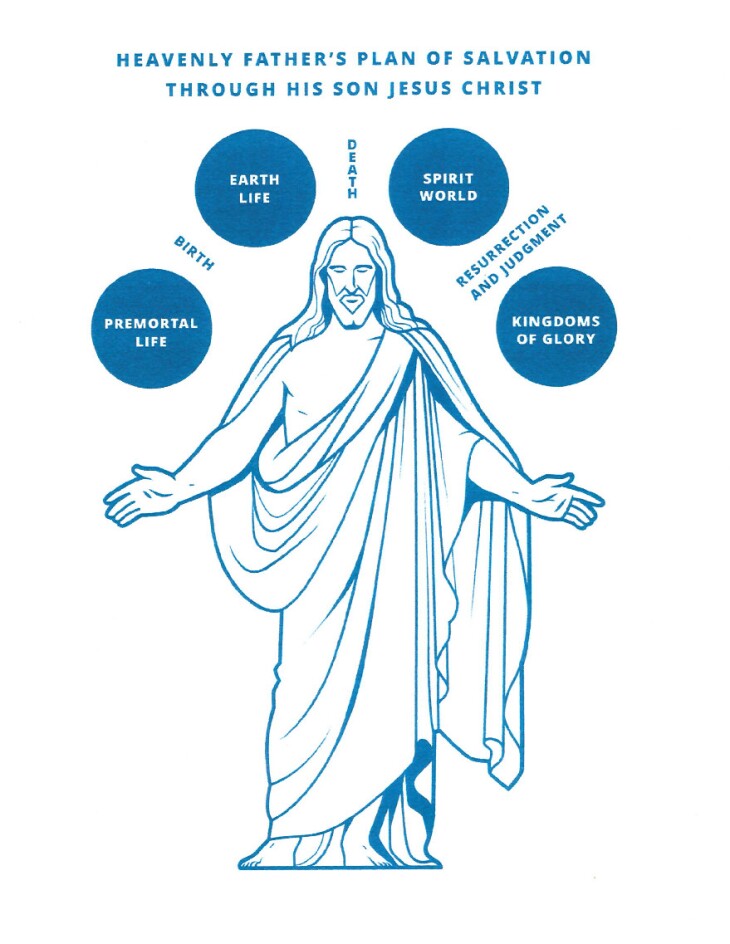
    Outside of the Church of Jesus Christ of Latter-day Saints, what does Christianity believe about the after-life? Generally speaking, Christianity believes that we are born on earth, live our lives, die, are judged, and assigned to either heaven or hell.

    I heard something on an awesome podcast called Unshaken Saints recently that I’d never realized. What the host of the podcast pointed out was that Christianity has it right. Christianity is just missing the beginning and the end.

    As I stated, Christianity believes in life on earth, then judgement, then heaven or hell.

    The truth is that life doesn’t start here on earth. This is the beginning that Christianity is missing. We lived long before we came to earth. There are many truths that stem from our understanding of our premortal existence. One of the most important truths that premortality provides us is an understanding of agency. We chose to come here. This life wasn’t thrust upon us. This is the missing beginning.

    The truth after death (the end) is that we are temporarily assigned to either “spirit prison” or “paradise,” but this isn’t our final resting place. After our temporary assignment to prison or paradise, we receive our final judgement that the scriptures speak of. This is when we come before God and Jesus Christ, Jesus Christ as our advocate to the Father and our judge before God. This is where we either accept Jesus Christ and the mercy He has given us and are reconciled to God, then assigned our glory by the mercy of God and His Son, Jesus Christ; or we reject Jesus Christ and are cast out to outer darkness. We must willfully reject God, Jesus Christ, and the mercy we are given to be cast off. This is the hell that Christianity understands.

    There will be glory assigned to all of God’s children. How can that be? It can be because He loves us that much, so much that He gave His only Begotten Son to save us.

    Christianity thinks the final judgement is immediately after we die. The beauty of the Plan of Salvation is the realization that everyone will have an opportunity to accept Jesus Christ. Everyone will be taught and be given a fair chance. Spirits in “prison” will learn what they missed on earth. No one will be left out. Children are alive in Christ (Moroni 8:12). No one will be lost.

    This is what Christianity misses. The beginning and the end. Premortality and the final judgement. If you cut off the beginning and the end of the Plan of Salvation, you have life on earth and spirit prison or paradise. That’s missing half the picture. We lived before we came here. We were loved by a loving Father in heaven before we came here. At the end, we will be judged for our actions, all we did on earth, our heart’s intent, our good deeds and bad, what we provided in this speck of time that will send us on an eternal trajectory. The beginning and the end. That’s what Christianity misses by rejecting further revelation by God’s prophets.

    What does this do to Christianity?

    Christianity believes we started here on earth. What does that do to our agency? We didn’t choose to come here. We didn’t know God before we came, who is He to us? This is what Joseph Smith spoke of when he talked about the First Vision. He said he learned that God and Jesus Christ knew him by name. For me, that knowledge is so engrained in my soul and being, it’s something I know, that God knows me. The Christianity Joseph Smith knew prior to the First Vision led him to be surprised that God could know him. I’m grateful for the truth God provided Joseph Smith when he appeared to him in a grove.

    Back to what Christianity believes – we come to this earth by no choice of our own, sent by a God we don’t know or understand. We come to this earth to suffer by the sweat of our brow, a fallen world, a cruel world, a challenge we don’t understand, a challenge we didn’t choose. Then God judges us and casts 90% of us off. Most are cast off because they never knew God or Jesus Christ, no fault of their own.

    This is what Christianity believes.

    The podcast provided another analogy that made me think about how this misunderstanding of the Plan of Salvation limits Christianity.

    There are two young men sitting outside of a Bishop’s office. One of the boys doesn’t want to be there. He doesn’t understand why he’s there. All he knows about the Bishop is that he’s a wrathful, unkind, harsh man. This young man fears the Bishop.

    The other young man knows the Bishop. He knows him to be just and kind. He knows the Bishop loves him and only wants what’s best for the him.

    As the first boy waits, he feels like he is in prison. He is dreading the upcoming confrontation with this unkind bishop.

    What does the second young man experience? Is he not in a paradise? He knows he’s soon to meet a friend. That friend is going to give him a treat, congratulate him on how he’s been doing, give him a hug and tell him he loves him. This second young man welcomes the meeting with the Bishop.

    The lack of knowledge in Christianity represents the first young man. Christianity doesn’t know God. By removing the premortal existence, life with a loving Father before life on earth, a Plan to come to earth and progress, a chance to learn of Him after this life, and then to be judged after being given all the necessary information, Christianity only sees a confusing, wrathful God, who has unfairly judged them.

    The Plan of Salvation is a beautiful truth that Christianity is missing. Far from being completely ignorant, Christianity is really close. But this closeness, without the full truth, is extremely limiting.

    ALL of us on earth chose to come to earth. All of us already chose Jesus Christ.

    This is a powerful truth. I wish the rest of Christianity could see, understand, and accept the further light and knowledge that makes this life understandable and worth living.


  • The God You Know

    The God You Know

    When I started writing the post Unity, Peace, and Love, I actually had another point I intended to make. As often happens when I write, my point got sidetracked (I hope by the Spirit) and I ended up going a completely different direction than originally intended. The point I was sidetracked from, I still liked, and think is important, so I decided to write it anyway. Hopefully the Spirit will guide this post as well.

    In Unity, Peace, and Love I talked about a video that shocked me, the video of someone strutting up to a rameumptom to pray. The idea of a follower of God shoving people out of his way to pray was so bizarre to me. I wrote in the aforementioned post what I think ended up being a better point about this. But what really came to mind the first time I watched that video is how corrupt religion can become if people don’t know who they worship.

    In my original post about the rameumpton, I wrote about the God a friend of mine knew. His God was vengeful, exclusive, and selective. This friend believed that I was going to hell despite my best efforts. I assured that friend that I believed he was going to heaven. Do I worship a different God?

    Let me be clear, I believe we’re all trying to worship the same God. I don’t mean to make the same argument that many Christians make against members of the Church of Jesus Christ of Latter-day Saints, that I’m not Christian because I don’t worship the same Jesus Christ. Just because we have different understandings of the person doesn’t completely diminish our worship. My efforts in worshiping Christ, even if others deem it a “different” or “inaccurate” Jesus Christ, is still worship.

    The problem comes when our understanding of who we worship completely alters our understanding and our behavior. The idea that someone could shove someone on their way to prayer was so bizarre to me. But what if the God someone understands has no body, passions, and is unknowable? What if someone thinks God is a selective and vengeful God that needs to be feared?Why not shove someone on their way to prayer? This shoving behavior isn’t as bad as a God who destroys people on a whim, a God who sent us here so 99% of us could be damned to eternal torment. Surely shoving someone isn’t that bad if our example is that God.

    I wrote the above before I finished Alma chapter 21 so I’d forgotten about the next part about the Zoramites, their rameumptom, and their recited prayer.

    Verse 15 of chapter 21, after the depiction of a Zoramite shoving someone out of his way on his way to prayer, reads:

    “Holy, holy God; we believe that thou art God, and we believe that thou art holy, and that thou wast a spirit, and that thou art a spirit, and that thou wilt be a spirit forever.”

    Interesting their beliefs line up with my thinking about how not knowing God corrupts our behaviors not only religiously, but in life. Here we have a recited prayer and the confusion on God’s character destroying a society.

    The culmination of the Zoramites corruption was not in their recited prayers or confusion in God, though. The culmination is found in verse 16 which reads:

    “Holy God, we believe that thou has separated us from our brethren; and we do not believe in the tradition of our brethren, which was handed down to them by the childishness of their fathers; but we believe that thou has elected us to be thy holy children; and also thou has made it known unto us that there shall be no Christ” (emphasis added).

    All their confusion, twisting of doctrine, and beliefs ultimately led to a denial of Christ. We will know the modern religions have truly fallen when they stop believing in He who keeps this all together.

    In an April 2023 General Conference talk, Mark A. Bragg reminded us of the Joseph Smith quote, “If men do not comprehend the character of God, they do not comprehend themselves.”

    This is where modern revelation and especially the Lectures on Faith (See here, here, and especially here for more on those) becomes so important. We must understand the character of perfection and love that Heavenly Father and Jesus Christ possess so that we can aspire to those characteristics. An unknowable God gives us an unknowable standard. Knowing God is perfect love, and we can do our best to be like Him, gives us the ability to do our best to emulate His love.

  • Joseph Smith’s Long Night

    Joseph Smith’s Long Night

    Two thoughts from reading A Marvelous Work and a Wonder about Joseph Smith –

    From his story of Moroni coming to his bedroom three times throughout the night:

    Joseph Smith is up all night having visions. In the morning he goes to work the farm and his dad can tell he’s out of sorts and sends him home. On his way home he literally collapses with exhaustion.

    It occurred to me – wouldn’t it have been convenient for Joseph Smith to have gotten this instruction at any other time besides in the middle of the night when he had to do hard heavy labor in the morning?  Didn’t God know Joseph Smith was going to collapse on his way back home? Didn’t God care?

    God rarely asks us to do easy things. Things aren’t meant to be convenient. Things are meant to make us grow.

    Another thing, the collapse led directly to Moroni returning and Joseph being told to return to his father. Do you think when Joseph collapsed with exhaustion he might have wondered, “Why did he have to come in the middle of the night?” Joseph didn’t know the end from the beginning. He was directed to his father who believed Joseph when he said he saw an angel and  his father told him to immediately go follow the commands he was given.

    Which leads to another thought I had.

    What kind of fascinating teenager was Joseph Smith? Today, a teenager says, “I don’t feel good I can’t go to school” and parents are skeptical. Joseph Smith, in a situation where many teenagers would be trying to avoid intense manual labor, told his father he saw an angel “that commanded me to *cough not farm today, I mean, go get some plates from a hill *cough take a nap, I mean, yeah.”

    And that father, instead of thinking, “My lazy teenage son was up too late playing video games (or whatever teenagers did in the 1800s) and now he doesn’t want to work,” thought instead, yes, that was a vision from God, I believe you, go do what the angel told you to do.

    Jokes aside, the point I’m trying to make is that Joseph Smith must have been a fascinating young man. His father believed him. I wonder if, when he came back without the plates, his father wondered if he’d been duped into letting his son have an afternoon nap on a hill. This appeared to not be the case. Joseph’s family believed him from the beginning. For four years when he visited the hill annually. For months when he had nothing to show for the plates he had recovered. It was some time before he started to provide real evidence, a translation. Before the translation started, his entire family just had to take his word for it.

    Again, what kind of extraordinary person was a 14-year-old Joseph Smith that his father immediately believed he did see an angel, he was commanded to do something, he was not making it up. I believe he must have been a very honest young man. I believe he was young, still a rough stone, but destined to eventually become a prophet of God.

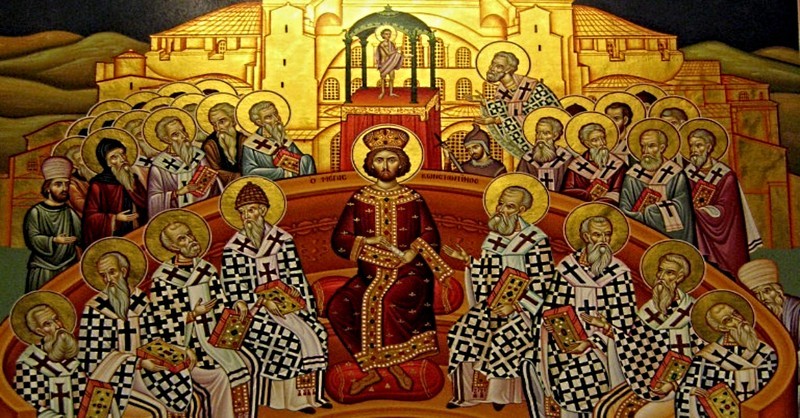
  • How did the Trinity come to be? – The Nicene Creed Post 1

    How did the Trinity come to be? – The Nicene Creed Post 1

    Most of my blog posts are personal experiences with little research. They’re mostly just stream-of-thought writing. That’s what I prefer.

    Every once in a while, I want to write about a topic I know nothing about, which results in some (or a lot) of research. My Adam-God Theory post is one that comes to mind.

    I’ve long wanted to write a post about how the Trinity came to be. To prove this, years ago I gave my thoughts on the Trinity in this post.

    And wrote about how I know the Godhead to be true in this post.

    This has been a topic pretty consistently on my mind for a long time.

    Quick definition so we can all follow along (because this isn’t going to be an advanced or complicated post), the Trinity refers to the belief that God the Father, Jesus Christ, and the Holy Ghost are all one being. Most of Christianity believes in the Trinity. The Church of Jesus Christ of Latter-day Saints, through the experience of the prophet Joseph Smith, believe in the Godhead. The Godhead is the belief that God the Father, Jesus Christ, and the Holy Ghost are three distinct beings who are one in purpose (John 17:21-23).

    I’ve long wanted to learn more about how the Trinitarian belief came to be. I know it developed from the Nicene Creed. But if this is a falsehood perpetuated throughout history, how did it become so dominant? I’ve wanted to understand this history better. Part of the motivation to understand this better comes from the dominance of the Trinitarian viewpoint. When I’m trying to relate to other Christians, the Trinity vs Godhead question really becomes an issue.

    To know God you must know who He is. When I talk to a Christian, we both believe in Jesus Christ, but who is Jesus Christ? It’s OK to say we both believe in God and go from there, but sometimes not understanding who God is keeps me and other Christians from really being able to progress and learn from each other.

    Personally, I believe this is why this misunderstanding has been so perpetuated throughout history. Satan is cunning. He knows if we don’t know who our Father is, it becomes so much harder to worship Him.

    Is that an unfair statement for me to make? I can hear all the Catholics and Protestants and Lutherans and Baptists in an uproar when I state that a core belief of theirs has been perpetuated by Satan to confuse them. I understand that this is inflammatory. When I’m told by those same groups of people that my belief that God the Father and Jesus Christ are separate and distinct beings is a lie that Satan has deceived me with, it hurts. So I get it.

    This is why I want to understand where the belief in the Trinity comes from.

    When I read the Bible, it’s so abundantly clear to me. It doesn’t make any sense to me that people can read the Bible and conclude that Heavenly Father and Jesus Christ are one person. And yet, I’m in the minority, so clearly, there’s more to it.

    We all have our biases. I have always known Heavenly Father and Jesus Christ to be separate individuals. I have always known Christ to be my advocate with the Father. I have always known Heavenly Father to be my literal Heavenly Father. Seeing it any other way is hard. I get that others have always seen them as the same being. Others have read the scriptures with them being the same entity in mind. I get it.

    Which leads me to my point.

    As I studied this more, trying to understand it, the more confused I got. How this came to be is so confusing. I wanted to write a post simply explaining the history of the Nicene Creed and how the Trinitarian belief came to be and I’m realizing giving a “simple” explanation is going to take a lot more reading to understand.

    Some things stood out as I’ve studied this topic. I have a 62,000+ word document of research, quotes, and other information from my study of this topic.

    What stands out are the words I come across when reading how the Trinitarian belief came into existence.

    “Argument” – 13 times in my notes.

    “Debate” – 7 times in my notes.

    “Power” – 18 times in my notes.

    These are the words I kept coming across as I studied this topic.

    One word stands out that I haven’t come across thus far in all my reading. That word is “revelation.” In all that I’ve read it’s always “debate” and “power” and “trial” and “gain” and “politics.” No revelation

    I would love for a biblical and historical scholar to give me a crash course on the history of the creeds. For now, I continue to read, and study, and try to understand why the Christian world trusts a gospel principle that was handed down by power and politics, with little reference to the God they were trying to understand.

    I conclude this post without a conclusion because I don’t yet have one. It will be the first of many posts about the Nicene Creed and the Trinitarian belief.