Tag: confidence

  • Simplified Fathership (Must read for all Dads!)

    Simplified Fathership (Must read for all Dads!)

    These are the highlights I typed up for myself from a book called Simplified Husbandship | Simplified Fathership by Richard M. Eyre. I typed this up mostly for myself to refer back to. This section is only on simplified fathership.

    (In multiple quotes in this book the author says “he” and “him” when referring to his own children. Since my children are all girls, I changed each of these instances to “her” and “she”).

    “Fathership is, in the eternal context of the gospel, vastly important. It is a key to much of what lies ahead. Until this life, fathership was God’s role, His only. When we came to this earth, we made the greatest of eternity’s transitions, assuming the fathership role ourselves – we hope to keep it for eternity. There is no greater stewardship no greater source of potential joy or of potential sorrow.”

    How true is that? There are no higher highs or lower lows than those associated with being a parent.

    I also like that idea, that we made the greatest of eternity’s transitions when we left our premortal life to come to earth. We took on the greatest responsibility when we came to earth. The responsibility over our bodies and the responsibility over the bodies of others. There was no going back once we decided to come here.

    “[Fathership] is hard because we’re dealing with the most complex things on earth: new human lives.”

    “It’s hard because God is the only one who knows how. But that is also the reason we can do it, and do well at it – because our Heavenly Father will help us (individually, personally) to be good fathers, if we ask, if we try, if we make it a high enough priority.”

     “Fathership isn’t easy, but it is natural. You do have fathership inside of you. It was bred there through the premortal eternities. It was taught by the perfect example of the only Father there.”

    Truths about fathership and families that are self-evident:

    1. “Families are heavy, profound, eternal responsibilities.”
    2. “Families are the foundation of civilization.”
      • “Every society that has flourished has been firmly founded upon strong families and homes. The early success of the American democracy can be attributed to the family. There was little social progress in the first 250 years following Columbus’s landing. Most “Americans” were French and Spanish seekers of fortune, more oriented to the pursuit of wealth than to serious settlement. America, like the Orient and all great civilizations of progress and stability, became great with the arrival of strong families who wanted to build real homes.”

    “Happy families are all alike: every unhappy family is unhappy in its own way.” – Leo Tolsto

    The key qualities to simplified fathership:

    1. Confidence
    2. Consultantship
    3. Calmness-Consistency-Congruence
    4. Concentration

    Confidence:

    “People respond to confidence. People live up to the images they perceive others have of them. Especially little people.”

    “All children have unique gifts. A parent who can recognize them will magnify them. He will feel real confidence in the child which the child will sense in a hundred subtle ways. Strength leads to strength. Confidence grows.”

    “Rewards are better than punishments.”

    “The father who has programmed himself to look for and show confidence will direct toward the child the kind of light that can be reflected and that will steadily and gradually increase the child’s self-esteem.”

    “Sometimes the most obvious ways of showing (and building) confidence in children are overlooked. The more direct ways are often best. The most direct way is to tell the child. Sit a three-year-old down, look her square in the eye, and say, “You are really a fast runner. You are very good at eating with a fork. You are good at building things with your blocks. I am really proud of you.”

    “Try it as an experiment. Think about the specific things you are proud of about your child. Make a mental list. Not too long. Just the main things. Think of the gifts she has, the things (even little ones) that she does well. Get her alone. Concentrate on her. Tell her what she’s good at. Some children react more than others (when I do this with my three-year-old he beams like a sunbeam and is sweetness and light for twelve hours) but all children react. Those who respond least may be those who need it most.”

    Confidence Summary:

    “A father who is self-programming the concept of “confidence” says to himself:

    • “I look for my child’s gifts, talents, virtues, sweetness. I notice all she does well, all she is, all she is becoming.
    • “I tell her! I praise her in every way – by word, look, touch.
    • “I give more attention for positive behavior than for negative.
      • (I really try to do this, though it is difficult. The natural reaction to something bad is to jump up and correct it immediately. Since that natural reaction is so hard to fight, I try to be extra intentional about reacting to positive behavior. When Ivy does something for Sage or picks up after herself, I try to be very effulgent and boisterous with my praise).
    • “I avoid criticism consciously, carefully. I separate my disfavor with things she does from my constant favor and confidence in her, in who and what she is.
    • “I love my child. I‘m more grateful for her than I can express. She is a very important person to me. I am important because I have her! She knows this; she feels it.”

    Consultantship:

    “Our Heavenly Father whose fathership is perfect and whose model all fathers should look to, set the clear example of wisdom. His plan, and that of His Son, was built around agency and freedom. He rejected (as did we) the plan of guarantees and managed supervision, choosing instead the plan of self-determination and experience, and freedom to ask, decide, and choose.”

    “Perhaps the Lord’s greatest strength is manifest when He lets us make mistakes.”

    • I think about how patient God was with me while I figured out who I am. Can I do this same thing for my girls as they grow and make mistakes? I hope so.

    A study was done by Life magazine. It selected two groups of students. One group were A students, and the other group were less self-motivated students with average grades. The students came from similar homes. The researchers traced the students’ histories backwards trying to find differences. The researchers didn’t find differences from their homes until they got to the pre-school years:

    “The difference was the parents. The A students had parents who functioned more as consultants than managers. They loved their children but were involved and busy with other things as well. Their general attitude toward their pre-school children was to keep them in a free, stimulating environment; let them explore; respond to their questions; watch for “curious moments” when they could teach their children. The C parents were more dominant, more managing. In most cases, they actually spent more time with their children than the A parents, but that time consisted of directing the children and force-feeding them with things they were often not interested in. The C children had more restricted environments and lived lives that were virtually managed by their parents.”

    One day the author planned a whole day with his kids: clean their rooms, plant in the garden, go on a bike ride. The day quickly fell apart. “The rooms never got clean, I planted by myself the only seeds that got planted, and the kids acted as if I was forcing them to ride their bikes.” The author was reminded of something urgent he had to do in the afternoon for work. He told his kids, “Kids, I’ve got a little work I have to do. There are some seeds in the shed. The directions are on them, but don’t touch them until your rooms are straight. I’ll unlock the old clothes chest for costumes if you want to play afterwards. I don’t care what you do as long as you clean up. I’ll be in the den if you need me.”

    The author states that the afternoon went amazing. He helped with a couple questions about the seeds and had to remind his son twice about his room. He settled one disagreement that “gave me a chance to teach a principle. (We “backed up” the problem and had the two act out how they could have resolved it without fighting. It was a real teaching moment, because it was related to something that had just happened rather than being a lesson I just happened to want to teach them).” The author got his work done and when he finished his kids had a play to present to him with the costumes.

    He says, “I learned that day that children do not need to be told to learn or told what to learn. They need responsive parents. They need a father who is more interested in them and in their needs and interests of the day than in his own preconceived ideas of what would be fun or what they should learn.”

    I have found this to be especially true lately with Ivy and Sage. When anything happens – Ivy takes something and Sage is screaming, Sage hits Ivy and Ivy is retaliating, etc. I usually intervene and help them resolve it. Lately I’ve just been letting it happy. This takes a lot of resolve because the natural parent reaction is “there is conflict happening with my kids, I need to do something.” But what I’ve found is, when I intervene, I can usually calm it down after a couple minutes, but another conflict is very likely to happen again soon after.

    What I’ve found is that if I just let the conflict happen between them, it might take longer to calm down, someone might even get hurt, but they will eventually resolve it. And when they do resolve it, it will be done, over, squashed. I think when I step in and force a resolution, there isn’t really anything being resolved. I’m putting a band-aid on the situation and it will soon happen again. But when they’re allowed the space to work it out together, it actually gets resolved, and they move on to peaceful, awesome, team-work play.

    “Children are more like plants than like clay. They need to be nourished, not formed; cultivated in their own growth, not pressed into molds.”

    “My Commitment to My Children’s Agency”:

    1. I will not force my children into my preconceived mold of what they should be. I will try to discover who and what they really are as they discover themselves. I will try to expose them to many things and to encourage their interests, their abilities.
    2. I will try to give them a free and active, open environment. No parts of our house will be off-limits. I will be sure there is an abundance of crafts, projects, books, games, and materials to experiment with.
    3. I will watch them, listen to them, and answer their questions honestly (with another question whenever I can). I will watch for “teaching moments” and take the time necessary whenever I see one.
    4. As much as practical, I will let them make their own decisions.
    5. I will make my own life as real and full as possible so that I will serve as an example to them of the joy of growing up and becoming an adult. I will show confidence in the gospel and in myself so that they will want to come to me when they have questions or worries.

    Item one will be difficult for me given my love of basketball. I hope my girls will develop a love of basketball as I watch with them, take them to practice, and take them to play. Ivy and I have started daily ball handling drills. So far it’s fun and she’s enjoying it. I hope it continues.

    Give the right priority to your kids without dominating them.

    “The Savior, of course, was a great consultant. He guided people in working out their own problems. He answered questions with questions or with parables. He made people think, encouraging them to draw their own conclusions.”

    “Joseph Smith, in one of his most profound and thought-provoking statements, said, “I teach [the people] correct principles and they govern themselves.” To a surprising degree, this works even with small children.”

    Consultantship Summary:

    • “I am a consultant to them. I let them explore, experience, discover, I watch for teaching moments and respond to questions but try not to manage or dictate what the do any more than I have to.
    • “I teach them principles and try to be an example of each principle I teach.”

    Calmness-Consistency-Congruence:

    Calmness

    When speaking of Mr. Rogers, “It is because he is so calm that it makes them (kids) feel calm.”

    “Anything connected with the Savior or His words carries a feeling of peace.”

    “Nothing works better in calming down a child than telling her about a time when you felt the same way.”

    “Probably the most important key to calmness is that the father have calmness as his conscious goal. Whatever your other objectives for the moment…try to maintain a second objective which is always the same: ‘Keep a calm, pleasant spirit whenever you are with them.’”

    Consistency

    “Erratic behavior, on the other hand, upsets children and makes them insecure.”

    “Things that are consistent in a family become traditions. Children gain security and calmness from things that don’t change, things they can depend on.”

    Congruence

    “There is a difference between an uncontrolled temper and righteous indignation. There is also a difference between real calmness and artificially-contained fury.

    “Christ often taught through righteous indignation. When His apostles made mistakes and should have known better, He reproved them sharply, and they felt His love through His wanting them to be better. Two things distinguished His anger. First, it was always directed at what they did, never at them. Second, it was controlled, never out of control.” (John tells us that Christ braided a whip before driving the money-changers from the temple.)

    “You change your children for the better only as you change yourself for the better.”

    Importance of setting a good example:

    1. “We were having a hard time getting the two older girls to practice the violin consistently. After weeks of nagging and pushing, I had a better idea. I got out my old cello and started practicing each morning before breakfast. Within a week, the girls were practicing, too.
    2. “Josh’s room was always a disaster. I had tried to explain how much better and more peaceful he would feel if he kept it straight, but with no results. One day I brought him into my room, which needed cleaning, and sat him down to watch. While I cleaned, I talked about how nice it would make me feel. I showed him that I enjoyed having it straight. I explained what pride meant and that I was proud of my room. About then, he disappeared. When I finished I peeked into his room. He was cleaning feverishly, with a contented smile on his face.”

    Calmness-Consistency-Congruence Summary:

    • “I’m calm in the presence of my children. They feel my calmness and respond to it.”
    • “I’m consistent with my children in discipline, in being responsive to their questions, and in doing certain things they can depend on.”
    • “My feelings and behavior with my children are congruent. I let them see my real emotions, but they are always in control. If I get more angry than ‘righteous indignation’ would allow, I apologize to them.”

    That last part is something I take pride in. If I make a mistake (hurt my child, lose my temper, yell, am unfair, am unreasonable, etc), I will apologize to my girls. I think it’s extremely important that they see and hear me apologize when I make a mistake.

    Concentration:

    “Children need two kinds of confidence. One is the security-confidence of being part of a family institution. The other is the individual-confidence of liking themselves, of being unique, of knowing there are certain things they do well.”

    Ways to focus on each child as an individual:

    1. Daddy Dates
      • Each child has a “daddy date book” which is nothing more than a note book in which she keeps memories of each date – – a ticket stub or a program.
    2. Clubs
      • With the eldest daughter, who loves books, she has “the Library Discussion Group.” With a six-year-old son, who is very mechanically minded, he has “The Fixers Club” (whenever something breaks, the two of them try to fix it together). These clubs not only give each child a special and unique relationship with their dad; they also provide a vehicle for close communication. The father says he learns far more about his boy in their talks while “fixing things” than in any more formal “interview.”
    3. Husband-Wife Reviews
      • Go on a date once a month where the topic of discussion is each child, how they’re progressing, and their needs.
    4. Interviews
      • Meet with children once a week to talk about their week and their goals for the upcoming week.
    5. Ten-second Focus and Taking them Along.
      • Another father I want to tell you about says he’s too busy for any routines such as those listed above. He says that whenever he tries a “daily program” or a “weekly interview” something comes up and he feels guilty for not following it. His method, therefore, for giving his children individual attention is quite different. First, no matter how busy he is, he finds at least one moment a day (sometimes only a few seconds) to interact directly with each child. He focuses all his attention on that child, perhaps for just one question: “How did that math test go?” Second, this father takes one of his children with him whenever it is possible.

    The last part is something I put extra effort into doing even though it’s so much more work. Going to the store? Which (or all) of my girls can I take with me? Visiting someone from church? Who is coming with me? Meeting with the missionaries and someone interested in our church? One of my girls is coming along. That last one often happens and for any “distraction” having a young child with me causes I think is more than made up for by cuteness.

    “One help in a large family is for the father to make a point of privately telling each child how important his individual place in the family is. “You are the oldest and your example means so much to the others.” “You are the youngest daughter and we’ll always have a special love for you.” “You’re our blondie.”

    “As you begin to feel that you know the unique strengths and gifts of a particular child, it is a good exercise to write out a description of that child which includes each gift. The writing helps you focus real attention on that child. (The reading, out loud to the child, improves her confidence both in herself and in your love for and interest in her.)

    “Perhaps the best way to learn how to treat a child as an individual is to pray about each one, to ask the Lord to reveal to you their strengths and to tell you how to communicate fully and individually with each one.”

    Concentration – Summary

    • “Each of my children is unique. I appreciate separate things about each of them.
    • I find ways to be with each one alone and to talk to each one alone. I realize that each may need a different kind of communication with me.
    • I look for the unique gifts that each one has and compliment it and cultivate it.”
  • Blessing Ivy

    Blessing Ivy

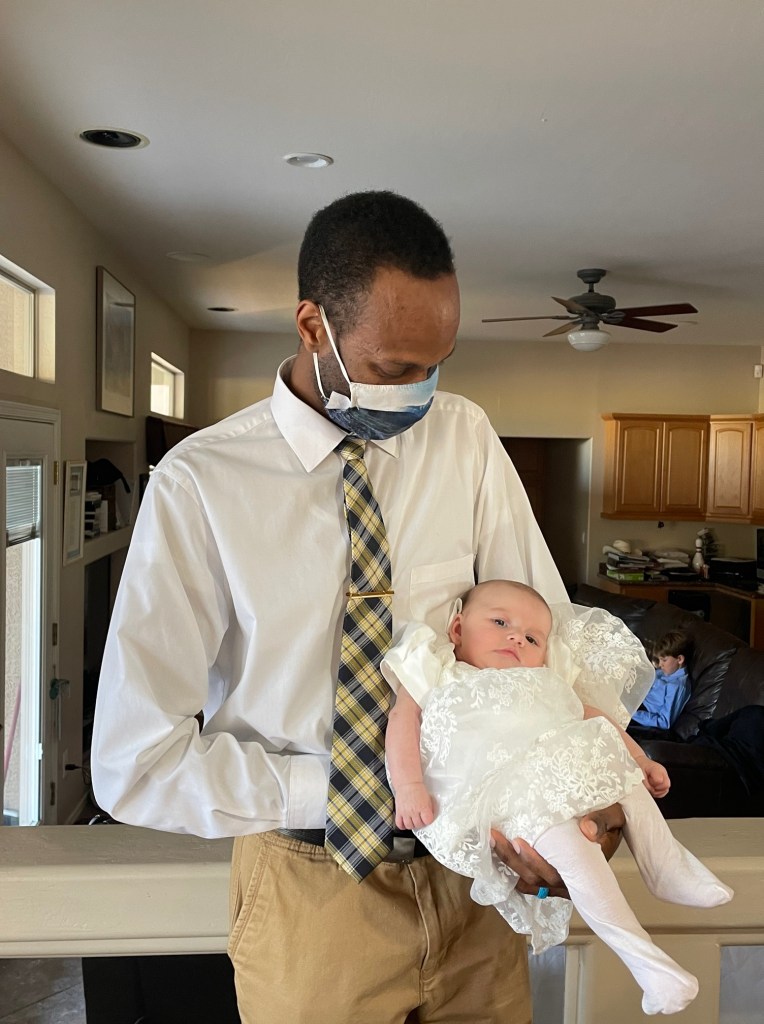
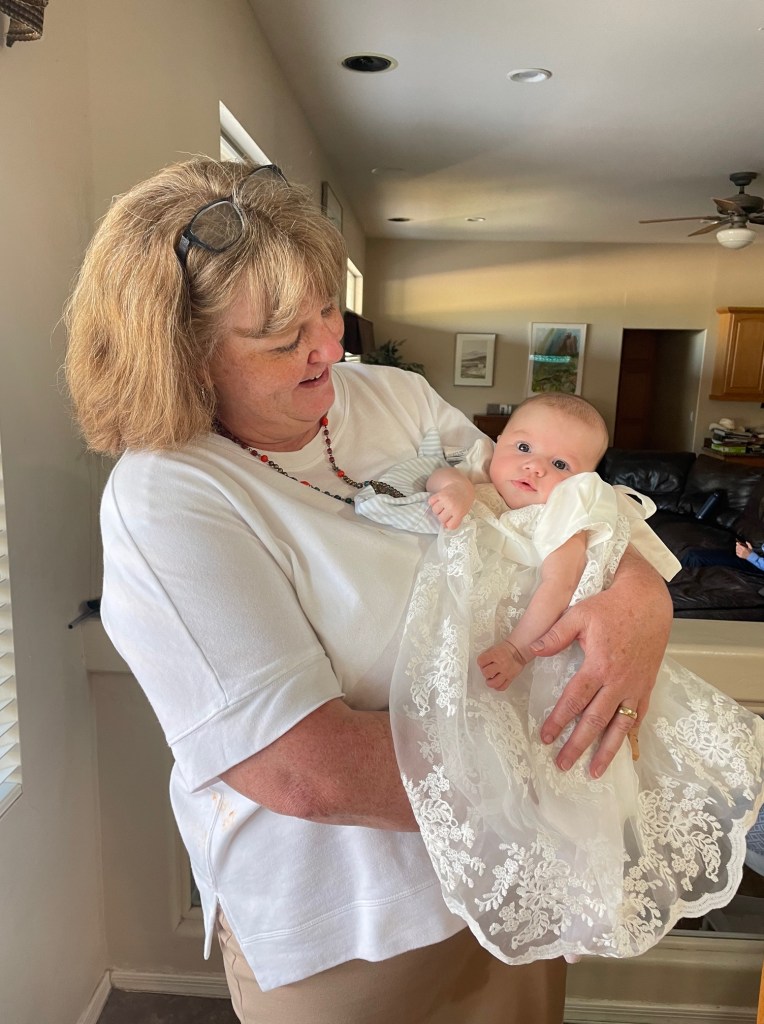
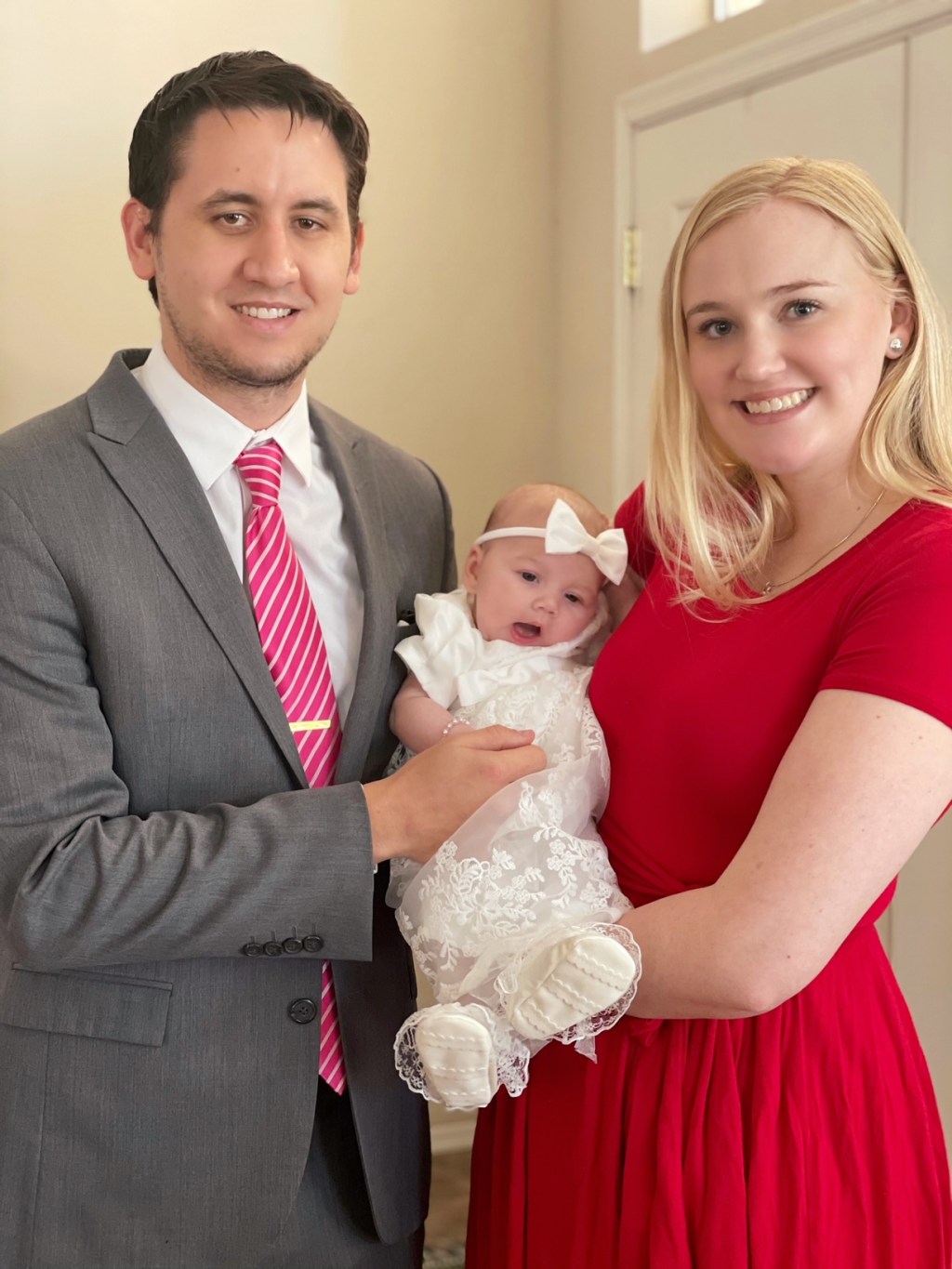
    I recently had the special opportunity to bless Ivy.  Leading up to the blessing, I did some research on the history of blessing children in the Church of Jesus Christ and its significance.  For Ivy’s blessing, Beth put together an event and a description of what a baby blessing is.  Here is that description:

    What is a baby blessing?

    In summary, the naming and blessing of children is a commandment of God. It is proper for a worthy father to name and bless his children. Blessing of children was done during the time of Christ, and it occurred in the early years of the restored Church. The ordinance has become a regular practice followed by Church members ever since.

    Who has the authority to bless a baby?

    A worthy priesthood holder under the direction of the local bishop. It is usually the father or a close family member.

    What is the priesthood?

    The word priesthood has two meanings. First, priesthood is the power and authority of God. It has always existed and will continue to exist without end. Through the priesthood, God created and governs the heavens and the earth. Through this power, He exalts His obedient children, bringing to pass “the immortality and eternal life of man.”

    Second, in mortality, priesthood is the power and authority that God gives to man to act in all things necessary for the salvation of God’s children. The blessings of the priesthood are available to all who receive the gospel.

    What is the format of a baby blessing?

    When blessing a baby, priesthood holders gather in a circle and place their hands under the baby. When blessing an older child, brethren place their hands lightly on the child’s head. The person who gives the blessing:

    1. Addresses Heavenly Father.

    2. States that the blessing is performed by the authority of the Melchizedek Priesthood.

    3. Gives the child a name.

    4. Gives words of blessing as the Spirit directs.

    5. Closes in the name of Jesus Christ.

    Ivy and Aunt Cambria

    Reading up on the baby blessing beforehand taught me some interesting things about this sacred practice that I would like to share.

    The below points were taken from this link:

    https://www.churchofjesuschrist.org/study/ensign/1979/12/i-have-a-question/in-blessing-an-infant-should-both-the-naming-and-blessing-be-addressed-to-our-heavenly-father?lang=eng

    1. Unique to giving a blessing to an older child or adult, the naming and blessing of a child is directed to Heavenly Father like prayers are. 
      • This could be because the baby is too young to understand the words directed to him or her. 
    2. It appears that Melchizedek Priesthood holders are authorized to more than ask for a blessing but are able to pronounce a blessing upon the child directly, as the spirit directs.
      • See D&C 20:70
      • Sometimes inspiration (or confidence) to pronounce/give a blessing does not come.  In this case it is of course acceptable to ask Heavenly Father for these blessings.  I believe this is how I felt in giving Ivy her blessing.  It was enough to ask Heavenly Father to bless her with my requests.
    3. It is a commandment to name and bless infants.
      • See again D&C 20:70
      • It is important to remember the naming and blessing of children is not a saving ordinance.  It is still an important and sacred moment seen in heaven.
    4. “It is an awesome responsibility to be a priesthood agent of the Lord, to act in his behalf, and to approximate in one’s words and doings what the Lord would do if he were here.  A father, especially, who is to bless his child, has the delight and responsibility to prepare himself beforehand by pondering and by fasting and prayer, that he may be sensitive to the suggestions of the Spirit when giving the blessing.”
      • “How blessed we are to be able to present our little ones before the Lord, our families and the Church, and then consecrate them to the Lord.  How blessed we are to be able to name them, plead over, pray for, and, yes, to bless them directly and personally in harmony with our finest desires for them, by the authorization and wisdom of heaven.”

    The below points were taken from this link:

    https://www.churchofjesuschrist.org/study/ensign/1988/12/i-have-a-question/why-is-the-naming-and-blessing-of-a-child-important?lang=eng

    1. An interesting account from Joseph Smith on March 13, 1843 says, “Twenty-seven children were blessed, nineteen of whom I blessed myself, with great fervency.  Virtue went out of me, and my strength left me…”
      • “[The next day] Elder Jedediah M. Grant enquired of me the cause of my turning pale and losing strength last night while blessing children.  I told him that I saw that Lucifer would exert his influence to destroy the children that I was blessing, and I strove with all the faith and spirit that I had to seal upon them a blessing that would secure their lives upon the earth; and so much virtue went out of me into the children, that I became weak, from which I have not yet recovered; and I referred to the case of the woman touching the hem of the garment of Jesus. (Luke 8).” (History of the Church, 5:303.)
      • Elder John Taylor said the Savior’s example of blessing children “should be studiously complied with without hesitancy or objection” (by priesthood holders).
      • We see that Joseph Smith followed the example of the Savior who blessed children in both Israel and the American continent.  (Mark 10:14-16 and 3 Nephi 17).  What an amazing and marvelous thought:  our virtue can be passed to our children.  Our blessings are a force Satan must reckon with.  It makes me want to bless my daughter daily.  It also adds insight to a scripture that has always been a bit puzzling in Luke 8:46.  Virtue can literally leave us to help others.
    2. The new name:
      • A new name is often involved when a covenant relationship is formed.
      • When Adam and Eve were given dominion over the earth, Adam named all the animals (Genesis 2:19-20).
      • God blessed them and named Adam after giving him a body (Genesis 5:2).
      • When we get baptized we follow a similar pattern, taking upon us a new name, the name of Christ.
      • Temple covenants also involve the giving and receiving of names.
    3. The responsibility of blessing a child is bestowed, ideally, on he who helped create that child’s body, and who Heavenly Father entrusted His child with in mortality.
      • Joseph F. Smith – “The patriarchal order is of divine origin and will continue throughout time and eternity.  There is, then, a particular reason why men, women, and children should understand this order and authority in the households of the people of God and seek to make it what God intended it to be, a qualification and preparation for the highest exaltation of his children.  In the home, the presiding authority is always vested in the father, and in all home affairs and family matters there is no other authority paramount…This authority carries with it a responsibility, and a grave one, as well as its rights and privileges, and men cannot be too exemplary in their lives, nor fit themselves too carefully to live in harmony with this important and God-ordained rule of conduct in the family organization.”

    It is my experience that giving blessings is often the closest I ever feel to Heavenly Father.  I can feel him speaking through me and it is always a powerful, emotional, and memorable experience.  The opportunity to bless my daughter will be one of the greatest moments of my life.  I have immense gratitude to my Heavenly Father for entrusting Ivy into my care, allowing me to name her, and trusting me to watch over and protect her in this life and through eternity.

  • Lectures on Faith – Lecture 2: The Object of Faith

    Lectures on Faith – Lecture 2: The Object of Faith

    A main theme throughout the Lectures on Faith is God’s perfect attributes.  Logically, for us to be able to have any faith in God He must be perfect.  We must know that we can trust God and, in turn, His Son, Jesus Christ. 

    The major theme I took away from Lecture 2 specifically is how we have attained faith throughout history.  Lecture 2 presents the profound idea that our faith in God is always dependent, or comes initially, from the faith of another.  Consider this, if no one in your life ever mentioned any sort of higher being, any sort of God, any sort of creator, would you come up with the thought on your own?  You think about God because He is someone we have been taught about since Adam.

    Even if your parents aren’t the ones who teach you about God, you learn about God from someone.  I would venture to say that in the world today every single person on the face of it has heard of the concept of a supreme being.  Why is this?  Where does our innate belief/consideration of God come from?

    Lecture 2 points out that there was an unbroken chain of testimony that started from Adam and was handed down through Abraham.  If you read Genesis carefully and do the math you will see that ancient prophets handed the knowledge of God down for generations.  It continues today.

    Adam knew God in the Garden of Eden.  When he left the Garden Adam still knew God.  We know Adam’s sons knew God.  Abel provided sacrifices to God.  Cain spoke to God even after murdering his brother.  This shows us that God spoke to men even after the fall and continued to speak to them as they continued to fall into transgression.  There is something significant here that I’d never considered.  Abel first got his knowledge of God from his father, Adam, as did Cain.  After they were told about God by Adam, then they had to develop their own faith in God.  They had to learn, trust, and depend on Him, or not. 

    The important thing to remember from this: we all start our faith by leaning on the faith of another.  We possess dependent faith.  This leads to another profound truth: God possesses independent faith.  God’s faith is not reliant on any outside source.  As discussed in lecture one, God’s faith is perfect.

    I’ve been studying the lectures alongside a video series that I will link at the bottom.  There were many amazing thoughts and ideas presented in that video, related to this second Lecture on Faith.

    Faith is faith until it happens, then it is knowledge. Since God has perfect faith, He doesn’t need to wait for something to happen for Him to know it.  He knows it is going to happen.  His faith is perfect therefore His knowledge is perfect.  It’s simple when you think about it in these terms, but it’s so critical.  It’s why we can have perfect faith in Him, BECAUSE we know His faith is perfect.

    IMPORTANT:  God is not still progressing.  This is important for us to understand.  God is not still learning.  If He was, we couldn’t have perfect faith in Him.

    God is Perfect - Ottawa Church of Christ

    This leads to a question: isn’t life boring for God if He has mastered everything?

    In the video they gave an awesome analogy.  Imagine you’re an accountant.  You master every aspect of accounting there is.  You have a perfect knowledge and ability in accounting.  Would you get bored with accounting?  Probably.  So, what would you then do?  You would teach others how to also master accounting.  God is the master accountant.  He has attained all knowledge on life, faith, eternity, creation – so what does He do?  He teaches us.  What a thought!  We are being tutored by the God of the universe.  That’s what makes this life so important.  When we consider that we are learning and being personally groomed by God Himself, what power it adds to our existence here!

    This leads to another important thought.  What was Christ’s ultimate message while here?  I think it would be service.  Love through service.  Give through service.  Charity.  Without charity you are nothing (1 Corinthians 13:2, Moroni 7:44)  Why did Christ teach this ever-important principle?  Because His Father, our Father, God is the ultimate server.  He is doing everything He does to teach us.  We truly are “His work and His glory” (Moses 1:39).

    I want to conclude with two last realizations: 

    1. The scriptures help develop our faith by teaching us of God.  This is important.
    2. Faith comes by hearing the word of God through the testimony of the servants of God, that testimony is always attended by the spirit.

    You aren’t told to have a testimony.  You’re not made to know Jesus is the Christ.  These are things you must come to a knowledge of through the spirit.  Think about it.  Christ, in His whole ministry, never told anyone He was the Son of God.  He always let them come to that conclusion on their own.  One example is Peter who He told, “blessed art thou for flesh and blood hath not revealed it unto thee, but my Father which is in heaven” (Matthew 16:17).   Another example is Christ to the woman at the well (John 4).  Christ didn’t go telling people who He was.  It had to be revealed by the spirit.  This is why signs come by faith, and not the other way around (D&C 63:7-12).

    Our hearts must be open for us to receive the testimony of Jesus Christ.  2 Nephi 33:1 “When a man speaketh by the power of the Holy Ghost the power of the Holy Ghost carrieth it UNTO the hearts of the children of men.”  Not INTO but UNTO.  It’s then on the heart of the individual to accept or reject the testimony.  The system is in place.  The system has been in place for God’s children to develop faith in Him from the beginning.  Once the testimony is carried to the heart It’s then on the agency of the individual to receive or reject that testimony. 

    God has perfect faith.  We are here to develop our faith so that we can be like Him.  He is the great accountant, and we are his protégés.  It is His hope, His glory that we can become like Him.  As we develop our faith here it will benefit us for the rest of eternity.  I know I say it a lot, but, what a thought.

    Video 3 (Lecture on Faith 2):  https://www.youtube.com/watch?v=F-o59d9ioGA&list=PLc5yYrpPFm2umksQf3jgULxoV4YIXTd2h&index=3

    Lecture on Faith 2: http://lecturesonfaith.com/2/

  • Lectures on Faith

    Lectures on Faith

    Lectures on Faith – Introduction and Lecture 1: Faith Defined.

    I’ve been watching a series of videos on the Lectures on Faith as supplemental material to my study of the Lectures.

    If you’re not familiar with the lectures on faith, you can read them all here:

    https://lecturesonfaith.com/

    It’s unclear who officially wrote the Lectures on Faith, though they were approved of and taught by Joseph Smith.  At a minimum, the concepts and theology of them comes from revelation given to Joseph Smith.  Yet another example and evidence of his calling as a prophet.

    I write here my notes and thoughts on these videos and the lectures.  There are seven Lectures.  The 10 video series I’ve been watching spans almost 5 hours and reviews each of the Lectures.  In writing this it will help me put together my thoughts and understanding on what Joseph Smith tried to teach us about faith.  Through this process I know my faith will grow by studying these principles.  What Joseph Smith taught about faith is beyond profound, it is revelatory. I will need to study his words and all supplemental material for the rest of my life to get a grasp of the profound and eternal nature of faith.  I look forward to reading over my notes here many times to refresh my mind and expand my knowledge on the subject.

    Video 1 was an introduction to the Lectures.  Video 2 was all about Lecture 1 – Faith Defined. 

    First, what are the Lectures on Faith?  They are principles put together by Joseph Smith to help early elders to share the gospel.

    What do the seven lectures cover? (from Video 1)

    Lecture 1 What is faith?

    Lecture 2 Links the principles of faith and the doctrine of revelation.  The power of human testimony is the medium with which the gospel is passed from generation to generation.

    Lectures 3 and 4 The character and attributes of God.  If we don’t understand the attributes of God, we can’t have confidence to exercise proper faith in Him.

    Lecture 5 The Godhead, nature of the members of the Godhead.

    Lecture 6 The Law of Sacrifice.

    Lecture 7 The fruits of faith.

    What is the plan for the Lectures on Faith?

    1. Teach what faith is.
    2. Teach how to obtain faith.
    3. What happens if you obtain faith?
    Lectures on Faith: The Exalted Nature of the Godhead (Part ...
    Bob Millet

    My favorite part from the first video was this suggestion from Bob Millet, one of the panelists. His suggestion was this: read the Lectures on Faith 20 times then you can start to study them.

    Now that I have an overview on what all 7 lectures will cover and teach, I can get into Lecture 1.

    Lecture 1: Faith Defined

    Obvious question to start, what is faith?

    Faith is the first principle in revealed religion and the foundation of righteousness.  Faith is the substance of things hoped for but not seen (Hebrews 11:1).  The lecture starts broad – faith is the belief that something will come to pass.  Then it gets more religious in tone: “the principle of action in all intelligent beings.”

    Faith is a principle of action.  Faith implies works, it implies activity, both physical and mental.  Just as faith is the moving action in all things temporal, so it is with spiritual (paragraph 12). 

    By faith God formed the earth.  I think this is the most profound point from Lecture 1.  That it is God’s faith that is His power.  Take faith from God and He would cease to exist (paragraph 16).  I know to many this seems like outright blasphemy.  But before rejecting the idea without thought, consider what is being said.  Faith is a principle of power.  It is the power by which God formed the earth.  Take away His faith, take away His power, He ceases to be God.  Luckily for us God’s power cannot be taken away.

    God’s faith and knowledge are equivalent.  It is God’s perfect faith that allows His perfect knowledge.  Consider: faith is believing in something that you haven’t yet seen.  Since God’s faith is perfect what He has faith in will be, it will exist.  We mortals look at faith as weak, unproven, unscientific.  It is God’s trust in the Plan of Salvation that makes Him create worlds. It is God’s perfect faith that created those worlds. It is God’s perfect faith that makes Him the Almighty.

    Again, faith is the power of God.  If faith is that important, it adds a whole new meaning, explanation, and understanding to this life.  Why do we move through life as if through a misty darkness, unsure of everything?  Why the veil that covers our eyes and fogs our minds to so much that we used to know?  Why don’t we know where we come from?  Why don’t we know where we’re going?  Why doesn’t God send angels down to tell us which church is true?  Why doesn’t God allow profound miracles to occur before unbelievers’ eyes so they can KNOW that He exists?  The reason God doesn’t do these things is due to the importance of faith.  We are here to learn faith, develop faith, grow faith; because it is that important.  God does not want to take that opportunity of growth and development away from us.  He won’t.  He knows how critical it is.

    Faith, then, is the first great governing principle which has power, dominion, and authority over all things: by it they exist, by it they are upheld, by it they are changed, or by it they remain, agreeably to the will of God.  Without it, there is no power, and without power there could be no creation, nor existence!” (Paragraph 24).

    Link to Lecture 1: https://lecturesonfaith.com/1/

    Link to Video 1 An Introduction on the Lectures: https://www.youtube.com/watch?v=MiV4dCY9OEA&list=PLc5yYrpPFm2umksQf3jgULxoV4YIXTd2h&index=1

    Link to Video 2 What is faith?: https://www.youtube.com/watch?v=S_EXFQK-KJE&list=PLc5yYrpPFm2umksQf3jgULxoV4YIXTd2h&index=2