Tag: constitution

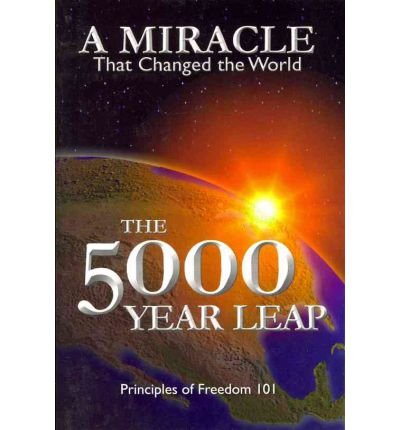
  • A Miracle that Changed the World

    A Miracle that Changed the World

    These are thoughts from a book I read recently called A Miracle that Changed the World. It was an awesome book that laid out just how spectacular the establishing of America was. This was a section of the book I had some thoughts on. I’m quoting sections of the book with my thoughts.

    p. 52:

    The Tide of Reform

    “Many Americas became extremely self-conscious about their lack of “public virtue” because of non-involvement in the affairs of government. They began to acknowledge their obsession with self-interest, the neglect of public affairs, and their disdain for the needs of the community as a whole. Gradually, a spirit of “sacrifice and reform” became manifest in all thirteen colonies.”

    This occurred in America in the couple of years leading up to the Declaration of Independence being signed. Is it any coincidence that a spirit of sacrifice, public virtue, and selflessness preceded the greatest revolution in the history of the world and the rise of the greatest nation ever to exist on earth? God needed a self-sacrificing and humble people to inherit the new world. When they exhibited these qualities, they became His chosen people to enact this major event. This led to a revolution and the freedom from tyranny that allowed the explosion of religious freedom that God planned, that couldn’t have happened under the rule of a monarchy. It started with sacrifice, service, and humility.

    “In the eyes of the Whigs, the two or three years before the Declaration of Independence always appears to be the great period of the Revolution, the time of greatest denial and cohesion, when men ceased to extort and abuse one another, when families and communities seemed peculiarly united, when the courts were wonderfully free of that constant bickering over land and credit that had dominated their colonial life.”

    Two things especially stand out to me from that statement –

    1. “families and communities seemed peculiarly united.”
      • From the Family Proclamation: “We call upon responsible citizens and officers of government everywhere to promote those measures designed to maintain and strengthen the family as the fundamental unit of society.”
      • As the fundamental unit of society, strong families make for strong society. No wonder Satan has so adamantly attacked the family. Look at divorce rates, look at what has happened to the American family. The dismantling of families is the the beginning of the downfall of a great society, and we’re seeing it happen right before our eyes.
    2. “the courts were wonderfully free of that constant bickering…”
      • Could the 13 original colonies have broken from the greatest world power at that time, colonies v. Greatest World Power, if they were busy bickering amongst themselves? It took unity for the freedom of America to be established.
      • D&C 38:27: “be one; and if ye are not one ye are not mine.”

    This is what we need – Americans to become self-conscious about how selfish we’ve become. This is the eternal principle of unity. America needed to be united under one cause and one heart before they could break free from tyranny. God wants us to be one. What has happened to that unity?

    I read in a Doctrine and Covenants commentary how early church members, going back to the very earliest days of the church, were advised to avoid courts. It was said that if a dispute couldn’t be resolved by arbitration, then there was discord and discontent too strong amongst the parties, and they needed to evaluate what they truly valued. One early church leader, Oliver Cowdery, was chastised for becoming too involved in the courts, and it ultimately began to descent towards his excommunication.

    “When Oliver moved to Missouri in 1837, he sought to alleviate personal debts by starting a legal career. Witnesses testified that Oliver had urged people to sue others in court who “fired guns in town,” who broke “the Sabbath day,” he “frequently solicited for business in collecting debts,” and “urge[d] on lawsuits with others.””

    There can’t be unity where there is constant bickering and lawsuits. Those needed to be removed from public standards before the 13 colonies could think to stand up against Britain.

    The book continues:

    “How the Moral Reform Accelerated the Revolution

    “Many Americans became so impressed with the improvement in the quality of life as a result of the reform movement that they were afraid they might lose it if they did not hurriedly separate from the corrupting influence of British manners. They attributed this corruption to the monarchal aristocracy of England. Even Americans such as John Jay, Robert Morris, and Robert Livingston were beginning to see that the people were exhibiting a potential capacity for virtue and morality which would guarantee the success of a free, self-governing society. Therefore, it became popular to express the sentiment that the sooner they became independent the better” (emphasis added).

    The underlined portion is the part that stood out to me. Imagine if society today could be said to have such a high standard of virtue and morality. This is what guaranteed the success of the United States: A virtuous and morally upright people. This is why they could self-govern themselves, because they self-governed in righteousness. Imagine describing our society like that today – excess of virtue and morality.

    The definition of virtue is “behavior showing high moral standards.”

    The definition of morality is “principles concerning the distinction between right and wrong or good and bad behavior.”

    We couldn’t be farther from such a standard. We’ve gone so far off the path that we have reversed morality so that right is wrong and wrong is right. We have molded morality to be what we want it to be. The early Americans who established this nation were moral and upright in all their dealings, which allowed them the honor of being the people to establish the most free, most righteous, and most powerful nation in history. Freedom and righteousness are power.

    Another motivating factor for the colonies wanting freedom from England was to avoid developing all the negative attributes of the British.

    “British influence was already taking its toll. One alarmed American wrote, “Elegance, luxury and effeminacy begin to be established.” David Ramsay declared that if Americans had not revolted “our frugality, industry, and simplicity of manners, would have been lost in an imitation of British extravagance, idleness and false refinements” (emphasis added).

    America has gotten closer to extravagance, idleness, and false refinements than frugality (look at our national debt), industry (look at our bail outs), and simplicity (look at social media).

    It’s time for unity in America. It’s time for virtue and morality. It’s time to protect and re-establish the importance of the family. It’s time to return to frugality, industry, and simplicity. If America can return to these values, maybe it stands a chance to stay a chosen nation and be protected from the tribulations that are to come.
  • Books in 2020

    Books in 2020

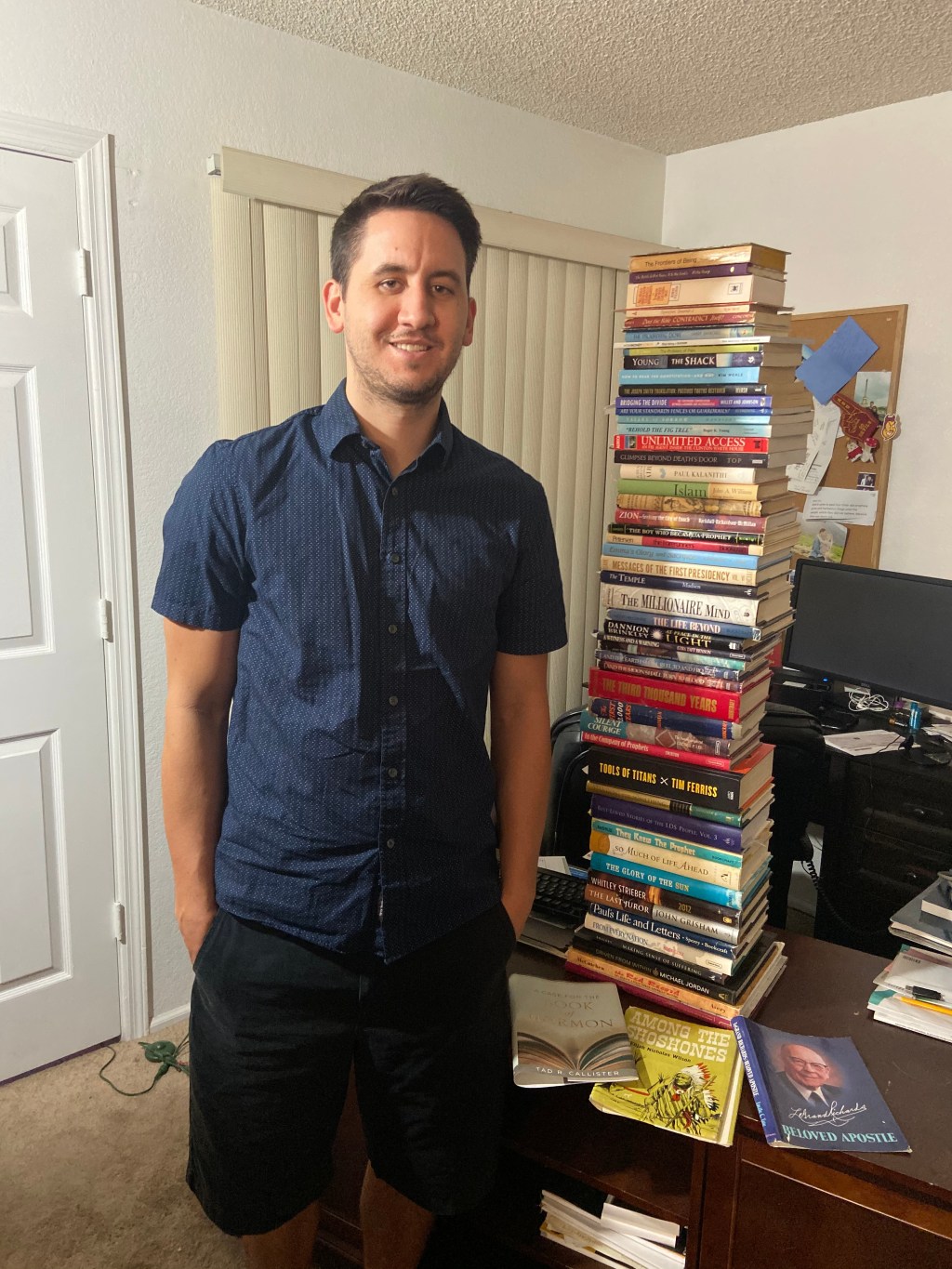
    This is a list of every book I read in 2020 and the order I ranked them in from favorite to least favorite.  I get something out of every book I read.  I learned long ago that if I allow myself to not finish one book, I won’t finish any.  For those reasons, when I start a book, I’m committed to finishing it.  I don’t care how dry or boring it may be.

    It was extremely difficult to rank these books.  For one, how do you rank nonfiction verse fiction?  Take a fictional John Grisham crime novel like The Last Juror and compare it to a nonfiction biography of the Prophet Joseph Smith for example.  How do you compare the two?  To avoid overthinking it I simply went through my list of books read and from what I remembered, put each on the list.  Every book’s placement on the list is from my initial remembering of how much I *enjoyed reading it.

                    *enjoyed for me is going to be vastly different from most people.  Precious Truths Restored, which was a top five favorite book of the year for me, is there because I learned so much from it and have referred to it constantly throughout the year since I finished it.  I doubt the average person would even get through it.  I loved it.

    I included a one sentence thought about each book.  This proved difficult because I could say so much about every book.  To get around the one sentence rule, I used many commas and run-on sentences. My list, my rules.

    I enjoyed all these books because they each taught me something. That’s the great thing about books.  Here’s my list:

    1. The First 2000 Years by Cleon Skousen
      • When I told a church-going friend I finished this book he looked at me incredulously, I guess my taste in books is unique.
    2. *A Case for the Book of Mormon by Tad R. Callister
      • This book will forever be my reference for a scholarly defense of the Book of Mormon.
    3. *The Mourning Dove by Larry Barkdull
      • I made Beth read this, super short, super memorable, loved this book.
    4. Tools of Titans by Tim Ferriss
      • I gained so much from this book, almost every one of the nearly 800 pages was marked, made me a Tim Ferriss fan for life. 
    5. The Joseph Smith Translation Precious Truths Restored by W. Jeffrey Marsh
      • Helped me tremendously in understanding the dangers of the different translations of the Bible, appreciating the Joseph Smith Translation of the Bible, and understanding how we have the various Bibles we have today.
    6. Bridging the Divide: The Continuing Conversation Between a Mormon and an Evangelical by Gregory C. V. Johnson and Robert L. Millet
      • Inspirational book of two people from different faiths finding joy in a discussion spanning many years that brings them both closer to God, reminded me of a relationship I have with a friend I enjoy discussing scripture with.
    7. *Best Loved Stories of the LDS People Vol 3 compiled by Jay A. Parry, Linda Ririe Gundry, Jack M. Lyon
      • The reason this ranked so high among so many other church history-esc books is I felt like I enjoyed a majority of the short stories, I gave it to my sister to read and she also enjoyed it.
    8. The Third Thousand Years by W. Cleon Skousen
      • This was the sequel to my favorite book of the year, it’s lower on the list because I feel like we generally know more about the third thousand years, so I felt like I got less out of it personally, still great though.
    9. *Among the Shoshones by Elijah Nicholas Wilson
      • Given to my sister-in-law to read, amazingly simple read that repeatedly had me saying out loud, “What the heck?”
    10. The Forerunners by Mark E. Petersen
      • This did a great job of explaining Joseph Smith’s role in the restoration and went into some detail about the pattern of forerunners being sent by God to start a great work on earth, John the Baptist and Joseph Smith being the most famous examples. 
    11. Return from Tomorrow by George G. Ritchie with Elizabeth Sherrill
      • One of the first ever Near-Death Experience books written, NDE books have a special place in my heart as it was an NDE book that helped me come back to church.
    12. The Red Record by David McCutchen
      • This was fascinating, it took legends of an ancient civilization you’ve never heard of, used oral records to go back thousands of years depicting their first legends of crossing an icy bridge to come to what would be the northern part of North America.
    13. And the Moon Shall Turn to Blood by Anthony E. Larson
      • This series of books blew my mind and led me to discussing it with people that didn’t have any interest discussing the topic, this fact instantly gets it higher on the list.
    14. And the Earth Shall Reel to and Fro by Anthony E. Larson
      • Part two to the above book, grouped the trilogy together on my list, these books use catastrophism as a basis of belief about what happened in the history of the world and what will happen in the future.
    15. And There Shall be a New Heaven and a New Earth by Anthony E. Larson
      • Part three of the trilogy, I enjoyed the first one the most and was slightly less interested as I got to the third book, but they were kind of like one book in three parts.
    16. All I need to Know I learned in Kindergarten by Robert Fulghum
      • A collection of short stories that were all extremely entertaining, quick and easy read.
    17. The Glory of the Sun by Sterling W. Sill
      • I love short anecdotes or stories which is why this is just below All I need to Know I Learned in Kindergarten because that’s one of the best books I’ve read that does that, this one did a good job as well on more spiritual and deep topics. 
    18. At Peace in the Light by Dannion Brinkley with Paul Perry
      • Another near-death experience book, I really want to read Dannion Brinkley’s first book Saved by the Light now.
    19. 2012 The War for Souls by Whitley Strieber
      • Awesomely creative book, so good I read it twice, no really, it wasn’t until the end that I realized I’d read 90% of the book years ago and never finished.
    20. How Money Works by Steve Siebold and Tom Mathews
      • A gift to me, I think this book advanced my knowledge of how money works ten fold, this should be required reading in high school.
    21. The Last Juror by John Grisham
      • Some authors have mastered how to get their readers to keep flipping pages no matter what, John Grisham is one of those writers.
    22. The Life Beyond by Joseph Fielding McConkie and Robert L. Millet
      • This book uses modern revelation to answer questions about what happens when we die, I’m amazed the world doesn’t flock to a book that answers the most important question in this life.
    23. Behold the Fig Tree by Roger K. Young
      • Any book that prepares me for what to expect leading up to the Millennium jumps up the list, see #13-15 for other examples.
    24. The Shack by William P. Young
      • Book turned popular motion picture, I may have liked the movie even more.
    25. Mama’s Boarding House by John D. Fitzgerald
      • A fictional account of an early settled western town, gun slinging stories have always fascinated me.
    26. Silent Courage by George P. Lee
      • A really good book was tainted when I learned what became of George P. Lee, was interesting reading about the life in a culture completely unique from my own.
    27. Millionaire Mind by Thomas J. Stanley
      • My only complaint about this book was the repetitiveness of points, though I still got a lot from it.
    28. They Knew the Prophet compiled by Hyrum L Andrus and Helen Mae Andrus
      • First-hand accounts about the prophet Joseph Smith from those who knew him.
    29. From Every Nation by Derin Head Rodriguez
      • Awesome book about the first foreign general authorities, amazing to see the distinct similarities a bunch of men from all over the world had that led to their growth in faith and devotion to Jesus Christ.
    30. How to Read the Constitution and Why by Kim Wehle
      • Should be required reading in any school, important for American students to understand the constitution better, especially now.
    31. Unlimited Access by Gary Aldrich
      • This book was interesting, an honest look from an FBI agent on the security of the white house while he was in charge of security at the white house.
    32. When Breath Becomes Air by Paul Kalanithi
      • A really neat look at life from someone who was experiencing his own mortality.
    33. Paul’s Life and Letters by Sidney B. Sperry
      • Made me understand the sacrifice of the Apostle Paul in a deeper way.
    34. The Boy who Became a Prophet by Mabel Harmer
      • Ranked on the lower end because I don’t remember a ton from it, though any book on Joseph Smith has proved rewarding.
    35. In the Company of Prophets by D. Arthur Haycock
      • An interesting view on modern-day prophets from the perspective of someone who knew them as well as anyone.
    36. Making Sense of Suffering by Peter Kreeft
      • Like #47 The Problem of Pain, except more at my reading level.
    37. It was on Fire when I sat on it by Robert Fulghum
      • Didn’t like nearly as much as #16, but still enjoyed a lot.
    38. *Translating the Anthon Transcript by Stan and Polly Johnson
      • Lowered due to the chance the information in the book wasn’t fully accurate/true, I very much enjoyed learning about this though, and gave to a friend to read.
    39. Zion Seeking the City of Enoch by Larry Barkdull
      • Larry Barkdull also wrote one of my favorite books of the year (#3), this was an awesome, fictional account of someone trying to join Enoch in the beginning stages of starting his perfected society. 
    40. Frontiers of Being by Duncan B. Blewett
      • Extremely deep and dense, some parts difficult to get through, used some of what I read in this book when officiating my sister’s wedding, fun fact, looked it up online and there’s a “new” copy for sale for $1,008.00.
    41. Valley of Sorrow by Alexander B. Morrison
      • Great book, taught me a lot, not a topic I know much about or am passionate about but definitely learned a lot and opened my mind to some different views on mental health.
    42. Glimpses Beyond Death’s Door by Brent Top
      • I think I struggled with feeling like I was reading an analysis of a bunch of other books that I actually wanted to read, this was surprising given my love for the topic, see #7 and #18.
    43. A witness and a Warning: Modern Day Prophet Testifies of the Book of Mormon by Ezra Taft Benson.
      • Since I already know the Book of Mormon is true this found me nodding my head in agreement throughout.
    44. *LeGrand Richards: Beloved Apostle by Lucile Christenson Tate
      • Gave to my brother to read, it’s inspiring to read about the life of someone with such spectacular faith. 
    45. The Temple: Where Heaven Meets Earth by Truman G. Madsen
      • Classic book teaching the importance of the temple.
    46. Standing for Something by Gordon B. Hinckley
      • Classic GBH.
    47. The Problem of Pain by C.S. Lewis
      • Was really excited for this book, quickly realized I wasn’t intellectually ready to read a philosophical book by C.S. Lewis.
    48. Driven from Within by Michael Jordan
      • Interesting look at Michael Jordan looking simultaneously at his basketball career and how it fueled his creative side which created a billion dollar shoe industry.
    49. Does the Bible Contradict Itself? by W. Arndt
      • A defense of the Bible, didn’t love reading cover to cover which the author kind of said not to do, but will possibly be a book I refer back to often in my life.
    50. Statements on Communism and the Constitution of the United States by David O. McKay
      • Don’t remember a ton about this, I know it was short, I mostly remember thinking, “they used to be extremely afraid of communism.”
    51. Hidden Treasures from the Scriptures: The Battle is not yours it is the Lord’ by Alisha Geary
      • Had an interesting theme about how to get through adversity, short book.
    52. Are Your Standards Fences or Guardrails? By John Bytheway
      • While it’s sort of silly I even read this as I was approaching 30, and I ranked it low, I actually got a lot out of it, especially useful as I was becoming a parent and thinking about the standards I’d like Ivy to have.
    53. Messages of the First Presidency Vol. 6 compiled by James R. Clark
      • I enjoyed it but it was dry, and the average person is not going to get through this book.
    54. Emma’s Glory and Sacrifice by Gracia N. Jones
      • Great book but kind of felt like the attempt to tie it to Emma was a stretch throughout simply due to how few records we have left behind in her own words.
    55. Islam by John A. Williams
      • Just really difficult to read without more of a foundation in the faith, felt like I constantly didn’t know enough to keep up with what was being discussed.
    56. So Much of Life Ahead by Dean Hughes
      • This was an OK book, but it was part 6 in a series and I just decided to read it.
    57. The Plain Truth about Christmas by Herbert W. Armstrong
      • Can’t believe I read this, best thing about it was how short it was, entertaining though I guess.

    *Recommended or gave this book to someone to read.

    Additional reading:

    1. Plan of Salvation pamphlet (should be read by everyone once a year to be reminded of why we’re here).
    2. Book of Mormon
    3. Doctrine & Covenants (Through Section 99)
    4. Old Testament (Finished Ezekiel)
    5. Come Follow Me lesson each week
  • Freedom

    Freedom

    Let’s take a quick trip through history.  Bear with me on the history recap, I swear it will be brief.

    The Revolutionary War started in 1775. 

    Some rag-tag colonists decided to stand up to and fight for independence from the greatest power in the world.  I’ll say that again, a group of mostly untrained men decided to take on the greatest military force on earth at that time.  Louder for those in the back, a group of settlers stood up to THE world superpower.

    Can you believe how truly insane that was?  Just that they revolted was crazy.  Surely that got smashed into submission…right? WRONG!

    They won! Independence.  How?  Tons of stories from that time point to divine intervention.  We can save those for another day.

    Interesting Revolutionary War Facts You've Never Heard • FamilySearch

    244 years ago, July 4, 1776 The Declaration of Independence was signed.

    1777 The Articles of Confederation were written.  This would be the first constitution of the United States.

    1787 The Constitution we have today was written.

    1791 the Bill of Rights was written for the United States. 

    Amendment I of that Bill of Rights:

    “Congress shall make no law respecting an establishment of religion, or prohibiting the free exercise thereof; or abridging the freedom of speech, or of the press; or the right of the people peaceably to assemble, and to petition the government for a redress of grievances.”

    Joseph Smith – Praise to the Man | The American Citadel

    1805 The Prophet Joseph Smith was born.

    1820 God the Father and His Son, Jesus Christ, appeared to Joseph Smith.

    1827 Joseph Smith received the golden plates.

    1830 The Church of Jesus Christ of Latter-day Saints, Christ’s restored church was re-established on the earth.

    Fourteen short years after the Bill of Rights was established and set forth the freedom of religion in this choice nation a prophet was born.  29 years after the established freedom of religion Heavenly Father appeared to His prophet.  Four short decades after the Bill of Rights was ratified Christ’s Church was restored. 

    Think about that for a moment.  Human history spanning thousands of years.  Yet, somehow, within 15 years of a free nation set forth the guidelines for free religion, a boy was born who 15 years later would claim visitation from God the Father.  He would establish a church from meager means.  Within 200 years that church would have millions of members across the globe.

    Talk about all the coincidences. 

    It was less than 40 years after freedom of religion was established in the United States of America that the Church of Jesus Christ was organized.

    What spectacular timing.

    I know there aren’t coincidences in God’s plan.  I know he reared up and prepared inspired, God-loving, intelligent men to establish this great nation.  Men who desired freedom above all else.  I know that soon after they did their part in establishing this free country it was finally time in God’s plan to establish His Church.  There had to be a place for the Church to be restored first.  There was nowhere else in the world the Church of Jesus Christ could have been established.

    God works in miraculous and spectacular ways for His purposes.

    I know the exact timing of Joseph Smith’s birth and the exact timing of the freedom of the United States were no coincidence.  They were planned out long ago.

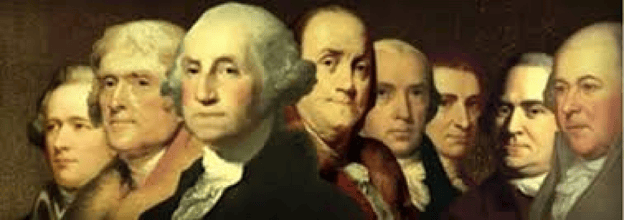
    On this Fourth of July I’m grateful to our founding fathers.

    I’m grateful to Joseph Smith.

    More than anything I’m grateful to God for His perfect plan.

    I’m grateful for a country where I can worship whom, how, and where I please.  I’m grateful that I can pray in private or public.  I’m grateful to be born in a country free.  I’m grateful that I’ve never been truly persecuted for my religious beliefs.  We live in a special country.  We live in a country founded on true principles: freedom, liberty, and equality.  I know it took some time for those principles to be truly established and I know we’re still working on some of those principles.  But the principles are there.  There are still parts of the world, many parts of the world, where freedom, liberty, and equality are not even considered.

    The most important principle of all that this nation was founded on:  faith and belief in God.

    I know right now America is in a predicament.  We have turned from God.  God gave us this great nation and helped its establishment.  Now we spit on Him and marvel at our own great strength and power.  We’re American!  THE Global Superpower.  Doesn’t that sound familiar.  We know what happens to global superpowers that rely on their own strength.

    If we don’t humble ourselves and confess to whom we owe all, God in Heaven, He will take back His land.  We are only as strong and powerful as our faith in God allows.  Like England during the Revolutionary War we will fall if our pride is not removed.  We must return to God.  He founded this country and it will continue to degrade until we return to the source of all strength.  It’s time to repent.

    I love this country.  I hope we can return to our principles and be better.  I hope we can love God and keep Him here with us.

    GOD Bless the USA