Tag: depression

  • Response to Depression

    Response to Depression

    On April 11, 2020 Beth posted a thoughtful and vulnerable post about depression. She really put herself out there talking about something that is sensitive for her. I was proud of her for writing it. It’s still one of the most read posts from my blog.

    It was the 10th post ever put on my blog. It was so early in my blog that I didn’t even put a cover image for it.

    I recently went back to read that post and decided, 4 years later, and after 5 years of marriage, that I would like to write my thoughts on her post and the topic of depression. This will be a difficult post to write because, even after these years, I’m still grappling with my understanding of depression – what it means, how it manifests, my role in it, along with all the other complexities that come with depression.

    I’m going to pull quotes from Beth’s post and give my thoughts.

    In her post, Beth said this:

    “Sometimes in frustration, I just want to sum it up as “if you know, you know” and call it good. But that is not enough. Individuals, family members, institutions, others with depression need to know.”

    I definitely need to know. Because I don’t understand it. And that’s hard for me.

    I am married to Beth. I’ve seen depression. I can kind of understand it. And yet, I don’t. I know I don’t. I don’t get it. And that’s hard for me. It’s hard for me to try to understand something that I don’t know where to begin understanding.

    With me… I may upset some people with depression here until you hear my explanation (or maybe even with my explanation) – depression is being sad and not wanting to get up or do anything. That’s my impression of it because I’ve experienced that. What I haven’t experienced is actually not being able to get out of bed. I don’t understand that. I don’t get it. That’s the reason I don’t understand depression. I just can’t relate to it. That doesn’t mean I don’t think it exists. It’s just something I have a hard time framing because it’s not in my personal experience. We have tons of examples of things we can’t understand because we haven’t seen or experienced them ourselves. I’ll dive into an example later on in this post. It’s hard to understand something you have zero personal frame of reference for.

    I must be clear here. I’m not saying I’m not empathetic or sympathetic to the challenge of physically not being able to get out of bed. I desperately hope I am sympathetic to it. I hope that I’ve showed my wife at least some of the support and understanding she needs through her challenges.

    What I’m saying is that I don’t understand it, I don’t get it.

    I hope if you’re experiencing depression and you’re in a close relationship with someone (parent, sibling, friend, significant other, etc.) who doesn’t understand it, that you can have patience with them as we have patience with you. Not understanding doesn’t always mean not caring or not believing it’s real or that it exists. It can sometimes mean really just not getting it, as much as we want to. I think sometimes it’s as hard for a non-depressed person to understand depression as it is for a person with depression to describe what it’s like to a non-depressed person. This is exactly what Beth is talking about in the above quote.

    Next quote I’d like to comment on from Beth’s post –

    “For me, it is not a weight laying heavily on me. I don’t feel like the people in the commercials that have a dark rain cloud following over their head wherever they go.”

    Beth is referring to what her depression is like to her. This struck me. It may seem silly, but as someone who hasn’t experienced “depression” (I don’t think) I kind of assumed it was all the same. Beth reminded me that just like anxiety and fear and all the other plethora of challenges we face in this life, no two people have the exact same experience. Depression for everyone must be unique to everyone. I’d venture to guess that one person with depression might have as much difficulty understanding another person’s version of depression as I have with understanding it at all.

    I think it’s important to remember that this challenge comes in many shapes and forms and to have patience with everyone and their unique circumstance.

    This is where I bring myself into it to try to understand and sympathize better.

    I struggle with anxiety. It’s not something I talk about a whole lot. I think I treat it like Beth treats depression: with a little bit of embarrassment and avoidance. But now I’m an adult. I’m no longer a scared and confused kid. I’m still sometimes scared and confused, but no longer a kid. I now realize that lots of people struggle with anxiety. It’s not something to be ashamed of.

    Beth and I have talked about depression and anxiety together. She talks about depression which, as I noted, I don’t understand. Then when I try to explain how anxiety manifests in me, I see the confusion descend upon her like the aforementioned cloud of depression. She can’t figure out what I’m talking about. She’ll say outright, “I don’t understand what you’re saying.” Do I take offense to this? Of course not! She hasn’t experienced it. I return to my point earlier – people experiencing depression: don’t blame or get upset with others that don’t understand what you’re going through. Your depression is unique to you. Don’t mistake lack of understanding for lack of caring or believing.

    “Eventually, when you’re in the midst of a depressive episode, you begin to convince yourself that this is the new you. You will never be successful again. You will be a burden and failure for the rest of your life. I was very lucky to never feel like I wanted to end my life but, with feelings like that, it isn’t difficult for me to see how people get there.”

    When I read that, it breaks my heart. When I read that it helps me to remember that this is a real and difficult challenge despite my lack of understanding. I can’t comprehend the idea of taking my own life. I think this is similar to how I don’t comprehend depression. I hope anyone reading this that, like me, struggles with understanding the dynamics and impact of depression on someone’s life, can read that quote and realize how serious this is. In whatever ways depression can feel “unreal” – suicide is not. Suicide is very, very real. We must have sympathy, love, compassion, patience, and as much understanding as we can possibly have to help those in our lives that have depression-like feelings. It can save a life.

    “So why don’t you just get up? Go on a hike, play a game, talk to someone, you’ll feel better.”

    This is my way of thinking.

    “I ask, can you still support me and sympathize with me even if you can’t understand? While that seems like a fair compromise, I still think I can try to help others get a glimpse of my perspective. We can meet in the middle.”

    I reiterate my point made earlier. We can try to understand. Those with depression, we only ask that you try to understand that often we without depression really are trying to understand and sympathize. It’s hard to understand something you can’t comprehend. It’s the catch-22 of sympathy. We sympathize, but ultimately, we can’t understand. If we understood, we’d know. All we can do is our best. Have patience with us as we have patience with you.

    “Sometimes that means lowering expectations for a while. Sometimes that means just learning to listen instead of feeling like you must come up with the solution.”

    This is the part I struggle with the most. I’m the standard guy who wants to fix things. Just listening doesn’t seem productive. I’ve tried over the course of my marriage to be better at this part. Listening. Beth will have to comment on whether or not I have gotten better at this. I’m not sure I want to hear the answer.

    I also struggle with lowering expectations. I’m not sure how to best say this without sounding insensitive but deep down inside I feel like lowering expectations for someone isn’t the answer. I coach basketball and deciding I don’t expect much from my players doesn’t seem like a great answer. In Beth’s whole post, that’s probably the line I most struggled with.

    “While my depression has been well controlled for years now, it’s never truly gone. It can sneak in when I least expect it. I make sure to take my medication daily and be mindful of triggers and warning signs. I try to be vocal with my husband when I feel it creeping in.”

    I’ve been married to Beth for over 5 years now. In that time, I’ve seen the warning signs. I can see when something is coming. I can see when Beth is starting to not be herself. Usually she is short with me, impatient with the girls and I, little things seem to put her on edge, and then there are hours of sleep.

    I guess I have lowered my expectations in the moment. But my way of thinking is so much that aforementioned – “Get up and fight through it”… I can’t help but wonder if lowering expectations is the right thing. Is the best thing to do to let a person with depression lie in bed for hours and days at a time? I’m not sure it is. I’m not sure we’re supposed to lower expectations.

    That said, that’s what I’ve done. In those moments I’ve tried to let Beth know I love her and I’m there for her and I give her the time to “come back.” Usually this is only for a day or two. A day or two where Beth doesn’t leave her room and I take care of the girls, the house, and the responsibilities. If it were more than a day or two, with everything we have going on, I’m not sure I could make it happen.

    This is difficult. It’s made more difficult for my lack of understanding.

    I can usually tell when Beth hasn’t taken her medication. It’s a bit disarming to immediately see the results of this. It’s a palpable and obvious difference. With lack of understanding it’s hard for me to understand how this can so drastically shift behavior so quickly. And yet… when I’m tired, how quickly does my demeanor, patience levels, and personality change?

    I know so little about the body and how it functions. What do I know? I know nothing.

    Ultimately, I have to rely on something bigger for understanding. I’ll close this post in much a similar way to how Beth ended her post 4 years ago. My understanding of God, this life, and His plan makes these things more understandable. We’re here to be tested. We’re here to go through tests that we don’t understand, to test our faith. We’re here to grow. Every challenge in our life is an opportunity to grow. I believe Beth’s depression is an opportunity for her to learn about herself and to become something so much more. I believe her depression is also a part of my mortal experience. It’s meant to teach me something important.

    I hope I’m still learning something important. I hope I’m always patient and understanding and helpful. I hope Beth knows she can always trust me to be there to make up the difference. I also hope Beth knows she’s always good enough.

    The hardest part, I think, about being married to someone with depression is seeing someone smart, and strong, and brave, and kind, and patient, and talented – think she is not those things. There have been many times that I’ve had to remind Beth that just because she doesn’t feel like those things in a particular moment – she is still those things. She will always be those things. They are more innate to her personality and being than depression is.


  • Beth’s Talk on Mosiah 3:19 (January)

    Beth’s Talk on Mosiah 3:19 (January)

    This is a talk, exactly as written, by Beth, that she gave in church in January. She rehearsed the talk verbally to me multiple times before I heard it in church. Of course, through hearing it I knew it was a great talk, but it wasn’t until proofreading and preparing to post this that I was struck by how phenomenal a talk this really was. Hope you enjoy reading it as much as much as I did. And now, Beth –

    Mosiah 3:19 Talk
    January 9, 2022
    Good morning brothers and sisters.
    I wanted to start by introducing my family as we are one of the families that were blended into this ward with the recent changes in the stake. My name is Elisabeth Quackenbush. My husband is Brayden Quackenbush. We met in the Scottsdale Young Single Adult Ward in 2017 and have been married for over 2 years. We have a one year old daughter named Ivy. You’ll see her running around Sunday School for another 5 months but she is very excited to start nursery after that.

    The topic I was given to speak on this morning is the scripture Mosiah 3:19. When I was informed this was my assignment I wasn’t really surprised. This scripture comes into my mind a lot and is brought up in conversations about life all the time when I’m chatting with my husband. I think it sticks in my mind because it stands in such contrast to a lot of the attitudes of the world these days.

    For those of you that memorized scripture mastery back in the day you may remember this scripture, but as a reminder, this scripture is King Benjamin speaking to his people in the Book of Mormon. It reads,

    “For the natural man is an enemy to God, and has been from the fall of Adam, and will be, forever and ever, unless he yields to the enticings of the Holy Spirit, and putteth off the natural man and becometh a saint through the atonement of Christ the Lord, and becometh as a child, submissive, meek, humble, patient, full of love, willing to submit to all things which the Lord seeth fit to inflict upon him, even as a child doth submit to his father.”

    When we break down this verse, we can derive meaning in a variety of ways. The first that I noted is that the natural man is inherently selfish. The second is the importance of change to the Eternal Plan of Happiness.

    Boyd K Packer stated in his 1990 talk, “Put Off the Natural Man, and Come Off
    Conqueror”:
    “Unchecked selfishness [of the natural man] stubbornly blocks the way for developing all of the divine qualities: love, mercy, patience, long-suffering, kindness, graciousness, goodness, and gentleness. Any tender sprouts from these virtues are sheared off by sharp selfishness. Contrariwise, I cannot think of a single gospel covenant the keeping of which does not shear off selfishness from us.”

    Through the influence of the Holy Ghost, and the atonement of Jesus Christ, we can and should change from the narrow focus of the natural man and become, “submissive, meek, humble, patient, full of love, and willing to submit to the will of God.”

    This idea of our ability and strength to change stands in stark contrast to the pervasive attitude of our society. This attitude states that we are born a certain way. We can’t change, and even shouldn’t want to change. If we do change, we are inauthentic. On the surface, this has a false sense of empowerment, I think. However, this idea that change is bad and that we must only be one way for the rest of our life is truly limiting, almost an eternal purgatory of mediocrity. Compare this to the freedom and growth permitted to us through Jesus Christ’s suffering, that we may improve and become like our Heavenly Father and Savior, Jesus Christ.

    My husband and I have had the opportunity to have many deep, religious
    conversations with friends of a variety of backgrounds. We often come across
    criticism of our faith’s belief that we can take steps, including repentance, baptism, and participating in temple ordinances, to change and become like God. We are accused of valuing works and forgetting the grace provided through Jesus Christ. On the contrary… His grace is the key element that permits us TO become new beings.

    In 2 Corinthians 5:17 we read, “Therefore if any man be in Christ, he is a new
    creature: old things are passed away; behold, all things are become new.”

    Brad Wilcox does a beautiful job in his BYU talk, “His Grace is Sufficient” at outlining how the Atonement of Jesus Christ, through His death and resurrection, provides us the need to change… (forgive me for this lengthy quote but as many of you know, this talk is incredible…)

    “[Yes, we are saved by Grace but] Have you been changed by grace? [We] are so excited about being saved that we are not thinking enough about what comes next. We are so happy the debt is paid that we may not have considered why the debt existed in the first place. Latter-day Saints know not only what Jesus has saved us from but also what He has saved us for.

    “A life impacted by grace eventually begins to look like Christ’s life. While many Christians view Christ’s suffering as only a huge favor He did for us,
    Latter-day Saints also recognize it as a huge investment He made in us.

    “As Moroni puts it, grace isn’t just about being saved. It is also about becoming like the Savior. The miracle of the Atonement is not just that we can live after we die but that we can live more abundantly. The miracle of the Atonement is not just that we can be cleansed and consoled but that we can be transformed.“

    Again, just think for a minute… how does that compare to what we are being taught by the world? I can’t change, I shouldn’t change…

    HOW DO WE PUT OFF THE NATURAL MAN AND BECOME LIKE CHRIST?

    We can actively seek this positive change…

    In her 1998 BYU Speech, Wendy Watson, now well known as Wendy Nelson, lists some ways. One is reflection. She notes how Alma directs this type of reflection:

    “Just how does Alma invite these change-inducing reflections? One way is through his use of questions. In Alma 5 alone, more than 40 questions are offered—questions like:
    Have ye received his image in your countenances? Have ye experienced this mighty change in your hearts? . . .
    . . . If ye have experienced a change of heart, and if ye have felt to sing the song of redeeming love, I would ask, can ye feel so now?‘ [Alma 5:14, 26]. Through the process of persistent questioning, Alma invites us to reflect over and over again: on our status with the Lord, on our spiritual growth and development, on things that need to change or have changed—and before we know it our desire for more change increases.”

    Another idea is to listen to the uplifting voices of authority in your life remembering, “As helpful as human voices of authority are, none can or should replace the ultimate voice of authority—the Word himself: the Savior Jesus Christ. What are you doing to hear his voice in your life? What are you doing to establish his voice as the voice of authority for you?”

    Other ways we can develop this change to become more like Him… Consistently and earnestly repent, seek out holy places, take steps of faith, pray to Him daily.”

    Sometimes change finds us…whether it be through loss, grief, depression, or trials in life, change is often thrust upon us in this mortal life. Again, the world finds few answers as to why there is such suffering and grief in the world. His eternal plan of growth and development is sometimes the only answer that makes sense. If we are to become like Christ, our innocent brother that felt all the sufferings of the world, how can we expect to be truly changed without some suffering of our own?

    Peter in speaking of [trials], said: “Beloved, think it not strange concerning the fiery trial which is to try you, as though some strange thing happened unto you: But rejoice, inasmuch as ye are partakers of Christ’s sufferings; that, when his glory shall be revealed, ye may be glad also with exceeding joy.”

    When we endure this life, put off the natural man, and develop into more Christ-like beings, we set ourselves up to feel an even greater degree of joy in this life and in eternity.

    This topic makes me think of a time when I came back to church after living a life that was not in line with what I knew to be right. I made many positive changes when I started coming back and attending the Scottsdale Young Single Adult ward. I starting observing the sabbath day, stopped a lifestyle of college partying, broke off a serious relationship, and made several other difficult but important decisions.

    However, with all this positive change and shunning of the enticings of the natural man, I still felt like I wasn’t receiving the blessings I thought I would. I wallowed in self pity over my own suffering for a while because of this and even wondered if all of my change was for nothing.

    However, I eventually decided I would stop focusing on what I needed and instead turned outward. I made it my mission to seek anyone in my ward that seemed lonely as I was. I sought opportunities to serve those that were also going through a variety of trials. And a miracle happened! The less I focused on my pain, my loneliness, my loss, and focused on loving those around me as Christ did, I really came to find true joy.

    I couldn’t believe how sincerely I loved everyone around me. I didn’t feel lonely. I developed new, Christ-like attributes. And ultimately, I shunned the ultimate trait of the natural man – selfishness. What a blessing that lesson was for my life.

    I know how hard it can be to put off the feelings we have as humans in a difficult mortal journey. It is something we will actively have to work for as long as we live. However, I know that when we let ourselves change and take on the characteristics of Christ we will prepare ourselves to find real joy in eternity. We will truly have cause to rejoice in his second coming.

    I say these things in the name of Jesus Christ, amen.

  • The Journal Entry of Beth’s Conversion Story

    The Journal Entry of Beth’s Conversion Story

    This is my wife, Beth’s testimony exactly as written.  Names have been changed.

    In a future post I will give some of my thoughts about this, but for now, the power of her testimony should stand on its own, unencumbered by any comments I could hope to make.

    Here it is.

    The Journal Entry of Beth’s Conversion Story

    April 20, 2016

                   I just read my patriarchal blessing for the second time since I got it. It confirmed promptings I’ve been having lately that I should do some journaling for myself and posterity so, even though it is past midnight I felt it better to do this than mindlessly fall asleep to some Netflix show. The past few years have had so much I don’t know how to fit everything I should write to remember. So, because of my failings as a journal writer, it will have to be a highlight reel of life. I just feel some changes that have occurred are too important to neglect to include.

                   I am in my third year at ASU. I love it, I love learning, but my diagnosis with clinical depression in October 2015 has really been a roadblock in my ability to work hard. Luckily, after dropping out for a semester, I’m slowly starting to feel like myself again. I’m not taking medication anymore but I’ve been hiking often and the feeling I get from pushing myself and being physically fit really serves as a great anti-depressant. So I’m back in school with just 9 credit hours, but hard classes. (1920’s senior thesis, history of college sports, and existentialism) I will probably graduate in about a year and do some sort of graduate school program. I previously had been dead set on going to law school. However, I’ve had to rethink my career path after being diagnosed with the depression episode. I don’t really trust myself to be able to go through law school. I always had 100% confidence in my academic capabilities. Now, I’ve taken a real hit to that confidence. My patriarchal blessing does mention that through my righteousness I will have many different career options. That has been comforting.

                   Life has been full of changes the past year. I think the biggest one that I will write on is about the ending of my very serious relationship with John for 2 ½ years and my decision to come back to church. I dated him from senior year of high school all the way up to just short of my 21st birthday. I really thought I loved him. He and I had plans to even get married one day. We were HS sweethearts and he was what I considered my first real love. I feel a real sense of anger at the situation but I also can’t help but think I will always love who he used to be and what we used to have.

    Initially, since about sophomore year of high school, I was set on not being LDS. I didn’t have a testimony of the Book of Mormon, I didn’t believe what the prophets spoke about. I wanted to live contrary to many of the commandments. I never cared to enter the temple. I was prepared to live that life with John too. We were definitely not living by LDS standards and that is exactly what I wanted. I was perfectly happy breaking the word of wisdom and living contrary to the law of chastity, among other things. Our relationship was never perfect. We fought often. He drank. I remember one day he drank so much he wound up in the hospital knocked out. For approximately 5 hours I sat there watching him, angry, upset, feeling betrayed, but wanting to show compassion. He cheated on me many times. I would often find messages on his phone texting other girls. He was perfectly fine with going out and getting drunk with other girls when I wasn’t around. Dramatic scenarios like these were often. I didn’t like who I was when I was with him. But I lost touch with who I used to be or who I could be. And when there were good times, I felt some amazing love. I just started to realize I had a better potential and I deserved better.

                   The changes came slowly at first. I remember when Clark was on his mission, I had one night where I felt so very, extremely alone. Not just physically but much deeper than that. It was dark. I was overcome by hopelessness. It was a feeling I almost lack the ability to explain. I now think it was a result of separating myself so far from the spirit that the light from Christ dimmed. I was prideful. I hadn’t prayed in years. But I did. I prayed in that moment. Desperately. I pleaded with God, please take this feeling from me even though I know I don’t deserve it. Immediately, my fear dissipated and calm overwhelmed me. That was the first time I understood how real prayer was. I wish I could convey that feeling to others. It was painful, scary, optimistic, and inspiring all at once. That was a start.

                   Any institute classes at ASU helped too. I didn’t mind studying the gospel from an intellectual standpoint so I liked going. I read scriptures. I discussed the gospel. I often was so eager to share what I learned with John. Sometimes he’d listen, other times he’d pretend to. It was awkward. I wanted to share what I found profound and he was resistant. But again, there were slow changes creeping in. I was realizing what the words of the gospel could mean. And he was realizing that he wanted nothing to do with it.

                   The real changes began around the start of 2015. I had quit or was about to quit partaking in most of the big sins I had been living in for years. I had already quit drinking and I was ready to cut-off the intimate aspect of my relationship with John. I had an institute class on the Teachings of the Latter-Day Prophets at this time. For some scheduling reason, I missed that class often. To make up absences we had to write papers on general conference talks. (Which I had never listened to previously in my life) So I did it. And that was a blessing in disguise. Again, I took it as an intellectual opportunity, like listening to Gospel TED Talks. At first I learned a lot. But then I began to feel a lot. I studied the atonement. And the friendship and companionship of Christ. I studied talks on being genuine and being compassionate. I began to slowly feel a change of heart, a softening of a heart that had been proud for many years. And even though I thought I was happy before, I started to feel joy. Real joy. And I started to feel love for others. Real Christ-like love. And I started to understand my divine purpose. The real potential I could live up to. Then came the dreams that gave the final push.

                   I’ve had vivid and detailed dreams for a few years now. Often they are silly. But often they are profound. Sometimes they even come true. I know that for many of us, the spirit speaks to us in dreams. For context, it is important to know I never wanted to get married in the temple before in my life and I never had been the kind of girl to dream excessively of my wedding day either. However, I had about four dreams where I was walking out of the temple in a white dress looking happier than I’d ever been lovingly holding the hand of a man. These dreams always ended right before I saw the face of the man I married. One night, I had the fifth identical dream but this time the man was John.

                   In addition, I had another dream that my friend Mike was home from his mission, in white, crying and saying how proud he was while hugging another person dressed in white. As he turned around it became clear it was John on his baptism day! So with these dreams I thought I knew what it meant! John and I would change our ways, repent, convert, and live happily ever after.

                   But of course that isn’t what happened. As a side note, I now have a different interpretation of those dreams. I think God was showing me what could be. What I should want to be. And as I saw that possibility play out in my dreams but realized that it could not be a reality in real life I had to consider what I truly wanted and expected for myself. After I broke up with John I had the wedding dream only once more. It was once again identical to the dreams before. But I saw the man I was going to marry. It isn’t like I could list a particular physical look I had for him but it’s as if I knew who he was anyway. As if the trust and love I had for him made me know him. And it made me desire so much to strive to one day be endowed so that I will get to marry that man and walk out of the temple with him one day. That was the first time I wanted to go through the temple. I now hope to be endowed and sealed one day.

    So after these dreams I tried to appeal to John, first by asking him to quit drinking. I wanted so badly to have the life I thought I knew we could have. But we were sent here with free will and someone needs to want to change in order to truly change. He did not want to change. The last few months were devastating. I thought I loved John, I was otherwise so happy, but my relationship was suffering. I was starting to open up to the gospel, to build a relationship with Christ. I was doing well in school, I was making many friends. But we had diverged. Thankfully I was blessed to be given so many obvious signs of what was right that I knew without any doubt there was no turning back from the Gospel at this point. I either go forward with this change next to John or I go forward without him. But I had to go forward And so June came, he sat on my front doorstep. We talked kindly but distanced. And that was it. I was sad. The man I thought I loved was gone. But inexplicably I felt so at peace. It felt okay. I felt optimistic. I sensed a hard path ahead but I knew it was going to be worth it.

                   So here I am with that journey under my belt. It has left me at times feeling damaged. I’m generally a confident person but I took a real hit to my self worth after this. The depression has made me feel like I’m not as smart or capable as I thought I was. My failed relationship made me feel I’m not worth someone’s loyalty or commitment That no matter how pretty or smart or funny or confident they think I am that a life with me wasn’t worth giving up something as trivial as alcohol. That my friends weren’t wiling to stick around when I chose to give up sin and follow Christ. But the gospel keeps me going.

                   I can’t wait to love someone that chooses to love me fully back. I hope one day I can trust myself to do that. I hope one day I can give 100% of my love and feel it back. I want to trust that I’m worth someone’s loyalty. I want to trust I’m worth a righteous man. I pray to become better through this trial so I can be worth it one day.

    And in the end of this trial I realize I’m grateful for it. I look to those times where I was given a sign and a testimony loud and clear when I’m beginning to doubt. And I’ve doubted. I was proud enough to think blessings would rain down on me immediately after this big step. They didn’t, at least not in the form I had expected. I’ve dated in the YSA ward but there hasn’t been anyone I’m seriously in to. In fact I almost find myself incapable of emotionally attaching to anyone. I’ve dealt with crippling depression. I lost friends. People decided they would choose John over me. They decided it was better to have the partying John than the sober Beth. I lost direction in my career path. But among all these trials I now understand what is temporary and what is eternal. It was the most alone I had ever felt. But I finally knew I wasn’t really ever alone.

                   I had to go through my own repentance process with the bishop. (Farnsworth then Thurston) It was scary. But I now love and feel the atonement for real. Every time I pray, I thank Heavenly Father for Christ’s atonement. I needed the atonement then, and I need it now. My testimony in the atonement holds me over when my testimony in other aspects is less stable. My testimony of the eternal nature of being is so strong. My testimony of Christ’s personal relationship to us through prayer is tangible.

                   I love Christ. I feel him there because he knows my pain. He’s been my friend when all hope was gone. I’m not completely myself again but I find joy in reaching out to those who I sense also feel alone, damaged, or scared. My trial has given me an ability to reach out to those in pain just as Christ does. And I feel real, Christ-like love that I’ve never felt before. I look at people with a new light now because of it.  I try to understand the principle of forgiveness because I need it. I long to maintain an eternal perspective because I knew what challenges there were to face on Earth yet I boldly said I was ready to do it. And I will continue to do so.

                   I look forward to the day I can look back and understand the ‘why’ of my experiences and trials. But for now I will press on with hope and gratitude. I know my Savior lives. I hope I never doubt it! I hope I never forget. I am so grateful for the hard times. I’m grateful for humility and for this clarity. I’m so grateful for my story.

    Elisabeth Brooke Cannon

  • Pornography

    Pornography

    This topic, unfortunately, becomes more and more prevalent, and more and more of an issue for us today.  It’s come up so many times, I’ve heard it so many times, and it’s such an issue that I felt I should share some thoughts on this uncomfortable subject.

    I believe I was 12 when my parents had “the talk” with me.  It still stands out as undoubtedly one of the most uncomfortable moments of my life.  I wonder if most people remember that talk.

    It’s a joke between Beth and I that I won’t have any part of the talk when it comes time for my kids to have it.  Of course, I’ll have to be there… I think.  Back turned.  Pretending like it’s not happening.  Preferably at a couch watching TV while it happens behind me in the kitchen, just like my dad did it.

    I don’t like talking about any of that stuff.  This expands to a lot of areas.  I used to joke constantly with Beth that I wouldn’t be in the delivery room.  Of course, I was there.  I wasn’t as uncomfortable as I anticipated.  Maybe I’m getting older or something, or potentially the life-altering magnitude of the moment got to me, who knows. 

    This is why I’m shocked, myself, that I’m writing down these thoughts.  Maybe I’ll even share them.  I’m writing them because I think I have a perspective to share that could maybe help others.  I think I’m writing it because I believe it might be good to talk about these things more, as much as I hate it.  There’s some power in putting uncomfortable topics out in the open.

    Pornography is a plague that is killing young boys, adolescents, teenagers, and adults.  It is destroying boys and men alike.  Lust is an extraordinarily powerful tool for Satan to use.  I am emphasizing males.  I don’t do this to imply females have zero trouble with this topic.  They do.  I focus on males because I think it’s obvious that it’s a bigger issue for males than females.

    Beth and I have had some candid discussions about the differences between men and women.  Beth has been a firm believer in the idea that men must control their minds and it’s not a woman’s responsibility to control a man’s mind by dressing modestly, etc.  I think I’ve opened Beth’s mind a bit to how different boys/men are to girls/women.  On that note, I think Beth has learned how difficult it is to be a boy.  Especially a teenage boy, nowadays.  The hormones of a teenage boy are a force to be reckoned with. 

    Now, this is in no way a post about how guys don’t need to control their thoughts or what’s in their pants.  The exact opposite, actually.  I should start by saying this:  every man is capable of controlling themselves.  I have friends who have gone from struggling mightily with pornography to going a year without viewing anything.  It is possible.  Not only is it possible, it’s liberating, it’s empowering.  You can learn that no part of your body controls you.  Your mind and soul control you.  Once you realize this truth, unlimited power, your mind, is at your disposal. 

    There is never an excuse to let your mind wander and start to misuse women, even in our thoughts.  Christ spoke of this often (Matthew 5:28).

    However, I want to note and emphasize how difficult it is for our young men growing up today.  How difficult it is to be a teenage boy.  Again, I don’t write this to excuse the behavior.  I write this, in part, for every woman that judges a man without having any comprehension of what it’s like to be a man.  The difficulty of being a man is multiplied ten-fold for teenage boys.

    There needs to be some patience and understanding from women about men.  There are so many things we (men) have no clue about women.  The same can be said for women understanding men.  The simple fact is many women have no idea what it’s like to be a man.

    Temptation is everywhere.  Any billboard, movie, tv show, commercial, picture, image on the internet, person on the street, app on a phone, song lyric, the list goes on, can trigger immoral thoughts.  Often mundane and only slightly sexual things in nature can lead to instant feelings of temptation and immoral thinking.  We as men are programmed with this gift and curse.  Gift because it can lead to a love, respect, admiration, desire, etc. for women.  Curse for the other obvious reasons.  As Boyd K. Packer said to all young men, “Your body is the instrument of your mind and the foundation of your character.  It has within it powers which, if properly used, will contribute greatly to your exaltation.  If you use this gift worthily, it will serve you throughout all eternity.”

    The challenge for teenage boys is feeling ashamed of these things.  Once too much shame sets in, young boys will naturally resort to privately giving into temptations, and then feel dirty and wrong when they do it.  It is wrong.  But the dirty part is tricky, because it’s a part of us.  It’s something that needs work to control.  The most important thing is to always come back to Heavenly Father and always try to be better.  The worst thing that can happen is a young boy turning inward and feeling overwhelming guilt, shame, and embarrassment about these urges.  You can turn away from God, but He doesn’t want that.

    I have heard of eternal companionships ending over “pornography addiction.”  This makes me so sad.  I’m sad for the woman, who has given up on a man who has the potential to change.  For every woman judging their husband too harshly, give our boys, and yes, even our men, a chance.  It is hard being a boy.  It is so hard being a boy today.  Pornography is everywhere, it is accessible, it is easy.  This doesn’t mean you don’t need to be loved by your husband or that him watching pornography is ok.  But your relationship can be made so much stronger if you embrace this challenge, support, and uplift him through it.  Instead of judging, think how hard this might be for the man.  Think how ashamed he might feel.  Then show compassion and help him.

    Women: help men, stop judging them and deciding you’re unsafe, or they are evil, or they are wrong for this difficult challenge they must face.  “In sickness and in health.”  Does this not apply to someone going through a personal struggle?  “For time and all eternity.”

    I mentioned an example of someone that struggled, as in, pornography multiple times a day, every day.  His situation was handled in three easy steps:

    1. He talked to his wife.  He told her he had a problem and needed help.
    2. He talked to church leaders.
    3. He talked to a couple friends and got support to help him through it.

    Additional thoughts for these three points.

    ONE is not possible if his wife is going to be irrational, uncaring, or judgmental.  This friend was supported by a loving wife who understood that he was a phenomenal person who had a challenge he had to deal with.  She was proud of him for having the courage to come to her.  She was involved in the rest of the plan (steps two and three). 

    TWO took courage.  Kudos to anyone strong enough, and self-aware enough, to talk to their church leaders, openly confess, and start themselves on a path of improvement. 

    Finally, THREE did not involve overbearing, controlling, constant checking in.  A couple friends held him accountable.  They didn’t judge him.  They didn’t harass him.  They didn’t stalk him.  They trusted that the struggling friend would come to them when he needed support. 

    A year later, the struggling friend has slowly moved towards complete abstinence from pornography.  This wouldn’t have been possible without a loving, supportive group around him.

    For those struggling with this issue, I should add an important, recent note from this friend.  When talking about my own, unrelated to pornography, bad habit, this friend told me: “Don’t give an inch when it comes to abstinence.  Not saying you and *activity are the same as me and porn, but to stay clean I have to shut all forms of lewdness out, not just specifically porn and rationalize bikini pics as not porn since there is no nudity.”

    I have a female friend who once told me her husband had an intense pornography addiction.  It was debilitating and affected his everyday life.  It was so bad he didn’t keep a cell phone.  At all.  To remove the opportunity, he got rid of his cell phone.  Some might say “this is weak, just control it.”  I say, sometimes admitting we are weak is the greatest strength.  I admire this “sacrifice” for ultimate well-being. 

    Do you need someone’s computer password sometimes?  Do you need to monitor them, watch over them, keep them more accountable?  Maybe….

    Even as I type that word, “maybe,” I think I totally disagree.  What’s the point of abstaining if it’s through forced, agency removed, babysitting behavior?  I’ve provided all the “men have it hard” points so now it’s time for the tough love.  If you need to monitor every move your husband makes because he has a “pornography addiction” then he’s never going to grow and learn to control himself.  If you need all his passwords, accounts, and computers checked each day, then he isn’t learning self-control, he’s learning to be controlled. 

    God has given us our agency and sometimes you need to buck up and be accountable for your behavior.  No babysitters.  No hand holding.  Maybe that stuff can help in the beginning but ultimately, if a man can’t be accountable to himself, then you can’t watch him every day. 

    “A young man (every man) should learn to rule his body.  Like his temper, he should keep it always under complete control.”

    Boyd K. Packer

    Being surrounded by a supportive group is vastly different from being surrounded by prison guards. 

    Using the example of the friend who has gone a year without pornography, the first step was him realizing “I have a problem.”  That is always the most difficult thing.  The world will have you think pornography is a part of life and it’s just “boys being boys.”  The natural man is an enemy to God (Mosiah 3:19), the world would have you stay being the natural man.  I was always caught telling myself I’m doing ok because I only give in once a week or once a month.  It took a while for me to realize I could be so much better than that.  Many reading this will scoff at this religious idea of self-control and abstinence.  They’ll say it’s natural, and we were built this way, built to give in to our urges.  I’ve had conversations with many close friends who ridicule the very notion of self-control when it comes to pornography.  As I’ve mentioned, yes, these urges are natural, but to become like God we must learn to control our very natures.

    When I was away from the church giving into my temptations was a more often occurrence, though I always felt the guilt.  That is a problem facing much of the world – the removal of guilt.  I never felt good after giving in.  It was the complete opposite feeling to reading a good book, reading scripture, conversing in prayer, that I now experience today.

    As I returned to church this habit lingered, pestered me, persisted.  There have been many examples in my return to church of me slowly weeding out old activities.  One example is playing basketball on Sunday.  I rationalized it was good to play basketball Sunday mornings because it kept me from doing what I used to do on Saturday nights.  Similar thinking came with pornography.

    As I immersed myself in scripture, prayer, church activity, these temptations lessened, though they never did, and I don’t know if they ever will, completely leave.  I’ve always found that the busier I am with good, wholesome activities, the easier it is to avoid. 

    Early on I would set goals.  I would make a “promise” to myself to go a week, then two weeks, then a month.  I wasn’t always perfect.  But early on it made me realize the real issue this was.  If I slipped up, not only was I making a mistake, but I also broke a promise to myself and to Heavenly Father.  That taught me early on to continue to fight to improve. 

    One of my favorite books, Visions of Glory, talks about pornography in an interesting way.  It pointed out that the “act” was an inherently selfish act.  It took out intimacy and effort.  It gave instant, personal gratification.  Visions of Glory portrayed a graphic image of the demons that thrive on us in our weakest moments.  It painted a picture of evil, deprived spirits feasting on our lusts when we give in to them.  It’s an image I’ve used to fight these temptations. 

    Another tool I’ve used that is kind of silly, but I really think works is, when I get those thoughts or ideas, if possible, I will say out loud, “Not today, Satan.  You can send your minions home.  You’re not winning today.”  It’s strange to say, but I think there is real power in this.  There’s something about telling Satan you won’t let him win.  Obviously, the real power comes with prayer. 

    As I said, this struggle may never completely go away.  It’s ok to talk about it.  I think we should be more willing to admit that we have faults, sometimes we slip up, and then to pick ourselves back up.

    Finally, I’d like to discuss my thoughts on repenting through these mistakes.  I’m hopeful writing my thoughts out will help me understand how I feel about this, as it’s something I truly struggle with – the guilt of slipping up and making a mistake.  It’s difficult to desperately want to be “perfect” and to constantly fall short.  We all experience this.  It is in no way exclusive to lust or pornography.  This is about sin in general.

    I’ve found that it’s critical for me not to kick myself too hard while I’m down, after I make a mistake.  This inevitably makes it harder to repent.  Sometimes I don’t even want to kneel and ask forgiveness because I feel so hypocritical.  How can I repent for something I’ve done 100 times?  Does God even respect me at that point?  The answer is, whether or not God respects me, He loves me.  That’s so much more comforting.

    Telling us not to repent, that we’re hypocrites, and we’re unworthy of forgiveness is a tool of Satan we must avoid.  God always wants us to repent.  I will say this again with emphasis:  GOD ALWAYS WANTS US TO REPENT.  There is no time, ever, that God wants us to feel such guilt that we can’t come to him.  Hypocrite or not.  We can’t be fooled in those greatest moments of weakness to think that God does not want us to come to him meekly, humbly, and ask for forgiveness.  Christ’s Atonement covers all.  I know He wishes us always to use the gift He freely gave to us.  Especially when it’s hard, humbling, and humiliating.

    That said, we must take our sins seriously.  It can’t be a cavalier, “well I did it again.”  Get on your knees, say sorry, do it again tomorrow.  That’s not how it works.  Look in your heart and find the sorrow for what you’ve done.  I’ve found it helpful to break down into great detail why what I did was wrong.  Who am I hurting?  That’s often myself.  Who could I hurt?  Who am I objectifying and how are my actions showing a disrespect to God’s extremely sacred gifts?  Sin is not a joke, and we must never treat it as such.

    To the lovely, strong, beautiful women of the world – please, be patient with us.  It’s harder to be a man than you will ever know, just as it’s harder (in different ways) to be a woman than we’ll ever know.

    I’d like to thank Beth for her help in preparing this post.  Never has something I’ve written required so much editing, and she was critical in that.  I’m grateful for a wife that understands these things and whom I can talk candidly to about these topics.  Beth and I have had many of these conversations.  I’ve never felt judged by my wife.  In fact, discussions with her help me to go easier on myself and feel her support.  That is empowering and has helped me to be a better man.  I couldn’t be that, a better man, without her support. 

  • The Social Dilemma (Netflix)

    The Social Dilemma (Netflix)

    What is truth?

    How do we know?

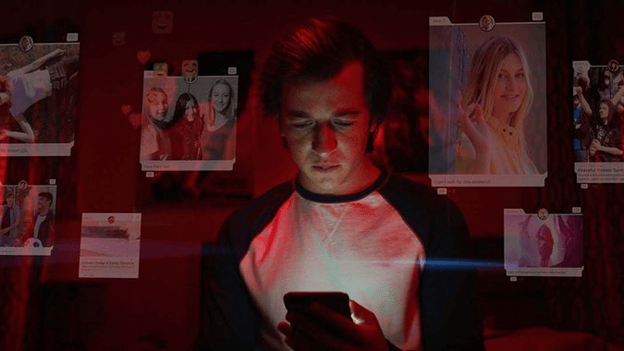
    If you haven’t watched The Social Dilemma on Netflix, watch it as soon as possible.  Could end up being the most important documentary of our generation.  Given that we are the generation of documentaries, that would make it the most important documentary ever.

    Why is this documentary important?  Because it’s real and it’s happening now. 

    What will be the downfall of America?  Have we given Civil War enough consideration?

    Let’s do a quick thought experiment.  What happens if Donald Trump wins the election this November?  There will be 165 million mad people.  Mad enough, maybe, to protest, riot, and maybe fight.

    What happens if Joe Biden wins the election in November?  There will be 165 million mad people.  Mad enough, maybe, to protest, riot, and maybe fight.

    Of course, 165 million people is an exaggeration because not everybody is this passionate, or angry, or inflamed about the upcoming election.

    Let’s call the number 30 million on each side.  Sound much better?

    Why is this happening?  Why are people always so angry?

    There is an increasing gap between what we would deem the “center.”  Center of anything.  Not overly passionate about one side or the other.  I’m not just talking about politics.  I’m talking about anything.  The middle is gone.  The “hear the other side,” “hear them out,” “hear their opinions,” are disappearing.  We’re turning into a world of people who think we know everything while not knowing anything.

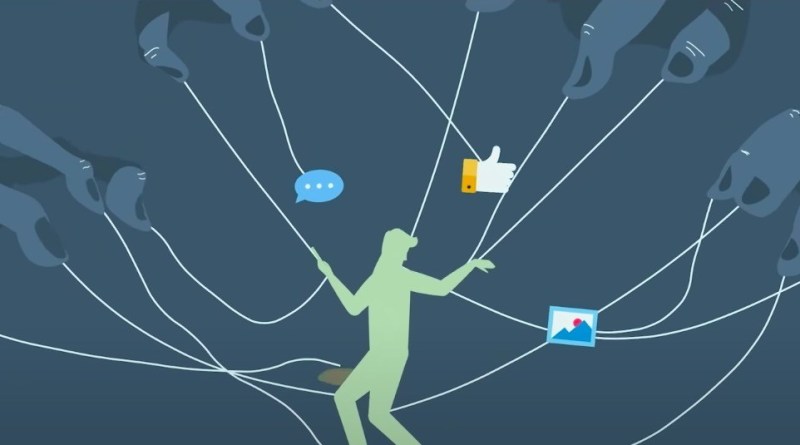
    So much from The Social Dilemma gave me an intense feeling of anxiety.  One statistic mentioned was that a study showed lies are spread on the internet/social media 6 times more quickly than truths.  What happens if a lie always has a 6x head start on the truth?  What happens is what we’re seeing happen.  Contention.  Hatred.  Vitriol.  Anger.  Confusion.  Aggression.  Fighting.

    This brings me to the most important point.

    What is truth?

    Can we even know what truth is?

    Truth is a concept society is starting to wonder exists.  How do we find something our society is starting to believe is a myth?

    This is where I turn off all my non-religious friends, but I would ask my non-religious friends:  What is your truth?  What do you turn to when everything around you is chaos, and confusion, and darkness?

    I don’t say this to spread the divide more.  I say this to invite others to find truth and make that truth love-based at all costs. 

    I love God because He loved me first.

    What is truth?

    God is truth. 

    He’s my truth.  Maybe He isn’t yours.  But you must find a truth to hold to dearly.  This truth must be centered on love.  We’ve seen what hate-filled “truth” results in.

    How do we survive in an age of disinformation?

    What do we do to protect ourselves?

    I think first we follow all the suggestions given during the credits of The Social Dilemma documentary.  I will list those here and then add my own suggestions.

    1. Uninstall apps from your phone that waste your time.
      • Hint: most of them.
    2. Turn off notifications.  Especially for anything that vibrates your leg that doesn’t provide an immediate and important alert you need to see at that moment.
    3. Use a search engines besides Google.
    4. Never watch a video recommended to you anywhere:  Facebook, Youtube, etc.  If it’s not something you went there to search for and to watch, just don’t watch it.
      • Wayyyyy easier said than done (but let’s all try!)
    5. Use a Chrome extension to remove recommendations.  Below are some options.
    6. Before you share anything online, fact check, consider the source, do the extra research (make sure it is GOOD).
      • If it looks like it’s designed to push your emotional buttons, it probably is.  Don’t share it.
    7. You vote with your clicks.  If you click on clickbate you’re perpetuating the problem.  Reward GOOD material.
    8. Get different kinds of information.
      • If you are on Twitter, add people who have different opinions from you.
      • Talk to people in the real world about real issues.
      • When you find enough people in the real world to talk to, delete your Twitter.
    9. Delete the social media accounts you really don’t need, that you don’t feel are healthy, that are taking you away from life.  Delete it and embrace the freedom!
    10. Get out of the system.
    11. The World is beautiful.  Live.

    For Families:

    1. Don’t give devices to your children.  Don’t allow them on social media.  Just don’t.
    2. Minimal screen time.
      • Set a limit and stick to it.  It was suggested to ask your child what they think is a good amount of time to spend looking at a screen each day.  Your child will often give a reasonable response.
      • Create that limit and then give rewards for going under it.  Set a 7 hour per week limit for screen time and your child spent 6 hours?  1-hour reward is a bowling trip or mini golf outing.  I used to love incentives like these as a kid.  I hope kids still do.
    3. No devices in the bedroom a set amount of time before bedtime. This will also help with sleep because you’re removing blue light which signals to your brain that it’s time to wind down.
      • Here’s a suggestion – read a book instead of your phone!
    4. Treat Social Media how Latter-day Saints treat dating – not before 16.

    Here are my suggestions.  If you can- delete it all.  Just do it.  I can almost promise you’ll feel better within a couple weeks, after the withdrawals stop.

    Me personally, I have a Facebook.  I use it so I can share my blog.  It’s good to have.  I see the use.  I’m working on limiting my scrolling down my timeline to zero and especially not watching suggested videos in my feed.  Suggested videos inevitably lead me to watching video after video of garbage material.

    Another thing that has helped me a ton has been moving the Facebook app from my main page.  I have it on page two.  That way I’m not constantly slapped in the face by that addictive, dopamine-igniting red alert symbol.  I have my Gospel Library on my home screen and if I find myself instinctively (or robotically) looking at my phone I do my best to open the scriptures and read those instead. 

    I understand all these things are easier said than done.  It’s not easy to delete social media.  It’s not easy, I get it.  I’m right there with you.  Technology is so good.  It can be used for so much good.  Why don’t we start using it for good again? 

    That brings me to my last point.

    My final and most important point.  What can we do to make a difference:  Share GOOD stuff. 

    Emphasis on GOOD MATERIAL.

    By good material I don’t mean you like it, or it tickled your fancy.  I mean it is GOOD.  It is wholesome.  It is kind.  It doesn’t make you explosively emotional but makes you feel gentle in your emotions. I mean good as in the good guided by the spirit.  I mean good as in loving.  I mean good as in spreading positivity. 

    I’m guilty like everyone else.  I see a post from the Church, and I scroll right through.  The AI (artificial intelligence) involved sees that (how scary is that?!).  They know I scrolled quickly past something GOOD.  We each need to make a conscious effort to spend time on the good stuff.  Read the good stuff.  Watch the good stuff.  If you don’t have good stuff on your Facebook timeline, use AI for good!  Go to google and search for Jesus Christ, the scriptures, conference talks, missionary messages.  You know how when you search for that cute new jacket for winter and there are suddenly cute winter jackets on your timeline?  Works the same way for good stuff.  Search for good stuff.  You’ll see more good stuff.  Spend more time with the good stuff. 

    This is how we can combat and fight the echo chamber of hatred.  This is how we remove political polarization.  This is how we remove lies.

    In the steps above I mentioned fact-checking what you share.  How about this? Spiritually check what you share.  Stop.  Say a prayer.  Ask yourself if what you’re sharing is spreading goodness, positivity, or love. If not, it can be deleted.

    I often pray before I write, and I often pray before I share what I write.  I always hope what I write is guided by something bigger and better than me. 

    Spiritually check everything you do online.  Is this making me a better person?  No.  Get it out of here.  Could this make someone’s day, bring a smile, alter someone for the better – SHARE IT. 

    This is what we can do.  This is how we can make a difference.

    I don’t ever say like and share on my blog posts because it’s become such a stupid thing to say.  But we need to say it for the things that deserve it.  Maybe we should change it to “LIKE AND SHARE GOODNESS.”

    So, if you think this was worth reading, did something positive for you, or helped you in any way, please share it.

    We can all do our part by sharing goodness.

    You can join the discussion and learn more about the Social Dilemma documentary at TheSocialDilemma.com

    I think this is important and I think it should be something we all start thinking about.  Let’s start thinking about it.  Let’s start doing our part.