Tag: equality

  • Is Roseto, Pennsylvania Zion?

    Is Roseto, Pennsylvania Zion?

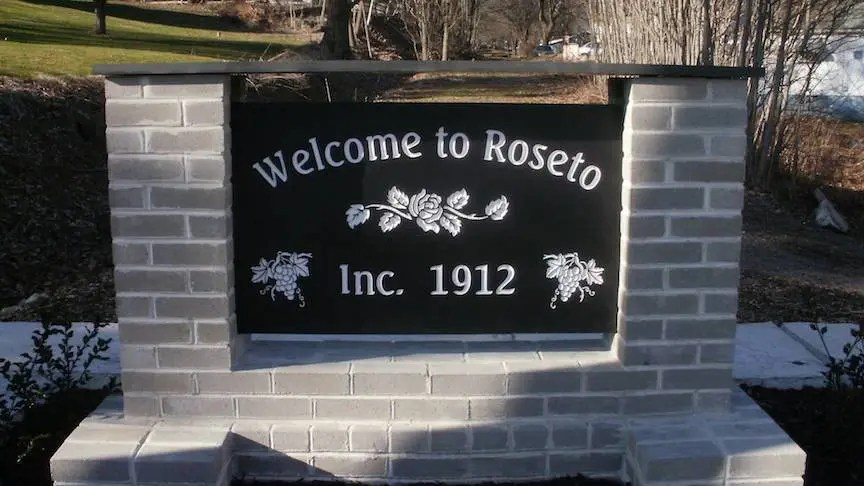
    There was an extraordinary thing happening in Roseto, Pennsylvania in the 1950s. I read about it in an awesome book called Outliers by Malcom Gladwell.

    Roseto, Pennsylvania was an outlier when it came to heart disease. For some reason, instances of heart attacks and heart trouble in Roseto were shockingly different than anywhere else.

    In the 1950s, heart attacks were the leading cause of death in men under the age of 65 (Outliers, p. 6).

    In Roseto, nobody under 55 had heart attacks. Roseto had half as many people with heart trouble over 65 compared to any other area studied. This included next-door cities and towns.

    What’s fascinating about this is that this phenomenon apparently had nothing to do with genetics, diet, or any other seemingly obvious reason. There was no obvoius indicator of why a whole community would be free of heart trouble.

    Heart trouble wasn’t the only thing missing from this community. A sociologist was brought in to study the community. His name was John Bruhn and he said, “There was no suicide, no alcoholism, no drug addiction, and very little crime. They didn’t have anyone on welfare. Then we looked at peptic ulcers. They didn’t have any of those either. These people were dying of old age. That’s it” (Outliers, p. 7).

    What made Roseto unique, then?

    Finding no pattern, those doing the study had to look at anything different about Roseto to try to explain this phenomenon.

    This led to a primary theory. That primary theory behind why Roseto, Pennsylvania residents didn’t suffer heart trouble or many other common diseases had to do with their community.

    Roseto had an old-fashioned way about it in the 1950s, even compared to the standards of its day. The residents of Roseto were primarily Italian-American immigrants. The standard in Roseto was to live at home as long as possible, take care of one another, and generally live a more laid-back and communal way of life. A young man would stay at home and take care of family. If he lost a job, it was okay. The community would often try to keep shortcomings like a lost job secret so as not to create any embarrassment. Kids would take care of parents. Parents would take care of kids. The community took care of each other. It was a family-focused, close-knit community.

    “(Researchers) learned about the extended family clans that underlay the town’s social structure. They saw how many homes had three generations living under one roof, and how much respect grandparents commanded. They went to mass at Our Lady of Mount Carmel and saw the unifying and calming effect of the church. They counted twenty-two separate civic organizations in a town of just under two thousand people. They picked up on the egalitarian ethos of the community, which discouraged the wealthy from flaunting their success and helped the unsuccessful obscure their failures” (Outliers p. 9, emphasis added).

    The fact that Roseto residents had such low instances of heart trouble revealed a potential connection between community relationships and social support to reduced stress and heart disease. The community of Roseto appeared to buffer its inhabitants from the stresses of life.

    This got me to thinking.

    What is Zion? What is the perfect society? What will it look like? What will it be like, practically speaking?

    “…the Rosetans had created a powerful, protective social structure…” (Outliers p. 9).

    Will Zion be a community that goes to church together? A community that stops to talk to each other? A community that continues to live under one roof with their direct family as long as possible? A community where equality reigns? A community where spontaneous cookouts in front yards are common?

    This sounds like Zion to me.

    It’s fascinating that a community basically shielded itself from the stresses of a fallen world by living by these principles. I believe these are God-given principles: fairness, love, community, support, unity – that’s what makes Zion.

    “When presenting (the researchers’) findings at many medical conferences where their peers were presenting long rows of data arrayed in complex charts and referring to this kind of gene or that kind of physiological process, and they themselves were talking instead about the mysterious and magical benefits of people stopping to talk to one another on the street and of having three generations under one roof….No one was used to thinking about health in terms of community” (Outliers p. 10).

    This Christmas season, as I’m inevitably considering the state of our world and where we’re headed, I can’t help but wonder: is it this simple?

    Community, family, support. People supporting people, people uplifting one another, communities looking out for each other. Neighbors waving hi. People engaging with those in their community. Ministering. Fellowship. Is it that simple? Would that fix our world?

    I think it would. I think this is primarily what is missing from our modern-day societies. Love thy neighbor. How about say hi to thy neighbor?

    This holiday season, aim to light the world. Start by dropping off cookies at a neighbor’s house. It might save you from a heart attack.

  • The Mis-Education of the Negro

    The Mis-Education of the Negro

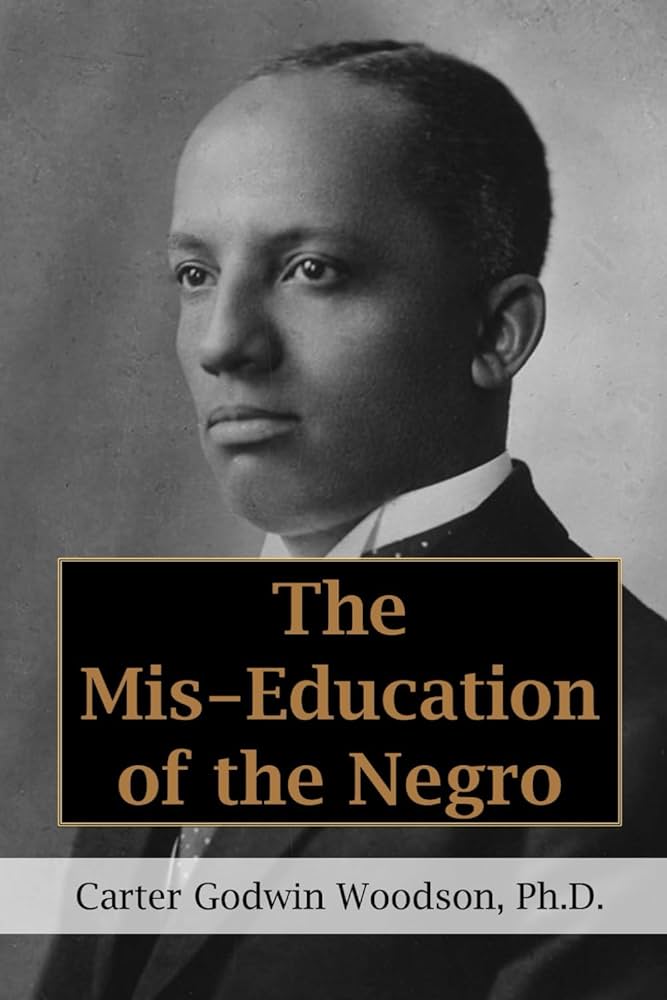
    I read a book recommended by CJ (thanks CJ) that I’ve wanted to write something about ever since reading. It was such an interesting and powerful book. It proposed some thoughts I’d never considered and really opened my mind to a different way of thinking about a particular part of American history.

    The book is titled The Mis-Education of the Negro, written in 1933. When I started the book, I immediately texted CJ and said there was too much in the book and that we should start a podcast series exploring the topics. He jokingly agreed to do a podcast. As I continued to read, I noted 40 topics, each I thought would make for a worthwhile discussion.

    CJ and I are at a combined 6 children 4 years old and younger, so a podcast is definitely on hold.

    I read this book a couple years ago.

    Discussing race is difficult. I’ve debated posting this for some time. Not that I’m saying anything controversial or crazy. Just that I don’t like to think too much about race. But our race is important. It makes who we are.

    Sometimes commenting on race as a white person feels like a lose-lose situation. I’m either so positive about other races that it seems like pandering to the point of insincerity or like I’m trying to make up for something, or I’m not positive enough and come across at best not understanding and at worst a racist.

    I think this is why talking about race in America is so difficult. I’ve written about it before and it still is one of the most difficult things I’ve written. 

    And yet, I continue to hear from my black brothers and sisters say that the best place to start is to just be open about discussing it. Which led me to put this post together. Nothing profound. Just my thoughts on a good book.

    I should mention that the book was written in 1933 which led me to continuously ask, is it still that bad? I think many of the disappointing and sad truths the book lays out have improved. Not yet perfect, but improved.

    I want to list some of the topics I noted as interesting from the book. Then I’ll elaborate on one of them.

    1. The “equality” of black and white people. Are black and white people the same? No, we are different in so many ways. From upbringing, culture, background, experience, etc. And that’s ok.
    2. Black people being nominally free but economically enslaved.
    3. Has education for black people gotten better or worse since 1933? I assume it must have improved, but it was a thought this book made me consider.
    4. This is something I feel like people my age have started talking about more- why didn’t we learn how to do taxes instead of the Nina, the Pinta, and the Sante Maria? – The question I asked from reading this book, what is education good for? Why do we care about random historical facts from Europe? To be clear, I appreciate as much as anyone the importance of understanding history and where we came from. But shouldn’t I also know how to file my taxes and apply for a job? Also, on that note of “where we come from.” I remember a lot of history being taught about Europe. I don’t remember a ton being taught about Africa, Asia, or South America.
    5. The opportunities that are afforded whites because more white people own businesses, etc. compared to black people. I think this was much more prevalent in the 1930’s compared to today.
    6. I really struggled with reading this book because I passionately hate the word in the title of the book. Underlining it over and over throughout the book drove me crazy. I almost put the book down many times because I hated how a group of people was being, I felt, unfairly characterized.
    7. Competing churches taking away from impoverished areas.
    8. Why do we study the domineering, warring nations and not the peaceful, productive nations?  The answer is obvious- the winners of wars write history. But philosophically something to consider.
    9. Interesting point mentioned about former slaves avoiding using art to portray their experiences. There were so few books or art pieces made by former slaves depicting that struggle. I think we see that more embraced today with hip hop. Artists like Tupac, Ice Cube, and Kendrick Lemar come to mind as individuals that fully embrace the struggles they have experienced in life and have made great art out of it.

    I heard this not from this book but 3+3 and 2+4 are the same. Different, but still the same.

    The point I’d like to discuss a little more is point one. The author of this book pointed out that we’re so obsessed with making everyone equal that we disregard that people are different. He points out that maybe black people and white people shouldn’t be taught exactly the same. We come from different backgrounds and different life experiences. Something that resonates with me and helps me learn may not resonate or help someone else with a different culture from mine.

    Still, I think this idea is interesting. Generally speaking, a black person has a different life experience from a white person. I’m not talking about just upbringing, I’m talking about the way we see the world, I’m talking about the way we interact with the world, I’m talking about the way the world interacts with us. Black people and white people can be different. That’s not bad though. We’re not different in an inferior / superior way, just different. Good and bad. Different.

    From the book:

    “The differences of races, moreover, is no evidence of superiority or of inferiority. This merely indicates that each race has certain gifts which the others do not possess. It is by the development of these gifts that every race must justify its right to exist.”

    It makes me think about what is happening with gender. Women and men are different, and that’s ok. We all have our own skills and talents that make us who we are. The fact that I’m a man makes me different from my wife. My wife has many skills and talents I’ll never possess. Recently I heard it put this way – 3+3 and 2+4 are the same. Different, but equal.

    That said, the most important thing is that we remember we are all sons and daughters of God. White and black doesn’t mean anything to God. What matters to God is what’s in our hearts. We are all individuals. That’s ok. We should all be treated equally, of course. But we should remember that we are unique. Our uniqueness is great.

    If you want to read a book that makes you consider race and the history of education for black people, this is a great book to read. I encourage all of us to study these ideas so we can better love and understand each other.

  • Freedom

    Freedom

    Let’s take a quick trip through history.  Bear with me on the history recap, I swear it will be brief.

    The Revolutionary War started in 1775. 

    Some rag-tag colonists decided to stand up to and fight for independence from the greatest power in the world.  I’ll say that again, a group of mostly untrained men decided to take on the greatest military force on earth at that time.  Louder for those in the back, a group of settlers stood up to THE world superpower.

    Can you believe how truly insane that was?  Just that they revolted was crazy.  Surely that got smashed into submission…right? WRONG!

    They won! Independence.  How?  Tons of stories from that time point to divine intervention.  We can save those for another day.

    Interesting Revolutionary War Facts You've Never Heard • FamilySearch

    244 years ago, July 4, 1776 The Declaration of Independence was signed.

    1777 The Articles of Confederation were written.  This would be the first constitution of the United States.

    1787 The Constitution we have today was written.

    1791 the Bill of Rights was written for the United States. 

    Amendment I of that Bill of Rights:

    “Congress shall make no law respecting an establishment of religion, or prohibiting the free exercise thereof; or abridging the freedom of speech, or of the press; or the right of the people peaceably to assemble, and to petition the government for a redress of grievances.”

    Joseph Smith – Praise to the Man | The American Citadel

    1805 The Prophet Joseph Smith was born.

    1820 God the Father and His Son, Jesus Christ, appeared to Joseph Smith.

    1827 Joseph Smith received the golden plates.

    1830 The Church of Jesus Christ of Latter-day Saints, Christ’s restored church was re-established on the earth.

    Fourteen short years after the Bill of Rights was established and set forth the freedom of religion in this choice nation a prophet was born.  29 years after the established freedom of religion Heavenly Father appeared to His prophet.  Four short decades after the Bill of Rights was ratified Christ’s Church was restored. 

    Think about that for a moment.  Human history spanning thousands of years.  Yet, somehow, within 15 years of a free nation set forth the guidelines for free religion, a boy was born who 15 years later would claim visitation from God the Father.  He would establish a church from meager means.  Within 200 years that church would have millions of members across the globe.

    Talk about all the coincidences. 

    It was less than 40 years after freedom of religion was established in the United States of America that the Church of Jesus Christ was organized.

    What spectacular timing.

    I know there aren’t coincidences in God’s plan.  I know he reared up and prepared inspired, God-loving, intelligent men to establish this great nation.  Men who desired freedom above all else.  I know that soon after they did their part in establishing this free country it was finally time in God’s plan to establish His Church.  There had to be a place for the Church to be restored first.  There was nowhere else in the world the Church of Jesus Christ could have been established.

    God works in miraculous and spectacular ways for His purposes.

    I know the exact timing of Joseph Smith’s birth and the exact timing of the freedom of the United States were no coincidence.  They were planned out long ago.

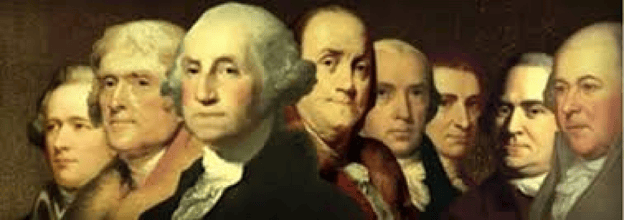
    On this Fourth of July I’m grateful to our founding fathers.

    I’m grateful to Joseph Smith.

    More than anything I’m grateful to God for His perfect plan.

    I’m grateful for a country where I can worship whom, how, and where I please.  I’m grateful that I can pray in private or public.  I’m grateful to be born in a country free.  I’m grateful that I’ve never been truly persecuted for my religious beliefs.  We live in a special country.  We live in a country founded on true principles: freedom, liberty, and equality.  I know it took some time for those principles to be truly established and I know we’re still working on some of those principles.  But the principles are there.  There are still parts of the world, many parts of the world, where freedom, liberty, and equality are not even considered.

    The most important principle of all that this nation was founded on:  faith and belief in God.

    I know right now America is in a predicament.  We have turned from God.  God gave us this great nation and helped its establishment.  Now we spit on Him and marvel at our own great strength and power.  We’re American!  THE Global Superpower.  Doesn’t that sound familiar.  We know what happens to global superpowers that rely on their own strength.

    If we don’t humble ourselves and confess to whom we owe all, God in Heaven, He will take back His land.  We are only as strong and powerful as our faith in God allows.  Like England during the Revolutionary War we will fall if our pride is not removed.  We must return to God.  He founded this country and it will continue to degrade until we return to the source of all strength.  It’s time to repent.

    I love this country.  I hope we can return to our principles and be better.  I hope we can love God and keep Him here with us.

    GOD Bless the USA