Tag: Exodus

  • Me and Moses

    Me and Moses

    Before you start reading, I will be comparing my WEAKNESS to Moses’s weakness. Don’t worry, I’m not comparing myself to Moses in a good way.

    I liked that title for this blog post because it gives off a good ‘ole image of Moses and I getting ready to go do some fishin’ or somethin’.

    There is never a moment I feel more like Moses than when I’m asked to speak in public, especially in church.

    I’m referring to Exodus 4:10:

    10 And Moses said unto the Lord, O my Lord, I am not eloquent, neither heretofore, nor since thou hast spoken unto thy servant: but I am slow of speech, and of a slow tongue.

    When I first thought about coming back to church in ~2011 there was one overwhelming obstacle in my path: what if I’m asked to speak??? I know to many this seems absurd. But I hope it goes to illustrate how big a fear this was (and still is) for me. I have memories of being a deacon (12–13-year-old) in church and dreading a Sunday School class I learned would be spent reading scripture out loud. It filled my entire body with fear. It made me lock up. It made my throat tight. It made me gulp over and over. It made me sweat. I would start to feel like I might throw up.

    Some of you think you have a fear of public speaking.

    Now do you get how big a fear this was and still is?

    I know others have it worse than me.

    When I did finally come back to church in ~2015, I had to make a decision early on. That decision was that I would not let my fear of speaking hold me back. God had brought me back and I had experiences to share and people to help. Not only that, but I had to learn to lessen the control fear had on my life.

    I decided when I was asked to speak in church, I would accept. That was until that first text came in one morning asking me to give the opening prayer in church that day. I froze. Instead of responding to the text, I called a mentor (I miss you Jessie) and talked it through. He reminded me that if I said no today, when would it stop? By the time I responded to the bishopric member who asked me to give the prayer, he had already reassigned it to someone else. I was off the hook that day, but I promised myself the next time I was asked to speak, I would accept without hesitation, before I could let the fear and excuses set in.

    Little did I know how much that next call would try my faith.

    I was in the middle of studying for a work certification. I’d already failed the test once and this next test was extremely important. I’d been studying for weeks. The test was a couple weeks away when I got the call. I was asked if I could speak in church in two weeks. The excuses flooded my mind: I have this test I’m studying for, I can’t write a talk, and besides, the added stress…! I can’t, I’ll have to accept next time.

    Then I remembered the promise I made myself. 

    “Yes, I will speak.”

    That taught me an important lesson. If we let our fears control us, they will. There are always excuses why NOT to do something that makes us uncomfortable. I spoke two weeks later in church. Beth still talks about that day, hearing me speak, as being the first day I caught her attention.

    From that day forward if I was asked to bless the sacrament, give an announcement in church, say the prayer, teach a lesson, or speak, I always answered yes without hesitation. It petrified me every time. I remember one day I gave someone the Holy Ghost which entailed laying my hands on a friend’s head and giving her a priesthood blessing in front of our entire church. That same day I also blessed the sacrament in front of the whole church, and I gave a talk in front of the whole church.

    Any one of those things in a given day would have given me nightmares.

    Before sacrament, I started to feel sick to my stomach. I thought I was going to be physically ill. I went to an empty classroom, I knelt, and I prayed for help.

    “Please, Heavenly Father, please, just help me get through this. I need you.”

    That may have been the day I solidified my knowledge that I can’t do anything without God, I’m nothing without Him.

    When I gave that blessing to the friend, bestowing the Holy Ghost upon her, I walked up with knees shaking. I thought I was going to, at a minimum fall over, and possibly faint. My throat was dry, and it hurt. I’ll never forget the feeling when I put my hands on her head, with the whole congregation, heads bowed, waiting for me to speak.

    I’ll never forget feeling like a cold bucket of water was poured over my head. From my head down to my toes I felt a tingling. Calm overcame me.

    My grandpa used to say his favorite thing in the world was to give a priesthood blessing because it was the closest he ever felt to God. He said he could feel God in those moments speaking through him.

    That’s what I experienced that day.

    I wrote this on a day that I was speaking in church. I still get kind of sick to my stomach. I still get extremely nervous. I still have to fight back the panic.

    Sometimes people tell me they can’t tell I’m nervous when I speak. I appreciate that, but sometimes I just wish everyone knew. There’s power in putting it out there.

    For others who have this fear, and I know there are many, my biggest advice is to put it out there. Don’t shy away from your fear. When I’m extra nervous, I might just say, “I’m really nervous right now.” Then I feel like I’ve removed the question from those watching and from myself worrying about it. I’ve found this to really help when public speaking.

    I’m grateful for my fear of speaking. It’s assured me, and is a constant reminder, that I can’t do anything without God.

    For those wondering, on the day I wrote this, I did end up speaking and it did go OK. I was supposed to speak for 10 minutes and spoke for 22 due to an excess of time being available. I feel that with practice anything can become more comfortable, and that’s definitely the case with me and public speaking.

    I’ve now taken to challenging myself a little more, to see just how far I can take this reliance on God. The last time I was asked to speak in church I intentionally put zero preparation into my talk. I was asked to speak last minute, a couple days beforehand, due to someone canceling, and the topic was “personal revelation,” so I thought it was a fitting time to try it.

    I got up before the church with little idea of what I was going to share. As I looked around at the congregation, I knew what I wanted to share.

    I’m grateful for the opportunity to speak in church. I’m grateful to be able to share my thoughts and experiences. This fear is a constant reminder that I need God, and I’m grateful for this weakness. Every time I’m asked to speak I’m reminded how weak and silly I am. We can look at all our weaknesses this way, as a reminder of how much we need Him. I know as we do this we come closer to God and better appreciate all He has done and continues to do for us.
  • Does God get Impatient?

    Does God get Impatient?

    Sometimes I have heard the comment when discussing scripture that God “lost his patience.” In this way of thinking, enough was enough for God. The Lord of Lords and King of Kings had come to the end of His straw. His patience was lost.

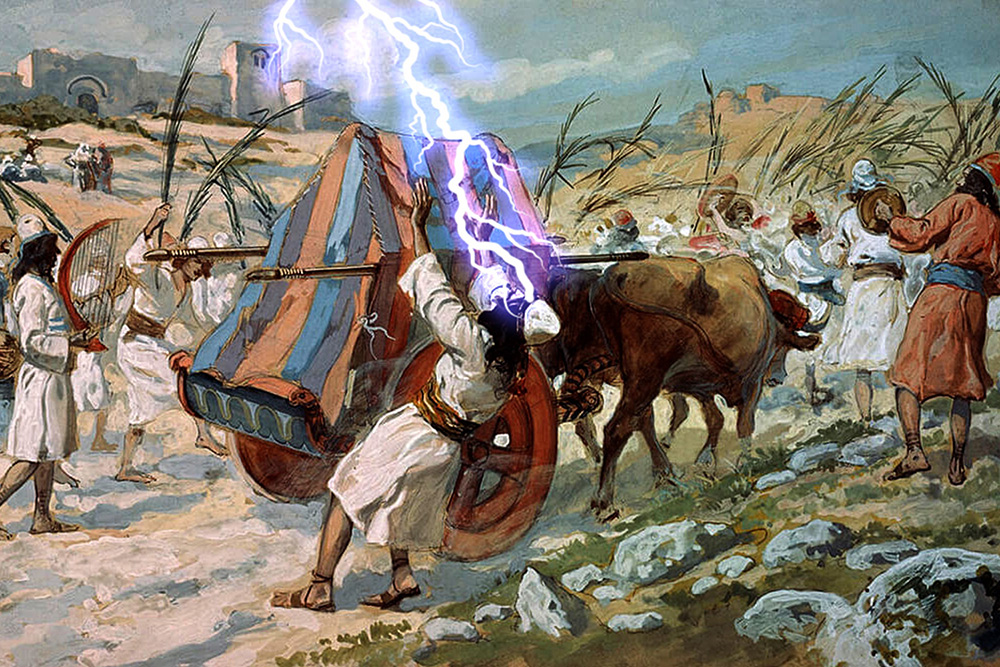
    There are countless examples we can look to where a perceived loss of patience occurred. In these examples, our human eyes see a loss of patience. Examples include the times the Lord told Moses He was going to destroy the Israelites (Exodus 32, Deuteronomy 9:12-14) or Uzzah touching the ark (2 Samuel 6:6-7).

    Does God change His mind?

    Various Google searches of “Is God impatient” come up with many titles like “God is patient – until He isn’t.” I propose that this is not the right way to think about God. I lose patience with my toddler, often. We all lose patience, often. Does God “lose patience” with me? I don’t think so.

    Remember the omniscient thing? Omniscience=all knowing. If God knows the beginning from the end, how can He lose patience? He knows what’s coming.

    From this link during some of those Google searches:

    “God is never said to be patient about things or circumstances. Why? It is because He knows all things. He knows the beginning from the end. He does not have any need of that kind of patience. When we speak of the patience of God, we are not talking about enduring hard times; we are talking about being longsuffering toward people.”

    David Hocking

    Patience, like time, is a human thing. It doesn’t apply to God. We apply it to Him in our attempt to understand Him. But how can God be “patient” if He already knows everything?

    So why are these examples, where it seems like the Lord changes His mind, included in the scriptures? Why is the account of the Lord saying He was going to destroy the Israelites and raise up a seed through Moses, only to “change His mind” included in the Bible?

    The question, “Why is it in the Bible” is almost always answered, “to teach us about Christ.”

    Let’s look at the Moses example.

    Moses is talking to Jehovah when he pleads on behalf of the children of Israel. He is interceding on their behalf. Who does Moses represent here? – Jesus Christ, our advocate with the Father. So, in this case, Moses was being a type of Christ and Christ was assuming the role of God the Father. We were learning from this scripture that Christ is our advocate with the Father, the same way Moses was the advocate for the Israelites with Jehovah.

    We must be careful in applying our human traits to God. God is not us. He works on a completely different plane. We can’t comprehend His ways and it’s important, because of our lack of understanding, we don’t lessen His power and perfection in our finite minds.

    God doesn’t lose patience with circumstances. He can’t. He knows all the circumstances. He knows the beginning. He knows the end. God doesn’t lose patience with us. He can’t. He is perfect in everything, including His love for us. He can want the best from us, He can want us to be better, He can want us to make better choices. But He DOES NOT lose patience with us. He is longsuffering. He is loving. He is perfect.

  • Inheritance and Lehi’s Blessing

    Inheritance and Lehi’s Blessing

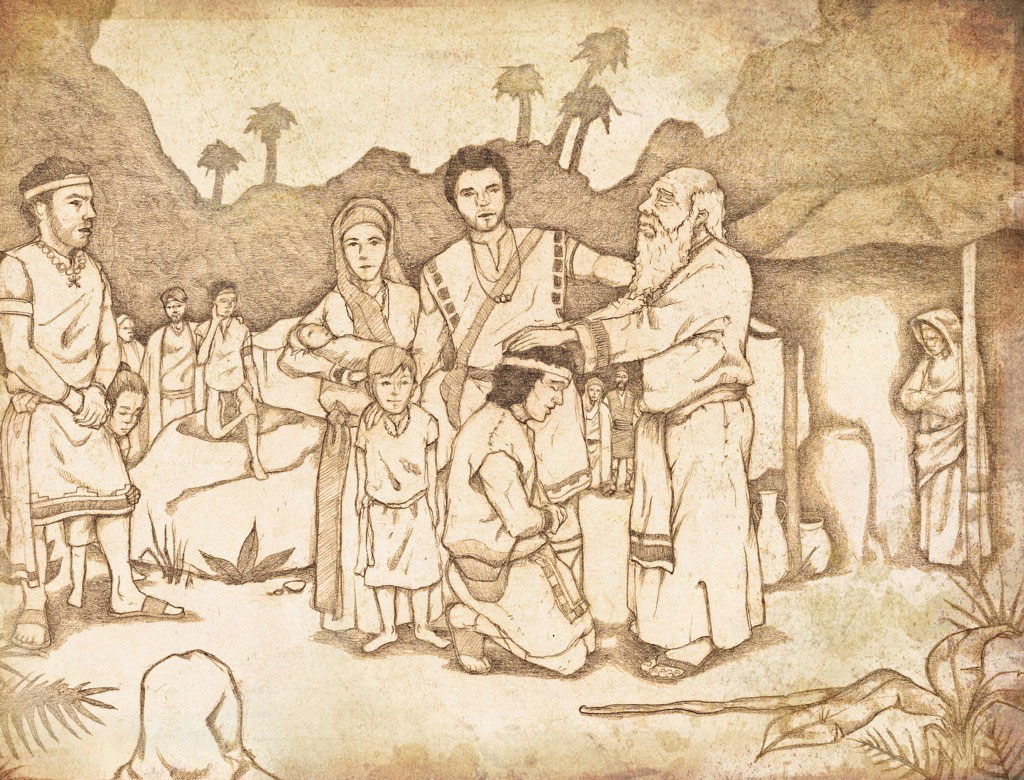
    I have always been confused by the blessings of Lehi to his posterity in the 4th chapter of 2 Nephi in the Book of Mormon.  For one, there is the obvious blessing that is missing: Nephi’s.  For another, there seem to be mixed messages.  Laman and Lemuel have a blessing, but it may be removed?  What does Sam get?  Who is the actual new leader- Nephi or Laman?

    In an article titled Lehi’s Last Will and Testament: A Legal Approach, John Welch goes into great detail on the legality and custom of Lehi’s blessing, and answers all of the above questions. I’d encourage anyone interested to read his whole article. It strengthened my testimony of the authenticity of the Book of Mormon and reminds us of the real world that Nephi was a part of.

    I want to go over some highlights from John Welch’s article that explain Lehi’s blessing in its cultural context. Credit also goes to Alan C. Miner who put together the points I found most relevant to the above questions.

    Inheritance and succession was an important aspect of near eastern culture. It was a way of “preserving and transmitting the family estate from one generation to the next” (John Welch). Typically, the eldest son of the father’s first wife inherited his estate. The leadership of the family was also an important inheritance given. Faulk points out, “a father was free to choose a younger son as his successor, if he found the eldest unworthy of the office.” Sound like this fits Laman and Lemuel much? The father passed this leadership of the family on often through a special blessing (Deuteronomy 21:17), like we see in 2nd Nephi chapter 4.

    There are many examples of this spiritual or ruling leadership being given to a younger son including:

    1. Abel
    2. Seth
    3. Jacob (Israel)
    4. Ephraim
    5. David
    6. Solomon

    In each of these cases older sons were passed over as the spiritual leaders of the family.

    So, we have property inheritance and ruling inheritance. There was a third category sometimes handed down from the father: priestly duties. This is what happened with Lehi giving Jacob the priestly authority in the Book of Mormon. Another example of this was Jacob/Israel’s blessing in the Old Testament. Israel blessed Judah with the ruling authority (Genesis 49:10), Joseph of Egypt receiving a double portion through Ephraim and Manasseh (Genesis 48:22), and Levi inherited some priestly rights to the priesthood.

    As time passed in ancient Jerusalem, it became common custom for the eldest son to automatically receive a double portion of the inheritance. As noted, there were times that younger sons received different portions, or rights to rule, or increased inheritance. This was the exception, not the rule.

    This basic background information brings us to our fascinating story in the Book of Mormon. We have an eldest son, Laman, who was the eldest son of, what appears to be, a relatively well-off citizen of Jerusalem. This family leaves behind their land and property, to venture off to a promised land, a promised land Laman seldom showed faith in attaining. This family spends years in the wilderness, potentially months on a ship, and eventually land in the promised land. This elder brother is now over the moon with joy and enthusiasm. He will inherit all that his father has and be the leader and now king of a new nation.

    But what about Nephi? It was Nephi from the start that helped the family in the wilderness. It was Nephi that went back and got the plates so they could remember God and how to read and write. It was Nephi who built a ship to get them to the promised land. Nephi led the family, physically and spiritually to the promised land. He was the natural leader of the family and deserved to inherit the leadership, and kingship, of this great new nation.

    Lehi has a bit of a conundrum. How was Lehi going to handle Laman’s expectation to receive a double portion from his father? How was Lehi to handle the expectation from Laman that, as the oldest son, it was his RIGHT to inherit everything, despite his lack of leadership throughout the journey. Especially when Nephi had been declared a “ruler and a teacher” (1 Nephi 2:22, 3:29) by God Himself.

    This brings us to our blessing, and to the answer to the questions I always had.

    Lehi needed to appease Laman while attaching appropriate contingencies to his blessing. The main contingency was that Laman’s blessing would be applicable as long as he hearkened unto Nephi. This same admonition was given to Lemuel, Sam, and the sons of Ishmael. If they refused to follow Nephi, their blessings would be null and void.

    So Lehi employed three ways to diminish Laman’s blessing and role as the firstborn son. In diminishing Laman’s role Lehi enhanced Nephi’s. This leads us to the questions:

    First, why was Sam’s portion linked with Nephi’s? Why were there no Samites?

    Combining Sam’s inheritance with Nephi’s was similar to Joseph of Egypt’s blessing being doubled through his sons, Ephraim and Manasseh. Sam’s share of the land was linked to Nephi’s and therefore Nephi’s portion was doubled through Sam’s faithfulness, loyalty, and devotion he would show to Nephi as he always had.

    Welch discusses a second way Lehi diminished Laman’s blessing as found in 2 Nephi 4:5-9, “He [Lehi] blessed his firstborn’s children to the effect that their sins and cursings would be answered upon the heads of their parents. This could not have been flattering to Laman.”

    The third way Laman’s authority and blessing was reduced, Lehi referred to Jacob three times as his “firstborn…in the wilderness” and applied the priestly duties to him. By naming Jacob as another version of the “firstborn,” Lehi subtly took away from Laman’s claims as the firstborn son. As we remember, the custom in ancient Jerusalem was for Laman to receive the inheritance by default because he was the firstborn son. But, with Jacob also receiving a form of the title, “first born son,” Laman lost some claim on this exclusive title.

    Laman was warned that if he was disobedient, to God and to Nephi, that his blessing would be revoked. Lehi was, in a way, willing to give Laman the cursory “honor” of the blessing while putting many safeguards in place to keep Laman from actually ruling.

    This background context gives us additional insight into how the Nephites (followers of Nephi) and Lamanites (followers of Laman) could so quickly devolve into war and contention. The peace was kept as long as Lehi, the official patriarch, was around. Custom in Jerusalem was to love and respect the father (Exodus 20:12). But as soon as Lehi died, it was chaos. Laman was never one to heed faith or blessings, so the warnings from his now passed father were of no concern to him. He wanted to rule.

    To conclude, Alan C. Miner states, “Thus, John Welch has provided a plausible cultural background and answer as to why there were no “Samites.”  His words also give testimony to the fact that the ancient world of which Lehi and Nephi were proposed to be a part of in the pages of the Book of Mormon was a very real world.” The confusing nature of the blessing adds to the authenticity of the Book of Mormon.  Lehi’s blessing is consistent with the pattern an ancient Israelite may use in blessing his children. 

    I bear testimony that the Book of Mormon is a true historical account of families that originated in Jerusalem and eventually settled in the Americas. The more I read and study the book the more obvious it becomes. God has given us a second witness of the divinity of Jesus Christ, and I’m grateful for it. I’m grateful for a book that has been tested for 200 years and still holds up. I’m grateful to know God is still invested in us and our lives. I’m grateful for the Book of Mormon, Joseph Smith, and the Church of Jesus Christ of Latter-day Saints.

  • We are Scripture

    We are Scripture

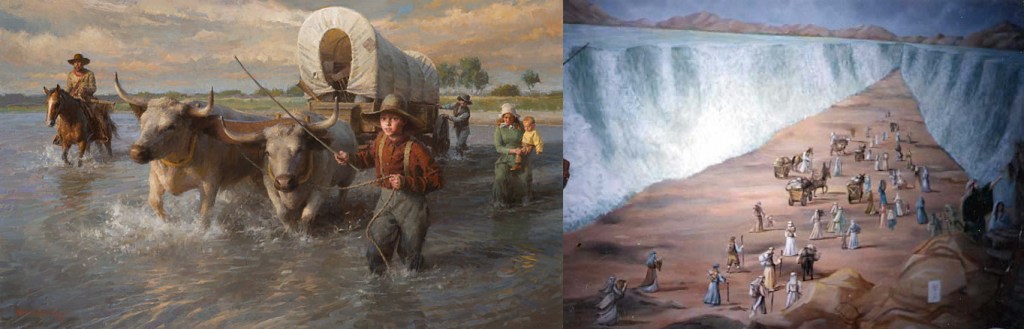
    As I read the historical background of Section 136 of the Doctrine and Covenants, I’m struck by the realization of how much the pioneers of the 1840s parallel the children of Israel leaving Egypt.

    The pioneers were leaving persecution, and in many ways bondage, just as the children of Israel.

    The pioneers had a humble leader, being inspired of God.  Brigham Young said, “What I know, I have received from the heavens…Men talk about what has been accomplished under my direction, and attribute it to my wisdom and ability; but it is all by the power of God, and by intelligence received from him.”

    The pioneers were on a covenant path.  The destination was not as important as the journey.  Section 136 is all about the pioneers learning to trust and follow God, whatever happened.  This has many parallels with the children of Israel, from manna coming to heaven to their rejection of the full covenants with God along their way.

    The pioneers were going to settle a new promised land.  The children of Israel were going to settle the Lord’s city.

    The comparisons go on and on.

    As I’ve been writing this, I have said: the pioneers compared to the children of Israel.  It’s important to realize that the pioneers were the modern children of Israel.  It is no coincidence that their story so perfectly parallels the Exodus from Egypt.  God works in patterns.  This is proof of His work.

    Brigham Young, when worries came from the pioneers about them being behind schedule in their goal to have crops planted, is quoted as saying, if the Saints “had done all [they] could,” he would feel “just as well satisfied as if [they] had a thousand acres planted with grain.  The Lord would do the rest.”

    Ultimately, the pioneers settled Utah.  Salt Lake City has become a bustling and powerful city of the world.  The desert has blossomed as the rose, (Isaiah 35:1) just as Jerusalem became a powerful city in ancient times.

    I believe we often read the scriptures and forget that we are scripture.  Very little differentiates us from the followers of God 2000 or 4000 years ago.  Different places, different time, new technology; but we are still following God, trying our best to keep His covenants, and trying our best to come closer to Him.

    If scripture verses were written about you, what would be written?

    With this understanding comes an important realization.  History repeats itself.  I believe we can read of the ancient Jews condemning their Christ to death on the cross and scoff at the idea.  We are ~170 years removed from our “time in the wilderness,” our pioneer days.  If Christ came before Zion today, would we know Him?

    I hope we would, but sometimes I worry for Zion.  We know Zion will become complacent in the last days.  It’s important that we stay vigilant in our devotion to God and to our covenants with Him.  Otherwise we risk the same fate that befell Jerusalem so many years ago.