Tag: Family

  • The Social Dilemma (Netflix)

    The Social Dilemma (Netflix)

    What is truth?

    How do we know?

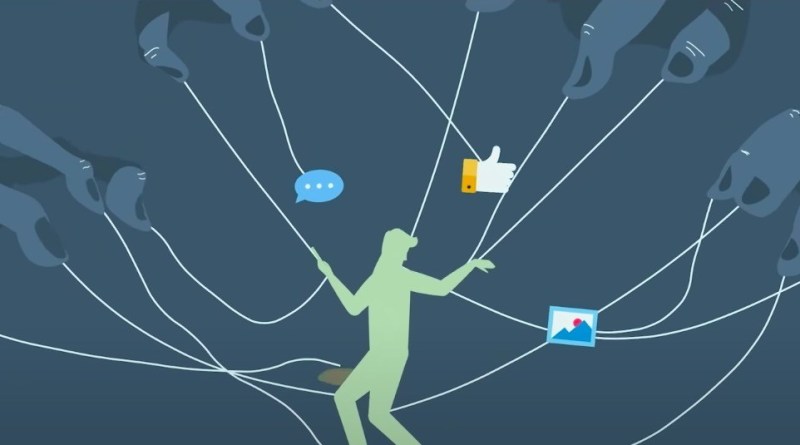
    If you haven’t watched The Social Dilemma on Netflix, watch it as soon as possible.  Could end up being the most important documentary of our generation.  Given that we are the generation of documentaries, that would make it the most important documentary ever.

    Why is this documentary important?  Because it’s real and it’s happening now. 

    What will be the downfall of America?  Have we given Civil War enough consideration?

    Let’s do a quick thought experiment.  What happens if Donald Trump wins the election this November?  There will be 165 million mad people.  Mad enough, maybe, to protest, riot, and maybe fight.

    What happens if Joe Biden wins the election in November?  There will be 165 million mad people.  Mad enough, maybe, to protest, riot, and maybe fight.

    Of course, 165 million people is an exaggeration because not everybody is this passionate, or angry, or inflamed about the upcoming election.

    Let’s call the number 30 million on each side.  Sound much better?

    Why is this happening?  Why are people always so angry?

    There is an increasing gap between what we would deem the “center.”  Center of anything.  Not overly passionate about one side or the other.  I’m not just talking about politics.  I’m talking about anything.  The middle is gone.  The “hear the other side,” “hear them out,” “hear their opinions,” are disappearing.  We’re turning into a world of people who think we know everything while not knowing anything.

    So much from The Social Dilemma gave me an intense feeling of anxiety.  One statistic mentioned was that a study showed lies are spread on the internet/social media 6 times more quickly than truths.  What happens if a lie always has a 6x head start on the truth?  What happens is what we’re seeing happen.  Contention.  Hatred.  Vitriol.  Anger.  Confusion.  Aggression.  Fighting.

    This brings me to the most important point.

    What is truth?

    Can we even know what truth is?

    Truth is a concept society is starting to wonder exists.  How do we find something our society is starting to believe is a myth?

    This is where I turn off all my non-religious friends, but I would ask my non-religious friends:  What is your truth?  What do you turn to when everything around you is chaos, and confusion, and darkness?

    I don’t say this to spread the divide more.  I say this to invite others to find truth and make that truth love-based at all costs. 

    I love God because He loved me first.

    What is truth?

    God is truth. 

    He’s my truth.  Maybe He isn’t yours.  But you must find a truth to hold to dearly.  This truth must be centered on love.  We’ve seen what hate-filled “truth” results in.

    How do we survive in an age of disinformation?

    What do we do to protect ourselves?

    I think first we follow all the suggestions given during the credits of The Social Dilemma documentary.  I will list those here and then add my own suggestions.

    1. Uninstall apps from your phone that waste your time.
      • Hint: most of them.
    2. Turn off notifications.  Especially for anything that vibrates your leg that doesn’t provide an immediate and important alert you need to see at that moment.
    3. Use a search engines besides Google.
    4. Never watch a video recommended to you anywhere:  Facebook, Youtube, etc.  If it’s not something you went there to search for and to watch, just don’t watch it.
      • Wayyyyy easier said than done (but let’s all try!)
    5. Use a Chrome extension to remove recommendations.  Below are some options.
    6. Before you share anything online, fact check, consider the source, do the extra research (make sure it is GOOD).
      • If it looks like it’s designed to push your emotional buttons, it probably is.  Don’t share it.
    7. You vote with your clicks.  If you click on clickbate you’re perpetuating the problem.  Reward GOOD material.
    8. Get different kinds of information.
      • If you are on Twitter, add people who have different opinions from you.
      • Talk to people in the real world about real issues.
      • When you find enough people in the real world to talk to, delete your Twitter.
    9. Delete the social media accounts you really don’t need, that you don’t feel are healthy, that are taking you away from life.  Delete it and embrace the freedom!
    10. Get out of the system.
    11. The World is beautiful.  Live.

    For Families:

    1. Don’t give devices to your children.  Don’t allow them on social media.  Just don’t.
    2. Minimal screen time.
      • Set a limit and stick to it.  It was suggested to ask your child what they think is a good amount of time to spend looking at a screen each day.  Your child will often give a reasonable response.
      • Create that limit and then give rewards for going under it.  Set a 7 hour per week limit for screen time and your child spent 6 hours?  1-hour reward is a bowling trip or mini golf outing.  I used to love incentives like these as a kid.  I hope kids still do.
    3. No devices in the bedroom a set amount of time before bedtime. This will also help with sleep because you’re removing blue light which signals to your brain that it’s time to wind down.
      • Here’s a suggestion – read a book instead of your phone!
    4. Treat Social Media how Latter-day Saints treat dating – not before 16.

    Here are my suggestions.  If you can- delete it all.  Just do it.  I can almost promise you’ll feel better within a couple weeks, after the withdrawals stop.

    Me personally, I have a Facebook.  I use it so I can share my blog.  It’s good to have.  I see the use.  I’m working on limiting my scrolling down my timeline to zero and especially not watching suggested videos in my feed.  Suggested videos inevitably lead me to watching video after video of garbage material.

    Another thing that has helped me a ton has been moving the Facebook app from my main page.  I have it on page two.  That way I’m not constantly slapped in the face by that addictive, dopamine-igniting red alert symbol.  I have my Gospel Library on my home screen and if I find myself instinctively (or robotically) looking at my phone I do my best to open the scriptures and read those instead. 

    I understand all these things are easier said than done.  It’s not easy to delete social media.  It’s not easy, I get it.  I’m right there with you.  Technology is so good.  It can be used for so much good.  Why don’t we start using it for good again? 

    That brings me to my last point.

    My final and most important point.  What can we do to make a difference:  Share GOOD stuff. 

    Emphasis on GOOD MATERIAL.

    By good material I don’t mean you like it, or it tickled your fancy.  I mean it is GOOD.  It is wholesome.  It is kind.  It doesn’t make you explosively emotional but makes you feel gentle in your emotions. I mean good as in the good guided by the spirit.  I mean good as in loving.  I mean good as in spreading positivity. 

    I’m guilty like everyone else.  I see a post from the Church, and I scroll right through.  The AI (artificial intelligence) involved sees that (how scary is that?!).  They know I scrolled quickly past something GOOD.  We each need to make a conscious effort to spend time on the good stuff.  Read the good stuff.  Watch the good stuff.  If you don’t have good stuff on your Facebook timeline, use AI for good!  Go to google and search for Jesus Christ, the scriptures, conference talks, missionary messages.  You know how when you search for that cute new jacket for winter and there are suddenly cute winter jackets on your timeline?  Works the same way for good stuff.  Search for good stuff.  You’ll see more good stuff.  Spend more time with the good stuff. 

    This is how we can combat and fight the echo chamber of hatred.  This is how we remove political polarization.  This is how we remove lies.

    In the steps above I mentioned fact-checking what you share.  How about this? Spiritually check what you share.  Stop.  Say a prayer.  Ask yourself if what you’re sharing is spreading goodness, positivity, or love. If not, it can be deleted.

    I often pray before I write, and I often pray before I share what I write.  I always hope what I write is guided by something bigger and better than me. 

    Spiritually check everything you do online.  Is this making me a better person?  No.  Get it out of here.  Could this make someone’s day, bring a smile, alter someone for the better – SHARE IT. 

    This is what we can do.  This is how we can make a difference.

    I don’t ever say like and share on my blog posts because it’s become such a stupid thing to say.  But we need to say it for the things that deserve it.  Maybe we should change it to “LIKE AND SHARE GOODNESS.”

    So, if you think this was worth reading, did something positive for you, or helped you in any way, please share it.

    We can all do our part by sharing goodness.

    You can join the discussion and learn more about the Social Dilemma documentary at TheSocialDilemma.com

    I think this is important and I think it should be something we all start thinking about.  Let’s start thinking about it.  Let’s start doing our part.

  • First year of marriage during a pandemic-oh my!

    First year of marriage during a pandemic-oh my!

    Beth and I have been married for 15 months.  If you’re doing the math, you’re realizing that our first 12 months of marriage included 3 months of quarantine.  It seems silly for someone married 15 months to give marriage advice.  But I’ll remind you, we’ve survived the great pandemic and quarantine period of 2020!  I’d like to write some things I learned in the first year of marriage.

    First let me comment on the pandemic.  While being stuck with someone and quarantined with them for 6 months may be miserable for some, it’s made me realize how lucky I am to have a wife I love to be around.  Beth and I have joked about how quarantine has been quite a blessing for us.  We basically haven’t left each other’s side for 6 months.  It’s crazy to think about.  What’s even crazier is I love it.  It’s given me a chance to appreciate her, talk with her, and be with her.  We went through a stretch when the weather was nice where we were biking almost every day.  That was great.  As the heat set in, we transitioned into conversations and TV series together.  It’s been nice. 

    It hasn’t been all roses and bliss.  While we rarely fight, there are still frustrations.  I’ll mention one (and don’t worry, this will be proofread by Beth before I post it).

    Early on in our marriage I noticed a frustration setting in.  If I cleaned a bathroom, or did laundry, or vacuumed the living room I would find myself resenting her.  I would wonder why she didn’t help or do this or that. 

    I was letting this frustration build when I turned to someone for advice.  This wise advice giver presented me with thoughts that completely turned around my way of thinking.  He said that when he got married (39 years ago, congrats!) he was given some advice that he took to heart.  He said he struggled with something similar early in marriage where he would fold the laundry and then expect his wife to do something in return.  Someone explained to him that you don’t fold the laundry to keep a leg up or hold something over on your wife.  You fold the laundry because you love your wife and you want to do it for her and yourself, without any thought of repayment.

    My advice giver talked about the Savior and how He is our greatest example.  He reminded me Jesus Christ never did anything with any hope of getting something in return.  Christ served only to serve.  He reminded me we’re here to become like Christ.  Folding the laundry or doing the dishes, with zero expectations of getting something back, was our small way of becoming like Christ. 

    It hit me how dumb I’d been.  Here I was doing good stuff like picking up around the house but doing it without good intentions.  I was essentially nullifying my “good deed.”  I was reminded we don’t serve to get pats on the back, we serve because we love.  It reminded of the advice of our bishop, Bishop Nelson, when Beth and I met with him before getting married.  He said, “If you always do whatever you can to make the other person happy, you will always have a happy marriage.”  I’ve realized how difficult that is in practice, but how rewarding it is to try to live thinking about Beth first.

    I realized after this advice that I’d really let some negative feelings set into my heart.  Looking back, I think it would have been a short skip and a jump to negative feelings turning into resentment, resentment turning into animosity, and animosity turning into a really unhappy home.  I’m extraordinarily grateful to two wise advice givers that helped me be a *slightly better husband early on.

    Let me be clear about something.  I am far from a perfect or I’d say even a decent husband at this point.  While Beth is the epitome of love and kindness, I know my tendency to be stoic and un-affectionate.  I am lucky to be married to someone who understands my flaws.  I’ve mentioned some of the patience I’ve developed but I’m well aware of Beth’s out of this world patience with me.  I know I am not easy to live with and I feel so lucky to have her. 

    Since I received the advice, I can say my heart has changed.  Every once in a while, if I’m vacuuming, I’ll get an inkling of frustration.  I have to stop myself and remember.  Am I vacuuming so I’m owed something?  No.  I’m vacuuming because I want to clean up and I love my wife.  She does so much around the house and does so much for me.  There’s no keeping score.  Truth is I’m lucky we don’t keep score, or I’d probably be losing.

    The moral of the story I learned is we control how we feel.  We can control our thoughts and our emotions- especially frustration.  It’s not always easy,  but it’s possible.  It’s what we’re here to learn.  We’re here to learn patience and love.  I’m still working on being a more loving husband and look forward to the years where Beth teaches me how to be more loving. 

    I see a sad trend in our society and the world today.  We give up too easy.  Love and marriage aren’t easy.  If it was easy it wouldn’t be rewarding.  We’re in a world that has decided if things are difficult, they’re not worth it.  It makes me sad.  Committing to marriage should be the most serious commitment of our life.  Too many people give up too quickly.  It’s sad and I wish it wasn’t that way.

    I know that my marriage will end up being the greatest catalyst to my growth in this life.  From my marriage I will soon be blessed with a daughter which will also provide vast opportunities to mature in many qualities.  I’m grateful for my marriage.  I’m grateful that my marriage is for eternity.  I can’t imagine vacuuming all these floors and taking out all this trash just to have this marriage end when I die.  I’m earning brownie points for eternity 😉.  (Just kidding!  Were you paying attention?  No brownie points!)

    I’ll conclude with a great quote.  The quote comes from Jenkin Lloyd Jones and has famously been quoted by Gordon B. Hinckley.  I share it because I think it’s important to remember, especially when marriage becomes difficult. 

    There seems to be a superstition among many thousands of our young who hold hands and smooch in the drive-ins that marriage is a cottage surrounded by perpetual hollyhocks, to which a perpetually young and handsome husband comes home to a perpetually young and ravishing wife. When the hollyhocks wither and boredom and bills appear, the divorce courts are jammed.

    Anyone who imagines that bliss is normal is going to waste a lot of time running around shouting that he’s been robbed. The fact is that most putts don’t drop. Most beef is tough. Most children grow up to be just ordinary people. Most successful marriages require a high degree of mutual toleration. Most jobs are more often dull than otherwise. . . .

    Life is like an old-time rail journey—delays, sidetracks, smoke, dust, cinders, and jolts, interspersed only occasionally by beautiful vistas and thrilling bursts of speed. The trick is to thank the Lord for letting you have the ride.”

  • Parents

    **Written in June of 2019**

    My dad hates baseball.  I hate baseball.  My dad played basketball in high school.  I played basketball in high school.  My dad is pretty ‘eh’ about football. He doesn’t hate it but he’s also not super passionate about it.  How do you think I feel about football?

    We generally follow our dad or parents’ lead in many ways.  I used sports because it’s a simple and easy example that is often true.  Another example is country music. Dad hates it and I hate it.  Why is this important? As I often do, I thought about this in a spiritual context.

    In the church, parents are implored to raise their children with the scriptures and to teach them of Jesus Christ.  To teach them of their Heavenly Father.  The scriptures are the gateway into this knowledge.  I’ve recently been thinking about the importance of raising kids to have knowledge of what’s truly important.  That, with love, will shape children into what they will become. 

    It’s hard to quantify how the way I was raised impacted who I am today.  I wouldn’t say my parents were the most vigilant scriptorians.  To be honest, I don’t remember reading the scriptures as a family, though I’m sure there were times.  Despite that, I always knew they were important.  Even if we didn’t always read them, I respected them.  That’s potentially the most important thing my parents gave me, a respect for scripture.  The same thing goes for church.  We may not have gone every week but growing up I knew it was important.

    Consider a scriptural example of young men raised right. They were raised to love their parents and love their freedom.  The account of the two thousand stripling warriors in the book of Alma shows us the profound influence good parents can have on children.  The parents of those 2,000 young men made a covenant not to raise weapons ever again against their brethren.  They were willing to die first.  Their children made no such covenant.  Since these children loved their parents, God, and their freedom, they willingly went to battle.

    The story is well known in the Church.  For those who aren’t familiar, go read chapter 56 in Alma of the Book of Mormon.  Of those 2,000 young men, not a single life was lost.  Many were hurt and injured, but not one killed.  They fought in a war and all were accounted for.  What explains this?  Their faith.  Alma 56:47-48 reads “Now they never had fought, yet they did not fear death; and they did think more upon the liberty of their fathers than they did upon their lives; yea, they had been taught by their mothers, that if they did not doubt, God would deliver them.  And they rehearsed unto me the words of their mothers, saying: We do not doubt our mothers knew it.”  These young men were raised to trust God.  The impact of their parents’ teachings made them powerful warriors. 

    Scripture becomes even more important because of the world we live in today.  We are surrounded by temptation.  The world has turned from God, turned from Christ.  We’ve started to depend on our own knowledge and understanding.  It’s interesting, at the time we have the most access to scripture and to the lessons of the past, we have most aggressively turned from God.  The time will come as it always does when God will remind man of their weak and feeble state.  We’ve become so used to buying food at the grocery store, we forget where that food ultimately comes from.  Drought and famine will happen, even in our modern, comfortable world.  Then people will turn to God.  It will be too late, as we see in scripture.

    Now is the time to raise children with a love of God.  Not a fear, a love.  That love comes from reading the scriptures.  Love for God comes from seeing all that He has given us.  We are nothing and have nothing without Him.

    Alma 57:21 reads, “Yea, and they did obey and observe to perform every word of command with exactness; yea, and even according to their faith it was done unto them; and I did remember the words which they said unto me that their mothers had taught them.” And in verse 27, “Now this was the faith of these of whom I have spoken; they are young, and their minds are firm, and they do put their trust in God continually.”

    It’s so important that youth today are raised with faith.  Our future depends on them.  Their faith will be the most important thing they have as the world becomes increasingly faithless.  Parents must be examples to their children first and lead them to the scriptures second.  I’m not a parent yet, but I hope one day to have kids that are filled with faith, love for others, and a humble appreciation for all that God has given them.  I often ponder what I can do to instill these values in my future children. 

    The answer is simple:  direct them to the scriptures. 

    We’ll Bring the World His Truth (Army of Helaman) – The Tabernacle Choir at Temple Square

    If you liked this post and also love the scriptures because of your parents, share this with them to thank them.