*This is from a true story I read 4 years ago that I can’t find the source for now.
There is a story of a person named Om whose mother was killed when he was a young child. After his mother was killed, Om was shipped off to another country. There he was held and kept by the very people who killed his mother.
Om lived in captivity like this for twenty years, mistreated, and kept by those who murdered his mother. At the age of twenty-four he was shipped back to his home and allowed to be free. Twenty years he was with the people who killed his mom and held him against his will.
One of those captors tried to befriend Om. This person’s name was Marc. Marc wasn’t directly responsible for Om’s suffering. Marc wasn’t the one who killed Om’s mother. But Marc was still one of them. Marc was the enemy.
The people directly responsible for the murder of Om’s mother told Marc to be careful around Om. Om hated them all and would kill Marc the first chance he got.
Over time Marc started to befriend Om and Om did not attempt to kill Marc.
While in captivity, Om developed a close relationship with a young child. This friendship was one of the few joys Om had in his difficult life.
One day Marc slipped and startled the young child that Om was so fond of.
Three female chimpanzees charged at Marc over his mishap and started to bite and attack him.
As Marc was being attacked, he saw Om charge toward them. Om was furious. Surely Marc was going to pay for startling Om’s precious young one. Om’s time of revenge had finally come. He was going to kill Marc.
To Marc’s surprise, Om fought off the three female chimpanzees and kept them at bay while Marc crawled to safety. Marc made it to a hospital and barely survived.
Here was Om, whose mother had been taken from him and his life destroyed by the people Marc represented. Om could easily view Marc as the ultimate evil. And yet, over time, they had become, if not friends, at least friendly.
Om stands for Old Man.
You’ve probably figured out by now that Om is a chimpanzee.
What can we learn from Om?
We humans consider ourselves so smart, so intelligent, far removed from the beastly chimpanzee. Here is a creature, an animal, a beast, who could show so much forgiveness that he would save a man who represented the destruction of his life.
We humans might immediately point to the lack of intelligence in Om as the reason behind his forgiveness. “If he really understood the situation, as we humans do, he wouldn’t be so quick to forgive.”
What if the opposite is true? What if it is a sign of Om’s intelligence that he was able to forgive?
Om showed compassion and forgiveness.
While we are human and chimpanzees are beast, we can learn something from Om.
The next time you find it difficult to love, or forgive, or understand, remember Om, a chimpanzee capable of great compassion.
As I prepared to write on this topic that I quite honestly don’t want to write about, I listed out those possible titles for this post. If that list is an indication of anything, it’s how scattered my thoughts on this topic will be.
I actively avoid politics. I aggressively avoid current affairs.
It’s not that I want to, I’d like to be aware of the important things happening around the world. It’s that I feel like I have to.
Politics and current events are so filled with hatred, vitriol, unkindness, unfairness, poison, and frankly stupidity that I have chosen to actively avoid it. This becomes a problem when my wife wants to discuss these things, and would really like her husband to be able to discuss it with her, and then she has to watch me like an ostrich putting my head straight into a hole. I just want no part of it.
Recent events have led to me looking into some things.
I hear so much leftist this and right wing that – I am aggressively trying to keep myself from knowing what these distinctions mean. Call me naive. I think it’s all so stupid.
What does this have to do with those topics listed above?
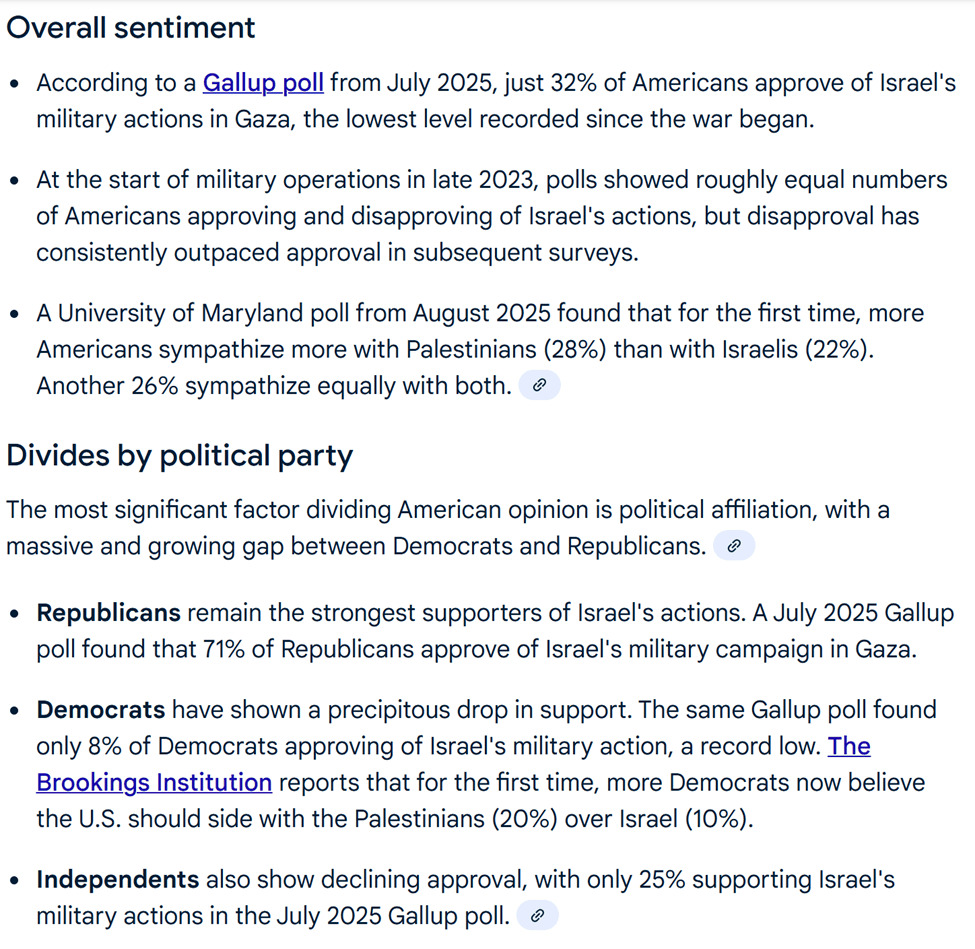
Just saying Israel and Palestine, I believe, ignites passionate political beliefs.
If you need proof, yes, even wars are split along party lines:
I do not like passionate political beliefs. I hope this post has nothing to do with politics.
I hope this post has something to do with history, what’s right, and prophesy.
I’ve written about Israel and Palestine before HERE and ten months later HERE.
The Book of Mormon was written so that we, the Gentiles of today, will understand what is coming in our future. The Book of Mormon is meant for our day and is meant to guide us.
I’ve recently been reading Hugh Nibley’s thoughts on what the Book of Mormon teaches us about how a civilization and a people can go wrong and destroy themselves.
I probably lost most people at “prophesy.” Prophesy is real. And while I put my head in the ground about political affairs and current events, I think the rest of the world puts its head in the ground when it comes to prophesy.
Hugh Nibley emphasized, as I’ve been studying his words regarding Mormon chapters 1-9, how the ancient inhabitants of Mesoamerica ultimately destroyed themselves. He detailed how the chosen people of this land, those who were given this land and given God’s covenant that it would be their land as long as they followed Him – how those people lost their favor and were destroyed.
The extinction of a people started with:
Pride.
No repentance.
War.
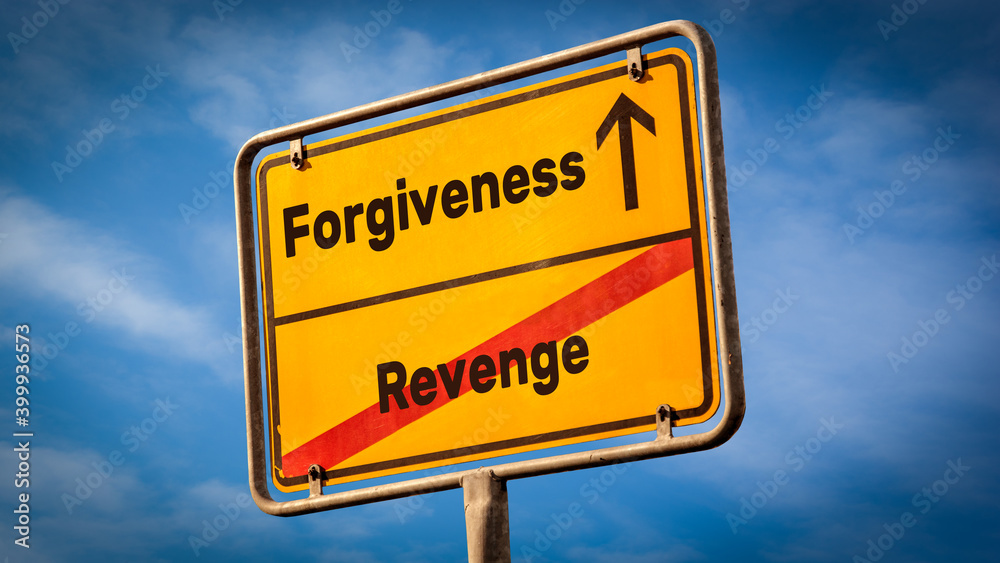
Revenge.
War is justified when it comes in self-defense. The thing I want to focus on here is revenge. Hugh Nibley talks about how the Nephites of the Book of Mormon were destroyed when they officially became a bloodthirsty people bent on revenge. God withdrew from them when they decided they would avenge all their fallen brothers who had been killed.
Which leads to me today, long having put my head in the ground since that post about Palestine and Israel four years ago.
I accidentally read an article about the current state of the Israel – Palestine war.
I decided to write this post when I read this:
“Signs for this old-new vocabulary are everywhere. It is common among Jews, for example, to add the initials for “blessed his memory” next to the name of the dead – but in this war, almost every soldier or civilian victim is memorialized with the phrase “Hashem yikom damo” (God will avenge his blood).”
God punishes the wicked with the wicked. You don’t want to become the people punishing the wicked in the name of God. Because at that point, you are the wicked. And at that point, your day will come too.
I fear how long the United State of America has felt the need to be the aggressor in the war against wickedness around the world.
There is a big difference between wars of self-defense, wars of aggression, and wars of revenge.
Ceasing to remember the blessed memory of loved ones and instead seeking to avenge blood is not God’s way.
The world has long said this is how God works. It is not how God works. It is how Satan works. And when people think they’re acting on behalf of God but really being led chain-linked by Satan, the worst atrocities happen.
Prophesy is being fulfilled before our eyes and the world collectively puts its head in the ground.
Which leads to my concluding point that Hugh Nibley mentions. Ultimately, we will all be judged for our own actions. What we do matters. All we can do is what we can do – kindness, forgiveness, love, peace, avoid contention, avoid fighting, avoid hatred, avoid judgment, meekness, humility, faith. These are the things we can do in a world that is lost and confused. A world that is deviating. A world that distances itself from God more and more every day.
You do your part. You do what’s right.
You love. That’s all.
9/15/25 Update
As I painfully, accidentally read more political information, I come back to add more because it seems relevant to what I’ve already written.
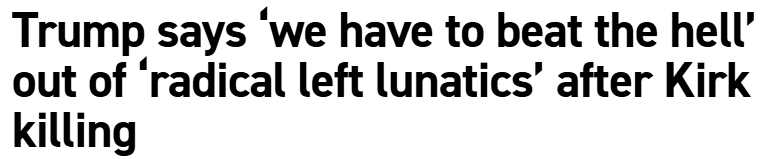
Some recent quotes I’ve read from Donald Trump regarding Charlie Kirk’s assassination:
And then I read articles and comments and it’s all attack attack attack hate hate hate while yelling at Trump for saying to attack attack attack. Does no one see the irony?
The same article with the headline
later, quietly, adds:
“The president added in a separate answer that he would urge his supporters to follow a nonviolent path in response to the shooting. “He [Kirk] was an advocate of nonviolence,” Trump said. “That’s the way I’d like to see people respond.””
Why does “beat the hell out of them” get the headline?
Because it evokes emotion on both sides. It gets clicks.
The same article that condemns Trump for violent speech chooses to promote the violent speech.
Why?
Because the violent inflammatory statement get the clicks.
It is all hypocrisy.
I’m not excusing Trump’s, “beat the hell out of them.” I am condemning it. But if we fail for this click-baiting and this hatred, this you against us mentality, we become part of the problem.
Then I read Governor Cox of Utah’s statements:
“We can return violence with violence; we can return hate with hate. That’s the problem with political violence. It metastasizes. We can always point the figure at the other side. At some point we have to find an off ramp, or else it’s going to get much worse.”
I stand by the Governor Cox’s words.
An eye for an eye quickly becomes lives for lives. Revenge hurts everyone.
How do we find an off ramp?
Again, from Governor Cox:
“Social media is a cancer on our society right now,” Cox said. “And I would encourage people to log off, turn off, touch grass, hug a family member, go out and do good in your community.”
Love. Forgive. Look past the thing you disagree with someone on and instead look at the beautiful, passionate, important person they are.
We all have a divine heritage and one day we will be embarrassed about how we thought of the people around us.
There is no other side. There are only people. We are all imperfect and the sooner we realize that and forgive and show love, the better we will all be. Only love can heal the divide in our world.
Forgiveness can be so hard. There’s a reason Christ emphasized it so differently from normal human traditions. Human thinking is, “I can’t forgive them that many times.” God’s response is, “how many times have I forgiven you?”
That point is brought home in Matthew chapter 18. In verses 21-23, Peter asks that question we’re all tempted to ask. How many times must I forgive? Seven? Surely seven is good. It’s 4 more times than the Hebrew law dictated at the time. Christ’s famous response,
“I say not unto thee, until seven times; but, until seventy times seven.”
Christ expounded upon this with the parable of the servant who owed a king a large sum. When brought forward to pay the sizeable debt, the servant fell down before the king and begged for patience. In great mercy, the king waived the debt.
That same servant then went out and grabbed another servant, demanding that a tiny amount be paid back. The second servant asked for patience and the same servant who had just been shown so much mercy had the second servant thrown into prison.
When the king heard this he “was wroth, and delivered him to the tormentors, till he should pay all that was due to him” (Matthew 18:34).
It seems so easy here on earth not to forgive others. What does it hurt us to not forgive? How does that person who wronged me deserve my forgiveness?There is a story from the book Return from Tomorrow. A holocaust survivor is found in a concentration camp. When he is liberated by the soldiers, he is put to work helping with the sick and dying around him. He is energetic and relatively healthy. The soldiers finally say to him, “you must have been lucky. You haven’t been here long, huh?” The man tells them how many years he’d been at the concentration camp; a long time. They marvel at his health. How can it be?
The man tells them that early in the war, his wife and children were murdered before his eyes. He desperately wanted to hate these men, hate this war, hate this world, hate God. He had every reason to. But, the survivor made a decision. He decided he would not carry that hate with him. He decided he wouldn’t poison himself with hate. Forgiveness saved his life.
Elder David E. Sorensen said, “When someone has hurt us or those we care about, that pain can almost be overwhelming. It can feel as if the pain or the injustice is the most important thing in the world and that we have no choice but to seek vengeance. But Christ, the Prince of Peace, teaches us a better way. It can be very difficult to forgive someone the harm they’ve done us, but when we do, we open ourselves up to a better future. No longer does someone else’s wrongdoing control our course. When we forgive others, it frees us to choose how we will live our own lives. Forgiveness means that problems of the past no longer dictate our destinies, and we can focus on the future with God’s love in our hearts.”
We may think not forgiving others is harmless, but hate is poison. Holding onto grievances and refusing to forgive only poisons ourselves.
In the book, Surprised by Hope, N. T. Wright said: “If you lock up the piano because you don’t want to play to somebody else, how can God play to you?“
Reading back on the story of the king and the foolish servant who would be forgiven his great debt then demand payment from another. We read that and scoff at the hypocrisy. Yet we all have this same hypocrisy in us. And God is our king, having forgiven us all, and wroth when we can’t extend the same favor to our fellow brothers and sisters.
Going along with what Elder Sorensen said, from this link: “I think it is helpful to recognize that offences and injuries are always bottled in our past. So, forgiveness requires us to deal with our past – not our present or future. We have to let go of our past in order to fill up the present and bless the future. When we fail to deal properly with our past, we are like someone whose elastic belt is caught on a barbed wire fence; we can make very little forward progress until we unhook ourselves from our pain and injustice in our past.”
That quote is perfect in explaining how that man from the concentration camp survived. That man, if he hated, would have been stuck in the past, attached to a barbed wire. Never being able to progress to his future. Instead, he chose to forgive, free himself, and save himself. That is the true power of forgiveness.
We have all been wronged. We have all wronged others. Some of us have been wronged worse than others. But life isn’t a ledger book. Life isn’t a tally of who has been wronged the most. There is always someone that has been wronged worse than you have. The book The Shack talks about this eternal idea of “being wronged.” If you refuse to forgive someone, and that someone refuses to forgive their father who made them that way, and their father refuses to forgive his father who made him that way: on and on for eternity. Grievances go back to the beginning of time. Forgiveness ends the vicious cycle of hate.
Forgive our trespasses as we forgive those who trespass against us.
There was a point in my life when I realized I’d been carrying around poison for far too long. There was a day I realized I had to forgive some people from my past so that I could move forward. I reached out to some people I hadn’t spoken to for so long. It helped me. I felt that feeling, of getting a weight off your shoulders. For me, it was more a feeling of getting poison out of my system. I thought I’d forgiven. It wasn’t until I actually said it, to the person that needed to hear it, and apologized for my part in pain that was caused, that I realized the burden I’d been carrying for so long.
We all must forgive.
Again, I know that sometimes such heinous wrongs are committed that some people feel they have the right to shout, “But I’ve never hurt someone like they hurt me!”
In those moments think about the person from the concentration camp who refused to hate. He chose to forgive. It saved his life. He had more reason to hate than just about anyone ever has. He chose not to. There’s always someone that deserves to hate more. Choose to love instead.
Let go of the hate you harbor and forgive. Do you want to come before God and Him to ask, “how can I forgive you, when you never forgave?”
We all do wrong, and we all get wronged. Remove yourself from the past and progress.
A forgiveness post would be lacking if it didn’t mention where all forgiveness originates. Always remember, there is only one person who can truly break the vicious cycle of pain and hate. Jesus Christ is the ultimate giver of grace and mercy. If you feel you truly can’t forgive, lean on Him. He felt the pain, He felt all of it, and He has forgiven us. He’s forgiven all of us. He died so that we can experience the true feeling of freedom that He allows. His blood paid our debt, all of it. As we rely on Him, we will find the forgiveness our hearts desperately need.
I write this with as much humility as possible. Fully knowing and understanding my weaknesses have given me perspective. It is my faults and errors that make me feel like I can write this letter.
I remember when I came back to church I was asked to not take the sacrament for three weeks. It was one of the more difficult things I had to do, although it doesn’t sound like much. I think it was the moment I realized I had changed. Something that in the past might not have affected me too much, really hurt. It was difficult coming back and immediately feeling like maybe I’m not enough. Maybe I could have gone the route of resentment. Instead I realized how much I didn’t want to have to go through that again.
I don’t in any way imply I’m better than someone who can’t take the sacrament and does feel resentment. We all have our own paths. Mine was of being completely away, coming back, and realizing I deserved my three weeks. Some are never officially away so that state of probation seems unfair or not right. I understand that.
This is my letter to the sinner. A reminder, that includes all of us. This is the sinner who has made mistakes. This particular sinner might come from a perfect family and part of their struggle is feeling like they don’t fit in in the one place they should feel welcome. This sinner might feel judged by the very people that should love them the most. It doesn’t matter if those family, friends, and caring loved ones are right or wrong. It matters how the sinner interprets things. We all live our own experiences and encounter the world in different ways. We must, to the best our abilities, see the world in perfect light and perfect truth.
Here is my letter to a hypothetical sinner:
You will never be like the “perfect” people you see around you. You won’t. Your path has been set. Your path has been set partly by different “luck,” different experiences. Partly by your choices. My life was set by very bad choices. But now that I’ve come out of the other side, my joy is greater than I could have ever imagined. You won’t be “perfect”, but you’ll be who Heavenly Father sees you can be. You won’t be “better” than those who never made the mistakes you made, but you might be stronger. Your path will lead you somewhere wholly different. And if you decide you want to come through to the other side: to truly know your Savior, to know forgiveness, to know what being welcomed home feels like even if you don’t think you’ll ever deserve it – if you come to that other side with that relationship with your Savior, your testimony will be welded in steel, as hard as diamond. You’ll have gone through the refiner’s fire and come out united with He who gives all strength. This is no excuse to continue to sin. You know the light. You’ve seen and felt the light. I knew the light and I turned from it. I hope to help anyone not make the same mistake.
You will make mistakes. You will sin. But no matter what, you have to remember Jesus Christ. Because while the world will judge you and you’ll have to struggle with that, He will judge you with a perfect love and comprehension. Remember that those around you are trying to judge you with love. They’re trying to love you righteously. Jesus Christ doesn’t try. He is perfect love. Don’t forget it. Don’t forget that those around you whose points of view you can’t understand, they’re trying to be like Jesus Christ. They may be falling short. But that’s not for you to judge. Just as they can’t judge you, you can’t judge their intentions or efforts. Just love and do your best.
I’m sorry you have to go through trials. But do not lose sight of Jesus Christ. Do not. He is the only person true peace can come from. Whatever you do, whatever mistakes you make, do not forget HIM. He won’t forget you. I promise.
At this point I must apologize. Throughout this letter I’ve referred to you as “the sinner.” I know that phrase hurt the whole way through. I know it because I’ve felt it. I did it throughout the whole letter to get to this point. I want to remind you, “sinner” is not who you are. It will never be who you are. We all sin but that’s not what God and Jesus Christ see in us. No matter how many mistakes we make. No matter how many slip ups or downright wrong things you do, you are not a sinner. You are a child of Heavenly Father. You are growing. You are learning. I reiterate something I said earlier, this does not excuse your sin. Sin is wrong, you know that. Christ will see your sin. What means much more to Him is your repentance. He doesn’t see who you were but who you will be.
“God cares a lot more about who we are and who we are becoming than about who we once were. He cares that we keep trying.”
Elder Dale G. Renlund in April 2015 Conference talk “Latter-day Saints Keep on Trying”
 No Coincidences