Tag: generations

  • What to do with all the Love

    What to do with all the Love

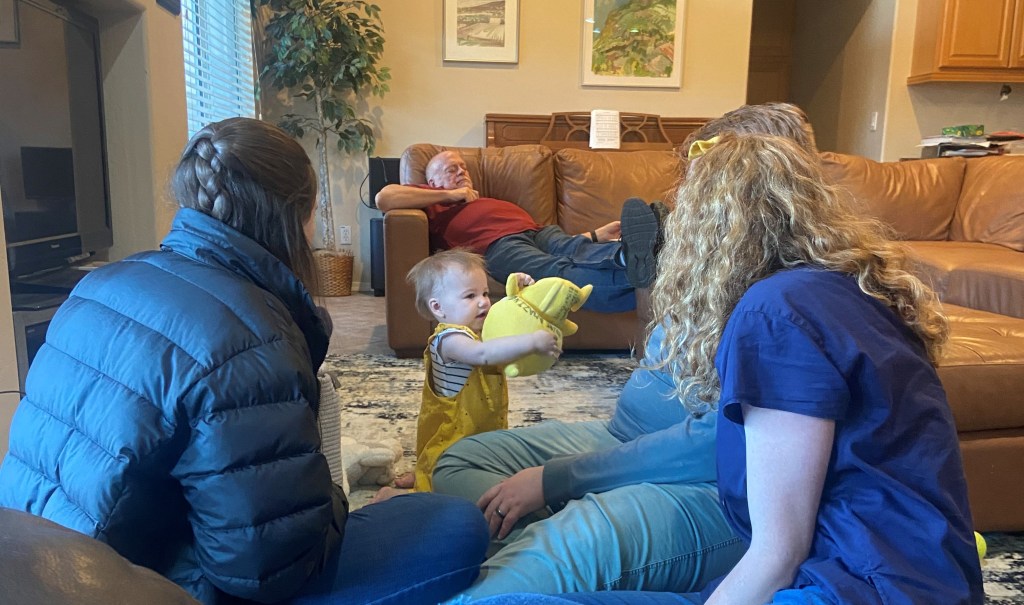
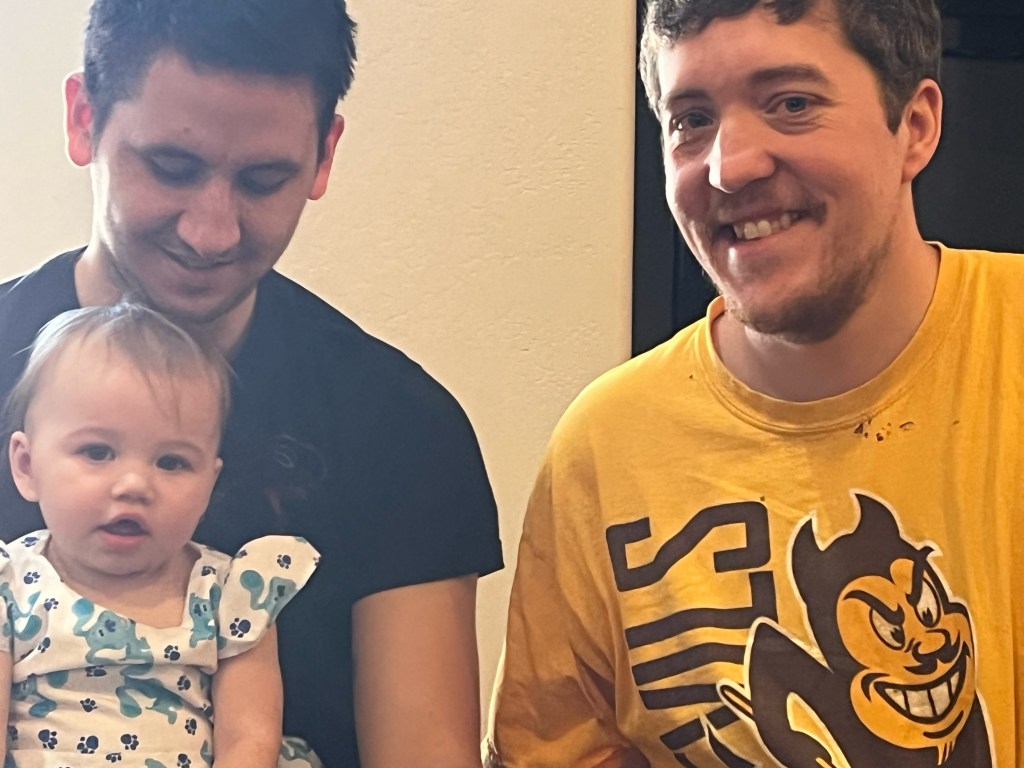
    I was meditating and thanking God for all He has given me in this life.  It was the day after Thanksgiving.  I had just watched Ivy with so much love around her, as detailed in Love has Afforded Me Much.  Ivy was surrounded by aunts, uncles, grandparents, great-grandparents, cousins, second cousins, great uncles, great aunts and the list goes on.  She was receiving so much love.
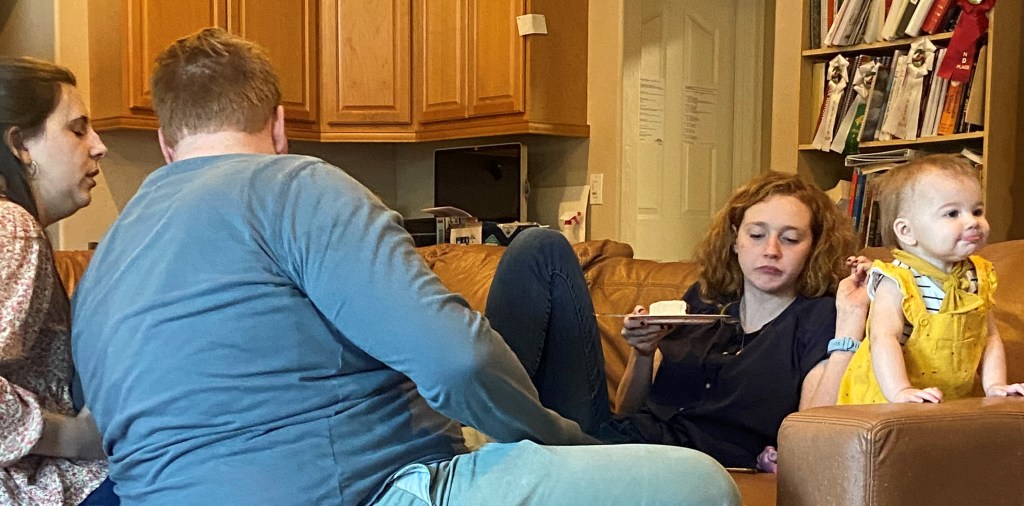
    That visual again brought me to realizing and remembering that was me 30 years ago.  I was the one having love poured out on me.  It brought me to a repeated thought: what did I do to deserve this?

    What did I do to deserve the family I was born into?  Now, how lucky I am to be one half of the uniting of two families – the Quackenbushes and the Cannons.  How blessed will Ivy be from a life of love from those two extended families she’s been born into? 

    How blessed have I been from being born into the Leaches and the Quackenbushes? An un-quantifiable amount of blessed.

    Where does that blessing come from?  Where does it stem from?  What was the catalyst of this blessed, love-filled life I’ve been given?  The catalyst, the starting point, is the restored Gospel of Jesus Christ.  Three of my four grandparents converted to the church.  My fourth grandparent came from a faithful family back to the days of Joseph Smith.  I am forever grateful for my grandparents and the generations of love and family they’ve created.

    A similar story can be said from Beth’s side of the family, the Cannons and Vauterlauses.
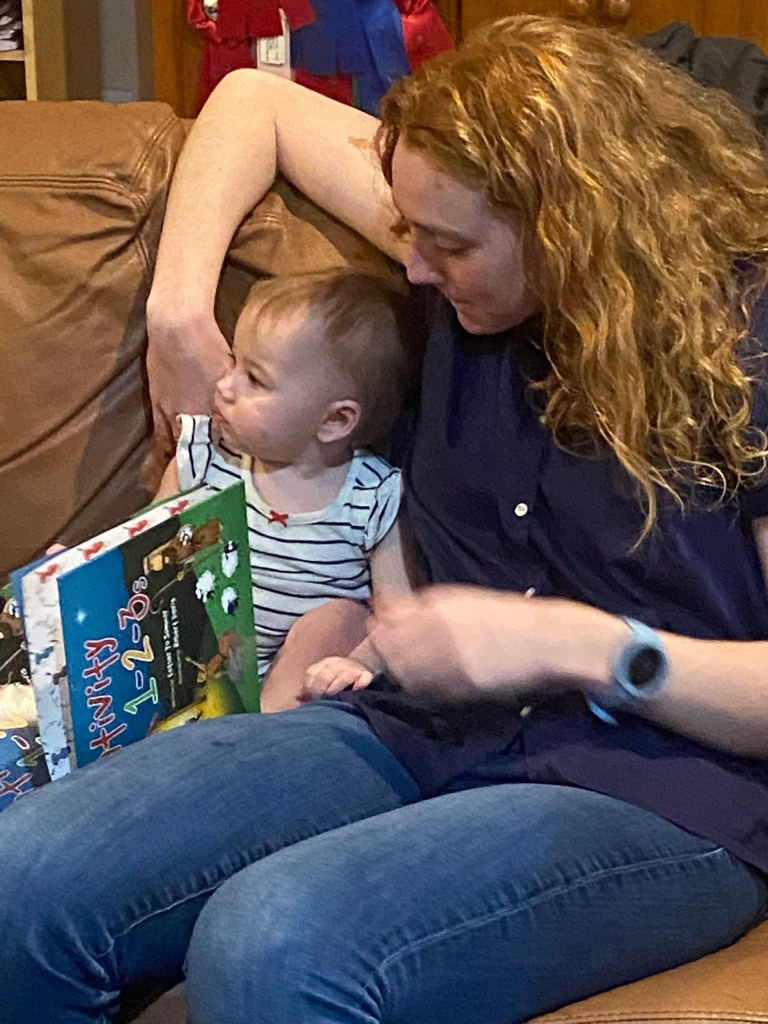
    The thought that occurred to me while meditating, to add to how Love has Afforded me Much, was this: I started to pray to God to please bless all those who didn’t have all the love Ivy had on Thanksgiving Day.  All those who don’t have great family dynamics, who feel lonely, who feel lost, who feel afraid; I asked God to let them feel His love.  I asked Him to spare no angels in pouring out blessings on those who don’t feel loved in this world.

    Then it occurred to me.  Love has Afforded me Much.  God has given me a surplus of love.  A love I can’t quantify.  It’s my responsibility to share that excess of love I’ve been blessed with, with God’s children, my brothers and sisters across the globe.  I pray that I can share the love that’s been given to me with those around me.
    I believe the greatest thing I can do to share that love, the greatest thing any one of us can do that have been given (Luke 12:48) so (D&C 82:3) much (Boyd K. Packer), is to share the source of that love.  The source of that love is Jesus Christ, His Gospel, His Church.  It is our responsibility to share with others what has blessed us so.

    Love is important.  Supporting someone, listening to someone, loving someone, these are all noble.  But what of generational love?  What of the love that permeates through families – of children, grandchildren, and great grandchildren?  That’s what my grandparents created.  That love started with missionaries sharing the gospel of Jesus Christ with three of my grandparents, and with the gospel being shared to one of my Great Great Grandparents by Joseph Smith.

    I am grateful for this Church.  I am grateful for the blessing it has been to me and my family.  I am grateful to my Heavenly Father for allowing me this greatest of all blessings.  I feel a noble responsibility, a beautiful weight to share it with others.  My wish is that the world can accept Jesus Christ and experience the love he has to share. 

    I love Jesus Christ, and I am forever grateful to Him. 
  • Lectures on Faith – Lecture 2: The Object of Faith

    Lectures on Faith – Lecture 2: The Object of Faith

    A main theme throughout the Lectures on Faith is God’s perfect attributes.  Logically, for us to be able to have any faith in God He must be perfect.  We must know that we can trust God and, in turn, His Son, Jesus Christ. 

    The major theme I took away from Lecture 2 specifically is how we have attained faith throughout history.  Lecture 2 presents the profound idea that our faith in God is always dependent, or comes initially, from the faith of another.  Consider this, if no one in your life ever mentioned any sort of higher being, any sort of God, any sort of creator, would you come up with the thought on your own?  You think about God because He is someone we have been taught about since Adam.

    Even if your parents aren’t the ones who teach you about God, you learn about God from someone.  I would venture to say that in the world today every single person on the face of it has heard of the concept of a supreme being.  Why is this?  Where does our innate belief/consideration of God come from?

    Lecture 2 points out that there was an unbroken chain of testimony that started from Adam and was handed down through Abraham.  If you read Genesis carefully and do the math you will see that ancient prophets handed the knowledge of God down for generations.  It continues today.

    Adam knew God in the Garden of Eden.  When he left the Garden Adam still knew God.  We know Adam’s sons knew God.  Abel provided sacrifices to God.  Cain spoke to God even after murdering his brother.  This shows us that God spoke to men even after the fall and continued to speak to them as they continued to fall into transgression.  There is something significant here that I’d never considered.  Abel first got his knowledge of God from his father, Adam, as did Cain.  After they were told about God by Adam, then they had to develop their own faith in God.  They had to learn, trust, and depend on Him, or not. 

    The important thing to remember from this: we all start our faith by leaning on the faith of another.  We possess dependent faith.  This leads to another profound truth: God possesses independent faith.  God’s faith is not reliant on any outside source.  As discussed in lecture one, God’s faith is perfect.

    I’ve been studying the lectures alongside a video series that I will link at the bottom.  There were many amazing thoughts and ideas presented in that video, related to this second Lecture on Faith.

    Faith is faith until it happens, then it is knowledge. Since God has perfect faith, He doesn’t need to wait for something to happen for Him to know it.  He knows it is going to happen.  His faith is perfect therefore His knowledge is perfect.  It’s simple when you think about it in these terms, but it’s so critical.  It’s why we can have perfect faith in Him, BECAUSE we know His faith is perfect.

    IMPORTANT:  God is not still progressing.  This is important for us to understand.  God is not still learning.  If He was, we couldn’t have perfect faith in Him.

    God is Perfect - Ottawa Church of Christ

    This leads to a question: isn’t life boring for God if He has mastered everything?

    In the video they gave an awesome analogy.  Imagine you’re an accountant.  You master every aspect of accounting there is.  You have a perfect knowledge and ability in accounting.  Would you get bored with accounting?  Probably.  So, what would you then do?  You would teach others how to also master accounting.  God is the master accountant.  He has attained all knowledge on life, faith, eternity, creation – so what does He do?  He teaches us.  What a thought!  We are being tutored by the God of the universe.  That’s what makes this life so important.  When we consider that we are learning and being personally groomed by God Himself, what power it adds to our existence here!

    This leads to another important thought.  What was Christ’s ultimate message while here?  I think it would be service.  Love through service.  Give through service.  Charity.  Without charity you are nothing (1 Corinthians 13:2, Moroni 7:44)  Why did Christ teach this ever-important principle?  Because His Father, our Father, God is the ultimate server.  He is doing everything He does to teach us.  We truly are “His work and His glory” (Moses 1:39).

    I want to conclude with two last realizations: 

    1. The scriptures help develop our faith by teaching us of God.  This is important.
    2. Faith comes by hearing the word of God through the testimony of the servants of God, that testimony is always attended by the spirit.

    You aren’t told to have a testimony.  You’re not made to know Jesus is the Christ.  These are things you must come to a knowledge of through the spirit.  Think about it.  Christ, in His whole ministry, never told anyone He was the Son of God.  He always let them come to that conclusion on their own.  One example is Peter who He told, “blessed art thou for flesh and blood hath not revealed it unto thee, but my Father which is in heaven” (Matthew 16:17).   Another example is Christ to the woman at the well (John 4).  Christ didn’t go telling people who He was.  It had to be revealed by the spirit.  This is why signs come by faith, and not the other way around (D&C 63:7-12).

    Our hearts must be open for us to receive the testimony of Jesus Christ.  2 Nephi 33:1 “When a man speaketh by the power of the Holy Ghost the power of the Holy Ghost carrieth it UNTO the hearts of the children of men.”  Not INTO but UNTO.  It’s then on the heart of the individual to accept or reject the testimony.  The system is in place.  The system has been in place for God’s children to develop faith in Him from the beginning.  Once the testimony is carried to the heart It’s then on the agency of the individual to receive or reject that testimony. 

    God has perfect faith.  We are here to develop our faith so that we can be like Him.  He is the great accountant, and we are his protégés.  It is His hope, His glory that we can become like Him.  As we develop our faith here it will benefit us for the rest of eternity.  I know I say it a lot, but, what a thought.

    Video 3 (Lecture on Faith 2):  https://www.youtube.com/watch?v=F-o59d9ioGA&list=PLc5yYrpPFm2umksQf3jgULxoV4YIXTd2h&index=3

    Lecture on Faith 2: http://lecturesonfaith.com/2/

  • Lectures on Faith

    Lectures on Faith

    Lectures on Faith – Introduction and Lecture 1: Faith Defined.

    I’ve been watching a series of videos on the Lectures on Faith as supplemental material to my study of the Lectures.

    If you’re not familiar with the lectures on faith, you can read them all here:

    https://lecturesonfaith.com/

    It’s unclear who officially wrote the Lectures on Faith, though they were approved of and taught by Joseph Smith.  At a minimum, the concepts and theology of them comes from revelation given to Joseph Smith.  Yet another example and evidence of his calling as a prophet.

    I write here my notes and thoughts on these videos and the lectures.  There are seven Lectures.  The 10 video series I’ve been watching spans almost 5 hours and reviews each of the Lectures.  In writing this it will help me put together my thoughts and understanding on what Joseph Smith tried to teach us about faith.  Through this process I know my faith will grow by studying these principles.  What Joseph Smith taught about faith is beyond profound, it is revelatory. I will need to study his words and all supplemental material for the rest of my life to get a grasp of the profound and eternal nature of faith.  I look forward to reading over my notes here many times to refresh my mind and expand my knowledge on the subject.

    Video 1 was an introduction to the Lectures.  Video 2 was all about Lecture 1 – Faith Defined. 

    First, what are the Lectures on Faith?  They are principles put together by Joseph Smith to help early elders to share the gospel.

    What do the seven lectures cover? (from Video 1)

    Lecture 1 What is faith?

    Lecture 2 Links the principles of faith and the doctrine of revelation.  The power of human testimony is the medium with which the gospel is passed from generation to generation.

    Lectures 3 and 4 The character and attributes of God.  If we don’t understand the attributes of God, we can’t have confidence to exercise proper faith in Him.

    Lecture 5 The Godhead, nature of the members of the Godhead.

    Lecture 6 The Law of Sacrifice.

    Lecture 7 The fruits of faith.

    What is the plan for the Lectures on Faith?

    1. Teach what faith is.
    2. Teach how to obtain faith.
    3. What happens if you obtain faith?
    Lectures on Faith: The Exalted Nature of the Godhead (Part ...
    Bob Millet

    My favorite part from the first video was this suggestion from Bob Millet, one of the panelists. His suggestion was this: read the Lectures on Faith 20 times then you can start to study them.

    Now that I have an overview on what all 7 lectures will cover and teach, I can get into Lecture 1.

    Lecture 1: Faith Defined

    Obvious question to start, what is faith?

    Faith is the first principle in revealed religion and the foundation of righteousness.  Faith is the substance of things hoped for but not seen (Hebrews 11:1).  The lecture starts broad – faith is the belief that something will come to pass.  Then it gets more religious in tone: “the principle of action in all intelligent beings.”

    Faith is a principle of action.  Faith implies works, it implies activity, both physical and mental.  Just as faith is the moving action in all things temporal, so it is with spiritual (paragraph 12). 

    By faith God formed the earth.  I think this is the most profound point from Lecture 1.  That it is God’s faith that is His power.  Take faith from God and He would cease to exist (paragraph 16).  I know to many this seems like outright blasphemy.  But before rejecting the idea without thought, consider what is being said.  Faith is a principle of power.  It is the power by which God formed the earth.  Take away His faith, take away His power, He ceases to be God.  Luckily for us God’s power cannot be taken away.

    God’s faith and knowledge are equivalent.  It is God’s perfect faith that allows His perfect knowledge.  Consider: faith is believing in something that you haven’t yet seen.  Since God’s faith is perfect what He has faith in will be, it will exist.  We mortals look at faith as weak, unproven, unscientific.  It is God’s trust in the Plan of Salvation that makes Him create worlds. It is God’s perfect faith that created those worlds. It is God’s perfect faith that makes Him the Almighty.

    Again, faith is the power of God.  If faith is that important, it adds a whole new meaning, explanation, and understanding to this life.  Why do we move through life as if through a misty darkness, unsure of everything?  Why the veil that covers our eyes and fogs our minds to so much that we used to know?  Why don’t we know where we come from?  Why don’t we know where we’re going?  Why doesn’t God send angels down to tell us which church is true?  Why doesn’t God allow profound miracles to occur before unbelievers’ eyes so they can KNOW that He exists?  The reason God doesn’t do these things is due to the importance of faith.  We are here to learn faith, develop faith, grow faith; because it is that important.  God does not want to take that opportunity of growth and development away from us.  He won’t.  He knows how critical it is.

    Faith, then, is the first great governing principle which has power, dominion, and authority over all things: by it they exist, by it they are upheld, by it they are changed, or by it they remain, agreeably to the will of God.  Without it, there is no power, and without power there could be no creation, nor existence!” (Paragraph 24).

    Link to Lecture 1: https://lecturesonfaith.com/1/

    Link to Video 1 An Introduction on the Lectures: https://www.youtube.com/watch?v=MiV4dCY9OEA&list=PLc5yYrpPFm2umksQf3jgULxoV4YIXTd2h&index=1

    Link to Video 2 What is faith?: https://www.youtube.com/watch?v=S_EXFQK-KJE&list=PLc5yYrpPFm2umksQf3jgULxoV4YIXTd2h&index=2