Tag: Glory of God

  • Faith in Man or Faith in God

    Faith in Man or Faith in God

    Since I’m posting this on Thanksgiving day I think I’m obligated to say I’m grateful for the Book of Mormon, how it makes me a better person, how it makes my home a happier place, what it teaches me about Jesus Christ, and the hope it gives me for an eternal future.

    I will make a simple argument here.

    My thesis:

    Anyone who has read the Book of Mormon and believes it is a made-up story written by a man has more faith in the brilliance of a man than in the Glory of God. It is easier for that person to believe there is a man with otherworldly abilities than that God still speaks to humans.

    Explanation –

    Things that can’t be denied by any logical or thinking person:

    1. The Book of Mormon exists. You can go get a copy now and read it.
    2. The Book of Mormon was brought into existence in our day, for us to read, somehow.

    If the above two points are true, then we can move on.

    Next statements of truth:

    1. Since the Book of Mormon exists, we must determine who played a role in creating it.

    This leads us to only a couple options as far as I can tell. There may be other sub-options, but I think this mostly covers it. I’ve added sub points to each option to add important perspective:

    1. Joseph Smith wrote it by his own mind and creativity.
      • Joseph Smith had a third-grade education.
      • There are many witnesses attesting to Joseph Smith’s involvement in the creation of the Book of Mormon.
      • If historical accounts are to be believed, Joseph Smith dictated it word for word without notes or reference materials.
    2. Someone else wrote the Book of Mormon
      • This is hard to believe given countless eye-witness testimonies of Joseph Smith’s involvement in the creation of this book. It takes some creative gymnastics to determine how this could be true.
    3. Joseph Smith wrote it with the assistance of somebody very learned, ex: Sydney Rigdon.
      • This would require some sort of explanation on why no one else ever came forward to claim writing such a brilliant book.
      • With any minor research we find much evidence to show Sydney Rigdon didn’t meet or know Joseph Smith until the Book of Mormon was published.
    4. Joseph Smith translated the Book of Mormon by the power of God.
      • This would be taking the supposed creator of the book at his word.

    I believe any basic research into this subject proves Joseph Smith’s direct involvement in the creation of the Book of Mormon. Whether that be through point 1 or point 4 will now be briefly discussed. If points 2 or 3 are to believed, then a vast and complex conspiracy has been going on for 200 years. For 200 years, no proof has come forth to show that anyone but Joseph Smith created the Book of Mormon. No one has come forward. No information has leaked.

    If we come down to points 1 or 4, let’s address point 1, that Joseph Smith wrote the Book of Mormon by his own mind and creativity.

    Let’s first just disregard the fact that he wrote it in 65 working days because I feel detractors will just say, “That’s not true” even though the historical account appears to support if not prove this. Let’s say Joseph Smith wrote it with as much time, editing, and re-editing as he needed (which many testimonies argue against, but for the sake of this argument, let’s say he did take months or years to write it before he turned 25 years old).

    Those arguing Joseph Smith created the Book of Mormon from his own mind admit a man with little to no formal education, little to no access to any historical books or other reference materials, wrote a detailed account of a company leaving Jerusalem and travelling to the Americas. Instead of elaborating more on this, I will quote a challenge issued by Hugh Nibley to his students at BYU:

    “Since Joseph Smith was younger than most of you and not nearly so experienced or well educated at the time he copyrighted the Book of Mormon, it should not be too much to ask you to hand in by the end of the semester (which will give you more time than he had) a paper of, say, five to six hundred pages in length.  Call it a sacred book if you will, and give it the form of a history.  Tell of a community of wandering Jews in ancient times; have all sorts of characters in your story, and involve them in all sorts of public and private vicissitudes [daily activities]; give them names — hundreds of them — pretending that they are real Hebrew and Egyptian names of circa 600 B.C.; be lavish with cultural and technical details — manners and customs, arts and industries, political and religious institutions, rites, and traditions, include long and complicated military and economic histories; have your narrative cover a thousand years.

    Keep a number of interrelated local histories going at once; feel free to introduce religious controversy and philosophical discussion, but always in a plausible setting; observe the appropriate literary conventions and explain the derivation and transmission of your varied historical materials.  Above all, do not ever contradict yourself!  For now we come to the really hard part of this little assignment.  You and I know that you are making this all up — we have our little joke — but just the same you are going to be required to have your paper published when you finish it, not as fiction or romance, but as a true history!  After you have handed it in you may make no changes in it. . . .

    What is more, you are to invite any and all scholars to read and criticize your work freely, explaining to them that it is a sacred book on a par with the Bible.  If they seem over-skeptical, you might tell them that you translated the book from original records by the aid of the Urim and Thummim — they will love that!  Further to allay their misgivings, you might tell them that the original manuscript was on golden plates, and that you got the plates from an angel.  Now go to work and good luck!” (The Prophetic Book of Mormon, F.A.R.M.S., 221-222)

    I will add Alan C. Miner’s addition to this challenge, stating, “It shouldn’t be hard, living as we do in the computer world of the internet”:

    “Because your story is supposed to be a religious record, include in your paper over 500 different descriptive titles for deity, all within a proper religious context that will not only explain these titles in relation to what we have in the Bible, but give added meaning and understanding to the text of the Bible and to your own story.  And while you are at it, have most all the proper names of people, places and things have intrinsic and symbolic meaning.  Because this is supposedly an ancient Hebrew record, give hundreds of ancient parallelistic Hebrew literary forms.  In fact, have the whole text written in parallelistic patterns.  Incorporate thousands of phrases from the Bible so that these intertextual usages give added meaning to both the Bible and the Book of Mormon.  Make sure that the biblical sources are from all different parts of the Bible, and for that added touch, use some extra-biblical texts.  But don’t limit yourself to just your own patterns of language, or that of the KJV Bible, also use Early Modern English terms that were dated near 1611 when the KJV Bible was first published and became the bible of the masses.  Weave in an underlying theme of covenants with the Lord, both culturally and scripturally using covenant terms and practices used in ancient times.  In fact, it would be a good idea to make every part of your narrative not only covenant-related, but Christ related as well. For one final challenge you must dictate your story to a scribe without the aid of a written script.  While you may be allowed to tell your scribe to adjust the spelling of proper names, you must leave your script as you dictate it, and never ask your scribe to tell you where you left off after lunch or the end of a day.  On his own, your scribe can adjust capitalization, punctuation, the spelling of traditional words, and some simple grammar, but that is all.  Dictate parts of your story in non-chronological order, and be sure to credit these parts of your story to different writers, varying your manner of using words so that a distinct separation of language style can be detected.”

    What Joseph Smith wrote has been critiqued, criticized, evaluated, and been under a microscope for nearly 200 years. With additional evidence from archaeology, what we know about the Middle East and Jerusalem, and what we know about the Americas, the Book of Mormon is more validated, not disproven, despite what detractors may argue.

    I hope this goes to illustrate how impossible this act would be. It would be miracle of extraordinary human skill, intelligence, and foresight (knowing things that hadn’t yet been discovered yet, like chiasmus).

    Those who believe Joseph Smith wrote the book of Mormon through his own brilliance have more faith in the genius of a man than faith in the idea that God assisted in the matter. Put simply, you either have faith in the brilliance of Joseph Smith or in the Glory of God.

    Those who believe Joseph Smith did not translate the Book of Mormon through the gift, power, and love of God “deny the power thereof” (2 Timothy 3:5, Joseph Smith History 1:19).

    You must come to terms with this truth.  Either Joseph Smith was above and beyond the most brilliant man in the history of mankind.

    Or. 

    God loves His children and instituted a great work through Joseph Smith.

    What does it say if you more easily believe in Joseph Smith than in God?

    I am grateful for the Book of Mormon.

  • Be Ye Therefore Perfect

    Be Ye Therefore Perfect

    There is a message recently brought to my attention in Matthew chapters 5-7. We all know the sermon on the mount. Don’t just not kill, also don’t even be angry. Don’t just not commit adultery, don’t even lust. Be ye therefore perfect.

    What comes next though? I haven’t before considered how the next chapters lead to a great message, a culmination of how we should behave and how we should try to be.

    What does the Sermon on the Mount transition into? What is the theme of chapter 6?

    Matthew 6:1 –

    “Take heed that ye do not your alms before men, to be seen of them: otherwise ye have no reward of your Father which is in heaven.”

    Matthew 6:20 –

    “But lay up for yourselves treasures in heaven, where neither moth nor rust doth corrupt, and where thieves do not break through nor steal.”

    Matthew 6:38 (JST) –

    “Wherefore, seek not the things of this world but seek ye first to build up the kingdom of God, and to establish his righteousness”

    Matthew 6 is all about our motives. In chapter 5 you seek to be perfect by your behavior. Chapter 6 asks, “why are you seeking to be perfect?” Is it for the glory of the world? Is it for more temporal possessions and blessings? Chapter 6 looks at your heart and asks your intention. We should want to be perfect because we love God and we love others. We should want to be perfect because it’s right. Perfection shouldn’t be about us or what it does for us. We should want to be perfect because Christ was perfect, perfect love, and our example. Chapter 6 tells us to look heavenward in all things.

    Which leads us to chapter 7. What does chapter 7 teach us?

    The message of chapter 7 is summed up by verse 1 (JST) –

    “Judge not unrighteously, that ye be not judged; but judge righteous judgement.”

    You’ve worked hard to fix your bad habits, to be loving, to treat others as you want to be treated. You’ve then addressed why you’re doing these things. Your heart is pure, you love others because it’s the right thing to do you. You look heavenward. Chapter 7 is about understanding that not everyone is at the same point on their own journey to perfection. Just because someone is working along their path, and in your mortal eyes may seem to be “behind” you, they’re not. Judge not others. They’re working their way down the path of perfection just as you are.

    That said, we still judge others righteously. Righteous judgement is loving judgement.

    Matthew 7:9 (JST) –

    “Go ye into the world, saying unto all, Repent, for the kingdom of heaven has come nigh unto you.”

    D&C 6:9 –

    “Say nothing but repentance unto this generation.”

    D&C 15:6 –

    “the thing which will be of the most worth unto you will be to declare repentance unto this people.”

    D&C 16:6 –

    “the thing which will be of the most worth unto you will be to declare repentance unto this people.”

    D&C 14:8 –

    “And it shall come to pass, that if you shall ask the Father in my name, in faith believing, you shall receive the Holy Ghost, which giveth utterance, that you may stand as a witness of the things of which you shall both hear and see, and also that you may declare repentance unto this generation.”

    What Christ’s apostles at the meridian of time were told to preach was the same thing those who were instrumental in the restoration of the Gospel of Jesus Christ were told to preach. It’s the same thing we’re supposed to preach today.

    Repentance.

    That’s what brings us and those around us closer to Christ.

    So, work on yourself first, Matthew chapter 5. Work on your motives second, Matthew chapter 6. Then, preach repentance to those on a different part of the path than you. Preach repentance with love and understanding. Never forgetting that you’re on the path too, trying to be your best. That’s all we can ask of each other. Do your best.

    From the book 40 Years And Marching On, an article by John W. Welch (p. 228) he says:

    “First is the acknowledgment that all people are at different stages in the eternal journey toward the glory of God, which is intelligence.”

    This is the message of the Sermon on the Mount. It’s not a one-part lesson, it’s 3 parts. Be perfect – be perfect for the right reasons – accept that others are not perfect (yet).

  • The Glory of the Sun

    The Glory of the Sun

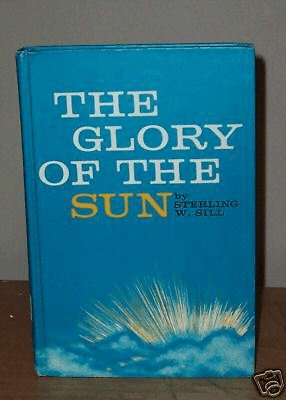
    I recently finished a book that was so packed with wisdom I couldn’t come close to taking it all in.  Every page provided a new insight.  Every thought was provoking.  It is amazing to walk through the minds of men and women so in touch with the spirit or some form of knowledge I don’t yet have.  It’s my favorite part of reading.  From reading his words and thoughts I could feel his closeness to our Heavenly Father and Jesus Christ, and therefore come closer to them myself.

    The name of the book was The glory of the sun which refers to 1 Corinthians 15:41:

    “There is one glory of the sun, and another glory of the moon, and another glory of the stars: for one star differeth from another star in glory.”

    Doctrine and Covenants 76:70 reads:

    “These are they whose bodies are celestial, whose glory is that of the sun, even the glory of God, the highest of all, whose glory the sun of the firmament is written of as being typical.”

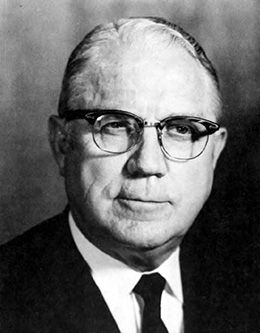
    Sterling W. Sill, author of this book, was a general authority in the Church of Jesus Christ of Latter-day Saints.  He was asked to share a series of gospel messages each week for a year over the radio.  The series was called “Sunday Evening from Temple Square.”  Those 52 addresses were put into this book.  It’s amazing to see that so many unique and powerful messages can come from one individual. 

    Sterling W. Sill

    Every message was so good, I could randomly turn to a page and share an important thought.  There was one in particular I found pertinent to our current moment in history.

    Elder Sill shared his messages at the height of the cold war so there is an emphasis of freedom and liberty throughout. 

    In one of his addresses titled “Five grains of Corn” Elder Sill reviewed the custom of Thanksgiving.  Elder Sill pointed out that Thanksgiving is a uniquely American holiday.  It is a day we give thanks to our ancestors who bravely came here and suffered through much hunger, affliction, and death.  He reminded me that during Thanksgiving we give “deep gratitude.. for the rich productivity of American soil.”

    I believe it is important for us to remember the blessed nation we are fortunate to live in.  The United States of America is a chosen land.  One thought Elder Sill presented was the idea that we live more lavishly and comfortably today than any king in history.  He pointed out that if we had to live as King Solomon, even in all the glory of his palace and kingdom, it would be a great hardship to us.

    What a thought!  The average person in America lives with more comfort than any historical king!  How blessed we are and how often we take for granted this great nation we live in.  It truly is a promised land. 

    What has always separated America from any other nation is our freedom – the freedom that gives us the ability to worship our God however we please. If you look at the short history of the United States it becomes quickly apparent what separates us.  It is the freedom we enjoy, particularly religious freedom.  It saddens me that as a nation we are turning from the God who has so blessed us.  It is part of the agency God has given us, the freedom this nation is founded on, that currently allows so many to turn from God.

    This paragraph from the book rings so familiar to our current landscape that I will quote it in whole.  Elder Sill says:

    “In the United States we have just gone through a great political election to decide who would represent us in the governing councils of our country for the next four years.  We have been sharply divided on issues and people.  We have settled the matter by an appeal to the ballot box.  No blood was shed, no life was in danger, no one had any thought of trying to liquidate his opponent.  No one even pounded with his shoe or threatened to throw it at anyone.  Now all Americans will settle down and give full support to the government that they, under God, have created.  Now we will all unite in building a greater America and help to carry out our divine mission to promote freedom, justice, and happiness in the world.”

    Election day is tomorrow.  It is my sincere prayer that we as a nation can unite and support whoever wins this election.  It is my prayer that there is no bloodshed, danger, threats, or pounding of feat.

    The final and important point Elder Sill gives in this message is about our faith in God that I have already mentioned.  Specifically, the devotion to His Son, Jesus Christ. 

    The Mayflower Compact, written by those coming to settle a new America reads, “We whose names are underwritten have undertaken for the glory of God to establish in Virginia the first colony for the advancement of the Christian faith.”

    The New England Federation Compact Agreement reads similarly, “We all have come into these parts of America with one and the same end, namely to advance the kingdom of the Lord Jesus Christ.”

    I hope we can remember our Thanksgiving for this promised land.  I hope we can remember the freedoms and liberties we enjoy, and how great it is to be a part of the democratic process.  Finally, I hope we can remember who it is our ancestors came to America to serve, who’s kingdom they wished to establish. 

    “America was established as a kind of laboratory or experiment station to show what would happen to any people who cared and dared to follow Jesus Christ.” – Elder Sill.

    How blessed our ancestors were and how blessed we’ve been as we’ve looked to Jesus Christ.  I hope that can continue.