At church last week, we had an uplifting meeting focused on music. Ivy and Sage even participated, singing my new favorite song:
That evening, the Church of Jesus Christ of Latter-day Saints hosted an interfaith concert. Beth and I took Ivy as a special treat for being such a big kid lately. It was a sufficiently uplifting Sunday.
This is Holy Week.
Latter-day Saint traditions haven’t normally had a big focus on Holy Week (not sure if that’s supposed to be capitalized…).. I don’t even really know what it means. The Church of Jesus Christ of Latter-day Saints has asked its members to have a little more focus on Easter this and recent years.
I had a blog post already prepared for this week. I rarely stray from my plans. But during church on Sunday, a thought came to me:
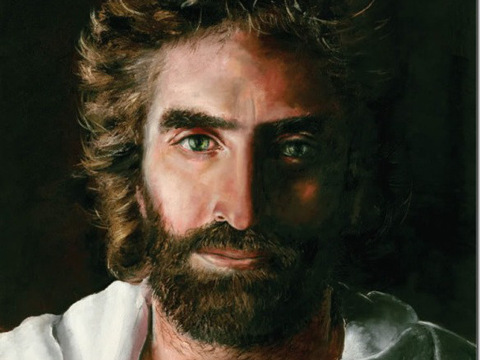
When was the last time I wrote a post completely focused on Jesus Christ?
I hope my blog is Christ-centered. I think pretty much every post should have something to do with Him. But I realized I hadn’t given my simple testimony of Him in some time.
I don’t have anything extraordinary to say since this wasn’t planned. Except that everything about Jesus Christ is extraordinary.
This is my humble testimony and my small reminder to the world.
Jesus Christ, under the direction of God the Father, created this Earth that we now reside on. He was our Brother. We were part of the council that decided to come to Earth.
Jesus Christ was born to a virgin in Bethlehem. He was the Creator of this Earth. He could have been born anywhere. Instead of being born in a royal palace, He was born in a manger, amidst farm animals, in the humblest of circumstances.
I marvel that He would descend from His throne divine To rescue a soul so rebellious and proud as mine, That He should extend His great love unto such as I, Sufficient to own, to redeem, and to justify.
Jesus Christ lived and grew, just like us. He walked this Earth that He had created. Then He began to preach.
Jesus Christ quickly amassed followers and a reputation for His powerful words, teachings, and miracles.
Jesus Christ went to a garden called Gethsemane. There He began the process we now call the Atonement.
Atonement: Reparation for a wrong or injury. Atonement: the reconciliation of God and humankind through Jesus Christ.
He paid for every sin. He paid for every wrongdoing. He felt every suffering, injustice, pain, sickness, heartache, loneliness, fear, hurt, and tear. He experienced it like it was His own. The sheer weight of this task made Him bleed from every pore in His body. A mortal body with an immortal soul. Our Brother.
I stand all amazed at the love Jesus offers me, Confused at the grace that so fully He proffers me. I tremble to know that for me He was crucified, That for me, a sinner, He suffered, He bled and died.
As if this weren’t enough, He allowed Himself to be arrested, spit upon, and beaten. He carried the cross that would be used to kill Him.
He allowed Himself to be nailed to a cross. Nails through His feet. Nails through His hands. Nails through His wrists.
I think of His hands pierced and bleeding to pay the debt! Such mercy, such love and devotion can I forget? No, no, I will praise and adore at the mercy seat, Until at the glorified throne I kneel at His feet.
He suffered and died so we could be reconciled to God. He suffered and died so we could one day go home with Him.
Then the glorious, most fantastic, most amazing news the Earth had ever heard. Death isn’t the end.
Three days after His death Jesus Christ raised up the body He allowed to die.
He keeps the nail marks in a resurrected and perfected body. Why? I ask my daughters this often. Why does Jesus Christ keep the marks of the nails in His perfect body? “To remind us that He always remembers us.”
Oh, it is wonderful that He should care for me Enough to die for me! Oh, it is wonderful, wonderful to me!
1 And now Abinadi said unto them: I would that ye should understand that God himself shall come down among the children of men, and shall redeem his people.
2 And because he dwelleth in flesh he shall be called the Son of God, and having subjected the flesh to the will of the Father, being the Father and the Son…
How can Christ be both the father and the son? It’s a question that has troubled Christianity since before it was called Christianity. How can there be the one true God (Jehovah) and yet Jesus Christ (Jehovah) pray to His father who is in heaven?
How can Christ be both the father and the son? Well, how are you, reading this a father (or mother) and a son (or daughter)? Sometimes we might overcomplicate the simplest things.
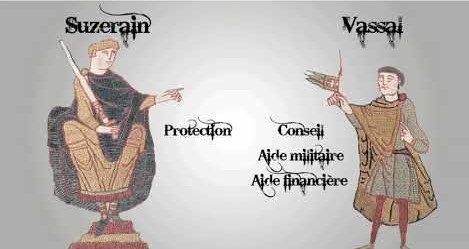
In the ancient near east there existed a system wherein covenants could be made. That system could be described as a Suzerain Vassal covenant or treaty. In this sort of agreement one of the parties would be greater or more powerful than the other. The suzerain would be the powerful entity. The vassal would be the subservient, or lesser, or learning entity. In this sort of treaty, the vassal would pay tribute or show some form of loyalty to its suzerain. In return, the suzerain would provide protection or some other sort of benefit to its vassal. There could only be one suzerain/vassal connection. Meaning, a vassal couldn’t have two suzerains. This would basically be treason. You can only serve one lord.
“The covenant Yahweh established with Israel at Mount Sinai exhibits striking parallels with Hittite suzerain/vassal treaties, which had six basic features: 1) a preamble that identifies the suzerain; 2) a historical prologue that recounts the previous relationship between the parties; 3) covenant stipulations to which the vassal must agree; 4) provisions for periodic reading and safekeeping of the covenant; 5) witnesses to the covenant; and 6) blessings and curses should the vassal either keep or fail to keep the covenant. The Sinaitic covenant contains all six of these characteristics.”
In his book, The Last Days: Types and Shadows from the Bible and the Book of Mormon, Avraham Gileadi states:
“the idea of Israel’s suzerain or Lord [Jehovah] assuming vassal or servant status in order to answer to his suzerain [God the Father] for his people’s rebelliousness introduces the concept of a God higher than Israel’s God. That is, Jehovah, the God of Israel, is a “Son” to God the “Father” (3 Nephi 11:7,11,32; compare 15:4-5). That concept does not appear explicitly in the Old Testament. Many Jews, therefore, insist that God is but “one” (Hebrew ehad; Deuteronomy 6:4); other than the Lord, they assume, no God exists (see Isaiah 44:6,8; 45:21-22). However, the idea of “the Father” and “the Son” makes perfect sense in light of ancient Near Eastern suzerain (Lord)–vassal (servant) covenant relationships.
“Abinadi (and every prophet who teaches God’s redemption of humanity) here enlightens us. Abinadi says that God, who redeems his people, is both “the Father and the Son” (Mosiah 15:1-3; compare Alma 11;38-39; Ether 3:14). That abstruse statement seems at first glance to contradict the careful distinction between the Father and the Son that other scriptures teach. But when viewed from the ancient Near Eastern suzerain (lord)–vassal (servant) covenant relationship, we gain insight on how the Lord can serve as a suzerain or Father to his people Israel, but also can serve as a vassal or Son to his Father or suzerain. To Israel, the Lord is Father, and they become his sons or vassals. To God the Father, the Lord is the Son, subjecting his will to the Father in order to merit Israel’s salvation (Mosiah 15:2,7).
“Moreover, as the literal and loyal Son of a divine Father–as the Son of a righteous [covenant suzerain “Father”]–the Lord is not subject to death unless he himself consents to die (See the type of Isaac’s consenting to let Abraham sacrifice him–Genesis 22:9) Even if he does die, the Father must come to the aid of his vassal and deliver his Son from death. In ancient Near Eastern literatures there is the concept of the god who dies only to revive and assume the throne of a senior deity. Thus “God breaketh he bands of death . . . giving the Son power to make intercession for the children of men” (Mosiah 15:8). What the Father does for the Son, the Son does for his sons and daughters: when “the Son reigneth, and hath power over the dead . . . he bringeth to pass the resurrection of the dead” (Mosiah 15:20).
“Moreover, the moment one introduces the idea of the Father and the Son, one also introduces the concept of spiritual progression. That constitutes as much a part of the “good news,” or gospel, as does redemption from death itself (see Mosiah 15:10-19). Inherent in a Father/suzerain–Son/vassal relationship with God is the assuming of divine attributes–becoming God-like…”
So we see that this Near Eastern tradition of suzerain and vassal treaties and covenants perfectly aligns with how we relate to Jesus Christ. He is our suzerain, making us His children. God is His suzerain. Through our covenant relationship with Christ, we receive protection from both Christ and His Father and our Father, God the Father.
Another interesting thought from that note is how Christ conquered death. It was by His relationship with the Father that He was able to conquer death. He in turn allows us the same opportunity when we link ourselves to His will and power. Christ received His divine identity from His Father. We can receive our divine identity through Jesus Christ’s Atonement and conquering of death. This is why we only come to the Father through the Son. Christ is our protector, our Suzerain. As we serve Him, we receive that protection as His vassals.
In addition, another way that Christ is our father is through the resurrection. It is due to Christ’s atonement and resurrection that we are able to be resurrected. This makes Christ the father of our bodies. For we wouldn’t have our bodies without His resurrection and the gift that we can be resurrected into our bodies. God the Father is still the father of our spirits. Whether that be through adoption, some measure of creation, or some other way, we’ll one day know.
A last note I wanted to make that I liked from this article:
“The basis of the covenant was Yahweh’s gracious acts toward Israel, not their obedience to him.”
Our covenant relationship with Christ is a reminder that His grace saves us. It doesn’t matter how obedient we are. We needed His grace to save us. As our Suzerain, His covenant with us is based so much more on how He loves us and all He is willing to do for us than anything we can do for Him. We can never properly repay Christ for all He’s done for us. He is the Suzerain. He has the power to save us.
This is the good news of the Gospel. Because Christ conquered all, we can become like Him, and in turn, become like our Father in Heaven.
I’ve heard of the “Adam-God Theory” but never looked into it. Until recently, I really didn’t know what exactly it referred to. Here is my research into the Adam-God theory for those interested and especially for those who may have concerns about this theory and its history in the restored Church of Jesus Christ.
Before I begin, almost all my thoughts come from this link:
It was a great resource on this topic and I recommend it if you want to learn more.
If you want a quick, short video that sums up the whole history of the Adam-God theory, watch this video:
Now, my thoughts.
The Adam-God theory is the theory that Adam and God the Father are the same person. This theory was mentioned by Brigham Young.
First – Adam is not God the Father. Adam is not who we pray to. This does not fit the teachings of the scriptures, does not fit modern revelation, is not a doctrine of the restored gospel. So why are we talking about it, you ask?
Second – Yes, Brigham Young did make some bold statements about Adam being God. He also made countless statements contradicting that statement. Brigham Young was a convert and a prophet. Try to imagine the dichotomy of those positions. Try to imagine someone a few years into the faith trying to lead the entire church. Is it so shocking that there were erroneous statements made, especially when we consider and understand the personality and boldness of the prophet who led the saints across the rugged wilderness of the West?
Third – Because Brigham Young made incorrect statements does not mean he was a false prophet. It means he was learning line upon line, and he made false statements. He has made statements to try to help us, the people of the church, reconcile some of his more questionable comments. For example, when speaking generally about who Adam was and proposing some thoughts about Adam, Brigham started by saying, “I propose to speak upon a subject that does not immediately concern yours or my welfare….I do not pretend to say that the items of doctrine and ideas I shall advance are necessary for the people to know, or that they should give themselves any trouble about them whatever.. (Brigham Young, Oct 8, 1851). If it does not concern our welfare, don’t get too hung up on it. The church was young and growing when Brigham was prophet. God has always worked through us, mortals, to fulfill His works. This has always resulted in fallibility. Brigham Young was a prophet, even if he made mistakes in the thousands of public discourses he gave during his learning period as a prophet/convert.
Fourth – Because prophets are fallible does not mean we cannot trust and follow them. As The Church has grown out of its infancy, it has strengthened itself in countless ways. One of those strengths has become the checks and balances of the church organization. The First Presidency and Quorum of the Twelve Apostles must be unanimous in any declaration of doctrine. President Nelson speaks hundreds of times a year. Not every word from his mouth (in my opinion) is scripture. It is guidance and direction from God’s anointed prophet, yes, but not scripture. But when President Nelson, the First Presidency, and the Quorum of the Twelve sign their names to a declaration, it becomes binding guidance on doctrine, church policy, etc. Such was the case with “The Family: A Proclamation to the World” for example.
Now, the statement made by Brigham that when Adam and Eve came to the Garden of Eden they already had celestial, resurrected bodies is interesting. I more think they came with perfect bodies as they came directly from the Father and hadn’t yet been corrupted by the fall, not that they were necessarily resurrected bodies yet. Celestial, maybe, resurrected, I don’t think so. That’s all I will say on this matter, though, to support my point earlier that things that distract from our salvation should be discussed with caution. I haven’t done enough research, pondering, or praying to comment on this with much confidence and would hate for my children 150 years from now to claim I believed Adam was already resurrected when put in the Garden of Eden. See how these small comments can be blown out of proportion? Grateful I’m not a prophet.
Another thought – the eternal nature of the plan of happiness is not something we can begin to comprehend. If it ultimately distracts us from our current efforts towards salvation, we should tread with ultimate caution. Such is the thinking about if Adam lived on another planet before he came here and countless other thought experiments that might distract from what is important, which is, Jesus Christ performed the ultimate atoning sacrifice for my sins. He died so that I can live. He suffered so I can be forgiven and can live with God, my Father, again. All other questions, while interesting and can expand our minds and thinking, if they distract from the ultimate source of our salvation – the Plan of Salvation and Christ’s personal role in it for us – should be avoided.
Those are my thoughts on this from my research. Here are some final items to really, I hope, put this theory and any issues involved with it, to rest.
As mentioned, Brigham contradicted himself many times on the idea that Adam was God. While he mentioned the idea a couple times in public, there are many other instances of Brigham Young speaking where he clearly separated Adam and God the Father as two separate individuals.
BYU professor Stephen E. Robinson sums it up well:
“Yet another way in which anti-Mormon critics often misrepresent LDS doctrine is in the presentation of anomalies as though they were the doctrine of the Church. Anomalies occur in every field of human endeavor, even in science. An anomaly is something unexpected that cannot be explained by the existing laws or theories, but which does not constitute evidence for changing the laws and theories. An anomaly is a glitch…. A classic example of an anomaly in the LDS tradition is the so-called “Adam-God theory.” During the latter half of the nineteenth century Brigham Young made some remarks about the relationship between Adam and God that the Latter-day Saints have never been able to understand. The reported statements conflict with LDS teachings before and after Brigham Young, as well as with statements of President Young himself during the same period of time. So how do Latter-day Saints deal with the phenomenon? We don’t; we simply set it aside. It is an anomaly. On occasion my colleagues and I at Brigham Young University have tried to figure out what Brigham Young might have actually said and what it might have meant, but the attempts have always failed. The reported statements simply do not compute—we cannot make sense out of them. This is not a matter of believing it or disbelieving it; we simply don’t know what “it” is. If Brigham Young were here we could ask him what he actually said and what he meant by it, but he is not here…. For the Latter-day Saints, however, the point is moot, since whatever Brigham Young said, true or false, was never presented to the Church for a sustaining vote. It was not then and is not now a doctrine of the Church, and…the Church has merely set the phenomenon aside as an anomaly.”
“As far as can be determined, none of Brigham Young’s successors in the presidency of the Church continued this teaching in public, and by the presidency of Joseph F. Smith (1901–18) there were active moves to censure small groups that taught Adam-God.
One of the earliest statements from the Church rejecting Adam-God teachings was made by Charles W. Penrose in 1902:
‘The Church of Jesus Christ of Latter-day Saints has never formulated or adopted any theory concerning the subject treated upon by President Young as to Adam.‘
In October 1976 general conference, Spencer W. Kimball declared the Church’s official position on Adam-God:
‘We warn you against the dissemination of doctrines which are not according to the Scriptures and which are alleged to have been taught by some of the General Authorities of past generations. Such, for instance, is the Adam-God theory. We denounce that theory and hope that everyone will be cautioned against this and other kinds of false doctrine.‘”
Other statements by future general authorities refuting Brigham Young’s opinions:
Bruce R. McConkie – “What I am saying is that Brigham Young, contradicted Brigham Young, and the issue becomes one of which Brigham Young we will believe. The answer is we will believe the expressions that accord with the teachings of the Standard Works.”
And Brigham Young himself – “I am more afraid that this people have so much confidence in their leaders that they will not inquire for themselves of God whether they are led by Him. … Let every man and woman know, by the whisperings of the Spirit of God to themselves, whether their leaders are walking in the path the Lord dictates, or not.”
Finally, while some might consider everything said here to be a sign that the church changes and is “wrong,” I would completely refute that. The church is changing. The church is growing. The church is living.
Doctrine and Covenants 1:30 is Christ speaking and reads “And also those to whom these commandments were given, might have power to lay the foundation of this church, and to bring it forth out of obscurity and out of darkness, the only true and living church upon the face of the whole earth, with which I, the Lord, am well pleased, speaking unto the church collectively and not individually.”
While so many would criticize the Church of Jesus Christ of Latter-day Saints for changing, the Lord describes it as living. The only living church on the face of the earth. This is a power of Christ’s church- not a weakness.
100 posts! I thought it warranted a special post. You never know when you start something like a blog if you’ll actually stick to it. Here I am a year and a half and 100 posts later, with hundreds still to go.
I figured as part of my first 100 posts I could mention the top 5 most read:
It’s interesting what this list shows. Life and death.
It was scary starting a blog. It’s basically a public diary. I’m excited for Ivy to read it one day. Thank you to everyone who has read and supported. The primary motivation in writing and sharing these posts has always been to share my faith story and hopefully help others in some tiny way. If my story or my thoughts have helped one person think about life or come closer to Jesus Christ, then a million hours (close to how much time I’ve put into this) is worth it.
I re-read my first post to prepare for writing this. In reading that, I was kind of surprised by how open and vulnerable I made that. It inspired me to share another more personal post.
As I read that very first post I was reminded why I decided to write this. I had my own very unique journey back to God and I hoped it could help someone, whether that be back to God or to God for the first time. During those years where I removed God completely from my life, I feared every day I was away from Him that I’d never be able to return. I know there are so many people out there that feel the same way. There are also people that have never known God, prayer, repentance, all these things some of us take for granted. These are abstract concepts to many, I know.
I want to share that I believe God is for everyone. As the world screams at us, “You have your screens, your technology, your books, universities, learning, society with its conveyer belt of packaged food, water always, peace, prosperity. Watch Netflix! Relax! All is well (2 Nephi 28:21). Set aside thoughts of life, death, and purpose. You have your purpose, live and let live.” The world is telling us that despite the chaos around us, everything is fine, and we don’t need God. I testify that all is well IF we have God.
I want to tell everyone, there is more than what the world screams at us is important. There is much, much more. I want to tell everyone who will listen, God is for you. If you’ve ever known Him, if you’ve never known Him, if you consider Him a complete foreign concept, if you consider Him a myth, He is for you and He is there for you. You can come to Him, and when you do, your life changes.
That’s what sticks with me most when I think about those years away from God. I removed Him, but He was never gone. We can’t remove our Father. This makes us accountable; it can be a frightening concept if we fear Him. We don’t need to fear Him. He is only there out of love. He will never leave us.
I bear my testimony of the most important things: God is our Father, and He does love us. Jesus Christ did something unimaginable. Would you die for your child? Would you suffer the punishment for the sins of your child? Probably. Would you die for the person torturing you? Christ did. He suffered for all of us, really suffered and felt. I have been blessed to have the Holy Ghost be a part of my life when I’ve made good choices, since it was conferred upon me when I was 9 years old. Joseph Smith did see Heavenly Father and Jesus Christ. He translated the Book of Mormon from ancient records. The temples that are now dotting the earth are God’s temples. The temples are clean and holy. I can be with my family forever because of what Christ did for me in Gethsemane and on the cross.
I know this to be true. This knowledge brings purpose and understanding to my life. It doesn’t make trials go away but it makes them understandable.
I wish everyone would consider the great plan of salvation, The Plan of Happiness. But we are distracted.
I have been so blessed by God and I ask Him constantly what I’ve done to be afforded so much. The least I can do is share it with others, and I am glad to do so.
I leave this testimony for my daughter, and my family, and all those I care about to read- forever. I leave it in the name of my Redeemer, my Savior, my King, Jesus Christ.
I’m not going to cite a bunch of scriptures supporting my point. In my experience that does nothing because individual scriptures can be interpreted in a million different ways. Any scripture I give that seems clear as day to me to show God the Father, Jesus Christ, and the Holy Ghost as three distinct personages is quickly explained away and followed up with another scripture that someone believes shows they are one being.
Instead of trying to convince anyone of this doctrine, I more want to give my thoughts on it. I also want to briefly discuss the importance of this doctrine and why I believe it has been so adamantly fought over throughout the centuries.
First, the “they are one” controversy with the many scriptural references is so easy for me to understand. They are one in intent and purpose, so they are one. Christ, when praying to His Father said, “let them be one, Father, as you and I are one.” (John 17:21-23) Why would Christ say this? Given the doctrine of the trinity, was Christ praying that his apostles would morph together into one super spiritual being? No, it doesn’t make sense. What Christ was praying for was literal. “Let them be one, as you and I are one” – in intent, purpose.
Second, what sense does a unified being make? I know we are human, and we don’t understand much of anything about the true nature of Heaven, of eternity, of what is next. I have faith in a lot, but I understand little. Maybe the next life is filled with multiple personality Gods and beings that I’m meant to worship. Maybe God can split into three personages. Maybe He did this to make us understand some deep, important principle. Maybe? Or maybe every person who counseled over this principle (the famous Nicene Creed) and ultimately came to a decision we follow hundreds of years later didn’t understand. God isn’t setting out to confuse us. He doesn’t want us to NOT comprehend Him. He wants us to know how much He loves us. He wants us to know He SENT His only begotten son, who also loves us. He wants us to know the Holy Spirit can be a constant companion to us. He doesn’t want to confuse us. He isn’t throwing out stumbling blocks all along the way to make things more difficult. This life isn’t intended to be a maze of confusion that we may be lucky to determine what God wants us to know. He wants us to seek Him and to seek truth. He WANTS us to understand. God the Father, Jesus Christ, and the Holy Spirit are three separate, distinct beings. I don’t know this (yet), but I have faith and hope that it’s true.
Joseph Smith saw them. That’s why that moment was so significant. They didn’t speak to Him from the clouds. They appeared in their bodies. To show him, “you are like us, and we are like you.” They have bodies of flesh and blood. Christ really came here, His Father’s Son, to attain a body and die for us. That principle is pure and beautiful.
Have you ever wondered why Christ ate fish and bread with the apostles after his resurrection? Why was that account included in the scriptures? The scriptures are full of important information, obviously. Why was this seemingly unimportant detail included? Not because Christ was trying to make His apostles comfortable. It was included because it was important. Christ was showing that He had a body. Just as we, when we are resurrected, will be resurrected with our bodies.
This brings me to the third point, exactly why this doctrine was fought so hard against for all of history. Satan is cunning. Satan knows what is and isn’t important to our salvation. With the fervor and aggression Satan has fought this doctrine with, it seems obvious to me how important it is. This doctrine is so important because the corruption of it distances us from our Heavenly Father. That is Satan’s great purpose. What greater way to distance us from our Father than corrupting His image into some unknowable, un-understandable, un-comprehendible being? It is the opposite of what God is. He knows us, He understands us, He comprehends us, and he wants us to understand Him. This bizarre trinity He’s been morphed into makes it so hard to communicate with Him. How do you communicate a triple being you can’t imagine? Not the same, personal way you can communicate with your own father. Not the way your loving Heavenly Father wants you to communicate with Him. A father that sent His only begotten Son to save the rest of His spirit children.
I wish I could be more eloquent on this topic. Of all topics I wish I had a poet’s or philosopher’s eloquence for, this is it. Because it’s important. But I’m not a poet or a philosopher. My words fall short of what I want to portray. I wish so much that everyone could know Heavenly Father the way I feel and know Him. He and Christ are so important to me. Combining them in one takes away one of the most important persons in my life.
This truth is eternal, and this truth is important.
To learn more about the truth of the Godhead, visit here:



 No Coincidences