“When you get to a place where you understand that love and belonging, your worthiness, is a birthright and not something you have to earn, anything is possible.”
Think about that statement for a moment.
I heard this quote in a recent meditation I did. The meditation guided this visual exercise: Picture yourself as a child, truly picture it. Picture yourself as a baby. Picture yourself on someone’s lap. Picture yourself being held, comforted, and played with. Picture yourself laughing joyfully as someone makes a funny face at you. Picture yourself young and innocent.
You don’t have to earn worthiness; you don’t have to earn love. You are loved because you are.
The next time you don’t feel worthy, picture yourself as a child. You are worthy.
This exercise led me to an even more powerful thought. One that speaks not only to our worthiness here, but to our birthright and our eternal potential.
Consider Adam for a moment, the first man. When he came to this earth, we are told he was as a child. Adam came to earth meek and humble, a child-like individual. He had forgotten who he was. Who he was in reality was Michael the archangel, the chief angel. Adam was Michael, the angel second in authority. His authority was only exceeded by Jesus Christ Himself (and God, of course). In Hebrew the name Michael means “Who is like God.” This Michael came to earth with his mind wiped clean, with no recollection of his prior authority, no memory of his prior self.
What about us? What don’t we remember about ourselves?
The next time you are insecure, unsure, or afraid, remember that you are a child of divine inheritance. You are a prince or princess of the most High God. Consider that for a moment.
Not only are you loved and worthy of love, you are loved by the God of the universe. You are in line to inherit all He has to offer (D&C 84:38). Remember that, and don’t forget it. Hold to it.
We are as children here. We don’t remember our past. For all we know, we were spiritual giants. We are spiritual giants. We can be spiritual giants. Embrace that identity. Remember who you might be. Remember who it is you have been tutored by. The God of Heaven and Earth. When we embrace this way of thinking and embrace this possibility, the difficult things of this earth become so inconsequential. Our true potential is greatness. May we never forget it.
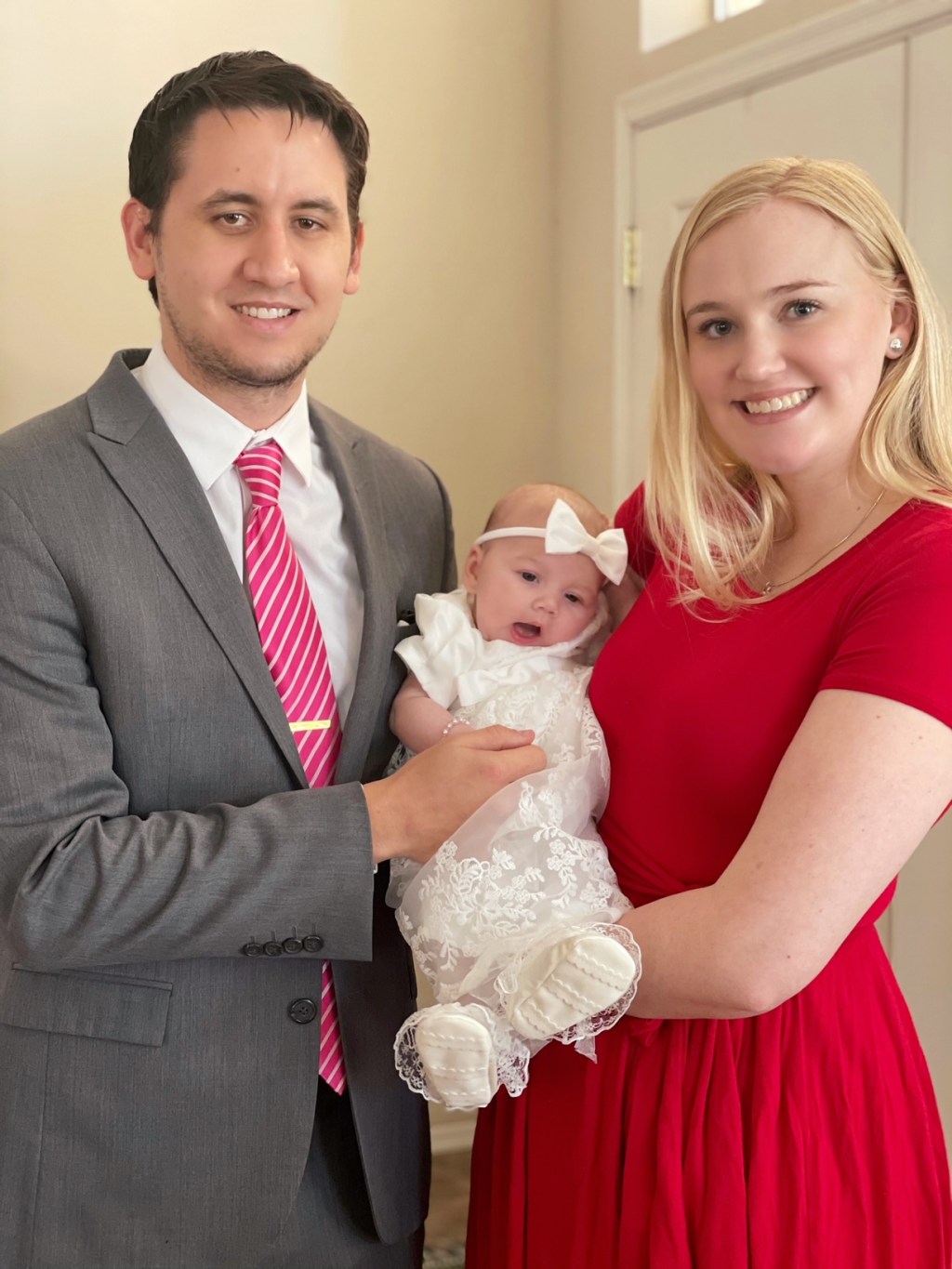
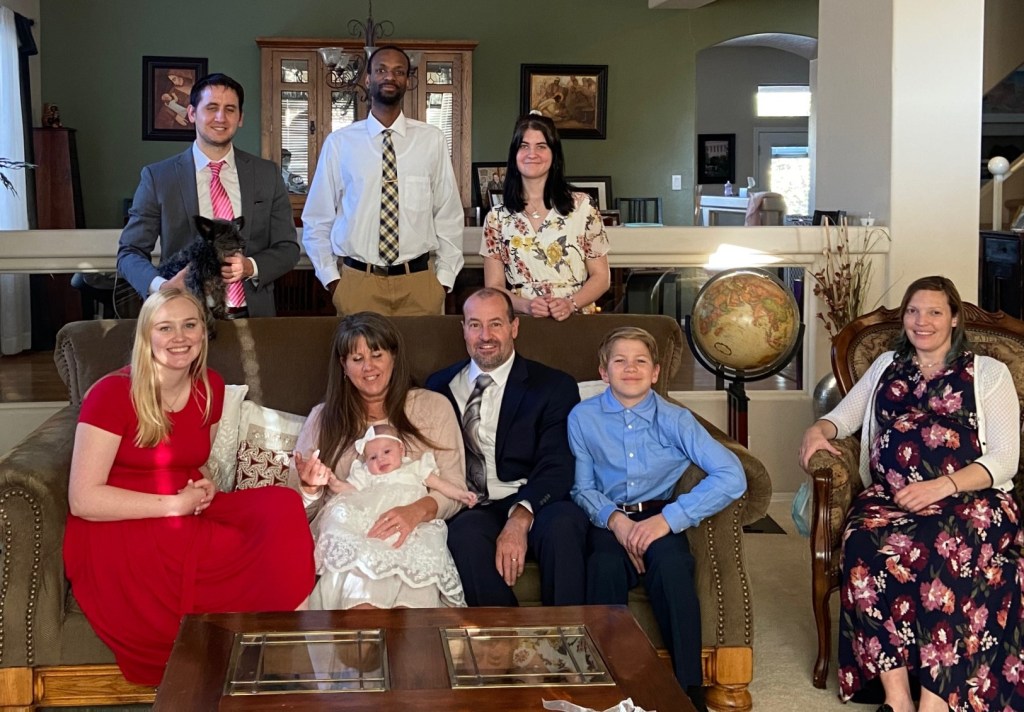
I recently had the special opportunity to bless Ivy. Leading up to the blessing, I did some research on the history of blessing children in the Church of Jesus Christ and its significance. For Ivy’s blessing, Beth put together an event and a description of what a baby blessing is. Here is that description:
What is a baby blessing?
In summary, the naming and blessing of children is a commandment of God. It is proper for a worthy father to name and bless his children. Blessing of children was done during the time of Christ, and it occurred in the early years of the restored Church. The ordinance has become a regular practice followed by Church members ever since.
Who has the authority to bless a baby?
A worthy priesthood holder under the direction of the local bishop. It is usually the father or a close family member.
What is the priesthood?
The word priesthood has two meanings. First, priesthood is the power and authority of God. It has always existed and will continue to exist without end. Through the priesthood, God created and governs the heavens and the earth. Through this power, He exalts His obedient children, bringing to pass “the immortality and eternal life of man.”
Second, in mortality, priesthood is the power and authority that God gives to man to act in all things necessary for the salvation of God’s children. The blessings of the priesthood are available to all who receive the gospel.
What is the format of a baby blessing?
When blessing a baby, priesthood holders gather in a circle and place their hands under the baby. When blessing an older child, brethren place their hands lightly on the child’s head. The person who gives the blessing:
1. Addresses Heavenly Father.
2. States that the blessing is performed by the authority of the Melchizedek Priesthood.
3. Gives the child a name.
4. Gives words of blessing as the Spirit directs.
5. Closes in the name of Jesus Christ.
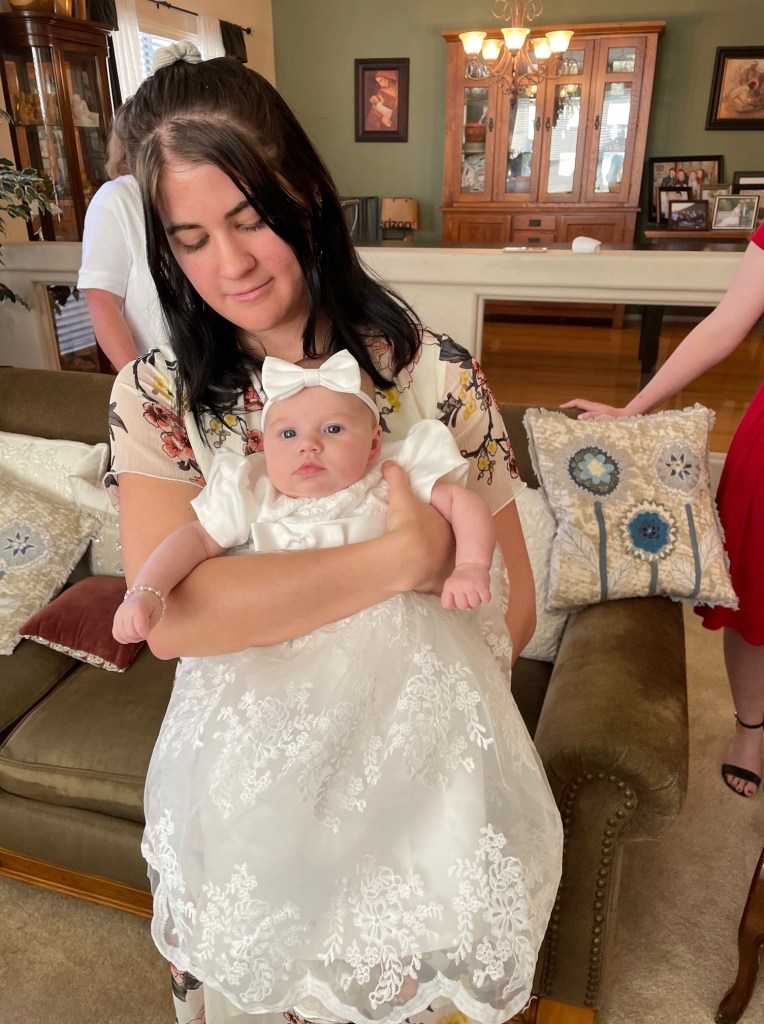
Ivy and Aunt Cambria
Reading up on the baby blessing beforehand taught me some interesting things about this sacred practice that I would like to share.
Unique to giving a blessing to an older child or adult, the naming and blessing of a child is directed to Heavenly Father like prayers are.
This could be because the baby is too young to understand the words directed to him or her.
It appears that Melchizedek Priesthood holders are authorized to more than ask for a blessing but are able to pronounce a blessing upon the child directly, as the spirit directs.
Sometimes inspiration (or confidence) to pronounce/give a blessing does not come. In this case it is of course acceptable to ask Heavenly Father for these blessings. I believe this is how I felt in giving Ivy her blessing. It was enough to ask Heavenly Father to bless her with my requests.
It is important to remember the naming and blessing of children is not a saving ordinance. It is still an important and sacred moment seen in heaven.
“It is an awesome responsibility to be a priesthood agent of the Lord, to act in his behalf, and to approximate in one’s words and doings what the Lord would do if he were here. A father, especially, who is to bless his child, has the delight and responsibility to prepare himself beforehand by pondering and by fasting and prayer, that he may be sensitive to the suggestions of the Spirit when giving the blessing.”
“How blessed we are to be able to present our little ones before the Lord, our families and the Church, and then consecrate them to the Lord. How blessed we are to be able to name them, plead over, pray for, and, yes, to bless them directly and personally in harmony with our finest desires for them, by the authorization and wisdom of heaven.”
An interesting account from Joseph Smith on March 13, 1843 says, “Twenty-seven children were blessed, nineteen of whom I blessed myself, with great fervency. Virtue went out of me, and my strength left me…”
“[The next day] Elder Jedediah M. Grant enquired of me the cause of my turning pale and losing strength last night while blessing children. I told him that I saw that Lucifer would exert his influence to destroy the children that I was blessing, and I strove with all the faith and spirit that I had to seal upon them a blessing that would secure their lives upon the earth; and so much virtue went out of me into the children, that I became weak, from which I have not yet recovered; and I referred to the case of the woman touching the hem of the garment of Jesus. (Luke 8).” (History of the Church, 5:303.)
Elder John Taylor said the Savior’s example of blessing children “should be studiously complied with without hesitancy or objection” (by priesthood holders).
We see that Joseph Smith followed the example of the Savior who blessed children in both Israel and the American continent. (Mark 10:14-16 and 3 Nephi 17). What an amazing and marvelous thought: our virtue can be passed to our children. Our blessings are a force Satan must reckon with. It makes me want to bless my daughter daily. It also adds insight to a scripture that has always been a bit puzzling in Luke 8:46. Virtue can literally leave us to help others.
The new name:
A new name is often involved when a covenant relationship is formed.
When Adam and Eve were given dominion over the earth, Adam named all the animals (Genesis 2:19-20).
When we get baptized we follow a similar pattern, taking upon us a new name, the name of Christ.
Temple covenants also involve the giving and receiving of names.
The responsibility of blessing a child is bestowed, ideally, on he who helped create that child’s body, and who Heavenly Father entrusted His child with in mortality.
Joseph F. Smith – “The patriarchal order is of divine origin and will continue throughout time and eternity. There is, then, a particular reason why men, women, and children should understand this order and authority in the households of the people of God and seek to make it what God intended it to be, a qualification and preparation for the highest exaltation of his children. In the home, the presiding authority is always vested in the father, and in all home affairs and family matters there is no other authority paramount…This authority carries with it a responsibility, and a grave one, as well as its rights and privileges, and men cannot be too exemplary in their lives, nor fit themselves too carefully to live in harmony with this important and God-ordained rule of conduct in the family organization.”
It is my experience that giving blessings is often the closest I ever feel to Heavenly Father. I can feel him speaking through me and it is always a powerful, emotional, and memorable experience. The opportunity to bless my daughter will be one of the greatest moments of my life. I have immense gratitude to my Heavenly Father for entrusting Ivy into my care, allowing me to name her, and trusting me to watch over and protect her in this life and through eternity.

 No Coincidences