Tag: hypocrisy

  • Revenge and Forgiveness

    Revenge and Forgiveness

    Israel

    Palestine

    Israel and Palestine

    Israeli War

    Aggressors in War

    Revenge

    Forgiveness

    9/14/25

    As I prepared to write on this topic that I quite honestly don’t want to write about, I listed out those possible titles for this post. If that list is an indication of anything, it’s how scattered my thoughts on this topic will be.

    I actively avoid politics. I aggressively avoid current affairs.

    It’s not that I want to, I’d like to be aware of the important things happening around the world. It’s that I feel like I have to.

    Politics and current events are so filled with hatred, vitriol, unkindness, unfairness, poison, and frankly stupidity that I have chosen to actively avoid it. This becomes a problem when my wife wants to discuss these things, and would really like her husband to be able to discuss it with her, and then she has to watch me like an ostrich putting my head straight into a hole. I just want no part of it.

    Recent events have led to me looking into some things.

    I hear so much leftist this and right wing that – I am aggressively trying to keep myself from knowing what these distinctions mean. Call me naive. I think it’s all so stupid.

    What does this have to do with those topics listed above?

    Just saying Israel and Palestine, I believe, ignites passionate political beliefs.

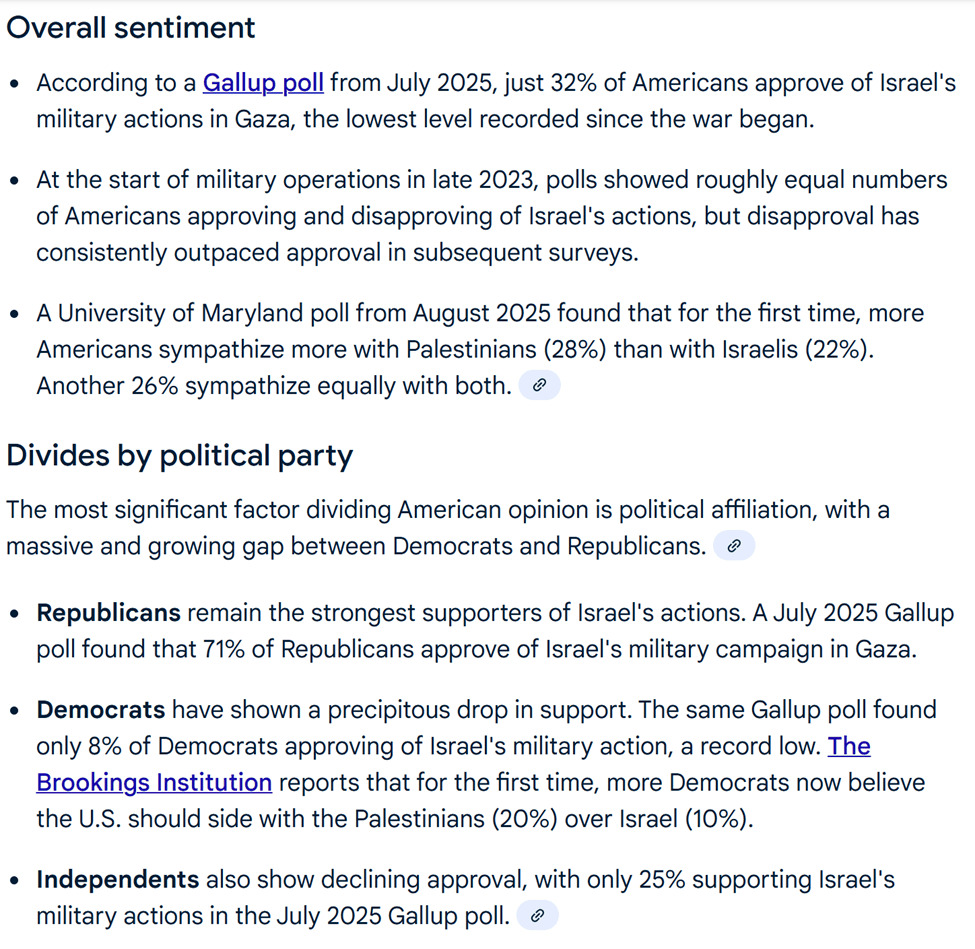
    If you need proof, yes, even wars are split along party lines:
    I do not like passionate political beliefs. I hope this post has nothing to do with politics.

    I hope this post has something to do with history, what’s right, and prophesy.

    I’ve written about Israel and Palestine before HERE and ten months later HERE.

    The Book of Mormon was written so that we, the Gentiles of today, will understand what is coming in our future. The Book of Mormon is meant for our day and is meant to guide us.

    I’ve recently been reading Hugh Nibley’s thoughts on what the Book of Mormon teaches us about how a civilization and a people can go wrong and destroy themselves.

    I probably lost most people at “prophesy.” Prophesy is real. And while I put my head in the ground about political affairs and current events, I think the rest of the world puts its head in the ground when it comes to prophesy.

    Hugh Nibley emphasized, as I’ve been studying his words regarding Mormon chapters 1-9, how the ancient inhabitants of Mesoamerica ultimately destroyed themselves. He detailed how the chosen people of this land, those who were given this land and given God’s covenant that it would be their land as long as they followed Him – how those people lost their favor and were destroyed.

    The extinction of a people started with:

    Pride.

    No repentance.

    War.

    Revenge.

    War is justified when it comes in self-defense. The thing I want to focus on here is revenge. Hugh Nibley talks about how the Nephites of the Book of Mormon were destroyed when they officially became a bloodthirsty people bent on revenge. God withdrew from them when they decided they would avenge all their fallen brothers who had been killed.

    Which leads to me today, long having put my head in the ground since that post about Palestine and Israel four years ago.

    I accidentally read an article about the current state of the Israel – Palestine war.

    I decided to write this post when I read this:

    “Signs for this old-new vocabulary are everywhere. It is common among Jews, for example, to add the initials for “blessed his memory” next to the name of the dead – but in this war, almost every soldier or civilian victim is memorialized with the phrase “Hashem yikom damo” (God will avenge his blood).”

    God punishes the wicked with the wicked. You don’t want to become the people punishing the wicked in the name of God. Because at that point, you are the wicked. And at that point, your day will come too.

    I fear how long the United State of America has felt the need to be the aggressor in the war against wickedness around the world.

    There is a big difference between wars of self-defense, wars of aggression, and wars of revenge.

    Ceasing to remember the blessed memory of loved ones and instead seeking to avenge blood is not God’s way.

    The world has long said this is how God works. It is not how God works. It is how Satan works. And when people think they’re acting on behalf of God but really being led chain-linked by Satan, the worst atrocities happen.

    Prophesy is being fulfilled before our eyes and the world collectively puts its head in the ground.

    Which leads to my concluding point that Hugh Nibley mentions. Ultimately, we will all be judged for our own actions. What we do matters. All we can do is what we can do – kindness, forgiveness, love, peace, avoid contention, avoid fighting, avoid hatred, avoid judgment, meekness, humility, faith. These are the things we can do in a world that is lost and confused. A world that is deviating. A world that distances itself from God more and more every day.

    You do your part. You do what’s right.

    You love. That’s all.

    9/15/25 Update

    As I painfully, accidentally read more political information, I come back to add more because it seems relevant to what I’ve already written.

    Some recent quotes I’ve read from Donald Trump regarding Charlie Kirk’s assassination:

    The radicals on the left are the problem. And they’re vicious and they’re horrible and they’re politically savvy.

    We have radical left lunatics out there, and we just have to beat the hell out of them.

    And then I read articles and comments and it’s all attack attack attack hate hate hate while yelling at Trump for saying to attack attack attack. Does no one see the irony?

    The same article with the headline

    later, quietly, adds:

    “The president added in a separate answer that he would urge his supporters to follow a nonviolent path in response to the shooting. “He [Kirk] was an advocate of nonviolence,” Trump said. “That’s the way I’d like to see people respond.””

    Why does “beat the hell out of them” get the headline?

    Because it evokes emotion on both sides. It gets clicks.

    The same article that condemns Trump for violent speech chooses to promote the violent speech.

    Why?

    Because the violent inflammatory statement get the clicks.

    It is all hypocrisy.

    I’m not excusing Trump’s, “beat the hell out of them.” I am condemning it. But if we fail for this click-baiting and this hatred, this you against us mentality, we become part of the problem.

    Then I read Governor Cox of Utah’s statements:

    “We can return violence with violence; we can return hate with hate. That’s the problem with political violence. It metastasizes. We can always point the figure at the other side. At some point we have to find an off ramp, or else it’s going to get much worse.”

    I stand by the Governor Cox’s words.

    An eye for an eye quickly becomes lives for lives. Revenge hurts everyone.

    How do we find an off ramp?

    Again, from Governor Cox:

    “Social media is a cancer on our society right now,” Cox said. “And I would encourage people to log off, turn off, touch grass, hug a family member, go out and do good in your community.”

    Love. Forgive. Look past the thing you disagree with someone on and instead look at the beautiful, passionate, important person they are.

    We all have a divine heritage and one day we will be embarrassed about how we thought of the people around us.

    There is no other side. There are only people. We are all imperfect and the sooner we realize that and forgive and show love, the better we will all be. Only love can heal the divide in our world.

  • Hypocrisy in Intelligent Design and Evolution Debate

    Hypocrisy in Intelligent Design and Evolution Debate

    The theory of intelligent design is, simply put, the idea that this world is too perfectly designed for there to be no designer. The theory comes from what’s called the Watchmaker Analogy, put forth by William Paley in 1802. The idea is that if you walked into the woods and found a pocket watch, you would assume someone designed that pocket watch. Due to the complexity and clear design of the pocket watch, you would not assume it just appeared there by coincidence.

    Of course, it’s more complex than that. Before you say, “Well you would assume a designer because you’ve seen a pocket watch before,” well, sure. That’s not the point. The point is that things that appear to have been designed usually have a designer. If it makes you feel better, insert “clearly designed foreign object” instead of pocket watch.

    Intelligent design gets a tough rap in the scientific community. In scientific circles, they scoff at this idea. They say, scientifically, who is the designer? The ridicule continues from there.

    There is one argument from scientists against the theory of intelligent design that I’d like to discuss here. Scientists who believe in the theory of evolution and oppose intelligent design make this argument:

    They say that –

    “If there is an intelligent designer, why would that intelligent designer create things that seem to not have a purpose?”

    To be funny, and to lighten the mood, we will use the example of male nipples. Why would an intelligent designer give males nipples when they serve no purpose?

    Proponents of intelligent design would respond, “Just because we don’t know the purpose, doesn’t mean there is none.”

    This results in escalated scoffing from evolutionary scientists. They say, “That is unscientific. You can’t have it both ways. You can’t say something has an intelligent designer, then when asked why there would be pointless designs say we don’t know the purpose of those designs. That is unscientific as it is untestable and can’t be proven either way.”

    This goes back to what is “scientific” in terms of the scientific method, etc.

    The theory of evolution is that all species have evolved through a process called natural selection. There is ample evidence to appear that the theory of evolution is true. See my post What the Theory of Evolution is Missing. Natural selection is basically the idea that the strongest survive, they breed, and so the strongest traits in a species will survive and be passed on.

    Of course, it’s not that simple.

    So, here’s the thing.

    If an evolutionary proponent is asked, “Why did natural selection result in males with nipples? How did nipples help man survive?”

    The response would be, “Natural selection doesn’t guarantee everything is related to survival. There is some randomness.”

    What is the difference between the intelligent design defense and the evolution defense?

    What’s the difference between:

    • Intelligent designer
      • If we don’t understand the design, doesn’t mean there is no purpose.

    And

    • Evolution and natural selection
      • Not every trait is for the purpose of survival, there is some randomness.

    Where is the difference? These are both ‘you can’t have it both ways’ arguments.

    Is there something I’m missing here? Is this not, essentially, the same argument? Is this not the same thing?

    Ultimately, the root of criticism of the theory of intelligent design comes down to one thing: belief in God. That’s what it’s all about. A lot is thrown around about “unscientific” and blah blah. Please define “scientific.” Cool, thank you. Now I’ll find 10 different definitions of scientific from 10 different scientists.

      I’ve elaborated more on the “God issue” in science in this post. Science and religion will always be in an unwarranted battle until the true scientist – the one who set this all up, designed it, created it, organized it, and sent us here – comes down and explains it all to us. I welcome that day.

    1. Prodigal Son

      Prodigal Son

      The story of the Prodigal Son is well known.  For those who have not read it before or haven’t read it recently it can be found in Luke 15:11-32.

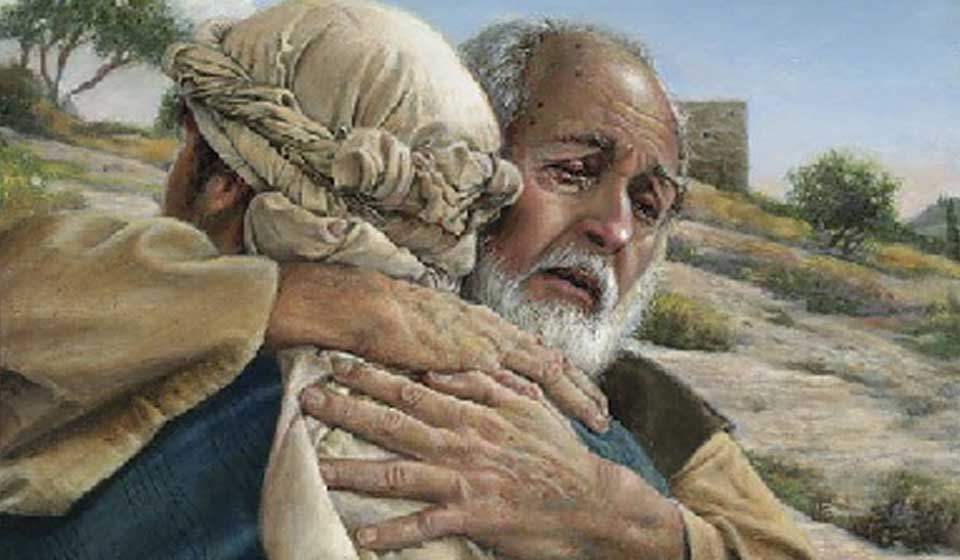
      The story of the Prodigal Son has always hit close to home for me.  Obviously, it’s easy for me to relate to the younger son.  You should read Luke chapter 15 above but a quick summary: there were two sons.  They will be referred to as the elder/older son and the younger son as I write.  The two sons were given their inheritances.  The younger son left his home and went to a faraway city.  There he squandered his inheritance on “riotous living.”  When he hit the lowest of lows, the younger son returned home to beg his father to allow him to be a servant.  The father, instead of showing anger, welcomed his son home, killed the fatted calf, put a robe on his son, gave him a ring, put shoes on his feet, and threw a huge party in celebration of his return.

      The older son, upon hearing of his brother’s return and the subsequent party, was angry.

      This story is often told in such a way that the primary lesson is about the Prodigal Son and his father’s reaction to his return. The story is called “the prodigal son” after all.  That lesson being that no matter how we stray, how far gone are, and how many mistakes we make our Heavenly Father (the father in the story) will always welcome us back.  In fact, Heavenly Father rejoices at our repentance:

      “I say unto you, that likewise joy shall be in heaven over one sinner that repenteth, more than over ninety and nine just persons, which need no repentance.”

      Luke 15:7

      All Prodigal Sons like myself rejoice at this story.

      I once heard a different perspective on this story, and I’d like to share it.  There is a great lesson to be learned in the story of the Prodigal Son by looking at a secondary character: the older brother.

      A great question to ask yourself before reading any of Christ’s parables is “who was He speaking to?”  Another good question is “What was He trying to teach?”  If you look at the parable from the perspective of the Prodigal Son, you can say Christ was teaching those who have sinned that they can always repent and return to the light of their Heavenly Father’s love.

      Who was Christ speaking to when he gave this parable? He was speaking to those looking for the message of God.   He was speaking to the listeners.  These were the ones looking for the message of God.  When giving this parable Christ was speaking to the saints.

      Consider what can be learned from the older brother.  The older brother never left.  The older brother never sinned.  The older brother respected and worked for his father.  Many say, and I always thought, he was justified in his reaction.  His exact words in verses 29 and 30:

      “And he answering said to his father, Lo, these many years do I serve thee, neither transgressed I at any time thy commandment: and yet thou never gavest me a kid (fatted calf), that I might make merry with my friends:

      But as soon as this thy son was come, which hath devoured thy living with harlots, thou hast killed for him the fatted calf.”

      This appears to be a natural reaction.  He had always been there.  He had always done right.  Only for his corrupt brother to return and receive honor.

      Why did the older son stay and work hard for his father?  Why did he keep his commandments?  Was he simply looking forward to the inheritance he was to receive?

      A Crucial Lesson from the Brother of the Prodigal Son « Meridian Magazine

      Why do you serve God and keep his commandments?  Are you looking forward to your mansion?  Do you serve God so you can inherit His glory?  Are you serving Him for YOUR benefit?

      We should serve God because we love God.  We should serve God because we love those around us.  Our service to God shouldn’t be for the blessings and honors He can give us.  Our hearts should serve for love and not for our inheritances.

      Jesus didn’t tell this story only to get sinners to repent.  He also told this story to get the saints to repent.  The Prodigal Son went out to experience life and disregarded his father’s possessions.  The older son on the other hand stuck around, but he was working to please his father.  He looked at himself as moral and worthy.  He was after his father’s possessions.  That’s what he concerned himself with.  The elder son was keeping score.  He was trying to earn his father’s love and inheritance.

      Sometimes we are like the Prodigal Son: sinning and needing to return home.  Sometimes we are like the older brother: serving for the glory of the world. 

      Often we are like the older son in our envy and jealousy.  When someone returns to the fold do we judge them for their past?  Or, like the father in the parable and our Heavenly Father, do we rejoice at someone’s return?

      Elder Holland in his talk, The Other Prodigal, said:

      “I testify that no one of us is less treasured or cherished of God than another.  I testify that He loves each of us-insecurities, anxieties, self-image, and all.  He doesn’t measure our talents or our looks; He doesn’t measure our profession or our possessions.  He cheers on every runner, calling out that the race is against sin, not against each other.  I know that if we will be faithful, there is a perfectly tailored robe of righteousness ready and waiting for everyone, “robes…made…white in the blood of the Lamb.”  May we encourage each other in our effort to win that prize is my earnest prayer.”

      Let us not compare our blessings to the blessings of others, what we have to the possessions of others.  Let us support and help each other to all return to our Heavenly Father.  Jealousy is of Satan.  We should never look down on somebody who made mistakes and is trying to return to God, because then we are the sinner.  We can learn from every character in Christ’s great parable.  Be like the Prodigal Son and repent, humble ourselves, and return home.  Be like the elder son and don’t envy but welcome our wayward brothers and sisters back home with joy and love.  And be like the father, loving all those around us, embracing the sinner and the saint alike.  I believe this is God’s hope for us and what Christ was teaching us through this story.

      __________________________

      Here is a link to Jeffery R. Holland’s talk, The Other Prodigal:

      https://www.churchofjesuschrist.org/study/general-conference/2002/04/the-other-prodigal?lang=eng

    2. Rameumptom

      Rameumptom

      It’s amazing to read the Book of Mormon and compare those people to our day.  One story from the Book of Mormon that recently stood out to me was the story of the Zoramites and the rameumptom.

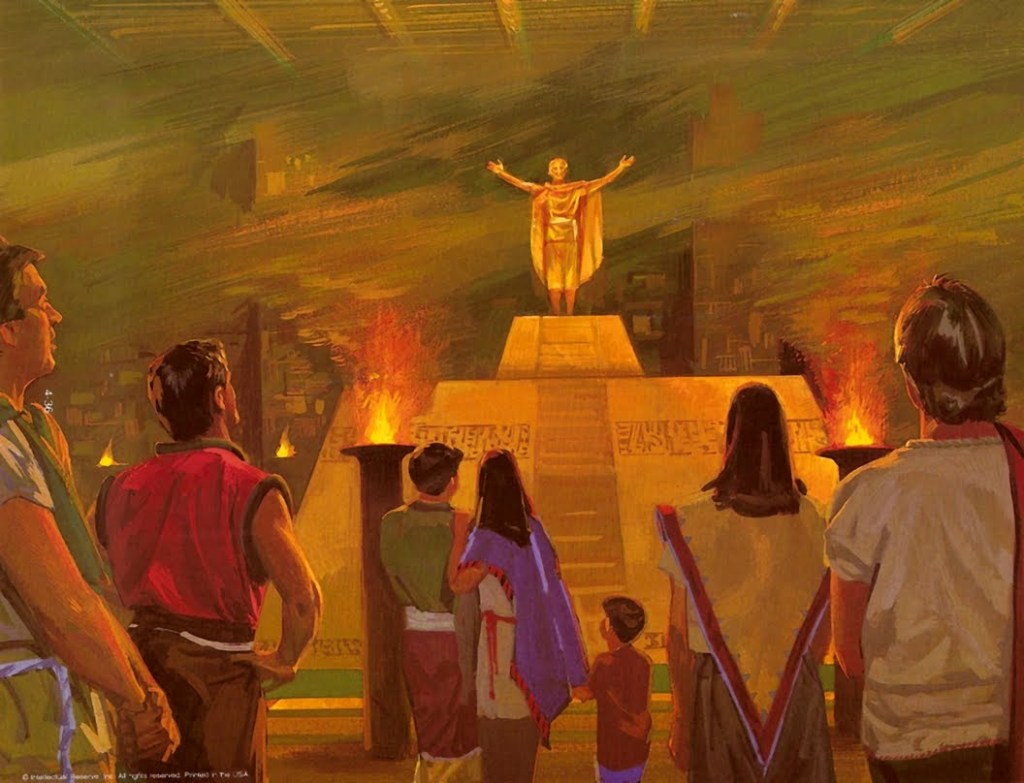
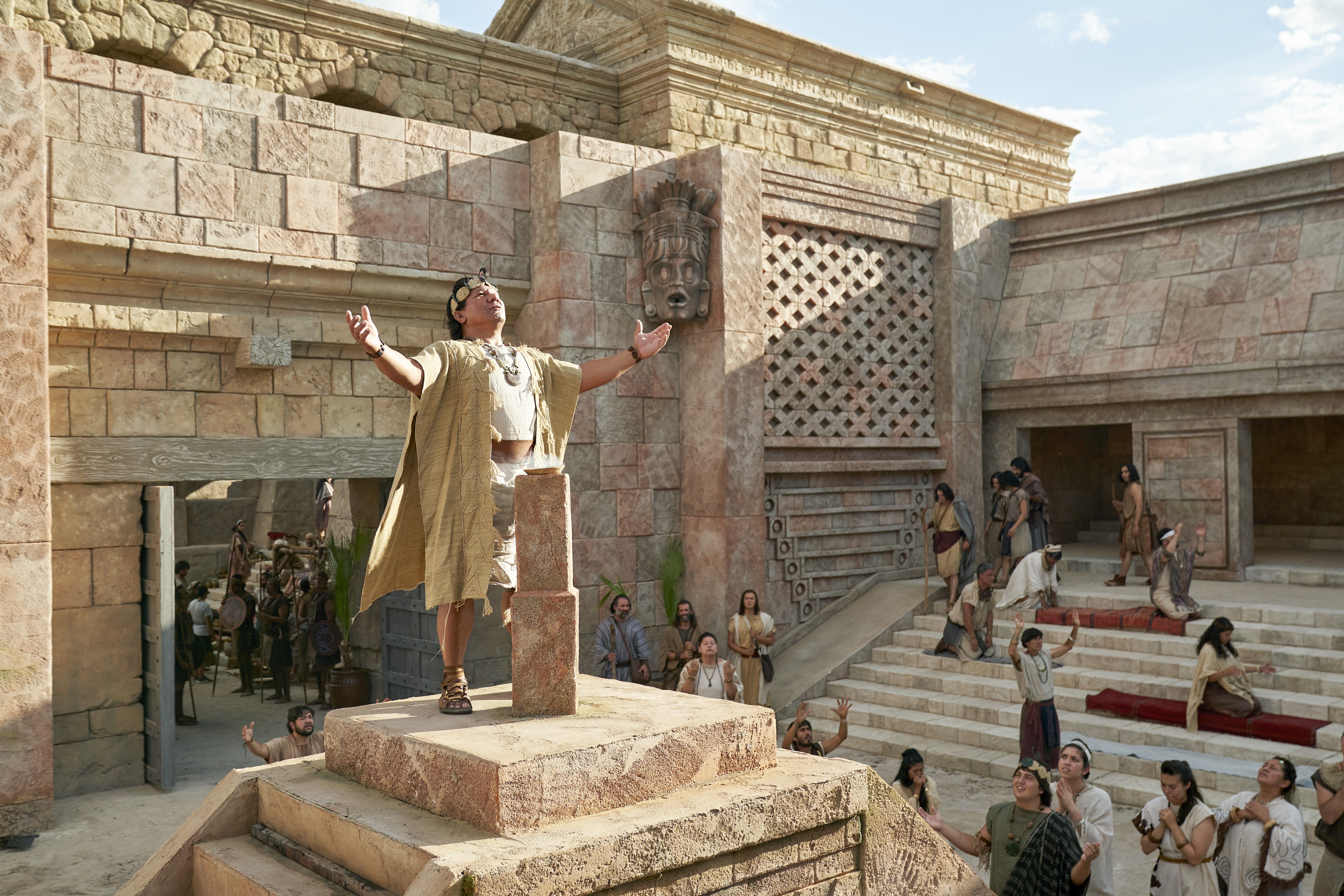
      The Zoramites were a people who corrupted religion in many ways.  They built a large tower.  This tower was called a rameumptom and it was used for prayer.  People would go to the top of the tower and loudly proclaim a rehearsed prayer.  In the prayer they would thank God that He chose them.  They would thank God that He had enlightened them and saved them while He would damn all the others to hell for their false beliefs.  They would say their prayer, leave the tower, and go about their week without another thought towards God.  They would use their week to serve no one but themselves. 

      A Zoramite man prays on the Rameumptom in the land of Antionum.

      Let’s compare the many false beliefs of the Zoramites to our society today.

      First, praying on the rameumptom.  What good deed is done today without proclaiming it to the world?  We’re all guilty of it.  Social media is our modern day rameumptom.  It is where we proudly shout our greatest deeds for the world to see.  Prayer and good deeds should be done in private.  Let not thy left hand know what thy right hand doeth.

      Second, the Zoramites had a temple that only the rich were able to go to.  Churches today have become much more about prestige and power than about humility and kindness.

      Third, rehearsed prayer.  The Zoramites used a rehearsed, scripted prayer to talk to God.  There are many problems with this.  It takes any effort from the procedure.  The prayer has no thought or feeling to it, it’s like reading in class.  There’s no genuine questions, no genuine requests, no genuine gratitude. It is a script.  We see this in many churches today.

      Fourth, prayer without action.  This is a byproduct of rehearsed prayer.  What does prayer without effort lead to?  Life without effort.  The Zoramites loudly spoke their prayers from their tower, stepped down, and that was the extent of their worship.  They wouldn’t speak to God again until the next week when they would give their five minute rehearsed prayer and move on with their life.  This is the worship of our society today.  With all God has given us we can’t even give Him a day of worship in return.  Most don’t go to church at all.  Many who do go, go on Sunday, listen for an hour, and the rest of the week don’t do a selfless act.  Christ was our example.  He taught us to pray always, serve others, and love others.  If we aren’t doing that, we aren’t of Him, no matter how loud our prayer.

      Fifth, the Zoramites thanked God that they were chosen by Him.  They thanked Him for enlightening them and turning them away from the foolish traditions of their fathers and neighbors.  They were selected by God and would be saved.  All others were fools who would burn in hell.  Sound familiar?  Many churches today believe you will only be saved if you follow their beliefs or belong to their church.  What kind of selective God is this?  It spits in the face of a loving, caring Heavenly Father who is no respecter of persons. This is a blasphemous and poisonous teaching that goes back to the pride and selective nature of churches.  God loves all His children and will provide a way for all of them to attain as much glory as they desire.  The doctrine of Jesus Christ taught by the Church of Jesus Christ of Latter-day Saints teaches that there are many mansions in heaven and God’s wonderful plan has provided a way for a vast majority, almost all of His children to go to Heaven.  All that repent,  follow His commandments, and believe in His Son will find a place worthy of their righteous hearts.  This is truth.

      I have a close friend of a different Christian faith.  We have many good religious conversations.  One day the topic of heaven came up.  He told me that surely I didn’t believe he would go to heaven as he wasn’t a member of the Church of Jesus Christ of Latter-day Saints, my church.  This made me so sad.  I told him with complete sincerity and 100% certainty that I knew he was going to heaven.  Whether he joined the Church (my church) or not, I knew he was a good person.  I knew he loved Jesus Christ.  I knew he tried every day to seek Christ and to do good.  I knew he sought God with all his heart.  I knew he was kind and liked to help people.  I know, without a doubt in my mind, that there is a place in heaven for him.  I know this because I know God.  I know he loves all of us.  I told this to my friend, and I’ll never forget the look on his face.  A little shock, a little awe.  I know that he believes I am going to hell, he has told me so.  He believes I have been fooled and I will have to pay for my ignorance.

      I know that God loves him, and I know that God loves me.  I know that Jesus Christ is the perfect judge.  We will be judged perfectly.  Even those who are fooled will be given mercy and love from God.  That’s the God I know.  I feel sad for those who don’t know that same God.

      False teachings have corrupted and destroyed religion.  False teachings have turned many away from the truth and light that religion should provide.

      I have an invitation to anyone who read this and thought “I do hate how churches say everyone who doesn’t do this or that is going to hell,” or “I’ve never understood rehearsed prayers,” or “I can’t stand the hypocritical church goers who are the meanest people during the week.”  My invitation is to come and see.  Come and learn of the Gospel of Jesus Christ. Come and learn what Christ intended for us.  Come and learn true principles and ordinances of Christ’s gospel.  Come serve with us, come worship with us, come pray with us, come be with us.  The Church of Jesus Christ of Latter-day Saints is not perfect, not yet.  Not until Christ returns.  We can still be hypocrites but we’re trying.  Christ’s Gospel is perfect and we’re working toward it.  Come and see.

    3. Faith and Signs

      Faith and Signs

      3 Nephi chapter 2 is a fascinating and important part of the Book of Mormon.  It’s especially important to our day.  There’s a chance our moment in history could be parallel to this time in the Book of Mormon record.

      The start of chapter 2 tells us that despite many signs, wonders, and prophesied events coming about, the people continued to harden their hearts and scoff at the idea of a being like Jesus Christ, the Son of God, ever visiting them.   

      Verse 8 reads:

      “Now the Nephites began to reckon their time from this period when the sign was given, or from the coming of Christ; therefore, nine years had passed away.”

      There are two important points I want to make here.

      First, many miraculous signs happened.  This resulted in an extremely short-lived conversion. 

      3 Nephi 1:22 in part reads:

      “the more part of the people did believe, and were converted unto the Lord.”

      A mere 3 years (3 years!) and we have 3 Nephi 2:1:

      “the people began to forget those signs and wonders which they had heard, and began to be less and less astonished at a sign or a wonder from heaven, insomuch that they began to be hard in their hearts, and blind in their minds..”

      We see here how an outward sign can have a bolstering effect on faith, but ultimately signs create temporary faith.  The people didn’t do the necessary work to grow, strengthen, and develop their faith.  Within 3 years those signs were a distant memory.  Their day to day deeds and thoughts were what shaped them.  Those who continued to pray, look for Christ, and study the words of the prophets looked forward to a miraculous day.  Those who saw a sign and only momentarily changed their thinking or habits soon fell back into their disbelieving and hard-hearted ways.

      Terrance Szink says, “the conversion was the result of an outward sign and required no work on the part of the people.  They had seen the sign but, for the most part, they did not sustain their faith.”

      Faith must be practiced daily. If not, it will die like a flower without water.  We are entering a time just like this time in the Book of Mormon.  We are entering a time when signs will become common.  Miraculous events will happen around us.  How many around us will harden their hearts and not see what is right in front of them? 

      There will come a time when Biblical prophesies will start to be more obvious.  There are already signs around us that have been prophesied for centuries.  These signs will become more obvious.  This will only temporarily make people look to God, if it does at all.  Soon people will scoff at believers. People will speak of science and coincidence.  Many will say Christ is not coming because He doesn’t come in their expected timing.  Christ will come exactly when He intends to.

      The second point I want to make is more just an interesting thought.

      How funny is it that a vast majority of the people in the Book of Mormon quickly forgot the signs they’d seen? Yet, as a whole, the people changed how they kept track of time.  They started to speak of years in terms of the time since the sign appeared.  How ironic is that?  These people that didn’t believe the sign still acknowledged it was important enough that they changed how they tracked time.

      It’s reminiscent of today.  As a society we use the year 2020 as the time since Christ’s birth.  Yet, how many people among us today don’t even believe in Jesus Christ?  How many don’t believe He was the Son of God? He was important enough for us to mark our calendar by Him but not important enough to actually believe in Him.

      I believe many will have to answer for this hypocrisy one day.  The signs of Christ are obvious.  The impact He had on the world are so profound, and yet many still deny.  One day we will all have to stand before God and either accept Jesus Christ as our Savior, or reject Him.  I hope on that day our hearts are not hardened and we don’t deny the grace and love that will be right before us.