Mosiah 15:1-2 reads:
1 And now Abinadi said unto them: I would that ye should understand that God himself shall come down among the children of men, and shall redeem his people.
2 And because he dwelleth in flesh he shall be called the Son of God, and having subjected the flesh to the will of the Father, being the Father and the Son…
How can Christ be both the father and the son? It’s a question that has troubled Christianity since before it was called Christianity. How can there be the one true God (Jehovah) and yet Jesus Christ (Jehovah) pray to His father who is in heaven?
How can Christ be both the father and the son? Well, how are you, reading this a father (or mother) and a son (or daughter)? Sometimes we might overcomplicate the simplest things.
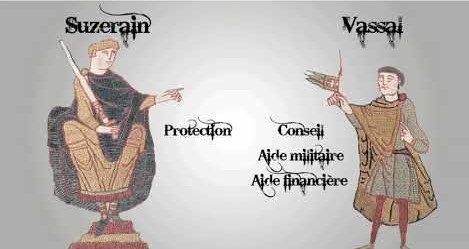
In the ancient near east there existed a system wherein covenants could be made. That system could be described as a Suzerain Vassal covenant or treaty. In this sort of agreement one of the parties would be greater or more powerful than the other. The suzerain would be the powerful entity. The vassal would be the subservient, or lesser, or learning entity. In this sort of treaty, the vassal would pay tribute or show some form of loyalty to its suzerain. In return, the suzerain would provide protection or some other sort of benefit to its vassal. There could only be one suzerain/vassal connection. Meaning, a vassal couldn’t have two suzerains. This would basically be treason. You can only serve one lord.
From this article on the suzerain/vassal covenant relationship:
“The covenant Yahweh established with Israel at Mount Sinai exhibits striking parallels with Hittite suzerain/vassal treaties, which had six basic features: 1) a preamble that identifies the suzerain; 2) a historical prologue that recounts the previous relationship between the parties; 3) covenant stipulations to which the vassal must agree; 4) provisions for periodic reading and safekeeping of the covenant; 5) witnesses to the covenant; and 6) blessings and curses should the vassal either keep or fail to keep the covenant. The Sinaitic covenant contains all six of these characteristics.”
In his book, The Last Days: Types and Shadows from the Bible and the Book of Mormon, Avraham Gileadi states:
“the idea of Israel’s suzerain or Lord [Jehovah] assuming vassal or servant status in order to answer to his suzerain [God the Father] for his people’s rebelliousness introduces the concept of a God higher than Israel’s God. That is, Jehovah, the God of Israel, is a “Son” to God the “Father” (3 Nephi 11:7,11,32; compare 15:4-5). That concept does not appear explicitly in the Old Testament. Many Jews, therefore, insist that God is but “one” (Hebrew ehad; Deuteronomy 6:4); other than the Lord, they assume, no God exists (see Isaiah 44:6,8; 45:21-22). However, the idea of “the Father” and “the Son” makes perfect sense in light of ancient Near Eastern suzerain (Lord)–vassal (servant) covenant relationships.
“Abinadi (and every prophet who teaches God’s redemption of humanity) here enlightens us. Abinadi says that God, who redeems his people, is both “the Father and the Son” (Mosiah 15:1-3; compare Alma 11;38-39; Ether 3:14). That abstruse statement seems at first glance to contradict the careful distinction between the Father and the Son that other scriptures teach. But when viewed from the ancient Near Eastern suzerain (lord)–vassal (servant) covenant relationship, we gain insight on how the Lord can serve as a suzerain or Father to his people Israel, but also can serve as a vassal or Son to his Father or suzerain. To Israel, the Lord is Father, and they become his sons or vassals. To God the Father, the Lord is the Son, subjecting his will to the Father in order to merit Israel’s salvation (Mosiah 15:2,7).
“Moreover, as the literal and loyal Son of a divine Father–as the Son of a righteous [covenant suzerain “Father”]–the Lord is not subject to death unless he himself consents to die (See the type of Isaac’s consenting to let Abraham sacrifice him–Genesis 22:9) Even if he does die, the Father must come to the aid of his vassal and deliver his Son from death. In ancient Near Eastern literatures there is the concept of the god who dies only to revive and assume the throne of a senior deity. Thus “God breaketh he bands of death . . . giving the Son power to make intercession for the children of men” (Mosiah 15:8). What the Father does for the Son, the Son does for his sons and daughters: when “the Son reigneth, and hath power over the dead . . . he bringeth to pass the resurrection of the dead” (Mosiah 15:20).
“Moreover, the moment one introduces the idea of the Father and the Son, one also introduces the concept of spiritual progression. That constitutes as much a part of the “good news,” or gospel, as does redemption from death itself (see Mosiah 15:10-19). Inherent in a Father/suzerain–Son/vassal relationship with God is the assuming of divine attributes–becoming God-like…”
So we see that this Near Eastern tradition of suzerain and vassal treaties and covenants perfectly aligns with how we relate to Jesus Christ. He is our suzerain, making us His children. God is His suzerain. Through our covenant relationship with Christ, we receive protection from both Christ and His Father and our Father, God the Father.
Another interesting thought from that note is how Christ conquered death. It was by His relationship with the Father that He was able to conquer death. He in turn allows us the same opportunity when we link ourselves to His will and power. Christ received His divine identity from His Father. We can receive our divine identity through Jesus Christ’s Atonement and conquering of death. This is why we only come to the Father through the Son. Christ is our protector, our Suzerain. As we serve Him, we receive that protection as His vassals.
In addition, another way that Christ is our father is through the resurrection. It is due to Christ’s atonement and resurrection that we are able to be resurrected. This makes Christ the father of our bodies. For we wouldn’t have our bodies without His resurrection and the gift that we can be resurrected into our bodies. God the Father is still the father of our spirits. Whether that be through adoption, some measure of creation, or some other way, we’ll one day know.
A last note I wanted to make that I liked from this article:
“The basis of the covenant was Yahweh’s gracious acts toward Israel, not their obedience to him.”
Our covenant relationship with Christ is a reminder that His grace saves us. It doesn’t matter how obedient we are. We needed His grace to save us. As our Suzerain, His covenant with us is based so much more on how He loves us and all He is willing to do for us than anything we can do for Him. We can never properly repay Christ for all He’s done for us. He is the Suzerain. He has the power to save us.
This is the good news of the Gospel. Because Christ conquered all, we can become like Him, and in turn, become like our Father in Heaven.
 No Coincidences