Tag: John

  • Rameumptom

    Rameumptom

    It’s amazing to read the Book of Mormon and compare those people to our day.  One story from the Book of Mormon that recently stood out to me was the story of the Zoramites and the rameumptom.

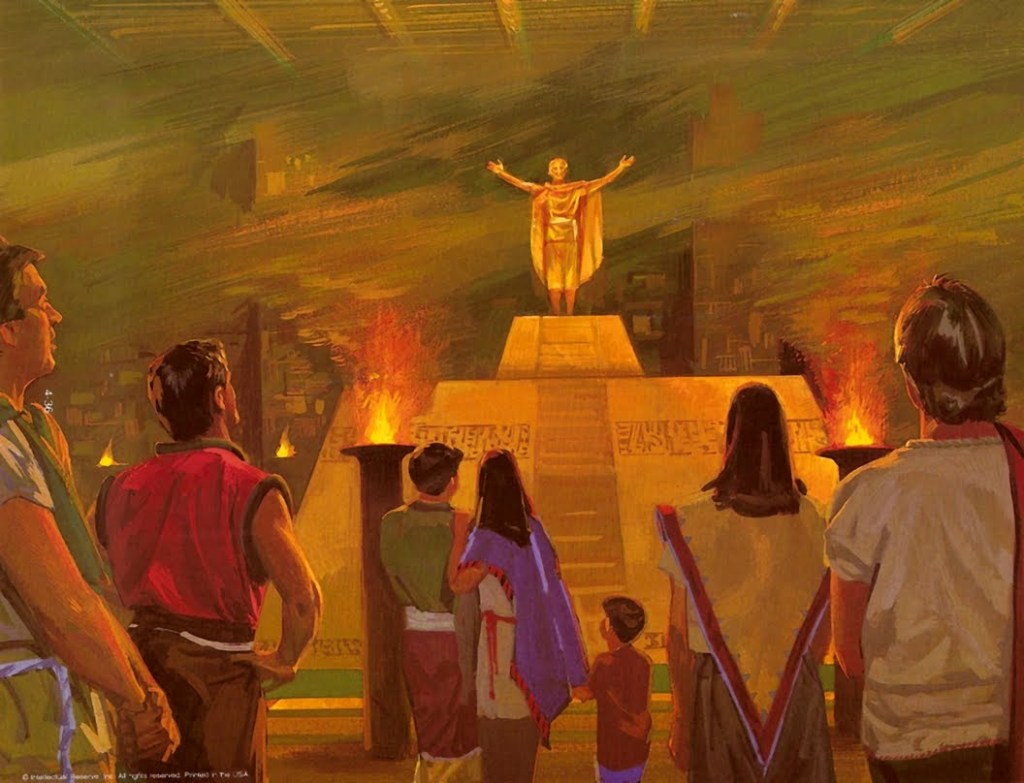
    The Zoramites were a people who corrupted religion in many ways.  They built a large tower.  This tower was called a rameumptom and it was used for prayer.  People would go to the top of the tower and loudly proclaim a rehearsed prayer.  In the prayer they would thank God that He chose them.  They would thank God that He had enlightened them and saved them while He would damn all the others to hell for their false beliefs.  They would say their prayer, leave the tower, and go about their week without another thought towards God.  They would use their week to serve no one but themselves. 
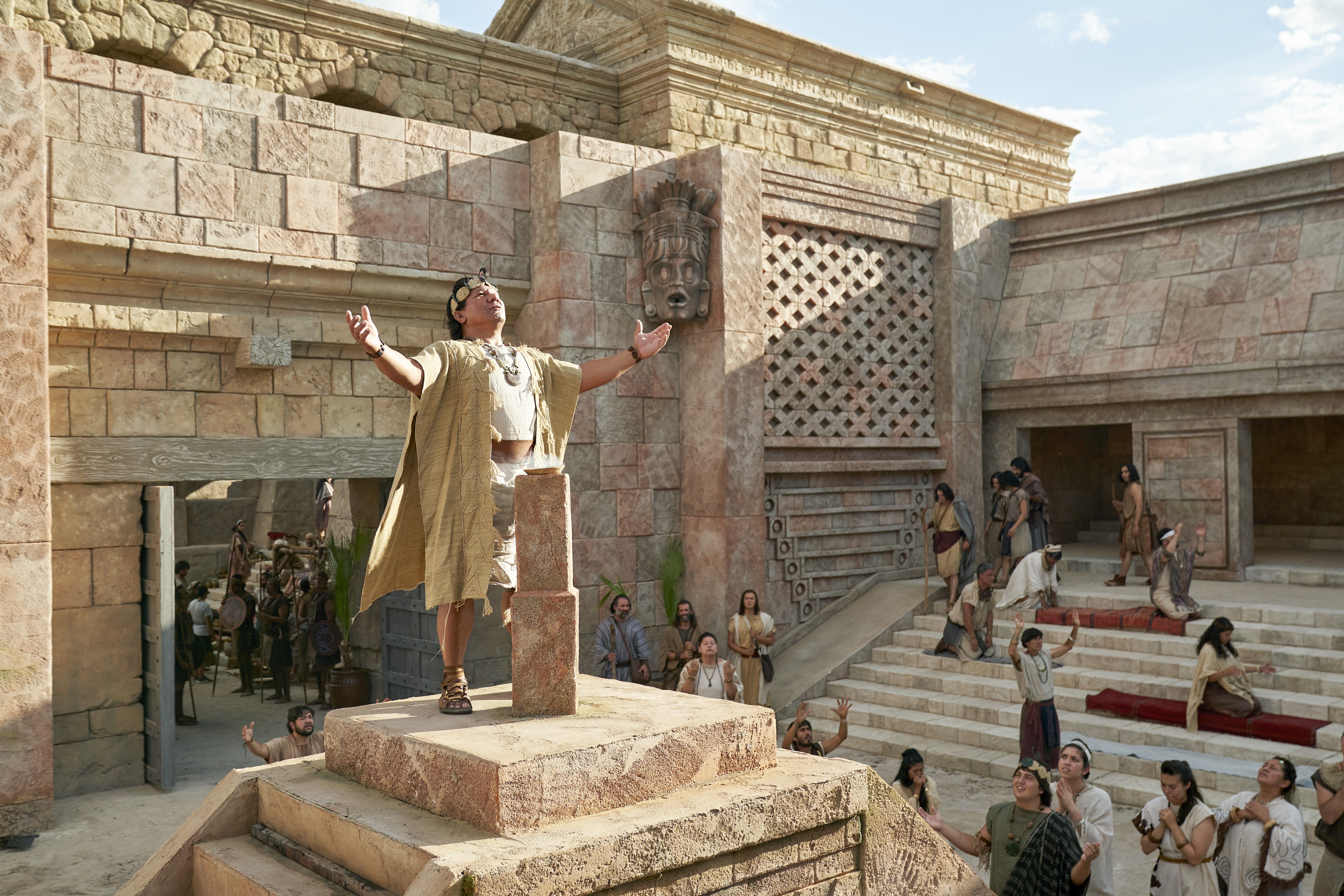
    A Zoramite man prays on the Rameumptom in the land of Antionum.

    Let’s compare the many false beliefs of the Zoramites to our society today.

    First, praying on the rameumptom.  What good deed is done today without proclaiming it to the world?  We’re all guilty of it.  Social media is our modern day rameumptom.  It is where we proudly shout our greatest deeds for the world to see.  Prayer and good deeds should be done in private.  Let not thy left hand know what thy right hand doeth.

    Second, the Zoramites had a temple that only the rich were able to go to.  Churches today have become much more about prestige and power than about humility and kindness.

    Third, rehearsed prayer.  The Zoramites used a rehearsed, scripted prayer to talk to God.  There are many problems with this.  It takes any effort from the procedure.  The prayer has no thought or feeling to it, it’s like reading in class.  There’s no genuine questions, no genuine requests, no genuine gratitude. It is a script.  We see this in many churches today.

    Fourth, prayer without action.  This is a byproduct of rehearsed prayer.  What does prayer without effort lead to?  Life without effort.  The Zoramites loudly spoke their prayers from their tower, stepped down, and that was the extent of their worship.  They wouldn’t speak to God again until the next week when they would give their five minute rehearsed prayer and move on with their life.  This is the worship of our society today.  With all God has given us we can’t even give Him a day of worship in return.  Most don’t go to church at all.  Many who do go, go on Sunday, listen for an hour, and the rest of the week don’t do a selfless act.  Christ was our example.  He taught us to pray always, serve others, and love others.  If we aren’t doing that, we aren’t of Him, no matter how loud our prayer.

    Fifth, the Zoramites thanked God that they were chosen by Him.  They thanked Him for enlightening them and turning them away from the foolish traditions of their fathers and neighbors.  They were selected by God and would be saved.  All others were fools who would burn in hell.  Sound familiar?  Many churches today believe you will only be saved if you follow their beliefs or belong to their church.  What kind of selective God is this?  It spits in the face of a loving, caring Heavenly Father who is no respecter of persons. This is a blasphemous and poisonous teaching that goes back to the pride and selective nature of churches.  God loves all His children and will provide a way for all of them to attain as much glory as they desire.  The doctrine of Jesus Christ taught by the Church of Jesus Christ of Latter-day Saints teaches that there are many mansions in heaven and God’s wonderful plan has provided a way for a vast majority, almost all of His children to go to Heaven.  All that repent,  follow His commandments, and believe in His Son will find a place worthy of their righteous hearts.  This is truth.

    I have a close friend of a different Christian faith.  We have many good religious conversations.  One day the topic of heaven came up.  He told me that surely I didn’t believe he would go to heaven as he wasn’t a member of the Church of Jesus Christ of Latter-day Saints, my church.  This made me so sad.  I told him with complete sincerity and 100% certainty that I knew he was going to heaven.  Whether he joined the Church (my church) or not, I knew he was a good person.  I knew he loved Jesus Christ.  I knew he tried every day to seek Christ and to do good.  I knew he sought God with all his heart.  I knew he was kind and liked to help people.  I know, without a doubt in my mind, that there is a place in heaven for him.  I know this because I know God.  I know he loves all of us.  I told this to my friend, and I’ll never forget the look on his face.  A little shock, a little awe.  I know that he believes I am going to hell, he has told me so.  He believes I have been fooled and I will have to pay for my ignorance.

    I know that God loves him, and I know that God loves me.  I know that Jesus Christ is the perfect judge.  We will be judged perfectly.  Even those who are fooled will be given mercy and love from God.  That’s the God I know.  I feel sad for those who don’t know that same God.

    False teachings have corrupted and destroyed religion.  False teachings have turned many away from the truth and light that religion should provide.

    I have an invitation to anyone who read this and thought “I do hate how churches say everyone who doesn’t do this or that is going to hell,” or “I’ve never understood rehearsed prayers,” or “I can’t stand the hypocritical church goers who are the meanest people during the week.”  My invitation is to come and see.  Come and learn of the Gospel of Jesus Christ. Come and learn what Christ intended for us.  Come and learn true principles and ordinances of Christ’s gospel.  Come serve with us, come worship with us, come pray with us, come be with us.  The Church of Jesus Christ of Latter-day Saints is not perfect, not yet.  Not until Christ returns.  We can still be hypocrites but we’re trying.  Christ’s Gospel is perfect and we’re working toward it.  Come and see.
  • Lectures on Faith – Lecture 2: The Object of Faith

    Lectures on Faith – Lecture 2: The Object of Faith

    A main theme throughout the Lectures on Faith is God’s perfect attributes.  Logically, for us to be able to have any faith in God He must be perfect.  We must know that we can trust God and, in turn, His Son, Jesus Christ. 

    The major theme I took away from Lecture 2 specifically is how we have attained faith throughout history.  Lecture 2 presents the profound idea that our faith in God is always dependent, or comes initially, from the faith of another.  Consider this, if no one in your life ever mentioned any sort of higher being, any sort of God, any sort of creator, would you come up with the thought on your own?  You think about God because He is someone we have been taught about since Adam.

    Even if your parents aren’t the ones who teach you about God, you learn about God from someone.  I would venture to say that in the world today every single person on the face of it has heard of the concept of a supreme being.  Why is this?  Where does our innate belief/consideration of God come from?

    Lecture 2 points out that there was an unbroken chain of testimony that started from Adam and was handed down through Abraham.  If you read Genesis carefully and do the math you will see that ancient prophets handed the knowledge of God down for generations.  It continues today.

    Adam knew God in the Garden of Eden.  When he left the Garden Adam still knew God.  We know Adam’s sons knew God.  Abel provided sacrifices to God.  Cain spoke to God even after murdering his brother.  This shows us that God spoke to men even after the fall and continued to speak to them as they continued to fall into transgression.  There is something significant here that I’d never considered.  Abel first got his knowledge of God from his father, Adam, as did Cain.  After they were told about God by Adam, then they had to develop their own faith in God.  They had to learn, trust, and depend on Him, or not. 

    The important thing to remember from this: we all start our faith by leaning on the faith of another.  We possess dependent faith.  This leads to another profound truth: God possesses independent faith.  God’s faith is not reliant on any outside source.  As discussed in lecture one, God’s faith is perfect.

    I’ve been studying the lectures alongside a video series that I will link at the bottom.  There were many amazing thoughts and ideas presented in that video, related to this second Lecture on Faith.

    Faith is faith until it happens, then it is knowledge. Since God has perfect faith, He doesn’t need to wait for something to happen for Him to know it.  He knows it is going to happen.  His faith is perfect therefore His knowledge is perfect.  It’s simple when you think about it in these terms, but it’s so critical.  It’s why we can have perfect faith in Him, BECAUSE we know His faith is perfect.

    IMPORTANT:  God is not still progressing.  This is important for us to understand.  God is not still learning.  If He was, we couldn’t have perfect faith in Him.

    God is Perfect - Ottawa Church of Christ

    This leads to a question: isn’t life boring for God if He has mastered everything?

    In the video they gave an awesome analogy.  Imagine you’re an accountant.  You master every aspect of accounting there is.  You have a perfect knowledge and ability in accounting.  Would you get bored with accounting?  Probably.  So, what would you then do?  You would teach others how to also master accounting.  God is the master accountant.  He has attained all knowledge on life, faith, eternity, creation – so what does He do?  He teaches us.  What a thought!  We are being tutored by the God of the universe.  That’s what makes this life so important.  When we consider that we are learning and being personally groomed by God Himself, what power it adds to our existence here!

    This leads to another important thought.  What was Christ’s ultimate message while here?  I think it would be service.  Love through service.  Give through service.  Charity.  Without charity you are nothing (1 Corinthians 13:2, Moroni 7:44)  Why did Christ teach this ever-important principle?  Because His Father, our Father, God is the ultimate server.  He is doing everything He does to teach us.  We truly are “His work and His glory” (Moses 1:39).

    I want to conclude with two last realizations: 

    1. The scriptures help develop our faith by teaching us of God.  This is important.
    2. Faith comes by hearing the word of God through the testimony of the servants of God, that testimony is always attended by the spirit.

    You aren’t told to have a testimony.  You’re not made to know Jesus is the Christ.  These are things you must come to a knowledge of through the spirit.  Think about it.  Christ, in His whole ministry, never told anyone He was the Son of God.  He always let them come to that conclusion on their own.  One example is Peter who He told, “blessed art thou for flesh and blood hath not revealed it unto thee, but my Father which is in heaven” (Matthew 16:17).   Another example is Christ to the woman at the well (John 4).  Christ didn’t go telling people who He was.  It had to be revealed by the spirit.  This is why signs come by faith, and not the other way around (D&C 63:7-12).

    Our hearts must be open for us to receive the testimony of Jesus Christ.  2 Nephi 33:1 “When a man speaketh by the power of the Holy Ghost the power of the Holy Ghost carrieth it UNTO the hearts of the children of men.”  Not INTO but UNTO.  It’s then on the heart of the individual to accept or reject the testimony.  The system is in place.  The system has been in place for God’s children to develop faith in Him from the beginning.  Once the testimony is carried to the heart It’s then on the agency of the individual to receive or reject that testimony. 

    God has perfect faith.  We are here to develop our faith so that we can be like Him.  He is the great accountant, and we are his protégés.  It is His hope, His glory that we can become like Him.  As we develop our faith here it will benefit us for the rest of eternity.  I know I say it a lot, but, what a thought.

    Video 3 (Lecture on Faith 2):  https://www.youtube.com/watch?v=F-o59d9ioGA&list=PLc5yYrpPFm2umksQf3jgULxoV4YIXTd2h&index=3

    Lecture on Faith 2: http://lecturesonfaith.com/2/

  • Truths Removed from the Bible:  What does the Book of Mormon tell us about Baptism?

    Truths Removed from the Bible: What does the Book of Mormon tell us about Baptism?

    I like to think about what critics would say as proof against the Book of Mormon.  I think it helps to have responses to honest concerns about its validity.  I always hope something I read, know, or especially my testimony can one day help someone to see what I see, the truth of this ancient record. 

    The Book of Mormon makes a very important claim.  The claim is that many plain and precious truths have been removed from the Bible over time.  When Joseph Smith first translated the Book of Mormon this was an outlandish and inflammatory statement.  Even more so than today. Christianity in the early to mid-1800s had a firm belief that the Bible was infallible. 

    From a website (https://stepbystep.alancminer.com/) I’ve loved using to study alongside the Book of Mormon, I read this:

    “Richardson, Richardson and Bentley write that while the Book of Mormon testifies to the authenticity of the Bible, it does not claim that the Bible is without error. It specifically states that there were many “plain and precious things” that were deleted from its pages through the evil works of men. (See 1 Nephi 13:20-32; 19:10-12; 20:1-3; 2 Nephi 3:5-22; Alma 33:3, 13, 15; 34:7; 46:23-27; Helaman 8:19-20; 15:11; 3 Nephi 10:14-17; 12:13, 17-19, 22, 29-30; 14:1.)

    Scholars of the Bible have found indisputable evidence that the Bible has indeed suffered many deletions. Non Mormon scholarship has concluded that the gospels found in the New Testament have also been manipulated.”

    Critics may ask for specific examples of any “plain and precious truths” found in the Book of Mormon that are not also found in the Bible.

    The website I mentioned above goes on to list 24 plain and precious truths removed from the Bible and where they are laid forth in the Book of Mormon.  I’d like to go over an extremely important one.

    Baptism is only for those who are accountable (Moroni 8:5-23).

    I know of nowhere in the Bible that lays forth the age of accountability. Should children be baptized?  We know baptism is of the utmost importance:

    John 3:5 “Jesus answered, Verily, verily, I say unto thee, Except a man be born of water and of the Spirit, he cannot enter into the kingdom of God.”

    What does the Book of Mormon teach us on the subject of baptism? Moroni chapter 8 is full of profound truths found nowhere in the Bible. I will quote portions of the chapter here but encourage everyone to read the chapter and ponder its truthfulness.

    8 “the whole need no physician, but they that are sick; wherefore, little children are whole, for they are not capable of committing sin; wherefore the curse of Adam is taken from them in me (Jesus Christ), that it hath no power over them”

    9 “I know that it is solemn mockery before God, that ye should baptize little children.”

    10 “repentance and baptism unto those who are accountable and capable of committing sin; yea, teach parents that they must repent and be baptized, and humble themselves as their little children, and they shall all be saved with their little children.”

    11 “And their little children need no repentance, neither baptism.”

    12 “But little children are alive in Christ…if not so, God is a partial God, and also a changeable God, and a respector of persons; for how many little children have died without baptism!”

    15 “For awful is the wickedness to suppose that God saveth one child because of baptism, and the other must perish because he hath no baptism.”

    19 “Little children cannot repent; wherefore, it is awful wickedness to deny the pure mercies of God unto them, for they are all alive in him because of mercy.”

    20 “And he that saith that little children need baptism denieth the mercies of Christ, and setteth at naught the atonement of him and the power of his redemption.”

    Girl Being Baptized

    Who can read this and deny the truth that speaks to your heart and soul?  It is so clearly laid out. So perfectly explained. 

    What about how to baptize?  There is so much confusion in the world on not only when but how.  Does the Book of Mormon provide an answer?  Of course!  3 Nephi 11:24-28.

    24 And now behold, these are the words which ye shall say, calling them by name, saying:

    25 Having authority given me of Jesus Christ, I baptize you in the name of the Father, and of the Son, and of the Holy Ghost. Amen.

    26 And then shall ye immerse them in the water, and come forth again out of the water.

    27 And after this manner shall ye baptize in my name; for behold, verily I say unto you, that the Father, and the Son, and the Holy Ghost are one; and I am in the Father, and the Father in me, and the Father and I are one.

    28 And according as I have commanded you thus shall ye baptize. And there shall be no disputations among you, as there have hitherto been; neither shall there be disputations among you concerning the points of my doctrine, as there have hitherto been.

    How lucky we are to live in the dispensation of the fullness of times. I’m grateful for the Book of Mormon. I’m grateful that it clarifies what has been a point of contention within Christianity for centuries.

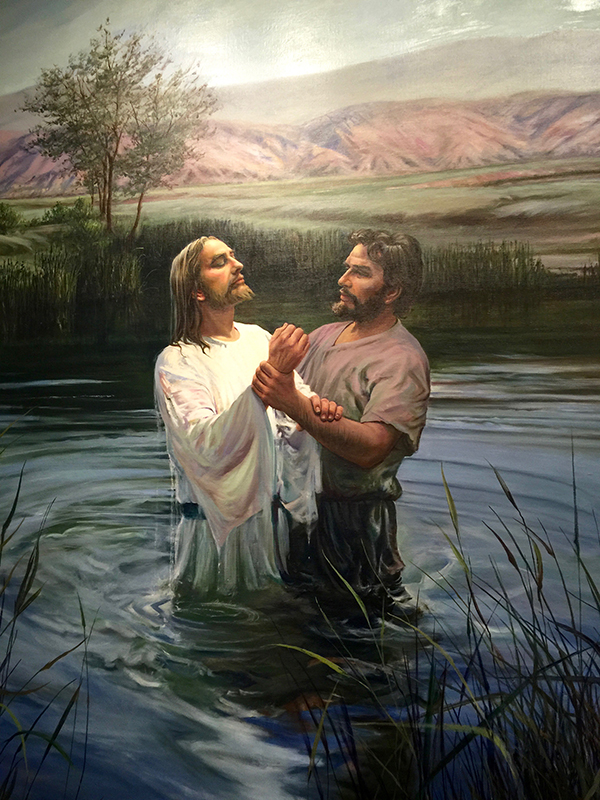
    Christ was our ultimate example.

    2 Nephi 31:5 And now, if the Lamb of God, he being holy should have need to be baptized by water, to fulfil all righteousness, O then, how much more need have we, being unholy, to be baptized yea, even by water!

    Click below to learn more about baptism as it has been perfectly restored through the Gospel of Jesus Christ by the Church of Jesus Christ of Latter-day Saints.

    https://www.churchofjesuschrist.org/study/manual/true-to-the-faith/baptism?lang=eng