Tag: justice

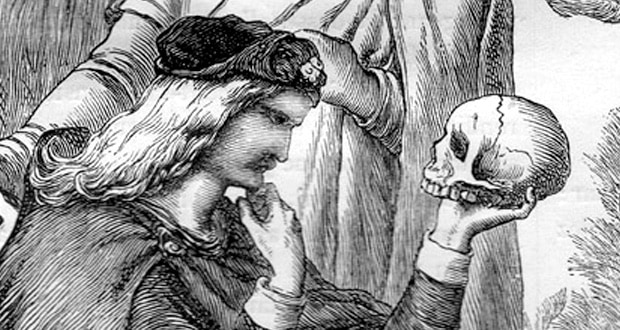
  • Romney as Hamlet

    Romney as Hamlet

    This was an assignment for a class I took. I liked what I came up with so much, I decided to turn it into a blog post!

    I’m merging two topics I’m not super familiar with in this post: Shakespeare and politics. It was only when re-reading this in preparation for posting (written over 2 years ago) that I looked up the fate of Mitt Romney and learned he didn’t run for a new term in the Senate.

    The assignment was to compare Hamlet to a political figure. This is what I came up with.

    When I started to consider the comparison between Mitt Romney and Hamlet, more and more parallels started to come up. The easy starting point is political family and affluence. Mitt Romney’s father was a well-known politician. In a way, similar to Hamlet, Mitt Romney was brought up in a prominent and politically royal family.

    The second parallel pertains to Hamlet and Mitt Romney’s individual commitment to their morals and principles. You can say what you want about Hamlet’s actions and trajectory. He believed his father was killed and he was out to make it right. Mitt Romney, similarly, did what he thought was right when it came to his political decisions. Hamlet made decisions based on his principles that ultimately hurt him in the end. He deemed doing what he felt was right with vengeance more important than his own welfare. Similarly, Mitt Romney voted politically based on his principles, even if that was at his own expense. In sticking to his principles, Hamlet betrayed his uncle, the crown, and the “system.” That’s precisely how Romney has been portrayed by many Republicans, as betraying his “team” or party.

    Romney has ultimately been villainized for his voting. Despite many begging for politicians to step out of the political mode, vote and do what they think is right, and be a good person, when Mitt Romney did that, the Republican party vilified him. They called him a betrayer and a madman. Very akin to Hamlet being perceived as a madman, walking the halls, being crazy, really due to a desire for justice.

    It occurred to me that ultimately how you view Hamlet is completely colored by one question: did he, or didn’t he really see his dead father and know that his uncle killed his father? If Hamlet saw his dead father and knew for a fact that his father was assassinated by his uncle, then his actions are justified. With this view, Hamlet is a hero throughout, even if a tragic hero. If, on the other hand, Hamlet from the start was a crazy person, having visions and believing his dead father spoke to him from the grave, then he may have unjustly attacked his uncle throughout.

    If you are a devout Donald Trump supporter and/or Republican, you may feel Mitt Romney betrayed the party, that he is simply disloyal. If emotions are separated from the party and perceived betrayal of Donald Trump, then Mitt Romney only did what he thought was right. Your perception of both Hamlet and Mitt Romney is tinted by your preconceived notions.

    Hamlet was called crazy, which I’ve mentioned. In the end, Hamlet was honored and respected. He was, in my opinion, correctly represented by Horatio in the end. Despite his flaws, Hamlet was given a respected funeral and high honors. We haven’t gotten there yet with Mitt Romney. I believe history will look back kindly on Mitt Romney. I believe 50 years from now people may look back and wonder why someone who just tried to do what they thought was right was vilified. To further this comparison, Donald Trump could be considered Claudius. Mitt Romney betrayed him, doing what he thought was right. Hamlet, deeming Claudius’s actions unforgivable, worked against him throughout the play.

    On a final, unrelated note, this was my first time watching or reading Hamlet. I knew very little about the play beforehand. Beth and I were extremely tickled by “Get thee to a nunnery.” Too funny. #InsideHamletJokes.

  • The Higher Law and the End of Blood Sacrifice

    The Higher Law and the End of Blood Sacrifice

    Christ fulfilled the law. This was why blood sacrifices were done with after His last and great sacrifice. But what does this mean, practically?

    The Israelites practiced God’s law which was a law of reparations. You take out the eye of an enemy maliciously, you take out his eye. Someone kills your brother, you kill him. The problem with this is obvious. Blood begets blood and when does it end?

    This is why the Israelites practiced the law of sacrifice. They took an animal, that had nothing to do with bloodshed, or theft, or lying, and instead of continuing the constant cycle of reparations, they sacrificed the blood of the animal. This is obviously what Christ represented when He died on the cross. He paid the price for all our sins, because we are incapable of paying such a price.

    This is why Christ preached a higher law. No longer was it an eye for an eye but it was turn the other cheek. No longer was it sue for damages but give your second coat. Christ’s point was that after He died for our sins, animal sacrifices would be done away with, there was no more putting your sins off on a goat. Christ was teaching the end of strife. Someone wrongs you, forgive them and move on. This put an end to the vicious cycle of payback and recompense.

    Who was the greatest example ever of this? Jesus Christ never asked us to do something He didn’t do first, when He was up on the cross, and forgave those who had scourged, beaten, and crucified Him.

    But of course, justice still had to be paid for a wrong done. That’s where Christ came in, paying the ultimate and last sacrifice with His blood. So, we flawed human beings, who sometimes commit wrong without even meaning to, can be forgiven. This is the miracle of what Christ did for us, the miracle of His atonement, the miracle of His forgiveness, and the miracle of the higher law.

  • TRUTH about Heaven

    TRUTH about Heaven

    On November 19, 1823, a young man named Alvin Smith died.  The Smith family asked a Presbyterian minister to officiate at Alvin’s funeral.  “As Alvin had not been a member of the minister’s congregation, the clergyman asserted in his sermon that Alvin could not be saved.  William Smith…recalled: ‘[The minister]… intimated very strongly that [Alvin] had gone to hell, for Alvin was not a church member, but he was a good boy and my father did not like it.” (Teachings: Joseph Smith, 401, 403).

    On January 21, 1836, while in the temple at Kirtland, Ohio, the heavens were opened up to a still young man named Joseph Smith.  It was recorded:

    1 The heavens were opened upon us, and I beheld the celestial kingdom of God, and the glory thereof, whether in the body or out I cannot tell. 

    5 I saw Father Adam and Abraham and my father and my mother; my brother Alvin, that has long since slept;

    6 And marveled how it was that he had obtained an inheritance in that kingdom, seeing that he had departed this life before the Lord had set his hand to gather Israel the second time, and had not been baptized for the remission of sins.

    7 Thus came the voice of the Lord unto me, saying: All who have died without a knowledge of this gospel, who would have received it if they had been permitted to tarry, shall be heirs of the celestial kingdom of God; 

    8 Also all that shall die henceforth without a knowledge of it, who would have received it with all their hearts, shall be heirs of that kingdom;

    9 For I, the Lord, will judge all men according to their works, according to the desire of their hearts.

    10 And I also beheld that all children who die before they arrive at the years of accountability are saved in the celestial kingdom of heaven. 

    Matthew 7 of the Joseph Smith translation has an important clarification:

    Now these are the words which Jesus taught his disciples that they should say unto the people.

    Judge not unrighteously, that ye be not judged; but judge righteous judgment.

    What is, righteous judgement, then? From the New Testament Student Manual:

    “President Dallin H. Oaks explained these teachings and their application, basing his comments on the principle “that there are two kinds of judging: final judgments, which we are forbidden to make, and intermediate judgments, which we are directed to make, but upon righteous principles:

    First, a righteous judgment must, by definition, be intermediate. It will refrain from declaring that a person has been assured of exaltation or from dismissing a person as being irrevocably bound for hellfire. It will refrain from declaring that a person has forfeited all opportunity for exaltation or even all opportunity for a useful role in the work of the Lord. The gospel is a gospel of hope, and none of us is authorized to deny the power of the Atonement to bring about a cleansing of individual sins, forgiveness, and a reformation of life on appropriate conditions.

    Second, a righteous judgment will be guided by the Spirit of the Lord, not by anger, revenge, jealousy, or SELF-INTEREST(my emphasis added). …

    Third, to be righteous, an intermediate judgment must be within our stewardship. We should not presume to exercise and act upon judgments that are outside our personal responsibilities. …

    Fourth, we should, if possible, refrain from judging until we have adequate knowledge of the facts. …

    “A fifth principle of a righteous intermediate judgment is that whenever possible we will refrain from judging people and only judge situations. … We can set and act upon high standards for ourselves or our homes without condemning those who do otherwise. …

    Sixth, forgiveness is a companion principle to [this] commandment. … In modern revelation the Lord has declared, ‘I, the Lord, will forgive whom I will forgive, but of you it is required to forgive all men’ (D&C 64:10).

    Seventh, a final ingredient or principle of a righteous judgment is that it will apply righteous standards” (“‘Judge Not’ and Judging,” Ensign, Aug. 1999, 7, 9–12).”

    I will refrain from judging that minister at Alvin’s funeral who failed in almost all these points laid out by President Oaks.  I will leave that judgement to God for such behavior.

    What I will say is this:  the hateful, vengeful God that condemns young children and the ignorant to eternal hellfire, is not my God.  My God doesn’t create someone, give them a body, send them to earth, only to condemn them to eternal damnation because they never committed to a God they never heard of.

    Where is the justice, mercy, and LOVE of that God?  There is no love in that God.  That is not my God.

    My God loves all His children.

    1 Peter 4:6 “For for this cause was the gospel preached also to them that are dead, that they might be judged according to men in the flesh, but live according to God in the spirit.” 

    How can it be, then? How can men be judged in the flesh when their flesh has long since been laid in the ground and returned to the dust from which it was formed?

    Salvation for the dead through ministering to the dead.  Baptisms and ordinances for the dead.  Ordinances that the dead cannot, once dead, perform for themselves.  For we, without them, cannot be made perfect, as they, without us, cannot be made perfect (Hebrews 11:40, D&C 128:18).

    Truth.

    Pure.

    Simple.

    If this doesn’t make sense to you, please, re-read it.  Then read it again, then read it again.  New wine is difficult to fit in old bottles.  Then ask me, and maybe I can explain in better.  I know the missionaries can.

    God doesn’t condemn you or your loved ones to hell because you haven’t met or been taught of the true Him.  This is the great evil that Satan has perpetuated throughout Christianity.

    THAT IS NOT GOD.

    God is love.  You, your father, your father’s father.  He loves all of you.  And you will all be able to hear the truth before any judgement is made.  I love that God, and I am grateful for Him.  And I am grateful for Joseph Smith for these pure, simple truths that he restored.  And I am grateful for my Savior, Jesus Christ, who affords me all this: forgiveness, love, peace, eternity with my family.  Because He suffered for me.  Again, and again and again and again I say, thank you.

    To learn more about TRUTH:

    CLICK HERE

  • Lectures on Faith – Lectures 3 and 4: The Character and Attributes of God.

    Lectures on Faith – Lectures 3 and 4: The Character and Attributes of God.

    These two lectures are combined because they are so closely linked.  They were also combined into one video in the series I’m watching that teaches about the Lectures on Faith.

    Lectures 3 and 4 are about the unchanging attributes of God and why understanding those attributes is necessary for our faith.

    The points made in the video were so good I’m going to just list the character traits and attributes of God given in these lectures and then give points from the video.  All the points from the video I believe inspire some thought-provoking ideas.

    Character of God:

    1. He was God before the world was created and continued to be God after.
    2. He is merciful, gracious, slow to anger, abundant in goodness, He was from everlasting, and will be to everlasting.
    3. He is unchanging, there is no variableness with Him, His course is one eternal round.
    4. He is a God of truth and cannot lie.
    5. He is no respecter of persons.
    6. He is love.

    Attributes of God:

    1. Knowledge
    2. Faith or power
    3. Justice
    4. Judgement
    5. Mercy
    6. Truth

    It is obvious why these two lectures go hand in hand as there is a lot of overlap between the character and attributes of God.

    I’ll now go over some interesting thoughts from the video.

    1. Pretty obvious but worth saying, this is not a finite list of attributes.  It’s meant to help our minds to understand who God is so we can put complete faith in Him.
    2. Unfortunately, this has become less true in our day, but most of us don’t have a problem believing in God, it’s what He’s like where we have an issue – and so much disagreement.
    3. The first attribute listed is mercy.  One of the first attributes of God Nephi mentions in the Book of Mormon is mercy.  In Moroni’s last chapter, the concluding chapter of the book of Mormon, mercy is mentioned again.
      • 1 Nephi 1:14 And it came to pass that when my father had read and seen many great and marvelous things, he did exclaim many things unto the Lord; such as: Great and marvelous are thy works, O Lord God Almighty! Thy throne is high in the heavens, and thy power, and goodness, and mercy are over all the inhabitants of the earth; and, because thou art merciful, thou wilt not suffer those who come unto thee that they shall perish!
      • Moroni 10:3 Behold, I would exhort you that when ye shall read these things, if it be wisdom in God that ye should read them, that ye would remember how merciful the Lord hath been unto the children of men, from the creation of Adam even down until the time that ye shall receive these things, and ponder it in your hearts.
      • It is important for us to understand the mercy of God.
    4. If we have the idea that God is easy to anger it makes it harder for us to have faith in Him.  In the parable of the talents, why did the servant bury his talent?  Because he was afraid.
    5. The fifth and sixth attributes can be combined.  God is a God of love because He is no respecter of persons.  He loves us all. 
    6. God doesn’t stop loving people when they sin.  The difference is God is not able to bless people when they sin.
    7. Where there is doubt faith cannot exist.  Questions are different from doubts.

    I’ll conclude with a statement directly from lecture 4:16 because I think it is extra relevant to us today.

    “And lastly, but not less important to the exercise of faith in God, is the idea of the existence of the attribute truth, in him. For, without the idea of the existence of this attribute the mind of man could have nothing upon which it could rest with certainty: all would be confusion and doubt; but with the idea of the existence of this attribute in the Deity, in the mind, all the teachings, instructions, promises and blessings become realities, and the mind is enabled to lay hold of them with certainty and confidence.”

    We see the fruits of this today.  If no one knows for sure what truth is we become so shaken and confused, thrown about by any wind, blown about on the sea like a boat without paddle.  That’s how we are today when we try to understand truth without putting our faith in the truth of God.  One expert disagrees with another expert.  No one knows how to fix anything.  It is all confusion.  We don’t know who to listen to or who to trust.  Trust God.  His attribute of truth allows us to put our complete confidence in Him and know He will never lead us astray.

    To read the lectures yourself you can find them HERE.

    For the videos about the lectures you can go HERE.