Tag: lamb of god

  • Prodigal Son

    Prodigal Son

    The story of the Prodigal Son is well known.  For those who have not read it before or haven’t read it recently it can be found in Luke 15:11-32.

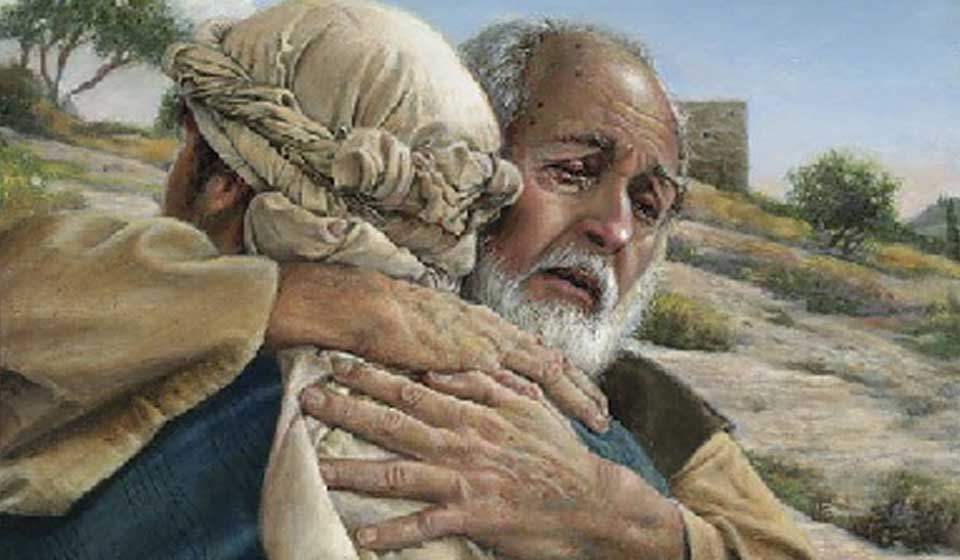
    The story of the Prodigal Son has always hit close to home for me.  Obviously, it’s easy for me to relate to the younger son.  You should read Luke chapter 15 above but a quick summary: there were two sons.  They will be referred to as the elder/older son and the younger son as I write.  The two sons were given their inheritances.  The younger son left his home and went to a faraway city.  There he squandered his inheritance on “riotous living.”  When he hit the lowest of lows, the younger son returned home to beg his father to allow him to be a servant.  The father, instead of showing anger, welcomed his son home, killed the fatted calf, put a robe on his son, gave him a ring, put shoes on his feet, and threw a huge party in celebration of his return.

    The older son, upon hearing of his brother’s return and the subsequent party, was angry.

    This story is often told in such a way that the primary lesson is about the Prodigal Son and his father’s reaction to his return. The story is called “the prodigal son” after all.  That lesson being that no matter how we stray, how far gone are, and how many mistakes we make our Heavenly Father (the father in the story) will always welcome us back.  In fact, Heavenly Father rejoices at our repentance:

    “I say unto you, that likewise joy shall be in heaven over one sinner that repenteth, more than over ninety and nine just persons, which need no repentance.”

    Luke 15:7

    All Prodigal Sons like myself rejoice at this story.

    I once heard a different perspective on this story, and I’d like to share it.  There is a great lesson to be learned in the story of the Prodigal Son by looking at a secondary character: the older brother.

    A great question to ask yourself before reading any of Christ’s parables is “who was He speaking to?”  Another good question is “What was He trying to teach?”  If you look at the parable from the perspective of the Prodigal Son, you can say Christ was teaching those who have sinned that they can always repent and return to the light of their Heavenly Father’s love.

    Who was Christ speaking to when he gave this parable? He was speaking to those looking for the message of God.   He was speaking to the listeners.  These were the ones looking for the message of God.  When giving this parable Christ was speaking to the saints.

    Consider what can be learned from the older brother.  The older brother never left.  The older brother never sinned.  The older brother respected and worked for his father.  Many say, and I always thought, he was justified in his reaction.  His exact words in verses 29 and 30:

    “And he answering said to his father, Lo, these many years do I serve thee, neither transgressed I at any time thy commandment: and yet thou never gavest me a kid (fatted calf), that I might make merry with my friends:

    But as soon as this thy son was come, which hath devoured thy living with harlots, thou hast killed for him the fatted calf.”

    This appears to be a natural reaction.  He had always been there.  He had always done right.  Only for his corrupt brother to return and receive honor.

    Why did the older son stay and work hard for his father?  Why did he keep his commandments?  Was he simply looking forward to the inheritance he was to receive?

    A Crucial Lesson from the Brother of the Prodigal Son « Meridian Magazine

    Why do you serve God and keep his commandments?  Are you looking forward to your mansion?  Do you serve God so you can inherit His glory?  Are you serving Him for YOUR benefit?

    We should serve God because we love God.  We should serve God because we love those around us.  Our service to God shouldn’t be for the blessings and honors He can give us.  Our hearts should serve for love and not for our inheritances.

    Jesus didn’t tell this story only to get sinners to repent.  He also told this story to get the saints to repent.  The Prodigal Son went out to experience life and disregarded his father’s possessions.  The older son on the other hand stuck around, but he was working to please his father.  He looked at himself as moral and worthy.  He was after his father’s possessions.  That’s what he concerned himself with.  The elder son was keeping score.  He was trying to earn his father’s love and inheritance.

    Sometimes we are like the Prodigal Son: sinning and needing to return home.  Sometimes we are like the older brother: serving for the glory of the world. 

    Often we are like the older son in our envy and jealousy.  When someone returns to the fold do we judge them for their past?  Or, like the father in the parable and our Heavenly Father, do we rejoice at someone’s return?

    Elder Holland in his talk, The Other Prodigal, said:

    “I testify that no one of us is less treasured or cherished of God than another.  I testify that He loves each of us-insecurities, anxieties, self-image, and all.  He doesn’t measure our talents or our looks; He doesn’t measure our profession or our possessions.  He cheers on every runner, calling out that the race is against sin, not against each other.  I know that if we will be faithful, there is a perfectly tailored robe of righteousness ready and waiting for everyone, “robes…made…white in the blood of the Lamb.”  May we encourage each other in our effort to win that prize is my earnest prayer.”

    Let us not compare our blessings to the blessings of others, what we have to the possessions of others.  Let us support and help each other to all return to our Heavenly Father.  Jealousy is of Satan.  We should never look down on somebody who made mistakes and is trying to return to God, because then we are the sinner.  We can learn from every character in Christ’s great parable.  Be like the Prodigal Son and repent, humble ourselves, and return home.  Be like the elder son and don’t envy but welcome our wayward brothers and sisters back home with joy and love.  And be like the father, loving all those around us, embracing the sinner and the saint alike.  I believe this is God’s hope for us and what Christ was teaching us through this story.

    __________________________

    Here is a link to Jeffery R. Holland’s talk, The Other Prodigal:

    https://www.churchofjesuschrist.org/study/general-conference/2002/04/the-other-prodigal?lang=eng
  • One True Church

    One True Church

    I initially tried to write this post with the hope of using scripture and doctrine and principles to convince anyone who would read that the Church of Jesus Christ of Latter-day Saints is God’s true church, restored from the meridian of time on the same principles that Christ established while He was here.  I have agonized over this post.  Eventually I realized something obvious.  No one is going to read this and dive into the deep scriptural and doctrinal references that add to the truth claims of this church.  Plenty has been written on the truth claims of this church.  All of it by much more learned and accomplished religious scholars than I.  For the best intellectual break down of every truth claim of the Church of Jesus Christ of Latter-day Saints, A Marvelous Work and a Wonder is the book to read. 

    What I can do is reference some scriptures, but ultimately give my testimony of this Church and Christ’s gospel.  This will be my best attempt to explain why it’s important to have one faith, one body, one church (Ephesians 4:5).

    Into some scripture from the Book of Mormon:

    “Thou hast beheld that if the Gentiles repent it shall be well with them; and thou also knowest concerning the covenants of the Lord unto the house of Israel; and thou also hast heard that whoso repenteth not must perish.”

    1 Nephi 14:5

    In a recent post He Lives I talked about why any church is important.  Why covenants?  Why repenting?  Because it turns us to Jesus Christ.

    “And he said unto me: Behold there are save two churches only; the one is the church of the Lamb of God, and the other is the church of the devil; wherefore, whoso belongeth not to the church of the Lamb of God belongeth to that great church, which is the mother of abominations; and she is the whore of all the earth.”

    1 Nephi 14:10

    It’s important to note that this scripture doesn’t mean if you don’t belong to the Church of Jesus Christ you belong to the Church of the Devil.  But.  An important point is made.  There is a church of the Lamb of God.  There is a church that if Christ were here today, He would be the head of.  There is a church that Christ is the head of spiritually.  It must be.  God and Jesus Christ have not left us.  What this scripture is saying is you either must follow the devil or follow Christ and there will be a church on the earth with proper keys and authority to help you in following Jesus Christ.

    “There is only light and darkness; there is no dusky twilight zone [in regard to covenant salvation].  Either men walk in the light or they cannot be saved.  Anything less than salvation is not salvation.  It may be better to walk in the twilight or to glimpse the first few rays of a distant dawn than to be enveloped in total darkness, but salvation itself is only for those who step forth into the blazing light of the noonday sun.”

    Bruce R. McConkie

    The beauty of the doctrine taught by Joseph Smith (given him from Jesus Christ) is that everyone will have a chance to hear the gospel.  Every one will have their chance to choose to walk in the light.  Agency is a core truth in God’s Plan.  Without agency it would all be for not.  What would our faith and devotion mean if it was by coercion?  There is an idea perpetuated by other faiths and churches that if you aren’t baptized you are doomed to hell or if you don’t believe a certain way, you’re destined for eternal suffering. This is not how God works.  It can’t be.  Where is the grace, love, and compassion in that plan?  Many faiths that emphasize the grace of Christ also claim hell as the destination for those who have never heard of Him.  All will have their chance to accept Jesus Christ as their Savior.  We are all the more blessed if we accept Him while here on earth when we are walking completely by faith. The covenants we make here draw us closer to Him  These are truthful doctrines taught by Joseph Smith that should speak to all hearts that believe in a God who is our loving Father.

    “Many in the religious world claim that no church is better than any other, just different.  As “all roads lead to Rome,” it is reasoned that all beliefs must lead to heaven.  If all religious paths do indeed lead to heaven, the righteous will be at a considerable disadvantage.  If the gates of the celestial city are to be thrown open that widely, why the need for Apostles and prophets, their doctrines, their priesthood and keys; indeed, why the need for the Savior himself and a strait and narrow way?  The doctrine of one true church is as offensive to much of the Christian world today as was the testimony of Christ anciently that he was “the way, the truth, and the life”” (John 14:6).

    Joseph McConkie and Robert Millet

    Part of my agonizing over this post was the fear of offending all my friends of other faiths. I would never want to disparage other churches and especially any church that leads to God and faith in Jesus Christ. That said, I will not apologize for claiming Christ has ONE church.

    “There is only one true way to eternal life and that is by obedience to valid covenants.  That is what the Book of Mormon testifies.  When one comes to an understanding of the Lord’s covenant process of salvation, what great things the Lord did with our fathers in bringing them to a knowledge of this covenant process, and that this message is being sent forth to all the world, then one can not help but become convinced that Jesus is the Christ, the Eternal God, manifesting himself unto all nations.”

    Alan C. Miner

    I can’t agree with Brother Miner’s words more because that is what I have experienced.  My baptism, the priesthood, my temple covenants draw me to Jesus Christ in a way that would not be possible otherwise.  I know others can come to Christ and be devoted to Him without these covenants. What shall be bound on earth shall be sealed in heaven. We aren’t here for worldy things but for eternal. I am grateful for my covenants. They draw me closer to my Heavenly Father, my Savior, and eternity.

    “For the time speedily shall come that all churches which are built up to get gain, and all those who are built up to get power over the flesh, and those who are built up to become popular in the eyes of the world, and those who seek the lusts of the flesh and the things of the world, and to do all manner of iniquity; yea, in fine, all those who belong to the kingdom of the devil are they who need fear, and tremble, and quake; they are those who must be brought low in the dust; they are those who must be consumed as stubble; and this is according to the words of the prophet.”

    1 Nephi 22:23

    I will not talk down on other churches. But does that scripture strike a chord with anyone else? Sound familiar. These are the churches of our day. They draw near to God with their lips but deny the power thereof (Joseph Smith History 1:19, 2 Timothy 3:5).

    This will continue to be a theme of my writing.  My greatest desire is for others to experience the love of Jesus Christ as I have felt it.  This comes through covenants.  This comes from knowing who we follow.  This comes from knowing what He has done for us. 

    I know that the Church of Jesus Christ of Latter-day Saints is Christ’s church on the earth today.  There are many churches that do much good.  But there is one way.  Covenants are only binding if they are initiated by God.  The Church of Jesus Christ of Latter-day Saints is the establishment by which Christ initiates his covenants with man.  This is my testimony.  In His name.