Tag: Latter-day saints

  • We are Scripture

    We are Scripture

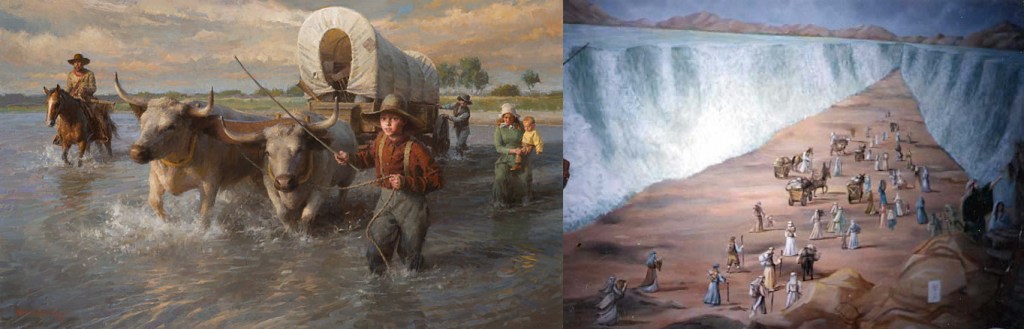
    As I read the historical background of Section 136 of the Doctrine and Covenants, I’m struck by the realization of how much the pioneers of the 1840s parallel the children of Israel leaving Egypt.

    The pioneers were leaving persecution, and in many ways bondage, just as the children of Israel.

    The pioneers had a humble leader, being inspired of God.  Brigham Young said, “What I know, I have received from the heavens…Men talk about what has been accomplished under my direction, and attribute it to my wisdom and ability; but it is all by the power of God, and by intelligence received from him.”

    The pioneers were on a covenant path.  The destination was not as important as the journey.  Section 136 is all about the pioneers learning to trust and follow God, whatever happened.  This has many parallels with the children of Israel, from manna coming to heaven to their rejection of the full covenants with God along their way.

    The pioneers were going to settle a new promised land.  The children of Israel were going to settle the Lord’s city.

    The comparisons go on and on.

    As I’ve been writing this, I have said: the pioneers compared to the children of Israel.  It’s important to realize that the pioneers were the modern children of Israel.  It is no coincidence that their story so perfectly parallels the Exodus from Egypt.  God works in patterns.  This is proof of His work.

    Brigham Young, when worries came from the pioneers about them being behind schedule in their goal to have crops planted, is quoted as saying, if the Saints “had done all [they] could,” he would feel “just as well satisfied as if [they] had a thousand acres planted with grain.  The Lord would do the rest.”

    Ultimately, the pioneers settled Utah.  Salt Lake City has become a bustling and powerful city of the world.  The desert has blossomed as the rose, (Isaiah 35:1) just as Jerusalem became a powerful city in ancient times.

    I believe we often read the scriptures and forget that we are scripture.  Very little differentiates us from the followers of God 2000 or 4000 years ago.  Different places, different time, new technology; but we are still following God, trying our best to keep His covenants, and trying our best to come closer to Him.

    If scripture verses were written about you, what would be written?

    With this understanding comes an important realization.  History repeats itself.  I believe we can read of the ancient Jews condemning their Christ to death on the cross and scoff at the idea.  We are ~170 years removed from our “time in the wilderness,” our pioneer days.  If Christ came before Zion today, would we know Him?

    I hope we would, but sometimes I worry for Zion.  We know Zion will become complacent in the last days.  It’s important that we stay vigilant in our devotion to God and to our covenants with Him.  Otherwise we risk the same fate that befell Jerusalem so many years ago.

  • You are Loved, You are Worthy

    You are Loved, You are Worthy

    “When you get to a place where you understand that love and belonging, your worthiness, is a birthright and not something you have to earn, anything is possible.”

    Think about that statement for a moment. 

    I heard this quote in a recent meditation I did.  The meditation guided this visual exercise:  Picture yourself as a child, truly picture it.  Picture yourself as a baby.  Picture yourself on someone’s lap.  Picture yourself being held, comforted, and played with.  Picture yourself laughing joyfully as someone makes a funny face at you.  Picture yourself young and innocent. 

    You don’t have to earn worthiness; you don’t have to earn love.  You are loved because you are.

    The next time you don’t feel worthy, picture yourself as a child.  You are worthy.

    This exercise led me to an even more powerful thought.  One that speaks not only to our worthiness here, but to our birthright and our eternal potential. 

    Consider Adam for a moment, the first man. When he came to this earth, we are told he was as a child. Adam came to earth meek and humble, a child-like individual. He had forgotten who he was. Who he was in reality was Michael the archangel, the chief angel. Adam was Michael, the angel second in authority. His authority was only exceeded by Jesus Christ Himself (and God, of course). In Hebrew the name Michael means “Who is like God.” This Michael came to earth with his mind wiped clean, with no recollection of his prior authority, no memory of his prior self.

    What about us?  What don’t we remember about ourselves?

    The next time you are insecure, unsure, or afraid, remember that you are a child of divine inheritance.  You are a prince or princess of the most High God.  Consider that for a moment.

    Not only are you loved and worthy of love, you are loved by the God of the universe.  You are in line to inherit all He has to offer (D&C 84:38).  Remember that, and don’t forget it.  Hold to it.

    We are as children here.  We don’t remember our past.  For all we know, we were spiritual giants.  We are spiritual giants.  We can be spiritual giants.  Embrace that identity.  Remember who you might be.  Remember who it is you have been tutored by.  The God of Heaven and Earth.  When we embrace this way of thinking and embrace this possibility, the difficult things of this earth become so inconsequential.  Our true potential is greatness.  May we never forget it.

  • Rameumptom

    Rameumptom

    It’s amazing to read the Book of Mormon and compare those people to our day.  One story from the Book of Mormon that recently stood out to me was the story of the Zoramites and the rameumptom.

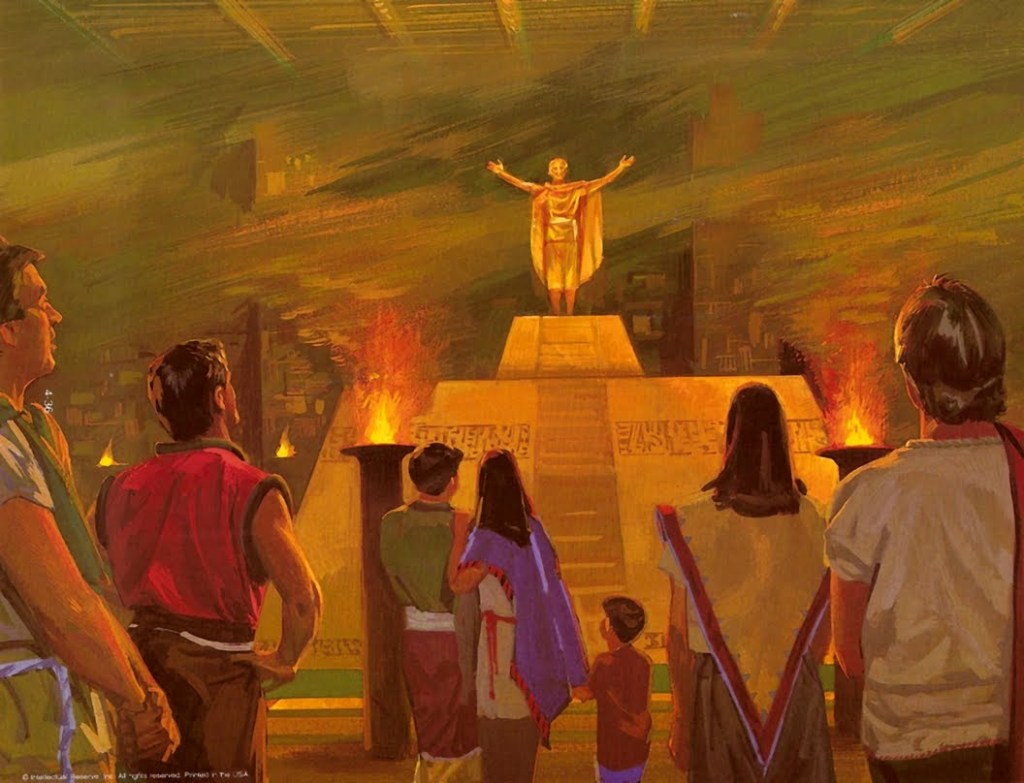
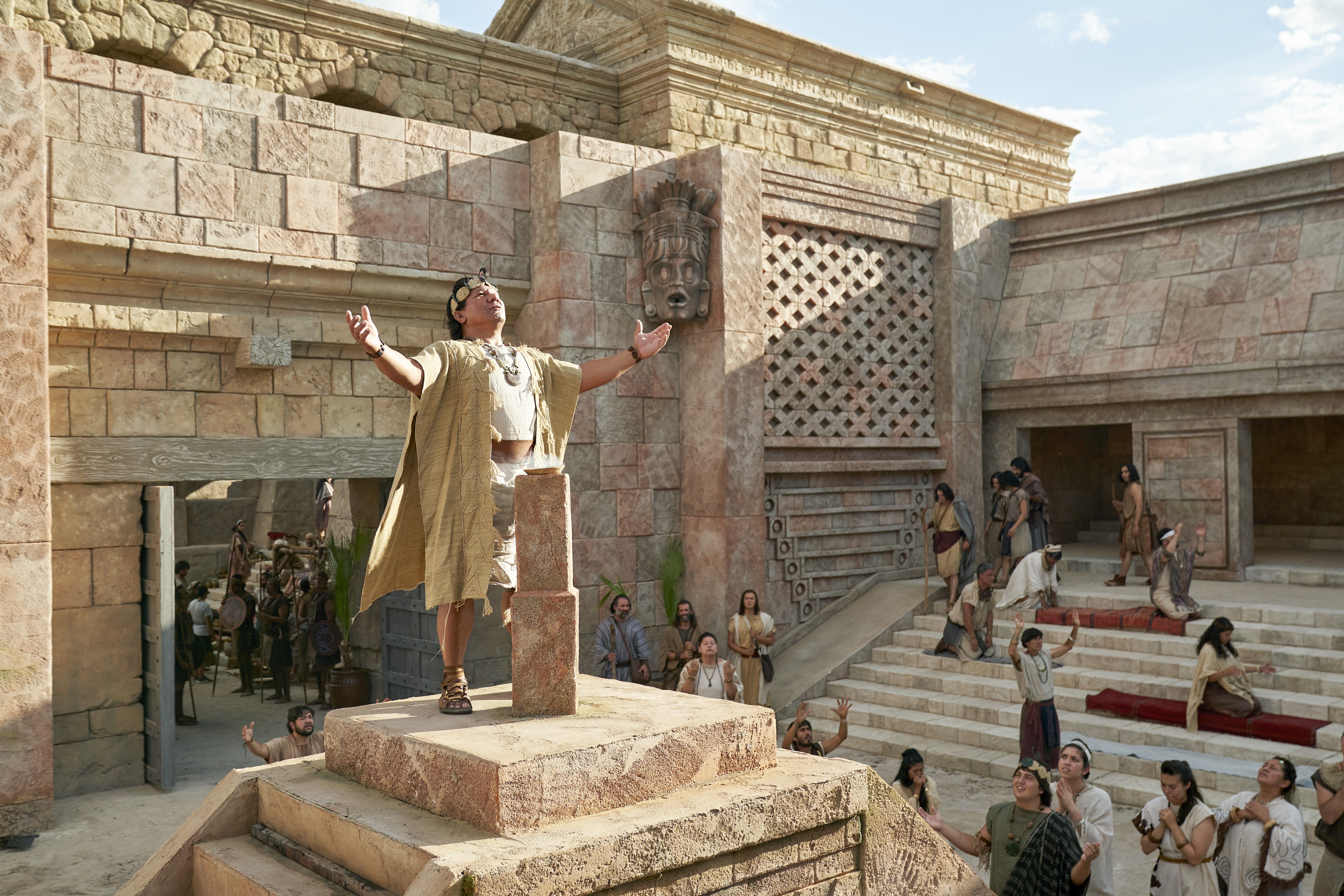
    The Zoramites were a people who corrupted religion in many ways.  They built a large tower.  This tower was called a rameumptom and it was used for prayer.  People would go to the top of the tower and loudly proclaim a rehearsed prayer.  In the prayer they would thank God that He chose them.  They would thank God that He had enlightened them and saved them while He would damn all the others to hell for their false beliefs.  They would say their prayer, leave the tower, and go about their week without another thought towards God.  They would use their week to serve no one but themselves. 

    A Zoramite man prays on the Rameumptom in the land of Antionum.

    Let’s compare the many false beliefs of the Zoramites to our society today.

    First, praying on the rameumptom.  What good deed is done today without proclaiming it to the world?  We’re all guilty of it.  Social media is our modern day rameumptom.  It is where we proudly shout our greatest deeds for the world to see.  Prayer and good deeds should be done in private.  Let not thy left hand know what thy right hand doeth.

    Second, the Zoramites had a temple that only the rich were able to go to.  Churches today have become much more about prestige and power than about humility and kindness.

    Third, rehearsed prayer.  The Zoramites used a rehearsed, scripted prayer to talk to God.  There are many problems with this.  It takes any effort from the procedure.  The prayer has no thought or feeling to it, it’s like reading in class.  There’s no genuine questions, no genuine requests, no genuine gratitude. It is a script.  We see this in many churches today.

    Fourth, prayer without action.  This is a byproduct of rehearsed prayer.  What does prayer without effort lead to?  Life without effort.  The Zoramites loudly spoke their prayers from their tower, stepped down, and that was the extent of their worship.  They wouldn’t speak to God again until the next week when they would give their five minute rehearsed prayer and move on with their life.  This is the worship of our society today.  With all God has given us we can’t even give Him a day of worship in return.  Most don’t go to church at all.  Many who do go, go on Sunday, listen for an hour, and the rest of the week don’t do a selfless act.  Christ was our example.  He taught us to pray always, serve others, and love others.  If we aren’t doing that, we aren’t of Him, no matter how loud our prayer.

    Fifth, the Zoramites thanked God that they were chosen by Him.  They thanked Him for enlightening them and turning them away from the foolish traditions of their fathers and neighbors.  They were selected by God and would be saved.  All others were fools who would burn in hell.  Sound familiar?  Many churches today believe you will only be saved if you follow their beliefs or belong to their church.  What kind of selective God is this?  It spits in the face of a loving, caring Heavenly Father who is no respecter of persons. This is a blasphemous and poisonous teaching that goes back to the pride and selective nature of churches.  God loves all His children and will provide a way for all of them to attain as much glory as they desire.  The doctrine of Jesus Christ taught by the Church of Jesus Christ of Latter-day Saints teaches that there are many mansions in heaven and God’s wonderful plan has provided a way for a vast majority, almost all of His children to go to Heaven.  All that repent,  follow His commandments, and believe in His Son will find a place worthy of their righteous hearts.  This is truth.

    I have a close friend of a different Christian faith.  We have many good religious conversations.  One day the topic of heaven came up.  He told me that surely I didn’t believe he would go to heaven as he wasn’t a member of the Church of Jesus Christ of Latter-day Saints, my church.  This made me so sad.  I told him with complete sincerity and 100% certainty that I knew he was going to heaven.  Whether he joined the Church (my church) or not, I knew he was a good person.  I knew he loved Jesus Christ.  I knew he tried every day to seek Christ and to do good.  I knew he sought God with all his heart.  I knew he was kind and liked to help people.  I know, without a doubt in my mind, that there is a place in heaven for him.  I know this because I know God.  I know he loves all of us.  I told this to my friend, and I’ll never forget the look on his face.  A little shock, a little awe.  I know that he believes I am going to hell, he has told me so.  He believes I have been fooled and I will have to pay for my ignorance.

    I know that God loves him, and I know that God loves me.  I know that Jesus Christ is the perfect judge.  We will be judged perfectly.  Even those who are fooled will be given mercy and love from God.  That’s the God I know.  I feel sad for those who don’t know that same God.

    False teachings have corrupted and destroyed religion.  False teachings have turned many away from the truth and light that religion should provide.

    I have an invitation to anyone who read this and thought “I do hate how churches say everyone who doesn’t do this or that is going to hell,” or “I’ve never understood rehearsed prayers,” or “I can’t stand the hypocritical church goers who are the meanest people during the week.”  My invitation is to come and see.  Come and learn of the Gospel of Jesus Christ. Come and learn what Christ intended for us.  Come and learn true principles and ordinances of Christ’s gospel.  Come serve with us, come worship with us, come pray with us, come be with us.  The Church of Jesus Christ of Latter-day Saints is not perfect, not yet.  Not until Christ returns.  We can still be hypocrites but we’re trying.  Christ’s Gospel is perfect and we’re working toward it.  Come and see.

  • Truths Removed from the Bible:  What does the Book of Mormon tell us about Baptism?

    Truths Removed from the Bible: What does the Book of Mormon tell us about Baptism?

    I like to think about what critics would say as proof against the Book of Mormon.  I think it helps to have responses to honest concerns about its validity.  I always hope something I read, know, or especially my testimony can one day help someone to see what I see, the truth of this ancient record. 

    The Book of Mormon makes a very important claim.  The claim is that many plain and precious truths have been removed from the Bible over time.  When Joseph Smith first translated the Book of Mormon this was an outlandish and inflammatory statement.  Even more so than today. Christianity in the early to mid-1800s had a firm belief that the Bible was infallible. 

    From a website (https://stepbystep.alancminer.com/) I’ve loved using to study alongside the Book of Mormon, I read this:

    “Richardson, Richardson and Bentley write that while the Book of Mormon testifies to the authenticity of the Bible, it does not claim that the Bible is without error. It specifically states that there were many “plain and precious things” that were deleted from its pages through the evil works of men. (See 1 Nephi 13:20-32; 19:10-12; 20:1-3; 2 Nephi 3:5-22; Alma 33:3, 13, 15; 34:7; 46:23-27; Helaman 8:19-20; 15:11; 3 Nephi 10:14-17; 12:13, 17-19, 22, 29-30; 14:1.)

    Scholars of the Bible have found indisputable evidence that the Bible has indeed suffered many deletions. Non Mormon scholarship has concluded that the gospels found in the New Testament have also been manipulated.”

    Critics may ask for specific examples of any “plain and precious truths” found in the Book of Mormon that are not also found in the Bible.

    The website I mentioned above goes on to list 24 plain and precious truths removed from the Bible and where they are laid forth in the Book of Mormon.  I’d like to go over an extremely important one.

    Baptism is only for those who are accountable (Moroni 8:5-23).

    I know of nowhere in the Bible that lays forth the age of accountability. Should children be baptized?  We know baptism is of the utmost importance:

    John 3:5 “Jesus answered, Verily, verily, I say unto thee, Except a man be born of water and of the Spirit, he cannot enter into the kingdom of God.”

    What does the Book of Mormon teach us on the subject of baptism? Moroni chapter 8 is full of profound truths found nowhere in the Bible. I will quote portions of the chapter here but encourage everyone to read the chapter and ponder its truthfulness.

    8 “the whole need no physician, but they that are sick; wherefore, little children are whole, for they are not capable of committing sin; wherefore the curse of Adam is taken from them in me (Jesus Christ), that it hath no power over them”

    9 “I know that it is solemn mockery before God, that ye should baptize little children.”

    10 “repentance and baptism unto those who are accountable and capable of committing sin; yea, teach parents that they must repent and be baptized, and humble themselves as their little children, and they shall all be saved with their little children.”

    11 “And their little children need no repentance, neither baptism.”

    12 “But little children are alive in Christ…if not so, God is a partial God, and also a changeable God, and a respector of persons; for how many little children have died without baptism!”

    15 “For awful is the wickedness to suppose that God saveth one child because of baptism, and the other must perish because he hath no baptism.”

    19 “Little children cannot repent; wherefore, it is awful wickedness to deny the pure mercies of God unto them, for they are all alive in him because of mercy.”

    20 “And he that saith that little children need baptism denieth the mercies of Christ, and setteth at naught the atonement of him and the power of his redemption.”

    Girl Being Baptized

    Who can read this and deny the truth that speaks to your heart and soul?  It is so clearly laid out. So perfectly explained. 

    What about how to baptize?  There is so much confusion in the world on not only when but how.  Does the Book of Mormon provide an answer?  Of course!  3 Nephi 11:24-28.

    24 And now behold, these are the words which ye shall say, calling them by name, saying:

    25 Having authority given me of Jesus Christ, I baptize you in the name of the Father, and of the Son, and of the Holy Ghost. Amen.

    26 And then shall ye immerse them in the water, and come forth again out of the water.

    27 And after this manner shall ye baptize in my name; for behold, verily I say unto you, that the Father, and the Son, and the Holy Ghost are one; and I am in the Father, and the Father in me, and the Father and I are one.

    28 And according as I have commanded you thus shall ye baptize. And there shall be no disputations among you, as there have hitherto been; neither shall there be disputations among you concerning the points of my doctrine, as there have hitherto been.

    How lucky we are to live in the dispensation of the fullness of times. I’m grateful for the Book of Mormon. I’m grateful that it clarifies what has been a point of contention within Christianity for centuries.

    Christ was our ultimate example.

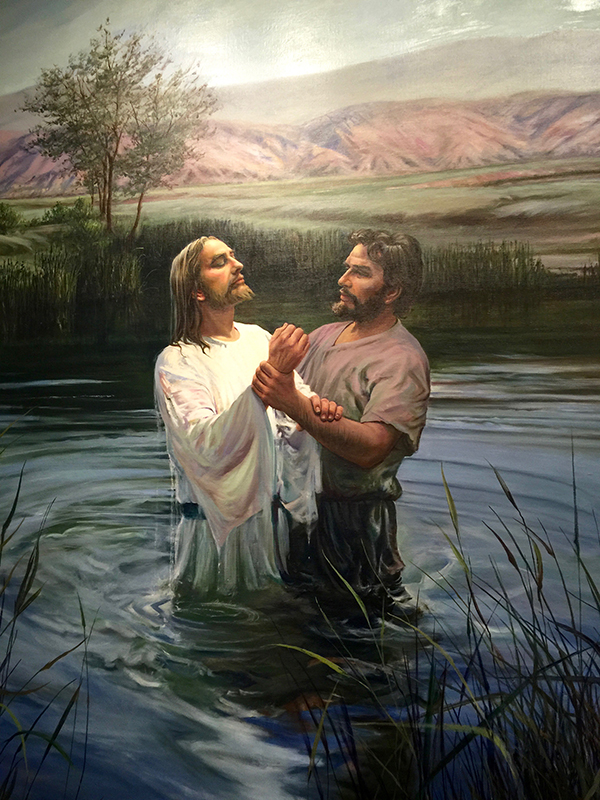
    2 Nephi 31:5 And now, if the Lamb of God, he being holy should have need to be baptized by water, to fulfil all righteousness, O then, how much more need have we, being unholy, to be baptized yea, even by water!

    Click below to learn more about baptism as it has been perfectly restored through the Gospel of Jesus Christ by the Church of Jesus Christ of Latter-day Saints.

    https://www.churchofjesuschrist.org/study/manual/true-to-the-faith/baptism?lang=eng