Tag: leadership

  • The Difference Between Steph Curry and Kevin Durant

    The Difference Between Steph Curry and Kevin Durant

    This will be slightly out of brand for my blog. I love basketball so it’s surprising this is the first true basketball commentary I’ve written.

    Anyways,

    Kevin Durant is without question one of the best players in the NBA right now (when healthy), and one of the most talented players of all time. He is an extraordinary basketball player. It was big news a couple weeks ago when he requested a trade from his current team, the New Jersey Nets. It was especially relevant in Arizona because Durant listed Phoenix and Miami as his two preferred destinations.

    A quick history on Kevin Durant for those that don’t know –

    Durant was on an off-the-charts talented Oklahoma City team that had 3 future MVPs on the roster. That Oklahoma City Thunder team gave a record breaking 73-win Golden State Warriors team all it could handle. The Warriors came back from down 3-1 to the Oklahoma City Thunder. That Warriors team then lost to the LeBron led Cavaliers in the finals.

    After the Warriors lost to the Cavaliers, and beat Durant’s Thunder, Durant left his team to join the record-breaking Warriors. A true, “if you can’t beat em, join em.” I didn’t hate this move by Durant like a lot of basketball fans did. As a lover of basketball, I could see that Durant hated playing with Russell Westbrook. From watching Durant play with Westbrook, I could understand Durant’s frustration. He wanted to play with a real team. Draymond Green, Klay Thompson, and Steph Curry made basketball look so fun. If I could play with any NBA team, it would hands down be the Warriors. They play basketball right. I understood Durant’s decision.

    Fast forward some years. The Warriors win two more championships in 3 years. Durant is the Finals MVP both times. Here’s the thing though. The Warriors were never Durant’s team. It was always Steph Curry’s team. No matter how phenomenal Durant was. He couldn’t be loved in the Bay Area the way Steph was.

    This led Durant to leave again. Always looking for the greener grass. He joined the Nets and hitched his wagon to a known enigma: Kyrie Irving. I won’t go into all the details, but the Nets experiment went disastrously. About as bad as it possibly could. Durant wanted to go to New Jersey to make it his city, the way San Francisco was Steph’s city. It exploded in his face.

    So here we are, full circle. Durant is wanting out again. Looking for greener pastures, again.

    Here’s the amazing thing I’m sure the casual NBA fan has missed.

    What were the two teams Durant said were his two most desired destinations to be traded to? The Suns and the Heat. Who was the number one team in the west last year?… the Suns. Who was the number one team in the East last year?…the Heat. Interesting.

    When Durant left the Thunder, he got destroyed in the media for leaving to join a better team. Despite being the player that took the Warriors over the top, potentially making them the best team in NBA history, he was never satisfied. He always seemed jaded by how he was bashed for the decision, and the perceived lack of love and appreciation he received for his basketball brilliance.

    Here we are. Years later. He’s making the same decision. He went to a team to make it his own. It was disastrous. So, he’s trying to go to another team that already has leadership and join them.

    How does Steph Curry tie into this?

    Steph Curry is a leader of men; Durant is a lone ranger. Durant is not a leader of men.

    Durant thinks because he can recruit talent to play with him, that makes him a leader. Recruiting talent doesn’t make you a leader. Elevating those around you makes you a leader. When has Durant elevated others?

    The dichotomy of Kevin Durant is wanting to be a part of good culture, then ultimately wanting to be the good culture himself. But you can’t be the good culture by the simple fact that you want to be the good culture. Good culture is humility, self-sacrifice, team before individual. Durant acts like that’s what he wants, but then he leaves the greatest team of all time because he wasn’t getting the credit he felt he deserved. He went somewhere else thinking he could have it all. A talented team and a city that loved him.

    Look who he gravitated towards in his recruitment efforts– another lone wolf, unique, kind of weird individual – Kyrie Irving. Look who else he brought in – a strip club attending, come in out of shape, (selfish), James Harden. These aren’t culture builders. What happened in Golden state doesn’t happen every day. And it does not happen by accident. It’s not every day that you find immensely talented people that are willing for it not to be all about them. Kevin Durant was never interested in it not being about him. That’s the dichotomy.

    Steph Curry brought Kevin Durant in and embraced him. He didn’t care about the limelight. He cared about winning. He proved that. Two MVP trophies that did not go his way. Why? Because he had the humility to say, definitively, “it doesn’t have to be about me.” With Steph Curry, it’s truly about the team.

    Steph Curry doesn’t try to be humble. He doesn’t try to be a uniter of men. He just is those things. They come naturally to him. He is a leader. These things don’t come naturally to Kevin Durant.

    This isn’t an indictment of Kevin Durant as a person and definitely not as a basketball player. Not everyone is a born leader. It may be unfair to compare him to the most selfless superstar in NBA history, and I don’t think it’s even close. Who has a higher combination of talent, accolades, and humility than Steph Curry?

    That said, Kevin Durant brought this comparison on himself. He had it all. Championships. A great team. Great teammates. He left that because he wanted to do it himself. When things got hard, he bailed ship faster than Kyrie bails a vaccination center. Is it any surprise that his two preferred destinations are where there’s a solid team, solid culture, solid comradery, and solid leadership?

    Durant thought he wanted to be a leader of men. He quickly realized he only wanted to play basketball. That’s fine. Hopefully, though, he doesn’t go to Phoenix or Miami, win championships, and then realize he’s still not happy. Even though, if that were to happen, it seems like a foregone conclusion that would be the result.

    Always seeking greener pastures.
  • Inheritance and Lehi’s Blessing

    Inheritance and Lehi’s Blessing

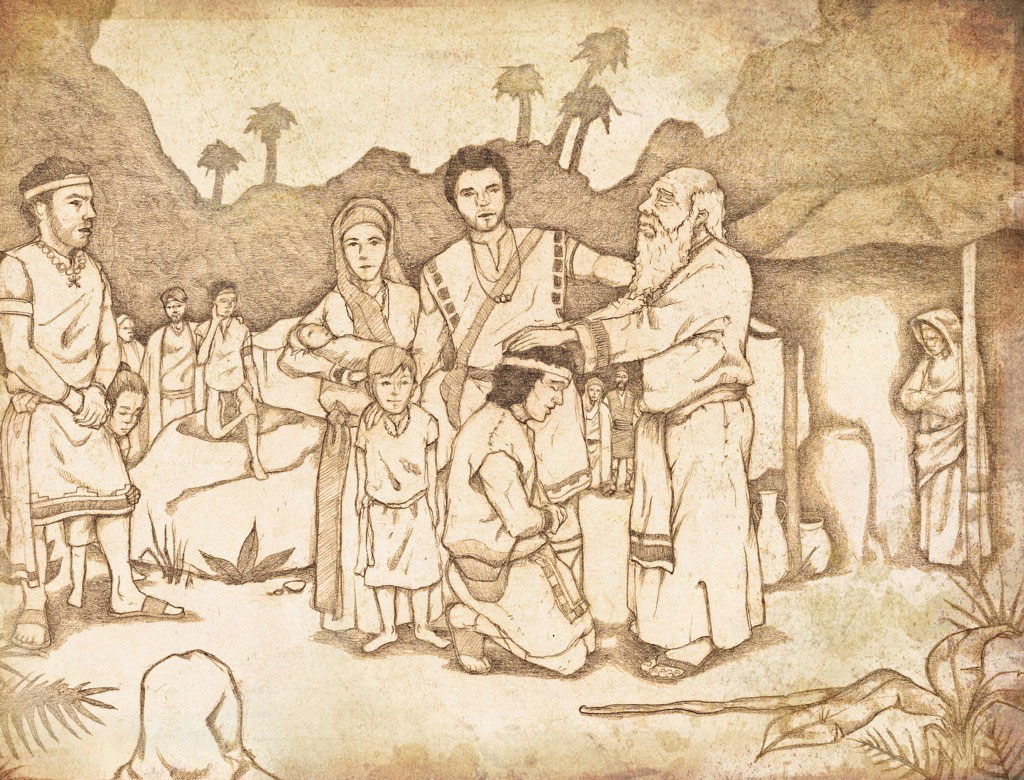
    I have always been confused by the blessings of Lehi to his posterity in the 4th chapter of 2 Nephi in the Book of Mormon.  For one, there is the obvious blessing that is missing: Nephi’s.  For another, there seem to be mixed messages.  Laman and Lemuel have a blessing, but it may be removed?  What does Sam get?  Who is the actual new leader- Nephi or Laman?

    In an article titled Lehi’s Last Will and Testament: A Legal Approach, John Welch goes into great detail on the legality and custom of Lehi’s blessing, and answers all of the above questions. I’d encourage anyone interested to read his whole article. It strengthened my testimony of the authenticity of the Book of Mormon and reminds us of the real world that Nephi was a part of.

    I want to go over some highlights from John Welch’s article that explain Lehi’s blessing in its cultural context. Credit also goes to Alan C. Miner who put together the points I found most relevant to the above questions.

    Inheritance and succession was an important aspect of near eastern culture. It was a way of “preserving and transmitting the family estate from one generation to the next” (John Welch). Typically, the eldest son of the father’s first wife inherited his estate. The leadership of the family was also an important inheritance given. Faulk points out, “a father was free to choose a younger son as his successor, if he found the eldest unworthy of the office.” Sound like this fits Laman and Lemuel much? The father passed this leadership of the family on often through a special blessing (Deuteronomy 21:17), like we see in 2nd Nephi chapter 4.

    There are many examples of this spiritual or ruling leadership being given to a younger son including:

    1. Abel
    2. Seth
    3. Jacob (Israel)
    4. Ephraim
    5. David
    6. Solomon

    In each of these cases older sons were passed over as the spiritual leaders of the family.

    So, we have property inheritance and ruling inheritance. There was a third category sometimes handed down from the father: priestly duties. This is what happened with Lehi giving Jacob the priestly authority in the Book of Mormon. Another example of this was Jacob/Israel’s blessing in the Old Testament. Israel blessed Judah with the ruling authority (Genesis 49:10), Joseph of Egypt receiving a double portion through Ephraim and Manasseh (Genesis 48:22), and Levi inherited some priestly rights to the priesthood.

    As time passed in ancient Jerusalem, it became common custom for the eldest son to automatically receive a double portion of the inheritance. As noted, there were times that younger sons received different portions, or rights to rule, or increased inheritance. This was the exception, not the rule.

    This basic background information brings us to our fascinating story in the Book of Mormon. We have an eldest son, Laman, who was the eldest son of, what appears to be, a relatively well-off citizen of Jerusalem. This family leaves behind their land and property, to venture off to a promised land, a promised land Laman seldom showed faith in attaining. This family spends years in the wilderness, potentially months on a ship, and eventually land in the promised land. This elder brother is now over the moon with joy and enthusiasm. He will inherit all that his father has and be the leader and now king of a new nation.

    But what about Nephi? It was Nephi from the start that helped the family in the wilderness. It was Nephi that went back and got the plates so they could remember God and how to read and write. It was Nephi who built a ship to get them to the promised land. Nephi led the family, physically and spiritually to the promised land. He was the natural leader of the family and deserved to inherit the leadership, and kingship, of this great new nation.

    Lehi has a bit of a conundrum. How was Lehi going to handle Laman’s expectation to receive a double portion from his father? How was Lehi to handle the expectation from Laman that, as the oldest son, it was his RIGHT to inherit everything, despite his lack of leadership throughout the journey. Especially when Nephi had been declared a “ruler and a teacher” (1 Nephi 2:22, 3:29) by God Himself.

    This brings us to our blessing, and to the answer to the questions I always had.

    Lehi needed to appease Laman while attaching appropriate contingencies to his blessing. The main contingency was that Laman’s blessing would be applicable as long as he hearkened unto Nephi. This same admonition was given to Lemuel, Sam, and the sons of Ishmael. If they refused to follow Nephi, their blessings would be null and void.

    So Lehi employed three ways to diminish Laman’s blessing and role as the firstborn son. In diminishing Laman’s role Lehi enhanced Nephi’s. This leads us to the questions:

    First, why was Sam’s portion linked with Nephi’s? Why were there no Samites?

    Combining Sam’s inheritance with Nephi’s was similar to Joseph of Egypt’s blessing being doubled through his sons, Ephraim and Manasseh. Sam’s share of the land was linked to Nephi’s and therefore Nephi’s portion was doubled through Sam’s faithfulness, loyalty, and devotion he would show to Nephi as he always had.

    Welch discusses a second way Lehi diminished Laman’s blessing as found in 2 Nephi 4:5-9, “He [Lehi] blessed his firstborn’s children to the effect that their sins and cursings would be answered upon the heads of their parents. This could not have been flattering to Laman.”

    The third way Laman’s authority and blessing was reduced, Lehi referred to Jacob three times as his “firstborn…in the wilderness” and applied the priestly duties to him. By naming Jacob as another version of the “firstborn,” Lehi subtly took away from Laman’s claims as the firstborn son. As we remember, the custom in ancient Jerusalem was for Laman to receive the inheritance by default because he was the firstborn son. But, with Jacob also receiving a form of the title, “first born son,” Laman lost some claim on this exclusive title.

    Laman was warned that if he was disobedient, to God and to Nephi, that his blessing would be revoked. Lehi was, in a way, willing to give Laman the cursory “honor” of the blessing while putting many safeguards in place to keep Laman from actually ruling.

    This background context gives us additional insight into how the Nephites (followers of Nephi) and Lamanites (followers of Laman) could so quickly devolve into war and contention. The peace was kept as long as Lehi, the official patriarch, was around. Custom in Jerusalem was to love and respect the father (Exodus 20:12). But as soon as Lehi died, it was chaos. Laman was never one to heed faith or blessings, so the warnings from his now passed father were of no concern to him. He wanted to rule.

    To conclude, Alan C. Miner states, “Thus, John Welch has provided a plausible cultural background and answer as to why there were no “Samites.”  His words also give testimony to the fact that the ancient world of which Lehi and Nephi were proposed to be a part of in the pages of the Book of Mormon was a very real world.” The confusing nature of the blessing adds to the authenticity of the Book of Mormon.  Lehi’s blessing is consistent with the pattern an ancient Israelite may use in blessing his children. 

    I bear testimony that the Book of Mormon is a true historical account of families that originated in Jerusalem and eventually settled in the Americas. The more I read and study the book the more obvious it becomes. God has given us a second witness of the divinity of Jesus Christ, and I’m grateful for it. I’m grateful for a book that has been tested for 200 years and still holds up. I’m grateful to know God is still invested in us and our lives. I’m grateful for the Book of Mormon, Joseph Smith, and the Church of Jesus Christ of Latter-day Saints.

  • Authority in God’s Kingdom

    Authority in God’s Kingdom

    In 1830 the church was brand new and something extremely difficult happened.  An issue occurred which would forever shape church government.  This issue would establish a pattern, God’s pattern, of order.

    An extremely faithful member of the Church, in fact one of the 8 witnesses of the Book of Mormon, started to receive revelations on the gathering of Zion.  This member was Hiram Page.  He was faithful to the church and would never deny the Book of Mormon’s authenticity.  It was not surprising that many church members believed the revelations Hiram Page received.  Why wouldn’t they?  He was a faithful member.  He was one of the 8 witnesses, a blessed individual that saw and beheld the gold plates.

    The issue was, if Hiram Page could receive revelation for the entire church, then who couldn’t receive revelation for the entire church?  You’re seeing where this is going.  The Church of Jesus Christ of Latter-day Saints would go the way of all other sects of Christianity:  chaos.

    There must be order in God’s system.  God could not have every person claiming revelation for His Church.  It’s important to note, personal revelation is an important part of our mortal journey.  Personal revelation is also critical in God’s church.  Revelation cannot be received by an individual pertaining to the entire church or to guide those in a higher position of authority.  Without this rule, there would be complete confusion, as there started to be when Hiram Page reported his revelations.

    When this problem arose, Joseph Smith was in the most difficult of positions.  How did he correct this issue without seeming authoritarian and dictatorial?  He needed Hiram Page, Oliver Cowdery (who supported Hiram’s revelations), and all church members to understand the significance of this issue. 

    Joseph Smith met with the congregation and explained revelations received prior to Hiram’s revelations.  Joseph Smith had documented the Lord’s commandments in Doctrine and Covenants sections 20 and 21.  He now learned that many members of the new church didn’t understand these doctrines and principles of church government. 

    The history states that Joseph Smith joined with the people and explained the revelations in Doctrine and Covenants 20 and 21 in detail.  He used simple language and explained what it actually meant.  In what could have been a contentious and ugly situation, church members, Oliver Cowdery, and Hiram Page himself left understanding the error of their ways.  This was a prophet of God explaining God’s order.  All present accepted.

    This is the way it should be.

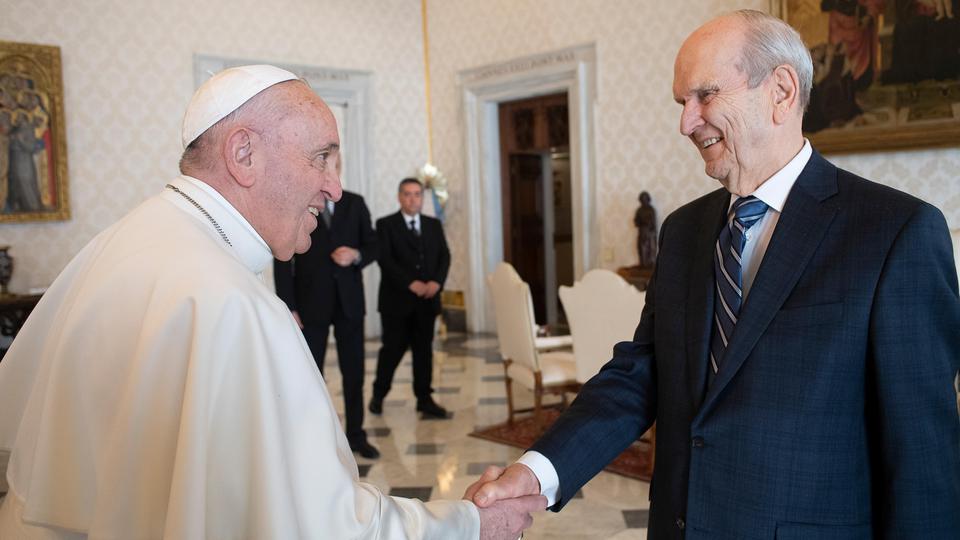
    I would like to compare this to something I learned when reading about how “retired” Pope Benedict XVI… retired.  I didn’t understand how this could be and wanted to research to see what happened.

    Instead of commenting on what I learned about Pope Benedict’s retirement, I want to comment on something else I came across.  An article I read talked about how the current Pope Francis has considered relaxing priestly celibacy rules and how “retired” Pope Benedict came out publicly against this.

    Does this not present a problem?  What if the current Pope did make a decree and the “retired” Pope publicly voiced his disagreement with it?  Would there be another branch of Catholicism?  One following current Pope and one following retired Pope?

    I can’t understand it.  There can’t be confusion in God’s kingdom.  While men are imperfect, God can’t have questions of authority in His church.  Otherwise, there is complete chaos.

    These stories of how two issues were handled strengthened my testimony of the importance of authority.  I believe the Church of Jesus Christ of Latter-day Saints is Christ’s Church restored to the earth, and as such, it must have order.  As I study Priesthood authority and how the church functions with millions of members across the entire globe, I’m blown away at how seamlessly it all works.

    Joseph Smith foresaw General Authority Seventies when the church was a couple dozen members.  Now as the Church grows and there are 12 quorums of the Seventy, anyone who doesn’t believe this church to be divinely guided must marvel at Joseph Smith’s foresight.

    The truth is it wasn’t Joseph Smith’s foresight, it was God’s foresight.  This church is divinely guided, divinely structured, and divinely governed.  My testimony of this grows daily as I understand the structure of the church better and see how the Lord guides His Kingdom. 

  • Listen, Learn, Love

    Listen, Learn, Love

    I recently listened to an episode from a podcast called Listen, Learn Love.  This podcast has opened up my ways of thinking on a few topics.  The episode I listened to recently I basically want to summarize (steal) because the points made are so simple, so well-said, and so true. 

    Here is a link to the website for the podcast if you want to learn more: https://www.listenlearnandlove.org/

    The episode I recently listened to that I’m writing thoughts on here is episode 2 and can be found if you search for podcast “Listen, Learn, and Love.”

    The podcast is hosted by Richard Ostler.  He is a former Young Single Adult Ward Bishop.  He has now done 334 episodes of his podcast which “was created out of the desire to better understand our LGBTQ+ brothers and sisters.  We believe in God and in His decree to love one another.” – from the mission statement on the website. 

    Episode 2 does not focus on the LGBTQ+ topic which I feel is an extremely important topic in the church.  Still, this episode is also important and I learned a lot from it.

    The topic was faith-crisis.  Whether minor or major, any faith crisis is difficult to go through.  When I was returning to church my uncle said something that has stuck with me.  He said he wouldn’t wish the losing of faith on his worst enemy.  You can lose cars, homes, family, money, everything in this world, but losing your faith is the hardest thing that a person can possibly go through.

    As I continue to write I will be presenting many ideas that came directly from Brother Ostler.  Please listen to the episode.  For ease of writing, I won’t reference Brother Ostler in everything I’ll continue to say. Just know most of these thoughts came directly from him, and I hope to re-state them without taking too much away from them.

    In my writing, I often refer to “The Church.” When I say this I am referring to the Church of Jesus Christ of Latter-day Saints.  Something I’d never considered is how important it is to clarify what we mean when we say, “The Church.” The Latter-day Saint Church could mean different things to different people.

    A couple categories for “The Church” are

    1. The Gospel of Jesus Christ.
      • This was described beautifully by Brother Ostler as a pristine, clear-watered pool.  No murkiness.  The Gospel of Jesus Christ is perfect in every way. This hasn’t been completely revealed yet.
    2. The restored Church of Jesus Christ.
      • It has the restored priesthood and priesthood keys. Ideally, this would be perfect.  I think we sometimes confuse this category with the next category I’ll mention.  The restored Church of Jesus Christ should be perfect.  The problem is, as we know, Christ must use fallible men and women to run His church.
    3. The institutional church.
      • This is where we get into a flawed organization. The institutional church has many people, programs, and policies that are meant to implement the Gospel of Jesus Christ.  The institutional church is run by men and women and therefore has flaws.  Christ guides the institutional church, but people make mistakes. Brother Ostler points out in the podcast that as a YSA Bishop he was a part of the institutional church and he knew he made mistakes as a Bishop, a leader in the church.

    Much of the hurt that comes into the souls of God’s children is caused by the institutional church.  It is critical to not confuse “The Church” the institution with the pure and perfect Gospel of Jesus Christ.

    A faith crisis is a serious event that can happen to anybody. You can’t always read and pray a faith crisis away.  We are here to develop faith and while here our faith will be tested.  Sometimes to the very brink.  It’s important to get our roots in the correct place.  Is your faith in a bishop?  It shouldn’t be, it should be in Jesus Christ.  The best bishop in the world can let you down.  Jesus Christ can not.

    The fourth article of faith: “We believe that the first principles and ordinances of the gospel are: FIRST, faith in the Lord Jesus Christ. 

    The Articles of Faith can be read here.  I invite everyone to read and focus on the first four articles of faith in the Restored Church of Jesus Christ.  You’ll notice not only is Jesus Christ’s name in the name of the Church, but that He is referenced three times in the first four articles. 

    Our foundation must be on Christ.

    Brother Ostler talked about the Policy Statement of 2015 and how it created a “mini faith crisis” for him.  These were changes made by the institutional church and have since been reversed.  He talked about how difficult that was for him, personally.  He is not the first person I’ve heard that was impacted in a sad, difficult way by those changes.  He emphasized that the brethren (leaders of the church) were doing their best.  Brother Ostler referred to dominoes, and how the policy statements started to make dominoes fall in his faith.  What saved Brother Ostler’s faith was that all his dominoes didn’t fall.  As he stated so perfectly, some of his dominoes had roots to the center of the earth and couldn’t be shaken.  He referenced Jesus Christ, priesthood blessings, and temples as the foundation of his faith.

    The 2015 Policy Statement is a good example of what separates the institutional church from the Gospel of Jesus Christ. The institutional church can and does make mistakes. Jesus Christ does not reverse. Jesus Christ does not change.

    We must change the way we discuss faith crises.  There are too many people who leave the church because they don’t feel heard.  The idea that you can read or pray away a faith crisis is inaccurate and often leads individuals to feel like the “Church” is avoiding their concerns.  We have to listen, as the Savior did, to those with concerns.  Ask questions.  Having a faith crisis does not mean someone is sinning.  It can mean that, but it doesn’t always.  Brother Ostler is a perfect example.  His self-described “mini faith crisis” came while he was a YSA bishop spending dozens of hours each week in service to others.  He was reading, praying, and serving as much as anyone could at that time.  Imagine telling a bishop he needs to pray more, or read more, or do more to fix your problem.  One could rightfully be turned off by this suggestion.

    We must stop considering a faith crisis as a dirty topic that we must avoid.  Thousands are having one at this moment.  Those with unshaken faith must support and lift those who have a hard time. We must address questions head on and strengthen our faith together. We must strengthen each other. We are family. The Gospel of Jesus Christ is meant for everyone. 

    Now I’d like to share some of my personal story.  I returned to church in 2016.  I narrowly missed being an active member of the church when the policy statements came out.  I know this was a hard time for the church.  I know many people left.  I know many people, like Brother Ostler, were shaken by the announcement. 

    I’ve often thought about my faith.  I feel fortunate and blessed to have never experienced a personal faith crisis.  Even in my time away from the church, I never doubted that Jesus Christ died for me.  I never doubted Joseph Smith was a prophet.  I never doubted the restored Church of Jesus Christ.  I never doubted the Church of Jesus Christ of Latter-day Saints.  While I was living completely opposite to some of the teachings the church, I still knew it was true.  I know I caused many head scratches from those who witnessed my verbal devotion while clearly ignoring all the precepts of the church.

    I said my faith has always been a blessing to me.  I believe it has.  When I was living opposite to the principles of the gospel it felt like a curse.  I’m sure I will need to answer for that one day.  If I knew it so much to be true, I believe I’ll be more accountable for my behavior.  Maybe that’s what gives me so much faith in Jesus Christ.  I know how important His Atonement is to me personally.  I have too many spots on my garments.  Without Him I am a damned soul. 

    Maybe that’s difficult for others who have never grievously sinned.  It’s easy to appreciate a lifeboat when you’re sinking in the ocean.  What if you’re safe on shore, do you still have the same appreciation for the lifeboat?  I’m not implying those who have lived just, kind, good lives start to finish are in anyway unappreciative of the sacrifice Jesus Christ made for them.  I’m truly amazed by those I see that have been faithful and true for all of their mortal journey.  I can only speak for myself.  I was not true for all of my journey and it makes me worship and love my Savior so intensely. 

    I wonder what would have happened if I was in church in 2015.  Would I have struggled?  Would I have left?

    I don’t know the answer to many questions.

    A book I read recently repeated the idea that we (humanity) know so much; space travel, geography, math, science.  Ask someone to give some thoughts about nature or history and everyone can provide some insight.  Ask someone to provide some thoughts about who they are, and they will struggle.  We often know and understand ourselves least of all the things in the world. I take comfort in knowing there are two individuals who know me infinitely better than I currently know myself.

    I want to give advice to anyone currently in a faith crisis.  Fight.  Don’t lose your faith.  Please.  It’s the most valuable thing on this earth.  You can lose your family, money, cars, your home, and you can lose your faith.  I hope we all fight for our faith.  Focus your faith on what is most important.  All your questions – ask them.  Doubt.  Wonder.  Have concern.  Voice your concerns.  But don’t forget where faith should lie.  Jesus Christ is the only name whereby men can be saved (Acts 4:12).

    Sometimes people will hurt, disappoint, or let you down. Sometimes those people may be leaders you trust. We all hurt and disappoint people we love. We must hope that we will receive mercy for the hurt we cause, and therefore should show mercy to those who hurt us. The great giver of all mercy is Jesus Christ. He loves each of us. He wants each of us to do whatever we can to come closer to Him. Stay close to Him and He will never let you down.

    Find those experiences in your memory that remind you that Jesus Christ guides His church.  Read the Book of Mormon and ask yourself if it could be false.  Then ask yourself, if it is false, how can it so perfectly testify of Jesus Christ?

    Find your foundation in sure things.  The pure faith in Christ.  Then fight for that faith.  We hope the Church of Jesus Christ of Latter-day Saints can be a faith building organization for all.  We hope that the covenants we make can strengthen our faith and the faith of those around us.  But at all costs, do not mix the pure, perfect, pristine waters of the Gospel of Jesus Christ with the sometimes-murky institution run by us here on earth.