Christ gives the parable of wheat and tares in Matthew 13:24-30:
24 Another parable put he forth unto them, saying, The kingdom of heaven is likened unto a man which sowed good seed in his field:
25 But while men slept, his enemy came and sowed tares among the wheat, and went his way.
26 But when the blade was sprung up, and brought forth fruit, then appeared the tares also.
27 So the servants of the householder came and said unto him, Sir, didst not thou sow good seed in thy field? from whence then hath it tares?
28 He said unto them, An enemy hath done this. The servants said unto him, Wilt thou then that we go and gather them up?
29 But he said, Nay; lest while ye gather up the tares, ye root up also the wheat with them.
30 Let both grow together until the harvest: and in the time of harvest I will say to the reapers, Gather ye together first the tares, and bind them in bundles to burn them: but gather the wheat into my barn.
1 Verily, thus saith the Lord unto you my servants, concerning the parable of the wheat and of the tares:
2 Behold, verily I say, the field was the world, and the apostles were the sowers of the seed;
3 And after they have fallen asleep the great persecutor of the church, the apostate, the whore, even Babylon, that maketh all nations to drink of her cup, in whose hearts the enemy, even Satan, sitteth to reign—behold he soweth the tares; wherefore, the tares choke the wheat and drive the dchurch into the wilderness.
4 But behold, in the last days, even now while the Lord is beginning to bring forth the word, and the blade is springing up and is yet tender—
5 Behold, verily I say unto you, the angels are crying unto the Lord day and night, who are ready and waiting to be sent forth to reap down the fields;
6 But the Lord saith unto them, pluck not up the tares while the blade is yet tender (for verily your faith is weak), lest you destroy the wheat also.
7 Therefore, let the wheat and the tares grow together until the harvest is fully ripe; then ye shall first gather out the wheat from among the tares, and after the gathering of the wheat, behold and lo, the tares are bound in bundles, and the field remaineth to be burned.
Quick rundown:
Verses 1-3 explains the great apostasy that occurred to the church after the apostles “have fallen asleep” (aka were killed).
Verse 4 reminds us that we’re now speaking of our day.
Verse 5 tells us, “the angels are crying unto the Lord… to reap down the fields.” That can be interpreted different ways but basically the angels want to start with the harvest. The harvest can be considered the gathering of souls at the end of times. This leads to
Verse 6 where the Lord tells the angels to hold off on the harvest because He doesn’t want to destroy the wheat. The wheat are the righteous, those followers of the Lord. The tares are those who oppose God.
Verse 7 we learn that wheat will grow alongside tares until the end. Then the wheat will be separated from the tares, and the tares will be burned.
I believe the most telling part of those verses is in verse 6 where it says, “for verily your faith is weak.”
The Lord doesn’t want to pull up the tares because the wheat is still “tender” with weak faith.
I’ve heard this parable many times but for the first time a thought occurred to me. What would it mean for the angels to reap the harvest and pull up the tares while the wheat is still weak? The tares being pulled up signifies the evil people of the world being taken away. The wheat would be too weak to handle this, the wheat is too intertwined with the tares. Wheat and tares, of course, represent people. What does it mean that the wheat is too tender for the tares to be taken? The thought that occurred to me was that the wheat, or faithful people, would have their faith shattered if the tares around them were taken. Could this represent the tares of some friends, family, and people we care about? What if God let loose the angels and took up the tares. How many faithful people would lose loved ones?
“The good seed are the children of the kingdom; but the tares are the children of the wicked one”.
Christ doesn’t detail the ok seed or the middle ground seed. We are good seeds or we are tares. We are working for Christ or working against Him. We are faithful or we lack faith.
One day the wheat will be separated from the tares and the end will come. When that day comes, which side will we be on? The side of the wheat or the side of the tares? It’s not enough to be lukewarm as the adversary intensifies his attack. Wheat is nourishing, tares are not. There’s no middle ground. You are either a wheat or a tare.
“For behold, I will show unto you that they were brought into bondage, and none could deliver them but the Lord their God, yea, even the God of Abraham and Isaac and of Jacob.”
“They” in this verse was referring to the followers of Alma. Some time earlier in the Book of Mormon story, Alma recruited a group of people who were baptized and covenanted to follow Jesus Christ. This group of people then fled from the rule of their wicked king, Noah.
Before Alma’s people could flee, though, a prophesy was made by a man named Abinadi.
“Yea, wo be unto this generation! And the Lord said unto me: Stretch forth thy hand and prophesy, saying: Thus saith the Lord, it shall come to pass that this generation, because of their iniquities, shall be brought into bondage [emphasis added], and shall be smitten on the cheek; yea, and shall be driven by men, and shall be slain; and the vultures of the air, and the dogs, yea, and the wild beasts, shall devour their flesh.”
This epic part of the story in the Book of Mormon is long and complex but long story short – Alma and his people fled wicked King Noah. Then King Noah is attacked by the Lamanites and flees into the wilderness where he is eventually burned and killed. His son, Limhi, takes over as king of the people. Limhi’s people are brought into bondage.
Some time later, the Lamanites stumble upon Alma’s people, and Alma’s people are also brought into bondage.
Remember, Alma’s people at this point had repented of their sins, been baptized, and turned to Christ with all their hearts. Remember Abinadi’s words, “this generation…shall be brought into bondage.” When Abinadi spoke these words, he was prophesying in the name of the Lord. Can the Lord lie? The Lord cannot lie. When He speaks, it must be true, and it must come to pass.
Despite their new covenants, prophesy still had to be fulfilled, and Alma and his people had to be brought into bondage.
There are many important lessons we can learn from this story. In particular we can learn from the people of Alma. Despite their good choices, they were still brought into bondage. Making good choices, being good people, doing all the right things like keeping our temple covenants, serving others, going to church, taking the sacrament; none of these things exclude us from adversity. Just because we’re following Christ and doing everything right, doesn’t mean everything goes perfect for us. Bad things happen to good people.
Why do bad things happen to good people? Because lessons are learned through trial.
What lesson is learned here?
Mosiah 24:13-14 is the Lord speaking to Alma and the people, amidst their trial:
“Lift up your heads and be of good comfort, for I know of the covenant which ye have made unto me; and I will covenant with my people and deliver them out of bondage [emphasis added]. I will also ease the burdens which are put upon your shoulders, that even you cannot feel them upon your backs, even while you are in bondage; and this will I do that ye may stand as witnesses for me hereafter, and that ye may know of a surety that I, the Lord God, do visit my people in their afflictions.”
The Lord could not lie. The people had to be brought into bondage. But, importantly, the Lord would be with them, He would make their burdens light. And also importantly, as Mormon said in verse 23: “I will show unto you that they were brought into bondage, and none could deliver them but the Lord their God, yeah, even the God of Abraham and Isaac and of Jacob.” Since the Lord could not lie, the people could know that when he covenanted to deliver them from bondage, it would happen. They were brought into bondage because the Lord said it would be, now He was saying He would deliver them. They knew they could trust the Lord’s word.
Amidst our hardest trials and most difficult times, we can turn to the Lord, and know that He will support, protect, and redeem us. No matter how difficult it gets. You, reading this, have your trials been as bad as becoming slaves to a harsh and bloodthirsty people? Rely on the Lord, and don’t murmur against Him. Continue to do your best and trust Him.
Limhi’s people were in bondage for an estimated 18 years while Alma’s people were in bondage for 1 year. Do you think it made the one year any easier for Alma’s people because the people they’d left got it at least 18 times worse? Of course not. In that time, they had made all the right choices and still had to give 365 days of servitude. But ultimately, because of their covenants with the Lord, He delivered them.
Don’t forget: with God, your burdens will be made light. Follow Him.
In 1830 the church was brand new and something extremely difficult happened. An issue occurred which would forever shape church government. This issue would establish a pattern, God’s pattern, of order.
An extremely faithful member of the Church, in fact one of the 8 witnesses of the Book of Mormon, started to receive revelations on the gathering of Zion. This member was Hiram Page. He was faithful to the church and would never deny the Book of Mormon’s authenticity. It was not surprising that many church members believed the revelations Hiram Page received. Why wouldn’t they? He was a faithful member. He was one of the 8 witnesses, a blessed individual that saw and beheld the gold plates.
The issue was, if Hiram Page could receive revelation for the entire church, then who couldn’t receive revelation for the entire church? You’re seeing where this is going. The Church of Jesus Christ of Latter-day Saints would go the way of all other sects of Christianity: chaos.
There must be order in God’s system. God could not have every person claiming revelation for His Church. It’s important to note, personal revelation is an important part of our mortal journey. Personal revelation is also critical in God’s church. Revelation cannot be received by an individual pertaining to the entire church or to guide those in a higher position of authority. Without this rule, there would be complete confusion, as there started to be when Hiram Page reported his revelations.
When this problem arose, Joseph Smith was in the most difficult of positions. How did he correct this issue without seeming authoritarian and dictatorial? He needed Hiram Page, Oliver Cowdery (who supported Hiram’s revelations), and all church members to understand the significance of this issue.
Joseph Smith met with the congregation and explained revelations received prior to Hiram’s revelations. Joseph Smith had documented the Lord’s commandments in Doctrine and Covenants sections 20 and 21. He now learned that many members of the new church didn’t understand these doctrines and principles of church government.
The history states that Joseph Smith joined with the people and explained the revelations in Doctrine and Covenants 20 and 21 in detail. He used simple language and explained what it actually meant. In what could have been a contentious and ugly situation, church members, Oliver Cowdery, and Hiram Page himself left understanding the error of their ways. This was a prophet of God explaining God’s order. All present accepted.
This is the way it should be.
I would like to compare this to something I learned when reading about how “retired” Pope Benedict XVI… retired. I didn’t understand how this could be and wanted to research to see what happened.
Instead of commenting on what I learned about Pope Benedict’s retirement, I want to comment on something else I came across. An article I read talked about how the current Pope Francis has considered relaxing priestly celibacy rules and how “retired” Pope Benedict came out publicly against this.
Does this not present a problem? What if the current Pope did make a decree and the “retired” Pope publicly voiced his disagreement with it? Would there be another branch of Catholicism? One following current Pope and one following retired Pope?
I can’t understand it. There can’t be confusion in God’s kingdom. While men are imperfect, God can’t have questions of authority in His church. Otherwise, there is complete chaos.
These stories of how two issues were handled strengthened my testimony of the importance of authority. I believe the Church of Jesus Christ of Latter-day Saints is Christ’s Church restored to the earth, and as such, it must have order. As I study Priesthood authority and how the church functions with millions of members across the entire globe, I’m blown away at how seamlessly it all works.
Joseph Smith foresaw General Authority Seventies when the church was a couple dozen members. Now as the Church grows and there are 12 quorums of the Seventy, anyone who doesn’t believe this church to be divinely guided must marvel at Joseph Smith’s foresight.
The truth is it wasn’t Joseph Smith’s foresight, it was God’s foresight. This church is divinely guided, divinely structured, and divinely governed. My testimony of this grows daily as I understand the structure of the church better and see how the Lord guides His Kingdom.
I had a dream last night. In it I was going down a stream. I had the feeling of leaving civilization for the wilderness. I came to a cliff. I climbed to the top and on the precipice there was a small and shabby tent erected. I went inside and there was an old prophet. I spoke with him.
A new prophet came. The new prophet was well dressed and well-kept, not like the old prophet living in a tiny tent on the edge of a cliff. The new prophet was respected, and I knew he came from a comfortable home. He was well regarded by society and lived comfortably in the world. He was told he had to take the place of the old prophet and live there in the wilderness, in a tent.
When I woke up from this dream, I had a feeling it was important, but I couldn’t figure out why.
What was this dream telling me?
I write down all my dreams. But this one felt important.
Was Russell M. Nelson the new prophet? Was he of the world? Was he flawed? What was the dream telling me?
As I meditated in the morning, I continued to ponder this question. On my drive into the office, I prayed to know if there was something I was supposed to glean from this dream. I asked specifically that if there was something important that I was supposed to learn to please allow my reading for the day to guide my mind to understanding.
I’m in Mosiah chapter 3 and Doctrine and Covenants section 133 respectively in my daily scripture study. A few hours later I was reading verse 71, exactly where I’d left off the day prior, of section 133, which reads:
“Behold, and lo, there are none to deliver you; for ye obeyed not my voice when I called to you out of the heavens; ye believed not my servants, and when they were sent unto you ye received them not.”
Alongside D&C I’m reading a commentary. The commentary for verse 71 said:
Why Are the Prophets Rejected?
President Spencer W. Kimball commented:
“Various excuses have been used over the centuries to dismiss these divine messengers. There has been denial because the prophet came from an obscure place. ‘Can there any good thing come out of Nazareth?’ (John 1:46.) Jesus was also met with the question, ‘Is not this the carpenter’s son?’ (Matt. 13:55.) By one means or another, the swiftest method of rejection of the holy prophets has been to find a pretext, however false or absurd, to dismiss the man so that his message could also be dismissed. Prophets who were not glib, but slow of speech, were esteemed as naught.…
“We wonder how often hearers first rejected the prophets because they despised them, and finally despised the prophets even more because they had rejected them. Even so, why else is the record of rejection so complete? The cares of the world are so many and so entangling, even very good people are diverted from following the truth because they care too much for the things of the world.…
“Sometimes people let their hearts get so set upon things and the honors of this world that they cannot learn the lessons they most need to learn. Simple truths are often rejected in favor of the much less-demanding philosophies of men, and this is another cause for the rejection of the prophets.
“But while there are various excuses for rejection, there’s a certain cause for this sad record. It must not be passed over: the cares of the world, the honors of the world, and looking beyond the mark are all determined by a persuasive few who presume to speak for all.…
“The holy prophets have not only refused to follow erroneous human trends, but have pointed out these errors. No wonder the response to the prophets has not always been one of indifference. So often the prophets have been rejected because they first rejected the wrong ways of their own society.
“These excuses for rejection of the prophets are poor excuses. The trouble with using obscurity as a test of validity is that God has so often chosen to bring forth his work out of obscurity. He has even said it would be so. (See D&C 1:30.) Christianity did not go from Rome to Galilee; it was the other way around. In our day the routing is from Palmyra to Paris, not the reverse. Just because something is in our midst does not mean that we have been in the midst of it. We can daily drive by a museum or an art gallery but know nothing of what is inside.
“The trouble with rejection because of personal familiarity with the prophets is that the prophets are always somebody’s son or somebody’s neighbor. They are chosen from among the people, not transported from another planet, dramatic as that would be!…
“Of course, rejection of the holy prophets comes because the hearts of people are hardened, as people are shaped by their society. Yet even when the hardening is swift, it can also be subtle. Who, for instance, a scant twenty years ago would have foreseen the massive use of abortion in society today? Like all the diseased doctrines of the devil, the practice is pleasing unto the carnal mind.
“Prophets have a way of jarring the carnal mind. Too often the holy prophets are wrongly perceived as harsh and as anxious to make a record in order to say, ‘I told you so.’ Those prophets I have known are the most loving of men. It is because of their love and integrity that they cannot modify the Lord’s message merely to make people feel comfortable. They are too kind to be so cruel. I am so grateful that prophets do not crave popularity.” (In Conference Report, Apr. 1978, pp. 115–16; or Ensign, May 1978, pp. 76–77.)
It wasn’t until the very end of that statement from Spencer W. Kimball that it hit me, and I remembered – I asked for guidance in what I read today to help with my dream. I dreamed of prophets, now I was reading a long commentary from a prophet about why prophets are rejected.
I thought back on my dream. I had correctly believed that Russell M. Nelson was the “new prophet.” What I incorrectly interpreted was that Russell M. Nelson was “of the world” or wrong in some way. My dream gave me a feeling that he was flawed. That he was attached to the comfortable home and respectful world he lived in.
After reading that comment from Spencer W. Kimball, I realized there was no flaw in Russell M. Nelson.
The attacks on prophets are starting to escalate in our current society. See the recent backlash against Jeffrey R. Holland as an example.
The eternal and correct view of prophets on gender, marriage, and the importance of the family is under attack. Prophets will not deny truth. They will continue to speak truth even as they are rejected by the world.
Nobody embodies a “loving man” more than Jeffrey R. Holland. If you’ve ever watched one of his tear-filled and tear-jerking General Conference addresses, you know that the man emanates love for us, for followers of Jesus Christ and for all of God’s children.
“Those prophets I have known are the most loving of men. It is because of their love and integrity that they cannot modify the Lord’s message merely to make people feel comfortable.”
No statement has ever fit Jeffrey R. Holland more accurately.
I started making connections between my dream and what it was trying to tell me, so I went back and re-read where I was at in Mosiah 3:18, 19 (the verses I read before D&C that day). It reads:
18 “For behold he judgeth, and his judgment is just; and the infant perisheth not that dieth in his infancy; but men drink damnation to their own souls except they humble themselves and become as little children, and believe that salvation was, and is, and is to come, in and through the atoning blood of Christ, the Lord Omnipotent.
19 “For the natural man is an enemy to God, and has been from the fall of Adam, and will be, forever and ever, unless he yields to the enticings of the Holy Spirit, and putteth off the natural man and becometh a saint through the atonement of Christ the Lord, and becometh as a child, submissive, meek, humble, patient, full of love, willing to submit to all things which the Lord seeth fit to inflict upon him, even as a child doth submit to his father.”
“And the infant perisheth not that dieth in infancy.”
“but men drink damnation to their own souls except they humble themselves and become as little children.”
“For the natural man is an enemy to God.”
“And becometh as a child.”
“even as a child doth submit to his father.”
“Who, for instance, a scant twenty years ago would have foreseen the massive use of abortion in society today? Like all the diseased doctrines of the devil, the practice is pleasing unto the carnal mind. Prophets have a way of jarring the carnal mind.”
I think my dream was reminding me what I already know to be true. We are in the time where our society has fully rejected the prophets. The attack on them is going to increase. Russell M. Nelson has been a respected heart surgeon, kind, gentle, grandfatherly figure. I believe we are quickly approaching the time that he will be cast into the wilderness and hated by a world that has always hated prophets. I believe this is what my dream was telling me.
Those of us with faith in Jesus Christ and His anointed servants must keep firm in our faith in Him, and in His servants. Don’t be shaken by the attacks on His chosen servants. If you do, your faith in Him (Jesus Christ) can be shaken next. Trust in whom He has chosen. Follow them as you follow Him. The Lord’s prophets will not lead us astray. Russell M. Nelson is the Lord’s anointed and he is our prophet. As the world turns on Jesus Christ’s prophet, we must support and protect him from a world that will hate what he and our Lord stand for.
For more on this topic, I read this blog post that elaborates on the dangers of choosing what we do and do not want to believe from prophets. Click the image below to read the post:
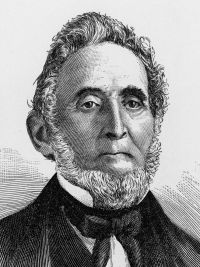
Apparently, it had been thought that Sidney Rigdon meant “to renounce his faith in Mormonism” when he took the stand on 21 August 1842. Instead, he “appeared to bear his testimony of its truth, and add another to the many miraculous evidences of the power of God.”
I stumbled upon this story while reading a commentary on Doctrine and Covenants section 124 verses 103-110. In these verses Sidney Rigdon is admonished to continue to stand by the Prophet Joseph Smith, along with other commandments, and “if he will hearken unto my voice, it shall be well with him” (verse 110).
Smith and Sjodahl remark that, “Sidney Rigdon, according to a generally prevailing impression, was more or less under the influence of a spirit of apostasy. It is related that, in Liberty jail, he declared to his fellow-prisoners that the sufferings of the Lord were nothing compared with his, and while the faithful Saints were straining every nerve to complete the Nauvoo Temple, he had no word of encouragement to them. As a consequence of his disposition, he did not have good health. Like the Corinthians who partook unworthily of the Sacrament (1 Cor. 11:30), he was ‘weak and sickly.’ The Lord, therefore, points out to him the cause of his ailments and promises to heal him, if he will do his duty and stand by the Prophet as a true counselor.”
The admonition from the Lord in section 124 was given on January 19, 1841 so it was 19 months later that he took the stand to detail the miracle he had experienced to those gathered.
As mentioned, given Sidney’s recent state of apostasy, I’m sure the gathered congregation was expecting to see some potential fireworks. They got fireworks, but not the apostasy-themed ones they were expecting.
Sidney told the congregation that his daughter Eliza died. She was pronounced dead by a physician. I will quote the story from the Joseph Smith Papers. “after a considerable length of time she rose up in the bed and spoke in a very powerful tone to the following effect in a supernatural manner: she said to the family that she was going to leave them (being impressed with the idea herself that she had only come back to deliver her message and then depart again,) saying the Lord had said to her the very words she should relate; and so particular was she in her relation, that she would not suffer any person to leave out a word or add one. She called the family around her and bade them all farewell with a composure and calmness that defies all description, still impressed with the idea that she was to go back. Up to the time of her death she expressed a great unwillingness to die, but after her return she expressed equally as strong a desire to go back. She said to her elder Sister, Nancy, ‘it is in your heart to deny this work, and if you do, the Lord says it will be the damnation of your soul.’ In speaking to her sister Sarah she said, ‘Sarah, we have but once to die, and I would rather die now than wait for another time.’ She said to her Sisters that the Lord had great blessings in store for them if they continued in the faith, and after delivering her message she swooned, but recovered again.”
It goes on to say that she continued in a near death fashion for 36 hours before she called her father, Sidney to her. Continuing from the Joseph Smith Papers: “the Lord had said to her, if he (Sidney) would cease weeping for his sick daughter, and dry up his tears that he should have all the desires of his heart; and that if he would go to bed and rest, he should be comforted over his sick daughter, for in the morning she should be getting better and should get well.” Sidney had wept and prayed for his daughter’s life. His daughter told him the Lord had commanded her to stay for Sidney’s prayers.
The account continues, (Sidney speaking), “It has also been rumored that I believe that Joseph Smith is a fallen prophet. In regard to this, I unequivocally state that I never thought so, but declare that I know he is a prophet of the Lord, called and chosen in this last dispensation, to roll on the kingdom of God for the last time. He closed by saying as it regards his religion he had no controversy with the world, having incontrovertible evidence, that through obedience to the ordinances of the religion he now believes, the Lord had actually given back his daughter from the dead.”
There is so much to unpack here. A few things that caught my attention –
Sydney being weak due to taking the sacrament unworthily.
The statement potentially made by Sidney Rigdon to the effect that the Lord’s sufferings were nothing in comparison to his, blasphemous indeed.
Interesting that Eliza was commanded to give the precise words of the Lord. Shows the importance of the Lord’s words, when He speaks, we listen and when we relay His message it must be precise.
Also, interesting that Eliza at first didn’t want to die, but once she had met the Lord, she didn’t want to come back to life. Why did she ultimately come back? Because the Lord commanded her. I believe this not to be out of duty to Him (though of course it was) but out of love. The Lord doesn’t force.
My concluding thought is on the cunningness of the devil. I haven’t studied the life of Sidney Rigdon much after he officially left the church. After reading this story I looked a little more into Sidney Rigdon. Apparently, after Joseph Smith’s martyrdom Sidney went on missions to the East to preach and gather followers to his new church. Sidney called it, “the most successful mission he had ever undertaken.” Where is this church today?
What I thought about the cunningness of Satan is this: Sidney Rigdon appears to never have denied the faith. Maybe that source exists and I haven’t seen it. What Sidney did instead was claim the authority as his own. He was misguided and pride took over. He believed the authority rested with him and so, instead of denouncing the faith, he tried to promote it in his own way. God had chosen his prophet. Sidney Rigdon couldn’t upheave that.
I believe there is a lot to be learned from this story from Church history. I noted just a couple of the interesting points that could result in their own post. Ultimately I settled on this important point –
I’m not sure where Sidney Rigdon’s church is today. I know where the Church of Jesus Christ is today.



 No Coincidences