Tag: love

  • Simplified Husbandship

    Simplified Husbandship

    These are the highlights I typed up for myself from a book called Simplified Husbandship | Simplified Fathership by Richard M. Eyre. I typed this up mostly for myself to refer back to.

    This is only on the simplified husbandship portion of the book. These are the quotes, summaries, and most important points I found from the book.

    “To become a better husband –

    change yourself

    not your wife.”

    “The home should be the center of growth, happiness, of excitement. If your home isn’t a happier place now than it was a year ago, you’re not progressing.”

    “A marriage of oneness should have a Venn diagram that is as circular as possible in the middle. When the marriage doesn’t have enough oneness, the middle is like a football.”

    “This type of marriage, like a football, is erratic and hard to predict. There is no telling where it will bounce.”

    “The best way for a husband to pursue this kind of oneness lies not in efforts to change his wife or even in efforts to change the marriage relationship. His best chance lies in changing himself.”

    Partnership-Plan-Pray

    Communication – “Oneness is an impossibility between two who share only part of what they feel.” This one really hits home for me. I’m not a great communicator.

    Inspiration – “The third partner should be the Lord.”

    One strategy for partnership –

    Wife handles the “inside partnership” of inside-the-home things such as home, children, personal kingdom, etc.

    Husband handles the “outside partnership” of outside-the-home things such as money, providing necessities, involvement in outside causes like church and civic, etc.

    In the above example, the wife would be general manager of inside partnership and husband participating partner and vice versa.

    Each night before prayer each gives a brief report on their stewardship, and receives comments, questions, or insight from the participating partner. Both participate, but one is in charge of each.

    During scheduling, attempt is made to find an hour where roles are reversed. Husband spends time with the children on the inside and wife shifts to outside activities, church, civic, or personal. (This seems extremely structured, to the point that it might border on unrealistic, practically speaking. But I still like the premise).

    Partnership – “day planning” – evening prayer.

    Each has a role and the Lord is the supervising partner.

    Partnership meeting is simple and shouldn’t take more than 10 minutes. The results:

    1. Each learns more about the arena where he or she did not spend the day (and becomes more appreciative of what the other is doing).
    2. Each gives input and ideas for the other’s benefit.
    3. Each thinks about what he or she will do the next day in both the general and the limited role.
    4. The prayer becomes far more specific and meaningful (because it is about things just discussed).
    5. Both sleep better when the next day is clear and challenging rather than hazy and uncertain.

    Things I personally could talk about with the outside responsibilities:

    1. Schedule for work / coaching / gym / church calling / projects
      • Go over my daily items
    2. Investments and status
    3. Finances – budget (handled by Beth, could be a part of her report).

    Once a month dinner date, reviewing the month. Review the past month and set goals for the month ahead.

    Once a year “honey-moon” vacation to review the last year and the year ahead.

    Principles:

    1. Total communication and openness
    2. Complementary roles (separate but shared responsibility)
    3. Shared goals and plans
    4. Adding the Lord to your partnership through earnest, regular prayer together

    “If exaltation is the goal, marriage partnerships must fold together in purpose and communication until they become one. We often imagine that temple marriages differ from civil marriages in quantity (they last longer), but, in fact, their quantity will be great only if their quality is great, only if oneness is obtained.”

    “Agreeing to disagree on some things is fine among friends and business partners but not between marriage partners striving for oneness.”

    “Partners are separated when they compete in any context other than fun.”

    “Emerson said, “Marriages do not fail, people fail. All marriages do is show those failures up.””

    Partnership-Plan-Pray Summary:

    • My wife is my partner in all I do.
    • We share everything, including our deepest feelings.
    • We plan our time together and share objectives for our lives inside and outside our home.
    • We pray together regularly, and preceding the prayer is a discussion of our partnership.

    Protect-Pamper-‘Preciate

    “A woman’s ego is no weaker than a man’s, but hers works in a slightly different way. Hers usually is best fed when she is cared for, complimented, appreciated, protected – even pampered a bit – not with the patronizing implication that she is weaker, less able, but with the implication that she is more special, important, and genuinely valued. A wife who receives sincere compliments, who is appreciated, who feels needed and cherished and protected, seems to gain a soft strength, a kind of clear-headed fulfillment that raises her toward her full potential in many areas.”

    “It’s the old notion of “out-giving” that can make marriages even more beautiful. Have you ever watched what happens to a basketball team when one player is so unselfish that he is always looking for a teammate to get the ball to? Other players respond in kind. The ball moves faster; everyone gets better shots. The teamwork of marriage can be similar.”

    Me – This is similar to the advice I received early in my marriage. When I confided in someone about my frustrations with doing household chores, that someone asked me point blank, “Why are you doing chores?” They asked if it was to one-up or get an edge on my wife. They asked how the Savior served. They pointed out that this life is meant for us to become like the Savior. The Savior never asked for anything in return when he served others. If I’m cleaning the house or doing something so that I’m owed something or appreciated by my wife, what’s the point? It’s not service, it’s a way to get an advantage. They said to love and serve my wife for that simple purpose. Because I love her and I want her to be happy, and for no other reason. My life and marriage are better when I realize and remember this.

    “It is not the addition of responsibility and children that destroy romance. It is the subtraction of courtship, of chivalry, of living to make the other person happy.”

    Protect-Pamper-‘Preciate Summary:

    • I love my wife deeply and understand her need to feel cherished and loved. 
    • I feel tenderness toward her and want to find meaningful ways to compliment her, to be chivalrous and protective of her. 
    • I watch her closely and notice the time she needs the “lift” of a tender kiss, a word of sincere appreciation, a helping hand, a date.” 

    Patriarch-Priesthood

    A wife is asked, “What would you do if your husband were to ask you to do something you didn’t agree with, not something unrighteous, but something you didn’t want to do?” 

    She responds, “I would tell him I didn’t want to, and we would discuss it.” 

    “Yes, and most things you would work out and agree on. But let’s say in this instance you still didn’t agree. You thought it was the wrong decision, but he still wanted it. What would you do?  

    She says, “I wouldn’t do it.” 

    “That’s what I want to talk to you about. You would have two options in that situation. One, to refuse. Or two, to say, ‘Yes, you know my feelings, but if you still feel it is right, I will accept your decision.’ If you take the first option you get into a power struggle and minimize his chance to change or repent if he is wrong (his ego, if you defy him, will lock him into his wrong choice). If you take the second option, you show trust and giving, and you maximize his chance to change if his decision is wrong. (The other side of the husband’s ego is the one which feels the responsibility to protect and be fair with his wife who puts her confidence in him.)” 

    The husband is then asked, “Would you ever do that? Demand that your wife do something she did not agree with? If you do, you will sooner or later destroy your relationship. If you force decisions on her, you abuse her trust and become a tyrant. That is what you do if you demand.” 

    If either the husband or wife remembers this, it will work. If the wife respects the priesthood, the husband will use it well. If the husband counsels and communicates rather than demands, the wife will respect the husband and they will be one, with the priesthood belonging to both together. 

    I would add that this example works the other way around as well. If the wife decides on something and doesn’t respect the disagreement of the husband and the husband refuses to compromise, it becomes a problem.

    “In a baseball game the pitcher throws the ball, the catcher catches it. The roles are equal but different. They could rotate, the catcher throwing every other pitch, but they would do less well in the game. In the patriarchal order, the husband holds the priesthood and the wife shares it. The “head of the home” (the husband’s role) and the “heart of the home” (the wife’s role) are equal but different in that both draw on the great, inherent strengths of each.”

    To be a strong priesthood leader in a home:

    1. Take the lead in planning the week together each Sunday. 
    1. Use the priesthood more in the home (for blessings, etc.). 
    1. Have a short personal interview with each child on Sunday evening. 
    1. Hold a good family prayer each morning and a “partnership prayer” with your wife each night.  

    Patriarch-Priesthood Summary:

    • My wife shares the priesthood with me, and we are equal partners. But I hold that authority and I have the righteous strength that helps her feel secure and fulfilled in her support. 
    • I take the lead in planning and goal-setting, in family prayer, and in personal interviews with each of the children. 
    • I realize that there is no intervening link in the priesthood chain between myself and the Lord. As a father I am entitled to direct inspiration for my wife and children. I ask for that inspiration and receive it. 
    • use the priesthood often in my home for personal blessings and to keep the Lord’s Spirit present.  

    Priority 

    “Lack of commitment is Satan’s key tool in destroying relationships. Without commitment, little problems and disagreements can become final ones.” 

    A “planning” husband: “In addition to planning with my wife, I consciously ‘prioritize’ my wife in my personal planning. When I plan my week, I think about her first, and the fist thing I put on my calendar is our Friday night date. Then I ask her about her schedule and try to work out when she might need me. I try to plan at least one little surprise for her each week.” 

    A less planning husband, “I just watch Pattie and try to notice when she needs a little pick up. Also, and I don’t always remember this, I try to make my last thought of the day, just before I got to sleep, be of Patti. I think, ‘What can I do for Pattie tomorrow?…It’s fun to try to think of her for a moment each night just as I doze off.” 

    Priority Summary:  

    • My wife comes first in my plans, my schedule, my priorities. 
    • When I have decisions to make, my first thought is always how they will affect her. 
    • I consciously try to find “little things” to do for her on a regular basis.  

    Becoming these things 

    “Most husbands, busy with jobs, callings, and concerns of all varieties, cannot be constantly thinking of their roles as husbands. Therefore, becoming these four qualities to the point where you live them naturally is the only practical, workable way to improve your husbandship.” 

    “Self-programming” is the idea of making these qualities subconscious, so they don’t have to constantly be thought about. The point is to become these husband qualities.  

    Methods of self-programming 

    1. Running 
    1. Meditation 
    • The same kind of self-programming can be done in meditation. Simply sit comfortably in a quiet place, close your eyes and quiet your mind as best you can. Then begin – “I put my wife first,” etc. 
    1. Shaving 
    1. The last thought of the day. 
    • The quiet night, with no light or distraction, is a good time to say, “I am the patriarch of my home. I lead righteously through the priesthood. Last week I gave a priesthood blessing to little Nell. I watch for opportunities to use the priesthood.” And so on. 

    “Each method of self-programming can be strengthened by prayer. We have great power to change ourselves, but our Heavenly Father is the true changing force.” 
  • Hook

    Hook

    I watch a lot of old movies from my childhood with my daughters now. I think Ivy has already started not taking me seriously when I say, “This is one of my favorite movies ever.” But Hook is really one of my favorite movies ever.

    Sometimes you forget that others did not live your childhood. When I heard Beth had seen Hook maybe one time through in her life, I was shocked. I’ve probably watched it from beginning to end at least 3 dozen times. Back in the day if you had a VHS of a movie it became an automatic watch at least a dozen times.

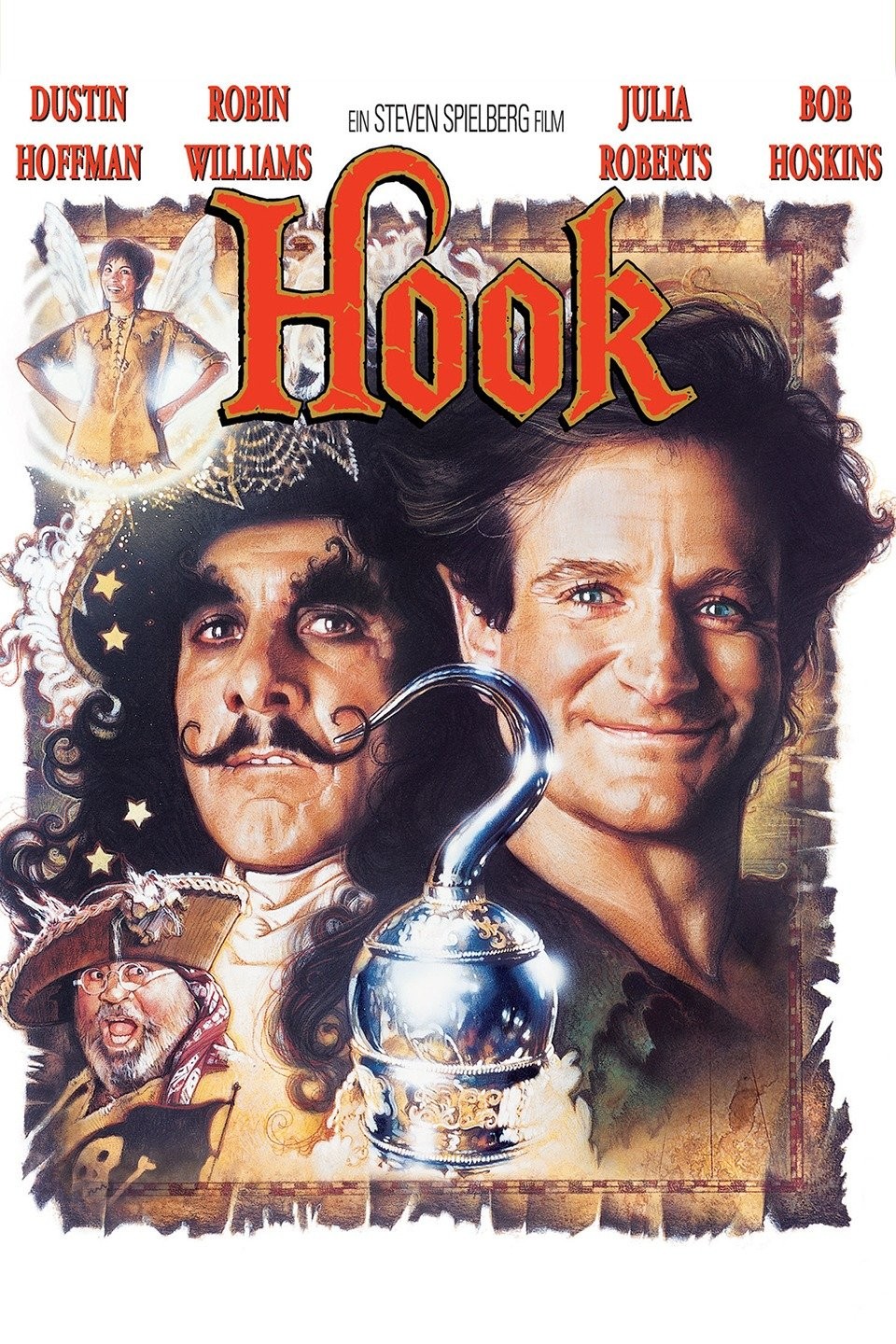
    For those who aren’t familiar with the movie Hook, it tells the story of a Peter Pan that left Neverland to marry Wendy Moira Angela Darling’s granddaughter. Peter is grown up now and has forgotten who he once was. It has Robin Williams as Peter Pan, Dustin Hoffman as Hook, and Julia Roberts as Tinker Bell. I never realized it was a Steven Spielberg film.

    I watched it recently with my girls. It’s been a while since I’ve watched it. This was the first time I’ve seen it since having kids. Some things stood out to me in my new “dad of three” mind. 

    In the movie, Peter Pan has become an important person. He works in “mergers and acquisitions.” It sounds like he works in major corporate takeovers. As Jack, Peter’s nine-year-old son, describes what Peter does for work, Wendy, who is now extremely old, mutters, more to herself than to anyone, “Peter, you’ve become a pirate.”

    Which led to the first thing from the movie that made me think, the first major theme. In Neverland, there are two main categories: Pirate or Child. A pirate steals, plunders, and is generally bad. The children, while not perfect, are, well, children. They are kind, playful, and forgiving. The children are good. Everything is a game to them. The children are filled with joy. The pirates are filled with hate. The Pirates and the Children in Neverland are diametrically opposed.

    There is a moment where Captain James Hook is considering suicide. He is musing about how he has no purpose and no meaning and just can’t take this life anymore. The film makes it clear this isn’t the first time this has happened. 

    The children on the other hand, despite their meager existence, have joy simply from living.

    There is a statement made throughout the film, “Death is the last great adventure.” We’ve all heard this statement. The movie emphasizes that it is the Pirates, the adults, who dwell on and obsess over death. The children never talk this way. To them life is the adventure. Every day for the children is filled with joy and fun. They’re not looking forward to death, they are too busy thinking about life.

    Adults as “bad” and children as “good.” But why? As a stressed out, often frustrated, often impatient husband and father, I heard what the movie was telling me. I am a pirate. The three little girls I’m surrounded by every day are pure joy, adventure, and curiosity. I am not bad. But my pirate tendencies are. My girls are good. 

    There’s a moment in Neverland when Peter’s kidnapped daughter starts singing out over the pirate city. She’s singing a lullaby that her mother used to sing to her. The pirates have forgotten their mothers. The pirates have forgotten what it’s like to be a child. As the young girl sings, the hardened, mean, tough pirates stop. They stare. Some weep. 

    Be ye as little children. The pirates had forgotten what it is to be a child. 

    The movie is about finding joy despite the mundane nature of life. The movie reminds us to not be pirates. Be children. Play, run, laugh.

    Finally, at the climax of the movie, Peter needs to remember who he was, or he’ll lose everything. He needs to have a happy thought. He’s been so obsessed with work and success for so long, he doesn’t remember where true happiness lies. He remembers being a father. He remembers the births of his two children. This is his happy thought: being a father. This is what allows him to fly. This is what allows him to defeat the pirates and be Peter Pan again. It’s this thought that allows him to be like a child again. 

    In the last scene of the movie, Wendy is standing at the window with Peter and his family. She says, “Your adventures are over.” Peter replies, “Oh no, to live, to live will be an awfully big adventure.”

  • Good Samaritan Mechanic

    Good Samaritan Mechanic

    I referenced our “van issues” in this post about our trip to Six Flags in April 2024. It is a story worth telling even all this time later. The six hour drive turned into 10 hours. This is how.

    We were planning to drive to California. The van was packed and ready to go. 

    Beth had started not feeling well the day before. As our time for leaving approached, she voiced more concern about how she was feeling. I reassured her that she would be okay once we got going.

    We didn’t get far before Beth said she couldn’t do it. She was too sick to be in the car for 6 hours to California. 

    Back home we went. We dropped off Beth and quickly unloaded her essentials. When Six Flags beckons, only the strong survive (just kidding Beth *mwah). 

    Back on the road we went. Just me and my two little girls.  

    We purchased the van we were driving from Beth’s parents. It drove well and had a brand-new engine but had some aesthetic issues. As we were driving Ivy began the drive with her normal excitement about our trip. It didn’t take long for her and Sage to both be asleep. In the quiet I started to hear things. A scraping sound was coming from the bottom of the van. 

    I pulled over and looked at the front of the van. It looked okay. Then I noticed a protective wheel well liner, the protective covering near tires, was flapping. That’s what was dragging. It seemed okay so I kept driving. I was paying close attention and noted that it started to make a very disconcerting noise if I got to 65 miles per hour or above. I couldn’t drive to California going less than 65 the whole way. 

    This led to me literally doing a back and forth exercise for the next 45 minutes. I drove ahead a little, I turned around, I called my mom, I turned back around for California, I called my dad, I pulled over and looked again, I turned back around for home, I turned back around for California.

    Like the wheel well liner, I was torn on what to do. Six Flags was waiting! Only the strong survived! Was I going to let this keep us from our already planned trip? 

    We had our SUV at home so I could have gone back, unloaded the whole car, girls, everything, then got back on the road. We were only about 45 minutes on our way. There was another problem. My brother was meeting us and the hotel was in our name. I wondered if he’d be able to stay in the room. I was in a difficult spot, and I didn’t know what to do. 

    I was praying this whole time, looking for an answer.

    Finally I decided I couldn’t risk driving the van with my girls in the back all the way to California. I turned around for the final time to go home.  

    That’s when Beth texted me a new thought – what if I looked for a place that could just fix up that part so we could make the drive? I figured it was worth a shot. I looked up a repair shop nearby and drove to it. The place I ended up at didn’t look right but I was resigned to trying one place and then giving up. At this point it was still early enough that we could get to California in a reasonable time if we hurried.  

    I wasn’t sure where I’d ended up, but it wasn’t a normal auto-repair shop. I parked the girls in front and ran into the building. Once inside, I knew I wasn’t in the right place. It was a corporate office with a front desk. Why did my navigation bring me here? 

    I decided I was already this far so I might as well ask. I started to explain my situation to the girl at the front desk who looked panicked. Panicked girl went and got another lady.  

    The other lady showed up. This lady exuded a lot more confidence than panicked lady. I think it was panicked lady’s first week. 

    I started explaining, “This is a long shot, it doesn’t look like I’m in the right kind of place, but I’m trying to go on a trip to California, my girls are in the car, and we’re having an issue with the car. I was wondering if anyone could take a quick look and see if there might be an easy fix just so we can make the drive.” 

    To my surprise, the lady asked if she could come look at it. She walked out to the van with me and got down on the ground. She quickly assessed what the issue was. She was talking out loud and wondering if she could fix it with tape, or if she could screw it in, or if it could be ripped off altogether. She stood up. “Follow me.” 

    Okay… I jumped in the car and followed her slowly as she walked around the side of this corporate building. In the back of the building was a huge auto repair shop. This was the place cars went when they were totaled. It was a massive corporate building with a giant repair shop attached.

    I saw the lady walk up to a mechanic in his bay, in the middle of a dozen other mechanics in their bays. Why did she choose this man? He was in the middle of working on a car. After a quick conference with him, she walked over to me and told me he was going to look at the car and see what he could do. He pulled the car he was in the middle of working on out and guided me into the spot.  

    I pulled in, somewhat bewildered by the kindness being shown. He immediately got down and started evaluating the problem. He quickly determined what was needed.  

    The girls continued to sit in their car seats while I stood outside the car. I opened their doors so they could see me.  

    “What are we doing, Daddy?” Ivy asked. I told her we were seeing if this nice guy could help us get to California. 

    I started talking to the guy and learned he had 6 children of his own under the age of 16.  

    He stood up. He told me what I needed to get it fixed and be able to make our trip to California. I was confused. I asked if he knew of a repair shop that could help.  

    “Oh, I’ll do it. Just go buy the part and bring it back here and I’ll get it fixed up for you.” 

    I was still kind of taken aback by the help I was receiving. 

    I hastily reserved the part at a nearby shop and got in the car to go pick it up. When I got back to the repair shop with the required part, my new angel mechanic friend put the part on. While he was at it, he took care of two other items that needed addressing. All told he spent over an hour fixing things on the van.

    At one point during the fix, what seemed to be the mechanic’s supervisor came by to see how some other work was coming along. I got worried, was I going to get this selfless good Samaritan in trouble? My mechanic (whose name, if you haven’t noticed, I embarrassingly can’t remember) explained how he was working on something and gave the timeline for that other car to get done. The supervisor was completely understanding and told him to take his time. This place seemed to have a phenomenal work environment.  

    When he finished his work, I still had the nerves of considering the drive to California in a car I wasn’t sure I could trust. I asked him if everything was good and if he would feel comfortable driving his family in it now.

    He looked me dead in the eyes and said, “I wouldn’t send you away from here if I wasn’t confident those two girls would be safe.” 

    I was touched. As I re-read my writing of this story, and just remember that moment, of this man I didn’t know pausing his whole day to help me and then assuring me that my two daughters’ safety was the most important thing in the world to him, I’m just in awe of the kindness shown. 

    When Beth suggested seeing if the car could be fixed real quick, I said a prayer. I asked my Heavenly Father for help. I asked Him, if it was possible for us to still make our trip to California, to help me find a place that could fix the car. 

    After I picked up the part I needed and was driving back to the location with my good Samaritan, I was trying to search for the place. I knew its location, I was able to retrace my steps back to it, but I was curious how I ended up there in the first place. I couldn’t remember what I’d searched to find it. 

    “Car repair shop.” 

    “Mechanic nearby.” 

    “Car maintenance.” 

    “Auto shop by me.” 

    “Auto repair garage.” 

    “Car parts.” 

    On and on I tried. I couldn’t remember what I searched for, but surely it was one of those options. Nothing brought me back to that corporate garage. How did I get there in the first place? I still don’t know. 

    I’ve since (these two years later) spent considerable time searching Google Maps and various keywords to try to find this place. I don’t have a phenomenal sense of direction and honestly have very little clue of the rough area I was in. I’ve scoured Google Maps for mechanic, demolition, and salvage shops in the area I thought I was in. It’s like the place disappeared, an angelic phantom of my imagination that did real, concrete work on our van. The only proof I have that the place existed are the still present fixes on our van.

    I asked the mechanic if I could pay him. I knew what his answer would be. 

    “Knowing those girls are going to have a great trip with their dad, that’s reward enough.” 

    I told him and the woman that I prayed for help and believe I was led there. In an increasingly non-spiritual world, it was nice when they agreed and were happy to be the answers to my prayer. 

    What were the odds of arriving at that place, and meeting a woman willing to go outside and get on the ground to look at the fender of a van, and then be led to a man, and that man be willing to drop what he was doing in his busy day to fix that van – all for no payment, reward, or recognition in return? They were a real answer to prayer, real angels. 

    I’m grateful for kindness and good people. I did nothing to deserve this kindness. It is people like those individuals that make this world a better place. They exemplify why we’re here and I thank them for their example to me of selfless service.  

    Now I can’t believe it’s been almost two years since this experience. I want to send cookies, or this thank you, or anything. But I can’t find them. While I desperately want to thank those two people, maybe this just makes it more of a miracle. I ended up there miraculously as an answer to prayer, and it’s as if the place disappeared after.

    Those two people will never see this but thank you. That became a memorable trip for me and my girls. More importantly, I was reminded that there are still exceptionally good, amazing people out there. 

  • Grandpa Frank

    Grandpa Frank

    My most vivid memory of Grandpa Frank, aside from the “Wogs” (the nickname he had for me) and sitting on his lap as a kid, being squeezed into a ball, and being told I would grow up that way, is a few years ago when he bore his testimony in a church meeting. Paraphrasing, Grandpa said:

    “I miss my wife. I miss my daughter. I miss them so much. But this Gospel tells me I will see them again. That means more to me than anything. And I know it’s true, and that brings me so much comfort.”

    As the legend goes, Grandma Leach converted to the Church of Jesus Christ of Latter-day Saints in her early 30s. While Grandma lugged kids to church every Sunday, Grandpa Frank would watch football, golf, or go fishing. He seldom attended. He showed little to no interest in church.

    Again, as legend goes, after over a decade of this, the bishop of Grandma’s ward came to the door one day.

    “Are you excited for this Saturday?!” He asked.

    “What is happening Saturday?” Grandma asked, confused.

    “Frank’s baptism!” The bishop exclaimed.

    Grandma had no idea. For months, on the sly, Grandpa Frank had been meeting with the missionaries and studying the Book of Mormon. He decided it was true. I have no idea why he never told Grandma. I don’t think anyone knows. Maybe this is where I get my secretive, stubborn, frustratingly independent qualities (sorry Beth).

    That Saturday he got baptized and proceeded to go to church with the family from then on.

    What is the Gospel of Jesus Christ, really?

    Change. A man who preferred football, golf, or fishing realized the most important thing in his world was his family. He sacrificed what he wanted to do on Sunday for them.

    What is the Gospel of Jesus Christ, really?

    Faith. A man who decided to believe something extraordinary: he could and would spend eternity with those he loved most.

    What is the Gospel of Jesus Christ, really?

    Love.

    I didn’t cry when I heard Grandpa died. I know I’ll see him again. I know where he is. I know he’s happy.

    As I write this, a vision comes to my mind.

    Grandpa Frank sees Grandma Sandra. He smiles. He is overjoyed to be reunited with the love of his love, his constant companion until the previous four years separated them temporarily. He embraces her. “It’s really true, Sandra?”

    “You always knew it was,” Grandma tells him.

    Others come. Grandpa is surrounded by Laura, Mike, Henry, Olivia, parents, grandparents, friends, loved ones, and Bengie, of course. They rejoice. People (and a dog) he missed so much, but always knew he’d see again.

    As I picture this reunion, and I think about where I am, similarly stubborn and obnoxious as Grandpa Frank, I think about my daughters, and this family I’ve been given. I think about the faith I’ve gained because I’ve seen examples of real faith. Faith as tangible as this keyboard I now type on. Grandpa Frank’s faith was real. I think about those I’ll one day see again. I think about those I have in my life now, that I’ll be able to have in my life forever. As I consider this all, I cry tears of joy.

    This is the Gospel of Jesus Christ.

    I know that Grandpa knew it and I know where he is now.

    What greater comfort is there than this?

    Thank you, Grandpa, I’ll see you soon.

  • Story of Compassion

    Story of Compassion

    *This is from a true story I read 4 years ago that I can’t find the source for now.

    There is a story of a person named Om whose mother was killed when he was a young child. After his mother was killed, Om was shipped off to another country. There he was held and kept by the very people who killed his mother.

    Om lived in captivity like this for twenty years, mistreated, and kept by those who murdered his mother. At the age of twenty-four he was shipped back to his home and allowed to be free. Twenty years he was with the people who killed his mom and held him against his will.

    One of those captors tried to befriend Om. This person’s name was Marc. Marc wasn’t directly responsible for Om’s suffering. Marc wasn’t the one who killed Om’s mother. But Marc was still one of them. Marc was the enemy.

    The people directly responsible for the murder of Om’s mother told Marc to be careful around Om. Om hated them all and would kill Marc the first chance he got. 

    Over time Marc started to befriend Om and Om did not attempt to kill Marc.

    While in captivity, Om developed a close relationship with a young child. This friendship was one of the few joys Om had in his difficult life.

    One day Marc slipped and startled the young child that Om was so fond of.

    Three female chimpanzees charged at Marc over his mishap and started to bite and attack him.

    As Marc was being attacked, he saw Om charge toward them. Om was furious. Surely Marc was going to pay for startling Om’s precious young one. Om’s time of revenge had finally come. He was going to kill Marc.

    To Marc’s surprise, Om fought off the three female chimpanzees and kept them at bay while Marc crawled to safety. Marc made it to a hospital and barely survived.

    Here was Om, whose mother had been taken from him and his life destroyed by the people Marc represented. Om could easily view Marc as the ultimate evil. And yet, over time, they had become, if not friends, at least friendly.

    Om stands for Old Man.

    You’ve probably figured out by now that Om is a chimpanzee.

    What can we learn from Om?

    We humans consider ourselves so smart, so intelligent, far removed from the beastly chimpanzee. Here is a creature, an animal, a beast, who could show so much forgiveness that he would save a man who represented the destruction of his life.

    We humans might immediately point to the lack of intelligence in Om as the reason behind his forgiveness. “If he really understood the situation, as we humans do, he wouldn’t be so quick to forgive.”

    What if the opposite is true? What if it is a sign of Om’s intelligence that he was able to forgive?

    Om showed compassion and forgiveness.

    While we are human and chimpanzees are beast, we can learn something from Om.

    The next time you find it difficult to love, or forgive, or understand, remember Om, a chimpanzee capable of great compassion.