Tag: Malcom Gladwell

  • Is Roseto, Pennsylvania Zion?

    Is Roseto, Pennsylvania Zion?

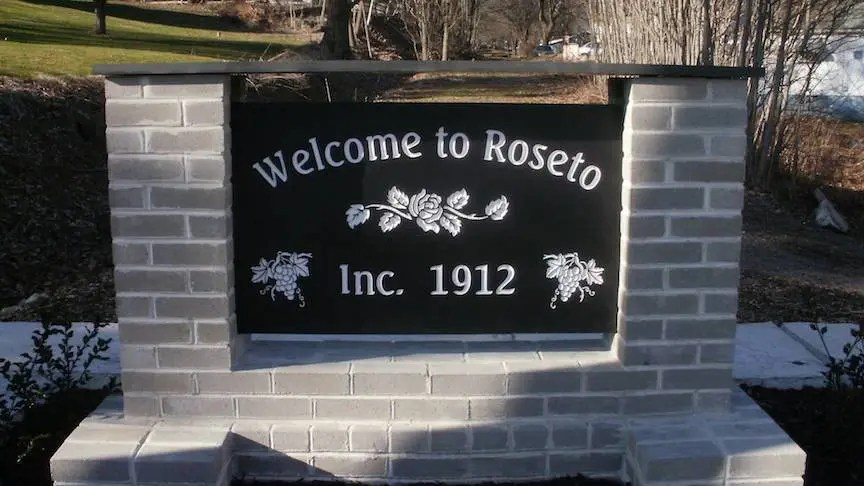
    There was an extraordinary thing happening in Roseto, Pennsylvania in the 1950s. I read about it in an awesome book called Outliers by Malcom Gladwell.

    Roseto, Pennsylvania was an outlier when it came to heart disease. For some reason, instances of heart attacks and heart trouble in Roseto were shockingly different than anywhere else.

    In the 1950s, heart attacks were the leading cause of death in men under the age of 65 (Outliers, p. 6).

    In Roseto, nobody under 55 had heart attacks. Roseto had half as many people with heart trouble over 65 compared to any other area studied. This included next-door cities and towns.

    What’s fascinating about this is that this phenomenon apparently had nothing to do with genetics, diet, or any other seemingly obvious reason. There was no obvoius indicator of why a whole community would be free of heart trouble.

    Heart trouble wasn’t the only thing missing from this community. A sociologist was brought in to study the community. His name was John Bruhn and he said, “There was no suicide, no alcoholism, no drug addiction, and very little crime. They didn’t have anyone on welfare. Then we looked at peptic ulcers. They didn’t have any of those either. These people were dying of old age. That’s it” (Outliers, p. 7).

    What made Roseto unique, then?

    Finding no pattern, those doing the study had to look at anything different about Roseto to try to explain this phenomenon.

    This led to a primary theory. That primary theory behind why Roseto, Pennsylvania residents didn’t suffer heart trouble or many other common diseases had to do with their community.

    Roseto had an old-fashioned way about it in the 1950s, even compared to the standards of its day. The residents of Roseto were primarily Italian-American immigrants. The standard in Roseto was to live at home as long as possible, take care of one another, and generally live a more laid-back and communal way of life. A young man would stay at home and take care of family. If he lost a job, it was okay. The community would often try to keep shortcomings like a lost job secret so as not to create any embarrassment. Kids would take care of parents. Parents would take care of kids. The community took care of each other. It was a family-focused, close-knit community.

    “(Researchers) learned about the extended family clans that underlay the town’s social structure. They saw how many homes had three generations living under one roof, and how much respect grandparents commanded. They went to mass at Our Lady of Mount Carmel and saw the unifying and calming effect of the church. They counted twenty-two separate civic organizations in a town of just under two thousand people. They picked up on the egalitarian ethos of the community, which discouraged the wealthy from flaunting their success and helped the unsuccessful obscure their failures” (Outliers p. 9, emphasis added).

    The fact that Roseto residents had such low instances of heart trouble revealed a potential connection between community relationships and social support to reduced stress and heart disease. The community of Roseto appeared to buffer its inhabitants from the stresses of life.

    This got me to thinking.

    What is Zion? What is the perfect society? What will it look like? What will it be like, practically speaking?

    “…the Rosetans had created a powerful, protective social structure…” (Outliers p. 9).

    Will Zion be a community that goes to church together? A community that stops to talk to each other? A community that continues to live under one roof with their direct family as long as possible? A community where equality reigns? A community where spontaneous cookouts in front yards are common?

    This sounds like Zion to me.

    It’s fascinating that a community basically shielded itself from the stresses of a fallen world by living by these principles. I believe these are God-given principles: fairness, love, community, support, unity – that’s what makes Zion.

    “When presenting (the researchers’) findings at many medical conferences where their peers were presenting long rows of data arrayed in complex charts and referring to this kind of gene or that kind of physiological process, and they themselves were talking instead about the mysterious and magical benefits of people stopping to talk to one another on the street and of having three generations under one roof….No one was used to thinking about health in terms of community” (Outliers p. 10).

    This Christmas season, as I’m inevitably considering the state of our world and where we’re headed, I can’t help but wonder: is it this simple?

    Community, family, support. People supporting people, people uplifting one another, communities looking out for each other. Neighbors waving hi. People engaging with those in their community. Ministering. Fellowship. Is it that simple? Would that fix our world?

    I think it would. I think this is primarily what is missing from our modern-day societies. Love thy neighbor. How about say hi to thy neighbor?

    This holiday season, aim to light the world. Start by dropping off cookies at a neighbor’s house. It might save you from a heart attack.
  • Books in 2023

    Books in 2023

    My books read have an inverse correlation to how many children I have. 58 in 2020, 45 in 2021, 26 in 2022, 21 in 2023, and in 2024 I’m on pace to finish 15. I miss reading 50 books in a year, but I have the best distractions.

    This is the third year I’ve made a list of all the books I read. Click to see lists for 2021 and 2022.

    2023’s book list comes with even more of a disclaimer than usual. You may have noticed I’m posting 2023’s list at the end of 2024. It’s been at least a year since I’ve read most of these books. This made it difficult to remember the finer details of the individual books. Add the fact that I packed all these books away so I can’t review my highlights, and I struggled a bit remembering each individual book.

    Still, it might mean the list even better represents what books I liked because the list will partially indicate the most memorable books from last year.

    So, here is the order of my most enjoyable reads from 2023.

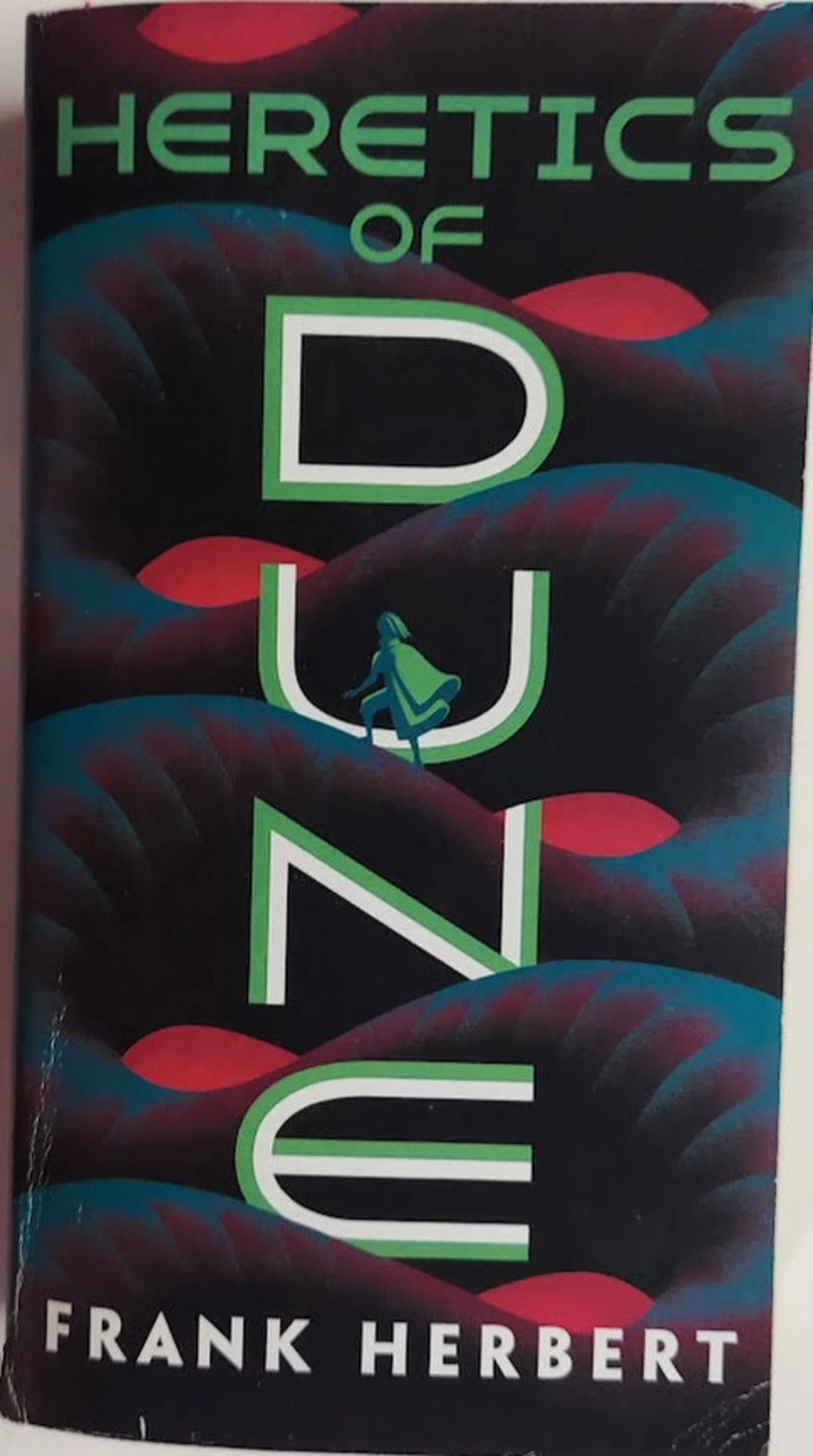
    1. Heretics of Dune by Frank Herbert
      • The fifth book in the Dune series, I must show respect for what Frank Herbert created in the Dune universe by ranking this book this high. I love this series. I loved this book. I love his universe. I love his writing. Best series I’ve read since Harry Potter, hands down.
    2. The Silkworm by Robert Galbraith (aka J.K. Rowling)
      • I loved this book, the second book in the Strike detective novel series. JK Rowling is the greatest author of our generation. This list doesn’t even have a Harry Potter book on it and yet Harry Potter was mentioned in the top two books. Anyways…
    3. Mandy’s Promise by Frank Leach
      • This book has a special place in my heart as it was written by my grandpa. Re-reading the synopsis of the book gave me chills because it really was a great story. I loved this book.
    4. The Man Who Broke into Auschwitz by Denis Avey
      • This was a phenomenal book. I just read the Wikipedia page on it and learned some of the story might have been embellished. Well, yeah, welcome to story-telling. It’s an extraordinary tale of a man who tried to get into Auschwitz and eventually survived being an Allied prisoner of the Second World War.
    5. Ancient America and the Book of Mormon by Thomas Stuart Ferguson and Milton R Hunter
    6. Outliers by Malcom Gladwell
      • This book was great, really made me think about how our situations and often some luck impact our potential growth and abilities. Must read for someone wanting to understand the outliers or overperformers in our society.
    7. Hugh Nibley’s semester one on the Book of Mormon
      • This is a transcription of all lectures from a Book of Mormon class Hugh Nibley taught from 1988-1990 at BYU. Don’t ask me how I found it, but I did, and I immediately downloaded and saved all of them. These are insightful, his understanding of history is off the charts, so many extraordinary insights that grew my testimony in the Book of Mormon and God’s hand in the history of all things. If you want a copy, let me know and I’ll send it to you. Invaluable.
    8. Career of Evil by Robert Galbraith
      • Book three of the Strike detective series. This book is ranked a little lower than Silkworm because it dragged a little more with a lot more developing characters and drawn-out suspicion. The end was well-worth the wait though.
    9. Songs of the Morning Stars by Sarah Hinze
      • This is a collection of stories about children visiting their families before they were born. Legend has it my dad dreamt of all of us before we came. He knew all our genders. So this one hits close to home.
    10. Thinking, Fast and Slow by Daniel Kahneman
      • This book was about how our minds work and about our fast or slow reactions or decisions. It explores thinking and ways to improve our decision-making.
    11. Go Forward with Faith by Sheri L. Dew
    12. Room by Emma Donoghue
      • I actually started this book once years ago and never finished it. That was back when I sometimes didn’t finish books. I enjoyed it this time. This is the story of a young boy born in captivity. Fascinating thought experiment about life, freedom, and experience. Also became a movie.
    13. Doctrine and Covenants Commentary by Hyrum M Smith and Janne M Sjodahl
      • This book was a 1200-page church history grind, but extremely rewarding to finish.
    14. Malachi and the Great and Dreadful Day by Mark E. Petersen
      • Malachi is a lesser-known prophet which means there is less content for the author to provide but also more I didn’t know about Malachi to be learned. I enjoyed this book. Other books I’ve read in the series included Moses (#24 from 2021) and Joshua (#22 from 2022).
    15. Book of Lost Tales Vol 3 Lays of Beleriand by J.R.R. Tolkien
      • By book three it felt like I was reading the same legends over again, with extra commentary about where words came from that didn’t super interest me. I still love reading Tolkien’s tales but didn’t love these as much.
    16. Liberty and Tyranny: A Conservative Manifesto by Mark. R. Levin
      • Without revealing too much about my political beliefs, I enjoyed this book.
    17. The Shaping of Middle-Earth (Vol 4) by Christopher Tolkien
      • See above commentary on Vol 3, lots of repetition, still fun to read Tolkien’s legend.
    18. Way to Be by Gordon B. Hinckley
      • Gordon B. Hinckley had a way of speaking and it comes out in this book. It was full of witty and funny stories amidst spiritual guidance and advice from a prophet of God.
    19. Gospel Symbolism by Joseph Fielding McConkie
      • I don’t remember this book super well, but it was all about the significance of symbolism in the scriptures and in the temple.
    20. Tao Te Ching by Lao-Tzu
      • “The Way.” This book was like reading Proverbs from the Bible: insightful but dry. Most interesting thought I got from this book was to make me consider the strength of babies.
    21. Mormonism and the Negro by John J. Stewart
      • This book was full of outdated and inaccurate information.