Tag: mercy

  • Story of Compassion

    Story of Compassion

    *This is from a true story I read 4 years ago that I can’t find the source for now.

    There is a story of a person named Om whose mother was killed when he was a young child. After his mother was killed, Om was shipped off to another country. There he was held and kept by the very people who killed his mother.

    Om lived in captivity like this for twenty years, mistreated, and kept by those who murdered his mother. At the age of twenty-four he was shipped back to his home and allowed to be free. Twenty years he was with the people who killed his mom and held him against his will.

    One of those captors tried to befriend Om. This person’s name was Marc. Marc wasn’t directly responsible for Om’s suffering. Marc wasn’t the one who killed Om’s mother. But Marc was still one of them. Marc was the enemy.

    The people directly responsible for the murder of Om’s mother told Marc to be careful around Om. Om hated them all and would kill Marc the first chance he got. 

    Over time Marc started to befriend Om and Om did not attempt to kill Marc.

    While in captivity, Om developed a close relationship with a young child. This friendship was one of the few joys Om had in his difficult life.

    One day Marc slipped and startled the young child that Om was so fond of.

    Three female chimpanzees charged at Marc over his mishap and started to bite and attack him.

    As Marc was being attacked, he saw Om charge toward them. Om was furious. Surely Marc was going to pay for startling Om’s precious young one. Om’s time of revenge had finally come. He was going to kill Marc.

    To Marc’s surprise, Om fought off the three female chimpanzees and kept them at bay while Marc crawled to safety. Marc made it to a hospital and barely survived.

    Here was Om, whose mother had been taken from him and his life destroyed by the people Marc represented. Om could easily view Marc as the ultimate evil. And yet, over time, they had become, if not friends, at least friendly.

    Om stands for Old Man.

    You’ve probably figured out by now that Om is a chimpanzee.

    What can we learn from Om?

    We humans consider ourselves so smart, so intelligent, far removed from the beastly chimpanzee. Here is a creature, an animal, a beast, who could show so much forgiveness that he would save a man who represented the destruction of his life.

    We humans might immediately point to the lack of intelligence in Om as the reason behind his forgiveness. “If he really understood the situation, as we humans do, he wouldn’t be so quick to forgive.”

    What if the opposite is true? What if it is a sign of Om’s intelligence that he was able to forgive?

    Om showed compassion and forgiveness.

    While we are human and chimpanzees are beast, we can learn something from Om.

    The next time you find it difficult to love, or forgive, or understand, remember Om, a chimpanzee capable of great compassion.

  • This is Repentance

    This is Repentance

    Sometimes I struggle with the idea that my sins have been made completely white through the Atonement of Jesus Christ, that I’m completely forgiven for everything I’ve done.

    I know this disrespects the Atonement of Jesus Christ and that’s part of my biggest struggle. The last thing I ever want to do is belittle what Christ did for me.

    The thing is, sometimes I still dwell on my past sins. Sometimes I still think about them. Sometimes I still feel remorse and guilt. Sometimes I wonder if I’ve paid the full penitence to those I hurt. Have my sins been washed away? Are they completely gone if I still remember them?

    I rationalize this, and I believe it’s true, that I remember them for my benefit. I have to remember them or I might return to them. It’s the remembrance of guilt that keeps me from wanting to go back to being that person.

    I understand this intellectually.

    Still, sometimes it’s hard for me to understand how Christ can have forgotten my sins, washed them away as if they never happened, when I can’t forget them myself.

    The young men I work with and I recently studied Isaiah chapter 1.

    Isaiah 1:18 reads:

    “Come now, and let us reason together, saith the Lord: though your sins be as scarlet, they shall be as white as snow; though they be red like crimson, they shall be as wool.”

    After reading that I emphatically emphasized something to those young boys. What I emphasized was this:

    “When you truly repent, and show remorse, and try your absolute hardest to not do it again, Christ forgives and forgets your sins. Period. White as snow. It’s as if they never happened. Don’t be deceived. Satan will have you believe you can never be forgiven for a mistake. This is the great lie. You can be forgiven. If you repent, Christ will forgive. Not only that, He won’t even remember it. It’s like it never happened. I can’t stress this enough.”

    That’s what I said to my young men, and I believe it’s true.

    But… do I believe it’s true?

    Given what I just wrote?

    I had a thought today for the first time ever. I often think about the time of judgement. That time when we stand before Christ and have our life reviews. I’ve never feared that moment. The thought that occurred to me today is: why don’t I fear that moment? I have so much to be embarrassed by, so much to be ashamed of in my past behavior. Why haven’t I worried about it before? It occurred to me that one day my wife, Beth, will see how I once was. I’ve tried to tell her, but I don’t think she gets it. Then it occurred to me that my family will see it too. I will be so ashamed! Why haven’t I feared this before?

    Then it hit me.

    Maybe that’s repentance.

    Repentance is knowing – yes, I did those things. Yes, I made many mistakes. But though my skins be scarlet (they are and were) they shall be as white as snow. As I type this, I hold back tears. That’s what Christ has done for me. That’s what repentance is.

    Luke 15:7:

    “I say unto you, that likewise joy shall be in heaven over one sinner that repenteth, more than over ninety and nine just persons, which need no repentance.”

    D&C 18:13:

    “And how great is his joy in the soul that repenteth!”

    I am that soul. I don’t know how the life review will go. If my sins are forgiven and forgotten, are those parts reviewed? I don’t know. But what I realized was, and why I’ve never feared that moment, is even if all my abhorrent behavior is shown, it will be ok. It will be ok because I changed.

    That thought of Beth seeing how I used to be? It occurred to me that maybe she’ll love me even more after seeing all of it because she’ll see how much I changed. She’ll be able to see the full picture of how far I came to be a semi-decent husband and father.

    I think that’s what repentance is. Knowing that even if all your sins are laid out, you’re still forgiven.

    That’s repentance.

  • The Higher Law and the End of Blood Sacrifice

    The Higher Law and the End of Blood Sacrifice

    Christ fulfilled the law. This was why blood sacrifices were done with after His last and great sacrifice. But what does this mean, practically?

    The Israelites practiced God’s law which was a law of reparations. You take out the eye of an enemy maliciously, you take out his eye. Someone kills your brother, you kill him. The problem with this is obvious. Blood begets blood and when does it end?

    This is why the Israelites practiced the law of sacrifice. They took an animal, that had nothing to do with bloodshed, or theft, or lying, and instead of continuing the constant cycle of reparations, they sacrificed the blood of the animal. This is obviously what Christ represented when He died on the cross. He paid the price for all our sins, because we are incapable of paying such a price.

    This is why Christ preached a higher law. No longer was it an eye for an eye but it was turn the other cheek. No longer was it sue for damages but give your second coat. Christ’s point was that after He died for our sins, animal sacrifices would be done away with, there was no more putting your sins off on a goat. Christ was teaching the end of strife. Someone wrongs you, forgive them and move on. This put an end to the vicious cycle of payback and recompense.

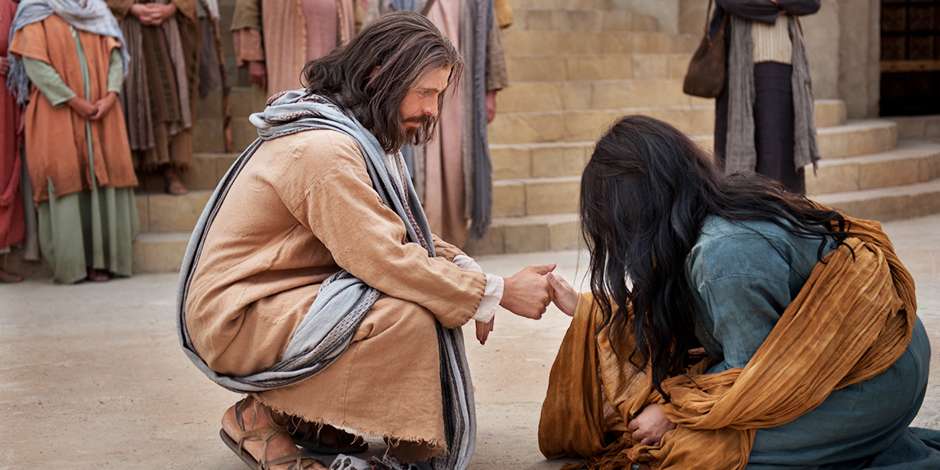
    Who was the greatest example ever of this? Jesus Christ never asked us to do something He didn’t do first, when He was up on the cross, and forgave those who had scourged, beaten, and crucified Him.

    But of course, justice still had to be paid for a wrong done. That’s where Christ came in, paying the ultimate and last sacrifice with His blood. So, we flawed human beings, who sometimes commit wrong without even meaning to, can be forgiven. This is the miracle of what Christ did for us, the miracle of His atonement, the miracle of His forgiveness, and the miracle of the higher law.

  • Forgiveness

    Forgiveness

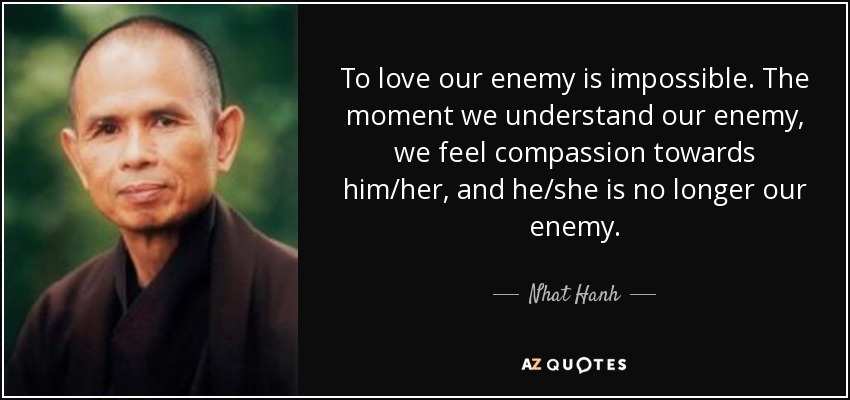
    Forgiveness can be so hard. There’s a reason Christ emphasized it so differently from normal human traditions. Human thinking is, “I can’t forgive them that many times.” God’s response is, “how many times have I forgiven you?”

    That point is brought home in Matthew chapter 18. In verses 21-23, Peter asks that question we’re all tempted to ask. How many times must I forgive? Seven? Surely seven is good. It’s 4 more times than the Hebrew law dictated at the time. Christ’s famous response,

    “I say not unto thee, until seven times; but, until seventy times seven.”

    Christ expounded upon this with the parable of the servant who owed a king a large sum. When brought forward to pay the sizeable debt, the servant fell down before the king and begged for patience. In great mercy, the king waived the debt.

    That same servant then went out and grabbed another servant, demanding that a tiny amount be paid back. The second servant asked for patience and the same servant who had just been shown so much mercy had the second servant thrown into prison.

    When the king heard this he “was wroth, and delivered him to the tormentors, till he should pay all that was due to him” (Matthew 18:34).

    It seems so easy here on earth not to forgive others. What does it hurt us to not forgive? How does that person who wronged me deserve my forgiveness?There is a story from the book Return from Tomorrow. A holocaust survivor is found in a concentration camp. When he is liberated by the soldiers, he is put to work helping with the sick and dying around him. He is energetic and relatively healthy. The soldiers finally say to him, “you must have been lucky. You haven’t been here long, huh?” The man tells them how many years he’d been at the concentration camp; a long time. They marvel at his health. How can it be?

    The man tells them that early in the war, his wife and children were murdered before his eyes. He desperately wanted to hate these men, hate this war, hate this world, hate God. He had every reason to. But, the survivor made a decision. He decided he would not carry that hate with him. He decided he wouldn’t poison himself with hate. Forgiveness saved his life.

    Elder David E. Sorensen said, “When someone has hurt us or those we care about, that pain can almost be overwhelming. It can feel as if the pain or the injustice is the most important thing in the world and that we have no choice but to seek vengeance. But Christ, the Prince of Peace, teaches us a better way. It can be very difficult to forgive someone the harm they’ve done us, but when we do, we open ourselves up to a better future. No longer does someone else’s wrongdoing control our course. When we forgive others, it frees us to choose how we will live our own lives. Forgiveness means that problems of the past no longer dictate our destinies, and we can focus on the future with God’s love in our hearts.”

    We may think not forgiving others is harmless, but hate is poison. Holding onto grievances and refusing to forgive only poisons ourselves.

    In the book, Surprised by Hope, N. T. Wright said: “If you lock up the piano because you don’t want to play to somebody else, how can God play to you?“

    Reading back on the story of the king and the foolish servant who would be forgiven his great debt then demand payment from another. We read that and scoff at the hypocrisy. Yet we all have this same hypocrisy in us. And God is our king, having forgiven us all, and wroth when we can’t extend the same favor to our fellow brothers and sisters.

    Verse 35 concludes that story:

    So likewise shall my heavenly Father do also unto you, if ye from your hearts forgive not every one his brother their trespasses.

    Going along with what Elder Sorensen said, from this link: “I think it is helpful to recognize that offences and injuries are always bottled in our past. So, forgiveness requires us to deal with our past – not our present or future. We have to let go of our past in order to fill up the present and bless the future. When we fail to deal properly with our past, we are like someone whose elastic belt is caught on a barbed wire fence; we can make very little forward progress until we unhook ourselves from our pain and injustice in our past.”

    That quote is perfect in explaining how that man from the concentration camp survived. That man, if he hated, would have been stuck in the past, attached to a barbed wire. Never being able to progress to his future. Instead, he chose to forgive, free himself, and save himself. That is the true power of forgiveness.

    We have all been wronged. We have all wronged others. Some of us have been wronged worse than others. But life isn’t a ledger book. Life isn’t a tally of who has been wronged the most. There is always someone that has been wronged worse than you have. The book The Shack talks about this eternal idea of “being wronged.” If you refuse to forgive someone, and that someone refuses to forgive their father who made them that way, and their father refuses to forgive his father who made him that way: on and on for eternity. Grievances go back to the beginning of time. Forgiveness ends the vicious cycle of hate. 

    Forgive our trespasses as we forgive those who trespass against us.

    There was a point in my life when I realized I’d been carrying around poison for far too long. There was a day I realized I had to forgive some people from my past so that I could move forward. I reached out to some people I hadn’t spoken to for so long. It helped me. I felt that feeling, of getting a weight off your shoulders. For me, it was more a feeling of getting poison out of my system. I thought I’d forgiven. It wasn’t until I actually said it, to the person that needed to hear it, and apologized for my part in pain that was caused, that I realized the burden I’d been carrying for so long.

    We all must forgive.

    Again, I know that sometimes such heinous wrongs are committed that some people feel they have the right to shout, “But I’ve never hurt someone like they hurt me!”

    In those moments think about the person from the concentration camp who refused to hate. He chose to forgive. It saved his life. He had more reason to hate than just about anyone ever has. He chose not to. There’s always someone that deserves to hate more. Choose to love instead.

    Let go of the hate you harbor and forgive. Do you want to come before God and Him to ask, “how can I forgive you, when you never forgave?”

    We all do wrong, and we all get wronged. Remove yourself from the past and progress.

    A forgiveness post would be lacking if it didn’t mention where all forgiveness originates. Always remember, there is only one person who can truly break the vicious cycle of pain and hate. Jesus Christ is the ultimate giver of grace and mercy. If you feel you truly can’t forgive, lean on Him. He felt the pain, He felt all of it, and He has forgiven us. He’s forgiven all of us. He died so that we can experience the true feeling of freedom that He allows. His blood paid our debt, all of it. As we rely on Him, we will find the forgiveness our hearts desperately need.

  • TRUTH about Heaven

    TRUTH about Heaven

    On November 19, 1823, a young man named Alvin Smith died.  The Smith family asked a Presbyterian minister to officiate at Alvin’s funeral.  “As Alvin had not been a member of the minister’s congregation, the clergyman asserted in his sermon that Alvin could not be saved.  William Smith…recalled: ‘[The minister]… intimated very strongly that [Alvin] had gone to hell, for Alvin was not a church member, but he was a good boy and my father did not like it.” (Teachings: Joseph Smith, 401, 403).

    On January 21, 1836, while in the temple at Kirtland, Ohio, the heavens were opened up to a still young man named Joseph Smith.  It was recorded:

    1 The heavens were opened upon us, and I beheld the celestial kingdom of God, and the glory thereof, whether in the body or out I cannot tell. 

    5 I saw Father Adam and Abraham and my father and my mother; my brother Alvin, that has long since slept;

    6 And marveled how it was that he had obtained an inheritance in that kingdom, seeing that he had departed this life before the Lord had set his hand to gather Israel the second time, and had not been baptized for the remission of sins.

    7 Thus came the voice of the Lord unto me, saying: All who have died without a knowledge of this gospel, who would have received it if they had been permitted to tarry, shall be heirs of the celestial kingdom of God; 

    8 Also all that shall die henceforth without a knowledge of it, who would have received it with all their hearts, shall be heirs of that kingdom;

    9 For I, the Lord, will judge all men according to their works, according to the desire of their hearts.

    10 And I also beheld that all children who die before they arrive at the years of accountability are saved in the celestial kingdom of heaven. 

    Matthew 7 of the Joseph Smith translation has an important clarification:

    Now these are the words which Jesus taught his disciples that they should say unto the people.

    Judge not unrighteously, that ye be not judged; but judge righteous judgment.

    What is, righteous judgement, then? From the New Testament Student Manual:

    “President Dallin H. Oaks explained these teachings and their application, basing his comments on the principle “that there are two kinds of judging: final judgments, which we are forbidden to make, and intermediate judgments, which we are directed to make, but upon righteous principles:

    First, a righteous judgment must, by definition, be intermediate. It will refrain from declaring that a person has been assured of exaltation or from dismissing a person as being irrevocably bound for hellfire. It will refrain from declaring that a person has forfeited all opportunity for exaltation or even all opportunity for a useful role in the work of the Lord. The gospel is a gospel of hope, and none of us is authorized to deny the power of the Atonement to bring about a cleansing of individual sins, forgiveness, and a reformation of life on appropriate conditions.

    Second, a righteous judgment will be guided by the Spirit of the Lord, not by anger, revenge, jealousy, or SELF-INTEREST(my emphasis added). …

    Third, to be righteous, an intermediate judgment must be within our stewardship. We should not presume to exercise and act upon judgments that are outside our personal responsibilities. …

    Fourth, we should, if possible, refrain from judging until we have adequate knowledge of the facts. …

    “A fifth principle of a righteous intermediate judgment is that whenever possible we will refrain from judging people and only judge situations. … We can set and act upon high standards for ourselves or our homes without condemning those who do otherwise. …

    Sixth, forgiveness is a companion principle to [this] commandment. … In modern revelation the Lord has declared, ‘I, the Lord, will forgive whom I will forgive, but of you it is required to forgive all men’ (D&C 64:10).

    Seventh, a final ingredient or principle of a righteous judgment is that it will apply righteous standards” (“‘Judge Not’ and Judging,” Ensign, Aug. 1999, 7, 9–12).”

    I will refrain from judging that minister at Alvin’s funeral who failed in almost all these points laid out by President Oaks.  I will leave that judgement to God for such behavior.

    What I will say is this:  the hateful, vengeful God that condemns young children and the ignorant to eternal hellfire, is not my God.  My God doesn’t create someone, give them a body, send them to earth, only to condemn them to eternal damnation because they never committed to a God they never heard of.

    Where is the justice, mercy, and LOVE of that God?  There is no love in that God.  That is not my God.

    My God loves all His children.

    1 Peter 4:6 “For for this cause was the gospel preached also to them that are dead, that they might be judged according to men in the flesh, but live according to God in the spirit.” 

    How can it be, then? How can men be judged in the flesh when their flesh has long since been laid in the ground and returned to the dust from which it was formed?

    Salvation for the dead through ministering to the dead.  Baptisms and ordinances for the dead.  Ordinances that the dead cannot, once dead, perform for themselves.  For we, without them, cannot be made perfect, as they, without us, cannot be made perfect (Hebrews 11:40, D&C 128:18).

    Truth.

    Pure.

    Simple.

    If this doesn’t make sense to you, please, re-read it.  Then read it again, then read it again.  New wine is difficult to fit in old bottles.  Then ask me, and maybe I can explain in better.  I know the missionaries can.

    God doesn’t condemn you or your loved ones to hell because you haven’t met or been taught of the true Him.  This is the great evil that Satan has perpetuated throughout Christianity.

    THAT IS NOT GOD.

    God is love.  You, your father, your father’s father.  He loves all of you.  And you will all be able to hear the truth before any judgement is made.  I love that God, and I am grateful for Him.  And I am grateful for Joseph Smith for these pure, simple truths that he restored.  And I am grateful for my Savior, Jesus Christ, who affords me all this: forgiveness, love, peace, eternity with my family.  Because He suffered for me.  Again, and again and again and again I say, thank you.

    To learn more about TRUTH:

    CLICK HERE