
Tag: miracle

  • Guilt

    Guilt

    Every once in a while, I feel guilt for things I did, the person I used to be, the people I hurt, the pain I caused, the horrible things I was a part of. I know it seems…like I haven’t really changed if I only feel that guilt every once in a while. Guilt is an interesting thing. 

    Every once in a while, I look back on who I was. I’ll feel some guilt for the worst things I was a part of. I think I’ll always feel that, in this life, to some extent. It’s like a prick in my side, as the scriptures would say. It stays with me because I need to be reminded of where bad choices lead.

    The most interesting thing about the guilt of my past is it’s not really there, anymore. By this I mean, when I think about it, I more think about the people I hurt, and I feel sorry. But those feelings have become distant, like an old me.

    I know there will be, or I hope there will be, some people who read this that I did hurt. I know they’re going to read this and scoff. “Oh good for you, you’ve been forgiven. What about me? The person you hurt.” That’s the guilt that still hits me sometimes.

    I have tried to reach out to some people from my past, especially early on. There were things I had to say and people I had to speak to before the weight of my guilt could be lifted off me. It’s intrersting…for years I didn’t let go of some of the weight I was carrying. And it was a weight. It was slowly killing me.

    I haven’t been forgiven because of myself. I haven’t chosen to forgive myself.

    I know a lot of my friends who have only known me in the last few years read this. They might sometimes wonder what makes me so passionate about church, God, the gospel, etc.

    I know a lot of my friends and people who knew me back when I was in full “of the world” mode and they now wonder, “What the heck changed? When did he become a God nut?”

    I know there are people from high school who will think similar things.

    I hope this explains a little bit about why I’ve become so passionate to share about Jesus Christ, to talk about Jesus Christ, to write about Jesus Christ. I hope for everyone who knew me in high school, everyone who knew me through college, everyone who knew me through church, I hope this can explain why I can’t stop talking about Jesus Christ.

    At least once a week I cry in gratitude. Because when I think about my past, it’s not really there anymore. Like I said, some guilt will always be there. But the overwhelming sadness at who I used to be is gone. I shed tears once a week asking God why. Why did He save me? What am I worth to Him?

    I can’t be ashamed of Jesus Christ anymore. I was ashamed and embarrassed to be a believer and outward worshiper of Him for too long.

    Today, I feel with an all too real sensation that He died for me. He suffered, and bled, and was scourged, and was insulted, and humbly took it, for me. Without Him that guilt would still be killing me. I’ve been washed clean by His blood. And that’s why I’ve changed. For all those who used to know me, that’s why I am the way I am now. Because the feeling of what Christ did for me is too real of a feeling.

    This forgiveness didn’t come over night. I didn’t one day feel great. It was months and months of being on my knees, crying, begging. It was reaching out to certain people. It was being humble enough to admit I made so many mistakes. And over time, I don’t know exactly when it happened, but one day my guilt was a thing of the past. Sometimes I feel guilt because my guilt is a thing of the past.

    Guilt is an interesting thing.

    I still make many, many mistakes.

    If there is anyone reading this that is still scoffing, thinking, “Well you were a jerk to me, screw you.” Please forgive me. You can comment here anonymously and really lay into me. I know there are still things I might need to make up for. Christ forgave me but others might still have to. Please reach out to me if I ever hurt you so I can try my best to ask for your forgiveness.

    For anyone reading this who thinks their choices are who they are. Your choices make you only if you continue to make them. As soon as you decide to change someone will be there to change you. Guilt doesn’t have to be with you forever. It can be washed away. Trust me, it’s a miraculous feeling. 

    I sometimes wonder how I could change so drastically. Being a person who said things like “washed clean in the blood of Christ” or “Christ saved me.” I never thought I would say things like that. They sound so corny. Then, in quiet moments by myself I’m overwhelmed by God’s love and that He gave His Son to die…for me. Then I decide I’ll be as corny as I have to be. I can’t be embarrassed anymore. I just can’t. Because I know Christ was never embarrassed to claim me. Through all my mistakes and through all the moments He should have turned His back on me, He never would, He never did. He always loved me. 

    I haven’t been forgiven because of myself. I’ve been forgiven because of Him. It’s the greatest gift I’ve ever been given and it’s free to us all. 

    It’s why I still cry EVERY time I hear this song: 

    And I Stand All Amazed:

    Video “Remembering in Whom We Have Trusted” by Elder Allen D. Haynie 

    *I wrote this sometime around 2019. As I edited it to post in 2026, I felt some sadness at things that are less true than they were 7 years ago. For example, I no longer cry at least once a week. I think about this sometimes. I really used to cry once a week, during the sacrament, when I thought about what Christ did for me. It’s less often now.

    While I want to retain that passion and that burning feeling of gratitude within me for what Christ has done for me, it’s also kind of beautiful that I’m less emotional. Part of the reason I’m less emotional is because I feel less guilt about past deeds. I think over time the Atonement of Jesus Christ has more and more healed my soul and my guilt.

    I still owe Him a tremendous debt of gratitude. I still owe Him everything. I hope to hold to those emotions while also being able to let go of past guilt as best I can. It’s a balance. A balance afforded me by the Great Healer.
  • The Higher Law and the End of Blood Sacrifice

    The Higher Law and the End of Blood Sacrifice

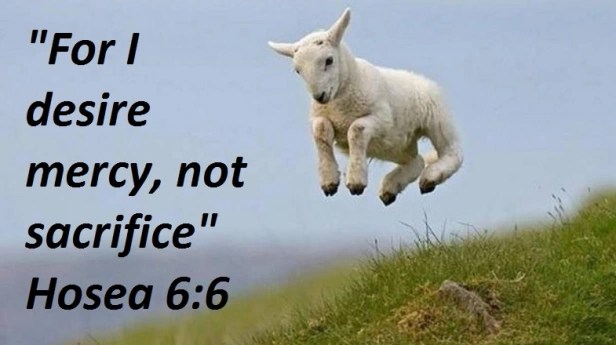
    Christ fulfilled the law. This was why blood sacrifices were done with after His last and great sacrifice. But what does this mean, practically?

    The Israelites practiced God’s law which was a law of reparations. You take out the eye of an enemy maliciously, you take out his eye. Someone kills your brother, you kill him. The problem with this is obvious. Blood begets blood and when does it end?

    This is why the Israelites practiced the law of sacrifice. They took an animal, that had nothing to do with bloodshed, or theft, or lying, and instead of continuing the constant cycle of reparations, they sacrificed the blood of the animal. This is obviously what Christ represented when He died on the cross. He paid the price for all our sins, because we are incapable of paying such a price.

    This is why Christ preached a higher law. No longer was it an eye for an eye but it was turn the other cheek. No longer was it sue for damages but give your second coat. Christ’s point was that after He died for our sins, animal sacrifices would be done away with, there was no more putting your sins off on a goat. Christ was teaching the end of strife. Someone wrongs you, forgive them and move on. This put an end to the vicious cycle of payback and recompense.

    Who was the greatest example ever of this? Jesus Christ never asked us to do something He didn’t do first, when He was up on the cross, and forgave those who had scourged, beaten, and crucified Him.

    But of course, justice still had to be paid for a wrong done. That’s where Christ came in, paying the ultimate and last sacrifice with His blood. So, we flawed human beings, who sometimes commit wrong without even meaning to, can be forgiven. This is the miracle of what Christ did for us, the miracle of His atonement, the miracle of His forgiveness, and the miracle of the higher law.

  • A Miracle that Changed the World

    A Miracle that Changed the World

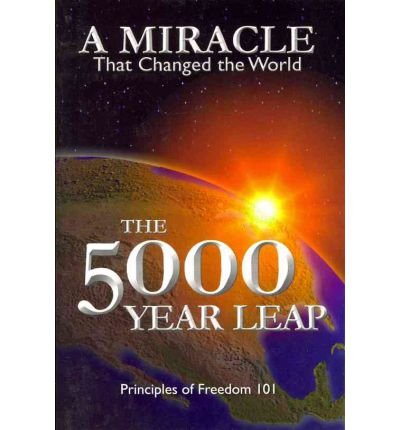
    These are thoughts from a book I read recently called A Miracle that Changed the World. It was an awesome book that laid out just how spectacular the establishing of America was. This was a section of the book I had some thoughts on. I’m quoting sections of the book with my thoughts.

    p. 52:

    The Tide of Reform

    “Many Americas became extremely self-conscious about their lack of “public virtue” because of non-involvement in the affairs of government. They began to acknowledge their obsession with self-interest, the neglect of public affairs, and their disdain for the needs of the community as a whole. Gradually, a spirit of “sacrifice and reform” became manifest in all thirteen colonies.”

    This occurred in America in the couple of years leading up to the Declaration of Independence being signed. Is it any coincidence that a spirit of sacrifice, public virtue, and selflessness preceded the greatest revolution in the history of the world and the rise of the greatest nation ever to exist on earth? God needed a self-sacrificing and humble people to inherit the new world. When they exhibited these qualities, they became His chosen people to enact this major event. This led to a revolution and the freedom from tyranny that allowed the explosion of religious freedom that God planned, that couldn’t have happened under the rule of a monarchy. It started with sacrifice, service, and humility.

    “In the eyes of the Whigs, the two or three years before the Declaration of Independence always appears to be the great period of the Revolution, the time of greatest denial and cohesion, when men ceased to extort and abuse one another, when families and communities seemed peculiarly united, when the courts were wonderfully free of that constant bickering over land and credit that had dominated their colonial life.”

    Two things especially stand out to me from that statement –

    1. “families and communities seemed peculiarly united.”
      • From the Family Proclamation: “We call upon responsible citizens and officers of government everywhere to promote those measures designed to maintain and strengthen the family as the fundamental unit of society.”
      • As the fundamental unit of society, strong families make for strong society. No wonder Satan has so adamantly attacked the family. Look at divorce rates, look at what has happened to the American family. The dismantling of families is the the beginning of the downfall of a great society, and we’re seeing it happen right before our eyes.
    2. “the courts were wonderfully free of that constant bickering…”
      • Could the 13 original colonies have broken from the greatest world power at that time, colonies v. Greatest World Power, if they were busy bickering amongst themselves? It took unity for the freedom of America to be established.
      • D&C 38:27: “be one; and if ye are not one ye are not mine.”

    This is what we need – Americans to become self-conscious about how selfish we’ve become. This is the eternal principle of unity. America needed to be united under one cause and one heart before they could break free from tyranny. God wants us to be one. What has happened to that unity?

    I read in a Doctrine and Covenants commentary how early church members, going back to the very earliest days of the church, were advised to avoid courts. It was said that if a dispute couldn’t be resolved by arbitration, then there was discord and discontent too strong amongst the parties, and they needed to evaluate what they truly valued. One early church leader, Oliver Cowdery, was chastised for becoming too involved in the courts, and it ultimately began to descent towards his excommunication.

    “When Oliver moved to Missouri in 1837, he sought to alleviate personal debts by starting a legal career. Witnesses testified that Oliver had urged people to sue others in court who “fired guns in town,” who broke “the Sabbath day,” he “frequently solicited for business in collecting debts,” and “urge[d] on lawsuits with others.””

    There can’t be unity where there is constant bickering and lawsuits. Those needed to be removed from public standards before the 13 colonies could think to stand up against Britain.

    The book continues:

    “How the Moral Reform Accelerated the Revolution

    “Many Americans became so impressed with the improvement in the quality of life as a result of the reform movement that they were afraid they might lose it if they did not hurriedly separate from the corrupting influence of British manners. They attributed this corruption to the monarchal aristocracy of England. Even Americans such as John Jay, Robert Morris, and Robert Livingston were beginning to see that the people were exhibiting a potential capacity for virtue and morality which would guarantee the success of a free, self-governing society. Therefore, it became popular to express the sentiment that the sooner they became independent the better” (emphasis added).

    The underlined portion is the part that stood out to me. Imagine if society today could be said to have such a high standard of virtue and morality. This is what guaranteed the success of the United States: A virtuous and morally upright people. This is why they could self-govern themselves, because they self-governed in righteousness. Imagine describing our society like that today – excess of virtue and morality.

    The definition of virtue is “behavior showing high moral standards.”

    The definition of morality is “principles concerning the distinction between right and wrong or good and bad behavior.”

    We couldn’t be farther from such a standard. We’ve gone so far off the path that we have reversed morality so that right is wrong and wrong is right. We have molded morality to be what we want it to be. The early Americans who established this nation were moral and upright in all their dealings, which allowed them the honor of being the people to establish the most free, most righteous, and most powerful nation in history. Freedom and righteousness are power.

    Another motivating factor for the colonies wanting freedom from England was to avoid developing all the negative attributes of the British.

    “British influence was already taking its toll. One alarmed American wrote, “Elegance, luxury and effeminacy begin to be established.” David Ramsay declared that if Americans had not revolted “our frugality, industry, and simplicity of manners, would have been lost in an imitation of British extravagance, idleness and false refinements” (emphasis added).

    America has gotten closer to extravagance, idleness, and false refinements than frugality (look at our national debt), industry (look at our bail outs), and simplicity (look at social media).

    It’s time for unity in America. It’s time for virtue and morality. It’s time to protect and re-establish the importance of the family. It’s time to return to frugality, industry, and simplicity. If America can return to these values, maybe it stands a chance to stay a chosen nation and be protected from the tribulations that are to come.

  • The Need for God in the Newborn Days

    The Need for God in the Newborn Days

    Having a newborn is pretty difficult. Understatement? The challenges are diverse and wide-ranging. I don’t believe this is a coincidence.

    As Beth and I were driving to the hospital for her to bring a baby into the world – we prayed.

    As we waited to get checked into the hospital – I prayed.

    As we sat in our first room and Beth’s pain started to increase – I prayed harder.

    As we were moved into the delivery room and the miracle began – I prayed constantly.

    As I held my new daughter – I prayed, holding back tears of gratitude.

    As we took the new member of our family to our hospital room – I prayed.

    As we struggled to stay awake and care for her new needs – I prayed.

    As we drove home – I prayed.

    As we started the first weeks of no sleep, stress, anxiety, and responsibility. As we tried to feed Sage, as we changed her multiple times throughout the night, as we walked around bleary eyed, as she slept on my chest, as she cried in my arms – I pray constantly for help and strength.

    As Beth becomes a zombie from lack of sleep – I pray.

    As I fall asleep holding Sage – I pray.

    As Ivy adjusts to a new sister, the responsibility, and the change to her little world – I pray for her.

    As Beth works to breastfeed every 3 hours and continues not to sleep – I pray for her.

    As I go back to work, Beth having extreme trepidation – I pray, and I assure her it will be ok.

    We’re being looked after.

    As Beth texts me, “You must have said a good prayer for us for today. I can’t believe I feel as good as I do right now.” – I pray with so much gratitude.

    I know we’re being looked after.

    Having and bringing home a newborn is stressful and a momentous responsibility. I don’t think that is a coincidence. I think it’s meant to remind us how much we need Him. I’m grateful for how difficult it is to bring a new baby home because it brings me closer to my Heavenly Father. I have to rely on Him, because I know my strength is nothing, and I know I can’t do it without Him.

    I’m grateful for these challenges because they remind me how much I need Him.

    I’m grateful to know He is there.

    I’m grateful to know we are watched over.

  • Beth’s Talk on Mosiah 3:19 (January)

    Beth’s Talk on Mosiah 3:19 (January)

    This is a talk, exactly as written, by Beth, that she gave in church in January. She rehearsed the talk verbally to me multiple times before I heard it in church. Of course, through hearing it I knew it was a great talk, but it wasn’t until proofreading and preparing to post this that I was struck by how phenomenal a talk this really was. Hope you enjoy reading it as much as much as I did. And now, Beth –

    Mosiah 3:19 Talk
    January 9, 2022
    Good morning brothers and sisters.
    I wanted to start by introducing my family as we are one of the families that were blended into this ward with the recent changes in the stake. My name is Elisabeth Quackenbush. My husband is Brayden Quackenbush. We met in the Scottsdale Young Single Adult Ward in 2017 and have been married for over 2 years. We have a one year old daughter named Ivy. You’ll see her running around Sunday School for another 5 months but she is very excited to start nursery after that.

    The topic I was given to speak on this morning is the scripture Mosiah 3:19. When I was informed this was my assignment I wasn’t really surprised. This scripture comes into my mind a lot and is brought up in conversations about life all the time when I’m chatting with my husband. I think it sticks in my mind because it stands in such contrast to a lot of the attitudes of the world these days.

    For those of you that memorized scripture mastery back in the day you may remember this scripture, but as a reminder, this scripture is King Benjamin speaking to his people in the Book of Mormon. It reads,

    “For the natural man is an enemy to God, and has been from the fall of Adam, and will be, forever and ever, unless he yields to the enticings of the Holy Spirit, and putteth off the natural man and becometh a saint through the atonement of Christ the Lord, and becometh as a child, submissive, meek, humble, patient, full of love, willing to submit to all things which the Lord seeth fit to inflict upon him, even as a child doth submit to his father.”

    When we break down this verse, we can derive meaning in a variety of ways. The first that I noted is that the natural man is inherently selfish. The second is the importance of change to the Eternal Plan of Happiness.

    Boyd K Packer stated in his 1990 talk, “Put Off the Natural Man, and Come Off
    Conqueror”:
    “Unchecked selfishness [of the natural man] stubbornly blocks the way for developing all of the divine qualities: love, mercy, patience, long-suffering, kindness, graciousness, goodness, and gentleness. Any tender sprouts from these virtues are sheared off by sharp selfishness. Contrariwise, I cannot think of a single gospel covenant the keeping of which does not shear off selfishness from us.”

    Through the influence of the Holy Ghost, and the atonement of Jesus Christ, we can and should change from the narrow focus of the natural man and become, “submissive, meek, humble, patient, full of love, and willing to submit to the will of God.”

    This idea of our ability and strength to change stands in stark contrast to the pervasive attitude of our society. This attitude states that we are born a certain way. We can’t change, and even shouldn’t want to change. If we do change, we are inauthentic. On the surface, this has a false sense of empowerment, I think. However, this idea that change is bad and that we must only be one way for the rest of our life is truly limiting, almost an eternal purgatory of mediocrity. Compare this to the freedom and growth permitted to us through Jesus Christ’s suffering, that we may improve and become like our Heavenly Father and Savior, Jesus Christ.

    My husband and I have had the opportunity to have many deep, religious
    conversations with friends of a variety of backgrounds. We often come across
    criticism of our faith’s belief that we can take steps, including repentance, baptism, and participating in temple ordinances, to change and become like God. We are accused of valuing works and forgetting the grace provided through Jesus Christ. On the contrary… His grace is the key element that permits us TO become new beings.

    In 2 Corinthians 5:17 we read, “Therefore if any man be in Christ, he is a new
    creature: old things are passed away; behold, all things are become new.”

    Brad Wilcox does a beautiful job in his BYU talk, “His Grace is Sufficient” at outlining how the Atonement of Jesus Christ, through His death and resurrection, provides us the need to change… (forgive me for this lengthy quote but as many of you know, this talk is incredible…)

    “[Yes, we are saved by Grace but] Have you been changed by grace? [We] are so excited about being saved that we are not thinking enough about what comes next. We are so happy the debt is paid that we may not have considered why the debt existed in the first place. Latter-day Saints know not only what Jesus has saved us from but also what He has saved us for.

    “A life impacted by grace eventually begins to look like Christ’s life. While many Christians view Christ’s suffering as only a huge favor He did for us,
    Latter-day Saints also recognize it as a huge investment He made in us.

    “As Moroni puts it, grace isn’t just about being saved. It is also about becoming like the Savior. The miracle of the Atonement is not just that we can live after we die but that we can live more abundantly. The miracle of the Atonement is not just that we can be cleansed and consoled but that we can be transformed.“

    Again, just think for a minute… how does that compare to what we are being taught by the world? I can’t change, I shouldn’t change…

    HOW DO WE PUT OFF THE NATURAL MAN AND BECOME LIKE CHRIST?

    We can actively seek this positive change…

    In her 1998 BYU Speech, Wendy Watson, now well known as Wendy Nelson, lists some ways. One is reflection. She notes how Alma directs this type of reflection:

    “Just how does Alma invite these change-inducing reflections? One way is through his use of questions. In Alma 5 alone, more than 40 questions are offered—questions like:
    Have ye received his image in your countenances? Have ye experienced this mighty change in your hearts? . . .
    . . . If ye have experienced a change of heart, and if ye have felt to sing the song of redeeming love, I would ask, can ye feel so now?‘ [Alma 5:14, 26]. Through the process of persistent questioning, Alma invites us to reflect over and over again: on our status with the Lord, on our spiritual growth and development, on things that need to change or have changed—and before we know it our desire for more change increases.”

    Another idea is to listen to the uplifting voices of authority in your life remembering, “As helpful as human voices of authority are, none can or should replace the ultimate voice of authority—the Word himself: the Savior Jesus Christ. What are you doing to hear his voice in your life? What are you doing to establish his voice as the voice of authority for you?”

    Other ways we can develop this change to become more like Him… Consistently and earnestly repent, seek out holy places, take steps of faith, pray to Him daily.”

    Sometimes change finds us…whether it be through loss, grief, depression, or trials in life, change is often thrust upon us in this mortal life. Again, the world finds few answers as to why there is such suffering and grief in the world. His eternal plan of growth and development is sometimes the only answer that makes sense. If we are to become like Christ, our innocent brother that felt all the sufferings of the world, how can we expect to be truly changed without some suffering of our own?

    Peter in speaking of [trials], said: “Beloved, think it not strange concerning the fiery trial which is to try you, as though some strange thing happened unto you: But rejoice, inasmuch as ye are partakers of Christ’s sufferings; that, when his glory shall be revealed, ye may be glad also with exceeding joy.”

    When we endure this life, put off the natural man, and develop into more Christ-like beings, we set ourselves up to feel an even greater degree of joy in this life and in eternity.

    This topic makes me think of a time when I came back to church after living a life that was not in line with what I knew to be right. I made many positive changes when I started coming back and attending the Scottsdale Young Single Adult ward. I starting observing the sabbath day, stopped a lifestyle of college partying, broke off a serious relationship, and made several other difficult but important decisions.

    However, with all this positive change and shunning of the enticings of the natural man, I still felt like I wasn’t receiving the blessings I thought I would. I wallowed in self pity over my own suffering for a while because of this and even wondered if all of my change was for nothing.

    However, I eventually decided I would stop focusing on what I needed and instead turned outward. I made it my mission to seek anyone in my ward that seemed lonely as I was. I sought opportunities to serve those that were also going through a variety of trials. And a miracle happened! The less I focused on my pain, my loneliness, my loss, and focused on loving those around me as Christ did, I really came to find true joy.

    I couldn’t believe how sincerely I loved everyone around me. I didn’t feel lonely. I developed new, Christ-like attributes. And ultimately, I shunned the ultimate trait of the natural man – selfishness. What a blessing that lesson was for my life.

    I know how hard it can be to put off the feelings we have as humans in a difficult mortal journey. It is something we will actively have to work for as long as we live. However, I know that when we let ourselves change and take on the characteristics of Christ we will prepare ourselves to find real joy in eternity. We will truly have cause to rejoice in his second coming.

    I say these things in the name of Jesus Christ, amen.