Tag: Moroni

  • Truths Removed from the Bible

    Truths Removed from the Bible

    This post comes directly from something I read on my favorite Book of Mormon commentary website. He received it from a book I would like to read at some point by Anthony E. Bentley: 1000 Evidences for the Church of Jesus Christ of Latter-day Saints: Part Two-A Voice from the Dust: 500 Evidences in Support of the Book of Mormon. The portion I’m taking from the book is from pages 16-17.

    In the book, Brother Bentley points out how critics like to ask for specific examples of any “plain and precious things” found in the Book of Mormon that are not also found in the Bible. He then provides this list:

    • The Lord prepares a way for us to keep all of His commandments (1 Nephi 3:7):
      • 7 And it came to pass that I, Nephi, said unto my father: I awill go and do the things which the Lord hath commanded, for I know that the Lord giveth no bcommandments unto the children of men, save he shall cprepare a way for them that they may accomplish the thing which he commandeth them.
    • How mysteries are made known unto man (1 Nephi 10:19; Mosiah 2:9; Alma 12:10; 26:22)
      • 19 For he that diligently seeketh shall find; and the bmysteries of God shall be unfolded unto them, by the power of the cHoly Ghost, as well in these times as in times of old, and as well in times of old as in times to come; wherefore, the dcourse of the Lord is one eternal round.
      • 9 And these are the words which he aspake and caused to be written, saying: My brethren, all ye that have assembled yourselves together, you that can hear my words which I shall speak unto you this day; for I have not commanded you to come up hither to btrifle with the words which I shall speak, but that you should chearken unto me, and open your ears that ye may hear, and your dhearts that ye may understand, and your eminds that the fmysteries of God may be unfolded to your view.
      • 10 And therefore, he that will aharden his heart, the same receiveth the blesser portion of the word; and he that will cnot harden his heart, to him is dgiven the greater portion of the word, until it is given unto him to know the mysteries of God until he know them in full.
      • 22 Yea, he that arepenteth and exerciseth faith, and bringeth forth good bworks, and prayeth continually without ceasing—unto such it is given to know the cmysteries of God; yea, unto such it shall be dgiven to ereveal things which never have been revealed; yea, and it shall be given unto such to bring thousands of souls to repentance, even as it has been given unto us to bring these our brethren to repentance.
    • The process for receiving revelation and inspiration (1 Nephi 17:45; Enos 1:10)
      • 45 Ye are aswift to do iniquity but slow to remember the Lord your God. Ye have seen an bangel, and he spake unto you; yea, ye have heard his voice from time to time; and he hath spoken unto you in a still small voice, but ye were cpast feeling, that ye could not feel his words; wherefore, he has spoken unto you like unto the voice of thunder, which did cause the earth to shake as if it were to divide asunder.
      • 10 And while I was thus struggling in the spirit, behold, the voice of the Lord came into my amind again, saying: I will visit thy brethren according to their diligence in keeping my commandments. I have bgiven unto them this land, and it is a holy land; and I ccurse it not save it be for the cause of iniquity; wherefore, I will visit thy brethren according as I have said; and their dtransgressions will I bring down with sorrow upon their own heads.
    • The gentiles to assist the house of Israel (1 Nephi 22:8-11; 2 Nephi 10:18)
      • And after our seed is scattered the Lord God will proceed to do a amarvelous work among the bGentiles, which shall be of great cworth unto our seed; wherefore, it is likened unto their being nourished by the dGentiles and being carried in their arms and upon their shoulders.
      • And it shall also be of aworth unto the Gentiles; and not only unto the Gentiles but bunto all the chouse of Israel, unto the making known of the dcovenants of the Father of heaven unto Abraham, saying: In thy eseed shall all the kindreds of the earth be fblessed.
      • 10 And I would, my brethren, that ye should know that all the kindreds of the earth cannot be blessed unless he shall make abare his arm in the eyes of the nations.
      • 11 Wherefore, the Lord God will proceed to make bare his arm in the eyes of all the anations, in bringing about his covenants and his gospel unto those who are of the house of Israel.
      • 18 Wherefore, my beloved brethren, thus saith our God: I will afflict thy seed by the hand of the Gentiles; nevertheless, I will asoften the hearts of the bGentiles, that they shall be like unto a father to them; wherefore, the Gentiles shall be cblessed and dnumbered among the house of Israel.
    • The law of consecration (2 Nephi 2:2)
      • 2 Nevertheless, Jacob, my firstborn in the wilderness, thou knowest the greatness of God; and he shall consecrate thine aafflictions for thy gain.
    • The reason God allows evil and opposition to continue in the world and the importance of moral agency (2 Nephi 2:2, 10:16)
      • (See above).
      • 16 Wherefore, he that afighteth against bZion, both Jew and Gentile, both bond and free, both male and female, cshall perish; for dthey are they who are the ewhore of all the earth; for fthey who are gnot for me are hagainst me, saith our God.
    • The purpose of Adam’s fall & man’s existence (2 Nephi 2:22-25)
      • 22 And now, behold, if Adam had not transgressed he would not have fallen, but he would have remained in the garden of Eden. And all things which were created must have remained in the same state in which they were after they were created; and they must have remained forever, and had no end.
      • 23 And they would have had no achildren; wherefore they would have remained in a state of innocence, having no bjoy, for they knew no misery; doing no good, for they knew no csin.
      • 24 But behold, all things have been done in the wisdom of him who aknoweth all things.
      • 25 aAdam bfell that men might be; and men care, that they might have djoy.
    • The lost prophecy of the latter-day Joseph (2 Nephi 3:6-16)
    • God’s word is not limited to the Bible (2 Nephi 29:3-13)
    • The lost teachings of Zenos (Jacob 5:1-77)
    • A description of the natural man, and how to overcome (Mosiah 3:19; Alma 5:6-45)
      • 19 For the anatural bman is an cenemy to God, and has been from the dfall of Adam, and will be, forever and ever, unless he eyields to the enticings of the fHoly Spirit, and gputteth off the hnatural man and becometh a isaint through the atonement of Christ the Lord, and becometh as a jchildksubmissive, meek, humble, patient, full of love, willing to submit to all things which the Lord seeth fit to inflict upon him, even as a child doth submit to his father.
    • How to retain the remission of sins (Mosiah 4:11-16)
    • The true process of being born again (Mosiah 5:2-9; Alma 5:6-45)
    • The office and calling of a seer (Mosiah 8:13-17):
      • 13 Now Ammon said unto him: I can assuredly tell thee, O king, of a man that can atranslate the records; for he has wherewith that he can look, and translate all records that are of ancient date; and it is a gift from God. And the things are called binterpreters, and no man can look in them except he be commanded, lest he should look for that he ought not and he should perish. And whosoever is commanded to look in them, the same is called cseer.
      • 14 And behold, the king of the people who are in the land of Zarahemla is the man that is commanded to do these things, and who has this high gift from God.
      • 15 And the king said that a aseer is greater than a prophet.
      • 16 And Ammon said that a seer is a revelator and a prophet also; and a gift which is greater can no man have, except he should possess the power of God, which no man can; yet a man may have great power given him from God.
      • 17 But a seer can know of things which are past, and also of things which are to come, and by them shall all things be revealed, or, rather, shall secret things be made manifest, and hidden things shall come to light, and things which are not known shall be made known by them, and also things shall be made known by them which otherwise could not be known.
    • The manner in which faith is developed and maintained (Alma 32:26-34)
    • The relationship between justice and mercy (Alma 34:15-16)
      • 15 And thus he shall bring asalvation to all those who shall believe on his name; this being the intent of this last sacrifice, to bring about the bowels of mercy, which overpowereth justice, and bringeth about means unto men that they may have faith unto repentance.
      • 16 And thus amercy can satisfy the demands of bjustice, and encircles them in the arms of safety, while he that exercises no faith unto repentance is exposed to the whole law of the demands of cjustice; therefore only unto him that has faith unto repentance is brought about the great and eternal dplan of eredemption.
    • The state of the soul between death and the resurrection (Alma 40:11-14):
      • 11 Now, concerning the astate of the soul between bdeath and the resurrection—Behold, it has been made known unto me by an angel, that the spirits of all men, as soon as they are departed from this mortal body, yea, the spirits of all men, whether they be good or evil, are ctaken dhome to that God who gave them life.
      • 12 And then shall it come to pass, that the spirits of those who are righteous are received into a state of ahappiness, which is called bparadise, a state of rest, a state of cpeace, where they shall rest from all their troubles and from all care, and sorrow.
      • 13 And then shall it come to pass, that the aspirits of the wicked, yea, who are evil—for behold, they have no part nor portion of the Spirit of the Lord; for behold, they chose evil works rather than good; therefore the spirit of the bdevil did enter into them, and take possession of their house—and these shall be cast out into couter darkness; there shall be dweeping, and wailing, and gnashing of teeth, and this because of their own iniquity, being led captive by the will of the devil.
      • 14 Now this is the state of the asouls of the bwicked, yea, in darkness, and a state of awful, cfearful looking for the fiery dindignation of the wrath of God upon them; thus they remain in this estate, as well as the righteous in paradise, until the time of their resurrection.
    • Christians and Christianity flourished before the time of Christ (Alma 46:13-16):
      • 13 And he fastened on his head-plate, and his abreastplate, and his shields, and girded on his armor about his loins; and he took the pole, which had on the end thereof his rent coat, (and he called it the btitle of liberty) and he cbowed himself to the earth, and he prayed mightily unto his God for the blessings of liberty to rest upon his brethren, so long as there should a band of dChristians remain to possess the land—
      • 14 For thus were all the true believers of Christ, who belonged to the church of God, called by those who did not belong to the church.
      • 15 And those who did belong to the church were afaithful; yea, all those who were true believers in Christ btook upon them, gladly, the name of Christ, or cChristians as they were called, because of their belief in Christ who should come.
      • 16 And therefore, at this time, Moroni prayed that the cause of the Christians, and the afreedom of the land might be favored.
    • The symbolisms of the remnant of Joseph’s coat (Alma 46:23)
      • 23 Moroni said unto them: Behold, we are a aremnant of the seed of Jacob; yea, we are a remnant of the seed of bJoseph, whose ccoat was rent by his brethren into many pieces; yea, and now behold, let us remember to keep the commandments of God, or our garments shall be rent by our brethren, and we be cast into prison, or be sold, or be slain.
    • The perpetual cycle of the human experience (pride cycle): obedience–>blessings–>prosperity–>pride–>sin–punishment–>humility–>repentance–>obedience . . . (Helaman 12:1-3):
      • And thus we can behold how false, and also the unsteadiness of the hearts of the children of men; yea, we can see that the Lord in his great infinite goodness doth bless and aprosper those who put their btrust in him.
      • Yea, and we may see at the very atime when he doth bprosper his people, yea, in the increase of their fields, their flocks and their herds, and in gold, and in silver, and in all manner of cprecious things of every kind and art; sparing their lives, and delivering them out of the hands of their enemies; softening the hearts of their enemies that they should not declare wars against them; yea, and in fine, doing all things for the welfare and happiness of his people; yea, then is the time that they do dharden their hearts, and do eforget the Lord their God, and do ftrample under their feet the Holy One—yea, and this because of their ease, and their exceedingly great prosperity.
      • And thus we see that except the Lord doth achasten his people with many afflictions, yea, except he doth visit them with bdeath and with terror, and with famine and with all manner of pestilence, they will not cremember him.
    • The “other sheep” spoken of in John 10:16 are identified (3 Nephi 15:16-24)
    • The powers of translated beings (3 Nephi 28:36-40)
      • 36 And now behold, as I spake concerning those whom the Lord hath chosen, yea, even three who were caught up into the heavens, that I knew not whether they were acleansed from bmortality to immortality—
      • 37 But behold, since I wrote, I have inquired of the Lord, and he hath made it manifest unto me that there must needs be a change wrought upon their bodies, or else it needs be that they must taste of death;
      • 38 Therefore, that they might not taste of death there was a achange wrought upon their bodies, that they might not bsuffer pain nor sorrow save it were for the sins of the world.
      • 39 Now this change was not equal to that which shall take place at the last day; but there was a change wrought upon them, insomuch that Satan could have no power over them, that he could not atempt them; and they were bsanctified in the flesh, that they were choly, and that the powers of the earth could not hold them.
      • 40 And in this state they were to remain until the judgment day of Christ; and at that day they were to receive a greater change, and to be received into the kingdom of the Father to go no more out, but to dwell with God eternally in the heavens.
    • Baptism is only for those who are accountable (Moroni 8:5-23)
    • The manner in which all truth may be verified (Moroni 10:4-5)   
      • And when ye shall receive these things, I would exhort you that ye would aask God, the Eternal Father, in the name of Christ, if these things are not btrue; and if ye shall ask with a csincere heart, with dreal intent, having efaith in Christ, he will fmanifest the gtruth of it unto you, by the power of the Holy Ghost.
      • And by the power of the Holy Ghost ye may aknow the btruth of all things.

    And lastly, one of my own:

    Order of baptism 3 Nephi 11:24-27
    24 And now behold, these are the words which ye shall say, calling them by name, saying:
    25 Having aauthority given me of Jesus Christ, I baptize you in the name of the bFather, and of the Son, and of the Holy Ghost. Amen.
    26 And then shall ye aimmerse them in the water, and come forth again out of the water.
    27 And after this manner shall ye abaptize in my name; for behold, verily I say unto you, that the Father, and the Son, and the Holy Ghost are bone; and I am in the Father, and the Father in me, and the Father and I are one.

    I haven’t personally checked the Bible for all of these truths. If anyone knows of places in the Bible that speaks of any of these truths I would gladly review them. Ultimately, it is not a competition between the Bible and the Book of Mormon. The primary purpose of the Book of Mormon is to testify of Christ, and part of that purpose is accomplished by supporting the Bible in every way. The Bible and the Book of Mormon together leave indisputable evidence of Christ’s divine mission as our Savior.

  • Lectures on Faith – Lectures 3 and 4: The Character and Attributes of God.

    Lectures on Faith – Lectures 3 and 4: The Character and Attributes of God.

    These two lectures are combined because they are so closely linked.  They were also combined into one video in the series I’m watching that teaches about the Lectures on Faith.

    Lectures 3 and 4 are about the unchanging attributes of God and why understanding those attributes is necessary for our faith.

    The points made in the video were so good I’m going to just list the character traits and attributes of God given in these lectures and then give points from the video.  All the points from the video I believe inspire some thought-provoking ideas.

    Character of God:

    1. He was God before the world was created and continued to be God after.
    2. He is merciful, gracious, slow to anger, abundant in goodness, He was from everlasting, and will be to everlasting.
    3. He is unchanging, there is no variableness with Him, His course is one eternal round.
    4. He is a God of truth and cannot lie.
    5. He is no respecter of persons.
    6. He is love.

    Attributes of God:

    1. Knowledge
    2. Faith or power
    3. Justice
    4. Judgement
    5. Mercy
    6. Truth

    It is obvious why these two lectures go hand in hand as there is a lot of overlap between the character and attributes of God.

    I’ll now go over some interesting thoughts from the video.

    1. Pretty obvious but worth saying, this is not a finite list of attributes.  It’s meant to help our minds to understand who God is so we can put complete faith in Him.
    2. Unfortunately, this has become less true in our day, but most of us don’t have a problem believing in God, it’s what He’s like where we have an issue – and so much disagreement.
    3. The first attribute listed is mercy.  One of the first attributes of God Nephi mentions in the Book of Mormon is mercy.  In Moroni’s last chapter, the concluding chapter of the book of Mormon, mercy is mentioned again.
      • 1 Nephi 1:14 And it came to pass that when my father had read and seen many great and marvelous things, he did exclaim many things unto the Lord; such as: Great and marvelous are thy works, O Lord God Almighty! Thy throne is high in the heavens, and thy power, and goodness, and mercy are over all the inhabitants of the earth; and, because thou art merciful, thou wilt not suffer those who come unto thee that they shall perish!
      • Moroni 10:3 Behold, I would exhort you that when ye shall read these things, if it be wisdom in God that ye should read them, that ye would remember how merciful the Lord hath been unto the children of men, from the creation of Adam even down until the time that ye shall receive these things, and ponder it in your hearts.
      • It is important for us to understand the mercy of God.
    4. If we have the idea that God is easy to anger it makes it harder for us to have faith in Him.  In the parable of the talents, why did the servant bury his talent?  Because he was afraid.
    5. The fifth and sixth attributes can be combined.  God is a God of love because He is no respecter of persons.  He loves us all. 
    6. God doesn’t stop loving people when they sin.  The difference is God is not able to bless people when they sin.
    7. Where there is doubt faith cannot exist.  Questions are different from doubts.

    I’ll conclude with a statement directly from lecture 4:16 because I think it is extra relevant to us today.

    “And lastly, but not less important to the exercise of faith in God, is the idea of the existence of the attribute truth, in him. For, without the idea of the existence of this attribute the mind of man could have nothing upon which it could rest with certainty: all would be confusion and doubt; but with the idea of the existence of this attribute in the Deity, in the mind, all the teachings, instructions, promises and blessings become realities, and the mind is enabled to lay hold of them with certainty and confidence.”

    We see the fruits of this today.  If no one knows for sure what truth is we become so shaken and confused, thrown about by any wind, blown about on the sea like a boat without paddle.  That’s how we are today when we try to understand truth without putting our faith in the truth of God.  One expert disagrees with another expert.  No one knows how to fix anything.  It is all confusion.  We don’t know who to listen to or who to trust.  Trust God.  His attribute of truth allows us to put our complete confidence in Him and know He will never lead us astray.

    To read the lectures yourself you can find them HERE.

    For the videos about the lectures you can go HERE.

  • Lectures on Faith – Lecture 2: The Object of Faith

    Lectures on Faith – Lecture 2: The Object of Faith

    A main theme throughout the Lectures on Faith is God’s perfect attributes.  Logically, for us to be able to have any faith in God He must be perfect.  We must know that we can trust God and, in turn, His Son, Jesus Christ. 

    The major theme I took away from Lecture 2 specifically is how we have attained faith throughout history.  Lecture 2 presents the profound idea that our faith in God is always dependent, or comes initially, from the faith of another.  Consider this, if no one in your life ever mentioned any sort of higher being, any sort of God, any sort of creator, would you come up with the thought on your own?  You think about God because He is someone we have been taught about since Adam.

    Even if your parents aren’t the ones who teach you about God, you learn about God from someone.  I would venture to say that in the world today every single person on the face of it has heard of the concept of a supreme being.  Why is this?  Where does our innate belief/consideration of God come from?

    Lecture 2 points out that there was an unbroken chain of testimony that started from Adam and was handed down through Abraham.  If you read Genesis carefully and do the math you will see that ancient prophets handed the knowledge of God down for generations.  It continues today.

    Adam knew God in the Garden of Eden.  When he left the Garden Adam still knew God.  We know Adam’s sons knew God.  Abel provided sacrifices to God.  Cain spoke to God even after murdering his brother.  This shows us that God spoke to men even after the fall and continued to speak to them as they continued to fall into transgression.  There is something significant here that I’d never considered.  Abel first got his knowledge of God from his father, Adam, as did Cain.  After they were told about God by Adam, then they had to develop their own faith in God.  They had to learn, trust, and depend on Him, or not. 

    The important thing to remember from this: we all start our faith by leaning on the faith of another.  We possess dependent faith.  This leads to another profound truth: God possesses independent faith.  God’s faith is not reliant on any outside source.  As discussed in lecture one, God’s faith is perfect.

    I’ve been studying the lectures alongside a video series that I will link at the bottom.  There were many amazing thoughts and ideas presented in that video, related to this second Lecture on Faith.

    Faith is faith until it happens, then it is knowledge. Since God has perfect faith, He doesn’t need to wait for something to happen for Him to know it.  He knows it is going to happen.  His faith is perfect therefore His knowledge is perfect.  It’s simple when you think about it in these terms, but it’s so critical.  It’s why we can have perfect faith in Him, BECAUSE we know His faith is perfect.

    IMPORTANT:  God is not still progressing.  This is important for us to understand.  God is not still learning.  If He was, we couldn’t have perfect faith in Him.

    God is Perfect - Ottawa Church of Christ

    This leads to a question: isn’t life boring for God if He has mastered everything?

    In the video they gave an awesome analogy.  Imagine you’re an accountant.  You master every aspect of accounting there is.  You have a perfect knowledge and ability in accounting.  Would you get bored with accounting?  Probably.  So, what would you then do?  You would teach others how to also master accounting.  God is the master accountant.  He has attained all knowledge on life, faith, eternity, creation – so what does He do?  He teaches us.  What a thought!  We are being tutored by the God of the universe.  That’s what makes this life so important.  When we consider that we are learning and being personally groomed by God Himself, what power it adds to our existence here!

    This leads to another important thought.  What was Christ’s ultimate message while here?  I think it would be service.  Love through service.  Give through service.  Charity.  Without charity you are nothing (1 Corinthians 13:2, Moroni 7:44)  Why did Christ teach this ever-important principle?  Because His Father, our Father, God is the ultimate server.  He is doing everything He does to teach us.  We truly are “His work and His glory” (Moses 1:39).

    I want to conclude with two last realizations: 

    1. The scriptures help develop our faith by teaching us of God.  This is important.
    2. Faith comes by hearing the word of God through the testimony of the servants of God, that testimony is always attended by the spirit.

    You aren’t told to have a testimony.  You’re not made to know Jesus is the Christ.  These are things you must come to a knowledge of through the spirit.  Think about it.  Christ, in His whole ministry, never told anyone He was the Son of God.  He always let them come to that conclusion on their own.  One example is Peter who He told, “blessed art thou for flesh and blood hath not revealed it unto thee, but my Father which is in heaven” (Matthew 16:17).   Another example is Christ to the woman at the well (John 4).  Christ didn’t go telling people who He was.  It had to be revealed by the spirit.  This is why signs come by faith, and not the other way around (D&C 63:7-12).

    Our hearts must be open for us to receive the testimony of Jesus Christ.  2 Nephi 33:1 “When a man speaketh by the power of the Holy Ghost the power of the Holy Ghost carrieth it UNTO the hearts of the children of men.”  Not INTO but UNTO.  It’s then on the heart of the individual to accept or reject the testimony.  The system is in place.  The system has been in place for God’s children to develop faith in Him from the beginning.  Once the testimony is carried to the heart It’s then on the agency of the individual to receive or reject that testimony. 

    God has perfect faith.  We are here to develop our faith so that we can be like Him.  He is the great accountant, and we are his protégés.  It is His hope, His glory that we can become like Him.  As we develop our faith here it will benefit us for the rest of eternity.  I know I say it a lot, but, what a thought.

    Video 3 (Lecture on Faith 2):  https://www.youtube.com/watch?v=F-o59d9ioGA&list=PLc5yYrpPFm2umksQf3jgULxoV4YIXTd2h&index=3

    Lecture on Faith 2: http://lecturesonfaith.com/2/

  • Truths Removed from the Bible:  What does the Book of Mormon tell us about Baptism?

    Truths Removed from the Bible: What does the Book of Mormon tell us about Baptism?

    I like to think about what critics would say as proof against the Book of Mormon.  I think it helps to have responses to honest concerns about its validity.  I always hope something I read, know, or especially my testimony can one day help someone to see what I see, the truth of this ancient record. 

    The Book of Mormon makes a very important claim.  The claim is that many plain and precious truths have been removed from the Bible over time.  When Joseph Smith first translated the Book of Mormon this was an outlandish and inflammatory statement.  Even more so than today. Christianity in the early to mid-1800s had a firm belief that the Bible was infallible. 

    From a website (https://stepbystep.alancminer.com/) I’ve loved using to study alongside the Book of Mormon, I read this:

    “Richardson, Richardson and Bentley write that while the Book of Mormon testifies to the authenticity of the Bible, it does not claim that the Bible is without error. It specifically states that there were many “plain and precious things” that were deleted from its pages through the evil works of men. (See 1 Nephi 13:20-32; 19:10-12; 20:1-3; 2 Nephi 3:5-22; Alma 33:3, 13, 15; 34:7; 46:23-27; Helaman 8:19-20; 15:11; 3 Nephi 10:14-17; 12:13, 17-19, 22, 29-30; 14:1.)

    Scholars of the Bible have found indisputable evidence that the Bible has indeed suffered many deletions. Non Mormon scholarship has concluded that the gospels found in the New Testament have also been manipulated.”

    Critics may ask for specific examples of any “plain and precious truths” found in the Book of Mormon that are not also found in the Bible.

    The website I mentioned above goes on to list 24 plain and precious truths removed from the Bible and where they are laid forth in the Book of Mormon.  I’d like to go over an extremely important one.

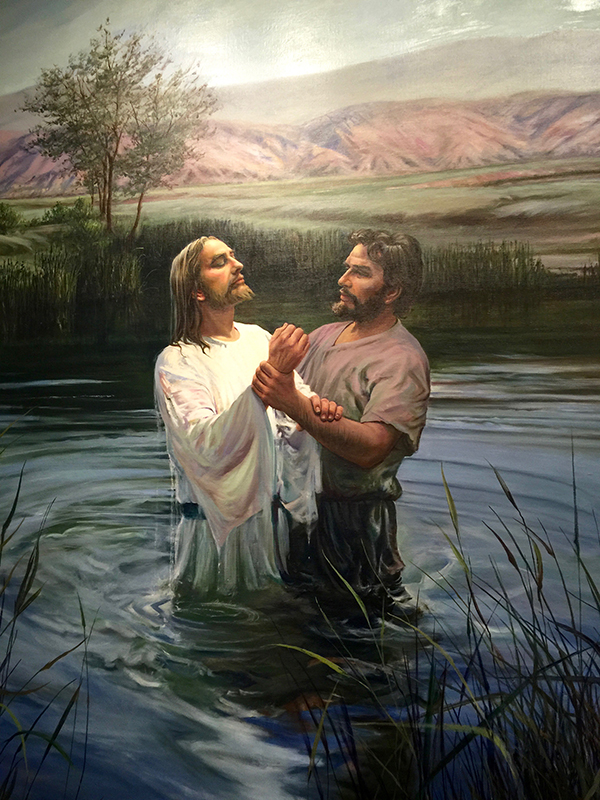
    Baptism is only for those who are accountable (Moroni 8:5-23).

    I know of nowhere in the Bible that lays forth the age of accountability. Should children be baptized?  We know baptism is of the utmost importance:

    John 3:5 “Jesus answered, Verily, verily, I say unto thee, Except a man be born of water and of the Spirit, he cannot enter into the kingdom of God.”

    What does the Book of Mormon teach us on the subject of baptism? Moroni chapter 8 is full of profound truths found nowhere in the Bible. I will quote portions of the chapter here but encourage everyone to read the chapter and ponder its truthfulness.

    8 “the whole need no physician, but they that are sick; wherefore, little children are whole, for they are not capable of committing sin; wherefore the curse of Adam is taken from them in me (Jesus Christ), that it hath no power over them”

    9 “I know that it is solemn mockery before God, that ye should baptize little children.”

    10 “repentance and baptism unto those who are accountable and capable of committing sin; yea, teach parents that they must repent and be baptized, and humble themselves as their little children, and they shall all be saved with their little children.”

    11 “And their little children need no repentance, neither baptism.”

    12 “But little children are alive in Christ…if not so, God is a partial God, and also a changeable God, and a respector of persons; for how many little children have died without baptism!”

    15 “For awful is the wickedness to suppose that God saveth one child because of baptism, and the other must perish because he hath no baptism.”

    19 “Little children cannot repent; wherefore, it is awful wickedness to deny the pure mercies of God unto them, for they are all alive in him because of mercy.”

    20 “And he that saith that little children need baptism denieth the mercies of Christ, and setteth at naught the atonement of him and the power of his redemption.”

    Girl Being Baptized

    Who can read this and deny the truth that speaks to your heart and soul?  It is so clearly laid out. So perfectly explained. 

    What about how to baptize?  There is so much confusion in the world on not only when but how.  Does the Book of Mormon provide an answer?  Of course!  3 Nephi 11:24-28.

    24 And now behold, these are the words which ye shall say, calling them by name, saying:

    25 Having authority given me of Jesus Christ, I baptize you in the name of the Father, and of the Son, and of the Holy Ghost. Amen.

    26 And then shall ye immerse them in the water, and come forth again out of the water.

    27 And after this manner shall ye baptize in my name; for behold, verily I say unto you, that the Father, and the Son, and the Holy Ghost are one; and I am in the Father, and the Father in me, and the Father and I are one.

    28 And according as I have commanded you thus shall ye baptize. And there shall be no disputations among you, as there have hitherto been; neither shall there be disputations among you concerning the points of my doctrine, as there have hitherto been.

    How lucky we are to live in the dispensation of the fullness of times. I’m grateful for the Book of Mormon. I’m grateful that it clarifies what has been a point of contention within Christianity for centuries.

    Christ was our ultimate example.

    2 Nephi 31:5 And now, if the Lamb of God, he being holy should have need to be baptized by water, to fulfil all righteousness, O then, how much more need have we, being unholy, to be baptized yea, even by water!

    Click below to learn more about baptism as it has been perfectly restored through the Gospel of Jesus Christ by the Church of Jesus Christ of Latter-day Saints.

    https://www.churchofjesuschrist.org/study/manual/true-to-the-faith/baptism?lang=eng