Tag: Mr. Feeny

  • “Education is not about obscure facts and little test scores” – Mr. Feeny

    “Education is not about obscure facts and little test scores” – Mr. Feeny

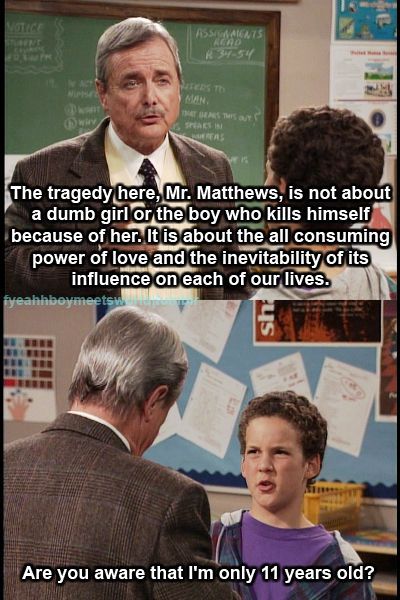
    “Education is not about obscure facts and little test scores. Education is about the overall effect of years of slow absorption of concepts, philosophies, approaches to problem-solving. The whole process is so grand and all-encompassing that it really can’t be threatened by the occasional late-night no-hitter. It is important that a boy spend time with his father.”

    Oh, the wisdom of Mr. Feeny.

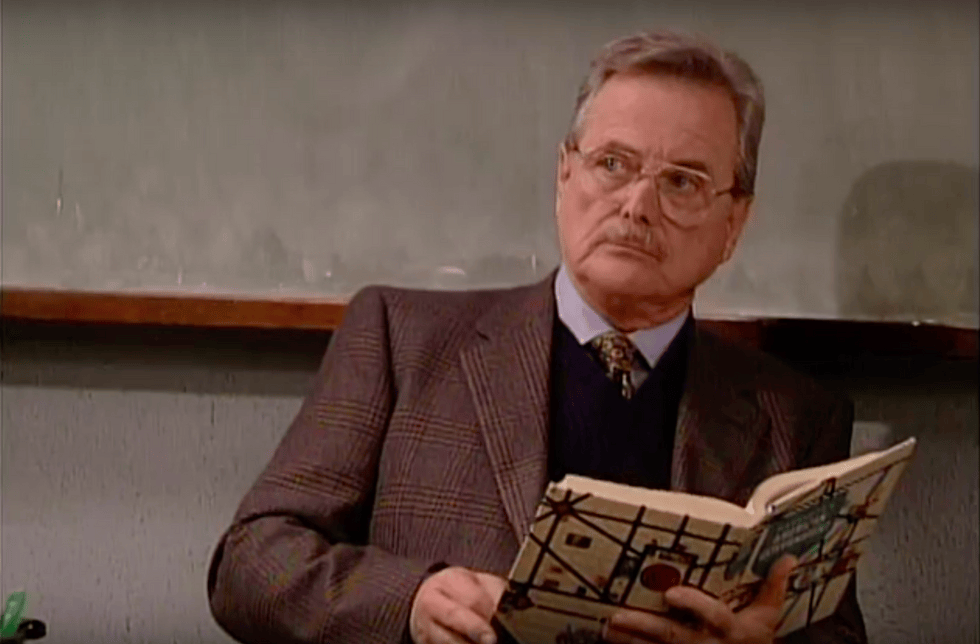
    I’ve had some good teachers in my life. I consider Mr. Feeny to be one of them, even though he’s a fictional character.

    Quick recap of this classic Boy Meets World episode. Alan (Cory’s father) pulls Cory out of bed late at night to watch a no-hitter in progress in a Phillies baseball game. The next day Cory sleeps through a test. Alan goes to speak to Mr. Feeny to ask if Cory could have a makeup test. Mr. Feeny denies his request.

    It is later in the episode, during a late-night stargazing, apple juice session that Cory sits down with Mr. Feeny and Mr. Feeny gives the above quote.

    Education is not about one moment. It’s about a billion small moments.

    I often reflect back on that quote. I have read more in 2020 (the year I wrote this post) than any previous year. I don’t feel any smarter today than I did a year ago, I don’t think. But that’s not how knowledge-gaining works. It doesn’t happen over the course of a day or a week or even a year. Learning is an ongoing process. I hope to look back on the year 2020 and appreciate that it helped me learn things that would help me learn more and grow for the rest of my life.

    I look forward to learning into eternity.

    It is important that a boy (or girl) spend time with his (or her) father (or mother). What is the value of time with a father, a mother, someone who loves you? I believe it’s invaluable.

    The episode continues and both Mr. Feeny and Alan come to Cory separately and tell Cory that the other was right in their decision. Alan tells Cory Mr. Feeny was right to not let him retake the test and that Alan shouldn’t have pulled Cory out of bed. Obviously, the quote above indicates that Mr. Feeny approved of Alan’s pulling Cory out of bed to spend time with his son, despite not letting Cory re-take the test.

    Later, Cory is talking to his mom and he asks her how two people could both think the other was right, while seemingly disagreeing with one another. The lesson here is that the world is not black and white. There are many judgment calls where there is no perfect decision. There are many decisions that depend on your intent.

    Cory’s dad was not wrong for wanting to spend time with his son. His desire was good and admirable. Mr. Feeny agreed with that.

    Mr. Feeny had a standard he had long set that he would take no excuses from students as to why they failed a test. He couldn’t back down from that standard. His standard was set so he would always hold his students accountable and not let them down. Mr. Feeny had a good reason for denying Alan’s request.

    Both were right. Both agreed with the other’s reasoning.

    The conversation between Mr. Feeny and Cory’s dad was contentious. It ended with Mr. Feeny saying, “this conversation is over.” Both men ended up telling Cory the other was right. Why is that? Respect, introspection, understanding of the reasoning behind another’s viewpoint.

    We could do with much more of this in the world today.
  • Book Review:  The Problem of Pain

    Book Review: The Problem of Pain

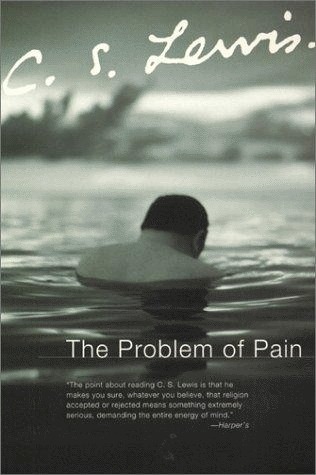
    The Problem of Pain by C.S. Lewis

    Copyright 1940

    ________________________________

    From the front cover: “The point about reading C.S. Lewis is that he makes you sure, whatever you believe, that religion accepted or rejected means something extremely serious, demanding the entire energy of mind.”

    Before starting this book, I was in the precarious position of thinking C.S. Lewis was one of my favorite authors without having ever read one of his books.  I have many of his books on my list of to-one-day-read.  The Lion, the Witch, and the Wardrobe is obviously on that list.  In the Church of Jesus Christ we often hear that C.S. Lewis is one of the most quoted, nonmember of the Church of Jesus Christ of Latter-day Saints, ever.  For good reason.  I came to the conclusion C.S. Lewis was one of my favorite authors because all his quote ARE SO GOOD.  He is brilliant.

    The Problem of Pain was the first C.S. Lewis book I ever read.

    I consider myself a semi-literate and intelligent individual.  That all went out the window while reading this book.

    This is how I felt reading this book:

    My monkey brain couldn’t wrap itself around these eloquent and long sentences.  Here’s another thing, I don’t like huge paragraphs, if you can’t tell.  When a paragraph goes 3 pages long (in the paper-back I was reading) I’m likely to get lost before even starting it.

    All that being said, my simplistic mind could still grasp that it was being stretched.  I could still sense this learning taking place in my mind, even if much of it was going over my head.  There were many quotes that made me stop and think. That was part of the problem.  To truly appreciate this book, I would have had to stop and ponder what I was reading at least 3 times per page.  That makes for a long reading of a 162-page book.

    I will read this book again, mark my words.  I may read it 10 more agains.  It is good and I do desperately want to understand it.  So, I won’t be giving up on it.  I’ll just have to mix in some simple, relaxed reading alongside it.  My mind  can only take so much.

    If you’re much smarter than me, please read it.  If you have read it and understood greater than 20% of it, let’s sit down and talk, but only if you’re prepared to be extremely patient with me.

    I will leave you with one of my favorite parts of this book so you can get a feel for the book, learn something, and see how brilliant C.S. Lewis’s writing is.  It will not be the whole paragraph because I don’t want every reader to get lost midway through like I often did.

    In speaking of hell, C.S. Lewis writes:

    “I willingly believe that the damned are, in one sense, successful, rebels to the end; that the doors of hell are locked on the inside.  I do not mean that the ghosts may not wish to come out of hell, in the vague fashion wherein an envious man ‘wishes’ to be happy: but they certainly do not will even the first preliminary stages of that self-abandonment through which alone the soul can reach any good.  They enjoy forever the horrible freedom they have demanded, and are therefore self-enslaved:  just as the blessed, forever submitting to obedience, become through all eternity more and more free.”