Tag: pain

  • What is Hell?

    What is Hell?

    Studies have shown that humans will prefer pain over boredom. We as humans need stimulation. When left in a room with the options being complete boredom or a painful electric shock, many will choose the electric shock just to feel something.

    You can watch this YouTube video for an interesting study on this:

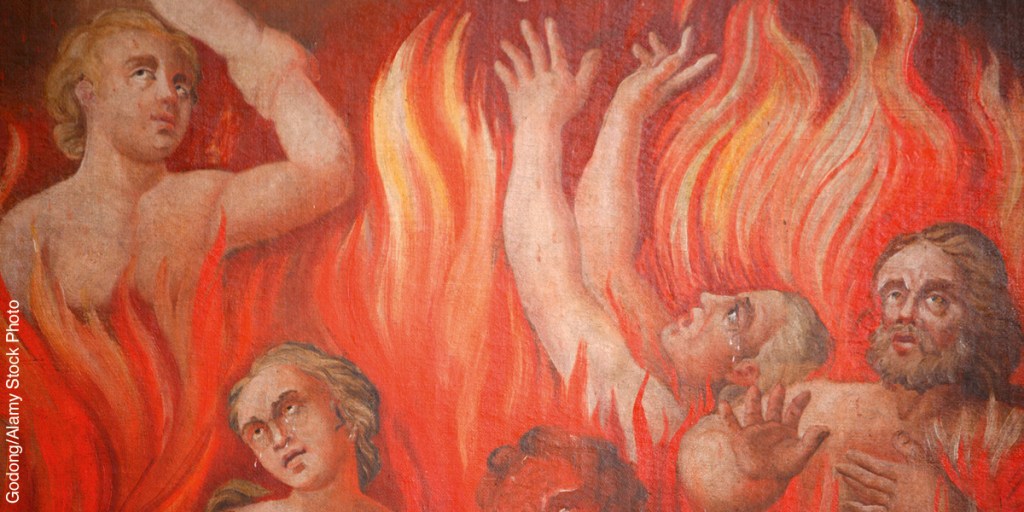
    There is this idea that perpetuates throughout Christianity that hell is fire and pain. I don’t think that’s actually the case. I think hell is boredom, stagnation, lack of growth, lack of purpose, selfishness to the point of looking only at oneself. I think hell is being stuck.

    Mark 9:43-44 reads:

    43 And if thy hand offend thee, cut it off: it is better for thee to enter into life maimed, than having two hands to go into hell, into the fire that never shall be quenched: 

    44 Where their worm dieth not, and the fire is not quenched.

    Doctrine and Covenants 76:43-44 reads:

    43 Who glorifies the Father, and saves all the works of his hands, except those sons of perdition who deny the Son after the Father has revealed him. 

    44 Wherefore, he saves all except them-they shall go away into everlasting punishment, which is endless punishment, which is eternal punishment, to reign with the devil and his angels in eternity, where their worm dieth not, and the fire is not quenched, which is their torment-

    The word translated “hell” in Mark 9:43 is the Greek word Gehenna. Gehenna was a garbage dump in ancient Jerusalem.

    “Gehenna was located on the south end of Jerusalem and had been a site for pagan child sacrifices during Old Testament times (2 Kings 23:10). During Jesus’ lifetime, Gehenna had a constant fire burning to dispose of the waste that was left there—from regular household trash to the carcasses of animals and convicted criminals (Jeremiah 7:31–33). Because of this, the Jews considered Gehenna to be a cursed place full of filth.” (See this link for more information).

    This is where we get the reference in Mark 9:44 “fire is not quenched.” Gehenna or hell was literally a place where fire never stopped, and I believe this is where the popular idea of hell being a place of fire comes from. I think the more critical point in those verses is the phrase, “Where their worm dieth not.” This is not referring to a literal worm, as I don’t believe the endless fire represent literal fire in hell. I believe the fire represents never ending torment.

    But what is this torment? Is it physical pain? Worse.

    As I mentioned earlier for that study, people would prefer any sensation to that of no sensation. I think the endless torment is being stuck for eternity.

    I read a book that once described what hell might be like. It considered hell to be like being a worm deep within mud. The worm squirms around, with no purpose or meaning. The worm can’t see, it can’t feel, it can’t think. It’s getting nowhere. It endlessly squirms in the mud.

    I believe the worm that dieth not is our eternal soul. What could be worse than an eternity of… nothing? What could be worse than being the equivalent of a worm squirming within mud, forever?

    Just the thought should terrify you.

    God has provided us a plan of growth and progression. He has provided us a way to become like Him. Those who reject Him will be stuck, forever. There will be no progressing for them. Their “worm dieth not.”

    I am grateful to God for all that He has given me and all that He has afforded me. I know that because He loves me He has allowed me to grow and progress in eternity. Not to be stuck and stagnant. Growth. I am grateful for that gift He has provided me. 

  • Suffering, a Moment, a Breakdown

    Suffering, a Moment, a Breakdown

    I want to share a story that just happened to me.

    I don’t know why it happened. I don’t know what happened. That’s why I’m writing it. Maybe writing it down will help me to understand.

    It’s 1/2/25 at 9:00 in the morning. It’s my first day back at work in something like 2 weeks. I’m driving to a client’s office. I’m listening to a podcast called Y Religion. They’re discussing 50 relics of the restoration; 50 items from the time the gospel of Jesus Christ was being restored.

    They mention a microphone used by Spencer W. Kimball. I love Spencer W. Kimball. He is one of my favorite prophets.

    As I’m writing this, I’m remembering what they talked about before this microphone. What they talked about before this microphone was the original manuscript of Jesus the Christ written by James E. Talmage. They emphasized that the writing of Jesus the Christ, one of the most impactful books of my life, was inspired by the Church of Jesus Christ of Latter-day Saints attempting to re-emphasize its focus on what is most important: Jesus Christ.

    The podcasters said sometimes the culture needs to be reminded of what our most important focus is.

    I wondered if the Church needs that reminder again today.

    I remember thinking that President Russell M. Nelson, a prophet today, is trying.

    They talked about the microphone. Brad Wilcox, the provider of one of my all-time favorite talks/speeches/dissertations (His Grace is Sufficient) started talking about Spencer W. Kimball. He shared a story from when he was on his mission and for the first time would hear a radio broadcast of General Conference. Back in those days, certain countries only got Conference in written word months after Conference completed. Brad Wilcox as a young missionary was disappointed when the radio turned on and he realized it was just a translator. Of course it was a translator. The message needed to be broadcast to this particular area in Spanish.

    Then, he said, Spencer W. Kimball came on the radio with his telltale, well-known scratchy voice. The small group of saints asked Brad, “Who is that????”

    He replied, and as he told the story he choked up, “That is the prophet of God.”

    On the podcast, they then started to discuss the sacrifice that Spencer Kimball went through – losing his vocal cords and continuing to preach, speak regularly, and guide God’s church.

    I thought about that sacrifice.

    What have we gone through?

    Have we lost our vocal cords and then been asked to continue to preach?

    I thought about that sacrifice. I thought about that prophet of God. I thought about that voice.

    And while I was driving in the car, I was crying. I didn’t even know I was crying. I didn’t know why I was crying. I still don’t know why I was crying.

    I started thinking about why I was crying.

    They talked about the kindness of Spencer W. Kimball and how losing his vocal cords made him so gentle, so empathetic to the suffering of others.

    I thought about my current calling as Elders Quorum President.

    I thought about how much I fall short in that calling.

    I thought about telling my quorum that I’m a bad ministering brother. But I try. And asking them, who are also bad ministering brothers, to also try.

    I thought about all the suffering I’ve learned about in our ward since becoming president. I thought about all the loneliness and sickness and illness and suffering and heartache.

    I thought about my daughters.

    I thought about the client I was about to see and some of the personal things he had told me about his family when he invited me to a Suns game once.

    I thought about the suffering of his family.

    I thought about all the suffering my daughters would have to endure in this life.

    And I asked why.

    And I cried harder.

    And I reminded myself of why.

    We know the why. Luckily, I know the why. I’ve written about it here a hundred times.

    And then I pulled up to a light. And I looked directly at a homeless man. And I thought about giving him a dollar. And I wondered if the light was going to change. And I thought about how I didn’t want him to have to limp over to me for a dollar. Then he started to limp over to me. And I let him pass. And I let him walk back by me. And I wondered if he had a drug addiction.

    And I thought about all the suffering in the world.

    And I cried.

    I wrote this. And I still don’t know quite what it means.

    I know the world is going to get a lot harder and there’s going to be a lot of suffering.

    And I’m going to ask why, despite knowing the answer.

    And I realize that sometimes knowing why will make it easier, maybe even help, and sometimes, maybe it won’t.

    And I worry about my daughters.

    And I worry about this world.

    And I worry about all the lost and lonely people.

    And I wonder why.

    And I want Jesus Christ to come back so it can stop. I want to help. But my efforts seem so small and fruitless. I’m a bad ministering brother and a bad Elders Quorum President and I wonder, I can’t possibly be who God needs in this position now.

    And I feel so small.

    And I just want Christ to come back and fix it all.

    But I know before that happens this all has to get a lot harder. It has to get so much harder.

    And I worry.

    And I have faith.

    And I wonder if my faith is enough.

    And I cry.

    So I wipe my eyes and blow my nose, hoping the client can’t tell that I’ve been crying. And I go about my day, always with why in the back of my mind.

  • This is Repentance

    This is Repentance

    Sometimes I struggle with the idea that my sins have been made completely white through the Atonement of Jesus Christ, that I’m completely forgiven for everything I’ve done.

    I know this disrespects the Atonement of Jesus Christ and that’s part of my biggest struggle. The last thing I ever want to do is belittle what Christ did for me.

    The thing is, sometimes I still dwell on my past sins. Sometimes I still think about them. Sometimes I still feel remorse and guilt. Sometimes I wonder if I’ve paid the full penitence to those I hurt. Have my sins been washed away? Are they completely gone if I still remember them?

    I rationalize this, and I believe it’s true, that I remember them for my benefit. I have to remember them or I might return to them. It’s the remembrance of guilt that keeps me from wanting to go back to being that person.

    I understand this intellectually.

    Still, sometimes it’s hard for me to understand how Christ can have forgotten my sins, washed them away as if they never happened, when I can’t forget them myself.

    The young men I work with and I recently studied Isaiah chapter 1.

    Isaiah 1:18 reads:

    “Come now, and let us reason together, saith the Lord: though your sins be as scarlet, they shall be as white as snow; though they be red like crimson, they shall be as wool.”

    After reading that I emphatically emphasized something to those young boys. What I emphasized was this:

    “When you truly repent, and show remorse, and try your absolute hardest to not do it again, Christ forgives and forgets your sins. Period. White as snow. It’s as if they never happened. Don’t be deceived. Satan will have you believe you can never be forgiven for a mistake. This is the great lie. You can be forgiven. If you repent, Christ will forgive. Not only that, He won’t even remember it. It’s like it never happened. I can’t stress this enough.”

    That’s what I said to my young men, and I believe it’s true.

    But… do I believe it’s true?

    Given what I just wrote?

    I had a thought today for the first time ever. I often think about the time of judgement. That time when we stand before Christ and have our life reviews. I’ve never feared that moment. The thought that occurred to me today is: why don’t I fear that moment? I have so much to be embarrassed by, so much to be ashamed of in my past behavior. Why haven’t I worried about it before? It occurred to me that one day my wife, Beth, will see how I once was. I’ve tried to tell her, but I don’t think she gets it. Then it occurred to me that my family will see it too. I will be so ashamed! Why haven’t I feared this before?

    Then it hit me.

    Maybe that’s repentance.

    Repentance is knowing – yes, I did those things. Yes, I made many mistakes. But though my skins be scarlet (they are and were) they shall be as white as snow. As I type this, I hold back tears. That’s what Christ has done for me. That’s what repentance is.

    Luke 15:7:

    “I say unto you, that likewise joy shall be in heaven over one sinner that repenteth, more than over ninety and nine just persons, which need no repentance.”

    D&C 18:13:

    “And how great is his joy in the soul that repenteth!”

    I am that soul. I don’t know how the life review will go. If my sins are forgiven and forgotten, are those parts reviewed? I don’t know. But what I realized was, and why I’ve never feared that moment, is even if all my abhorrent behavior is shown, it will be ok. It will be ok because I changed.

    That thought of Beth seeing how I used to be? It occurred to me that maybe she’ll love me even more after seeing all of it because she’ll see how much I changed. She’ll be able to see the full picture of how far I came to be a semi-decent husband and father.

    I think that’s what repentance is. Knowing that even if all your sins are laid out, you’re still forgiven.

    That’s repentance.

  • Pain

    Pain

    The other day I banged my knee against a bed frame so hard that I almost threw up. The pain was excruciating. Then I realized, why am I fine? I’m fine because I know the pain will end in the next couple minutes, then I’ll be fine.

    I haven’t experienced tons of physical pain in my life. I’ve been very lucky in that respect. I imagine the worst thing about pain is not knowing when it will end.

    What makes pain bearable is knowing it will end. It’s the not knowing that can be truly excruciating. For example, take even just the pain of a paper cut. If that painful cut was indefinite, meaning you felt the papercut for minutes, then hours, then days, just as intensely as that first moment when the cut happened, it would be horrible. Papercuts aren’t that bad because the pain passes quickly.

    What about when you don’t know when the pain will end?

    I think that’s the worst kind of experience. Again, I haven’t personally gone through that, so I can’t say from experience. But we’ve all heard stories of or know people with some sort of chronic pain. Pain that doesn’t end would be a challenge due to the mental exhaustion along with the physical pain.

    I haven’t even gotten into mental or emotional pain. Those are different categories that can be completely different levels of unbearable.

    If you’ve read a couple of my posts before, you know where this is going: The infinite Atonement of Jesus Christ.

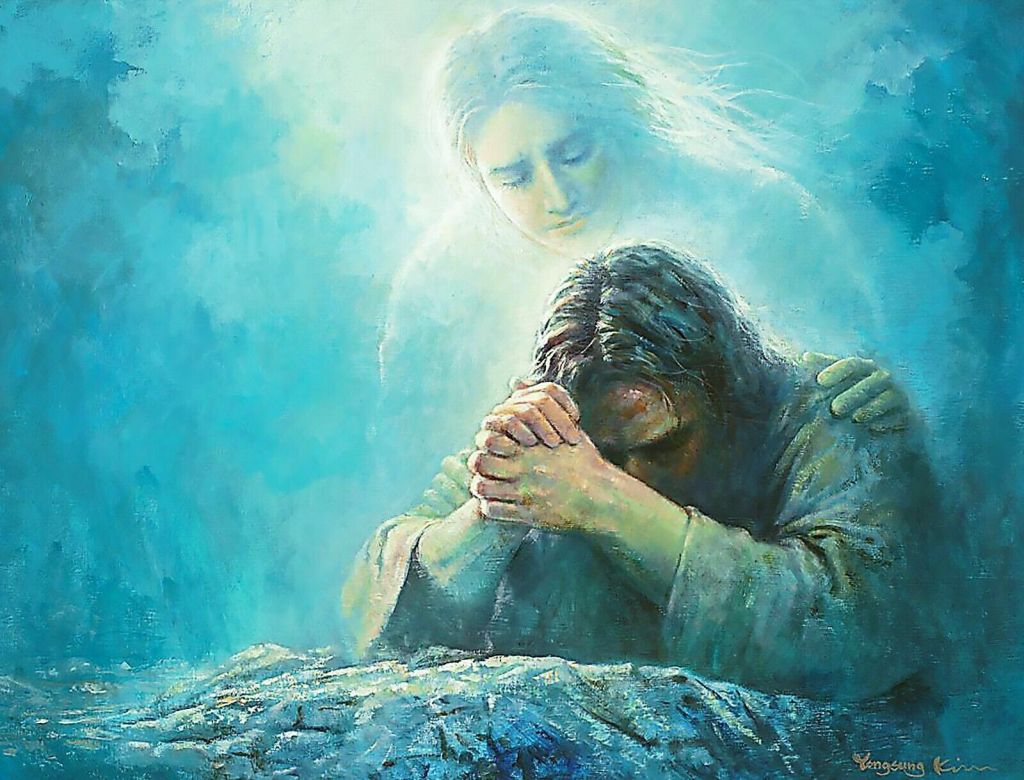
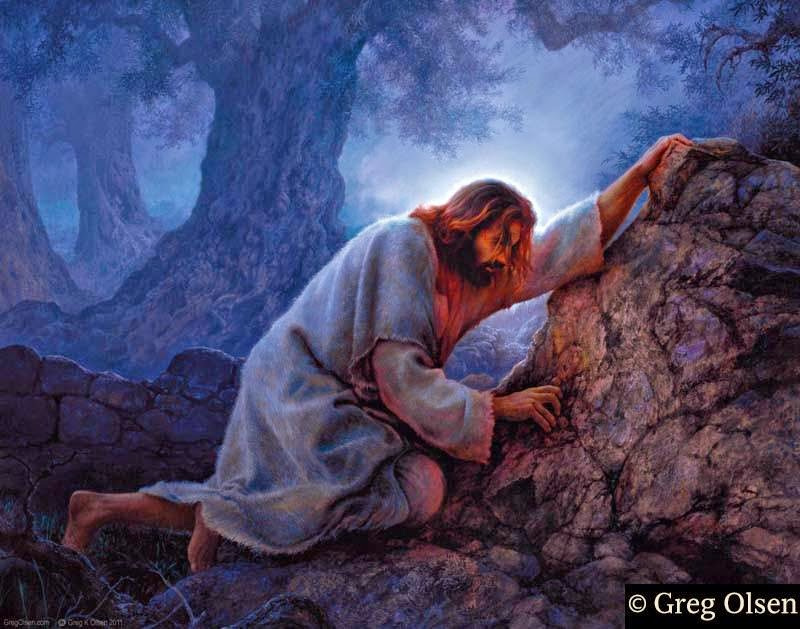
    Did the pain Christ felt in Gethsemane feel infinite? I doubt “infinite” is even close to an adequate word for what Christ felt when he experienced the past, present, and future sins, sufferings, and pains of a universe.

    Luke 22:41-44:

    41 And he was withdrawn from them about a stone’s cast, and kneeled down, and prayed,

    42 Saying, Father, if thou be willing, remove this cup from me: nevertheless not my will, but thine, be done.

    43 And there appeared an angel unto him from heaven, strengthening him.

    44 And being in an agony he prayed more earnestly: and his sweat was as it were great drops of blood falling down to the ground.

    I wonder if the uncertainty of time led to the ultimate request, “If thou be willing, remove this cup from me.”

    It’s hard to imagine what Christ felt in those moments. The “infinite” Atonement of Jesus Christ. Did it feel infinite? Did it feel like it would never end? However it felt, it didn’t feel good.

    D&C 19:18:

    18 “Which suffering caused myself, even God, the greatest of all, to tremble because of pain, and to bleed at every pore, and to suffer both body and spirit—and would that I might not drink the bitter cup, and shrink.

    19 Nevertheless, glory be to the Father, and I partook and finished my preparations unto the children of men.

    I remind myself daily that Christ suffered what He did because He loves me. I owe Him everything. I’m grateful that He was willing to pay the price of my sins and to feel all my sorrows and pains so He can support and understand everything about me.

    I hope during this Christmas season we remember what Christ did for us and why we celebrate Christmas.

  • The Lesser Talked about Sacrifice of the Atonement

    The Lesser Talked about Sacrifice of the Atonement

    One of the tragedies the trinitarian belief (that God, Jesus Christ, and the Holy Spirit are one being) has taken away is appreciation and understanding of God’s part of the sacrifice in the Atonement.

    “For God so loved the world that He gave His only begotten son.”

    Doesn’t mean much if there isn’t actually a God giving up his Only Begotten Son, right?

    We talk so much about the sacrifice that Jesus Christ did for us, for good reason. His Atonement paved the way for us to return home. He suffered, bled, felt the crushing pain of a universe of sickness, pain, and sin, and died for us. He did that. There’s reason we talk about Him. He is the only way to God, our Heavenly Father.

    Speaking of God’s part in that sacrifice shouldn’t diminish what Christ Himself did for us.

    I’m a father.

    The other day Ivy was on the top of the couch and fell backward to the cushion. She wasn’t hurt at all. She was fine, but try telling her that. She was scared, and she was screaming and freaking out. She was fine, but she was still upset.

    Now, if Ivy was really hurt, if she fell from the cushion down to the floor, I would have moved so fast. I would have been there. As it was, I stayed in my seat and tried to tell her how awesome a fall that was.

    If Ivy or Sage are in real pain, I’m there.

    I can’t imagine the torment, the suffering, the heart-wrenching anguish of watching my children suffer. I can’t imagine it.

    God can.

    God watched His Son be spit upon, scourged, beaten, slapped, ridiculed, and finally nailed to a cross to die a slow, painful, and seemingly humiliating death.

    Words from Jeffery R. Holland in a 1999 talk:

    “I am a father, inadequate to be sure, but I cannot comprehend the burden it must have been for God in His heaven to witness the deep suffering and Crucifixion of His Beloved Son in such a manner. His every impulse and instinct must have been to stop it, to send angels to intervene-but He did not intervene. He endured what He saw because it was the only way that a saving, vicarious payment could be made for the sins of all His other children from Adam and Eve to the end of the world. I am eternally grateful for a perfect Father and His perfect Son, neither of whom shrank from the bitter cup nor forsook the rest of us who are imperfect, who fall short and stumble, who too often miss the mark” (“The Hands of the Fathers,” Ensign, May 1999, 14).

    What I realize is that God knew His Son. He knew Jesus Christ was going to fulfill His destiny. He knew what His Son, Jesus Christ, would do on the cross. LIke me on the couch, knowing Ivy was ultimately going to be OK, God knew Jesus Christ would be OK. He knew that Christ so loved us, that He would suffer it all for us. Why did God do it though? Why didn’t He send angels to intervene? Wouldn’t that be what a loving Father would do? He didn’t intervene because He so loved the world. The world is us. He loves us so much that He was willing to suffer this pain of watching His Son suffer. The ultimate sacrifice, of Father and Son.

    If that doesn’t bring you to tears, I don’t know what will.

    God loves you.

    I don’t know how it all works. I don’t know how the celestial kingdom, heaven, a place of infinite joy and peace, can also have weeping. But I know that my God weeps.

    Don’t let us forget that God suffered that day too. He suffered an anguish hardly imaginable. The anguish of watching His only begotten in pain.

    In the case of the suffering of Jesus Christ, the payment had to be made to save us. In some grand cosmic mystery that I don’t yet understand, we can’t return home until we are perfected through the blood of Christ. God allowed that sacrifice, and contributed His sacrifice, because he loves the world. He loves us.

    I believe God does weep over the evil, heartache, pain, suffering, and sadness in this world. He weeps over sin. He weeps over us.

    But ultimately, we have fallen to a soft cushion. We are safe. We are secure. We are secure in the blood of Jesus Christ. We are secure only because of Jesus Christ and what He did for us.

    While God wants to come comfort us, He doesn’t stop suffering because we’re still on the couch cushion. And if it helps us grow, does that make it any easier for Him to watch us suffer? Maybe. I knew Ivy wasn’t really suffering. I knew it was temporary fear she felt. I was always there for her.

    This is my reminder to you: God is there for you. He will never leave you. He is always aware of your hardships. In addition to God, Jesus Christ isn’t only there with your hardships, He already felt your hardships. He understands it all, because He felt it all.

    God loves you. Jesus Christ loves you. They love you so much that they sacrificed for you. Don’t forget that. It will give you strength.