Tag: Paul of Tarsus

  • An Epistle from the New Testament Apostles

    An Epistle from the New Testament Apostles

    I read a book titled An Epistle from the New Testament Apostles.

    A sentence in the second paragraph of the preface caught my attention and helped me to read this book in a different light. That sentence read:

    “Imagine for a moment how you might feel if you were to go to your mailbox only to find there a long letter addressed personally to you from the First Presidency and the Quorum of the Twelve Apostles as those church leaders were constituted shortly after the resurrection of Christ.”

    Huh. Do we read the Bible in this way? Do we read the Bible as if Simon Peter, Paul of Tarsus, or John the Beloved were writing to us? How much more power comes from the words as we consider them a personal letter directly sent to us? What is the Bible really, but a letter sent directly to us from these prophets? You could also consider the Bible a letter sent to you from God.

    I’d like to share a part of this book that was especially significant to me. As I said, the book takes all the epistles of the prophets in the New Testament and categorizes them. It’s also worth noting that where there are multiple translations or interpretations of what may have been originally written, this book showed some of those different options. Keep that in mind when reading the quotes below. One category that stood out to me was titled:

    Unity in the Church

    From James 3:14-16 “But if ye have bitter envying and strife in your hearts, glory not/do not assume superiority over/ and lie not against the truth. This wisdom descendeth not from above, but is earthly, sensual, devilish. For where envying and strife is, there is confusion and every evil work.”

    Sounds like Christianity today.

    Another section.

    A Call to Unity in the Body of Christ

    From Ephesians 4:1-6 “I therefore, the prisoner of the Lord, beseech you that ye walk worthy of the calling wherewith ye are called, With all lowliness and meekness, with longsuffering, forbearing one another in love; Endeavouring to keep the unity of the Spirit in the bond of peace. There is {In} one body, and one Spirit, even as ye are called in one hope of your calling; One Lord, one faith, one baptism, One God and Father of all, who is above all, and through all, and in you all.” 

    Ephesians 4:11-15: “And he gave some, apostles; and some, prophets; and some, evangelists; and some, pastors and teachers; For the perfecting of the saints, for the work of the ministry, for the edifying of the body of Christ: Till we in the unity of the faith, all come and of {to} the knowledge of the Son of God, (MISSING ERASED CONTENT FROM KJV). That we be no more children, tossed to and fro, and carried about with every wind of doctrine, by the sleight of men, and cunning craftiness, whereby they lie in wait to deceive, But speaking the truth in love, may grow up into him in all things, which is the head, even Christ.”

    Unity.

    I point out the lack of it in Christianity not to try to “dispute” or to create “contention” but to point out the obvious.

    It’s interesting the first things Jesus Christ did when he appeared to His other flock in the Americas.

    1. He proclaims His Atonement, announcing that He accomplished what the prophets said would be fulfilled, announcing that He can save His people.
    2. He ministers to His people one by one. They are each individually allowed to come up and feel the wounds in His hands, feet, and sides.
    3. After the people cry out “Hosana!” literally, “God save us” or “Save now, we pray,” Jesus Christ sets forth the mode of baptism, the way He can save them.

    From here Christ’s complete focus is on unity. He elaborates on the oneness of Himself, God the Father, and the Holy Ghost.

    Then He says (3 Nephi 11:28-30), “And according as I have commanded you thus shall ye baptize. And there shall be no disputations among you, as there have hitherto been; neither shall there be disputations among you concerning the points of my doctrine, as there have hitherto been. For verily, verily I say unto you, he that hath the spirit of contention is not of me, but is of the devil, who is the father of contention, and he stirrith up the hearts of men to contend with anger, one with another. Behold, this is not my doctrine, to stir up the hearts of men with anger, one against another; but this is my doctrine, that such things should be done away.”

    May we all avoid disputations and contention. May we always serve with meekness, longsuffering, and love. I hope that one day Christianity can be unified in our faith in Jesus Christ. That will likely not come until the millennium, when we can all look to who we serve, and know without a doubt that we know Him. But we can do our part today to not let the devil have power over us. We can do our part by removing contention and argument from our lives.

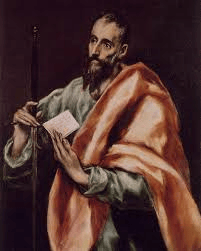
  • Paul’s Life and Letters

    Paul’s Life and Letters

    Book Review: Paul’s Life and Letters

    By Dr. Sidney B. Sperry

    Copyright 1955

    __________________

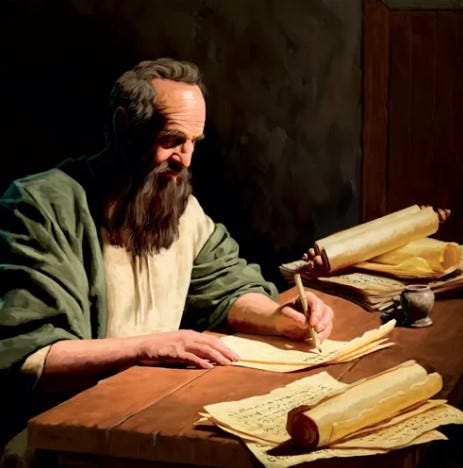
    This book was a breakdown of Paul’s life and everything he ever wrote – thus the title.  I haven’t read the New Testament beginning to end.  I want to finish the Old Testament first.  This book helped me get a better understanding of Paul’s writings.  His writing was deep and powerful.  I also think his writings have always been and are increasingly misunderstood.

    Paul was such a fascinating figure.  I’ve long wondered what it would have been like to be alongside him.  Everything he did he did with such zeal.  Reading and learning about him, I’m awed by his work ethic.  He’s somebody to be admired for his hard work.  The fervor with which he did whatever he put his mind to.  It’s motivating on one hand and terrifying on the other.  Few can live up to the devotion Paul had to what he was passionate for.  We are lucky his passion turned towards the Gospel of Jesus Christ and worship of God as we’ve seen how his efforts against the early saints caused much pain and suffering.

    The book starts with a history of Paul.  Where he was from, who he was, how he became who he became.  The beginning was basically a historical biography of who Paul was.  As Paul got into the portion of his life where he was writing so much, the book transitions.

    This book is one I will refer back to often as I continue to study scripture.  It had a great breakdown of Paul’s individual epistles and when they were estimated to be written.  For example, chapter 13 was “Paul’s third missionary journey (continued).”  It gave a detailed breakdown of the epistle to the Galatians including everything Paul said, the authenticity, importance, style, and doctrine from that epistle.  I would find myself marking entire pages during these chapters. 

    There were many notable things I learned about Paul from this book.  One was that he worked throughout his missionary ministry.  Despite travelling all over the ancient world and spending many, many years as a full-time missionary, it never appears that Paul was paid for his ministry.  He was given “gifts” from church members from time to time.  But it seems very clear that Paul always worked.  The predominant theory is that he was a tent builder.  I found this very interesting given that many modern-day ministers point to Paul’s writings as proof that Paul advocated a paid ministry. 

    One amazing thing about this book was the feeling I had while reading it.  Especially while reading the breakdown of Paul’s letters.  There were moments where I’d pause and ask myself what I was feeling.  This isn’t normally something I do, but I was aware I was feeling something.  It was joy.  It was a feeling like, ‘what is this earth and what does it really matter but to be a test for something greater?  Live righteously and prepare to live with Christ and God forever.’  While reading his writings everything seemed so clear and simple.  It was a feeling in my chest while reading his messages.  Pure joy.  Pure peace.  Pure comfort in the future if I am faithful.  Motivation to be faithful.  As long as I am obedient and keep faith, I truly have nothing to fear.  It’s a similar feeling to what I get when I read the Book of Mormon.  That testified and made it so clear to me that what I was reading was the word of God, meant to lift up and inspire.

    I’m grateful for this book and the understanding it gave me of Paul and his writings.  As I mentioned, I know I’ll be using this book often as I continue to read scripture and one day study Paul’s writings more intently.  The principles Paul taught were pure.  He was called by Jesus Christ Himself which tells us of the importance of Paul’s work.  The missionary effort Paul put forth and his contribution to building God’s kingdom is inspiring.  He has the greatest conversion story of all time.  We could all be better if we spent more time aspiring to be like Paul the Apostle.

  • Pride of the Gentiles

    Pride of the Gentiles

    I write this as a complement to my testimony of the Book of Mormon as the Word of God.

    For the purposes of what I’m writing I will focus on the Old Testament.  I would gladly speak on the New Testament, but for simplicity I will focus on the Old.

    Let’s look historically at the creation of the Bible.  The text of the Old Testament was preserved and handed down by the hands of the Jews.  It was protected by the Jews.  If not for the Jews, there would be no Old Testament today.

    By definition, a gentile is a person who is not Jewish.  The Gentiles received the Bible from the Jews.  Most of us are gentiles.  If you come from Europe, have Catholic, Protestant, or pretty much any other Christian ties in your ancestry, you are most likely considered a gentile.  Again, none of us would have the Bible today if it weren’t for the Jews.

    It’s those same Gentiles who today say, A Bible, a Bible, we have a Bible! (2 Nephi 29:3).  But how do you have the Bible?  You have it from the Israelites, from the Jews.  You didn’t do anything to gain it.

    When Christ was crucified and resurrected the Jews of old who believed in Christ had a difficult time moving past their traditions.  If you read about Paul and his missionary efforts, you will see that a major portion of his time was spent fighting Judaizers.  Judaizers were “Christians in the primitive church who taught it was necessary to adopt Jewish customs and practices, especially those found in the Law of Moses.”

    From History of the Christian Church, 1, 338 regarding Judaizers:

    These men were Christians in name, but narrow-minded and narrow-hearted Jews in fact.  They were scrupulous, pedantic, slavish formalists, ritualists, and traditionalists of the malignant type.  Circumcision of the flesh was to them more important than circumcision of the heart, or at all events an indispensable condition of salvation.  Such men could, of course, not understand and appreciate Paul, but hated and feared him as a dangerous radical and rebel.  Envy and jealousy mixed with their religious prejudice.  They got alarmed at the rapid progress of the gospel among the unclean Gentiles who threatened to soil the purity of the church…”

    For just a couple of examples of Paul’s contention with Judaizers see Acts 15:23-29, Galatians chapters 3 and 4, Acts 21: 20-25.  That last example in Acts 21 would be roughly the year AD 58.  At this point, 25 years after Christ’s death, there were still thousands of Jewish Christians following the Law of Moses.

    I give this historical background to make a comparison to the Christian gentiles of today. 

    Christians who cannot accept any scripture outside of the Bible are the Jews of old.  Holding firm to their traditions, fighting to preserve what they’ve always known, refusing to see the greater blessing of the Gospel right before them.

    The Gentiles of today say, “I have a Bible.”  By what source have you gotten your Bible?

    2 Nephi 29 4-5:

    4 But thus saith the Lord God: O fools, they shall have a Bible; and it shall proceed forth from the Jews, mine ancient covenant people. And what thank they the Jews for the Bible which they receive from them? Yea, what do the Gentiles mean? Do they remember the travails, and the labors, and the pains of the Jews, and their diligence unto me, in bringing forth salvation unto the Gentiles?

    5 O ye Gentiles, have ye remembered the Jews, mine ancient covenant people? Nay; but ye have cursed them, and have hated them, and have not sought to recover them. But behold, I will return all these things upon your own heads; for I the Lord have not forgotten my people.

    The Jews couldn’t accept further revelation – that Jesus was the Christ and in Him the law was fulfilled.  Gentiles today  – who have only been shown the mercy of God by being adopted into Christ’s fold – do the same thing.  They have a Bible, they need no “other” Bible.

    What does this speak of?  It speaks of pride.  This attitude says – “God has given us all He’s going to give us and now it’s up to ME, MAN to interpret what God is saying.”  This pride removes God from the equation.  You think God has disowned us?  You think He’s given us all He can or will give us?  WHY?!?!?  God loves His children.  Has He abandoned us?

    The hard-hearted, prideful, and stubborn attitude of holding onto traditions has kept people from Christ since the start of mankind and it continues today.  Let go of pride and accept that God still speaks to man.  Pride makes us interpret the Bible how it suits us.  Let go of pride and let God guide us.

    The denial of modern revelation is the removal of God.  It is the denial of either God’s love for us or His power in redeeming His children.  How can people who can only accept the Bible not see that?  They’ve removed a living God for God’s word.  The Bible is God’s word to us, but what good is it if you don’t understand it?  What good is it if you kick against the pricks?  Let the spirit work within you and accept all truth God will give you.  He will enlighten your mind and expand your spirit, but you must let Him, and stop removing Him by saying you have the Bible and that’s all you need.

    The great apostle Paul spent his entire missionary career fighting against the Judaizers.

    Today modern-day missionaries of the Church of Jesus Christ of Latter-day Saints spend so much time fighting modern day Judaizers, traditionalists.  We must Bible bash, meanwhile we have a far greater message: GOD STILL LIVES, GOD STILL SPEAKS, REVELATION IS ALIVE.  He has provided a new Book of Promise – the Book of Mormon – to help and guide us. Not to replace the Bible but to supplement it.  READ IT.  And see for yourself if it speaks to your spirit. See for yourself if God still loves His children. See for yourself if Jesus is the Christ and if HE IS STILL redeeming his people.  Set aside your pride!

    2 Nephi 29: 6-9

    Thou fool, that shall say: A Bible, we have got a Bible, and we need no more Bible. Have ye obtained a Bible save it were by the Jews?

    Know ye not that there are more nations than one? Know ye not that I, the Lord your God, have created all men, and that I remember those who are upon the isles of the sea; and that I rule in the heavens above and in the earth beneath; and I bring forth my word unto the children of men, yea, even upon all the nations of the earth?

    Wherefore murmur ye, because that ye shall receive more of my word? Know ye not that the testimony of two nations is a witness unto you that I am God, that I remember one nation like unto another? Wherefore, I speak the same words unto one nation like unto another. And when the two nations shall run together the testimony of the two nations shall run together also.

    And I do this that I may prove unto many that I am the same yesterday, today, and forever; and that I speak forth my words according to mine own pleasure. And because that I have spoken one word ye need not suppose that I cannot speak another; for my work is not yet finished; neither shall it be until the end of man, neither from that time henceforth and forever.

    How accurate are those words written nearly 2600 years ago?  Inspired writing.  It is my testimony that the Book of Mormon can only bring a person closer to the Savior of the world, Jesus Christ.  I wish we could all remove our pride and stop being like the Judaizers of the primitive Church.  Accept that Christ is as interested in us today as He was when He walked the earth 2000 years ago.  Read His word.  Hear His word.  Feel his word.  Accept his words. All of them.

    Jesus Teaching in the Western Hemisphere (Jesus Christ Visits the Americas)
  • Book Review: LeGrand Richards Beloved Apostle

    Book Review: LeGrand Richards Beloved Apostle

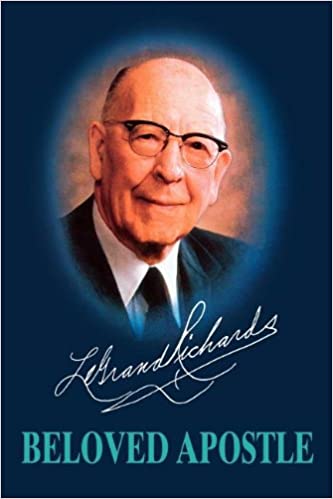
    LeGrand Richards: Beloved Apostle

    By Lucile Christenson Tate

    Copyright 1982

    _______________________

    I was excited to read this book because LeGrand Richards wrote one of the most impactful books for my life that I’ve ever read – A Marvelous Work and a Wonder.

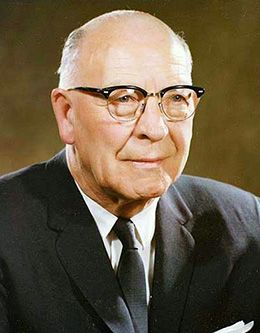
    I think the best way to honor this book is to honor the amazing man LeGrand Richards was.

    Testimony Archives - BYU Speeches

    He was a mission president, presiding Bishop, and member of the Quorum of the Twelve Apostles. He was an Apostle of the Lord Jesus Christ.  I believe near the end of his life he was in very close communication with Jesus Christ.

    One of his greatest contributions to the building up of God’s kingdom here on earth has been the writing A Marvelous Work and a Wonder.   One of my favorite books of all time.  I don’t know how a person can read that book and still question the claims of the Church of Jesus Christ of Latter-day Saints.

    In life LeGrand was one of the greatest missionaries of this dispensation.  He was described by someone in this book as the Paul of the latter days.  I was extremely motivated by his example and boldness in sharing the gospel throughout his life. 

    One great missionary story about LeGrand Richards in the book comes from Bruce R. McConkie. Elder McConkie tells of a time he was sitting in the back of a plane waiting for it to take off.  LeGrand got on the plane and shook the hand of every single person. “He started at the front and walked the full length of the plane shaking the hands of everyone aboard – people he’d never seen before – and he asked each one if he or she was a Mormon.” After speaking to each person on the plane he went back up to the front, turned, and said, “There are seventeen of us on board tonight. Isn’t it wonderful to belong to the Church?” Bruce R. McConkie continued, “The plane was full of non-Mormons, some had never heard of Mormons, but that is exactly what he did…all over the plane people smiled, laughed, were pleased. He hadn’t offended. He hadn’t hurt anyone’s feelings and he’d left a good impression and feeling for the Church.” He was a kind, gentle, and somewhat funny old man.  Can you imagine the impact this act had on that plane?  The feeling of fellowship that would be present?  The missionary discussions and promotion of the Gospel of Jesus Christ that could then occur?

    I can imagine someone leaning over, “who is that man?”

    A response, “He is an Apostle of the Lord, Jesus Christ.”

    To LeGrand Richards:  Thank you.  Thank you for writing amazing books.  Thank you for being an example of service to the Lord, and to others.  Thank you for being a source of truth and light to this world.  All I know of you is what I’ve read.  That’s enough to tell me I greatly look forward to meeting you one day, if I ever get that privilege.

    ________________________

    LeGrand Richards spoke in General Conference a total of 22 times. He was known for speaking purely from his heart and through the spirit. He could go on and on with profound spiritual insights. Here is his second talk in General Conference in October of 1971, “Laying a Foundation for the Millennium.”