I may have written about this idea before, but given we just celebrated Christmas I’m going to share the thought again.
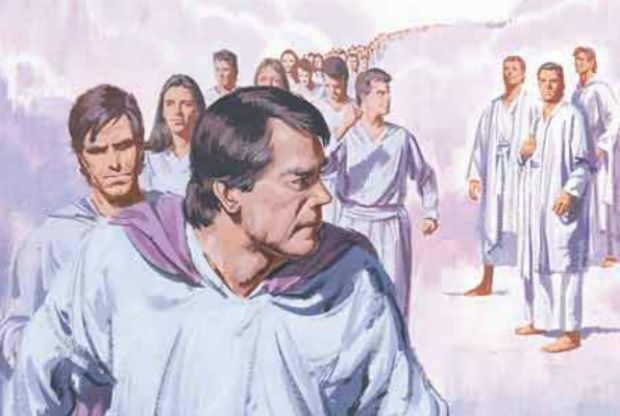
If you’re reading this, you chose to come to earth. You don’t remember this choice, but trust me, you did.
If you’re reading this, you knew to some extent what coming to earth would entail. To be clear, you couldn’t fully understand what you were getting into. But I imagine you knew it would be hard. You knew you would suffer. You knew you would fail.
Then you discussed an option. Maybe someone could atone for every mistake you would make so you could be forgiven and return home again.
Someone stepped forward and you accepted Him.
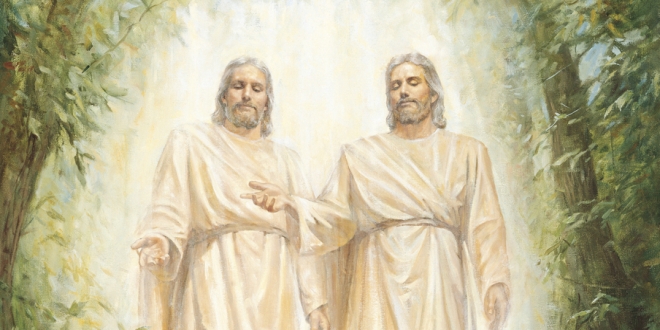
Who was that person that you put your entire eternal salvation, destiny, and future into? Who did you trust enough to literally put the fate of your soul on the line? Who was this person that you trusted so much, who you knew loved you so intensely, who was so upright, so kind, so seemingly perfect that you actually believed and trusted He would go down and continue to be perfect. You believed He would go down and do something impossible so you could be saved. I assume you knew Him to be so perfect that you believed He could continue to be perfect with all that mortality could throw at Him. Impossible. It seemed impossible and yet you trusted Him.
Who was this person?
What was His character?
What was He like?
How could He be so magnificent, so powerful, so kind, so loving, so perfect that you were willing to bet your existence on it?
Who was He?
Did He know what He was getting into way back then?
“And he went a little farther, and fell on his face, and prayed, saying, O my Father, if it be possible, let this cup pass from me: nevertheless not as I will, but as thou wilt.”
“And about the ninth hour Jesus cried with a loud voice, saying, Eli, Eli, lama sabachthani? that is to say, My God, my God, why hast thou forsaken me?”
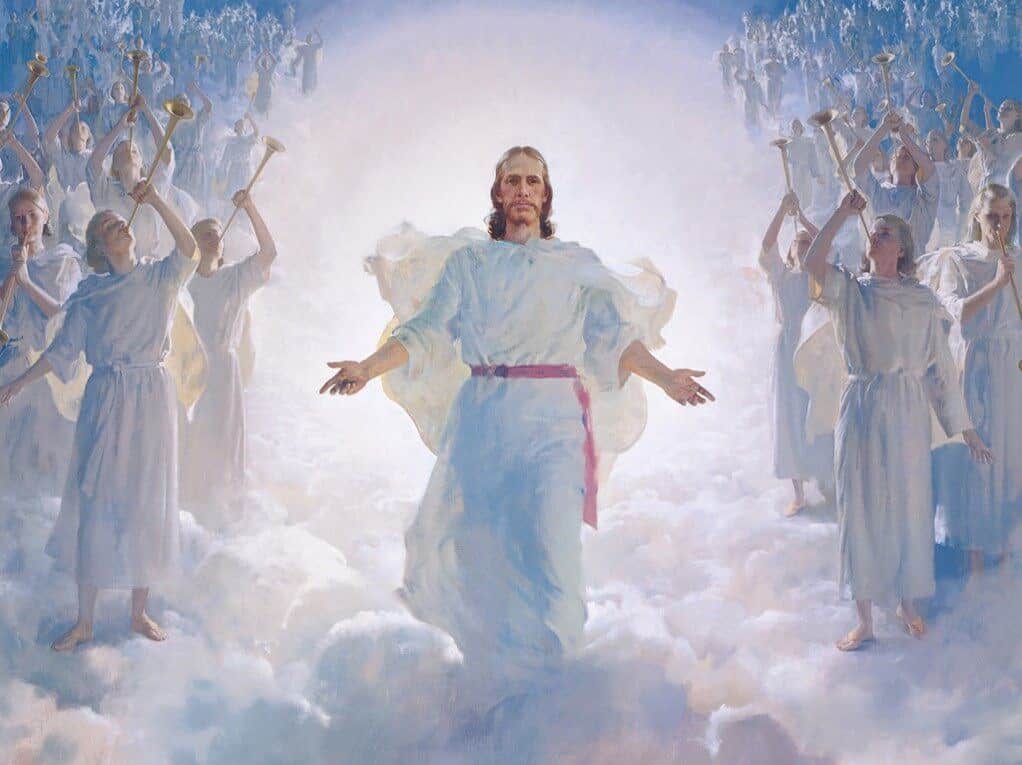
The heavens cried for joy when He accomplished the impossible.
You cried for joy knowing He accomplished the impossible.
Did Christ know He would accomplish His mission on earth? Was His faith a perfect knowledge? With the importance of agency, I believe there was a chance that Christ would fail.
But He didn’t.
We knew He wouldn’t.
Who was this character?
This Being.
This Entity.
This Savior.
This Brother.
This Person that we so trusted.
I’m grateful He was born. I’m grateful He accomplished His mission. I’m grateful that He knew I wasn’t going to be perfect and so He did the hard thing for me. I’m grateful for His love. I’m grateful that He loved me so much that He refused to fail, even though it was unimaginably hard. I know He refused to fail because He knew what was at stake.
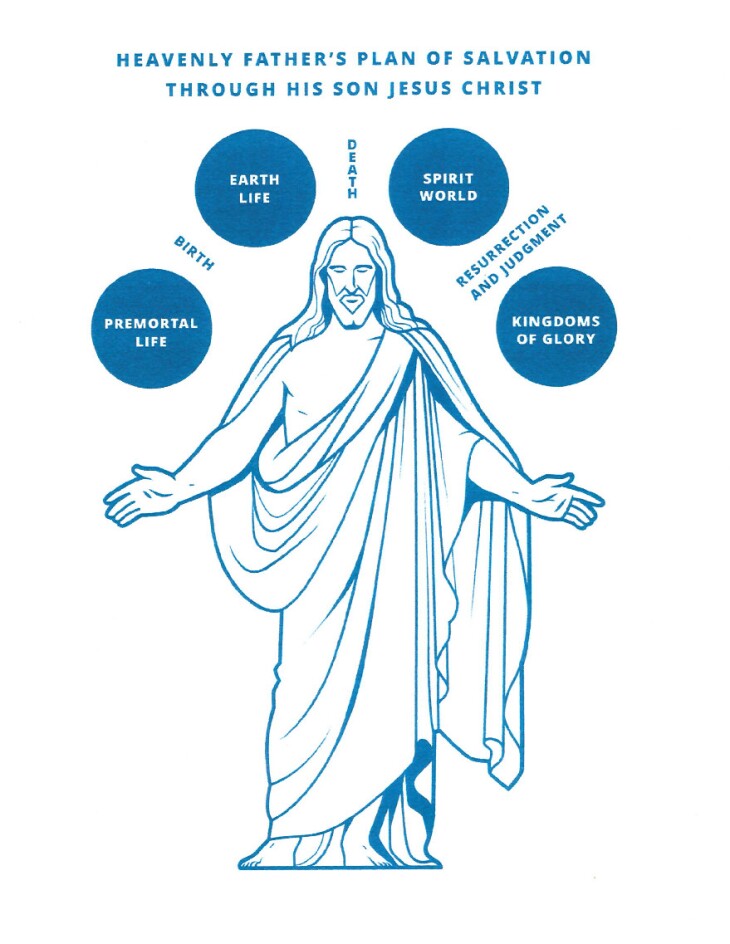
Outside of the Church of Jesus Christ of Latter-day Saints, what does Christianity believe about the after-life? Generally speaking, Christianity believes that we are born on earth, live our lives, die, are judged, and assigned to either heaven or hell.
I heard something on an awesome podcast called Unshaken Saints recently that I’d never realized. What the host of the podcast pointed out was that Christianity has it right. Christianity is just missing the beginning and the end.
As I stated, Christianity believes in life on earth, then judgement, then heaven or hell.
The truth is that life doesn’t start here on earth. This is the beginning that Christianity is missing. We lived long before we came to earth. There are many truths that stem from our understanding of our premortal existence. One of the most important truths that premortality provides us is an understanding of agency. We chose to come here. This life wasn’t thrust upon us. This is the missing beginning.
The truth after death (the end) is that we are temporarily assigned to either “spirit prison” or “paradise,” but this isn’t our final resting place. After our temporary assignment to prison or paradise, we receive our final judgement that the scriptures speak of. This is when we come before God and Jesus Christ, Jesus Christ as our advocate to the Father and our judge before God. This is where we either accept Jesus Christ and the mercy He has given us and are reconciled to God, then assigned our glory by the mercy of God and His Son, Jesus Christ; or we reject Jesus Christ and are cast out to outer darkness. We must willfully reject God, Jesus Christ, and the mercy we are given to be cast off. This is the hell that Christianity understands.
There will be glory assigned to all of God’s children. How can that be? It can be because He loves us that much, so much that He gave His only Begotten Son to save us.
Christianity thinks the final judgement is immediately after we die. The beauty of the Plan of Salvation is the realization that everyone will have an opportunity to accept Jesus Christ. Everyone will be taught and be given a fair chance. Spirits in “prison” will learn what they missed on earth. No one will be left out. Children are alive in Christ (Moroni 8:12). No one will be lost.
This is what Christianity misses. The beginning and the end. Premortality and the final judgement. If you cut off the beginning and the end of the Plan of Salvation, you have life on earth and spirit prison or paradise. That’s missing half the picture. We lived before we came here. We were loved by a loving Father in heaven before we came here. At the end, we will be judged for our actions, all we did on earth, our heart’s intent, our good deeds and bad, what we provided in this speck of time that will send us on an eternal trajectory. The beginning and the end. That’s what Christianity misses by rejecting further revelation by God’s prophets.
What does this do to Christianity?
Christianity believes we started here on earth. What does that do to our agency? We didn’t choose to come here. We didn’t know God before we came, who is He to us? This is what Joseph Smith spoke of when he talked about the First Vision. He said he learned that God and Jesus Christ knew him by name. For me, that knowledge is so engrained in my soul and being, it’s something I know, that God knows me. The Christianity Joseph Smith knew prior to the First Vision led him to be surprised that God could know him. I’m grateful for the truth God provided Joseph Smith when he appeared to him in a grove.
Back to what Christianity believes – we come to this earth by no choice of our own, sent by a God we don’t know or understand. We come to this earth to suffer by the sweat of our brow, a fallen world, a cruel world, a challenge we don’t understand, a challenge we didn’t choose. Then God judges us and casts 90% of us off. Most are cast off because they never knew God or Jesus Christ, no fault of their own.
This is what Christianity believes.
The podcast provided another analogy that made me think about how this misunderstanding of the Plan of Salvation limits Christianity.
There are two young men sitting outside of a Bishop’s office. One of the boys doesn’t want to be there. He doesn’t understand why he’s there. All he knows about the Bishop is that he’s a wrathful, unkind, harsh man. This young man fears the Bishop.
The other young man knows the Bishop. He knows him to be just and kind. He knows the Bishop loves him and only wants what’s best for the him.
As the first boy waits, he feels like he is in prison. He is dreading the upcoming confrontation with this unkind bishop.
What does the second young man experience? Is he not in a paradise? He knows he’s soon to meet a friend. That friend is going to give him a treat, congratulate him on how he’s been doing, give him a hug and tell him he loves him. This second young man welcomes the meeting with the Bishop.
The lack of knowledge in Christianity represents the first young man. Christianity doesn’t know God. By removing the premortal existence, life with a loving Father before life on earth, a Plan to come to earth and progress, a chance to learn of Him after this life, and then to be judged after being given all the necessary information, Christianity only sees a confusing, wrathful God, who has unfairly judged them.
The Plan of Salvation is a beautiful truth that Christianity is missing. Far from being completely ignorant, Christianity is really close. But this closeness, without the full truth, is extremely limiting.
ALL of us on earth chose to come to earth. All of us already chose Jesus Christ.
This is a powerful truth. I wish the rest of Christianity could see, understand, and accept the further light and knowledge that makes this life understandable and worth living.
I believe a careful reading of different scriptural records gives us a picture of Satan’s progression and tells us how he ultimately ended up cast down. There will be a lot of scriptural references here (duh). If you follow the story something becomes pretty clear about Satan. There’s a major revelation I learned about Satan that I never understood, and I don’t think many church members know.
Before I start I want to mention, my interest in studying Satan is the opposite of my interest in studying Christ, but helps with the same purpose. I think it’s good to study Satan to see how he fell and to avoid the behavior he exhibited that led him there. Through his story you see examples of pride, unrighteous ambition, anger, envy, jealousy, bitterness, selfishness, along with many other negative attributes. All of Satan’s attributes are the direct opposite to the traits of Jesus Christ. Ultimately Satan became a being of darkness. He rejected all light. Many around us reject light and I think as we understand Satan and understand his motivations (to tempt, enslave, and control us) we are better suited to withstand him. With that, we begin.
Satan’s story starts in the Book of Moses chapter 4:1-2:
1 And I, the Lord God, spake unto Moses, saying: That Satan, whom thou hast commanded in the name of mine Only Begotten, is the same which was from the beginning, and he came before me, saying—Behold, here am I, send me, I will be thy son, and I will redeem all mankind, that one soul shall not be lost, and surely I will do it; wherefore give me thine honor.
2 But, behold, my Beloved Son, which was my Beloved and Chosen from the beginning, said unto me—Father, thy will be done, and the glory be thine forever.
Here we see what I believe is well known to Latter-day Saints. Heavenly Father asked, “who will I send?”
Satan came forth and responded, “Behold, here am I, send me, I will be thy son, and I will redeem all mankind, that one soul shall not be lost, and surely I will do it; wherefore give me thine honor.”
Christ said, “Father, thy will be done, and the glory be thine forever.”
We know what happens here, though it isn’t said in these two verses. Christ is chosen by the Father.
Now we’re going to jump to a new book of scripture to continue Satan’s story. Abraham 3:24-28 reads:
24 And there stood one among them that was like unto God, and he said unto those who were with him: We will go down, for there is space there, and we will take of these materials, and we will make an earth whereon these may dwell;
25 And we will prove them herewith, to see if they will do all things whatsoever the Lord their God shall command them;
26 And they who keep their first estate shall be added upon; and they who keep not their first estate shall not have glory in the same kingdom with those who keep their first estate; and they who keep their second estate shall have glory added upon their heads for ever and ever.
27 And the Lord said: Whom shall I send? And one answered like unto the Son of Man: Here am I, send me. And another answered and said: Here am I, send me. And the Lord said: I will send the first.
28 And the second was angry, and kept not his first estate; and, at that day, many followed after him.
In verse 24 – “one among them that was like unto God” – clearly refers to Jesus Christ. He is speaking to “those who were with him.” He goes on to talk about the first and second estates of man, of us. Verse 27 is where it gets important.
Verse 27 – The Lord (Jesus Christ) said, “Whom shall I send?” Note that Christ is following the same pattern He learned from His Father. “And one answered like unto the Son of Man.” This is Adam, the first man, or Michael as he was known in the premortal existence. Adam said, “Here am I, send me.”
Still in verse 27 – “And another answered and said: Here am I, send me.” – This will prove to be Satan.
“And the Lord said: I will send the first.”
Now the critical verse 28:
“And the second was angry, and kept not his first estate; and, at that day, many followed after him.”
So, it is clearly put forth here. I always thought Satan rebelled at Christ being chosen by the Father, and maybe he did in his heart. If you read Moses chapter 4 straight through that is how it seems. But when you read this story sequentially, we see what actually happened. Christ was chosen by the Father. Christ is essentially now leading the “project” under the direction of Heavenly Father. He is standing with others helping in the work. He follows the Father’s pattern and asks who will be the first man. Here Christ chooses Adam over Satan.
This adds a dimension to my understanding of Satan. A couple things of note. First, we know from the beginning Satan wanted the glory and wanted all of God’s children to return to heaven (see Moses 4:1). When he is passed over, he doesn’t openly rebel yet. When Christ is choosing who will be the first man, it’s possible Satan still saw a way to foil God’s plan and have all the honor given to him. He would go down as the first man and he would refuse to fall. If Satan went as the first man and refused to fall, man could never choose and therefore could never sin. If man couldn’t sin, there would be no need for a redeemer, there would be no choice, repentance, or progression. Satan would bring everyone back to heaven and in so doing destroy their agency. I think this was his plan.
Christ wisely chooses Adam to be the father of all and lead the human race into mortality.
It’s at this point we see Satan has had enough. He’s been passed over once by the Father. Now the one who took what he believed to be his rightful spot is choosing to pass him over as well.
Verse 28: “And the second (Satan) was angry, and kept not his first estate; and, at that day, many followed after him. – Emphasis added.
Here we see Satan’s rebellion. Here we see he leads “many” away. Before we continue with Satan’s story, I feel it’s important to remind you: Congratulations! If you’re reading this, you kept your first estate and are in the process of keeping your second estate. Keep it up and you’re promised to “have glory added upon (your) head for ever and ever” (Abraham 3:26).
Back to Satan.
Our story picks back up in Revelations chapter 12. I’ll be using the Joseph Smith Translation as it makes everything so much clearer.
The first part of Revelations 12:4 reads:
“And there appeared another sign in heaven; and behold, a great red dragon, having seven heads and ten horns, and seven crowns upon his heads. And his tail drew the third part of the stars of heaven, and did cast them to the earth.”
The great red dragon is obviously Satan, and here we see he drew away one third of the children of God after him. He and his followers were cast down to earth.
Revelations 12:6
“And there was war in heaven; Michael and his angels fought against the dragon; and the dragon and his angels fought against Michael;“
Michael (Adam) and his angels fought against Satan and his angels.
Verse 7 tells us that Michael and his angels (who might be us!?) prevailed.
Revelations 12:8
“Neither was there place found in heaven for the great dragon, who was cast out; that old serpent called the devil, and also called Satan, which deceiveth the whole world; he was cast out into the earth; and his angels were cast out with him.”
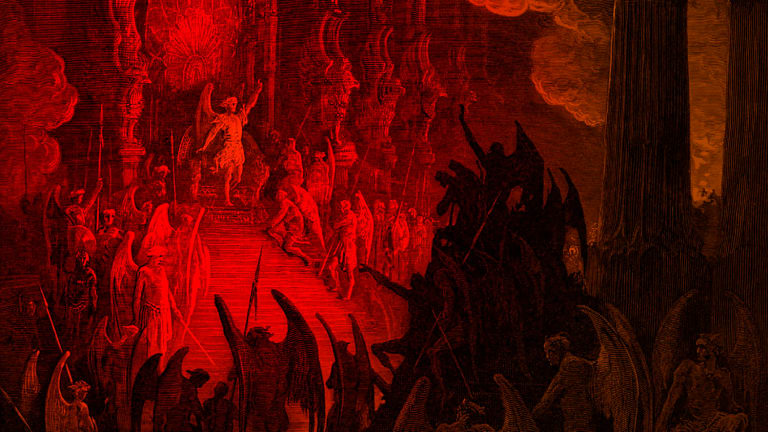
Here we see the official result. There was no more place found in heaven for Satan, his followers, and their rebellion against Christ, which meant rebellion against God. Satan’s plan was foiled. He was not chosen to be the redeemer of man and he was not chosen to be the first man where he could foil God’s Plan of Salvation. He was cast down, in bitterness.
In conclusion, it doesn’t appear Satan rebelled at the outset. He was conniving and always looking for another way to enslave us, God’s children. I mentioned it earlier but every person on this earth already chose Christ. We were not fooled by Satan. We are here.
How did Satan get one third to follow him? I think if we carefully consider this question we can come up with some likely possibilities. There were many in the premortal existence that maybe didn’t properly prepare for this life, our second estate. When the time came to be tested, those who didn’t prepare would be fearful. We knew that some would fail to reach the Celestial Kingdom, and those among the host of heaven who had not used their agency to prepare well for mortal life were likely cognizant of that fact. From there it would be easy for Satan to convince some that they would fail, and they should therefore follow him.
Secondly, I believe Satan’s focus in the premortal life would have been to doubt Jesus Christ and his ability to redeem us. I believe Satan would have told many that Christ would fail, and then what? They would all fail and never be able to return home. I believe Satan likely attacked Christ. This would also be an attack on the ability to repent. Satan would have told those who didn’t use their agency well premortally that they wouldn’t use their agency well in life, that they wouldn’t repent, and change, and improve, and would ultimately fail. It’s the same tactic Satan uses today.
I invite everyone to hold firmly in your heart, remember, you chose Christ already. You were valiant already. You were brave already. You may have already fought Satan in heaven with Michael. You won. You are still fighting Satan today and you can still win. Remember that he is the father of lies, and Christ is our salvation. Look to Christ, keep your faith in him, keep repenting, keep changing, keep looking to Christ and we will all return to Him again.
I know that Satan is never giving up, just like he never gave up in the premortal life. Just like in the premortal life we will prevail. We have Christ on our side. With Jesus Christ and Heavenly Father on our team, we cannot lose.
 No Coincidences