Tag: premortality

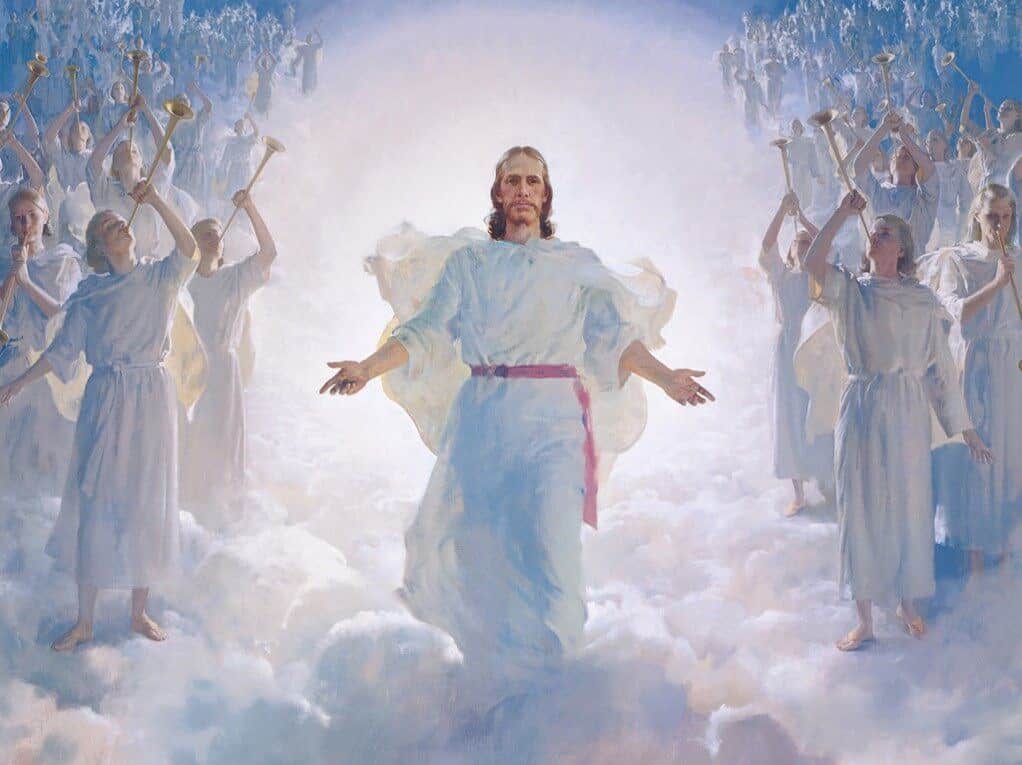
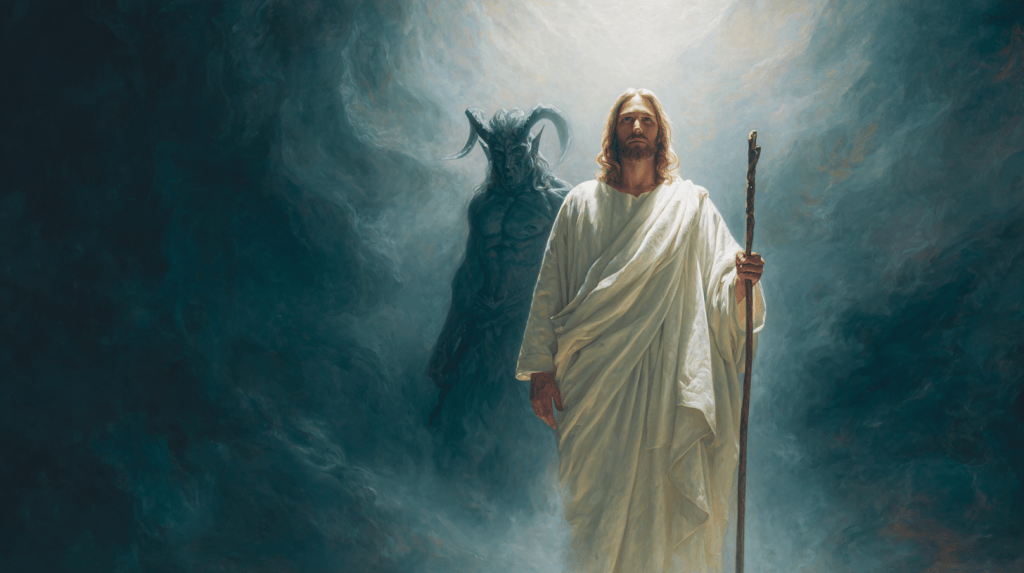
  • Satan is Jesus’s Older Brother

    Satan is Jesus’s Older Brother

    Stay with me.

    Before I go down this path let me acknowledge some things:

    1. We don’t understand how time works in eternity. It’s likely everything I’m about to say is nonsense from the eternal perspective. Still, have some fun with me. I know I got your attention with that title.
      • It’s very possible that God “adopted” billions of intelligences at the same time. Meaning, It didn’t go Satan, then Jesus, then Moses, then you, then me, etc. It’s probably not that simple. Anyways…

    Now that’s out of the way, I think there is a fun thought experiment/argument to be had that despite Jesus Christ having the title of “Firstborn”, Satan might be “older” than Jesus.

    Everything in this world symbolizes Jesus Christ. Everything points to Him (Moses 6:63, 2 Nephi 11:4). 

    There are some individuals from history that are clear types and shadows of Jesus Christ.

    Examples:

    1. Joseph of Egypt
      • Savior of his people and all of Egypt
    2. Moses
      • Liberator of Israel
    3. Nephi
      • Led his people to the Promised Land
    4. David
      • King of Israel
    5. Isaac
      • Inheritor of all that Abraham had and father of Israel (Jacob)
    6. Jacob (Israel)
      • Father of the covenant people of Earth
    7. Joseph Smith
      • Restorer of the Gospel on Earth (through Jesus Christ, of course)
    8. Peter
      • Leader of Christ’s church after Christ’s ascension
    9. Abel
      • In the likeness of his father, hearkened to the voice of the Lord
    10. Ephraim
      • Received the birthright, descendents are responsible for the gathering of Israel

    All of these men represent Jesus Christ in different but very clear and obvious ways. 

    What do all these men have in common? None of them are the oldest in their family. None of them are the firstborn.

    Interesting, right?

    “Well, but, the scriptures say Jesus Christ is the firstborn of God. Clear as day,” said a hypothetical someone arguing against my point.

    What if “firstborn” has meaning closer to heir, covenant son, preeminent one?

    Psalm 89:27 speaking of David, King of Israel, reads:

    “I will make him my firstborn, higher than the kings of the earth.”

    David was the youngest son in his family.

    In Genesis 22:2 God says to Abraham:

    “Take now thy son, thine only son Isaac, whom thou lovest…”  

    But Isaac wasn’t Abraham’s only son. He also had Ishmael. Maybe Isaac was his covenant son. 

    Jeremiah 31:9 reads:

    “For I am a father to Israel, and Ephraim is my firstborn.”

    None of Ephraim, David, or Isaac were the firstborn. Yet they were each described as such in varying ways.

    Now Jesus’s words about Himself:

    “I was in the beginning with the Father, and am the Firstborn” (D&C 93).

    This is a captivating feature of scripture. There is a repeated theme of an older brother rejecting His younger brother who receives stewardship over him. 

    Cain opposed Abel.

    Ishmael yielded to Isaac.

    Esau opposeed Jacob.

    Joseph of Egypt was rejected by his older brothers.

    David was initially overlooked by his older brothers.

    Are these older brothers representative of Satan, the way the younger brother is representative of Jesus?

    Sound familiar? (Satan’s Story and Satan’s Story Continued)

    Maybe all these examples are meant to teach us something. It’s hard to be an older brother and yield leadership to your younger brother. What if Satan had taken another route and humbly accepted Jesus Christ? What if he accepted Jesus Christ’s position as “firstborn of the Father”, the chosen one, God’s beloved? What if Cain didn’t oppose Abel? Where would Cain be now?

    Also, what if Joseph of Egypt’s brothers accepted his position of power over them from the beginning? Joseph wouldn’t have been able to complete his earthly mission of saving all of Egypt. Sometimes, maybe, we need opposition (2 Nephi 11).

    But what happens when older brothers do humbly yield to their younger brother? Joseph Smith’s older brothers were legendarily supportive of his calling as God’s prophet. Esau famously humbled himself and reconciled with Jacob. Moses’s older brother Aaron appears to have accepted Moses’s role as prophet most of the time. Amazing things happen when older brothers can humble themselves.

    What if Laman and Lemuel could have humbled themselves before Nephi? Think of the love, peace, and prosperity that could have existed among the Nephites in the Americas. But then we wouldn’t have had all the lessons the Book of Mormon teaches us about opposition.

    God’s plan is perfect.

    It’s fascinating to look at scripture from a broader perspective, look for patterns, and try to grasp all that God wants us to learn and understand.

    While I prefaced this post saying it could be somewhat silly of an exercise, I stand by it. I think it’s a good exercise to review the scriptures in out-of-the-box ways and try to see the patterns God may be trying to teach us.

    Wherever in the birth order Jesus Christ and Satan landed, we know they were “older.” We know that God chose Jesus Christ to be His Son, the Redeemer of the world, the Savior of mankind. We know God doesn’t make mistakes. I’m grateful for what the scriptures teach me about Jesus Christ and that they can constantly strengthen my testimony of Him and all that He did for me.


  • The Room and Freedom

    The Room and Freedom

    I just finished the book The Room. Without spoiling too much, it’s about a woman who is captured and kept locked up in an 11 foot by 11 foot room with her five-year-old son who is born into captivity.

    It is a good book. The most interesting part is that it’s written from the perspective of the five-year-old.  

    At the end of the book there was a “Reading Group Guide” with questions to consider. One of them was, “Why do people tend to be so fascinated by stories of long-term confinement?” 

    I pondered this a bit. The obvious answer is that our freedom is so precious to us, we can’t imagine something so terrible, so we’re drawn to it. Like watching a train crash or the modern true crime craze. 

    There is a longer answer, though.  

    Our freedom, our agency, is the most important thing in the world to each of us. Our ability to choose and make our own choices is more important to us than anything. It’s more important to God than anything, also. That’s why we’re here. 

    I think this fascination with confinement and the inability to choose is a fascination with something we know to be inherently wrong.  

    Every one of us here on earth chose to come here, to Earth. There were some who didn’t choose this. There was one that tried to take away our freedom, to force us to choose his way. He phrased it as a way to save us all, but really, what he was proposing was enslavement. Satan proposed the plan that would have us all return to heaven. The catch was that we would have no say in the matter. We would be compelled to follow him, to do it his way. We would be his puppets. In return, he would ensure we got back safely. 

    God always wants us to choose. 

    We even chose to be able to choose. We are here because we chose agency and freedom.  

    I think that’s why these stories are so fascinating to us. We already chose freedom. Being here on Earth was a choice. God will always give us a choice. Not being given a choice feels wrong because it is wrong.  

    We already chose to reject Satan and come here and use our agency. 

    Don’t forget that. You’ve already chosen.   

  • The Ladder of the Atonement

    The Ladder of the Atonement

    When we came to earth and committed our first sin, knowing right and wrong, we fell. Coming to Earth was an inevitable fall. Why then did we shout for joy when the plan was laid forth and we were told we would be coming to Earth? Coming to Earth to fall below our current status, to fall into a pit, in a way. So why were we excited to enter this pit?

    Well, for a couple reasons. One reason would be that we would receive a body. Another reason was we knew we could become like our Father, who we loved and admired. All it required was this scary step.

    I think this might be why so many didn’t come to earth. We are told that one third of our brothers and sisters in heaven didn’t make the jump. They were content where they were at. Why fall and risk not getting back to the point they were already at? I think we see this mindset with a lot of people on earth now. Why push yourself? Why come out of your comfort zone? Why do difficult things? Why do anything for anyone else? What’s the point? The point is growth and progression. If we’re not growing we’re not doing anything.

    So, we fell into this pit called earth. And how were we supposed to get out? We would be stuck in a pit. We would need something completely out of our power and ability to save us. A ladder would need to be extended to us. And from this ladder we could ascend not only out of the pit and back to our original standing before we came to earth. We could ascend all the way to be like our Father, the one we admired and desperately wanted to be like.

    The Atonement is that ladder. From the pit, there was nothing we could do to attain this ladder. It was given to us by the grace of Jesus Christ alone. He brought the ladder, He did the hard work (bleeding from every pore, broken body) of carrying that ladder to us. Then He extended the ladder down.

    It was then up to us to decide if we wanted to use the ladder. God won’t ever force us to do anything. We would have to choose to use the ladder. We would have to choose to take step by step, rung by rung to come up to the level of our Savior, Jesus Christ. Again, without the ladder, we could do nothing. With the ladder, we could be like Him.

    What is the ladder? The ladder is faith in Jesus Christ and His Atoning sacrifice for our sins, for our fallen state. Every time we repent and try to be better, we are taking a step up the ladder Jesus Christ has provided us. Every step up the ladder is service and love. Every step up the ladder is trying to be like Jesus Christ, by using the ladder to get closer to Him.

  • Who was Jesus Christ

    Who was Jesus Christ

    I may have written about this idea before, but given we just celebrated Christmas I’m going to share the thought again.

    If you’re reading this, you chose to come to earth. You don’t remember this choice, but trust me, you did.

    If you’re reading this, you knew to some extent what coming to earth would entail. To be clear, you couldn’t fully understand what you were getting into. But I imagine you knew it would be hard. You knew you would suffer. You knew you would fail.

    Then you discussed an option. Maybe someone could atone for every mistake you would make so you could be forgiven and return home again.

    Someone stepped forward and you accepted Him.

    Who was that person that you put your entire eternal salvation, destiny, and future into? Who did you trust enough to literally put the fate of your soul on the line? Who was this person that you trusted so much, who you knew loved you so intensely, who was so upright, so kind, so seemingly perfect that you actually believed and trusted He would go down and continue to be perfect. You believed He would go down and do something impossible so you could be saved. I assume you knew Him to be so perfect that you believed He could continue to be perfect with all that mortality could throw at Him. Impossible. It seemed impossible and yet you trusted Him.

    Who was this person?

    What was His character?

    What was He like?

    How could He be so magnificent, so powerful, so kind, so loving, so perfect that you were willing to bet your existence on it?

    Who was He?

    Did He know what He was getting into way back then?

    I don’t think He did.

    Matthew 26:39:

    “And he went a little farther, and fell on his face, and prayed, saying, O my Father, if it be possible, let this cup pass from me: nevertheless not as I will, but as thou wilt.”

    Matthew 26:42:

    “He went away again the second time, and prayed, saying, O my Father, if this cup may not pass away from me, except I drink it, thy will be done.”

    Matthew 27:46:

    “And about the ninth hour Jesus cried with a loud voice, saying, Eli, Eli, lama sabachthani? that is to say, My God, my God, why hast thou forsaken me?”

    The heavens cried for joy when He accomplished the impossible.

    You cried for joy knowing He accomplished the impossible.

    Did Christ know He would accomplish His mission on earth? Was His faith a perfect knowledge? With the importance of agency, I believe there was a chance that Christ would fail.

    But He didn’t.

    We knew He wouldn’t.

    Who was this character?

    This Being.

    This Entity.

    This Savior.

    This Brother.

    This Person that we so trusted.

    I’m grateful He was born. I’m grateful He accomplished His mission. I’m grateful that He knew I wasn’t going to be perfect and so He did the hard thing for me. I’m grateful for His love. I’m grateful that He loved me so much that He refused to fail, even though it was unimaginably hard. I know He refused to fail because He knew what was at stake.

    Merry Christmas.

  • Why Do I Care?

    Why Do I Care?

    I’ve been thinking recently. Why I care about this?

    This being – the Gospel, the Church of Jesus Christ, the Church of Jesus Christ of Latter-day Saints, Jesus Christ in general.

    Let’s start with Jesus Christ in general. I feel like I write about this constantly and it’s the constant conclusion to one of my posts, so I’ll be brief here. I care about Jesus Christ in general because He has given me everything. The least I can do in return is share Him, follow Him, try my best to be like Him.

    Let’s go broader. Why do I care about the Gospel and the Church of Jesus Christ? That, I think goes in line with why I care about Jesus Christ Himself. If I care about Him, then I would care about His church, and I’d want to share His gospel. That lines up.

    You’ll notice I distinguished the Church of Jesus Christ with the Church of Jesus Christ of Latter-day Saints. This is what I want to focus on and think about here.

    Why do I care to share that I’m a member of the Church of Jesus Christ of Latter-day Saints? Why do I invite people to church? Why do I invite people to activities? Why do I share Book of Mormons? Why do I invite people to meet with the missionaries? Why do I share being a latter-day saint? Why do I talk about it? Why does it matter? Why do I care? Why do I keep doing it with such little success?

    It’s something I think about relatively often. The why?

    How do I stay motivated to write spiritually themed blog posts every week not very many read and fewer still are interested in?

    Why do I keep having gospel discussions with people and trying to convince them that this is the restored Church of Jesus Christ – when everyone I talk to disagrees, or worse, doesn’t care?

    Why do I keep inviting people to church and activities when they never come?

    Why do I keep sharing scriptures and conference talks that no one reads or listens to?

    Why is being a “Mormon” important?

    Hmm.

    Sounds depressing right? Sometimes it’s hard. Being a member missionary is hard. It’s discouraging. It seems like an endlessly fruitless effort.

    And yet I’m not being persecuted or crucified so I have really nothing to complain about compared to saints from earlier times.

    So, I’ve distinguished “The Church of Jesus Christ of Latter-day Saints” from “The Church of Jesus Christ” but that’s really the answer to the question of why. I do all these things, no matter how hard or discouraging, because I believe the Church of Jesus Christ of Latter-day Saints is the Church of Jesus Christ. I believe they are one and the same. I believe this is Christ’s restored church. I believe it is the way back to Him. I believe I was called and sent here to share it. That’s why I do it. That’s why I care.

    I have a friend who converted to this church who once said something I found fascinating. He said, basically, “Whether it’s true or not, I don’t care. This church brings me happiness. It’s made my life better. It’s made me a better person. It’s made me feel closer to God. Is it true? Is it the One True Church? I don’t know. Really, I don’t care.”

    He doesn’t care because for him it’s about his well-being. This church has helped his life and brought him joy. What does he care about the rest of it? While I think in a completely different way, I can appreciate this line of logic, this way of thinking. This person is an extreme pragmatist. So when he said this statement, it told me a lot about him.

    Does what this individual said make him any less of a latter-day saint and disciple of Christ than me? I’ll say, I think it could, but it doesn’t. This person is still one of the most faithful, serving, selfless, Christ-like individuals I know. Ultimately his why doesn’t matter as much as who he is becoming, which is more like Jesus Christ.

    I consider that person’s why somewhat temporal. ‘This church has been good to me and brought me joy, I’m for it.’

    My why is different.

    My question is, what if the church doesn’t bring you joy? What if it makes your life worse? This friend of mine might leave if that were the case. Right now he has no reason to leave.

    Maybe this is why so many leave. They don’t see how the church is benefitting them.

    This friend and I have a mutual friend. The mutual friend is very interested in religion and so we’ve had religious conversations together. After a few discussions, my friend said the mutual friend would never join the church. He said the mutual friend had too much to lose. His family would disown him, his wife would hate him, his whole life would change. It would be too hard. Should that person join the church?

    My friend would say no.

    Again, my why is different.

    I look at that and say, “Is it true?”

    Response from hypothetical person, “Well…”

    “No well, is it true?”

    If it’s true, if God sent a prophet, and that prophet established a church, and it’s Christ’s church – if it’s true – what else matters?

    Is it true?

    I believe it is.

    That’s why it matters. That’s why I care. That’s why it’s so important to me.

    I’ll write more on the temporal vs spiritual benefits of the church another time. But for now, I wanted to share that.

    Is it true?

    Yes.

    Then it matters. It matters more than anything else on this entire earth.