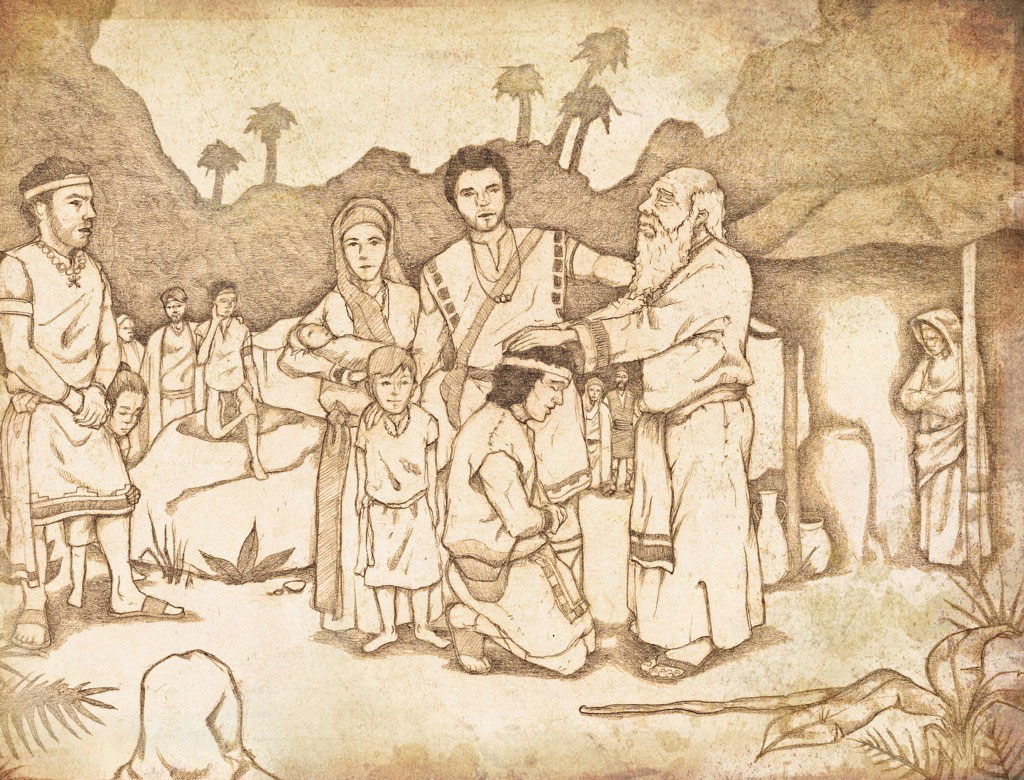
I have always been confused by the blessings of Lehi to his posterity in the 4th chapter of 2 Nephi in the Book of Mormon. For one, there is the obvious blessing that is missing: Nephi’s. For another, there seem to be mixed messages. Laman and Lemuel have a blessing, but it may be removed? What does Sam get? Who is the actual new leader- Nephi or Laman?
In an article titled Lehi’s Last Will and Testament: A Legal Approach, John Welch goes into great detail on the legality and custom of Lehi’s blessing, and answers all of the above questions. I’d encourage anyone interested to read his whole article. It strengthened my testimony of the authenticity of the Book of Mormon and reminds us of the real world that Nephi was a part of.
I want to go over some highlights from John Welch’s article that explain Lehi’s blessing in its cultural context. Credit also goes to Alan C. Miner who put together the points I found most relevant to the above questions.
Inheritance and succession was an important aspect of near eastern culture. It was a way of “preserving and transmitting the family estate from one generation to the next” (John Welch). Typically, the eldest son of the father’s first wife inherited his estate. The leadership of the family was also an important inheritance given. Faulk points out, “a father was free to choose a younger son as his successor, if he found the eldest unworthy of the office.” Sound like this fits Laman and Lemuel much? The father passed this leadership of the family on often through a special blessing (Deuteronomy 21:17), like we see in 2nd Nephi chapter 4.
There are many examples of this spiritual or ruling leadership being given to a younger son including:
Abel
Seth
Jacob (Israel)
Ephraim
David
Solomon
In each of these cases older sons were passed over as the spiritual leaders of the family.
So, we have property inheritance and ruling inheritance. There was a third category sometimes handed down from the father: priestly duties. This is what happened with Lehi giving Jacob the priestly authority in the Book of Mormon. Another example of this was Jacob/Israel’s blessing in the Old Testament. Israel blessed Judah with the ruling authority (Genesis 49:10), Joseph of Egypt receiving a double portion through Ephraim and Manasseh (Genesis 48:22), and Levi inherited some priestly rights to the priesthood.
As time passed in ancient Jerusalem, it became common custom for the eldest son to automatically receive a double portion of the inheritance. As noted, there were times that younger sons received different portions, or rights to rule, or increased inheritance. This was the exception, not the rule.
This basic background information brings us to our fascinating story in the Book of Mormon. We have an eldest son, Laman, who was the eldest son of, what appears to be, a relatively well-off citizen of Jerusalem. This family leaves behind their land and property, to venture off to a promised land, a promised land Laman seldom showed faith in attaining. This family spends years in the wilderness, potentially months on a ship, and eventually land in the promised land. This elder brother is now over the moon with joy and enthusiasm. He will inherit all that his father has and be the leader and now king of a new nation.
But what about Nephi? It was Nephi from the start that helped the family in the wilderness. It was Nephi that went back and got the plates so they could remember God and how to read and write. It was Nephi who built a ship to get them to the promised land. Nephi led the family, physically and spiritually to the promised land. He was the natural leader of the family and deserved to inherit the leadership, and kingship, of this great new nation.
Lehi has a bit of a conundrum. How was Lehi going to handle Laman’s expectation to receive a double portion from his father? How was Lehi to handle the expectation from Laman that, as the oldest son, it was his RIGHT to inherit everything, despite his lack of leadership throughout the journey. Especially when Nephi had been declared a “ruler and a teacher” (1 Nephi 2:22, 3:29) by God Himself.
This brings us to our blessing, and to the answer to the questions I always had.
Lehi needed to appease Laman while attaching appropriate contingencies to his blessing. The main contingency was that Laman’s blessing would be applicable as long as he hearkened unto Nephi. This same admonition was given to Lemuel, Sam, and the sons of Ishmael. If they refused to follow Nephi, their blessings would be null and void.
So Lehi employed three ways to diminish Laman’s blessing and role as the firstborn son. In diminishing Laman’s role Lehi enhanced Nephi’s. This leads us to the questions:
First, why was Sam’s portion linked with Nephi’s? Why were there no Samites?
Combining Sam’s inheritance with Nephi’s was similar to Joseph of Egypt’s blessing being doubled through his sons, Ephraim and Manasseh. Sam’s share of the land was linked to Nephi’s and therefore Nephi’s portion was doubled through Sam’s faithfulness, loyalty, and devotion he would show to Nephi as he always had.
Welch discusses a second way Lehi diminished Laman’s blessing as found in 2 Nephi 4:5-9, “He [Lehi] blessed his firstborn’s children to the effect that their sins and cursings would be answered upon the heads of their parents. This could not have been flattering to Laman.”
The third way Laman’s authority and blessing was reduced, Lehi referred to Jacob three times as his “firstborn…in the wilderness” and applied the priestly duties to him. By naming Jacob as another version of the “firstborn,” Lehi subtly took away from Laman’s claims as the firstborn son. As we remember, the custom in ancient Jerusalem was for Laman to receive the inheritance by default because he was the firstborn son. But, with Jacob also receiving a form of the title, “first born son,” Laman lost some claim on this exclusive title.
Laman was warned that if he was disobedient, to God and to Nephi, that his blessing would be revoked. Lehi was, in a way, willing to give Laman the cursory “honor” of the blessing while putting many safeguards in place to keep Laman from actually ruling.
This background context gives us additional insight into how the Nephites (followers of Nephi) and Lamanites (followers of Laman) could so quickly devolve into war and contention. The peace was kept as long as Lehi, the official patriarch, was around. Custom in Jerusalem was to love and respect the father (Exodus 20:12). But as soon as Lehi died, it was chaos. Laman was never one to heed faith or blessings, so the warnings from his now passed father were of no concern to him. He wanted to rule.
To conclude, Alan C. Miner states, “Thus, John Welch has provided a plausible cultural background and answer as to why there were no “Samites.” His words also give testimony to the fact that the ancient world of which Lehi and Nephi were proposed to be a part of in the pages of the Book of Mormon was a very real world.” The confusing nature of the blessing adds to the authenticity of the Book of Mormon. Lehi’s blessing is consistent with the pattern an ancient Israelite may use in blessing his children.
I bear testimony that the Book of Mormon is a true historical account of families that originated in Jerusalem and eventually settled in the Americas. The more I read and study the book the more obvious it becomes. God has given us a second witness of the divinity of Jesus Christ, and I’m grateful for it. I’m grateful for a book that has been tested for 200 years and still holds up. I’m grateful to know God is still invested in us and our lives. I’m grateful for the Book of Mormon, Joseph Smith, and the Church of Jesus Christ of Latter-day Saints.
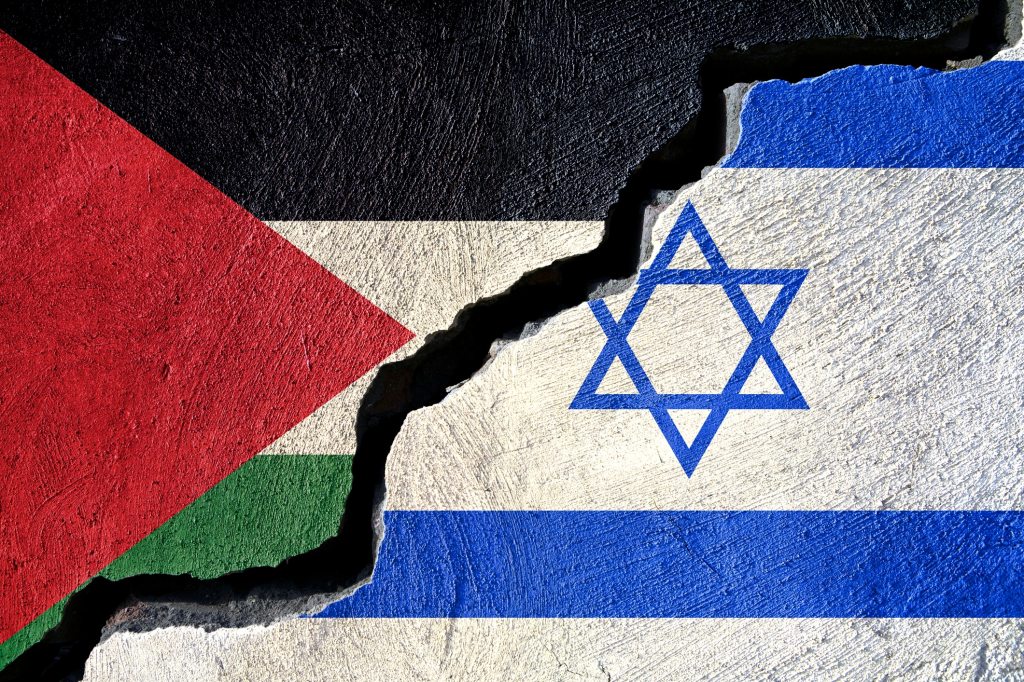
I recently went about educating myself on the current conflict in the Middle East between Israel and Palestine. It was briefly a popular subject in the news recently. Then, as the news is wont to do, the next hot topic came, and we didn’t hear about this issue anymore. That doesn’t mean this is no longer an issue, only that we’re not hearing about it as much. This problem has been ongoing for decades.
First, a disclaimer before broaching this subject: what is happening in the Middle East is a complex issue today, has been for a very long time, and will continue to be. As is often the case in multi-decade feuds between different cultures, this isn’t a simple movie plot – bad guys vs good guys. No superlatives will properly express how complex this issue is, so I won’t use any. I’ll leave it at the statement: this is a complex issue.
Before I get into this complex issue, I must state something of vast importance. It is important we don’t hate anyone, on either side. That includes hating the Jews, which is becoming a “hip” thing to do lately. It is of critical importance that we don’t completely vilify and blame the Jewish people for the atrocities that have been performed. Yes, atrocities are being performed. But, if we hate and vilify and discriminate against the Jewish people for the acts of a few or even of many, we are doing exactly what we’re so angry at the Jews for. We are mistreating people. Whether people are right or wrong, mistreating them is never an acceptable response.
A little historical background on what has happened and has been happening in Israel/Palestine, for those like me who have kept themselves blissfully ignorant of the topic.
At the end of World War II many Jewish people were displaced, their homes destroyed, they had nowhere to go. As these refugees wondered where they should go, a natural gathering to their ancient homeland started to occur. The only problem was their homeland was already home to a new group of people. The area of “Israel,” the land gifted to Abraham and his Jewish descendants by God, had become Palestine. New people had been living there for centuries.
The Bible has long prophesied of the gathering of Jews back to their homeland. The 20th Century has seen many Jewish people gather back to the land of Israel, making it a nation again, for the first time in 2,000 years. Did this gathering fulfill prophesy? In part. That prophesy won’t be completely fulfilled until Christ returns and shows the Jewish descendants of Abraham the prints in his hands and feet and they accept the Lord as their Christ.
Since we are witnessing, in our time, a prophesy fulfilled only in part, it’s obvious why this topic is so important to study and understand. It fascinates me that something prophesied of for centuries has been happening right before our eyes, in our time, our parents’ time, and our grandparents’ time. Yet we all act like this isn’t a big deal. Prophesy fulfilled in the dispensation of the fullness of times. Another reminder of the significance of the time we now find ourselves in.
When I heard of the issues in Israel, I realized I needed to pay attention. I’m aggressive in my avoidance of news and current affairs. I know I should do better. When I heard about Israel in the news, and as a studier and believer of the Bible, I was ashamed and embarrassed to be so ignorant on such an important topic. My ignorance needed to be rectified. The events in the Middle East are prophetic and important. Which led to my study of the subject.
What has happened as part of this 20th century gathering is what has happened anytime a people travels to an inhabited land in hopes of making it their own. This mass migration of the Jewish people back to Israel/Palestine has led to war, contention, and oppression. The Jewish people have established a Jewish state: Israel exists again. This establishment has shown little regard for the previous inhabitants. As the Jews have established some dominance and control in the region, naturally they exert some pressure on the previous people. The oppressed from history and particularly World War 2 have become the oppressors. Due to a lot of outside support, the Jewish state of Israel has been given much leeway in human rights violations. Public opinion has always been on the side of Israel, largely due to the support of Bible believing Christian countries (see documentary The Occupation of the American Mind).
There is wrongdoing on both sides. The Jewish people/Israel are not blameless. The Arabs/Palestine are not blameless. There is blood on the hands of both sides. This is in large part what makes this issue so complex. When conflict becomes decades of conflict, an eye for an eye becomes 100,000 eyes for 100,000 eyes.
That’s the million-foot view. The difficulty I’ve found in researching this subject is the bias you get from both sides. I’ve found it difficult to find completely impartial, factual, and historical information. The best and most impartial documentary I’ve watched so far is Two Blue Lines. That’s where much of my thoughts on this topic will come from. That documentary really made me think about this problem from different angles.
My hope is that I can give some thoughts on this issue, in the simplest and most layman terms, to help others realize how important it is we pay attention to what’s happening in the Middle East. Instead of saying too much in a breakdown of this topic, I’ll just share some interesting thoughts that developed from the documentaries I’ve watched. At the end of this, I’ll list out these documentaries if you’d like to further educate yourself on the important events happening in Palestine.
One topic that developed in the documentary Two Blue Lines was the idea that the Jewish people had become grounded in the land and not in the people. I believe it was a Jewish rabbi that pointed out it isn’t the land of Israel that makes Judaism, it is the people, no matter where they are. He talked about how Judaism is confused. God wants love. Judaism is one with all people. Judaism should be love and peace and brotherhood. What’s happening in the nation of Israel is the people are becoming grounded in land, and not religion. They have linked themselves to the earth, to something temporal. Judaism is more than a land, it is bigger. Judaism has survived as a people, a religion, and a culture through centuries of persecution and attempts at eradication because of their strong roots in God. Jews believe they are God’s chosen people. Rooting themselves to the land of Israel weakens what has always been their strength. The issue in Israel has become a people linked to a land instead of to God.
As a studier of the Bible, I realized I fell into this grounded in land and not in people thinking. My first thought (when completely ignorant of the issue) was – “of course the Jews are coming back to Israel by any means necessary. The Bible said it was rightfully theirs, the Bible tells us they would return to it, of course this is happening.” That, though, doesn’t excuse oppressive or unloving behavior. Prophesy told us the Jews would be scourged from generation to generation for what was done to Jesus Christ (2 Nephi 25:16), this didn’t make the Holocaust rightful in anyway. In a similar way, just because the Jewish return to Israel was prophesied doesn’t make Jewish mistreatment of Palestinians acceptable.
Other thoughts, mostly from Two Blue Lines and The Gatekeepers:
This is quickly going to become a more relevant issue in the United States.
A girl talked about how the Jews are repeating history. Similar to what was done to them so recently in the Holocaust they are now doing to others. She talks about how it’s hard to stop because it’s not one person, it’s like a movement. It’s gaining momentum and it’s happening.
One Jewish lady said that history will not look kindly on what is happening in Israel. Live by the sword die by the sword. They are committing war crimes. History takes note. Maybe not today, but one day. She said this ~30 years ago. We’re seeing that day come. As mentioned, the public shift against the Jews and the state of Israel is happening now, right before our eyes.
A fascinating point was made about segregation. Israel was established in 1948. At that time, they modeled after and looked up to the United States which was the pinnacle of the western world. At that time the US was still a segregated country. 70 years later Israel hasn’t had a civil rights movement. They still live in segregation, but instead of black people being discriminated against it’s Palestinians who are being mistreated. For a real-world picture of this watch the fictional movie A Borrowed Identity.
These are quotes from individuals In Two Blue Lines
“It’s clear that there will not be peace if we continue to demolish innocent peoples’ houses….”
“What is more dangerous is what this (mistreating Palestinians) does to Israeli people… as Israeli soldiers and citizens we become, from year to year, more animals.”
“What’s worse is what is being done to Israeli people, we are becoming animals.”
The Gaza Strip (the most fought over land in possibly all the world) is the size of Mobile Alabama with 10x the population.
As you watch this, don’t villainize the Jewish people. Then you are perpetuating the evil. Understand they are confused, and they are wrong. They do need to be held accountable. It needs to stop. They need to stop treating others how they have been treated. They need to treat others how they WANT to be treated.
One individual pointed out that the Palestinians don’t have a state or an army. This “war” is against a people. You can’t have ethnic democracy, or “Jewish democracy.” Either you believe in democracy, or you believe in a Jewish state.
From The Gatekeepers – all former Shin Bet (Israel’s internal security service, think the FBI) leaders were unanimous; Israel must talk with the terrorists. They must talk with anyone that might talk to them. Peace cannot come through military or tactics or fighting or intelligence. Another of the Shin Bet leaders, the oldest one in the last 7 min of the documentary talked about how the occupation is making young Israelis cruel. They’re becoming like Germany when they occupied territories. Not how Germany was towards the Jews, but how they were to all the others they occupied (Polish, Danish, Norwegians, etc.). He said, “We win every battle, but we lose the war.”
That’s some of what I learned from conflicts in the Middle East. I’ll now present some scriptural evidence of the prophesy being fulfilled.
From a commentary on Doctrine and Covenants section 133 (items in parentheses are my own insertions): “The Gentiles who obeyed the Gospel were commanded (v. 12) to gather in Zion (Utah/America), and those of the house of Judah were to flee to Jerusalem (seen in 20th century, as discussed) (v. 13). This is in harmony with the prediction of Isaiah and Micah, that out of Zion (America) shall go forth the law, and the word of the Lord (Bible) from Jerusalem (Micah 4:2). For from both these centers the Lord shall judge. Jerusalem shall be re-built and become a holy city, the capital for Judah, and Zion shall be the capital and city of our God, for Ephraim and his fellows (why so many of the tribe of Ephraim are already in America). Both shall be seats of government in unison with each other, and the Lord shall dwell in both.” (Smith and Sjodahl commentary).
Zechariah 14:1-5 reads:
Behold, the day of the Lord cometh, and thy spoil shall be divided in the midst of thee.
2 For I will gather all nations against Jerusalem to battle; and the city shall be taken, and the houses rifled, and the women ravished; and half of the city shall go forth into captivity, and the residue of the people shall not be cut off from the city.
3 Then shall the Lord go forth, and fight against those nations, as when he fought in the day of battle.
4 And his feet shall stand in that day upon the mount of Olives, which is before Jerusalem on the east, and the mount of Olives shall cleave in the midst thereof toward the east and toward the west, and there shall be a very great valley; and half of the mountain shall remove toward the north, and half of it toward the south.
5 And ye shall flee to the valley of the mountains; for the valley of the mountains shall reach unto Azal: yea, ye shall flee, like as ye fled from before the earthquake in the days of Uzziah king of Judah: and the Lord my God shall come, and all the saints with thee.
This what the Jews expected from their Savior, the Messiah. They expected a warrior. A soldier to redeem them from the occupation of the Romans. Instead, they got the Lamb of God. That phrase had largely been removed from their scripture. Search for it in our current Old Testament and you will not find “Lamb of God” referenced. Why? Because it did not fit the image the Jewish people wanted from their King. They wanted and expected a king more akin to David, not Solomon.
Zechariah 14:1-5 is a yet to be fulfilled prophesy. As I heard of the hate and vitriol being pointed towards the Jews in the news and on social media, I realized it was starting. It’s long been a question: with the state of Israel so favored worldwide, how would this prophesy come to be? When would the armies encompass them about? As we see time and time again, political alliances and mutually beneficial allegiances turn quickly when public opinion starts to turn. Public opinion against the nation of Israel is changing right before our eyes. Prophesy is beginning to take its shape.
54 And he (Christ) said also to the people, When ye see a cloud rise out of the west, straightway ye say, There cometh a shower; and so it is.
55 And when ye see the south wind blow, ye say, There will be heat; and it cometh to pass.
56 Ye hypocrites, ye can discern the face of the sky and of the earth; but how is it that ye do not discern this time?
The Jewish people must turn to their Savior and accept that He has already come before them. They can’t rely on alliances with the United States any longer. They must trust in the Lord their God. They are the chosen of the Lord, even despite their great mistakes. He still loves them; they are still His people. They must turn to Him and trust in Him. Political alliances are fickle. The Lord’s covenants with the people of Israel are eternal.
Tragedies have occurred in the Palestine/Israel conflict on both sides. Inhumane treatment abounds. The opposite of love has been shown for God’s children. We are all God’s children. The Jewish people know this. They must turn from their obsession in obtaining their homeland and instead make the world a promised land. They must repent for the sins of few or many. They must correct wrongs currently being done in the Middle East. When they do this, they will continue to have the favor of the Lord Jesus Christ, and no one can come against them.
For more on the signs of the Second Coming see this link:
About the media’s influence on America determining how we view this issue and ultimately whose “side” we end up on because of that media influence.
Two Blue Lines (2015)
Can be found for purchase on Amazon Prime Video, Youtube, Apple TV.
Best, most impartial documentary I’ve seen.
A Borrowed Identity (2015)
Can be found for purchase on Amazon Prime Video.
Fictional account of a Palestinian living in occupied territory. This one teaches less general facts as it’s not a documentary, but teaches a lot, nonetheless. It gives a real life feel to how this has impacted individual, real people, for generations.
The Gatekeepers (2012)
Can be found on Hulu, Starz, Amazon Prime Video, and others.
Documentary of the intelligence agency in Israel. Very powerful.
I recently finished a book that was so packed with wisdom I couldn’t come close to taking it all in. Every page provided a new insight. Every thought was provoking. It is amazing to walk through the minds of men and women so in touch with the spirit or some form of knowledge I don’t yet have. It’s my favorite part of reading. From reading his words and thoughts I could feel his closeness to our Heavenly Father and Jesus Christ, and therefore come closer to them myself.
The name of the book was The glory of the sun which refers to 1 Corinthians 15:41:
“There is one glory of the sun, and another glory of the moon, and another glory of the stars: for one star differeth from another star in glory.”
“These are they whose bodies are celestial, whose glory is that of the sun, even the glory of God, the highest of all, whose glory the sun of the firmament is written of as being typical.”
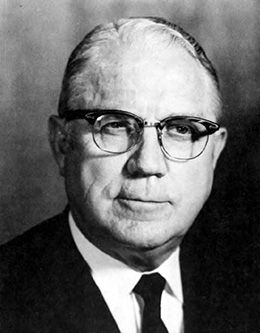
Sterling W. Sill, author of this book, was a general authority in the Church of Jesus Christ of Latter-day Saints. He was asked to share a series of gospel messages each week for a year over the radio. The series was called “Sunday Evening from Temple Square.” Those 52 addresses were put into this book. It’s amazing to see that so many unique and powerful messages can come from one individual.
Sterling W. Sill
Every message was so good, I could randomly turn to a page and share an important thought. There was one in particular I found pertinent to our current moment in history.
Elder Sill shared his messages at the height of the cold war so there is an emphasis of freedom and liberty throughout.
In one of his addresses titled “Five grains of Corn” Elder Sill reviewed the custom of Thanksgiving. Elder Sill pointed out that Thanksgiving is a uniquely American holiday. It is a day we give thanks to our ancestors who bravely came here and suffered through much hunger, affliction, and death. He reminded me that during Thanksgiving we give “deep gratitude.. for the rich productivity of American soil.”
I believe it is important for us to remember the blessed nation we are fortunate to live in. The United States of America is a chosen land. One thought Elder Sill presented was the idea that we live more lavishly and comfortably today than any king in history. He pointed out that if we had to live as King Solomon, even in all the glory of his palace and kingdom, it would be a great hardship to us.
What a thought! The average person in America lives with more comfort than any historical king! How blessed we are and how often we take for granted this great nation we live in. It truly is a promised land.
What has always separated America from any other nation is our freedom – the freedom that gives us the ability to worship our God however we please. If you look at the short history of the United States it becomes quickly apparent what separates us. It is the freedom we enjoy, particularly religious freedom. It saddens me that as a nation we are turning from the God who has so blessed us. It is part of the agency God has given us, the freedom this nation is founded on, that currently allows so many to turn from God.
This paragraph from the book rings so familiar to our current landscape that I will quote it in whole. Elder Sill says:
“In the United States we have just gone through a great political election to decide who would represent us in the governing councils of our country for the next four years. We have been sharply divided on issues and people. We have settled the matter by an appeal to the ballot box. No blood was shed, no life was in danger, no one had any thought of trying to liquidate his opponent. No one even pounded with his shoe or threatened to throw it at anyone. Now all Americans will settle down and give full support to the government that they, under God, have created. Now we will all unite in building a greater America and help to carry out our divine mission to promote freedom, justice, and happiness in the world.”
Election day is tomorrow. It is my sincere prayer that we as a nation can unite and support whoever wins this election. It is my prayer that there is no bloodshed, danger, threats, or pounding of feat.
The final and important point Elder Sill gives in this message is about our faith in God that I have already mentioned. Specifically, the devotion to His Son, Jesus Christ.
The Mayflower Compact, written by those coming to settle a new America reads, “We whose names are underwritten have undertaken for the glory of God to establish in Virginia the first colony for the advancement of the Christian faith.”
The New England Federation Compact Agreement reads similarly, “We all have come into these parts of America with one and the same end, namely to advance the kingdom of the Lord Jesus Christ.”
I hope we can remember our Thanksgiving for this promised land. I hope we can remember the freedoms and liberties we enjoy, and how great it is to be a part of the democratic process. Finally, I hope we can remember who it is our ancestors came to America to serve, who’s kingdom they wished to establish.
“America was established as a kind of laboratory or experiment station to show what would happen to any people who cared and dared to follow Jesus Christ.” – Elder Sill.
How blessed our ancestors were and how blessed we’ve been as we’ve looked to Jesus Christ. I hope that can continue.
I’ve been pondering a scripture that many might find a peculiar scripture to study. I think value can be taken from almost any scripture.
1 Nephi 18:23 reads:
“And it came to pass that after we had sailed for the space of many days we did arrive at the promised land; and we went forth upon the land, and did pitch our tents, and we did call it the promised land.”
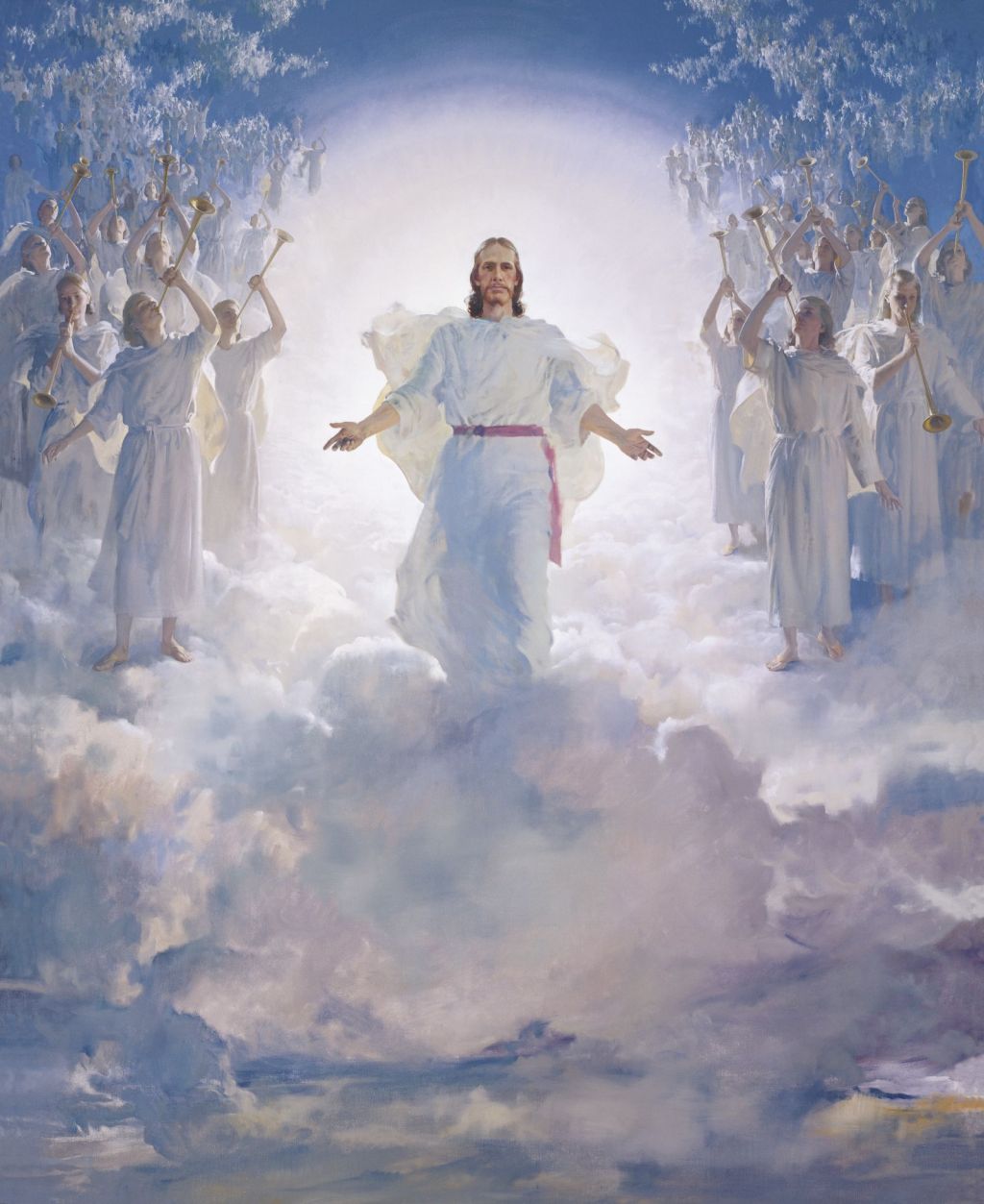
“The Rapture,” the “Second Coming,” the “Millennium,” the “End of Times,” it comes in many different terms. There’s a belief in a lot of Christianity that the end will come overnight, Christ will appear, and the millennium will be ushered in.
From what I’ve read and studied and what modern revelation tells us, this will not be the case. There will be a long, drawn out period of famine, war, disease, fires, earthquakes, and other natural disasters that will go on for some time before Christ returns.
Check out that list. War. Disease. Fire. Sound familiar?
The fall of society and of God’s chosen land (United States of America) will come before the Millennium is ushered in. The faith of the saints, the believers of Christ, will be tested in serious and tragic ways. There will be much suffering. If your foundation and faith in Christ is not firm before it comes you could find yourself asking, “Why is God letting this happen?”
We’ve always known this was going to happen. The scriptures have talked about our day since the beginning of time. Now we’re seeing it happen.
Back to 1 Nephi 18:23 (with some emphasis added):
“And it came to pass that after we had sailed for the space of many days we did arrive at the promised land; and we went forth upon the land, and did pitch our tents, and we did call it the promised land.”
Many estimates put that “space of many days” that Lehi and his family sailed as at least 1-2 years. That’s 1-2 years on a cramped boat sailing across the ocean. After many days they finally arrived at the promised land.
I believe this will be similar to how Christ’s coming will approach us. We will spend many days being tossed about by the winds and waves. We will be required to endure a lot of suffering before we can arrive at the promised land.
As things get more difficult, I pray that each of us individually considers how strong our faith in Christ truly is. It’s easy today to casually say, “I believe in Jesus Christ.” But what about when it’s hard? What about when your life is in jeopardy because of that belief? Will you still profess Him who will never turn His back on you?
Finally, while things are scary in our world, and only getting scarier, it’s important to remember Romans 8:35-39:
35 Who shall separate us from the love of Christ? shall tribulation, or distress, or persecution, or famine, or nakedness, or peril, or sword?
36 As it is written, For thy sake we are killed all the day long; we are accounted as sheep for the slaughter.
37 Nay, in all these things we are more than conquerors through him that loved us.
38 For I am persuaded, that neither death, nor life, nor angels, nor principalities, nor powers, nor things present, nor things to come,
39 Nor height, nor depth, nor any other creature, shall be able to separate us from the love of God, which is in Christ Jesus our Lord.



 No Coincidences