Tag: promises

  • Abraham’s Faith

    Abraham’s Faith

    I had a thought (shocker).

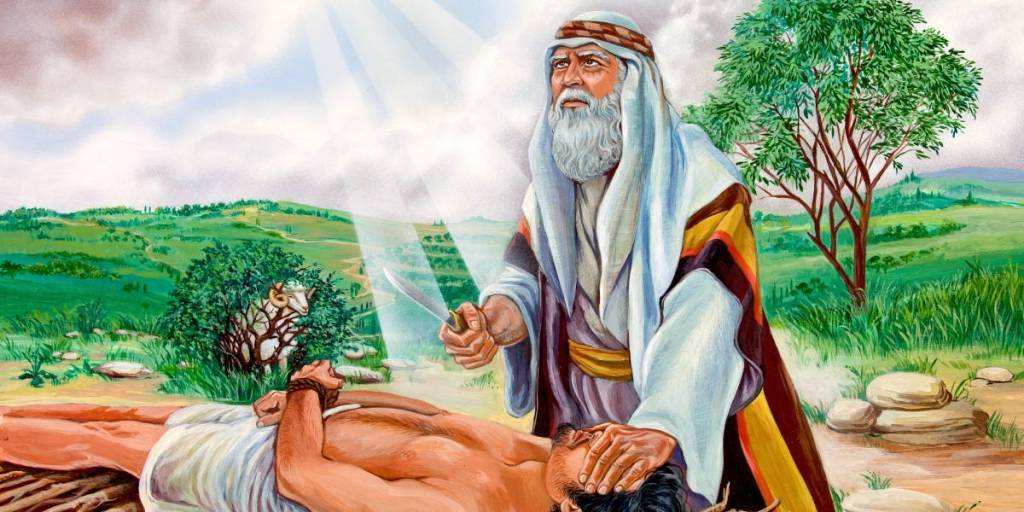
    I shared last week about Abraham’s shared experience of almost being sacrificed by his father.

    Here’s another way to look at it.

    We marvel at the faith of Abraham to sacrifice his son. He didn’t know that God would stop him moments before he went through with it. For all Abraham knew, his son would be dead, gone. And yet, he was still willing to do what God asked him to do.

    We marvel at this faith to do the impossible.

    What about God, when it came to sacrificing His only Son? Well, we would say, God knew the end. He knew His Son would conquer death and be resurrected. He knew His Son’s death would only be temporary. He’s God. He has nothing to worry about. Abraham was just a man. Abraham had no such knowledge.

    Or did he? 

    Faith is the “assurance of things hoped for, the evidence of things not seen” (Hebrews 11:1). Faith, by its nature, is to not have a perfect knowledge of things. Was Abraham’s faith so perfect that he did know, just like God knew with Jesus Christ, that everything would be ok?

    Abraham had a promise from God. God promised Abraham that his seed would be as numerous as the stars in the heavens and the sands of the sea. Abraham had some understanding of the eternities. It didn’t matter to him when the promises of God would be fulfilled. He trusted God. He had a perfect knowledge that God would keep his promises. 

    Now. The gut-wrenching, heart-tearing, indescribable and impossible act of losing your son. The pain. What about that? Abraham had faith that God would even make that right. Abraham had faith that God would only allow him to do what ultimately he needed to do to become who he could become. Abraham trusted God enough to do anything. Why? I think because he knew God loved him. Abraham didn’t have faith that God loved him, didn’t hope that God loved him, didn’t believe that God loved him. He knew. 

    Maybe faith proceeds knowledge.

    If we truly understand God’s love for us, His children, we can do anything, and endure anything.

    Abraham didn’t know the exact result of the sacrifice of his son. But he did know that God kept His promises. And hew knew that God loved him. And whatever the result, it would all work out for their benefit, glory, and growth in the long run. 

    That is faith.

  • Why is the Book of Mormon Needed?

    Why is the Book of Mormon Needed?

    In honor of General Conference this weekend, I’m going to post a short and simple message.

    I know that we take the Book of Mormon for granted. I know that there are infinite purposes and benefits to us having the Book of Mormon on earth.

    Why do we need the Book of Mormon? Below is one critical reason.

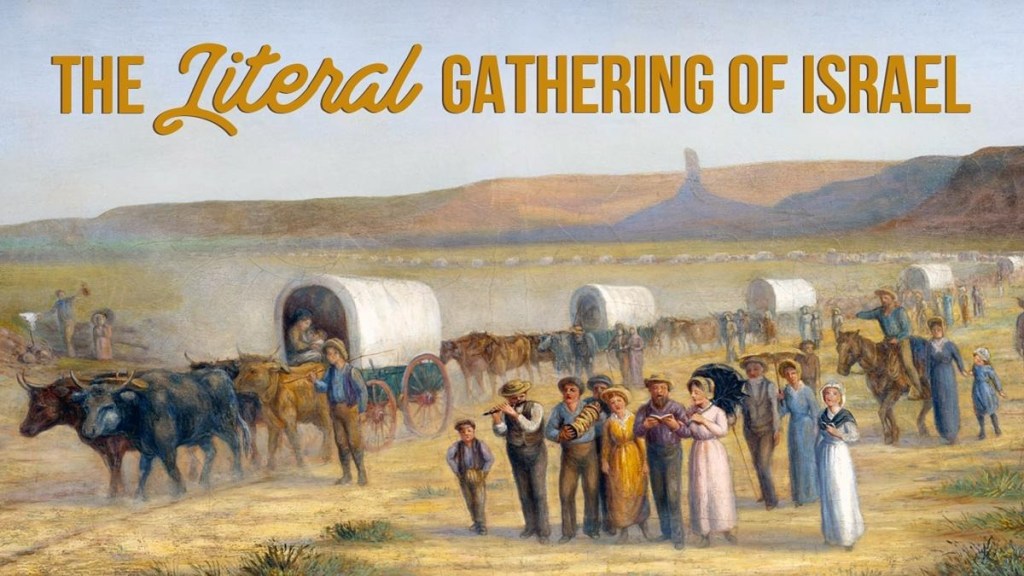
    The Lord declared that there would be a sign before the gathering of His people, and before He started to establish Zion.

    The Book of Mormon is that sign. It is God’s sign that the Abrahamic covenant is still in force. The elect of the Lord are being gathered. This has been prophesied.

    This is why we need the Book of Mormon.

    “In fact, if there were no Book of Mormon, the promised gathering of Israel would not occur.”

    -President Russell M. Nelson

    Or else where are people gathering? Do we see any other gathering in the world today? Surely it must be happening. God can’t be a liar.

  • Destruction of Christ

    Destruction of Christ

    While looking at the cover picture for this post, an obvious realization came to me.

    Look closely at that picture. What do you see?

    The top of the picture is glorious. You can faintly make out a being in that bright light, coming out of the clouds.

    It was the bottom of the picture that caught my attention. One word comes to mind: desolation.

    It hit me why desolation and pain and suffering and death and starvation and destruction must happen to the people on this Earth before Christ’s Second Coming. People on earth are so stubborn and prideful. We wouldn’t accept Christ if He came out of the sky right now. With Netflix, food, water, and our comfortable lives, if we saw Him come straight out of the clouds as a bright star, we would be fascinated for as long as we’re fascinated with anything that hits the news.

    Many would deny it as some sort of special effects stunt put on by the media.

    Do you realize last year the government came out and said UFOs exist?

    The collective reaction of Earth seemed to be, “cool.”

    How long would Christ’s coming fascinate us if it happened tomorrow? A week? A year? A day? Then it would become old news and we’d move on. Seriously. Seems ridiculous? I think it’s true. 

    Destruction will make people humble themselves and accept Christ when He comes. It will make some people realize man isn’t great at governing a planet and we need some help from something, anything. For those opposed to God and religion, what happens before the Second Coming may even make them concede we need help from the divine. The destruction of Earth that will come in the last days (these days) will hopefully lead to many realizing Satan’s principles (which now run the world) are destructive. Greed, envy, anger, jealousy, deceit, lust, and revenge cannot run a fruitful society.

    The destruction will make people realize they need Jesus Christ. We see it now, today. No one thinks they need Christ in their life. No one cares about God. We’re comfortable. Life is good.

    What happens when life isn’t as comfortable? People turn to God.

    Life will get drastically less “good” before His coming. Many will cry about how it is unfair and how could a loving God let this happen to us? We let this happen to us. Our choices will lead us to that point.

    What is the being in the top of that picture coming to do? What will Jesus Christ be coming to the earth to do? Look at the bottom of the picture again. When the Earth is destroyed, all our comforts and idols that we relied so heavily on gone, when that time comes, He will be coming to heal. He will be coming to fix what is broken. Who can deny we are broken?

    While the destruction of the Second Coming can be a frightening topic, for the faithful it will be a bittersweet time to rejoice. While destruction happens around us, we can have faith and confidence that God is keeping all His promises to us, His children.

    When that time comes, as fear grips the Earth, we can have joy amidst the world’s uncertainty. We will know our Savior is coming. We will know we can rely on Him. We will know, as long as we put our faith and trust in Him, all will work out for our benefit and for His glory.

    As the world falls deeper and deeper into turmoil, what a comfort that is.

  • Importance of Promises (and Covenants)

    Importance of Promises (and Covenants)

    Since as long as I can remember, promises have been important to me. I’ve always said I would never break a promise for any reason. Period. I’m sure at some points in my life I have broken promises. I have this vague recollection of a broken promise or two that still eat at me. I don’t remember the details, but I remember the feeling of not keeping my word. For whatever reason, promises are something I’ve always considered immensely important, I’m not sure exactly why. Deep down inside, I’ve always thought promises were important to keep. Otherwise, what was the point? Otherwise, words were hollow and how could you be trusted?

    In Alma 23:16-25:2 of the Book of Mormon, there is the story of the Anti-Nephi-Lehis. This is the story of the Lamanites who converted unto the Lord and from then on turned away from their past traditions of murder and bloodshed. They buried their weapons of war and covenanted to shed blood no more. They took their new covenant so seriously that when other Lamanites came to war against them, rather than break their newly made covenant, they knelt before their former brothers and gave up their lives.

    As I read this story recently, a question arose: how seriously do we take our covenants? What does our word mean to us? How about when our word is a promise to God? How important do we deem that pact?

    Covenants are important. Covenants are serious. Keeping covenants is a serious thing.

    The converted Lamanites, or Anti-Nephi-Lehis, made a covenant to shed blood no more. Full stop. No excuses. When their lives were at stake, did they reconsider? Did they say to themselves, “well I promised this, but surely I’m not supposed to lie here and die over a promise”? They thought the exact opposite. Their covenant was worth more than their mortal life. These Anti-Nephi-Lehis understood the significance of covenants. There were no excuses. They had faith. They knew that if they died keeping their word to God, they would inherit a glory and reward that would be well worth the earthly sacrifice.

    Covenants with God are greater than death.

    So, I ask again, how seriously do you take your covenants?

    Have I been perfect in keeping the covenants I’ve made with God? Let’s review the first covenants I made with God when I was baptized at age 9. I covenanted to:

    1. Take upon myself the name of Jesus Christ.
    2. Keep His commandments.
    3. Serve Him to the end.

    Have I been perfect in this? Of course not. None of us are perfect yet. But I’ve tried. I often wonder how much my baptism and the Gift of the Holy Ghost at age 9 strengthened me and helped me to return. I often wonder how my upbringing influences my deep respect for promises. Though I haven’t been perfect, I always took these covenants seriously.

    I now take further covenants I’ve made very seriously. For example, my covenant with my wife, to be faithful to her, to love her, to serve her, to be there for her. That is the most important promise I’ve made in this life and I intend to die before breaking it.

    In a world of promise-breaking and commitment to nothing, I am ever-grateful for the covenants I’ve been privileged to make. I’m grateful for the Church of Jesus Christ that provides the proper authority for me to make promises with God. I’m grateful to be linked to God. I’m grateful for the strength covenants provide in a shaky and uncertain world.

    If you’ve made covenants that you’ve broken, I implore you to reexplore those promsies. Satan leads us to believe that once broken, we can’t mend our word. When our promise is with God, that is true, we can’t mend it. But He can. Jesus Christ suffered the Atonement so that we can come back even to make up for the promises we’ve broken. He knows we aren’t perfect. He will make the difference. I fell into that trap for stretches in my life. Thinking I’d gone too far away from God, I’d broken too many promises, disregarded too many commandments, and I couldn’t come back. The feeling of reuniting with God is the most comforting feeling in the world. Reunite with Him. He will always take us back. He will always reestablish our covenants because He loves us that much.

    Come back to Him and feel His peace.

    I am grateful for covenants and that God allows me, an insignificant little speck, to align and connect myself with Him. What power. What comfort.

  • Suzerain and Vassal: The Father and the Son

    Suzerain and Vassal: The Father and the Son

    Mosiah 15:1-2 reads:

    1 And now Abinadi said unto them: I would that ye should understand that God himself shall come down among the children of men, and shall redeem his people.

    2 And because he dwelleth in flesh he shall be called the Son of God, and having subjected the flesh to the will of the Father, being the Father and the Son…

    How can Christ be both the father and the son? It’s a question that has troubled Christianity since before it was called Christianity. How can there be the one true God (Jehovah) and yet Jesus Christ (Jehovah) pray to His father who is in heaven?

    How can Christ be both the father and the son? Well, how are you, reading this a father (or mother) and a son (or daughter)? Sometimes we might overcomplicate the simplest things.

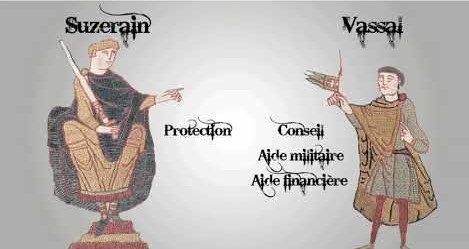
    In the ancient near east there existed a system wherein covenants could be made. That system could be described as a Suzerain Vassal covenant or treaty. In this sort of agreement one of the parties would be greater or more powerful than the other. The suzerain would be the powerful entity. The vassal would be the subservient, or lesser, or learning entity. In this sort of treaty, the vassal would pay tribute or show some form of loyalty to its suzerain. In return, the suzerain would provide protection or some other sort of benefit to its vassal. There could only be one suzerain/vassal connection. Meaning, a vassal couldn’t have two suzerains. This would basically be treason. You can only serve one lord.

    From this article on the suzerain/vassal covenant relationship:

    “The covenant Yahweh established with Israel at Mount Sinai exhibits striking parallels with Hittite suzerain/vassal treaties, which had six basic features: 1) a preamble that identifies the suzerain; 2) a historical prologue that recounts the previous relationship between the parties; 3) covenant stipulations to which the vassal must agree; 4) provisions for periodic reading and safekeeping of the covenant; 5) witnesses to the covenant; and 6) blessings and curses should the vassal either keep or fail to keep the covenant. The Sinaitic covenant contains all six of these characteristics.”

    In his book, The Last Days: Types and Shadows from the Bible and the Book of Mormon, Avraham Gileadi states:

    “the idea of Israel’s suzerain or Lord [Jehovah] assuming vassal or servant status in order to answer to his suzerain [God the Father] for his people’s rebelliousness introduces the concept of a God higher than Israel’s God. That is, Jehovah, the God of Israel, is a “Son” to God the “Father” (3 Nephi 11:7,11,32; compare 15:4-5). That concept does not appear explicitly in the Old Testament. Many Jews, therefore, insist that God is but “one” (Hebrew ehad; Deuteronomy 6:4); other than the Lord, they assume, no God exists (see Isaiah 44:6,8; 45:21-22). However, the idea of “the Father” and “the Son” makes perfect sense in light of ancient Near Eastern suzerain (Lord)–vassal (servant) covenant relationships.

         “Abinadi (and every prophet who teaches God’s redemption of humanity) here enlightens us. Abinadi says that God, who redeems his people, is both “the Father and the Son” (Mosiah 15:1-3; compare Alma 11;38-39; Ether 3:14). That abstruse statement seems at first glance to contradict the careful distinction between the Father and the Son that other scriptures teach. But when viewed from the ancient Near Eastern suzerain (lord)–vassal (servant) covenant relationship, we gain insight on how the Lord can serve as a suzerain or Father to his people Israel, but also can serve as a vassal or Son to his Father or suzerain. To Israel, the Lord is Father, and they become his sons or vassals. To God the Father, the Lord is the Son, subjecting his will to the Father in order to merit Israel’s salvation (Mosiah 15:2,7).

         “Moreover, as the literal and loyal Son of a divine Father–as the Son of a righteous [covenant suzerain “Father”]–the Lord is not subject to death unless he himself consents to die (See the type of Isaac’s consenting to let Abraham sacrifice him–Genesis 22:9) Even if he does die, the Father must come to the aid of his vassal and deliver his Son from death. In ancient Near Eastern literatures there is the concept of the god who dies only to revive and assume the throne of a senior deity. Thus “God breaketh he bands of death . . . giving the Son power to make intercession for the children of men” (Mosiah 15:8). What the Father does for the Son, the Son does for his sons and daughters: when “the Son reigneth, and hath power over the dead . . . he bringeth to pass the resurrection of the dead” (Mosiah 15:20).

         “Moreover, the moment one introduces the idea of the Father and the Son, one also introduces the concept of spiritual progression. That constitutes as much a part of the “good news,” or gospel, as does redemption from death itself (see Mosiah 15:10-19). Inherent in a Father/suzerain–Son/vassal relationship with God is the assuming of divine attributes–becoming God-like…”

    So we see that this Near Eastern tradition of suzerain and vassal treaties and covenants perfectly aligns with how we relate to Jesus Christ. He is our suzerain, making us His children. God is His suzerain. Through our covenant relationship with Christ, we receive protection from both Christ and His Father and our Father, God the Father.

    Another interesting thought from that note is how Christ conquered death. It was by His relationship with the Father that He was able to conquer death. He in turn allows us the same opportunity when we link ourselves to His will and power. Christ received His divine identity from His Father. We can receive our divine identity through Jesus Christ’s Atonement and conquering of death. This is why we only come to the Father through the Son. Christ is our protector, our Suzerain. As we serve Him, we receive that protection as His vassals.

    In addition, another way that Christ is our father is through the resurrection. It is due to Christ’s atonement and resurrection that we are able to be resurrected. This makes Christ the father of our bodies. For we wouldn’t have our bodies without His resurrection and the gift that we can be resurrected into our bodies. God the Father is still the father of our spirits. Whether that be through adoption, some measure of creation, or some other way, we’ll one day know.

    A last note I wanted to make that I liked from this article:

    “The basis of the covenant was Yahweh’s gracious acts toward Israel, not their obedience to him.”

    Our covenant relationship with Christ is a reminder that His grace saves us. It doesn’t matter how obedient we are. We needed His grace to save us. As our Suzerain, His covenant with us is based so much more on how He loves us and all He is willing to do for us than anything we can do for Him. We can never properly repay Christ for all He’s done for us. He is the Suzerain. He has the power to save us.

    This is the good news of the Gospel. Because Christ conquered all, we can become like Him, and in turn, become like our Father in Heaven.