Tag: read

  • The Last Juror

    The Last Juror

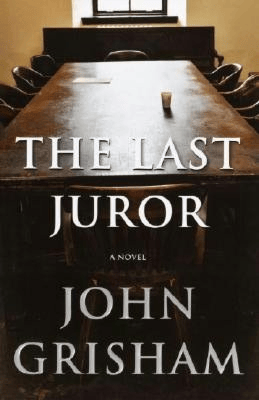
    The Last Juror was written by John Grisham in 2004. It is his 18th novel written. I read a lot of nonfiction so a break into a fictional story is always a breath of fresh of air.  But diving into a book from an experienced novelist like Grisham is particularly refreshing.

    This is the first novel from Grisham based in Ford County, Mississippi since his first novel ever written, A Time to Kill which was published in 1989.

    I enjoyed this book a lot and finished the 355 pages in a handful of sittings.  It’s one of those books where it’s difficult to stop because at every stopping point there’s some sort of cliffhanger that keeps you reading.  You expect something like that from such a great writer. It’s amazing to read a Stephen King or John Grisham and spend half the time enjoying the book and the other half marveling at their literary capabilities.

    The plot of the story is an interesting one.  It is based around a 23-year old college dropout that purchases a failing newspaper and the story that goes with his maturation as a small business owner and only provider of news in a small town.  I wonder if the name “John Grisham” weren’t attached to this book if a publisher would ever give it a second glance.  The plot doesn’t scream thriller, but when you’re a talented writer anything can become an entertaining journey. A name goes a long way when you’ve shown the sort of success Grisham has shown.

    Like I said, I enjoyed the story.  It kept me engaged.  I was interested.  I never felt bored or dragged along.  I was always interested in what was going to come next.  That said, I don’ think everyone would enjoy this book.  I could easily see most readers becoming bored with the story.  Some readers may feel the story is particularly slow through stretches in the middle.  With reading so much nonfiction, I’ve become so used to reading through slow or dry parts of books.  It’s hard to say if this is truly a page-turning fiction or if my perception has been skewed. 

    If someone is going to read one book a year, find another more acclaimed book.  There are so many phenomenal books out there, options are endless.  If anything, read Grisham’s first couple books. I haven’t read his first books (yet), but I imagine they are great given how many novels and movies have followed.

    I wouldn’t read this book a second time but I’m glad I read it once.  It was an interesting and engaging story to me.  I look forward to reading some of Grisham’s earlier novels as time goes by.

    After writing this my curiosity took me to the internet to see how others felt about this book.  Obviously, feelings about a book will vary wildly depending on the source, but what I found is this novel is generally well received.  Of the 3 dozen or so novels Grisham has written this is often rated as one of his better books. 

    Maybe my fiction-good-book-radar isn’t as messed up as I thought it was.

  • Listen, Learn, Love

    Listen, Learn, Love

    I recently listened to an episode from a podcast called Listen, Learn Love.  This podcast has opened up my ways of thinking on a few topics.  The episode I listened to recently I basically want to summarize (steal) because the points made are so simple, so well-said, and so true. 

    Here is a link to the website for the podcast if you want to learn more: https://www.listenlearnandlove.org/

    The episode I recently listened to that I’m writing thoughts on here is episode 2 and can be found if you search for podcast “Listen, Learn, and Love.”

    The podcast is hosted by Richard Ostler.  He is a former Young Single Adult Ward Bishop.  He has now done 334 episodes of his podcast which “was created out of the desire to better understand our LGBTQ+ brothers and sisters.  We believe in God and in His decree to love one another.” – from the mission statement on the website. 

    Episode 2 does not focus on the LGBTQ+ topic which I feel is an extremely important topic in the church.  Still, this episode is also important and I learned a lot from it.

    The topic was faith-crisis.  Whether minor or major, any faith crisis is difficult to go through.  When I was returning to church my uncle said something that has stuck with me.  He said he wouldn’t wish the losing of faith on his worst enemy.  You can lose cars, homes, family, money, everything in this world, but losing your faith is the hardest thing that a person can possibly go through.

    As I continue to write I will be presenting many ideas that came directly from Brother Ostler.  Please listen to the episode.  For ease of writing, I won’t reference Brother Ostler in everything I’ll continue to say. Just know most of these thoughts came directly from him, and I hope to re-state them without taking too much away from them.

    In my writing, I often refer to “The Church.” When I say this I am referring to the Church of Jesus Christ of Latter-day Saints.  Something I’d never considered is how important it is to clarify what we mean when we say, “The Church.” The Latter-day Saint Church could mean different things to different people.

    A couple categories for “The Church” are

    1. The Gospel of Jesus Christ.
      • This was described beautifully by Brother Ostler as a pristine, clear-watered pool.  No murkiness.  The Gospel of Jesus Christ is perfect in every way. This hasn’t been completely revealed yet.
    2. The restored Church of Jesus Christ.
      • It has the restored priesthood and priesthood keys. Ideally, this would be perfect.  I think we sometimes confuse this category with the next category I’ll mention.  The restored Church of Jesus Christ should be perfect.  The problem is, as we know, Christ must use fallible men and women to run His church.
    3. The institutional church.
      • This is where we get into a flawed organization. The institutional church has many people, programs, and policies that are meant to implement the Gospel of Jesus Christ.  The institutional church is run by men and women and therefore has flaws.  Christ guides the institutional church, but people make mistakes. Brother Ostler points out in the podcast that as a YSA Bishop he was a part of the institutional church and he knew he made mistakes as a Bishop, a leader in the church.

    Much of the hurt that comes into the souls of God’s children is caused by the institutional church.  It is critical to not confuse “The Church” the institution with the pure and perfect Gospel of Jesus Christ.

    A faith crisis is a serious event that can happen to anybody. You can’t always read and pray a faith crisis away.  We are here to develop faith and while here our faith will be tested.  Sometimes to the very brink.  It’s important to get our roots in the correct place.  Is your faith in a bishop?  It shouldn’t be, it should be in Jesus Christ.  The best bishop in the world can let you down.  Jesus Christ can not.

    The fourth article of faith: “We believe that the first principles and ordinances of the gospel are: FIRST, faith in the Lord Jesus Christ. 

    The Articles of Faith can be read here.  I invite everyone to read and focus on the first four articles of faith in the Restored Church of Jesus Christ.  You’ll notice not only is Jesus Christ’s name in the name of the Church, but that He is referenced three times in the first four articles. 

    Our foundation must be on Christ.

    Brother Ostler talked about the Policy Statement of 2015 and how it created a “mini faith crisis” for him.  These were changes made by the institutional church and have since been reversed.  He talked about how difficult that was for him, personally.  He is not the first person I’ve heard that was impacted in a sad, difficult way by those changes.  He emphasized that the brethren (leaders of the church) were doing their best.  Brother Ostler referred to dominoes, and how the policy statements started to make dominoes fall in his faith.  What saved Brother Ostler’s faith was that all his dominoes didn’t fall.  As he stated so perfectly, some of his dominoes had roots to the center of the earth and couldn’t be shaken.  He referenced Jesus Christ, priesthood blessings, and temples as the foundation of his faith.

    The 2015 Policy Statement is a good example of what separates the institutional church from the Gospel of Jesus Christ. The institutional church can and does make mistakes. Jesus Christ does not reverse. Jesus Christ does not change.

    We must change the way we discuss faith crises.  There are too many people who leave the church because they don’t feel heard.  The idea that you can read or pray away a faith crisis is inaccurate and often leads individuals to feel like the “Church” is avoiding their concerns.  We have to listen, as the Savior did, to those with concerns.  Ask questions.  Having a faith crisis does not mean someone is sinning.  It can mean that, but it doesn’t always.  Brother Ostler is a perfect example.  His self-described “mini faith crisis” came while he was a YSA bishop spending dozens of hours each week in service to others.  He was reading, praying, and serving as much as anyone could at that time.  Imagine telling a bishop he needs to pray more, or read more, or do more to fix your problem.  One could rightfully be turned off by this suggestion.

    We must stop considering a faith crisis as a dirty topic that we must avoid.  Thousands are having one at this moment.  Those with unshaken faith must support and lift those who have a hard time. We must address questions head on and strengthen our faith together. We must strengthen each other. We are family. The Gospel of Jesus Christ is meant for everyone. 

    Now I’d like to share some of my personal story.  I returned to church in 2016.  I narrowly missed being an active member of the church when the policy statements came out.  I know this was a hard time for the church.  I know many people left.  I know many people, like Brother Ostler, were shaken by the announcement. 

    I’ve often thought about my faith.  I feel fortunate and blessed to have never experienced a personal faith crisis.  Even in my time away from the church, I never doubted that Jesus Christ died for me.  I never doubted Joseph Smith was a prophet.  I never doubted the restored Church of Jesus Christ.  I never doubted the Church of Jesus Christ of Latter-day Saints.  While I was living completely opposite to some of the teachings the church, I still knew it was true.  I know I caused many head scratches from those who witnessed my verbal devotion while clearly ignoring all the precepts of the church.

    I said my faith has always been a blessing to me.  I believe it has.  When I was living opposite to the principles of the gospel it felt like a curse.  I’m sure I will need to answer for that one day.  If I knew it so much to be true, I believe I’ll be more accountable for my behavior.  Maybe that’s what gives me so much faith in Jesus Christ.  I know how important His Atonement is to me personally.  I have too many spots on my garments.  Without Him I am a damned soul. 

    Maybe that’s difficult for others who have never grievously sinned.  It’s easy to appreciate a lifeboat when you’re sinking in the ocean.  What if you’re safe on shore, do you still have the same appreciation for the lifeboat?  I’m not implying those who have lived just, kind, good lives start to finish are in anyway unappreciative of the sacrifice Jesus Christ made for them.  I’m truly amazed by those I see that have been faithful and true for all of their mortal journey.  I can only speak for myself.  I was not true for all of my journey and it makes me worship and love my Savior so intensely. 

    I wonder what would have happened if I was in church in 2015.  Would I have struggled?  Would I have left?

    I don’t know the answer to many questions.

    A book I read recently repeated the idea that we (humanity) know so much; space travel, geography, math, science.  Ask someone to give some thoughts about nature or history and everyone can provide some insight.  Ask someone to provide some thoughts about who they are, and they will struggle.  We often know and understand ourselves least of all the things in the world. I take comfort in knowing there are two individuals who know me infinitely better than I currently know myself.

    I want to give advice to anyone currently in a faith crisis.  Fight.  Don’t lose your faith.  Please.  It’s the most valuable thing on this earth.  You can lose your family, money, cars, your home, and you can lose your faith.  I hope we all fight for our faith.  Focus your faith on what is most important.  All your questions – ask them.  Doubt.  Wonder.  Have concern.  Voice your concerns.  But don’t forget where faith should lie.  Jesus Christ is the only name whereby men can be saved (Acts 4:12).

    Sometimes people will hurt, disappoint, or let you down. Sometimes those people may be leaders you trust. We all hurt and disappoint people we love. We must hope that we will receive mercy for the hurt we cause, and therefore should show mercy to those who hurt us. The great giver of all mercy is Jesus Christ. He loves each of us. He wants each of us to do whatever we can to come closer to Him. Stay close to Him and He will never let you down.

    Find those experiences in your memory that remind you that Jesus Christ guides His church.  Read the Book of Mormon and ask yourself if it could be false.  Then ask yourself, if it is false, how can it so perfectly testify of Jesus Christ?

    Find your foundation in sure things.  The pure faith in Christ.  Then fight for that faith.  We hope the Church of Jesus Christ of Latter-day Saints can be a faith building organization for all.  We hope that the covenants we make can strengthen our faith and the faith of those around us.  But at all costs, do not mix the pure, perfect, pristine waters of the Gospel of Jesus Christ with the sometimes-murky institution run by us here on earth.
  • The Glory of the Sun

    The Glory of the Sun

    I recently finished a book that was so packed with wisdom I couldn’t come close to taking it all in.  Every page provided a new insight.  Every thought was provoking.  It is amazing to walk through the minds of men and women so in touch with the spirit or some form of knowledge I don’t yet have.  It’s my favorite part of reading.  From reading his words and thoughts I could feel his closeness to our Heavenly Father and Jesus Christ, and therefore come closer to them myself.

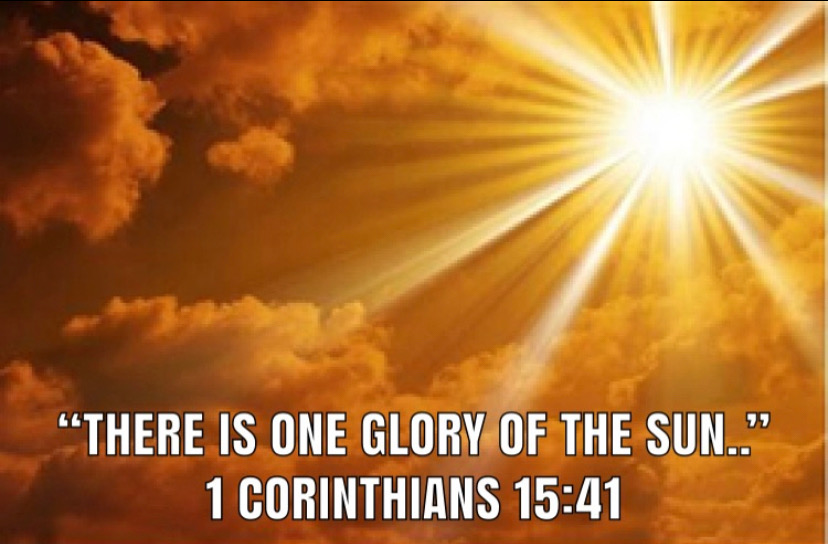
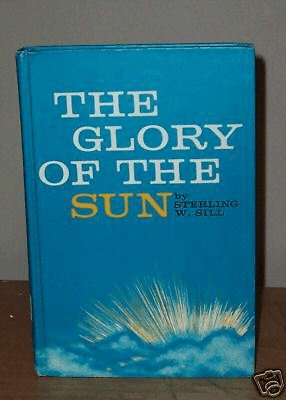
    The name of the book was The glory of the sun which refers to 1 Corinthians 15:41:

    “There is one glory of the sun, and another glory of the moon, and another glory of the stars: for one star differeth from another star in glory.”

    Doctrine and Covenants 76:70 reads:

    “These are they whose bodies are celestial, whose glory is that of the sun, even the glory of God, the highest of all, whose glory the sun of the firmament is written of as being typical.”

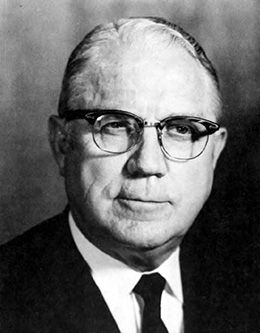
    Sterling W. Sill, author of this book, was a general authority in the Church of Jesus Christ of Latter-day Saints.  He was asked to share a series of gospel messages each week for a year over the radio.  The series was called “Sunday Evening from Temple Square.”  Those 52 addresses were put into this book.  It’s amazing to see that so many unique and powerful messages can come from one individual. 

    Sterling W. Sill

    Every message was so good, I could randomly turn to a page and share an important thought.  There was one in particular I found pertinent to our current moment in history.

    Elder Sill shared his messages at the height of the cold war so there is an emphasis of freedom and liberty throughout. 

    In one of his addresses titled “Five grains of Corn” Elder Sill reviewed the custom of Thanksgiving.  Elder Sill pointed out that Thanksgiving is a uniquely American holiday.  It is a day we give thanks to our ancestors who bravely came here and suffered through much hunger, affliction, and death.  He reminded me that during Thanksgiving we give “deep gratitude.. for the rich productivity of American soil.”

    I believe it is important for us to remember the blessed nation we are fortunate to live in.  The United States of America is a chosen land.  One thought Elder Sill presented was the idea that we live more lavishly and comfortably today than any king in history.  He pointed out that if we had to live as King Solomon, even in all the glory of his palace and kingdom, it would be a great hardship to us.

    What a thought!  The average person in America lives with more comfort than any historical king!  How blessed we are and how often we take for granted this great nation we live in.  It truly is a promised land. 

    What has always separated America from any other nation is our freedom – the freedom that gives us the ability to worship our God however we please. If you look at the short history of the United States it becomes quickly apparent what separates us.  It is the freedom we enjoy, particularly religious freedom.  It saddens me that as a nation we are turning from the God who has so blessed us.  It is part of the agency God has given us, the freedom this nation is founded on, that currently allows so many to turn from God.

    This paragraph from the book rings so familiar to our current landscape that I will quote it in whole.  Elder Sill says:

    “In the United States we have just gone through a great political election to decide who would represent us in the governing councils of our country for the next four years.  We have been sharply divided on issues and people.  We have settled the matter by an appeal to the ballot box.  No blood was shed, no life was in danger, no one had any thought of trying to liquidate his opponent.  No one even pounded with his shoe or threatened to throw it at anyone.  Now all Americans will settle down and give full support to the government that they, under God, have created.  Now we will all unite in building a greater America and help to carry out our divine mission to promote freedom, justice, and happiness in the world.”

    Election day is tomorrow.  It is my sincere prayer that we as a nation can unite and support whoever wins this election.  It is my prayer that there is no bloodshed, danger, threats, or pounding of feat.

    The final and important point Elder Sill gives in this message is about our faith in God that I have already mentioned.  Specifically, the devotion to His Son, Jesus Christ. 

    The Mayflower Compact, written by those coming to settle a new America reads, “We whose names are underwritten have undertaken for the glory of God to establish in Virginia the first colony for the advancement of the Christian faith.”

    The New England Federation Compact Agreement reads similarly, “We all have come into these parts of America with one and the same end, namely to advance the kingdom of the Lord Jesus Christ.”

    I hope we can remember our Thanksgiving for this promised land.  I hope we can remember the freedoms and liberties we enjoy, and how great it is to be a part of the democratic process.  Finally, I hope we can remember who it is our ancestors came to America to serve, who’s kingdom they wished to establish. 

    “America was established as a kind of laboratory or experiment station to show what would happen to any people who cared and dared to follow Jesus Christ.” – Elder Sill.

    How blessed our ancestors were and how blessed we’ve been as we’ve looked to Jesus Christ.  I hope that can continue.

  • Book Review: Mamma’s Boarding House

    Book Review: Mamma’s Boarding House

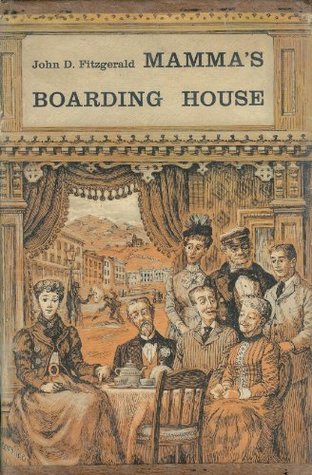
    Mamma’s Boarding House

    By John D. Fitzgerald

    Copyright 1958

    _________________________

    I think the Foreword to this book did a great job of summing up what it was all about, it read:

    “There was more to the settling of the West than the battles between Cattle Barons and Sheepmen, Outlaws and Posses, White Men and Indians, Ranchers and Homesteaders which have been told in story and song over and over again.

    There were other people who helped put down the roots of the West: the banker, the editor, the schoolteacher, the judge, the clergyman, the merchant, the artist, the saloonkeeper, the miner, the town drunk and the town bully.

    This is their story.”

    I read a lot of nonfiction so mixing in some fiction is always a nice change of pace.  This was a perfect book for that purpose.  A story shooting (pun intended?) back into a time I don’t know from personal experience but can relate to in all the cowboys v. natives fights I setup with my toys growing up.

    New Research Ends Marvel Vs. DC Movie Debate, But Is It a Fair Fight?

    I feel like the world has become increasingly fascinated by extreme fantasy – dragons and magic; or space travel – spaceships, aliens, and inter-galactic battles; or superheroes – Marvel and DC.  I think one of the greatest tragedies of this transition is kids not growing up with a fascination of something that really happened, here in the United States, in the last century.  Like I alluded to already, gun slinging bandits only slowed down by gun toting sheriffs – that was my favorite imaginary time as a kid.  I loved the idea of a bandit coming into town to rob the corner store and another gun wielder being the only defense.

    Attractions – Old Tombstone Western Theme Park

    This book took me right back into my old imagination.  A town where guns are on most hips as a matter of protection.  The value in this book was the story telling from the perspective of a young man growing up in an early western settlement in Utah.  If you enjoy the western theme, I think this is a great book for you.

    This book is the sequel to another book: Papa Married a Mormon, with a third in the series titled: Uncle Will and the Fitzgerald Curse.  I haven’t read Papa Married a Mormon but stumbled upon it in my collection of soon to be read books, so will read it soon.  I didn’t get the feeling I was missing much having not read the first book.  The story made complete sense to me and I thoroughly enjoyed it.

    The book is 241 pages but is a quick and easy read.  I would recommend it to anyone, especially anyone who enjoys the Western theme.