Tag: Reading

  • Is Roseto, Pennsylvania Zion?

    Is Roseto, Pennsylvania Zion?

    There was an extraordinary thing happening in Roseto, Pennsylvania in the 1950s. I read about it in an awesome book called Outliers by Malcom Gladwell.

    Roseto, Pennsylvania was an outlier when it came to heart disease. For some reason, instances of heart attacks and heart trouble in Roseto were shockingly different than anywhere else.

    In the 1950s, heart attacks were the leading cause of death in men under the age of 65 (Outliers, p. 6).

    In Roseto, nobody under 55 had heart attacks. Roseto had half as many people with heart trouble over 65 compared to any other area studied. This included next-door cities and towns.

    What’s fascinating about this is that this phenomenon apparently had nothing to do with genetics, diet, or any other seemingly obvious reason. There was no obvoius indicator of why a whole community would be free of heart trouble.

    Heart trouble wasn’t the only thing missing from this community. A sociologist was brought in to study the community. His name was John Bruhn and he said, “There was no suicide, no alcoholism, no drug addiction, and very little crime. They didn’t have anyone on welfare. Then we looked at peptic ulcers. They didn’t have any of those either. These people were dying of old age. That’s it” (Outliers, p. 7).

    What made Roseto unique, then?

    Finding no pattern, those doing the study had to look at anything different about Roseto to try to explain this phenomenon.

    This led to a primary theory. That primary theory behind why Roseto, Pennsylvania residents didn’t suffer heart trouble or many other common diseases had to do with their community.

    Roseto had an old-fashioned way about it in the 1950s, even compared to the standards of its day. The residents of Roseto were primarily Italian-American immigrants. The standard in Roseto was to live at home as long as possible, take care of one another, and generally live a more laid-back and communal way of life. A young man would stay at home and take care of family. If he lost a job, it was okay. The community would often try to keep shortcomings like a lost job secret so as not to create any embarrassment. Kids would take care of parents. Parents would take care of kids. The community took care of each other. It was a family-focused, close-knit community.

    “(Researchers) learned about the extended family clans that underlay the town’s social structure. They saw how many homes had three generations living under one roof, and how much respect grandparents commanded. They went to mass at Our Lady of Mount Carmel and saw the unifying and calming effect of the church. They counted twenty-two separate civic organizations in a town of just under two thousand people. They picked up on the egalitarian ethos of the community, which discouraged the wealthy from flaunting their success and helped the unsuccessful obscure their failures” (Outliers p. 9, emphasis added).

    The fact that Roseto residents had such low instances of heart trouble revealed a potential connection between community relationships and social support to reduced stress and heart disease. The community of Roseto appeared to buffer its inhabitants from the stresses of life.

    This got me to thinking.

    What is Zion? What is the perfect society? What will it look like? What will it be like, practically speaking?

    “…the Rosetans had created a powerful, protective social structure…” (Outliers p. 9).

    Will Zion be a community that goes to church together? A community that stops to talk to each other? A community that continues to live under one roof with their direct family as long as possible? A community where equality reigns? A community where spontaneous cookouts in front yards are common?

    This sounds like Zion to me.

    It’s fascinating that a community basically shielded itself from the stresses of a fallen world by living by these principles. I believe these are God-given principles: fairness, love, community, support, unity – that’s what makes Zion.

    “When presenting (the researchers’) findings at many medical conferences where their peers were presenting long rows of data arrayed in complex charts and referring to this kind of gene or that kind of physiological process, and they themselves were talking instead about the mysterious and magical benefits of people stopping to talk to one another on the street and of having three generations under one roof….No one was used to thinking about health in terms of community” (Outliers p. 10).

    This Christmas season, as I’m inevitably considering the state of our world and where we’re headed, I can’t help but wonder: is it this simple?

    Community, family, support. People supporting people, people uplifting one another, communities looking out for each other. Neighbors waving hi. People engaging with those in their community. Ministering. Fellowship. Is it that simple? Would that fix our world?

    I think it would. I think this is primarily what is missing from our modern-day societies. Love thy neighbor. How about say hi to thy neighbor?

    This holiday season, aim to light the world. Start by dropping off cookies at a neighbor’s house. It might save you from a heart attack.
  • Faith in Man or Faith in God

    Faith in Man or Faith in God

    Since I’m posting this on Thanksgiving day I think I’m obligated to say I’m grateful for the Book of Mormon, how it makes me a better person, how it makes my home a happier place, what it teaches me about Jesus Christ, and the hope it gives me for an eternal future.

    I will make a simple argument here.

    My thesis:

    Anyone who has read the Book of Mormon and believes it is a made-up story written by a man has more faith in the brilliance of a man than in the Glory of God. It is easier for that person to believe there is a man with otherworldly abilities than that God still speaks to humans.

    Explanation –

    Things that can’t be denied by any logical or thinking person:

    1. The Book of Mormon exists. You can go get a copy now and read it.
    2. The Book of Mormon was brought into existence in our day, for us to read, somehow.

    If the above two points are true, then we can move on.

    Next statements of truth:

    1. Since the Book of Mormon exists, we must determine who played a role in creating it.

    This leads us to only a couple options as far as I can tell. There may be other sub-options, but I think this mostly covers it. I’ve added sub points to each option to add important perspective:

    1. Joseph Smith wrote it by his own mind and creativity.
      • Joseph Smith had a third-grade education.
      • There are many witnesses attesting to Joseph Smith’s involvement in the creation of the Book of Mormon.
      • If historical accounts are to be believed, Joseph Smith dictated it word for word without notes or reference materials.
    2. Someone else wrote the Book of Mormon
      • This is hard to believe given countless eye-witness testimonies of Joseph Smith’s involvement in the creation of this book. It takes some creative gymnastics to determine how this could be true.
    3. Joseph Smith wrote it with the assistance of somebody very learned, ex: Sydney Rigdon.
      • This would require some sort of explanation on why no one else ever came forward to claim writing such a brilliant book.
      • With any minor research we find much evidence to show Sydney Rigdon didn’t meet or know Joseph Smith until the Book of Mormon was published.
    4. Joseph Smith translated the Book of Mormon by the power of God.
      • This would be taking the supposed creator of the book at his word.

    I believe any basic research into this subject proves Joseph Smith’s direct involvement in the creation of the Book of Mormon. Whether that be through point 1 or point 4 will now be briefly discussed. If points 2 or 3 are to believed, then a vast and complex conspiracy has been going on for 200 years. For 200 years, no proof has come forth to show that anyone but Joseph Smith created the Book of Mormon. No one has come forward. No information has leaked.

    If we come down to points 1 or 4, let’s address point 1, that Joseph Smith wrote the Book of Mormon by his own mind and creativity.

    Let’s first just disregard the fact that he wrote it in 65 working days because I feel detractors will just say, “That’s not true” even though the historical account appears to support if not prove this. Let’s say Joseph Smith wrote it with as much time, editing, and re-editing as he needed (which many testimonies argue against, but for the sake of this argument, let’s say he did take months or years to write it before he turned 25 years old).

    Those arguing Joseph Smith created the Book of Mormon from his own mind admit a man with little to no formal education, little to no access to any historical books or other reference materials, wrote a detailed account of a company leaving Jerusalem and travelling to the Americas. Instead of elaborating more on this, I will quote a challenge issued by Hugh Nibley to his students at BYU:

    “Since Joseph Smith was younger than most of you and not nearly so experienced or well educated at the time he copyrighted the Book of Mormon, it should not be too much to ask you to hand in by the end of the semester (which will give you more time than he had) a paper of, say, five to six hundred pages in length.  Call it a sacred book if you will, and give it the form of a history.  Tell of a community of wandering Jews in ancient times; have all sorts of characters in your story, and involve them in all sorts of public and private vicissitudes [daily activities]; give them names — hundreds of them — pretending that they are real Hebrew and Egyptian names of circa 600 B.C.; be lavish with cultural and technical details — manners and customs, arts and industries, political and religious institutions, rites, and traditions, include long and complicated military and economic histories; have your narrative cover a thousand years.

    Keep a number of interrelated local histories going at once; feel free to introduce religious controversy and philosophical discussion, but always in a plausible setting; observe the appropriate literary conventions and explain the derivation and transmission of your varied historical materials.  Above all, do not ever contradict yourself!  For now we come to the really hard part of this little assignment.  You and I know that you are making this all up — we have our little joke — but just the same you are going to be required to have your paper published when you finish it, not as fiction or romance, but as a true history!  After you have handed it in you may make no changes in it. . . .

    What is more, you are to invite any and all scholars to read and criticize your work freely, explaining to them that it is a sacred book on a par with the Bible.  If they seem over-skeptical, you might tell them that you translated the book from original records by the aid of the Urim and Thummim — they will love that!  Further to allay their misgivings, you might tell them that the original manuscript was on golden plates, and that you got the plates from an angel.  Now go to work and good luck!” (The Prophetic Book of Mormon, F.A.R.M.S., 221-222)

    I will add Alan C. Miner’s addition to this challenge, stating, “It shouldn’t be hard, living as we do in the computer world of the internet”:

    “Because your story is supposed to be a religious record, include in your paper over 500 different descriptive titles for deity, all within a proper religious context that will not only explain these titles in relation to what we have in the Bible, but give added meaning and understanding to the text of the Bible and to your own story.  And while you are at it, have most all the proper names of people, places and things have intrinsic and symbolic meaning.  Because this is supposedly an ancient Hebrew record, give hundreds of ancient parallelistic Hebrew literary forms.  In fact, have the whole text written in parallelistic patterns.  Incorporate thousands of phrases from the Bible so that these intertextual usages give added meaning to both the Bible and the Book of Mormon.  Make sure that the biblical sources are from all different parts of the Bible, and for that added touch, use some extra-biblical texts.  But don’t limit yourself to just your own patterns of language, or that of the KJV Bible, also use Early Modern English terms that were dated near 1611 when the KJV Bible was first published and became the bible of the masses.  Weave in an underlying theme of covenants with the Lord, both culturally and scripturally using covenant terms and practices used in ancient times.  In fact, it would be a good idea to make every part of your narrative not only covenant-related, but Christ related as well. For one final challenge you must dictate your story to a scribe without the aid of a written script.  While you may be allowed to tell your scribe to adjust the spelling of proper names, you must leave your script as you dictate it, and never ask your scribe to tell you where you left off after lunch or the end of a day.  On his own, your scribe can adjust capitalization, punctuation, the spelling of traditional words, and some simple grammar, but that is all.  Dictate parts of your story in non-chronological order, and be sure to credit these parts of your story to different writers, varying your manner of using words so that a distinct separation of language style can be detected.”

    What Joseph Smith wrote has been critiqued, criticized, evaluated, and been under a microscope for nearly 200 years. With additional evidence from archaeology, what we know about the Middle East and Jerusalem, and what we know about the Americas, the Book of Mormon is more validated, not disproven, despite what detractors may argue.

    I hope this goes to illustrate how impossible this act would be. It would be miracle of extraordinary human skill, intelligence, and foresight (knowing things that hadn’t yet been discovered yet, like chiasmus).

    Those who believe Joseph Smith wrote the book of Mormon through his own brilliance have more faith in the genius of a man than faith in the idea that God assisted in the matter. Put simply, you either have faith in the brilliance of Joseph Smith or in the Glory of God.

    Those who believe Joseph Smith did not translate the Book of Mormon through the gift, power, and love of God “deny the power thereof” (2 Timothy 3:5, Joseph Smith History 1:19).

    You must come to terms with this truth.  Either Joseph Smith was above and beyond the most brilliant man in the history of mankind.

    Or. 

    God loves His children and instituted a great work through Joseph Smith.

    What does it say if you more easily believe in Joseph Smith than in God?

    I am grateful for the Book of Mormon.

  • Tolkien’s Knowledge of Eternal Truths

    Tolkien’s Knowledge of Eternal Truths

    I’ve written before about Tolkien’s uncanny parallels to what the Church of Jesus Christ of Latter-day Saints knows to be true due to modern revelation. These truths include information on the premortal life, Satan, and the afterlife.

    See The Wisdom of Tolkien and The Many Literary Parallels to Satan.

    I just started reading The Silmarillion by J.R.R. Tolkien. It is a book whose tale pre-dates The Lord of the Rings Trilogy and even The Hobbit. It is the origin story of Middle Earth.

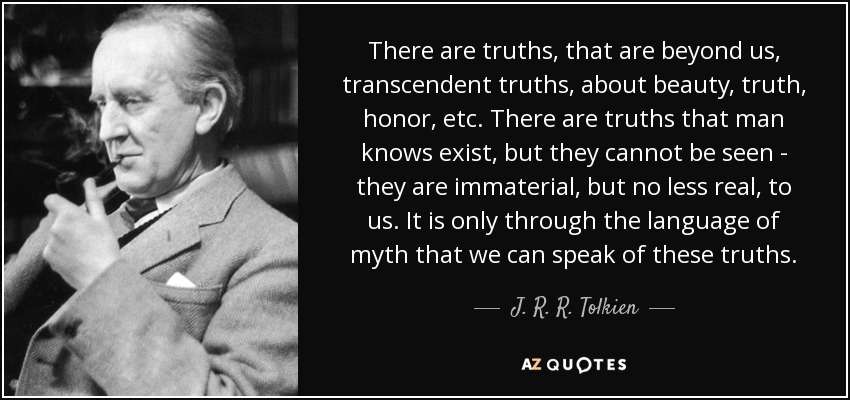
    The preface to The Silmarillion includes a letter Tolkien wrote to his editor. In the letter Tolkien is trying to explain why The Silmarillion and the Lord of the Rings trilogy should be released together as their saga is intrinsically linked. Something Tolkien said in that letter struck me. He said, “[The mere stories] arose in my mind as ‘given’ things, and as they came, separately, so too the links grew. An absorbing, though continually interrupted labour… yet I always had the sense of recording what was already ‘there’, somewhere: not of ‘inventing’.”

    J.R.R. Tolkien was known to be a devout Christian. So I find it no surprise that his soul seemed to speak of things already known, deep in his being, that he expressed through his writing.  

    I find that statement especially fascinating given the parallels to eternal truth Tolkien touched on as I already referenced. I’m going to note some of those truths I’ve found in The Silmarillion. This list, I think, could go on and on nearly endlessly, but I will list out the few that made me literally stop reading, come to my computer, and note down:

    It is a well known fact that Tokien was a religious man who was pulling from religious traditions into his writing. I think it is clear that he had a sense of more. I would consider that his spirit telling him things his mind had no way of knowing. We did come from somewhere. We are here for a reason. We are going somewhere. There are too many eternal truths in his writings. Someday I’ll likely re-read the Lord of the Rings Trilogy, books I haven’t read since I was 11 and 12, to see what more I can pull from those great books as an adult.

    1. (Page 16 of The Silmarillion) “Manwe (Jesus Christ) and Melkor (Satan) were brethren in the thought of Illuvatar (God). The mightiest of those Ainur (first children of God) who came into the world was in the beginning Melkor; but Manwe is dearest to Illuvatar and understands most clearly his purposes. He was appointed to be, in the fullness of time, the first of all Kings: lord of the realm of Arda (Earth) and ruler of all that dwell therein.”
      • Wow, there are many parallels here.
    2. (Page 36) (Note also that Elves and Men are often referred to in this mythology as the sons of Illuvatar (God)). The book talks about how death is given to men as a gift from Illuvatar (God). Whereas the elves are immortal on earth, men die. “But illuvatar knew that Men, being set amid the turmoils of the powers of the world, would stray often, and would not use their gifts in harmony; and he said: ‘these too in their time shall find that all that they do redounds at the end only to the glory of my work.’ Yet the Elves believe that Men are often a grief to Manwe (in this analogy, Manwe=Christ), who knows most of the mind of Illuvatar (God); for it seems to the Elves that Men resemble Melkor (Satan) most of all the Ainur, although he has ever feared and hated them, even those that served him.
      • This is fascinating because despite us being most like Satan (rebellious, stubborn, prone to anger and hatred, greedy, desirous of power, desirous of honor), he still fears us because we have bodies and have the potential he will never have. And even when we follow and serve Satan, he still hates us. This is just like in the Lord of the Rings mythology where men are looked at as a burden to God, but loved by Him. Melkor doesn’t trust man even when they serve him.`
    3. (Page 36) “It is one with this gift of freedom that the children of Men dwell only a short space in the world alive, and are not bound to it, and depart soon whither the Elves know not… But the sons of Men die indeed, and leave the world; wherefore they are called the Guests, or the Strangers. Death is their fate, the gift of Illuvatar, which as Time wears even the Powers shall envy. But Melkor (Satan) has cast his shadow upon it, and confounded it with darkness, and brought forth evil out of good, and fear out of hope.
      • It is a gift that we dwell on Earth for a short time. Our reward after earth life is unimaginable. Satan tries to make death seem like a bad thing, casting his shadow upon it. We should remember that death is not evil and nothing to fear. It is a gift.
    4. (Page 96) Curse of Noldor for slaying their brethren. “’Ye have spilled the blood of your kindred unrighteously and have stained the land of Aman. For blood ye shall render blood, and behold Aman ye shall dwell in Death’s shadow. For though Eru appointed to you to die not in Ea, and no sickness may assail you, yet slain ye may be, and slain ye shall be: by weapon and by torment and by grief; and your houseless spirits shall come then to Mandos. There long shall ye abide and yearn for your bodies, and find little pity though all whom ye have slain should entreat for you. And those that endure in Middle-earth and come not to Mandos shall grow weary of the world as with a great burden, and shall wane, and become as shadows of regret before the younger race that cometh after. The Valar have spoken.’
      • There are elves in the mythology that commit the first murder of their own kindred. They are punished by having their spirits go to Mandos, keeper of the underworld, after their deaths. “There long shall ye abide and yearn for your bodies.” This is a truth of the Plan of Salvation that when men die, they go to spirit prison or spirit paradise and look at the absence of their body from their spirit as a prison. Also, the ties to the first murder in the Bible and the curse of Cain are obvious.
    5. (Page 109) “And they mourned not more for the death of the Trees than for the marring of Feanor: of the works of Melkor one of the most evil. For Feanor was made the mightiest in all parts of body and mind, in valour, in endurance, in beauty, in understanding, in skill, in strength and in subtlety alike, of all of the Children of Iluvatar (God), and a bright flame was in him. The works of wonder for the glory of Arda (Earth) that he might otherwise have wrought only Manwe (Christ, God of earth) might in some measure conceive. And it was told by the Vanyar who held vigil with the Valar that when the messengers declared to Manwe the answers of Feanor to his heralds, Manwe wept and bowed his head.”
      1. This is talking about one of the earliest elves, Feanor. Feanor was deceived by Melkor and ultimately his pride led him to swearing an oath to do anything to reclaim the silmarils he had crafted. This led to many misdeeds. This made me think of Satan, a “morning star that fell.”
      • Also, this part talks about how the greatest evil Melkor (Satan) committed was lying, deceiving, and ultimately turning the path of Feanor to evil. The most evil work of Satan on this earth is turning the hearts of men to do evil when they could have done so much good. How many are there out there that could have been great bringers of peace, creators of beauty, uniters of the human race, that Satan destroyed?
    6. (Page 325) – Sauron in deceiving men tells them that the Valar have deceived men by putting forth the name of Eru (God). That they speak for Eru. He says Eru is a phantom, putting the power in the Valar’s hands. Then Sauron says, “But he that is their (the Valar) shall yet prevail, and he will deliver you from this phantom (God); and his name is Melkor, Lord of All, Giver of Freedom, and he shall make you stronger than they.”
      • Isn’t this the strategy of Satan today? There is no God. Those who speak for him (prophets) only speak in His name to get their own power. This is what Satan tries to get people to believe. There is one that you can follow who will give you freedom and power – yourself. In this analogy, I think Melkor is us. When Satan denies God, he usually doesn’t bring himself into it. He tells men that they are Gods and need no God. He tells us that we can find freedom and power in our own devices. Satan’s prevailing strategy today is telling the world there is no God.
    7. (Page 334-335) – men become so proud that they deny God and go to war against the Valar. It says that Manwe (the King of earth) “called upon Iluvatar, and for that time the Valar laid down their government of earth.” It says that Illuvatar changed the world with a chasm, water, and smoke, and the world was shaken.
      • This sounds like a description of the end of times when all the unrighteous turn from God and rebel against Him. They will be destroyed.
    8. There is a scene during the destruction of Numenor, a city that rebelled against the Gods, that describes a Queen of the people who, “Too late she strove to ascend the steep ways of the Meneltarma, to the holy place; for the waters overtook her.” The Meneltarma was the temple they had built to Illuvatar (God) and that had been neglected and ignored for decades. As floods started to come into the city, she tried to go to the temple but it was too late for the Queen. She had neglected the temple and God for too long. Once hardship befalls man, it’s too late to then try to cry out for help and worship God. This is the parable of the 10 virgins put right into the Lord of the Rings mythology.

    This is why I love reading! Everything denotes that there is a Christ. Beauty and truth can be pulled from almost any book. Everything I read gives me some new perspective or something new I hadn’t before considered. It’s also why I like writing. The greatest invention in the world was writing. Before I digress, let me close this post. I love Tolkien’s writing. Go read something great today.

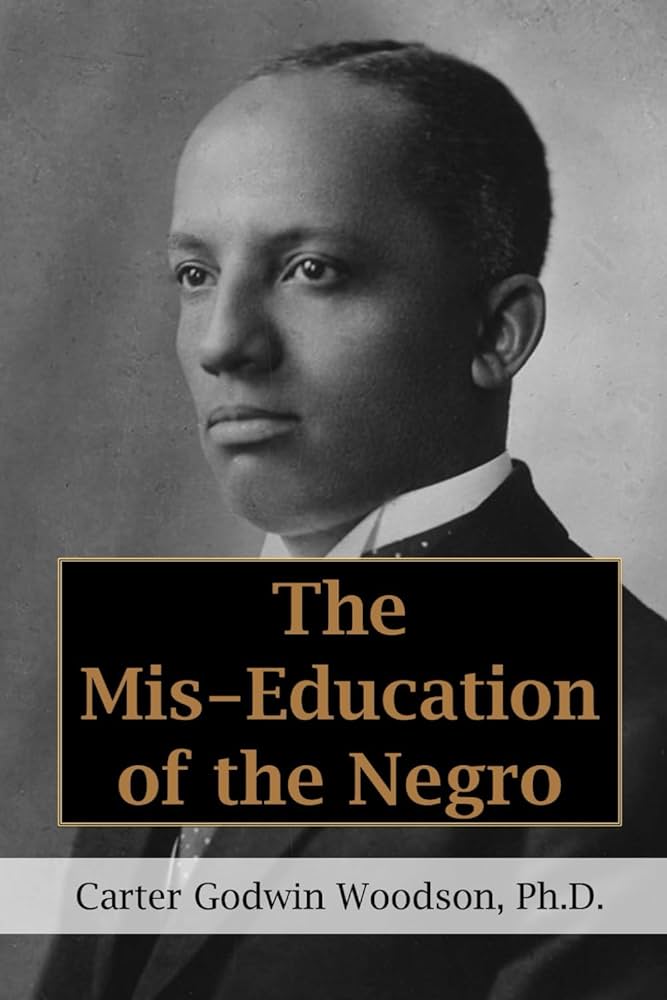
  • The Mis-Education of the Negro

    The Mis-Education of the Negro

    I read a book recommended by CJ (thanks CJ) that I’ve wanted to write something about ever since reading. It was such an interesting and powerful book. It proposed some thoughts I’d never considered and really opened my mind to a different way of thinking about a particular part of American history.

    The book is titled The Mis-Education of the Negro, written in 1933. When I started the book, I immediately texted CJ and said there was too much in the book and that we should start a podcast series exploring the topics. He jokingly agreed to do a podcast. As I continued to read, I noted 40 topics, each I thought would make for a worthwhile discussion.

    CJ and I are at a combined 6 children 4 years old and younger, so a podcast is definitely on hold.

    I read this book a couple years ago.

    Discussing race is difficult. I’ve debated posting this for some time. Not that I’m saying anything controversial or crazy. Just that I don’t like to think too much about race. But our race is important. It makes who we are.

    Sometimes commenting on race as a white person feels like a lose-lose situation. I’m either so positive about other races that it seems like pandering to the point of insincerity or like I’m trying to make up for something, or I’m not positive enough and come across at best not understanding and at worst a racist.

    I think this is why talking about race in America is so difficult. I’ve written about it before and it still is one of the most difficult things I’ve written. 

    And yet, I continue to hear from my black brothers and sisters say that the best place to start is to just be open about discussing it. Which led me to put this post together. Nothing profound. Just my thoughts on a good book.

    I should mention that the book was written in 1933 which led me to continuously ask, is it still that bad? I think many of the disappointing and sad truths the book lays out have improved. Not yet perfect, but improved.

    I want to list some of the topics I noted as interesting from the book. Then I’ll elaborate on one of them.

    1. The “equality” of black and white people. Are black and white people the same? No, we are different in so many ways. From upbringing, culture, background, experience, etc. And that’s ok.
    2. Black people being nominally free but economically enslaved.
    3. Has education for black people gotten better or worse since 1933? I assume it must have improved, but it was a thought this book made me consider.
    4. This is something I feel like people my age have started talking about more- why didn’t we learn how to do taxes instead of the Nina, the Pinta, and the Sante Maria? – The question I asked from reading this book, what is education good for? Why do we care about random historical facts from Europe? To be clear, I appreciate as much as anyone the importance of understanding history and where we came from. But shouldn’t I also know how to file my taxes and apply for a job? Also, on that note of “where we come from.” I remember a lot of history being taught about Europe. I don’t remember a ton being taught about Africa, Asia, or South America.
    5. The opportunities that are afforded whites because more white people own businesses, etc. compared to black people. I think this was much more prevalent in the 1930’s compared to today.
    6. I really struggled with reading this book because I passionately hate the word in the title of the book. Underlining it over and over throughout the book drove me crazy. I almost put the book down many times because I hated how a group of people was being, I felt, unfairly characterized.
    7. Competing churches taking away from impoverished areas.
    8. Why do we study the domineering, warring nations and not the peaceful, productive nations?  The answer is obvious- the winners of wars write history. But philosophically something to consider.
    9. Interesting point mentioned about former slaves avoiding using art to portray their experiences. There were so few books or art pieces made by former slaves depicting that struggle. I think we see that more embraced today with hip hop. Artists like Tupac, Ice Cube, and Kendrick Lemar come to mind as individuals that fully embrace the struggles they have experienced in life and have made great art out of it.

    I heard this not from this book but 3+3 and 2+4 are the same. Different, but still the same.

    The point I’d like to discuss a little more is point one. The author of this book pointed out that we’re so obsessed with making everyone equal that we disregard that people are different. He points out that maybe black people and white people shouldn’t be taught exactly the same. We come from different backgrounds and different life experiences. Something that resonates with me and helps me learn may not resonate or help someone else with a different culture from mine.

    Still, I think this idea is interesting. Generally speaking, a black person has a different life experience from a white person. I’m not talking about just upbringing, I’m talking about the way we see the world, I’m talking about the way we interact with the world, I’m talking about the way the world interacts with us. Black people and white people can be different. That’s not bad though. We’re not different in an inferior / superior way, just different. Good and bad. Different.

    From the book:

    “The differences of races, moreover, is no evidence of superiority or of inferiority. This merely indicates that each race has certain gifts which the others do not possess. It is by the development of these gifts that every race must justify its right to exist.”

    It makes me think about what is happening with gender. Women and men are different, and that’s ok. We all have our own skills and talents that make us who we are. The fact that I’m a man makes me different from my wife. My wife has many skills and talents I’ll never possess. Recently I heard it put this way – 3+3 and 2+4 are the same. Different, but equal.

    That said, the most important thing is that we remember we are all sons and daughters of God. White and black doesn’t mean anything to God. What matters to God is what’s in our hearts. We are all individuals. That’s ok. We should all be treated equally, of course. But we should remember that we are unique. Our uniqueness is great.

    If you want to read a book that makes you consider race and the history of education for black people, this is a great book to read. I encourage all of us to study these ideas so we can better love and understand each other.

  • The Many Literary Parallels to Satan

    The Many Literary Parallels to Satan

    I’ve always been struck by the parallels to Satan made in so many fantasy fiction books. I think the authors of these fictions are writing from a place that their soul understands, even if they don’t fully remember it here on earth, in this life. I guess these parallels aren’t too surprising given that Satan is the personification of evil, so, if you’re writing a fiction with evil characters, your evil will mirror him at least in some way.

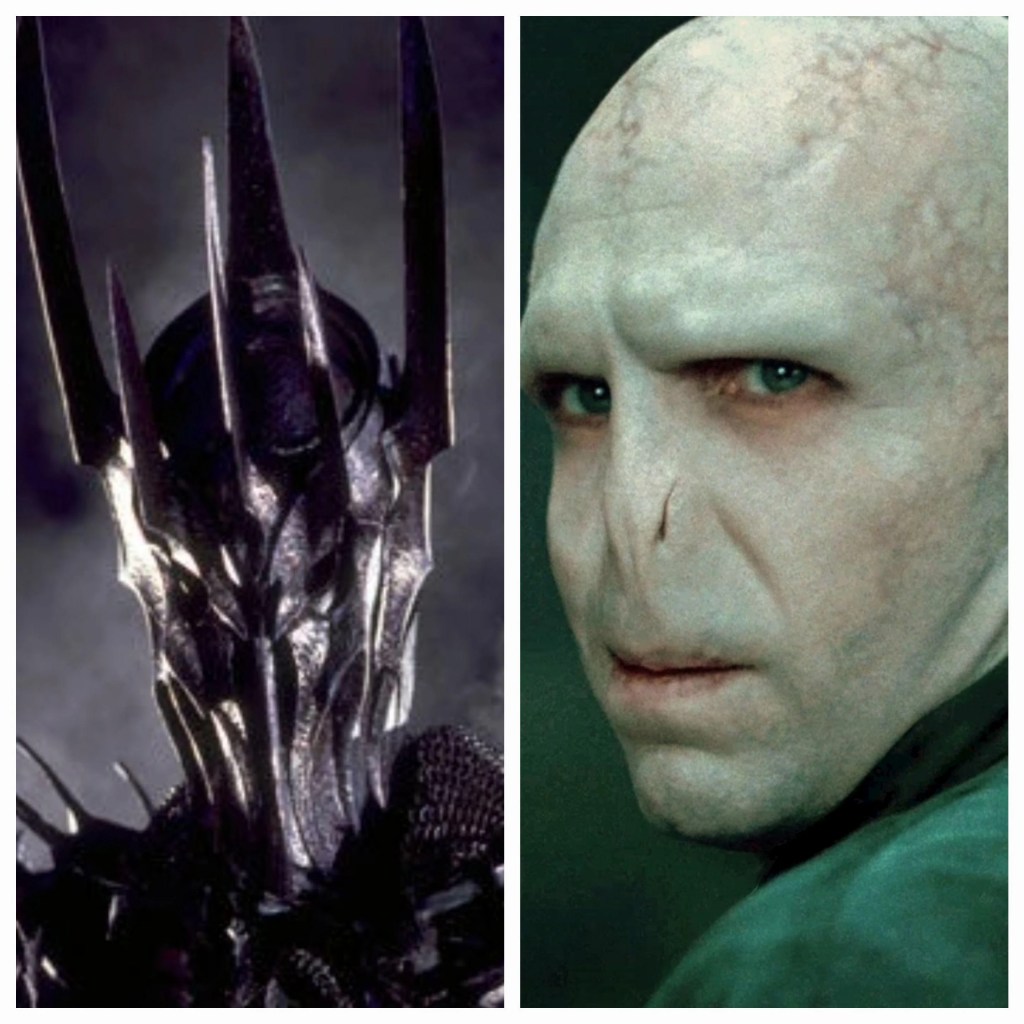
    One major example is Voldemort. It’s been a long time since I read the Harry Potter books. I just re-read book 1 with Ivy. I’m anxiously awaiting Ivy getting older so we can continue this greatest books series of all time together. Since it’s been so long since I read them, I can’t remember all the intricacies of Satan’s comparisons to Voldemort. There is the obvious – great wizard (Son of the Morning) turned evil and selfish, wanting dominion, power, and control. Voldemort was opposed to all things love. It was ultimately love that was his downfall because he couldn’t see its power.

    I recently read A Guide to Tolkien by David Day which is essentially an encyclopedia of Tolkien information – all things Lord of the Rings. It is not meant to be read cover to cover (I’m weird), but I still thoroughly enjoyed it. I learned so much about the mythology Tolkien created that gave me so much more appreciation for The Hobbit and the Lord of the Rings series. I’ve read all those books and seen the movies, but reading this book gave me a glimpse into the wonderful world Tolkien produced from his mind.

    In The Lord of the Rings world, Sauron was not the first evil of Arda (earth, or Middle-Earth). Sauron was actually the first leitenant of a greater evil called Melkor. In the Lord of the Rings mythology, there are 15 beings called Valar. They are essentially Gods who helped create and maintain the earth. One of these Gods was Melkor, one of the greats. Here is what is said about him in A Guide to Tolkien:

    “Last of the Valar is he who in the beginning was mightiest of the Ainur. He was named Melkor, “He who arises in Might”. He owned in part the powers of all the Valar (children of God), but chiefly his realm was Darkness and Cold. He moved over Arda (earth) like a black cloud that was dreadful to behold, like the World’s nightmare come into daylight. All evil that was and is in the World had its beginning in Melkor, for he revolted against Iluvatar (God) in the Timeless Halls and came to Arda in rage, wishing to make his own kingdom. He brought corruption into the World, and with him came a part of the Maiar (people who followed or served the Valar) twisted by his malice. He made his fortress, Utumno, and his armoury, Angband, deep under the mountain roots of Middle-earth. In Arda he waged five great wars against the Valar and put out the fairest lights of the World by destroying both the Great Lamps and the Trees of the Valar. 

    “In the beginning Melkor appeared in forms both fair and evil: his wiles were many and even Manwe the First King was deceived.  Yet after the Darkening of the Valinor, he always assumed his evil form and the Elves called him Morgoth, the “dark enemy of the World”… His countenance was evil, for the fire of malice was in his eyes and his face was twisted with rage…Yet, in the War of Wrath, all this power was destroyed, though Melkor summoned Dragons, Balrogs, Orcs, Trolls and every other evil being to his aid. This was the end of him, and, though much of his evil and some of his servants remained, he alone of the Valar was driven from the spheres of the World and now dwells for ever in the Void.”

    Sound familiar?

    All evil in the world had its beginning in him.

    He revolted.

    He came to Earth in rage.

    He wished to make his own kingdom.

    He brought corruption into the world.

    He brought with him followers (the sons and daughters or God, or in this case, the followers of the Valar).

    He made his home deep in the mountain roots of Earth.

    He waged war against God (the Valar).

    In the beginning he appeared in forms both fair and evil.

    The dark enemy of the world.

    His countenance was evil.

    He was driven from the spheres of the World and now dwells forever in the void.

    Tolkien was a religious man. But his religious traditions knew nothing of the true premortal scope of Satan’s actions. In writing this, it was like Tolkien was creating a character he knew from a previous life, someone his soul remembered, though his mind did not. 

    Art imitates life. In this case, art imitates eternity.